Home Blog Page 614

Delhi Metro goes Digital

NEW DELHI (Metro Rail News): Delhi Metro Rail Corporation’s official app on the Google Play Store, which helps you gather information about routes, timing, and fare of Delhi Metro, can be downloaded using a few simple steps.

After the completion of phase IV construction, the Delhi Metro will become the third-largest metro network in the world in terms of length. Delhi Metro is everyone’s favorite and a trusted mode of transportation in and across the national capital region.

So, to keep a track of travel routes, fare, and timings of the metro, you can download the official DMRC app. The app is very handy and useful when you are new to the city and have little knowledge about the functioning of the metro service.

How to download and use the DMRC app on your Android phone:

Step 1. To download the official DMRC app, you need to open the Google Play Store on your Android device

Step 2. Search for the Delhi Metro app in the search bar at the top of the store

Step 3. Click on the search result with the Delhi Metro Rail Corporation as the app developer

Step 4. Click install option on the page

Step 5. To use the app, follow the prompted instructions on the app

Step 6. Click on the displayed menu to get the required information

DMRC metro card and recharge

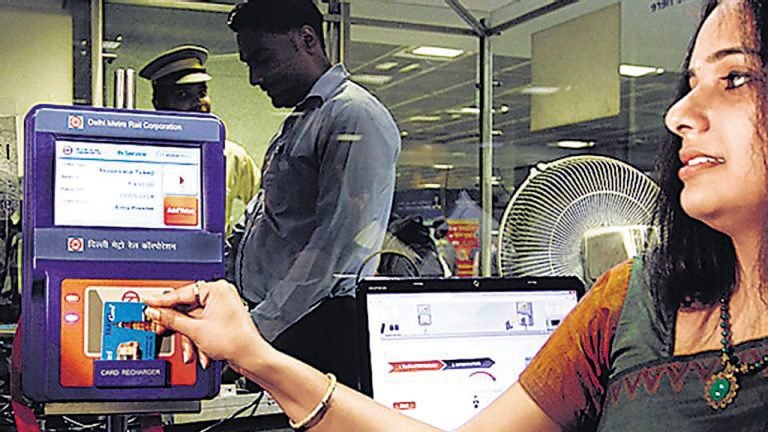
You can buy a DMRC Smart Travel Card at any metro station and use it to pay for your rides. Using Smart Card for your rides also helps you save money as you get a ten percent discount on the metro fare. The smart cards can be recharged at any metro station or alternatively you can recharge the card online on the official DMRC app website or apps like Paytm and PhonePe. The cards can be recharged using the card number and after the online recharge, you need to validate it by the AVMs at the metro station.

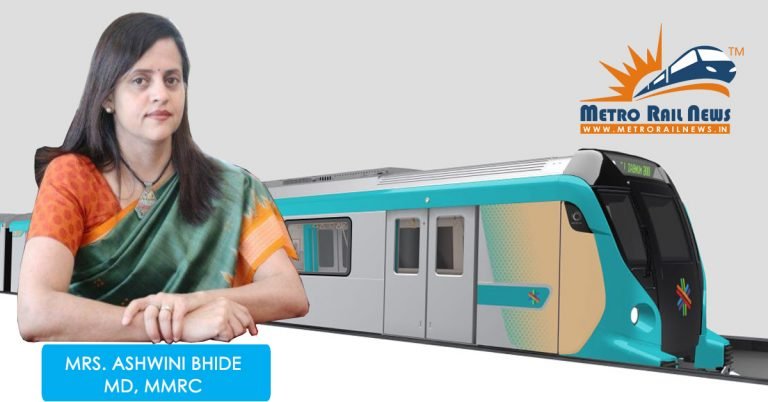
Exclusive interview of MMRC MD Ashwini Bhide

Mrs. Ashwini Bhide, Managing Director of Mumbai Metro Rail Corporation (MMRC), Who has the responsibility of constructing Mumbai’s first underground Metro rail network of 33.5 KMs long Colaba-Bandra-Seepz, also known as Mumbai Metro 3.

She talks about dealing with different perceptions and objections while trying to preserve the character of the city’s infrastructure, its outdoor and green spaces. She is not only dealing with the engineering challenges posed by this humongous multi-crore project but also the hubbub of acquiring Aarey Colony land and chopping almost 2,700 trees for the metro car depot for the 33-km long Colaba-Bandra-SEEPZ (Mumbai Metro 3) line.

How does it feel to be part of the first underground mass transit project? What has been the experience till now?

Mrs. Ashwini Bhide: As far as my personal involvement is concerned, its a matter of privilege to lead this very, very challenging project. It has been considered as India’s most-challenging project by Metroman Dr. E. Shreedharan himself. I joined the (Mumbai Metro 3) project in 2015 when the Mumbai Metro Rail Corporation Limited (MMRC) was separated from the Mumbai Metropolitan Region Development Authority (MMRDA).

We have had to execute this mass transit project in an overcrowded city like Mumbai, where you find old dilapidated buildings and heritage structures on one side and high rises on the other, without disturbing the city life, while controlling cost and time. There are engineering obstacles, social and environmental ones and those related to perception. Handling all of these is the opportunity of a lifetime for me and my team. It is a difficult but important task to make people comprehend the enormity of this project. Resolving issues such as rehabilitation, acquiring land, obtaining permission from Forests department; CRZ and other clearances become a big part of the exercise. The last four years have been like a rollercoaster ride but we always found a way. There is a sense of achievement.

Have there been any studies done on the change of transportation patterns as this is the only Metro line that will cut across both western and central railways on a parallel route? How much of a drop-in commuter would the suburban system witness? Or do you think only vehicle-users will use the Metro?

Mrs. Ashwini Bhide: This study was done in DPR of Mumbai Metro 3 where we worked out the Internal Rate of Returns (IRR) on investment which is divided into financial and economic IRR. The financial IRR sees how much money is invested and how much is earned as farebox collection. Economic IRR studies damages such as displacement of people, social impact and environmental impact such as chopping of trees. This project’s economic IRR is almost 18%. Location of business districts, housing, and residential patterns, commuting patterns are considered while planning the project. There is no direct connectivity to areas such as Fort, Colaba, Worli, BKC, Marol. The Mumbai Metro 3 corridor will ensure a major shift from vehicular traffic as it is not parallel to the suburban system. Whereas, Metro lines 2 and 7 would run parallel to the suburban corridor, so the excess crowd will get divided. As far as line 3 is concerned, the nodal shift would be around 15-20%.

There is a lot of confusion about how much Aarey Colony land will be taken up for the Metro project.

Mrs. Ashwini Bhide: We are in possession of 30 hectares of land at Aarey for the Metro car depot. This land is not in its entirety occupied by trees. There are around 3,000 trees but they are scattered only on 17% of the land. We were asked by the Tree Authority to retain a large chunk of trees, which is concentrated on one particular piece in the middle. So we have decided to retain that green cover in a five-hectare area. So the metro car depot will come up in the 25-hectare area. It was a major challenge for us to design a metro car depot for 31 metro trains with eight coaches each in just 25 hectares, but we decided to curtail some of the stabling lines and created additional space elsewhere near the station. Two trains each can be stabled in the facility created at BKC and Cuffe Parade.

Why can’t the Metro car depot be shifted to Kanjurmarg as per the larger public demand?

Mrs. Ashwini Bhide: The land at Kanjurmarg was not available even in December 2016, while we had been trying to acquire it since September 2015. By then, tenders had been awarded so we had to finalise a place for the depot before going ahead with the work and making any investment. In December 2016, the Government gave us permission to start the depot work at Aarey and now that 50% of our work has been done, there is again a demand to shift the carshed to Kanjurmarg. Is the land available at Kanjurmarg? No. And if at all it were available, it would take three years to just develop it as some of it is marshy. How can we wait when huge investments have already been made and we have to commission Metro 3 by December 2021?

Was the feasibility of having a Metro car depot examined at other sites too?

Mrs. Ashwini Bhide: The metro car depot is not just a parking area like the ones you have for buses or like the stabling lines you have for local trains. This is where all maintenance work will take place. All the recommended locations including Kalina university, BKC, Mahalaxmi racecourse were studied and were found unsuitable due to various reasons. Kalina was inadequate and even the University had future expansion plans. A detailed study was done for the racecourse to see if an underground depot was possible but then we would have had to keep it airconditioned round the clock, which would have a huge environmental impact. The plot at Aarey is best-suited as it has access from three sides and is easily accessible from JVLR.

Another major concern raised by environmentalists is also the flooding that can occur in neighbouring areas due to concretisation. What is your take on this?

Mrs. Ashwini Bhide: On what basis are people raising these questions? It’s nothing but misinformation to mislead people. Only a seven-hectare area of the metro car depot will be concretized and 75% of the land will remain unpaved. The said area is not the Mithi River’s floodplain but the catchment area from where the water goes to Mithi. Plus there is a huge gradient so water does not spread but goes down. In addition, there is already the presence of natural channels that have old stormwater drains (SWD). As part of the land development, we have already shifted some of the old SWDs outside the boundary by a proper drain as per BRIMSTOWAD requirement and this has been approved by the BMC.

What would be your message to Mumbaikars who are confused about this project?

Mrs. Ashwini Bhide: The Mumbai Metro 3 project only means to improve the city’s environment, reduce pollution, improve connectivity and commutability. We have to save lives which are being lost on railway tracks, we have to improve the quality of travel on the suburban rail network and on the roads, save time and make the city more sustainable. The environmental benefits of this project are far richer and wider than the temporary environment damages, so every citizen must support it and own it.

What about the allegations of commercial use of Aarey?

Mrs. Ashwini Bhide: There were claims that funds were going to be raised through the commercialisation of the Aarey land, when in fact the government is funding it. Had they studied the financial structuring of the project, which was available online, only Rs 1,000 crore, of the project cost is to be raised through our resources, while the rest is to be provided by the government. The Mumbai Metro Rail Corporation (MMRC) is a new company (formed to implement the Mumbai Metro 3) the Metro is yet to begin operations. We don’t have separate resources of our own yet. Hence, when we got cabinet approvals for this 30-hectare plot. They also gave us another 3.5-hectare plot next to JVLR. This land is already being used commercially for RMC plants.

What fare structure has the MMRC decided on?

Mrs. Ashwini Bhide: There won’t be any difference in the fare structure for different Metros, whether they are underground or elevated. A common fare policy of the government will be adopted by Mumbai Metro 3 because they don’t expect to recover the capital investment through farebox collection. Whatever we would like to get from farebox collection is basically the operation and maintenance cost.

Union Road Transport & Highway Minister Nitin Gadkari commented that protests against projects raise the project cost and cause delays. With the ongoing fight for Aarey Colony, how will these two factors be affected?

Mrs. Ashwini Bhide: When the tenders were received, we had to factor in the market-appreciated cost. The cost-escalation from 2011 to 2021, or beyond, will also be another burden to consider.

Apart from what Mr Gadkari said, which is absolutely right if the Mumbai Metro 3 project is not completed on time, Mumbaikars will be deprived of a much-needed facility which was thought of all the way back in the 1961 Development Plan. The 15% decongestion of trains won’t happen without it. In addition, without this project, the chance to have a healthier and smoother commute will be gone too.

For Mumbaikars, public transport is second nature. Do you think this can make public transport attractive for Mumbaikars?

Mrs. Ashwini Bhide: Some people use roadways due to lack of connectivity, some ditch trains as they are overcrowded. In some cases, both factors play out together. According to MMRDA’s comprehensive transport study this year, the 350-km network will be used by around 45 lakh people. By, 2041 when the Metro network reaches a mature stage, over one crore passengers will use it. While the suburban rail network will still exist, the vehicular traffic will remain static. Parking restrictions and other regulations will make it better. This will also give the railway network some breathing space to improve. Mumbai’s advantage is that it is public transport friendly. People here like using public transport and hence, it won’t struggle like other cities.

In terms of deadline, how is the work progressing?

Mrs. Ashwini Bhide: Work on all stations, including Girgaon-Kalbadevi, has started. Their progression is varied depending on when land became available. Overall, we have completed almost 48% of the work, around 34 km of tunneling out of the 56 km is completed. By the end of this year, we intend to complete almost 70 to 80% of our tunneling work. We intend to commission this project in two phases — Aarey to BKC and from BKC to Cuffe Parade. Phase 1 has reached a much-advanced stage with 90% of tunneling done and 60% work on stations done. As far as timelines are concerned, if the Aarey Metro car depot issue is resolved soon, we are pretty sure that we will complete in time. We cannot move the trains without the metro car depot.

The 26/7 floods lead to over 1,000 deaths. Despite you citing the need for the project, how can you assure that the project will not have any environmental impacts?

Mrs. Ashwini Bhide: Why should there be any environmental impacts? A public transport project has the capacity to take so many vehicles off the road and most importantly move people from one area to another with ease. Should this be environmentally dangerous? Open spaces that we have covered during construction are very limited. As far as open spaces are concerned, this project temporarily needs 76 hectares of land. The requirement of permanent land is 4-5 hectare scattered all over the 33-km alignment. Secondly, we have a lot of roadside trees in Mumbai, unlike many cities in Europe and America. Around 65% of the 3,000 trees that were disturbed have been transplanted.

For those that didn’t survive, we compensated by planting three times more trees. We have also given an undertaking to Tree Authority to plant more trees once the project is completed. Three nurseries are engaged in that project. In addition, we are also planting 21,000 trees in degraded forest lands of Sanjay Gandhi National park. Out of the 2,659 trees that will make way for the Aarey carshed, around 450 will be replanted in the vicinity of Aarey. We are looking for more spaces and may collaborate with the BMC to compensate for the rest.

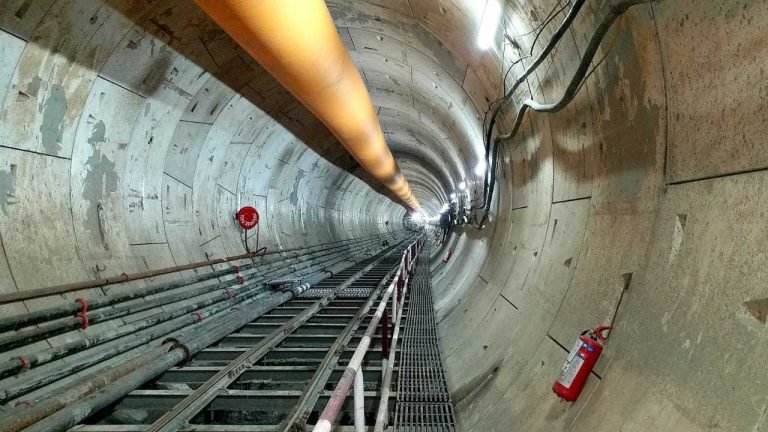
On the other hand, the underground Metro (Mumbai Metro 3), both tunnel and stations, are made watertight. There is a national building code. We follow NMP 130,131 which are the US building guidelines. Even in our National building code, there are certain stringent norms included. Mitigation plans for flood and fire are all in place. When tunnel-boring machines drill tunnels and immediately cover them with a concrete lining, no scope is left for the rock to get exposed. If the rock is exposed, then groundwater will seep in. Besides the concrete lining, there are rubber gaskets and grouting. Today, there is no water in the 34-km tunnel that we have built. This shows that the tunnel itself is watertight. Similarly, we have elevated the entries and exits of the station to prevent flooding.

The Metro car depot issue has seen a Twitter war like never before. On one side are environmentalists and on the other is the government machinery. How successful have you been in convincing people?

Mrs. Ashwini Bhide: There are two kinds of levels in this. One is the battle which takes place in the administrative and judicial sphere, where it is fought with reason, facts, and legal documents. There we have been fighting for the past four years and the same issue is being challenged again and again in different courts under different disguises. But all those cases we have won on the basis of facts presented in the court. Now we are facing court cases on the same issues that were settled in court before.

It is relatively easy to go back to court, show the earlier verdicts and win the case. The only issue is, how much time will it take? As far as the perception war in the social media sphere is concerned, it works both ways. If you want to counter the flurry of misinformation every time, I am myself not very sure about it. Because whatever you say, that is countered. At the same time, those who support the project, they are not a cohesive group but huge in number.

They want us to present facts on social media so that they can understand them too and are not influenced by misinformation or propaganda. And for their sake, we keep sharing the facts. So, it may look like a war or a battle, but the whole point is that because the wrong information is being spread as real information, with authority, it is necessary to counter that.

Policy decisions cannot be taken on Twitter or on the basis of the opinion of 80,000 people. Because it is the opinion of only this group, while we do not know the say of lakhs of other Mumbaikars, who may or may not be on social media. Even if you want a referendum, there is a need for a mechanism for that, which is not available.

We had a mechanism for suggestions, objections, public hearing. For the tree-cutting issue, we did that. Twice, even when it was not required, the matter was kept open for suggestions and objections. Eighty thousand suggestions and objections were raised but for hearing there were only 300-400 people. Who are those 80,000 people? So these 300-400 people got the replies to their objections. We made our factual position clear.

The government has to see long-term benefits and then take holistic decisions. The government cannot get swayed or influenced by certain flared emotions. So when you approach an institutional mechanism to raise issues, you get a fair hearing and committees are appointed to investigate. In 2015 it was possible for us to think about the land in Kanjurmarg but today it is not. Suppose it takes 10 years to get the Kanjurmarg land, would it be prudent for the government to let go of the investment made? We cannot get emotional. Those with a grouse approached the court and the court has already given its verdict.

This is the first time when a government body and an officer have been so outspoken on Twitter. What is your take on this?

Mrs. Ashwini Bhide: We have always been active on Twitter. This project has a long gestation period and plus it is an underground project. In an elevated project, you can see the piers and girders coming up, but in an underground project, you cannot take people down there to show the work. How do you show them then that things are moving? Which is why as part of our PR strategy, we present everything on social media. When people criticize us or raise queries, we answer those.

Do you personally handle your Twitter account?

Mrs. Ashwini Bhide: Yes, I personally handle it. I don’t have someone else doing it on my behalf.

When it comes to development and infra projects, it is argued that open spaces are readily grabbed as opposed to built-up spaces. Is there going to be a comprehensive policy to utilize built-up spaces instead?

Mrs. Ashwini Bhide: It does not work that way. In fact, we have utilized built-up spaces. In Girgaon-Kalbadevi, we have acquired 30 buildings. But sometimes the alignment requires that you take that space. In fact, if you take the example of Metro Metro 3, why it is underground? Because there is no open space. You cannot touch some old or heritage buildings and that is why it had to go underground. So as a policy, yes, one would go for easily-available government lands. Because they are relatively easily available for construction.

This interview to be covered in our October issue

(This article first appeared in DNA Newsmaker)

J Kumar Infra bags Rs 1998 cr contract for Mumbai Metro Rail Project

MUMBAI (Metro Rail News): Mumbai-based construction company, J Kumar Infraprojects on September 13, 2019, announced that it has received a Letter of Acceptance (LoA) from Mumbai Metropolitan Region Development Authority (MMRDA) for Rs 1998 crore work related to Mumbai Metro Rail Project which includes design and construction of elevated viaduct and nine elevated stations including two flyovers, underground twin tunnel, cut and cover, ramp and one underground station for corridor of Mumbai Metro Line 9.

The company, in a detailed statement, said that it has received Letter of Acceptance (LoA) from Mumbai Metropolitan Region Development Authority (MMRDA) for the contract of design and construction of Elevated Viaduct and Nine Elevated Stations.
buy udenafil online https://gilbertroaddental.com/wp-content/themes/twentyseventeen/inc/en/udenafil.html no prescription
The LoA is excluding architectural finishes and PEB Roof Structure. Also, the stated LoA is including two flyovers and underground twin tunnel, Cut and Cover, Ramp and one Underground Station which includes Architectural Finishes and PEB Structures, for Corridor of Mumbai Metro Line 9 i.e. extension of Line 7 from Dahisar (East) to Mira Bhayandar and Andheri to CSIA of Mumbai Metro Rail Project of MMRDA for Rs. 1,998 crore.

The company boasts the order book of Rs. 10,372.4 crore as on FY19, which gives strong revenue visibility for the company in the long term.

J Kumar Infraprojects is engaged in construction business which includes design and construction of roads, bridges, flyovers, subways, over bridges, skywalks and railway terminus/stations, among others.

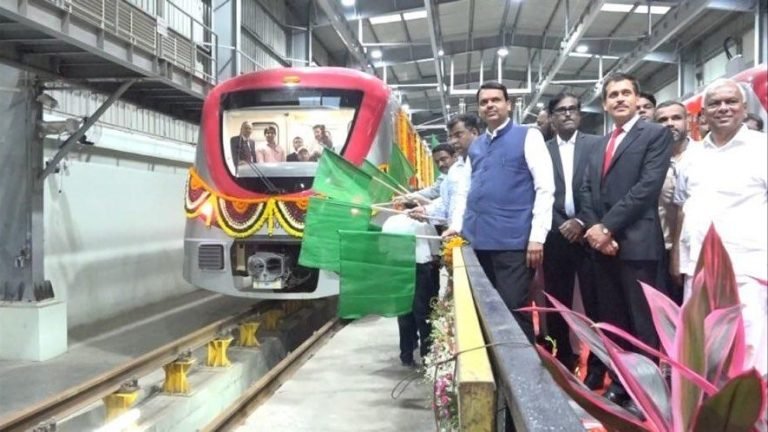
Maharashtra CM Devendra Fadnavis flags off the trial run of Navi Mumbai Metro Line-1

Navi Mumbai (Metro Rail News): Maharashtra Chief Minister Devendra Fadnavis on September 11, 2019, has officially flagged off the trial test run of Navi Mumbai Metro from Taloja Depot. The 3-coach trains run on 2-km long distance from Pendhar Metro terminal yard at Taloja to Pendhar station. The section is part of 11.1 km long Belapur-Pendhar corridor (Line 1).

Navi Mumbai Metro Line 1 (Belapur-Pendhar corridor) is consists of a total of 11 stations and is expected to be operational by mid-2020. A total of three-coach 8 trains will be run between Belapur and Pendhar stretch.

On August 29, an internal trial test run of 3-coach metro train was conducted inside the metro yard at Taloja.

In March 2019, CIDCO had received 2 three-coach metro trainsets for Navi Mumbai Metro from Chinese rolling stock manufacturer China Railway Rolling Stock Corporation (CRRC).

Line 1, which is built at an estimated cost of Rs 3,063 crore, is part of the phase I network of future lines of Navi Mumbai Metro rail project which will connect the upcoming international airport.

In June 2019, Board of Directors of City & Industrial Development Corporation of Maharashtra Limited (CIDCO) had accorded principle approval to appoint Delhi Metro Rail Corporation Limited (DMRC) to undertake the work of Line 2 & 3 of Navi Mumbai Metro rail project.

The Detailed Project Report (DPR) for Line 2 & 3 of Navi Mumbai Metro rail project had been submitted by RITES Limited. The CIDCO Board had accorded approval to implement Line 3 (Pendhar to MIDC) for Rs 1750.14 crore and Line 2 (MIDC to Khandeshwar) for Rs 2820.20 crore.

A total of 26.26 km metro rail network consists of four lines will be built under the Navi Mumbai Metro project with an estimated cost of Rs.8,904 crore.

Kochi Metro Becomes Second Rapid Transit System To Generate Revenue, after DMRC

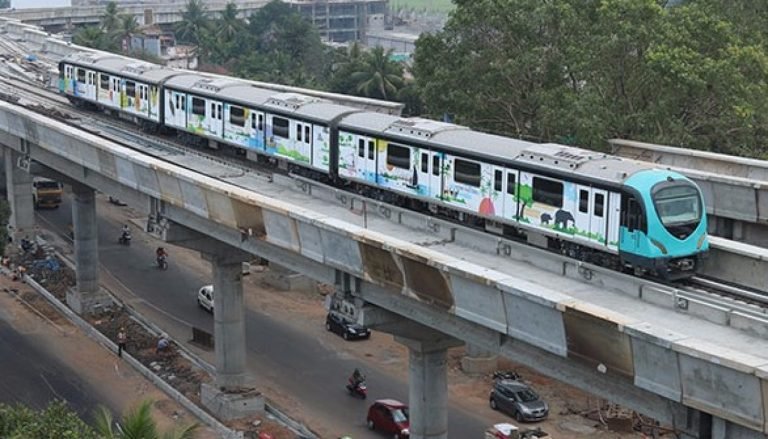
KOCHI (Metro Rail News): According to KMRL managing director APM Mohammed Hanish the Kochi Metro Rail Limited (KMRL) has also started generating surplus revenue from its service most of the days.

With this, the Kochi Metro has become the second metro after the Delhi Metro Rail Corporation (DMRC) to register a profit from its daily operations.

“The operating profit has been approximately Rs 2 lakh since April on most days. We hope the figure will further increase when the metro touches Pettah in January,” Hanish said, in a conversation.

According to data, provided by metro officials, the number of daily commuters at Kochi Metro has been rising from the last several days, with a record 95,285 passengers being served on last Saturday. It was the highest number of passengers since its commercial operation began in June 2017.

In view of its growing importance, Kerala Chief Minister Pinarayi Vijayan had last week inaugurated the new stretch of Kochi Metro from Maharaja’s College junction to Thykoodam.
buy viagra super force online no prescription
Vijayan, accompanied by Union Urban Affairs Minister Hardeep Singh Puri and other dignitaries also took a ride on the first Metro train from Maharaja’s College junction to Kadavanthra station near the Rajiv Gandhi Indoor Stadium.

Earlier, the Commissioner of Metro Rail Safety had granted sanction for the new stretch which has a total of five stations – Ernakulam South, Kadavanthra, Elamkulam, Vyttila, and Thykoodam. Foundation stones for constructing the Petta-SN Junction Section of Kochi Metro and for Kochi Water Metro Project to provide intermodal connectivity between jetties, bus terminals, and metro rail were also laid on the occasion.

The first phase of Kochi Metro, which offers Rs 120 daily passes and Rs 250 weekend passes, was inaugurated by Prime Minister Narendra Modi on June 2017.

In last eight months, 1.91 crore passengers traveled in Chennai metro trains

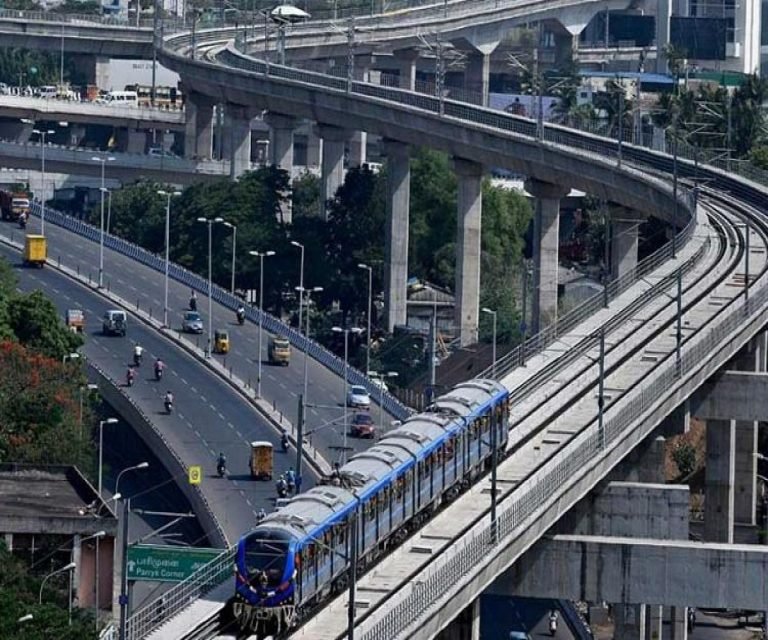
CHENNAI (Metro Rail News): In the last eight months more than 1.91 crore passengers have used metro rail services in Chennai. Chennai Metro Rail (CMRL) officials said the introduction of feeder services like share auto, share a taxi, MTC small buses, rental bikes, car and cycle, and airconditioned van services to IT corridors, for last-mile connectivity, had helped increase patronage.

In August, around 29.65 lakh passengers used metro rail services. According to CMRL, the daily patronage crossed one lakh on 19 days in August with the maximum at 1.3 lakh passengers on August 30. Officials said the daily ridership crossed more than one lakh during the weekdays while it touched 90,000 during weekends. However, the estimated daily ridership for the 45km phase-1 is 7.75lakh.

Compared to 19.37 lakhs passengers in the month of January, the monthly patronage shot up to 23.62 lakh in February after the last leg of 45km phase-1 between Washermenpet and AG-DMS opened in February.

The monthly ridership gradually increased to 28.17 lakh in July and 29.65 lakh in August. CMRL recently increased train frequency between Washermenpet and Airport during peak hours to five minutes.

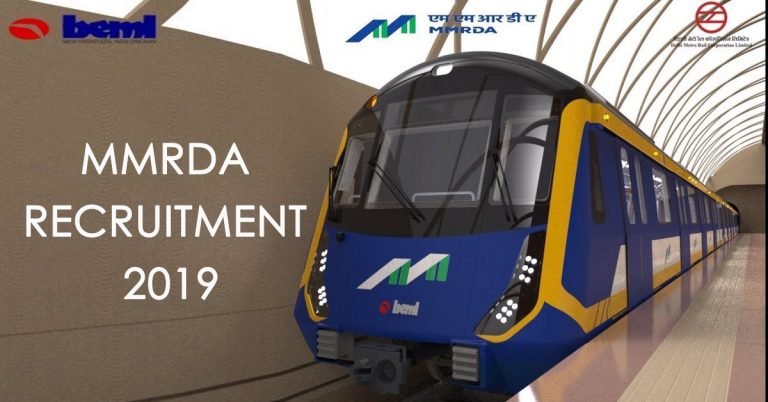
MMRDA Recruitment 2019: Apply Online for Mumbai Metro Jobs

MMRDA Recruitment 2019:  The Mumbai Metropolitan Region Development Authority (MMRDA) has invited eligible candidates to fill 25 Executive and 1,053 non-executive posts across various sections in Maha Mumbai Metro Operation Corporation Ltd (MMMOCL).Those who are interested can check the MMRDA recruitment notification, which is available on the authority’s official website; mmrda.maharashtra.gov.in. According to the notice, the online application process will begin from September 16 and continue until October 7, 2019. The salary package for the available positions will be based on the 7th Pay Commission

MMRDA Recruitment 2019Total number of vacancies: 1,078

The category-wise break-up of vacancies is given below:

Executive Category Posts – 25 Posts

  1. Dy. General Manager (Operation) – 1 post
  2. Dy. General Manager (Rolling Stock) – 1 post
  3. Dy. General Manager (PST) – 1 post
  4. Dy. General Manager (Electrical & Maintenance) – 1 post
  5. Dy. General Manager (S & T) – 1 post
  6. Dy. General Manager (Civil ) – 1 post
  7. Manager (Commercial) – 1 post
  8. Manager (Security) – 1 post
  9. Manager (Safety) – 1 post
  10. Manager (Stores) – 1 post
  11. Manager (HR) – 1 post
  12. Asst. Manager (Station Operation) – 2 posts
  13. Asst. Manager (OCC) – 1 post
  14. Asst. Manager (Rolling Stock) – 2 posts
  15. Asst. Manager (PST) – 2 posts
  16. Asst. Manager (Electrical & Maintenance) – 2 posts
  17. Asst. Manager (S&T) – 3 posts
  18. Asst. Manager (P/Way) – 2 posts

Non-Executive Category Posts – 1,053 Posts

  1. Station Manager – 18 posts
  2. Station Controller – 120 posts
  3. Section Engineer – 136 posts
  4. Jr. Engineer – 30 posts
  5. Train Operator (Shunting) – 12 posts
  6. Chief Traffic Controller – 6 posts
  7. Traffic Controller – 8 posts
  8. Jr. Engineer (S&T) – 4 posts
  9. Safety Supervisor I – 1 post
  10. Safety Supervisor II – 4 posts
  11. Senior Section Engineer – 30 posts
  12. Technician I – 75 posts
  13. Technician II – 287 posts
  14. Sr. Section Engineer (Civil) – 7 posts
  15. Section Engineer(Civil) – 16 posts
  16. Technician (Civil) I – 9 posts
  17. Technician (Civil) II – 26 posts
  18. Sr. Section Engineer (E&M) – 3 posts
  19. Section Engineer(E&M) – 6 posts
  20. Technician (E&M) I –  5 posts
  21. Technician (E&M) II – 11 posts
  22. Helper – 13 posts
  23. Sr. Section Engineer(S&T) – 18 posts
  24. Section Engineer(S&T) – 36 posts
  25. Technician (S&T) I – 42 posts
  26. Technician (S&T) II – 97 posts
  27. Security Supervisor – 4 posts
  28. Finance Assistant – 2 posts
  29. Supervisor (Customer Relation) – 8 posts
  30. Commercial Assistant – 4 posts
  31. Store Supervisor – 2 posts
  32. Jr. Engineer (Stores) – 8 posts
  33. HR Assistant I – 1 post
  34. HR Assistant II – 4 posts

MMRDA Recruitment 2019Eligibility Criteria

  1. Dy. General Manager (Operations), Asst. Manager (Station Operation), Asst. Manager (OCC): Degree in Electrical/Electronics/Electronics & Telecommunication Engineering from a Govt. recognized Institute.
  2. Dy. General Manager/Manager/Assistant Manager (Rolling Stock/PST/Electrical Maintenance): Degree in Electrical Engineering from a Govt. recognized Institute.
  3. Dy. General Manager/Assistant Manager (S&T): Degree in Electronics/Electronics & Telecommunication Engineering from a Govt. recognized Institute.
  4. Dy. General Manager (Civil)/Asst. Manager (P/Way): Degree in Civil Engineering from a Govt. recognized Institute.
  5. Manager (Commercial/Security): Bachelor degree in any discipline from a Govt. recognized Institute.
  6. Manager (Safety/Stores): Degree in Electrical /Electronics/Mechanical/Civil/ Engineering from a Govt. recognized Institute.
  7. Manager (HR), HR Assistant: Bachelor degree in any discipline with MMS (HR)/MBA (HR), PGDM (HR) from a Govt. recognized University.
  8. Station Manager, Station Controller, Sr. Section Engineer, Section Engineer, Junior Engineer, Chief Traffic Controller, Traffic Controller, Safety Supervisor, Store Supervisor: Degree or Diploma in Engineering in Electrical/Electronics/Electronics & Telecommunication from a government recognized University/Institute.
  9. Technician, Helper: ITI/NCVT/SCVT from a government recognized Institute.
  10. Security Supervisor, Supervisor (Customer Relation), Commercial Assistant: Bachelor degree in any discipline from a government recognized University/Institute.
  11. Finance Assistant: Degree in MBA, MMS/PGDBM in Finance from a government recognized University/Institute.

As per the official notification, if suitable candidates are not found for a post then the same will be filled up in lower scale by suitable candidates.

MMRDA Recruitment 2019Age Limit

  1. Manager (HR): 48 years
  2. Dy. General Managers: 45 years
  3. Managers/Assistant Managers, Senior Section Engineer, HR Assistant I: 43 years
  4. Station Manager, Section Engineer, Chief Traffic Controller, Safety Supervisor I, Supervisor (Customer Relation), Store Supervisor: 40 years
  5. Station Controller, Jr. Engineers, Train Operator (Shunting), Traffic Controller, Safety Supervisor II, Finance Assistant, Commercial Assistant, Technician I & II, HR Assistant II, Helper: 38 years

MMRDA Recruitment 2019Pay Scales

  1. Dy. General Manager: Rs.78,800-2,09,200
  2. Manager: Rs.67,700-2,08,700
  3. Asst. Manager: Rs.56,100-1,77,500
  4. Senior Section Engineer, HR Assistant I: Rs.47,600-1,51,100
  5. Station Manager, Section Engineer, Chief Traffic Controller, Safety Supervisor I, Supervisor (Customer Relation), Store Supervisor: Rs.41800-132300
  6. Station Controller, Jr. Engineers, Train Operator (Shunting), Traffic Controller, Safety Supervisor II, Finance Assistant, Commercial Assistant: Rs.38600-122800
  7. Technician I, HR Assistant II: Rs.25,500-81,100:
  8. Technician II: Rs.19,900-63,200
  9. Helper: Rs.15,000-47,600

MMRDA Recruitment 2019Important Dates

  • Date of Notification: September 9, 2019
  • Start date of submitting online application form: September 16, 2019
  • Last date submitting online application form: October 7, 2019

MMRDA Recruitment 2019Application Fee

To apply for the posts in MMRDA, a general candidate have to pay Rs.300/-, whereas reserved candidate have to pay Rs.150/- as Online Examination Fee.

MMRDA Recruitment 2019Mode of Selection

The mode of selection will include a written examination. Candidates who qualify in written exam will be called for Document Verification and then will have to appear for an Interview. Details of the exam and syllabus for the exam will be released later.

MMRDA Recruitment Important Links

MMRDA Official Notification PDF Download Click Here
MMRDA Official Website LinkClick Here

Follow the steps below to apply for the Mumbai Metro recruitment 2019:

Step 1: Candidates need to visit the official site of MMRDA at mmrda.maharashtra.gov.in.

Step 2:  Click on the login link on the right-hand side of the page.

Step 3: Enter login id and password.

Step 4: Fill the application form and make the payment.

Step 4: Click ‘submit’.

Step 5: Take a printout of the confirmation form for future reference.

Candidates should be well versed in Marathi and need to submit their SSC Examination certificate. If not fluent in Marathi, candidates need to pass Marathi examination as per instructions from the Maharashtra government. The online examination fee for general candidates is Rs 300 and fee for reserved candidates is Rs 150.

Eligible candidates will have to sit for a competitive exam. Shortlisted candidates will have to submit their educational documents. Aspirants should check the MMRDA official website for further details.

IL&FS to run Gurgaon Metro till September 17

GURGAON (Metro Rail News): The Gurgaon Metro will be operated and maintained by IL&FS till September 17 midnight as a licensee while its operational cost will be borne by the Haryana Urban Development Authority, the Punjab and Haryana High Court ruled on Monday.

The court also set September 17 as the next date of hearing of a petition by HUDA seeking termination of a service contract between it and the Rapid Metro Rail Gurgaon Limited (RMGL) and Rapid Metro Rail Gurgaon South Limited (RMGSL), the two special purposes vehicles (SPVs) floated by IL&FS.

The Gurgaon Metro is the country’s first privately-developed project which was built by the Infrastructure Leasing & Financial Services (IL&FS). IL&FS is now facing bankruptcy proceedings in the NCLAT, putting the rail service at risk of closure.

The high court said in its order “Till the next date of hearing September 17, the respondent (RMGL) shall operate and manage the Rapid Metro Rail at Gurgaon on both the lines but subject to reimbursement of the insurance and operation and maintenance cost by the petitioners (HUDA) of this period.

The court also stated that RMGL would not act as a concessionaire and rather would act as an agent, even as the counsel for HUDA submitted that the respondent can act as a licensee.

Mumbai metro body assures to plant more trees

MUMBAI (Metro Rail News): In a bid to tackle the ongoing social media campaigns and criticism against the proposed Metro crashed inside Aarey Milk Colony, chief of Mumbai Metro Rail Corporation (MMRC) Ashwini Bhide has been actively engaging in the microblogging site- Twitter, defending the project and emphasizing the need of Metro in a city like Mumbai.  

Bhide, as well as the Mumbai Metro 3– the official Twitter handle of MMRC has been regularly tweeting information, graphics as well as clarifications about everything related to Metro including court cases and accusations made by several environmentalists under #AareyAikaNa, which has now almost snowballed into an online campaign.

“There are total 3,691 trees in Metro-3 depot land. We will retain 1,045 trees. As per Tree Authority, approval 461 trees are to be transplanted and 2,185 are to be cut. Six times more trees mean 13110 trees to be newly planted. Please join us in planting them. #AareyAikaNa,” Bhide tweeted on September 8.

She even clarified that the plea to declare Aarey land as forest before Bombay High Court was dismissed on October 26, 2018, and special leave petition for the relocation of crashed to alternate locations including Kanjurmarg was dismissed by Supreme Court on April 15, 2019.

In another tweet she mentioned, “Some say that objection is to Metro crashed, NOT to Metro. The answer is that the Metro line cannot function without a crashed which is an integral part of the system.”

Using #AareyAikaNa, she even raised the issue of how the Mumbai city desperately needs enhancement of its rail-based public transport network. “Suburban railways carry 80 lakh passengers per day. Once Metro network is commissioned it would carry about 45 lakh people by 2031 and 1 crore people by 2041 as per MMRDA CTS,” was one of her tweets.

Taking on the environmentalists she even tweeted that ‘MCGM, Tree Authority has given the approval to cut 24472 trees from 2013 to 2017. 10074 trees among them to be cut and 14398 trees to be transplanted. What is their status? Has anyone heard any noise against it? Why now? Why so much?.”

As per Tree Authority, 461 trees are to be transplanted and 2,185 are to be felled Using #AareyAikaNa, the issue of how the city desperately needs enhancement of its rail-based public transport network was raised

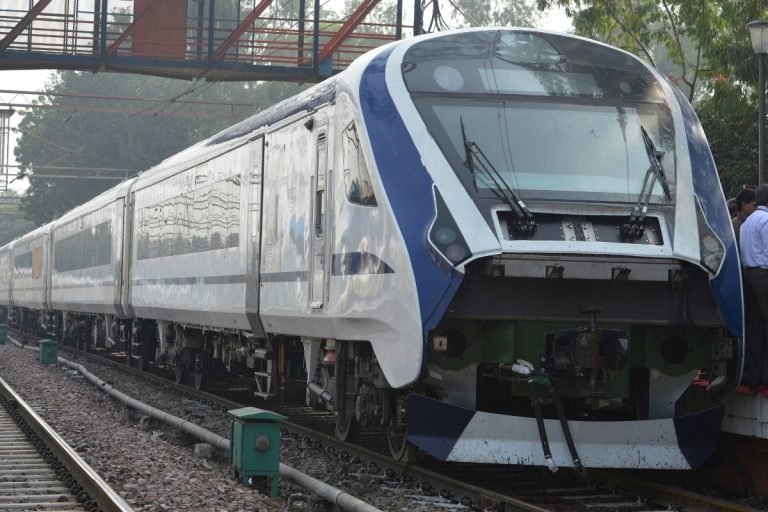
No more manufacturing of Vande Bharat rakes this year

NEW DELHI (Metro Rail News): On Monday Railway Board Chairman Vinod Yadav said that Indian Railways have decided not to manufacture any more Vande Bharat Express rakes in the current financial year.

He added, “The energy consumption of the train was much more than the world standards. We realized that when we do mass production, we cannot have such high energy consumption. So we decided to review the specifications that they become energy efficient. We will not be able to make any more Vande Bharat Express in 2019-20, but will produce 15 between 2020 and 2021, and 25 in 2021-2022″.

He further added that the issues with the train have been addressed and 40 more such trains will be produced till March 2022.

The production of this self-propelled engine-less train sets was stopped over allegations of favoritism and lack of transparency earlier this year. In July, Railway Minister Piyush Goyal met representatives of manufacturers and promised a transparent level-playing field to all of them.

Indian railways will put in place a regulator as and when private operators take over to run trains. The regulator will look into various issues such as fares, the routes such trains can run on, along with the crucial aspect of safety, Railway Board Chairman Vinod Yadav said on Monday.

Yadav said “We are studying all the issues related to pricing, with respect to private train operators. Private train operators will not come immediately but we will have to prepare for it from now. Whenever a private player comes in, a regulator will also come, adding that no decision on this regard will be taken without consulting all stakeholders.

This comes at the backdrop of the Indian railways allowing its tourism and catering subsidiary IRCTC to run Tejas trains, which is touted to be a train that will be run by an entity other than the national transporter. Handing over these two trains to IRCTC is expected to help the national transporter consider the option of roping in private players to run trains, which will cater to the larger idea of providing world-class service to passengers.

The train service has gained traction amongst rail travelers and is hailed as a game-changer akin to what a Rajdhani or Shatabdi did for the people’s mover. IRCTC will run Tejas trains on two routes—Delhi-Lucknow and, Ahmedabad-Mumbai Central, with the latter expected to begin operations around December.