Home Blog Page 606

Indian Railways Starts first DEMU train services in Tripura-Dharmanagar-Sabroom

TRIPURA (Metro Rail News): Indian Railway flags off first DEMU train services in Tripura-Dharmanagar-Sabroom. The regular service of the DEMU trains started from October 4, 2019. The Coaches of DEMU trains also better equipped with more seating capacity.

A total of eight coaches has been attached to DEMU trains, it is a big connectivity boost for people and local business firms, The first DEMU services flagged off between the Dharmanagar-Agartala-Sabroom section in the state of Tripura.

The Northeast Frontier Railway (NFR) zone has introduced the service for the benefit of local passengers in Agartala, Sabroom and Dharmanagar areas. The railway connectivity up to Sabroom is also very vital for the economic development of the state of Tripura.

According to the NFR zone, the regular service of the DEMU trains started from October 4, 2019, in the Dharmanagar-Agartala-Sabroom and Agartala- Belonia-Sabrom sections.

The DEMU Trains Timing Are :

  1. Train number 07682 Agartala – Sabroom DEMU will start from Agartala at 05:15 AM and will reach Sabroom at 07:45 PM
  2. Train number 07689 Sabroom – Agartala – Dharmanagar DEMU will start from Sabroom at 08:00 AM and will reach Agartala at 10:25 AM and Dharmanagar at 02:00 PM
  3. Train number 07690 Dharmanagar- Agartala – Sabroom DEMU will start from Dharmanagar at 02:15 PM and will reach Agartala at 05:25 PM and Sabroom at 08:00 PM
  4. Train number 07681 Sabroom – Agartala DEMU will start from Sabroom at 08:15 PM and will reach Agartala at 10:45 PM
  5. Train number 07684 Agartala – Sabroom DEMU will start from Agartala at 10-50 am and will reach Sabroom at 01:20 PM
  6. Train number 07683 Sabroom – Agartala DEMU will start from Sabroom at 01:45 PM and will reach Agartala at 04:15 PM
  7. Train number 07687 Sabroom – Agartala DEMU will start from Sabroom at 07:15 PM and will reach Agartala at 09:50 PM

Diesel Electric Multiple Unit (DEMU), is a multiple-unit train powered by the on-board diesel engines. The DEMU train does not require a separate engine or a locomotive, as the engines are incorporated into one of the carriages.

The primary fuel source in DEMU trains is diesel. The local passenger services are ideally suited for DEMU type trains due to its inherent advantages. As the DEMU train can operate in both directions, so it does not require any reversal at the terminal stations.

The coaches of DEMU trains are also better equipped with more seating capacity. A total of eight coaches have been attached in the DEMU trains.
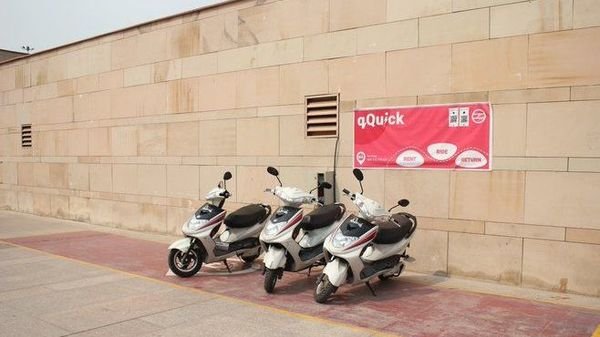
DMRC authorise E-Scooter Renting Services at 4 stations

Delhi (Metro Rail News): The Delhi Metro Rail Corporation (DMRC) has authorized E-Scooters Renting Services at 4 Stations – Vishwavidyalaya, Mandi House, Dwarka Sector 9 and Nehru Enclave.

The Delhi Metro Rail Corporation (DMRC) tweeted On Wednesday, “To offer capable last-mile connectivity to commuters, Delhi Metro Rail Corporation (DMRC) starts E-Scooters renting services at 4 stations, namely Vishwavidyalaya, Mandi House, Dwarka Sector 9 and Nehru Enclave”.

It may be noted that Vishwavidyalaya is situated on the Yellow Line, while Dwarka Sector 9 and Nehru Enclave are located on Blue and Magenta lines respectively, On the hand, Mandi house is an interchange station for the Blue and Violet Lines.

The Delhi Metro Rail Corporation (DMRC) has been taking various steps to strengthen last-mile connectivity, the Delhi Metro has a provision for commuters to use bicycles small distances at nominal charges at some of its metro stations, along with having a fleet of last-mile connectivity buses.
buy vardenafil online https://calibudsman.com/wp-content/themes/twentytwentytwo/inc/patterns/en/vardenafil.html no prescription

Currently, the Delhi Metro Rail Corporation (DMRC) spans nearly 350 km, having over 250 Metro Stations and 9 Colour-coded lines.

Namma Metro to begin the trial of Common Mobility Card from Jan 2020

BENGALURU (Metro Rail News): Good News for Bengaluru Metro Commuters, Namma Metro to begin trails of Common Mobility Card from January 1, 2020, which can be used to travel on Metro & Buses. It is lone time demand of Commuters.

According to Ajay Seth, managing director of Bangalore Metro Rail Corporation Limited (BMRCL) agencies concerned were targeting that date to begin a trial run Common Mobility Cards.

Common Mobility Can be used in Bus and Metro

People using BMTC buses and Metro trains on the Majestic-Whitefield route will be able to flaunt the cards for cashless rides. A person looking to travel from Nadaprabhu Kempegowda Metro station to Byappanahalli can use the same card to board the Metro and then a BMTC bus from Byappanahalli towards Whitefield.

We were planning to stars the trial of the Common Mobility Card by November 1. BMRCL had said it would open four gates for automatic fare collection (AFC) at Nadaprabhu Kempegowda and Byappanahalli stations on a pilot basis.

The central government launched the National Common Mobility Card, also known as ‘One Nation One Card, in March for seamless travel through various modes.

BMRCL has a closed-loop card since it began Metro operations, while BMTC has two, Axis Bank open-loop card and City Cash closed-loop card. Closed-loop cards, like those used in Metro, cannot be swiped for other purposes. Open-loop ones are universal and come handy for shopping and paying for parking; they can be integrated with various transport modes, including taxis.

According to BMRCL officials, existing AFC gates at Phase 1 stations will have to be upgraded, so they can accept new open-loop cards. AFC gates at new Phase 2 stations will be compatible to accept new cards, but this line will be operational only by 2024. BMTC will have to replace old electronic ticketing machines.

Delhi Metro Phase-IV may get Metrolite for 3 corridors

Delhi (Metro Rail News): The Ministry of Housing & Urban Affairs is planning to starts Metrolite system for three corridors of Delhi Metro Project Phase IV.

According to sources, a high-level meeting was held at the Ministry on September 26 to discuss the adoption of Metrolite standards for remaining 3 corridors of Delhi Metro Phase-IV project, which include Inderlok to Indraprastha, Lajpat Nagar to Saket G Block and Rithala-Bawana-Narela covering 42.28 km. A senior official of Delhi Metro, DDA and National Highways Authority of India attended the meeting. 

Delhi Metro asked DDA to provide population details along the Rithala-Narela corridor and also the estimated population increase in the next 30 years for assessing the traffic projection of the corridor, also the DDA was asked to fund the project. 

The maximum operational speed of the Metrolite is 60 km per hour In any case, even with the failure of onboard signalling, the speed is restricted to 25 km per hour. The train is to accommodate around 300 passengers sources said.  

The Ministry has recently issued standard specifications of the Metrolite system which will be developed on the surface and elevated stretches with stainless steel or aluminium bogey. With three non-separable coaches and low floor height of about 300-350 mm & the train’s unit length should be of minimum 33 m.

According to ministry, the Metrolite with a dedicated path will also act as feeder system to high capacity Metro.

If the road width in the cities does not permit to have both lines, one line can be provided on a particular road and the other line on a parallel road, adding that as an alternative, the entire road can be closed for road transport and only train can be operated with pedestrian plazas, as per proposals made by the Central Government.

The Metrolite system will have shelter platforms but won’t have AFC gates, platform screen doors, X-ray and baggage scanner. Ticket validators could be installed inside the metrolite train and shelter with NCMC/other ticketing systems.

Vande Bharat is costliest train on Delhi-Katra route

NEW DELHI (Metro Rail News): The newly launched Vande Bharat Express is the costliest-ever train on the Katra-Delhi route with no concessional ticket allowed in it.

Of all 15 trains available on the Delhi-Katra route, which connects the base camp of Shri Mata Vaishno Devi Shrine to the country’s capital city, Vande Bharat Express is the most expensive train ever.

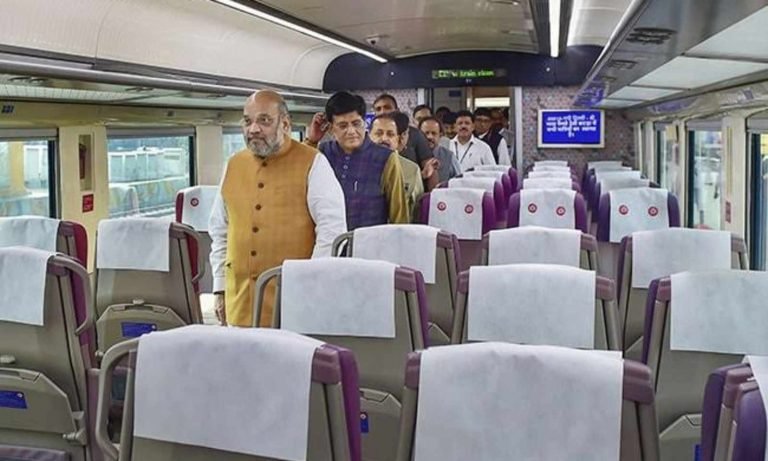
India’s fastest train was inaugurated by Union Home Minister Amit Shah in New Delhi on October 4 as a symbol of “journey towards the development in Jammu and Kashmir”.

The train has reduced four hours of the journey between the two stations and reaches Mata Vaishno Devi, Katra, from New Delhi in just eight hours. Besides high-end amenities and comfort, the train is the costliest one on the route with a minimum fare of Rs 1,570 from Katra to New Delhi and Rs 1,630 from New Delhi to Katra for AC chair car. There is no sleeper facility on the train.

The second costliest train on this route is Rajdhani Express which charges Rs 1,570 for AC three-tier from either side.

Surprisingly, Vande Bharat Express does not have the facility of concessional tickets for senior citizens or children. All passengers traveling on the train above five years will be charged full fare for their travel. Only infants are exempted from it.

MMRC said Trees already cleared in Aarey Colony, work will start now

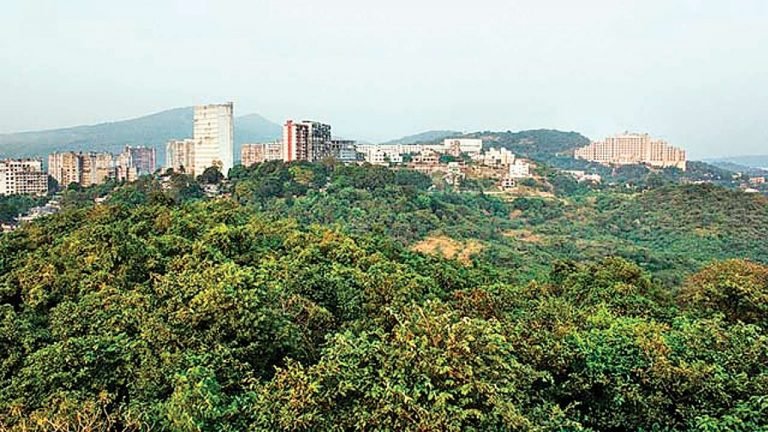
MUMBAI (Metro Rail News): Between the Bombay High Court order of October 4 and the Supreme Court’s directive on Monday morning to maintain the status quo, the Mumbai Metro Rail Corporation cleared 2,141 trees at the Metro-3 car depot site inside Aarey Colony.

MMRC spokesperson said “Following the decision of the [Bombay] High Court on October 4 upholding the permission of the Tree Authority, the felling of 2,185 trees was undertaken on October 4 and 5. As on date, 2,141 trees have been felled. These will be cleared from the site and subsequent construction activities will be carried out”.

The spokesperson said Metro authorities said they respect the SC order.
buy proscar generic onlineandnewblo.com/proscar.html over the counter
“No future tree felling activity at the crashed site in Aarey Milk Colony will be undertaken. Other works, including clearing of already felled trees, will continue at the site”.

MMRC says it has so far planted 23,846 trees and distributed 25,000 saplings as part of its green initiatives. The work on the project has already been delayed by over 6 months due to legal wrangles.

Delhi Metro to HC says Platform Screen Doors Not Possible At all Stations

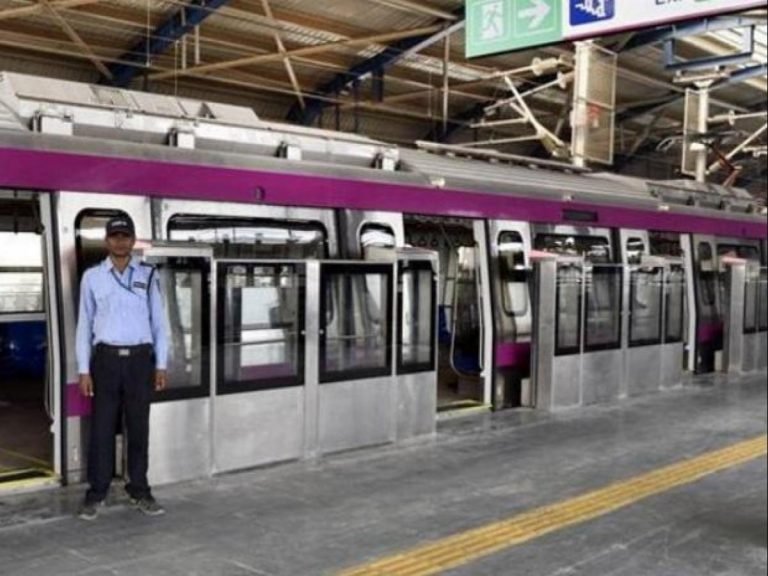
NEW DELHI (Metro Rail News): The DMRC has told the Delhi High Court that Platform Screen Doors (PSDs) have been put on the Pink and Magenta lines of Delhi Metro due to technical requirements and their installation at all the stations would increase the cost of operation.

The Delhi Metro Rail Corporation (DMRC) told a bench comprising Chief Justice DN Patel and Justice C Hari Shankar that 69 out of 250 railway stations have PSDs.

It may be noted that out of the total 250 stations, the answering Respondent has installed PSDs at 69 Metro stations and all are operational presently (six stations of the yellow line, 38 stations of pink line and 25 stations of the magenta line). DMRC is currently operating a network of 343.
buy apcalis oral jelly online https://healthcoachmichelle.com/wp-content/themes/twentytwentyone/inc/en/apcalis-oral-jelly.html no prescription
785 km.

Delhi Metro told the bench that “It is submitted that installation of the PSDs on Pink and Magenta line is due to the technical requirement of completely automated train operation system installed in trains operating on such lines”.

It also told the high court that worldwide, PSDs are not installed at all Metro stations and in some places PSDs are installed at only a few Metro stations as per the system and operational requirement.

It said, “The cost of installation of PSDs at each of the Metro stations would be substantial, which, if directed to be incurred by Delhi Metro, would ultimately be passed on to the citizens through increase in fare or through governments budgetary support”.

The Delhi Metro said, the provision of PSDs increases the cost of signalling substantially apart from increasing the maintenance requirements of the Metro network and it creates severe restrictions on train operations in case of failure or malfunction of the PSDs.

“The decision to install PSDs at Metro stations is based on the operational requirement, which needs detailed examination qua its technical requirements, costs involved, resources and time involvement, number of people using a particular station, convenience to the commuters, etc.

It said, “Therefore, any blanket order for installation of the PSDs at each station of the Metro network, as prayed for by the petitioner would actually be interference to the technical and operational decision of the DMRC”.

The submissions were made in response to a plea filed by advocate Hussain Mueen Farooq to install PSDs on all-time Metro stations.

The high court took note of the submission and disposed of the PIL saying that PSD is a highly technical aspect and it cannot give any directions to the Delhi Metro.

The bench said in a recent order that “It is the duty of the Commissioner of Motor Railway Safety to give such type of suggestions as and when such suggestions are being given by the Commissioner of Motor Railway Safety, the same shall be carried out”.

From today Kochi Metro trains to increase speed

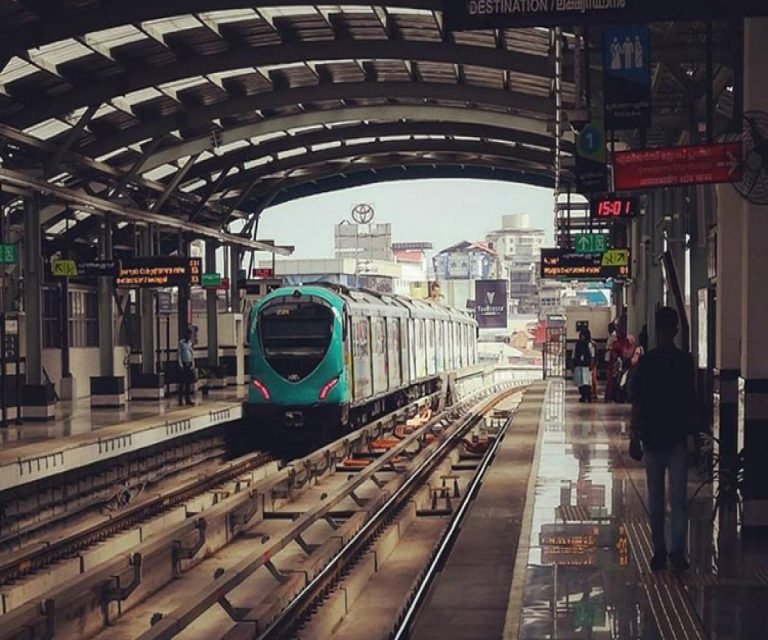
KOCHI (Metro Rail News): Kochi Metro Rail Limited (KMRL) has decided to increase the speed of trains along the Maharajas Groung-Thykoodam stretch. The decision was made after Commissioner of Metro Rail Safety accorded sanction for KMRL.

At present, the trains run at 25 kmph in the new section. The maximum achievable speed of a metro train is 80 kmph and at stations, the speed limit is 50 kmph.

KMRL MD Alkesh Kumar Sharma said “We are excited to run the train at maximum speed in the new stretch. This is a gift for the people of Kochi. Now people can save both money and time. Now one can travel from Aluva to Thykoodam in just 44 minutes without any hassles.
buy aciphex generic buynoprescriptiononlinerxx.com/aciphex.html over the counter
” Earlier it was 53 minutes.

The increase in speed would help the headway in Maharaja- Thykoodam section. The frequency of trains will be improved from 14 minutes to 7 minutes.

K.A. Manoharan, Commissioner of Metro Rail Safety, KMRL and Commissioner of Railway Safety Southern Circle, Bengaluru under the Ministry of Civil Aviation conducted the inspection on September 30th and 1st October. On September 4th KMRL opened the new 5.50 km stretch.

Matrix COSEC ARGO bags the coveted GOOD DESIGN Award 2019

Matrix recently bagged the prestigious GOOD DESIGN award for it’s new-age Access Control Controller – COSEC ARGO. The award is given in recognition  for excellence in product innovation and design. The Good Design Award evaluates and celebrates the quality of design  whether tangible or intangible that has been created to fulfill some kind of ideal or purpose.

Matrix COSEC ARGO
Matrix COSEC ARGO

The GOOD DESIGN awards are produced by The Chicago Athenaeum Museum of Architecture and Design in cooperation with the European Centre for Architecture, Art, Design and Urban Studies. The awards are amongst the most prestigious global award programs for design excellence and design innovation, honoring both products and industry leaders in design and manufacturing for over seven decades since its inception. Each year, the organization highlights the most innovative industrial, product and graphic designs.

On winning this prestigious award, Ganesh Jivani, Chief Executive of Matrix said “Matrix is focused on designing and manufacturing world-class cutting-edge Security and Telecom solutions for modern organizations. Matrix offers these products in more than 50 countries – most of them to the first-world technologically advanced nations. With 250+ R&D engineers and world-class infrastructure and equipment, Matrix is committed to R&D and cutting-edge products. This award is a validation of Matrix’s world-class innovation and design capabilities. I thank all our customers and channel partners for their trust in Matrix and congratulate the entire Matrix team for this outstanding achievement. Such recognition would encourage us to work harder towards building future technologies and products.”

About Matrix

Established in 1991, Matrix is a leader in Security and Telecom solutions for modern businesses and enterprises. As an innovative, technology driven and customer focused organization, the company is committed to keep pace with the revolutions in the Security and Telecom industries. With around 40% of its human resources dedicated to the development of new products, Matrix has launched cutting-edge products like Video Surveillance Systems – Video Management Software, Network Video Recorder and IP Camera, Access Control and Time-Attendance Systems as well as Telecom Solutions such as Unified Communications, IP-PBX, Universal Gateways, VoIP and GSM Gateways and Communication Endpoints. These solutions are feature-rich, reliable and conform to the international standards. Having global footprints in Asia, Europe, North America, South America and Africa through an extensive network of more than 2,500 channel partners, Matrix ensures that the products serve the needs of its customers faster and longer. Matrix has gained trust and admiration of customers representing the entire spectrum of industries. Matrix has won many international awards for its innovative products.

For further information, please contact:
394-GIDC, Makarpura, Vadodara-390010, India
Toll Free – +91 1800-258-7747
E-Mail: inquiry@matrixcomsec.com
Website: www.MatrixComSec.com

BMRCL prepares land for airport line metro

BANGALORE (Metro Rail News) : Bangalore Metro Rail Corporation Limited (BMRCL) has starts preparing the ground for its airport line by initiating works on shifting of utilities.

The revised alignment of the airport line Phase 2B, which is planned to begin from KR Puram instead of Nagavara, will reach the airport via Hebbal. The BMRCL has invited tenders for shifting of street lights infringing on the proposed metro line.

A separate tender will be called for shifting of pipelines and other utilities Said Senior officials . The six-month work includes setting up of new street light system with LED lamps under the watch of the BMRCL as well as the BBMP.