Home Blog Page 600

Supreme court says, Work on Delhi Metro Phase-IV to start soon

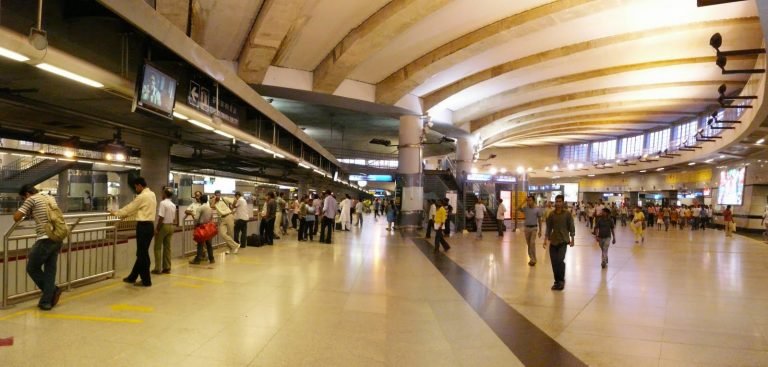
NEW DELHI (Metro Rail News): Work on the much stalled Delhi Metro Phase-IV is likely to commence soon as the central and Delhi governments have informed the Supreme Court that together they have released Rs 800 crore for three priority Mukundpur-Maujpur, R K Ashram-Janakpuri West and Aero CityTughlaqabad corridors.

The release of funds came nearly a month after the apex court on September 6 resolved the long-pending disagreement between the Centre and Delhi government over three major issues bearing operational losses, repayment of the loan from Japan International Cooperation Agency(JICA) in case of default or currency fluctuation costs and sharing of land cost.

On October 21, a bench of Justices Arun Mishra and Deepak Gupta recorded in its order that “Rs 200 crore has been released by the government of India. The government of Delhi has also released Rs 600 crore.

The statements are taken on record”. The Delhi Cabinet had in December 2018 given approval for a total cost of Rs 5,994.5 crore for the three priority corridors. The other three corridors under Phase-IV project are RithalaBawana-Narela, Inderlok-Indraprastha, and Lajpat Nagar-Saket G Block.

Taking up the issue of dispute over sharing of operational losses, the bench accepted senior advocate Aparajita Singh’s argument on behalf of Environment Pollution Control Authority (EPCA) that Delhi Metro Rail Corporation had not suffered any operational losses for the last five years and was not likely to suffer any losses in future.

The bench said, “We find nothing objectionable that in case the Metro suffers any loss, that is to be borne by the state government, as the Metro is the local conveyance within the state and considering the nature of the facilities, the loss, if any, should be borne by the state government. However, the state government has to ensure that its policies are such which do not cause any operational loss or otherwise due to the running of the metro trains.

Hence, we do not find any substance in the objection raised by the government of Delhi.” On repayment of JICA loan in case of default or currency fluctuation cost, the SC said as per the central policies for six states, the state government has to provide support to ensure financial sustainability. “So far the DMRC has not made any default in repayment of the loan.

We do not find anything objectionable in case the government of Delhi alone should bear the responsibility to provide support, if any, which may become necessary to repay the soft loan provided for the project.” “Delhi government is bound to ensure that financial health of DMRC is maintained properly and no steps are taken so that it may run into losses,” the bench had said.

After rejecting two of the Delhi government’s objections on Metro Phase-IV, the bench agreed with it that there should be 50:50 sharing of land acquisition cost with the Centre. The SC said, “We direct that out of the land cost of Rs 2447.10 crore, 50% shall be borne by the Delhi government and 50% by the Union of India.
buy temovate online https://www.mydentalplace.com/wp-content/themes/twentytwelve/inc/en/temovate.html no prescription

Delhi Metro Smart Card Could Soon Become Non-Transferable With Biometric Linking

NEW DELHI (Metro Rail News): The Delhi Metro Rail Corporation (DMRC) has announced that the passenger smart cards could soon be linked to the biometrics system, making them non-transferable. While the method of linking cards to passengers has not yet been determined, biometric linking has been suggested as an option.

In a recent report, the DMRC stated that this system would help the Delhi Metro provide concessions and special discounts to students and senior citizens.

However, Hardeep Sigh Puri, the housing and urban affairs minister, reportedly said that this concession is still under discussion, as it would be decided by the Delhi Metro Fare Fixation Committee (FFC) in the coming days.

Whether the DMRC chooses biometrics or any other method to link the smart cards to passengers, the system will make the Delhi Metro smart card non-transferable, unlike the current radio-frequency identification (RFID)-based system.

While the current smart card lets passengers top-up the amount through Paytm, it still involves a further step to validate the purchase at the metro ticketing counter. If metro smart cards do become unique, it would also allow faster recharges and top-ups for passengers through third-party services.

The Delhi Metro has been focussing on improving its passenger ticketing services in the past few months and besides the plan to introduce these unique smart cards, the metro service has tied up with Uber for ticketing and passes. Uber is launching its public transport service in India, starting with the Delhi Metro, though there is no timeline announced for the same.

The Delhi Metro spans nearly 350 km, having over 250 metro stations and nine color-coded lines. But last-mile connectivity is a problem.

Earlier in October, DMRC had given permission to electric scooter renting services at four Delhi Metro stations. The service would be operated outside metro stations by electric vehicle startup quick, which will allow dock-less scooter rentals on per-minute pricing through its app. The scooters are said to be keyless and smokeless.

The Delhi Metro has also partnered with bike and electric scooter rental service Yulu in September. Yulu has started its services from Dilli Haat to JLN Stadium in Delhi. The app is said to ease the first and last-mile connectivity for commuters. Yulu plans to deploy 5K electric non-motorised vehicles at metro stations by the end of this year.

India’s 1st water metro gets environment clearance by Modi government

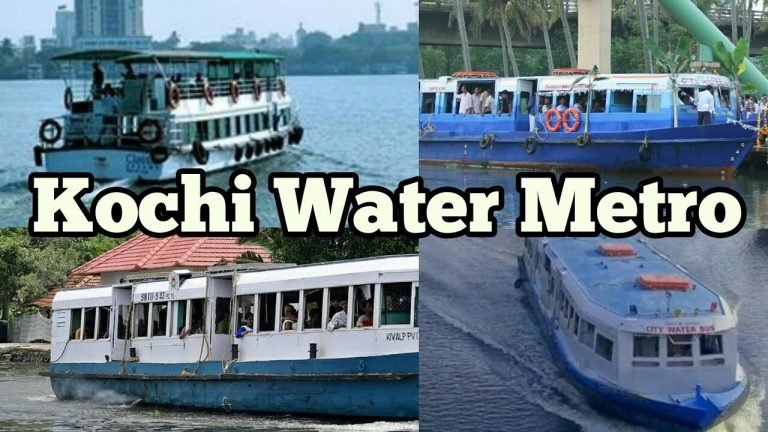
KERELA (Metro Rail News): Kerala will soon have India’s first water metro.  The environment clearance for the ambitious project has been provided by the Modi government, paving way for the infrastructure project to come up in Kochi.

The project, worth Rs 819 crore, would provide better connectivity to islands around Kochi with the mainland area. The approval was given by the Union Environment Ministry after looking at the views of its green panel. A joint venture firm of the Centre and Kerala government, Kochi Metro Rail Ltd (KMRL) has been selected as the implementing agency of the proposed project. KMRL is also the nodal agency for Kochi metro, as per the report.

Kochi water metro project will have 16 identified routes in Kochi. These routes in Kochi will provide connectivity to 38 terminals across 10 islands. Kochi water metro project will have 78.2 km channel length and two boatyards, according to the report.

Kochi is the first city in India to have water transport that will serve as a feeder service to the metro. Kochi water metro project also eyes to have 78 fuel-efficient, fast, and air-conditioned ferries carrying passengers to 38 jetties. 18 out of 38 jetties will be developed as main boat hubs. The remaining will be minor jetties that are meant for transit services.

As a social initiative, KMRL has will take up the development of 7 additional terminals such as Vaduthala, Info Park, Mulavukad View Point, Njarackal, and Embarkation jetty, the report said.

The cost of the project is estimated at Rs 819 crore. Around 9.51 hectare of land needs to be acquired for the Kochi water metro project. German Bank, KfW will provide financial assistance to the project, KMRL said on its website.

The proposed water metro project aims at providing easy access to scenic islands around the mainland Kochi. Apart from this, the proposed project is considered to enhance overall employment opportunities, KMRL was quoted as saying.

Delhi metro’s Green and pink line to be connected soon

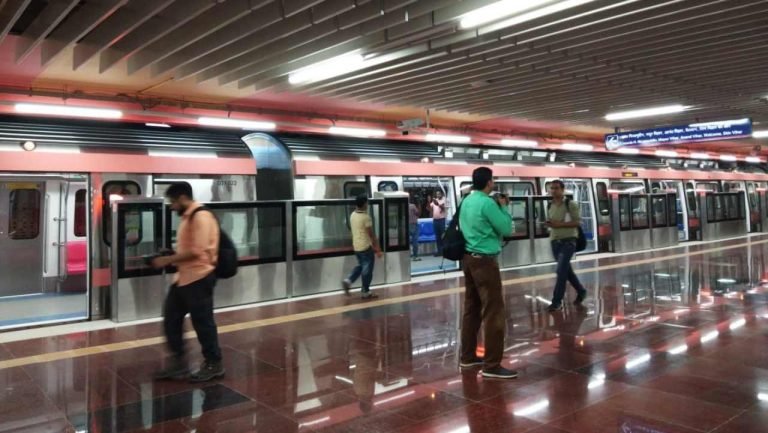
NEW DELHI (Metro Rail News): A unique interchange and connecting facility will come up between Delhi Metro Green Line and Delhi Metro Pink Line corridors. Delhi Metro Rail Corporation (DMRC) will construct an additional interchange facility on the Delhi Metro Green Line between the Punjabi Bagh and Shivaji Park stations on the route.

Once this interchange will be constructed the passengers will be able to get down from the platform, take a walkway and access a concourse to reach the Punjabi Bagh West station of Delhi Metro Pink Line. This will be the very first interchange facility of this sort over the Delhi Metro network where passengers changing the metro trains will get off on a viaduct, and not at a station.

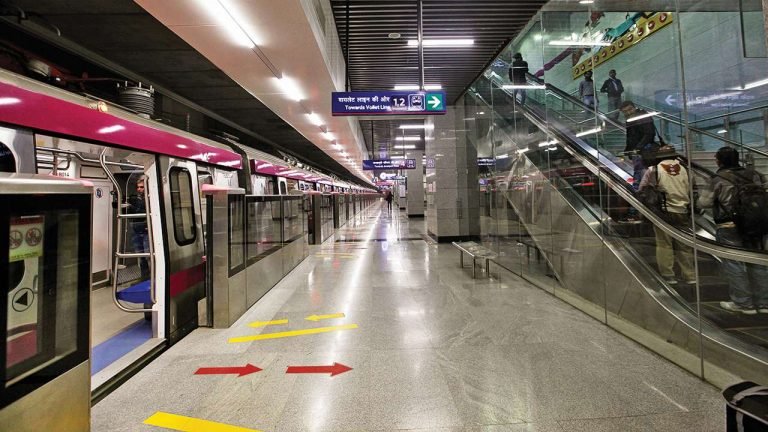
Except for the Delhi Metro Green Line, the Delhi Metro Pink Line Majlis Park-Shiv Vihar corridor connects with all other corridors on the network. But after this unique interchange facility, the Delhi Metro Green Line and Delhi Metro Pink Line will also get connected.

The 58.5 km long Delhi Metro Pink Line is a U-shaped corridor and It circles around the existing metro corridors, with interchange facilities at as many as 11 locations.

As the Delhi Metro Green Line till now, it is the only one that doesn’t have connectivity with the Delhi Metro Pink Line, hence commuters have been deprived of direct connectivity to South Delhi of areas such as Paschim Vihar, Nangloi, Punjabi Bagh and Madipur.

With the help of prefabricated steel platforms which will be constructed above the Punjabi Bagh roundabout, the viaduct at Delhi Metro Green Line Inderlok-Brigadier Hoshiyar Singh corridor will be modified.

Bur according to DMRC, this particular scheme has its own challenges in construction. The difference in terms of the height between the Delhi Metro Pink Line and Delhi Metro Green Line is 16.
buy cialis professional online https://blackmenheal.org/wp-content/themes/twentytwentytwo/inc/patterns/en/cialis-professional.html no prescription
7 meters, which will be covered with extra-large elevators, stairs as well as ramps.

It is difficult to create more space for steel platform pillars due to a flyover and an underpass nearby. However, the preliminary work for this connectivity has started and DMRC expects it to complete it by the end of next year. Additionally, the entire construction work will be carried out without disturbing the usual operations of the Delhi Metro Green Line.

This facility involves the construction of a pedestrian passage, which has been planned on two levels. Delhi Metro passengers who will be getting down at the steel platforms will then be able to take a commodious lift which will have a carrying capacity of 26 people.

This lift will then enable commuters to reach a mid-level common area before they can proceed to the concourse of the Delhi Metro Pink Line’s Punjabi Bagh West station. DMRC will not charge any tickets for this interchange. This will be constructed only as an embarking and disembarking facility for commuters.

Indian Railways to reduce Delhi-Howrah travel time to 12 hours

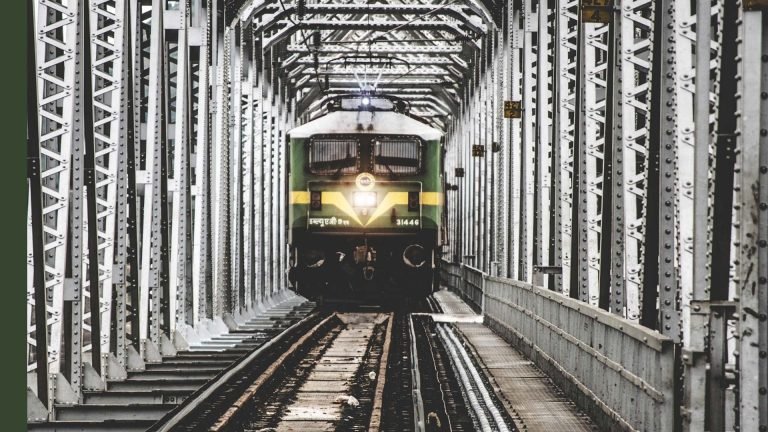
NEW DELHI (Metro Rail News): Indian Railways today took another step towards reducing the travel time between the two metropolitan cities, New Delhi and Kolkata. The New Delhi-Howrah route which is also known as the Grand Chord route is one of the busiest sections of the Indian Railways.

Grand Chord is part of the Howrah-Gaya-Delhi line and the Howrah-Allahabad-Mumbai line. A lot of important trains pass through this route which connects the national capital with the eastern region of the country.

As a part of the upgradation, process railways installed the most advanced Electronic Interlocking System at Tundla Junction in Uttar Pradesh.

The measure is expected to help Indian Railways speed up trains and to achieve the objective of reducing the travel time between Delhi and Howrah to about 12 hours from the existing 17-19 hours.

It acts as a link between Sitarampur, (West Bengal) and Pt. Deen Dayal Upadhyay Junction, Uttar Pradesh, and covers a stretch of 450 km falling in North Central Railway (NCR) Zone of Indian Railways, which maintains and operates 53% portion of this New Delhi-Howrah route.

Indian Railways replaced the 65-year old outdated Mechanical Signaling System with an advanced and safer Electronic Interlocking System at Tundla station in Uttar Pradesh.

Tundla Jn. is an important station on this super-saturated route operating 160% of its designed capacity. Tundla also connects the mainline with Agra Cantt. Jn. This important Electronic Interlocking work at Tundla Jn. was having 613 route combinations which are only second to Kharagpur in South Eastern Railway with 800 routes.

Despite being extremely important from a train operation point of view, Tundla Jn. was still continuing with the mechanically interlocked signaling system of 1955 vintage. This system required manual operation of levers for receipt and dispatch of trains from 05 different cabins.

Manual operation and coordination among cabins took approximately 05-07 minutes to handle each train at important Jn. station thus limiting its handling capacity to a maximum 190-200 train on a daily basis.

Further Mechanical signaling also required an upgrade to match with global safety standards in train operation. The layout of Tundla Jn. also needed important changes to accommodate longer trains and more route combinations for efficient train operations.

With the commissioning of this system and some post-commissioning works expected to be over by 17 November 2019 following major benefits shall be achieved in trains operation:

1. Train handling time to be reduced from existing 05-07 minutes to 30-60 seconds through centralized power cabin enhancing handling capacity of Jn. to 250 per day from existing 200 maximum, thus less detention of trains outside Tundla and improved Punctuality of Trains.

2. Train operation towards Agra will be immensely benefitted with two additional platforms and an extension of three existing platforms no. 3,4&5 to cater full-length trains on mainline.

3. All UP-direction yard lines are now fit for passenger train movement thus efficient handling of more coaching train.

4. Length of Yard lines increased to handle longer freight and passenger trains.

5. Double exit facility provided to Medical Relief Train (ARME) for immediate movement in both sides during accidents etc.

6. Centralized fail-safe operation through power cabin by just click of the mouse button replacing cumbersome, inefficient and manual operation spread across 05 cabins. Substantial saving on manpower requirements.

This work will go a long way in improving punctuality of trains on New Delhi- Howrah mainline and benefits shall be manifold during the incoming foggy season through safe and detention free handling of trains at Tundla Jn.

In 2020 MMRDA plans to start trial runs for Metro 2A and 7

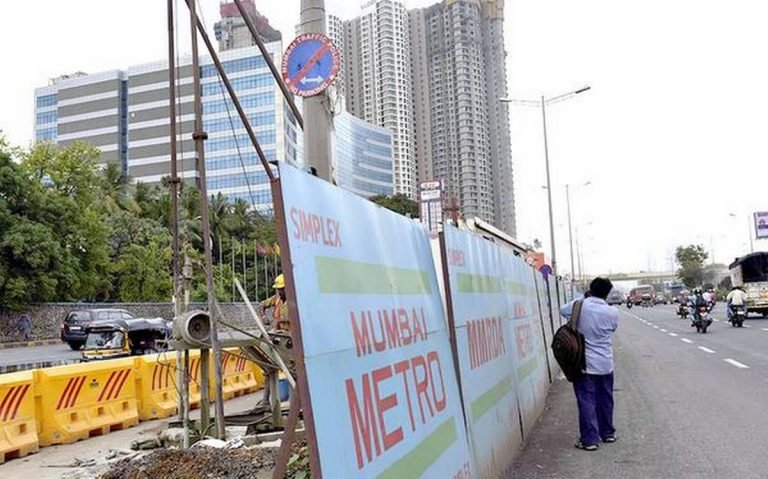
MUMBAI (Metro Rail News): State Government officials said, the Mumbai Metro Regional Development Authority is planning on starting trial runs for the Mumbai Metro Line 2A and Mumbai Metro Line 7 during July-August 2020.

The MMRDA is working simultaneously on multiple metro projects from which, metro line 2A which stretches from Dahisar to DN Nagar metro and metro line 7 stretches from Andheri East to Dahisar East. The distance covered by both the metros would be 35.1 Kms and will have an approximate daily ridership of 15.7 lakh.

The MMRDA has multiple infrastructure projects under its purview such as part of the Mumbai Metro, the monorail, Eastern and western express highways. An official said, “the reason why construction for different metro lines was happening simultaneously in the city was to ensure seamless travel.

If we were to do it one after the other, then people would get off at one point and take their private cars or transport for the next point. It would also take years for us to have an efficient metro transportation system.

The MMRDA is working simultaneously on different projects such as phase two of the monorail. Officials said that they had floated a tender and have received quotations from some Chinese players. “It will take some time since the rakes of the monorail are a patented technology but, the timeline for the work to pick up speed is one and a half years,” the same official said.

The Mumbai metro line three is under the purview of MMRCL in which MMRDA has a 10 percent stake. The other metro lines come under the purview of MMRDA.
buy caverta online https://pridedentaloffice.com/wp-content/themes/twentytwentyone/inc/en/caverta.html no prescription

East-West Metro’s revised cost gets Railway Board’s nod

KOLKATA (Metro Rail News): Railway Board has cleared East-West Metro’s revised cost of Rs 8575 crore. The initial project cost calculated 11 years ago was Rs 4,874 crore. The much-awaited nod will allow Japan International Cooperation Agency (Jica) to finally start disbursing the rest of the loan amount.

Jica is the principal funding agency for the project and is lending 55% of the total cost. The rest will be borne by the Centre. It had held back the third tranche of loan because the revised cost was not approved by the Railways Board.

Officials said there are two small steps after this following which the Jica funds will start flowing. Railway Minister Piyush Goyal will put his signature on the Railway Board approval and send it for the Union Cabinet’s clearance. “But the Railway Board’s approval is certainly the most important milestone for the revised cost,” said an official.

The nod came from an extended Railway Board that included members from the Union finance ministry, Niti Aayog and the ministry of statistics and program implementation. Jica’s contribution to the East-West Metro project will now be revised to Rs 4,158 crore. Earlier its share was Rs 2,253 crore of the Rs 4,874 crore estimated in 2008.

The cost was revised to Rs 8,575 crore in December 2015, but it has taken four years for Railway Board to approve the re-evaluated amount. The cost was revised because of escalations caused by several hurdles the project has gone through, including a route realignment, which is the biggest reason for the doubling of the project cost.
canadian online pharmacy buynoprescriptionrxxonline.net/canadian-online-pharmacy.html over the counter

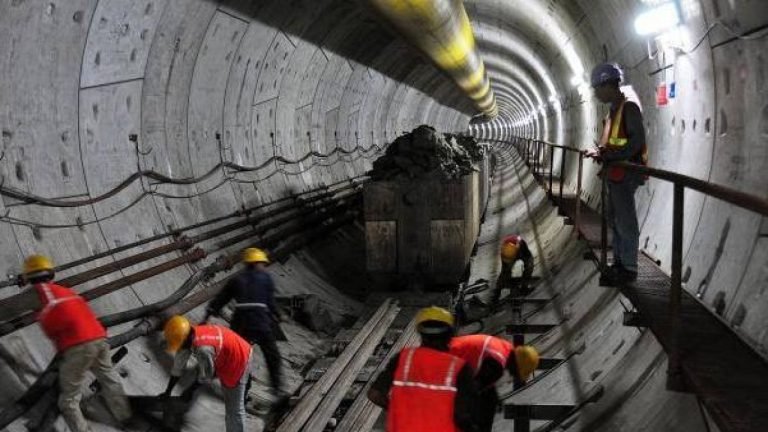
Kolkata Metro Rail Corporation (KMRC), the implementing agency, also cited an increase in wages and prices of steel and iron as the other factors. Interestingly, the cost revision has been approved two months after the project was hit by the biggest setback so far — the Bowbazar tunneling disaster that led to the collapse of several buildings and subsequent delay in meeting the deadline.

The latest setback will lead to more cost escalation, officials said. On the other hand, East-West Metro’s first phase covering 5km elevated stretch between Sector V and Salt Lake Stadium is about to be unveiled.

In 2008, KMRC had pegged that Rs 4,785 crore would be required to build the Metro rail system between Howrah Maidan and Salt Lake Sector V, including an underwater section, as part of “Kolkata East-West Metro Project (III)”. In December 2015, KMRC had sent a revised estimate of Rs 8,996 crore to the Union Cabinet.

The Cabinet set up a committee to review the cost. It recommended deductions and returned the file in 2017. KMRC officials went back to the drawing broad and reached a figure of Rs 8,575crore with a June 2021 deadline. Since then, the file has been passed from the finance ministry to the Cabinet and then to Niti Aayog and several other government departments.

Chennai Metro Rail decorates trains, joins passengers in celebrating Diwali

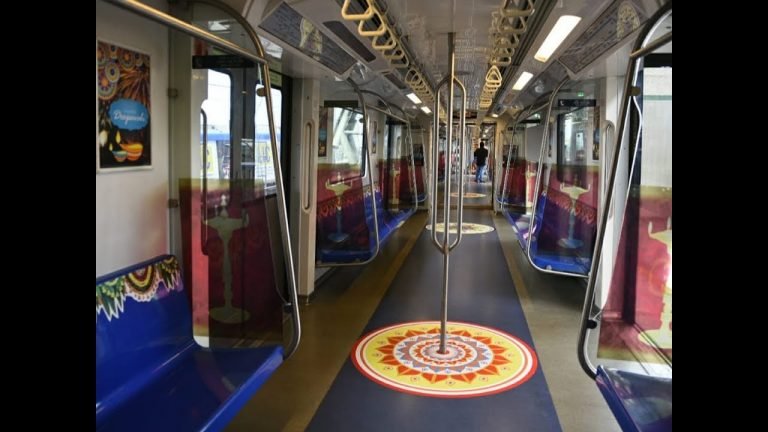
CHENNAI (Metro Rail News): The interior walls of metro trains were adorned with colorful stickers on Friday, as Chennai Metro Rail Limited (CMRL) joins its passengers to celebrate Diwali.

 In a release, CMRL said a total of 15 trains with the Rangoli and lights themed stickers are stuck on the walls and the floors of the trains running on both the corridors.

An official said, CMRL decorates the interiors of the trains every year during Diwali ever since the first service began operations in June 2015. “We usually leave the decorations even after the festival season”.

On Diwali Delhi Metro train services to end early

NEW DELHI (Metro Rail News): For the convenience of commuters, the Delhi Metro Rail Corporation (DMRC) issued a statement on the timings of metro rail services on Diwali day. The metro train services will end earlier than usual on October 27 (Sunday, Laxmipujan) but will run at its usual timings for the rest of the day.

The metro services will be available at its usual timings on Sunday starting at 6 am. The last metro trains will be available till 10 pm for all terminal stations of all lines on October 27.

DMRC said in a statement on Twitter that, “On account of Diwali, the last Metro train service on 27th October will start at 10 pm from terminal stations of all Metro Lines. Train services will run as usual for rest of the day on Sunday from 6 am onwards on all lines and from 4:45 am on Airport Express Line”.

DMRC said in a statement on Friday that the last metro train will depart from terminal stations  of Airport Express Line (New Delhi to Dwarka Sector 21), Red Line (Shaheed Sthal New Bus Adda to Rithala), Yellow Line (Samaypur Badli to HUDA City Centre), Green Line (Inderlok/Kirti Nagar to Brigadier Hoshiar Singh), Violet Line (Kashmere Gate to Raja Nahar Singh Ballabhgarh), Pink Line (Majlis Park to Mayur Vihar Pocket 1 and Trilokpuri Sanjay Lake to Shiv Vihar) and Magenta Line (Janakpuri West to Botanical Garden) at 10 pm on October 27 instead of the usual 11 pm.

Delhi Metro spans nearly 350 km, having over 250 metro stations and nine color-coded lines.

Rapid Metro rides could become cheaper, panel to review fares

GURUGRAM (Metro Rail News): With the Delhi Metro Rail Corporation (DMRC) taking over the operations of the 11.6km long Rapid Metro line, commuters can expect a correction in the ticket prices soon as a fare fixation committee has been constituted for the corridor.

According to sources, Rapid Metro fares might go down by around 50%. Currently, the minimum fare for Delhi metro is Rs 10, the minimum fare for Rapid Metro is Rs 20. The main role of the committee would be to review the existing fares and make changes. Haryana Mass Rapid Transport Corporation Limited (HMRTC) chief D Suresh said, “The fare fixation committee has been already constituted and the committee will decide if there are changes to be made.”

When asked if the high fare was the reason for the downfall of India’s first privately-funded metro line, he said, “I do not think that fares were the major reason behind the low ridership. We have multiple metro projects planned in Gurugram and once we connect the Rapid Metro to those lines, the ridership is likely to increase on its own,” said Suresh, while talking to the media at the formal takeover event of the metro line on Wednesday afternoon.

He was accompanied by DMRC managing director Mangu Singh who said that on Tuesday, DMRC took over the services without further delay so that commuters are not inconvenienced. “The problems facing the metro corridor will be resolved in the coming months,” he added.

DMRC will take a call on increasing the frequency of trains depending on the ridership and demand on the route. While as of now, DMRC will absorb all those employed with Rapid Metro, it will be decided after three months if all of them will be retained or not. Meanwhile, HMRTC and Rapid Metro are yet to decide the amount for the takeover and who gets the property rights. The total amount to be paid by HMRTC will be decided on the basis of a report being prepared by the CAG.

However even after the report is prepared, the two parties can raise objections. “The final terms of the takeover will only be decided through arbitration as also advised by the court,” said Suresh. Sources said HMRTC is also likely to change the name of the service once the new government is formed in the state.

According to reports, resolving a long-standing tussle on who will run the ailing Rapid Metro, DMRC announced that it will take charge from Tuesday evening. This July, Rapid Metro said that it will stop operating the trains by September 9 if the Haryana government fails to infuse funds it requires. Following the notice, the state government signed an agreement with DMRC which took over the operations and maintenance. With the takeover, around Rs, 1,800 crores of the debt of IL&FS will be reduced.