Home Blog Page 60

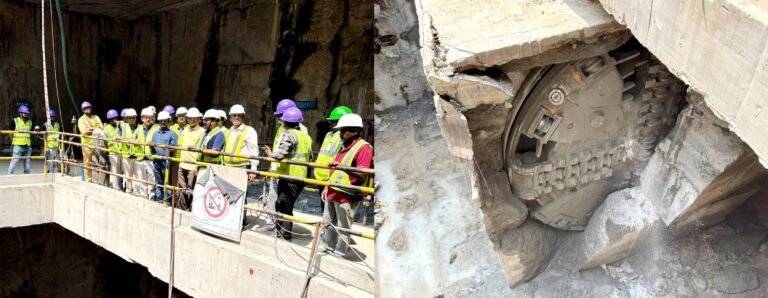
Delhi Metro Phase 4: TBM Disha Achieves Breakthrough on Golden Line

0
TBM Breakthrough for Delhi Metro Phase 4

DELHI (Metro Rail News): The Delhi Metro Rail Project progressed as Afcons Infrastructure’s TBM Disha (1264B) achieved a breakthrough at Tughlakabad Railway Colony station of Delhi Metro Phase 4’s Golden Line, which spans 23.622 km from Aerocity to Tughlakabad through 15 stations. This development was recorded under Package DC-07. 

TBM 1264B, nicknamed as TBM Disha, is an Earth Pressure Balance Tunnel Boring Machine, which constructed a 0.96 km tunnel between Tughlakabad and Tughlakabad Railway Colony station of the Golden Line. 

Gv6ARADWcAA3ds4

Afcons Infrastructure bagged Package DC-07 of Golden Line from Delhi Metro Rail Corporation ( DMRC) in January 2022 at Rs. 1669.20 crore with a 42-month deadline. 

The scope of work under this package includes the design and construction of twin tunnels from Sangam Vihar Station’s east end to Sarita Vihar Depot, covering 3 stations. The stations have been mentioned below:

  • Maa Anandmayee Marg 
  • Tughlakabad Railway Colony
  • Tughlakabad

Brief Scope: Design and Construction of Underground UP & Down Tunnels by Shield TBM from end of Cut & Cover tunnel near Sangam Vihar metro Station up to existing Sarita Vihar depot, Underground Ramp and Cut & Cover Tunnels near Sangam Vihar and Tughlakabad metro station and Underground Metro Stations at Maa Anandmayee Marg, Tughlakabad Railway Colony and Tughlakabad, including Retrieval/Launching shafts on Aerocity Tughlakabad corridor of Delhi MRTS Project of Ph-IV. 

In June 2025, DMRC also achieved a successful breakthrough at the Tughlakabad Railway colony Station of the Golden Line under Package DC-07. For this assignment, TBM was deployed from Maa Anandmayee Marg and constructed a 0.792-km-long tunnel towards Tughlakabad Railway colony station. To know more about this news: Click Here 

To speed up work in Delhi Metro Phase 4, DMRC has issued a Letter of Acceptance (LoA) to Rail Vikas Nigam Limited (RVNL) for the viaduct & platform construction contract of Delhi Metro Phase 4’s Golden Line Extension (Lajpat Nagar- Saket G Block) under Contract D2C-02. To know more about this news: Click Here 

To get real-time updates on metro and railway tenders, join our WhatsApp Community  https://chat.whatsapp.com/FhRoGfM8zUl4secYj1ZQDT

Advertisement1
InnoMetro_2026

Railway Ministry Clears Survey for Doubling of 77.96 km Jammu–Katra Rail Line

0

The Ministry of Railways has given approval for carrying out the final location survey for the doubling of the Jammu-Katra Rail Line. This railway line spans 77.96 km between Jammu and Shri Mata Vaishno Devi Katra. Northern Railway has been entrusted with the execution of the project.

Himanshu Shekhar Upadhyay, Chief Public Relations Officer, Northern Railway, stated, “This survey will cover a length of 77.96 km and its estimated cost will be Rs 12,59,17,363. It is going to lay the foundation for the construction of this future railway line.”

In addition to this, Shri Upadhyay mentioned that the doubling of the line will make the journey smoother and more convenient for devotees travelling to the Shri Mata Vaishno Devi shrine. Apart from boosting tourism, the new rail line will strengthen the economic ecosystem of the region.

As part of the USBRL project, the Jammu-Katra section currently features a single railway line via Udhampur, which acts as a constraint on operational flexibility. This limitation affects the capacity to introduce additional train services and accommodate increasing rail traffic, especially during peak pilgrimage seasons. 

The commissioning of the entire Udhampur–Srinagar–Baramulla Rail Link (USBRL) project has successfully integrated the Kashmir Valley into the national railway network, which has increased the number of passengers visiting the region. The Katra–Srinagar Vande Bharat Express has seen a positive response from both locals and tourists. In this context, the Railway Ministry’s decision to approve the final location survey is appropriate and reflects the growing transportation needs of the region.

Advertisement1
InnoMetro_2026

RVNL Receives LoA Worth Rs. 447 Cr for Civil Contract of Delhi Metro Phase 4

0
Delhi Metro
Representational image only

DELHI (Metro Rail News): Rail Vikas Nigam Limited (RVNL) has received a Letter of Acceptance (LoA) from Delhi Metro Rail Corporation (DMRC) for the viaduct & platform construction contract of Delhi Metro Phase 4’s Golden Line Extension (Lajpat Nagar- Saket G Block) under Contract D2C-02.

Gv5 rUqXwAAn1fV

The Golden Line’s Extension spans 8.385 km from Lajpat Nagar to Saket G Block. Originally, the Golden Line of Delhi Metro Phase 4 spans 23.622 km from Aerocity to Tughlakabad, covering 15 stations. 

DMRC floated a tender for this contract with a 1095-day deadline. On 25 April, technical bids were opened, revealing that 5 firms had submitted bids for the contract. On 2 July, the technical evaluation of the submitted bids took place. However, during the technical evaluation round, 2 firms’ bids out of 5 were rejected. On the same day, financial bids were opened, revealing that RVNL is the lowest bidder for the contract. 

Contract Value: Rs. 447.42 crore

Contract Duration: 1095 days ( 36 Months)

The scope of work under this contract includes the construction of a 7.298 km viaduct and the construction of 7 stations (Only Platform) from Pushp Vihar to the Lajpat Nagar section of Golden Line’s Extension. 

Brief Scope of Work: Part Design and Construction of Viaduct of Length 7.298 kms. from Chainage 1202.782 m to Chainage 8501.25 m including seven (07) stations (Only platforms) namely Pushp Vihar, Saket District Court, Pushpa Bhawan, Chirag Delhi, GK-1, Andrews Ganj and Lajpat Nagar including Pre-Engineered Building Structure in all stations of Lajpat Nagar to Saket G Block Corridor of Delhi MRTS Phase-IV Project. 

Recently, RVNL also secured a contract worth  ₹143.3 crore from South Central Railways. The contract includes upgrading the electric traction system of the Salem division of Southern Railway.

To get real-time updates on metro and railway tenders, join our WhatsApp Community  https://chat.whatsapp.com/FhRoGfM8zUl4secYj1ZQDT

Advertisement1
InnoMetro_2026

Jaipur Metro: Enabling the Pink City’s Transition to a Smart City

0
Jaipur Metro

Introduction 

Established in 1727 by Maharaja Sawai Jai Singh II, Jaipur is recognised as one of India’s earliest planned cities. Jaipur, the capital of Rajasthan, commonly referred to as the Pink City, is distinguished by its vibrant pink-hued architecture, rich historical significance, and notable urban infrastructure. The economy of Jaipur predominantly relies on tourism, handicrafts, and the trading of gemstones. In 1876, the city was painted pink to honour the visit of the Prince of Wales, thereby earning its iconic designation as the Pink City.

Over the period of time, Jaipur has experienced substantial population growth, ranking as the tenth most populous city in the nation. According to the 2011 census, the city had a population of 3.1 million, with projections estimating an increase to 8.1 million by 2031. This rise in residents necessitates an efficient public transportation system to adequately meet the growing commuter demand. Additionally, the expanding population raised the issue of traffic congestion in the city. The city saw an urgent requirement for a more effective transit solution. In response to this, the Jaipur Metro Rail Project was initiated as a sustainable and efficient urban transport alternative.

Jaipur 03 2016 34 Jaipur Metro 3 1

Jaipur Metro: Transforming Urban Mobility

Overview 

  • The Jaipur Metro Rail Project is an Urban Mass Rapid Transit System (MRTS) planned for the city. 
  • The Jaipur Metro Project comprises two planned corridors: the East-West Corridor and the North-South Corridor. 
  • Currently the Phase 1 of the Jaipur Metro, which consists of a single corridor, the Pink Line, spanning 11.98 km, is operational.
  • In January 2010, Jaipur Metro Rail Corporation (JMRC), A Special Purpose Vehicle (SPV), was established for the effective implementation of the Jaipur Metro. 
Pinkline4 1

Key Specification 

Speed and Track Top Speed: 80 kmph
Average Speed: 32 kmph
Track Gauge: Standard Gauge – 1435 mm
Electrification 25 kV, 50 Hz AC OHE
SignalingCab Signalling/Distance to Go
Rolling Stock 40 coaches (10 train-sets x 4) supplied by BEML
slider01 april 2016 2 1

Jaipur Metro Phase 1 

Overview 

Phase 1 of the Jaipur Metro project consists of a single corridor, the Pink Line, spanning 11.98 km (operational). The operational Route of the Jaipur Metro Phase 1 has been divided into Phase 1A and Phase 1B. 

DescriptionPhase-1A (Mansarovar to Chandpole)Phase-1B (Chandpole to Badi Chaupar)Total Phase-1 (Mansarovar to Badi Chaupar)
Elevated Route Length (in km)9.1309.13
Underground Route Length (in km)0.52.352.85
Total Route Length (in km)9.632.3511.98
Elevated Stations808
Underground Stations123
Total Stations9211
Total Project Cost (₹ in Crore)2,0231,1263,149
JMRC Slider 01 2 1

Preparation and Evolution of DPR For Phase 1 

March 2010: Initially, the Delhi Metro Rail Corporation (DMRC) submitted the Detailed Project Report (DPR) for the Jaipur Metro Rail Project. The DPR submitted by DMRC consisted of two corridors:

Corridor-1Durgapura to Ambabari
Corridor-2Mansarovar to Badi Chaupar

April 2011: The DPR submitted by DMRC was revised. In the revised DPR, Corridor 1 was extended to Sitapura Industrial Area instead of ending at Durgapura.

March 2012: A decision was made to bifurcate the DPR into two phases:

Phase IMansarovar to Badi Chaupar
Phase IISitapura Industrial Area to Ambabari

Jaipur Metro Phase 1 has been planned and implemented in four sections:

PhaseRouteLengthStatusOperational Since
Phase 1AMansarovar to Chandpole9.63 kmOperationalJune 3, 2015
Phase 1BChandpole to Badi Chaupar2.35 kmOperationalSeptember 23, 2020
Phase 1CBadi Chaupar to Transport Nagar3.41 kmUnder ImplementationTBD
Phase 1DMansarovar to Ajmer Road1.35 kmUnder ImplementationTBD
Note: The Rajasthan state government officially announced the Phase-1C and Phase-1D extensions of Jaipur Metro’s corridor 1 in the 2022–2023 budget, outlining these initiatives as part of the broader metro expansion plans.
jaipur metro rail corporation limited jaipur city jaipur government organisations JBDuTccMfM 1

Jaipur Metro Phase 1 Route Details 

Jaipur Metro Operational Route

Phase 1A & Phase 1B 

Line-1 – Pink Line: Mansarovar – Badi Chaupar

  • Length: 9.63 km (Phase 1A) and 2.35 km (Phase 1B)
  • Type: Elevated & Underground
  • Depot: Mansarovar
  • Number of Stations: 11
  • Station Names: Mansarovar, New Aatish Market, Vivek Vihar, Shyam Nagar, Ram Nagar, Civil Lines, Railway Station, Sindhi Camp and Chandpole, Chhoti Chaupar, and Badi Chaupar
Jaipur Metro 1

Jaipur Metro Under Implementation Route 

Phase 1C

Line-1Pink Line: Badi Chaupar –  Transport Nagar (Phase 1C)

  • Length: 3.41 km
  • Type: Underground (2.65 km) & Elevated (0.76 km)
  • Estimated Project Cost: Rs. 980.08 Crores 
  • Number of Stations: 2
  • Station Names: Ramganj Chaupar (underground) & Transport Nagar (elevated)

Phase 1D 

Line-1 – Pink Line: Mansarovar to Ajmer Road Chauraha  (Phase 1D)

  • Length: 1.35 km
  • Type: Elevated
  • Estimated Project Cost: Rs. 980.08 Crores  
  • Number of Stations: 1
  • Station Names: Ajmer Road Chauraha
Recent Update on Phase 1C & 1D 
In May 2025, Sam India Builtwell commenced the casting of the first pier cap for Phases 1C and 1D within package JP/EW/1C&1D(Elevated)/02R.
AD 4nXc4DhWZASpH28NGhyzwKjPWQgHV1cRRJ7nbJaUlfu1KufXb9Irvqp3upn6D48poyoELbqxLt2gftQmuH Mwr3q2eP3m5 ynVe9ixLE9H9vjM1 x PVcps0fF3A92ROX4 1KV 1iLoiiXAf717sQ?key=1MNX4ZLPsLLQQSiB65grzQ
697094 jaipur metro 02
Ajitabh Sharma, MD, Jaipur Metro

Jaipur Metro Phase 2 

Overview

The Jaipur Metro Phase-2 was announced in the State Budget 2025-26. The Jaipur Metro Phase 2 will be financed by the Asian Development Bank (ADB) and Asian Infrastructure Investment Bank (AIIB) through loans provide loans which are estimated to cost about Rs 12,260 Crore. 

Jaipur Metro
Jaipur Metro/Representational image only

Preparation and Evolution of DPR For Phase 2 

The concept of Phase 2 for Jaipur Metro evolved from the bifurcation of the Detailed Project Report (DPR) into Phase 1 & Phase 2. 

2012The DPR was updated and proposed a route of 23.099 km from Sitapura Industrial Area to Ambabari, comprising 5 underground stations and 15 elevated stations.
2014The DPR was modified to realign the metro system in consideration of the Air Funnel at Jaipur Airport and to ensure connectivity with the Collectorate. 
2017:The introduction of the Metro Rail Policy necessitated the incorporation of new guidelines and elements, As a result, the 2011 DPR was rendered and not implemented.
2020The DMRC revised the DPR and proposed a fully elevated route (Orange Line) spanning 23.51 km, comprising 21 elevated stations. 
2024The Government of Rajasthan announced a 7 km extension of the metro line northwards between Ambabari and Vidhyadhar Nagar. This extension necessitated a comprehensive reconsideration of Phase 2, prompting the JMRC to restructure the project into two segments:
Phase 2A: Ambabari – SitapuraPhase 2B: Ambabari – Vidhyadhar Nagar
Nov 2024JMRC appointed the Rail India Technical and Economic Service (RITES) to review the DPR for the Jaipur Metro Phase 2 project, taking into account the latest modifications and feasibility considerations
April 2025RITES submitted a draft of the DPR; however, the Chief Minister of Rajasthan proposed amendments to the DPR of the Jaipur Metro Phase 2. 

May 2025
Chief Minister of Rajasthan, Bhajan Lal Sharma, approved the Detailed Project Report (DPR) of Jaipur Metro Phase 2 submitted by RITES. 

Route Approved by the Rajasthan Government 

The Detailed Project Report (DPR) approved by the Rajasthan Government proposed the north-south main transit corridor of Jaipur city, between Todi Mod and Prahladpura, spanning 42.80 km. A total of 36 stations have been proposed in the DPR, comprising 34 elevated stations and two underground stations. 

Impact of Jaipur Metro

1. Enhanced Connectivity: The Jaipur Metro Rail Project has improved connectivity within the city by linking major residential areas to essential commercial, educational, and tourist destinations. This development enabled residents to travel rapidly and conveniently throughout Jaipur, thereby reducing travel times and enhancing the efficiency of daily commutes. Furthermore, once Phase 2 becomes operational, it will further enhance connectivity in the city. 

2. Reduction in Traffic Congestion: By offering a reliable alternative to road transportation, the metro system has contributed to alleviating traffic congestion on heavily travelled routes of Jaipur. With Jaipur’s population projected to reach 8.1 million by 2031, the Jaipur Metro is projected to decrease the dependence of residents on private vehicles and streamline urban connectivity with the city. 

3. Environmental Sustainability: The expansion of the Jaipur Metro has the potential to enhance the city’s environmental sustainability by decreasing the reliance on private vehicles. As an increasing number of commuters will opt for the metro as a mode of transportation, a reduction in vehicular emissions is expected, leading to improved air quality in the city. 

4. Economic Growth: The Jaipur Metro has increased the economic growth of the city. The introduction of the metro system has contributed to the rise of Property values near metro stations due to better accessibility, encouraging real estate developmentAdditionally, the project has attracted investments in infrastructure and commercial enterprises along the metro corridor. It has also generated numerous employment opportunities in construction, operations, and maintenance, further boosting the local economy. 

Conclusion

The Jaipur Metro represents a landmark initiative in modernising urban infrastructure in one of India’s most historic cities. With Phase 1 already operational and Phases 1C and 1D under implementation,  the introduction of the metro system has transformed daily commutes for residents. The recently approved Phase 2 will further enhance the connectivity in the city. The introduction of the metro system has not only enhanced connectivity in the city but has also reduced major issues in the city, like traffic congestion, by providing a faster and reliable mode of public transportation. As Jaipur expands, the metro will continue to play a vital role in shaping the city’s sustainable urban future.

Advertisement1
InnoMetro_2026

Bengaluru Suburban Rail Project: A Progress Amidst Uncertainties

0

Introduction 

Bengaluru, referred to as the “Silicon Valley of India,” is the capital and largest city of the southern Indian state of Karnataka. The city is home to numerous multinational technology corporations and ranks as India’s third most populous city. Bengaluru’s population exceeds 8 million, with a metropolitan population approaching 15 million. Over the years, the city’s infrastructure has adapted to support its multifaceted growth.

However, Bengaluru struggles to meet the transport demands of commuters in the city, which has resulted in increasing numbers of private vehicles in the city. The city has India’s second-largest metro system dedicated bus service, though it falls short in accommodating the transport needs of the residents. 

The Bengaluru Suburban Rail Project has been strategically designed to support the existing transport infrastructure of the city and attract commuters to use public transport rather than private vehicles. This will help the city to become more sustainable in all aspects. This study examines the factors associated with the Bengaluru Suburban Rail Project and shows how this project can contribute to meeting the growing transport needs of the city. 

Bengaluru Sub urban 2 1

Factors Responsible for the Development of BSRP

  1. Vehicular Population Growth: The increasing vehicular traffic on roads in Bengaluru necessitates a transport mode which can efficiently accommodate the commuters.
AD 4nXd BGmssjX8KSMXaxEuCMRoAhTLC0NLlm

Over the past four years, Bengaluru has experienced an increase in its vehicular population. As of February 2025, the city reported approximately 1.2 crore registered vehicles, closely aligning with its population of 1.4 crore

1. Autorickshaws 

Autorickshaws continue to play a crucial role in ensuring last-mile connectivity in urban and semi-urban areas. Their numbers have steadily increased across Karnataka:

  • 2020: 7.2 lakh
  • 2025: 8.8 lakh
    This reflects a growth of approximately 22% over five years.

2. Vehicle Registrations in Bengaluru

Bengaluru, the state capital, has witnessed consistent growth in motor vehicle registrations:

  • Total Registered Vehicles (as of Feb 2025): Over 1.2 crore
  • This includes a major share of two-wheelers and passenger cars.
a) Two-Wheelers
  • March 2021: 66.7 lakh
  • Feb 2025: 82.4 lakh
  • Growth: Around 23.5%
b) Passenger Cars
  • March 2021: 20.8 lakh
  • Feb 2025: 25.2 lakh
  • Growth: Approximately 21%

These statistics show that the road infrastructure is inadequate to manage the smooth flow of commuters. The BSRP is expected to ease the traffic on the roads and lead the city towards a sustainable future.

  1. Connectivity to Outskirts and Satellite Towns:
  • Bengaluru’s growth has extended far beyond its core. The city has people who commute from peripheral areas and satellite towns for work and other purposes.
  • The suburban rail will connect these outlying areas with the city’s business districts, tech parks, and residential hubs.
  1. Economic Growth and Job Creation:
  • The project is expected to create direct and indirect employment opportunities during construction and operation. 
  • The development of “Smart Station Hubs” integrating commercial, retail, hospitality, and workspace facilities will further boost economic activity.
  1.  Environmental Sustainability:
  • The shift from private vehicles to public transport will help reduce carbon emissions and improve air quality, contributing to environmental sustainability.
  • The project also incorporates green building features in its stations, including solar energy utilisation, rainwater harvesting, and the use of green materials, aiming for IGBC platinum ratings.
Bengaluru sub 3 2 1

Bengaluru Suburban Rail Project (BSRP) 

Overview

The Bengaluru Suburban Rail Project (BSRP) is an under-construction 149.348 km commuter rail network in Bengaluru, Karnataka. It will include 64 stations across 4 corridors. 

Each corridor of the Bengaluru Suburban Rail Project is named after commonly found local flowers in Bengaluru. The corridors are:

  • Sampige Corridor: Named after the Champa flower.
  • Mallige Corridor: Named after the Chameli flower.
  • Parijata Corridor: Named after the Prajakta flower.
  • Kanaka Corridor: Named after the Priyardarsha flower or Kanak Champa flower.
BengaluruSuburbanRailRouteMap 1 1

The Rail Infrastructure Development Company (Karnataka) Limited (K-RIDE), a special purpose vehicle, is responsible for the effective management and execution of the project. 

The Bengaluru Suburban Rail Project was initially scheduled for completion by 2026. However, a number of factors have contributed to delays in the project, which may subsequently extend the completion timeline to 2027.

DPR & Approvals 

  • Rail India Technical and Economic Service (RITES) was entrusted to prepare the Detailed Project Report (DPR) and feasibility report of the Bengaluru Suburban Rail Project.
  • BSRP received approval from the central government in 2020. The project was approved at the cost of ₹15,767 crore.
  • The foundation stone ceremony for the project took place on  June 20, 2023.

Key Features Of The Project As Per DPR’s Recommendation

ParameterDetails 
CoachesBroad gauge, Air-conditioned, 
Track Gauge3660 mm (Broad Gauge)
Traction System25KV AC, 50 Hz single-phase traction system
Signaling SystemCBCTC signalling proposed for high-frequency operations
Initial Operations6-car rake with a headway of 12 to 20 minutes
Service Hours5:00 AM to midnight
Design Speed90 km/h
Maintenance and Stabling FacilitiesDevanahalli (Corridor-1), Jnanabharathi (Corridor-3)

Major Contractors Involved in BSRP

CorridorWorkAmount & PackageFirm
Corridor 2Design and construction of an elevated viaduct of length 8.027 km from Benniganahalli to Chikkabanavara, excluding station buildingsRs. 849.97 croreLarsen & Toubro
Corridor 4The contract includes the construction of an elevated viaduct spanning 8.960 km and an at-grade formation covering 37.920 km along the Heelalige–Rajanukunte section.Rs. 1040.51 croreLarsen & Toubro
Corridor 4The contract involves the construction of 9 stations (1 elevated and 8 at-grade) at Heelalige, Singena Agrahara, Huskur, Ambedkar Nagar, Carmelaram, Bellandur, Marathahalli, Doddanakundi, KaggadasapuraRs. 613 crore (Package C4A)RVNL – Rithwik JV(Lowest Bidder)
Corridor 4 The contract includes the Design & Construction of Nine 9 Stations (1 elevated and 8 at-grade) at Channasandra, Horamavu, Hennur, Thanisandra, R. K. Hegdenagar, Jakkur, Yelahanka, Muddanahalli, Rajankunte,Package C4BNCC Limited

Land Requirement for the Project

As per the DPR, the project will come up on 101.687 acres of private land. In addition, it will utilise about 326.9 acres of railway land. In March 2025, Honourable Railway Minister Shri Ashwini Vaishnaw said in Lok Sabha that Indian Railways has transferred the land to K-RIDE; however, the progress of actions state government has been slow.

Bengaluru Suburban 1 1

Funding Mechanism

The Central Government will provide financial support amounting to up to 20% of the total project cost, exclusive of land, Rehabilitation and Resettlement (R&R) expenses, as well as central and state taxes, representing its equity contribution. The State Government will match this contribution, resulting in a combined equity contribution of 40%.

Particulars Amount
₹( In Crore)
% Share
Equity by the Govt. of India247920.0%
Equity by the Govt of Karnataka247920.0%
Soft Loans from bilateral/multilateral funding agencies743860.0%
Total Cost12396100.00%
Sub-Ordinate Debt for Central GST & Basic Customs Duty by GOI763
Subordinate Debt for land and R&R by the Government of Karnataka1470
Subordinate Debt for State GST by the Government of Karnataka785
Sub-Ordinate Debt for IDC for JICA ODA Loan @1.4% by Govt. of Karnataka353
Total Cost15767

€500 Million Loan from KfW

  • A loan agreement of €500 million (approximately ₹4,552 crore) was signed between KfW Development Bank of Germany and K-RIDE on 15 December 2023. Additionally, this agreement was accompanied by a grant of €4.5 million (approximately ₹41 crore) designated for the project.

The loan is designated to facilitate the development of the following corridors: 

Corridor 1: KSR Bengaluru to Devanahalli 

Corridor 3: Kengeri to Whitefield

1702743896314 1 1

€300 Million Loan from the European Investment Bank (EIB)

  • On 14 June 2024, the Ministry of Finance’s Department of Economic Affairs signed a Memorandum of Understanding (MoU) with the European Investment Bank (EIB) for a €300 million loan for the Bengaluru Suburban Rail Project (BSRP).
deccanherald 2024 06 3dd97065 0ffe 41f6 91b2 d483738acfae file7vyw6huqueoyhh1vkqr 1 1 1
  • According to K-RIDE, this agreement will facilitate the commencement of tenders for Corridor-1, Depot-2, as well as track and traction works associated with the project.

International Funding 

  • Railway Infrastructure Development Company (Karnataka), K-RIDE, secured foreign funding of about Rs 7,438 crore (approximately €800 million) for the Bangalore Suburban Rail Project. 

Funding Received (as of May 31, 2024)

  • ₹500 crore from the Ministry of Railways.
  • ₹665.42 crore from the State Government.

Route Details 

Under Construction: 54.9 km
Approved94.4 km
Elevated Routes45.392 km
At-Grade Routes103.856 km

Corridor 1: Sampige Line

  • Route: KSR Bengaluru City – Devanahalli via Yelahanka
  • Length: 41.478 km
  • Type: Elevated (19.22 km) & At-Grade (22.278 km)
  • Depot: Akkupet Depot
  • Number of Stations: 15 (8 elevated & 7 at-grade)
  • Station Names: KSR Bengaluru City (interchange), Srirampura, Malleswaram, Yesvantpur (interchange), Muthyal Nagar, Lottegollahalli (interchange), Kodigehalli, Judicial Layout, Yelahanka, Nitte Meenakshi, Bettahalasoor, Doddajala, Airport Trumpet, Airport Terminal, Airport KIADB, Devanahalli

Corridor 2: Mallige Line

  • Route: Baiyyappanahalli – Chikkabanavara via Hebbal
  • Length: 24.866 km
  • Type: Elevated (7.723 km) & At-Grade (17.143 km)
  • Depot: Jalahalli Depot
  • Number of Stations: 14 (6 elevated & 8 at-grade)
  • Station Names: Chikka Banavara, Myadarahalli, Shettyhalli, Jalahalli, Yesvantpur (interchange), Lottegollahalli (interchange), Hebbal, Kanaka Nagar, Nagawara, Kaveri Nagar, Banaswadi, Seva Nagar, Kasturi Nagar, Baiyapanahalli (interchange)

Corridor 3: Parijata Line

  • Route:  Kengeri – Whitefield via Bengaluru Cantonment & K R Puram
  • Length: 35.52 km
  • Type: Elevated (10.40 km) & At-Grade (25.12 km)
  • Number of Stations: 14 (4 elevated & 10 at-grade)
  • Station Names: Kengeri, RV College, Jnanabharati, Nayandahalli, Krishnadevaraya, Jagjeevanram Nagar, KSR Bengaluru City (interchange), Kumara Park, Bengaluru Cantt, Bengaluru East, Baiyapannahalli, Krishnarajapura, Hoodi, Whitefield

Corridor 4: Kanaka Line

  • Route: Heelalige – Rajankunte via Channasandra & Yelahanka
  • Length: 46.285 km
  • Type: Elevated (8.96 km) & At-Grade (37.92 km)
  • Depot: Silkboard Depot
  • Number of Stations: 19 (4 elevated & 15 at-grade)
  • Station Names: Rajankunte, Muddana Halli, Yelahanka (interchange), Jakkur, Hegde Nagar, Thanisandra, Hennur, Horamavu, Channasandra, Benniganahalli (interchange), Kagadaspura, Doddanekundi, Marathahalli, Belandur Road, Carmelaram, Ambedkar Nagar, Huskur, Singena Agrahara, Bommasandra, Heelalige

The BSRP will include the following interchange stations

Interchange StationsCorridors
Bengaluru CityCorridor-1 & Corridor-3
YesvantapurCorridor-1 & Corridor-2
LottegollahalliCorridor-1 & Corridor-2
YelahankaCorridor-1 & Corridor-4
BenniganahalliCorridor-2 & Corridor-4

Phase 2 of the Bengaluru Suburban Rail Project 

To facilitate the connectivity between Bengaluru and 6 satellite towns, Phase 2 of the Bengaluru Suburban Rail Project has been proposed by the K-RIDE Board. This project is expected to cover a total distance of about 146 km. Railway Infrastructure Development Company Karnataka (K-RIDE) is seeking approval from South Western Railway to carry out a pre-feasibility study for Phase 2. In addition. K-RIDE has mentioned that this study will be conducted without any financial support from the Railways. 

As per the February 2025 update, Phase 2 of BSRP will be integrated with the Circular Rail project, which spans 287km. 

Proposed Corridors Under Phase 2 

RouteLength
Devanahalli to Chikkaballapur18 km
Chikkabanavara to Kunigal50 km
Chikkabanavara to Dobbspet36 km
Kengeri to Hejjala11 km
Heelalige to Anekal Road11 km
Rajanukunte to Oddarahalli20 km

Challenges in the Bengaluru Suburban Railway Project

  1. Land Acquisition Derails the Progress of Project: Larsen & Toubro Suspends Work Activities

The BSRP Phase 1 is progressing at a very slow pace due to the unavailability of land. Currently, the work is under construction only on 2 of 4 corridors. L&T was awarded the 2 civil contracts for the project. Due to the unavailability of land, L&T has suspended its activities and also indicated that it might withdraw from the project if the land is not allocated.

 As per the government official, a major portion of the land has already been handed over to the contractor, however, certain hurdles remain due to legal disputes and compensation-related demands.

  1. Lease Model Fails for Rolling Stock Procurement

As part of the Bengaluru Suburban Rail Project, a total of 306 coaches will be procured to operate across the network. The estimated cost of the rolling stock is approximately ₹4,300 crore. The funding for the rolling stock will be shared equally between the Government of Karnataka and the Government of India, with each bearing 50% of the total cost.

In January 2023, K-RIDE floated the rolling stock tender under the lease model to lower the project cost however this initiative received very weak response from rolling stock manufacturers. Acknowledging this, state cabinet approved Rs 2,135 crore for the rolling stock procurement in November 2024. However the central government has not released its share of funds for the rolling stock so far.

  • ICF to Deliver AC Coaches for the BSRP: 

Railway Minister Shri Ashwini Vaishnaw during his visit to Bengaluru in February 2025 directed the K-RIDE to acquire the rolling stock directly from ICF. However, instead of following the standard public tendering process, K-RIDE intends to procure the coaches through direct purchase. This process will require K-RIDE to seek a formal exemption from the Karnataka government under the Karnataka Transparency in Public Procurements (KTPP) Act. Specifically, the exemption must be granted under Section 4(g) of the Act, which allows the government to waive the tendering requirement in special circumstances.

Initially K-RIDE plans to acquire 51 train to start operations on  the Corridor 2 and Corridor 4. As per the sources ICF has agreed to deliver 3-4 train sets by the end of 2026. 

  1.  Encroachment Issues: As stated by N. Manjula, Managing Director of K-RIDE, a total of 62 encroachments have been identified along the Baiyyappanahalli-Chikkabanavara Corridor, commonly referred to as the Mallige Line. These encroachments primarily pertain to private buildings and other unauthorised structures situated on railway land. These encroachments must be resolved before the commencement of construction activities. However, the clearance process is intricate and involves the issuance of formal notices and proper documentation, which may result in delays in construction progress. 
  1. Utility Shifts: Corridor-2 is currently encountering challenges related to the relocation of utilities, specifically water and sewer lines managed by the Bengaluru Water Supply and Sewerage Board (BWSSB), in addition to the relocation of high-tension overhead power lines. BWSSB is required to relocate 15 water lines and 17 sewer lines from the construction site to facilitate the project.
  1. K-RIDE to Miss the Deadlines: The BSRP project is running behind its completion deadline due to the factors mentioned above. A 7.4 km section of the Line was projected to be operational by December 2025. However, as per the work progress it is unlikely to achieve this deadline. Corridor 4 is also expected to become operational by the end of December 2027, although the delay in the rolling stock procurement and land acquisition can further extend this deadline.

Benefits of the Bangalore Suburban Rail Project 

1. Modal Integration: The Bengaluru Suburban Railway Project (BSRP) aims to establish a comprehensive integration with various transportation systems, including the metro, Bangalore Metropolitan Transport Corporation (BMTC) buses, existing railway stations, and bus terminals. BSRP stations are designed to include car bays, bus bays, and facilities for electric vehicle charging.

For Example, Hebbal station will serve as a critical multi-modal transport hub, linking metro services, bus depots, and suburban rail. Additionally, other stations, such as Bengaluru City, Yeshwantpur, and Benniganahalli, will similarly facilitate the integration of metro services with railway stations and bus depots

2. Decongesting Road Infrastructure:  Once completed, the project is expected to reduce the strain on Bengaluru’s road infrastructure, which is currently operating beyond its capacity. As more people shift from private vehicles to public transport, vehicular traffic is likely to decrease.

3. Cost-Effective Travel: The BSRP is structured to provide ticket pricing that is more economical in comparison to existing metro services, thereby enhancing accessibility for a broader segment of the population

4. Economic Growth: The approximately 149 kilometres of routes planned for the Bengaluru Suburban Railway have been strategically situated to traverse densely populated areas. This alignment is anticipated to transform locations in proximity to stations into integrated commercial hubs. Consequently, this development is likely to stimulate local economies by creating employment opportunities and facilitating increased trade within the surrounding regions. 

5. Environmental Benefits: By advocating for rail travel over road transport, the BSRP is expected to significantly reduce carbon emissions and foster a more sustainable urban environment. 

Conclusion 

The Bengaluru Suburban Rail Project shows immense potential for strengthening the transport infrastructure in the city. It has been strategically designed to connect satellite regions with the central urban areas. However, the implementation of the project has been progressing at a sluggish pace, which is likely to result in a delayed commencement of operations. Challenges such as land acquisition and delays in the procurement of rolling stock are currently hindering the effective execution of the project; furthermore, these issues are anticipated to contribute to an overall increase in the project’s costs. The BSRP is projected to alleviate traffic congestion by decreasing the number of road users by approximately 1 million individuals. Effectively addressing these challenges will be essential to realising the project’s potential to mitigate transportation issues within the city and to establish a benchmark for suburban rail networks across India.

Advertisement1
InnoMetro_2026

Titagarh Rail Acquires 40-Acre Land to Accelerate Production of Rolling Stock

0
Vande Bharat Sleeper Trains

In a strategic move to address the increasing demand for rolling stock in the rail transport sector, Titagarh Rail Systems Ltd signed a long-term lease agreement with the Government of West Bengal on 12 July 2025,  for a 40-acre land parcel for a total value of ₹126.63 crore under a 99-year lease arrangement.

This acquisition is a notable expansion initiative by the company as it seeks to scale up its production capabilities to cater to the growing needs of both Indian Railways and urban transit systems.

The newly acquired land will be utilised to enhance manufacturing capacity, with a particular focus on the production of Vande Bharat trainsets and metro coaches.

The newly leased land is located in the mouzas of Kotrung and Bhadrakali, adjacent to Titagarh’s existing 34-acre manufacturing facility in Uttarpara. This proximity enables operational synergy and efficient expansion of its industrial base, particularly in the production of Vande Bharat trainsets and metro coaches, which are in high demand as India modernises its rail infrastructure.

Titagarh Rail Systems, a diversified engineering group, operates across the railways, shipbuilding, infrastructure, and defence sectors. It specialises in manufacturing freight wagons, passenger coaches, metro coaches, modular steel bridges, and defence equipment. 

The acquisition of this land is a strategic move that positions Titagarh to meet the rising demand for indigenously manufactured rolling stock, support the Make in India initiative, and strengthen its role as a key contributor to India’s evolving transportation ecosystem.

Advertisement1
InnoMetro_2026

Pune Metro: Maha-Metro Invites Bids for E&M Contract of PCMC – Nigdi Section

0
Pune metro
Pune metro

PUNE (Metro Rail News): Maha-Metro (Maharashtra Metro Rail Corporation) has issued bids for the Electrical & Mechanical contract of Pune Metro’s Purple Line’s extension from PCMC to Nigdi, spanning 4.413 Km through 4 elevated stations. 

Tender Details 

Opening Date11 Jul 2025
Closing Date7 Aug 2025
Tender IdP1A-E&M-01/2025
Tender NoP1A-E&M-01/2025
EMD Rs. 37,11,470 
Pre-Bid Meeting 24 July 2025 
Contract Duration 96 Weeks 

Brief Scope of Work: Design Verification, Supply, Installation, Testing and Commissioning of Electrical & Mechanical (e&m), Elevators & Escalators Works at Elevated Stations of PCMC-Nigdi Corridor of Pune Metro Rail Project.

Originally, Pune Metro’s Purple Line spans 16.59 km between Pimpri Chinchwad Municipal Corporation (PCMC) and Swargate, covering  12 stations, and is currently operational. Later on, the northern extension and southern extension of the Pune Metro’s Purple line were planned to enhance connectivity in Pune. 

Pune Metro’s Purple Line 
Line Route Length Stations Status 
Orignal Line PCMC – Swargate 16.59 km12 StationsOperational 
Northern Extension PCMC to Nigdi 4.413 Km4 Stations Under Construction 
Southern Extension Swargate – Katraj(5.464 km3 Stations Under Implementation 

In June 2025, YFC Projects – BBG Infrastructure JV also received a Letter of Acceptance (LoA) from Maha-Metro for the civil contract of Pune Metro Purple Line’s northern extension. To know more about this News: Click Here.

To get real-time updates on metro and railway tenders, join our WhatsApp Community  https://chat.whatsapp.com/FhRoGfM8zUl4secYj1ZQDT

Advertisement1
InnoMetro_2026

RailTel Bags Kavach Contract Worth Rs.264 Cr from East Central Railway 

0
Indian Railways

RailTel Corporation of India Ltd. has secured a major contract worth Rs 264 crore from East Central Railway for implementing the Kavach system across 607 route km of low-density railway track under East Central Railway’s jurisdiction. 

Contract Value: Rs 264 crore

Contract Duration: 2 Years 

The awarded contractor will be responsible for deploying Kavach, the indigenous Train Collision Avoidance System, across the 607 km of low-density railway track by July 14, 2027.

Kavach is an advanced train safety system specifically engineered to maintain a train’s speed within the parameters established by the signalling framework. This system continuously monitors the train’s speed and automatically enforces adherence to designated speed restrictions. If the train exceeds the allowed speed or fails to respond to specific signal aspects, ATP promptly activates the emergency brakes to bring the train to a stop.

This recent contract from East Central Railway contributes to a series of substantial orders that RailTel has secured in July, raising the total order value for the month to exceed ₹130 crore.

Recently, South Eastern Railway also issued bids for 2 major Kavach Contracts. The total combined value of both contracts stands at 419.79 Crores. To know more about this news: Click Here 

To get real-time updates on metro and railway tenders, join our WhatsApp Community  https://chat.whatsapp.com/FhRoGfM8zUl4secYj1ZQDT

Advertisement1
InnoMetro_2026

Namo Bharat–Revolutionising Regional Mobility in India- NCRTC MD Shri Shalabh Goel 

0

Metro Rail News had the privilege to conduct an interview with Shri Shalabh Goel, Managing Director of NCRTC. Throughout the interview, Shri Shalabh Goel discussed the potential of India’s first RRTS Corridor to streamline connectivity in the NCR Region. Here are the edited excerpts. 

The urban mobility landscape in the country is witnessing a paradigm shift with the commissioning of the Delhi-Ghaziabad-Meerut Namo Bharat corridor in the National Capital Region (NCR). Namo Bharat, a regional rapid transit system, is a new-age transport system, designed to revolutionise regional commutes by connecting cities across NCR with high-speed, sustainable, and commuter-friendly rail services. The Hon’ble Prime Minister inaugurated the 17 km long Priority Section of this corridor on 20th October 2023, and since then 55 km of this 82 km long corridor with 11 stations has become operational in a phased manner.


The project, being implemented by the National Capital Region Transport Corporation (NCRTC), has been meticulously conceptualised to address the socio–economic aspirations of the people of NCR, empowering them with enhanced access to education, healthcare, employment, affordable housing and broader economic opportunities. 

Q1) Can you share some key details with our readers about the need for this first-of-its-kind project, i.e. Namo Bharat? 

The National Capital Region (NCR) is one of the most densely populated regions in the world. People, driven by the promise of economic opportunities and a better quality of life, continue to flock to the area at a pace that shows no signs of slowing down. However, this rapid population growth is placing immense pressure on the region’s infrastructure, threatening its sustainability and balanced development. NCR now also faces some of the most hazardous air quality levels globally, with one of the major contributors being the millions of private vehicles that operate throughout the region. 

Further compounding the issue are the severe traffic bottlenecks that affect critical interconnecting routes. Whether commuting from Gurgaon to Greater Noida or from Meerut and Ghaziabad to Delhi Airport, the lack of adequate public transport creates a vicious cycle, wherein reliance on private vehicles persists, aggravating the region’s congestion and pollution problems.

In response to these urgent challenges, the need for a comprehensive, affordable, and efficient modern urban regional public transport system has become increasingly critical. Such a system is not only essential for alleviating current issues but also for ensuring seamless connectivity, meeting the growing demand for mobility, and fostering sustainable urban development. Given the scale and capital-intensive nature of the project, it is crucial that the system not only meets the needs of today but is also designed to evolve and accommodate future challenges, including population growth, urban expansion, technological advancements, and long-term feasibility. 

The Namo Bharat project was conceived as a strategic solution to address the pressing transportation and environmental issues confronting NCR. It is part of the ‘Comprehensive Action Plan (CAP) for Air Pollution Control in Delhi & NCR’ and aligns with the recommendations of the ‘High Powered Committee on Decongesting Traffic in Delhi’.

Q2) In the backdrop of the Environment Day being observed across the globe, can you highlight the Sustainability and Environmental Initiatives being taken by NCRTC? 

Sustainability is at the core of the Namo Bharat project, with a focus on creating a cleaner and greener transportation system. As a rail-based transit system, Namo Bharat uses electric traction, significantly reducing fossil fuel consumption compared to traditional road vehicles. This shift contributes directly to a reduction in air pollution and supports the region’s broader environmental goals. 

The implementation of the Delhi-Meerut Namo Bharat corridor is expected to substantially increase the share of public transportation usage along the route, from 37% to 63%. Once fully operational, the first Namo Bharat corridor will help take-off over one lakh private vehicles from the roads, leading to an estimated reduction of approximately 2,50,000 tonnes of carbon dioxide emissions annually. This impact is a significant step towards reducing NCR’s carbon footprint and improving the region’s air quality. 

NCRTC remains committed to minimizing the environmental impact of the project through the adoption of numerous eco-friendly technologies and green initiatives. One such initiative is the state-of-the-art regenerative braking system integrated into the Namo Bharat rolling stock. This technology captures the train’s kinetic energy and converts it into electrical energy, achieving an energy saving of up to 30%. 

In alignment with India’s National Solar Mission and the promotion of renewable energy, NCRTC introduced a solar policy in March 2021. As part of this policy, NCRTC aims to generate approximately 11 MW of peak solar power from rooftops of stations, depots, and other buildings, primarily for non-traction purposes. To date, solar power plants with a capacity of 5 MW have already been commissioned, and the goal is to transform stations, depots, and substations into clean energy hubs. 

In addition to offering a sustainable transit solution, NCRTC is also making significant efforts to promote a greener environment across the region. By incorporating rainwater harvesting structures and recharge pits into the design of stations, depots, and along the viaducts, the project contributes to local water conservation. This approach not only helps replenish the groundwater table but also supports the region’s long-term environmental sustainability at a relatively low cost. 

Q3) What role does seamless multi-modal integration play in promoting the use of public transit systems? 

The success of any public transport system relies on its acceptability among the people and their willingness to choose it over private vehicles. This can only be achieved when the implementing agency prioritises not only comfort, reliability, and safety but also seamless connectivity and universal accessibility. Recognising this, NCRTC made it a cornerstone of the Namo Bharat project from the outset, placing unprecedented emphasis on Multi-Modal Integration and Interoperability.

To enable modal shift in favour of public transport, strategically located Namo Bharat stations provide seamless connectivity with other modes of transport, including bus terminals, railway stations, airports, and metro stations. This ensures smooth interchanges for commuters, making the transition between different modes of transport easy and efficient. 

This approach is also in line with the Hon’ble Prime Minister’s National Gati Shakti Masterplan. By enabling smooth transfers between modes, NCRTC seeks to provide a comprehensive solution to the growing mobility challenges faced by urban centres in the country. To facilitate this, we are working to ensure easy access to stations through walkways, lifts, escalators, foot over-bridges, and underpasses, facilitating universal access for all passengers. 

In another significant development, Meerut Metro services will be provided on a 23 km stretch, utilising the infrastructure of the Namo Bharat corridor. This integration will allow commuters to travel the distance in just 30 minutes, offering an efficient and seamless transit experience. By leveraging the Namo Bharat infrastructure, this first-of-its-kind integration in the country will enhance mobility in Western Uttar Pradesh, providing a more streamlined and convenient travel option for daily commuters. 

Furthermore, the Functional Plan for Transportation in NCR for 2032 identifies eight Namo Bharat corridors. Of these, three have been prioritised for Phase I implementation: the Delhi Ghaziabad-Meerut, Delhi-Gurugram-SNB-Alwar, and Delhi-Panipat-Karnal corridors. These three corridors will converge at Sarai Kale Khan Station, where they will be fully interoperable. 

Interoperability will allow Namo Bharat trains to seamlessly travel from one corridor to another. For example, a train traveling from Panipat or Karnal can continue directly to Ghaziabad, Meerut, or Gurugram/SNB without the need for passengers to switch trains, saving them time, ensuring comfort, and eliminating any additional charges for the interchange. 

The integration of these mass transit systems will create a vast network-of-networks, leading to higher ridership and ensuring long-term sustainability for these capital-intensive projects. This approach not only addresses the immediate mobility needs of the region but also sets the stage for a resilient and efficient public transportation infrastructure in the future. 

Q4) With India becoming a ‘Digital First’ market, what steps has NCRTC taken for offering a Unified Ticketing System for the convenience of commuters? 

In addition to prioritising the physical integration of various modes of transit, NCRTC has placed equal emphasis on Digital Integration. In line with the vision of “One India – One Ticket,” NCRTC has signed Memorandums of Understanding (MOUs) with Delhi Metro Rail Corporation (DMRC) to facilitate seamless ticketing for commuters. Through this collaboration, passengers can book tickets for both Namo Bharat and DMRC services using a single digital platform—either the Namo Bharat Connect App or the DMRC mobile app. A similar MOU has also been signed with the Indian Railway Catering and Tourism Corporation (IRCTC), further expanding the scope of digital integration. This unified ticketing system simplifies the travel experience, enabling commuters to easily access and navigate NCR’s vast transportation network. 

Q5) In terms of technological innovations, in your view, which is the most critical achievement in the Namo Bharat project? 

The Namo Bharat project integrates several cutting-edge technologies, making it one of the most advanced transport systems in the world. NCRTC has implemented the European Train Control System (ETCS) Level 2 over an LTE backbone, marking a global first. This system includes Automatic Train Protection (ATP) and Automatic Train Supervision (ATS), ensuring the highest standards of safety and efficiency for passengers. Additionally, Platform Screen Doors (PSDs) are integrated with the ETCS signalling system to prevent accidents and enhance passenger security. 

Q6) Finally, as the excitement for the full Namo Bharat Dehi-Meerut corridor to be operational builds up, can you share the project status? 

India’s first Namo Bharat corridor is being implemented between Delhi, Ghaziabad, and Meerut, covering an 82 km stretch. Recently, the Hon’ble Prime Minister inaugurated an additional 13 km extension between Sahibabad and New Ashok Nagar in Delhi, bringing the total operational stretch to 55 km, with 11 stations. With this inauguration, Delhi is now seamlessly connected to the historic city of Meerut, allowing commuters to travel the entire distance in just 35 minutes. 

Key stations in Delhi, such as Anand Vihar and New Ashok Nagar, further enhanced connectivity and with integration with other transit modes expanded the reach widely. At present, the project is progressing steadily, with construction of the remaining sections underway, as per its scheduled timelines. 

As the region continues to grow, Namo Bharat will be the bridge that connects communities, empowers commuters, and fosters a cleaner, more efficient environment. Through these efforts, the project is laying the foundation for a more connected, vibrant, and liveable NCR, where the quality of life is elevated for the benefit of all. Pic – Commuters at a Namo Bharat station.

Advertisement1
InnoMetro_2026

Mumbai Metro Line 3: Engineering Excellence Against the Odds

1

Introduction 

Mumbai, formerly known as Bombay, serves as the capital of the state of Maharashtra and is strategically situated along the Konkan coast, adjacent to the Arabian Sea. The city is recognised as India’s principal financial and commercial hub, often referred to as the “Economic Capital of India”. As the second-fastest-growing city in India, Mumbai is also among the most densely populated urban centres in the world, with an estimated population of 12.5 million. However, the rapid population growth resulted in major challenges for the existing transportation infrastructure, particularly the Mumbai Suburban Rail Network and bus services, which were struggling to meet the transportation needs of the city’s residents. 

In Response to these challenges, the city embarked on an ambitious journey to transform its transit landscape. The Mumbai Metro Project was conceptualised as a means to reduce traffic congestion and integrate seamlessly with the existing transport system. Currently, 59.19 km of the total route is operational, while 143.65 km of the route is under construction. Among the various lines planned under this initiative, Mumbai Metro Line 3 also known as the Colaba-Bandra-SEEPZ corridor, stands out not just for its scale but for the extraordinary engineering challenges it has faced and overcome.

This article explores the story of Mumbai Metro Line 3, highlighting how innovative planning, advanced engineering, and resilient execution are redefining urban mobility in Mumbai. 

Metro Line 3 Rake at Aarey Metro Station 1

Mumbai Metro Line 3: India’s Longest Fully Underground Rapid Transit Corridor

Overview

  • Mumbai Metro Line 3, India’s longest fully underground metro, weaving through densely populated, heritage-rich, and geologically complex terrain, stands as a monumental achievement. 
  • The Line 3 of Mumbai Metro, also known as Aqua Line, is a partly operational metro corridor which spans 33.5 km and establishes connectivity between Cuffe Parade, Bandra Kurla Complex (BKC), and Aarey JVLR through 27 stations. 
  • The Detailed Project Report of the Mumbai Metro Line 3 was prepared by RITES in 2011. India’s Central Government approved the project for construction on 28 June 2013.
  •  The project is being implemented and managed by the Mumbai Metro Rail Corporation Limited (MMRCL). 
Mumbai metro line 3 1

Mumbai Metro Line 3 Route 

Currently, the 20 km stretch of the Mumbai Metro 3 connecting Aarey and Acharya Atre Chowk is operational. The project is being implemented and managed by the Mumbai Metro Rail Corporation Limited (MMRCL). 

Features of Line 3 

Route length33.5 km 
Speed Max Speed: 90 kmph
Average Speed: 34 kmph
Rolling Stock248 coaches (31 x 8) by Alstom

Funding Mechanism of Mumbai Metro Line 3 

The Mumbai Metro Line 3 project is estimated to cost INR 37,276 Crore. The project is being funded through loans from Japan International Co-operation Agency(JICA), the Govt of India, the Govt of Maharashtra/MMRDA in the form of equity and subordinate debt and the funds from MIAL(Mumbai International Airport Pvt. Ltd.) 

Cost Breakdown 

AD 4nXf i4fpXmAW63lI3ba0liu92aF4OKj3iivcdJ0ssqbY5pOLYQACYQZPz0s59Y2eK3Omzc76 BrpLZ4q1UhuflSBgevNFjY3kaHDD tzeflgLXve4TR4izI7zUgDE AoaCON8YrT6gzqwqztmzA2tQ?key=uctpnNQR5jZUWN1u0s8Gnw
AD 4nXciUDvYUPmOBmpgfUv9Qwr gdGY3tn0qHz zcAH 2jt7aVOpD1pJ8GBh9in v VWX5xG8hag25zbaQdzqekAWsNDvfCsAapGsVWQD tI

Funding Received from JICA 

The JICA and the Government of India signed an official development assistance (ODA) loan for the Mumbai Metro Line 3. The JICA has provided the ODA loan through multiple tranches. 

Tranche Approx Amount ( In Crores) Year of Approval 
Tranche 1 Rs. 4,205.962013
Tranche 2Rs.5,926.00  2018
Tranche 3 Rs.2,366.522019
Tranche 4 Rs. 3,494.28 2024 
Tranche 5 Rs. 4,474 2024 
AD 4nXe T2Gu sGBqAQOelftGFWbNjWATchtaNH0IvkREb5VIAKyX3mYtVU7CN5 M6LXX9TBCgIl5qjCl5zNJTuUDKTRVCeajLKYmnMenlHJt5CV fv2jEhtF7H5WJnd3Y05Rhq5SMh9eJvMo49ByVm9GaQ?key=uctpnNQR5jZUWN1u0s8Gnw
Update: In June 2024, the Maharashtra state government also sanctioned a sum of ₹1,163 crore for Mumbai Metro Line 3.  

Major Contractors Involved in Mumbai Metro Line 3 

ContractContractor 
General ConsultantMAPLE: AECOM (lead) – PADECO, LBG and Egis Rail
Operations & MaintenanceDelhi Metro Rail Corporation (DMRC)
Package UGC-01: construction of tunnels and 4 stations between  Cuffe Parade – CST (Larsen & Toubro – Shanghai Tunnel Engineering Co (L&T-STEC) JV
Package UGC-02: construction of tunnels and 4 stations between CST – Mumbai Central Hindustan Construction Co – Moscow Metrostroy JV
Package UGC-03:  construction of tunnels and 5 stations between Mumbai Central – Worli Doğuş – Soma JV
Package UGC-04: construction of tunnels and 3 stations between Worli – Dharavi Continental Engineering Corp – ITD Cementation – Tata Projects JV
Package UGC-05: construction of tunnels and 4 stations between Dharavi – CSIA T1 (tunnels & 4 stations)J Kumar Infraprojects – China Railway Tunnel Group JV
Package UGC-06: construction of tunnels and 3 stations between  CSIA T1 – Marol NakaJ Kumar Infraprojects – China Railway Tunnel Group JV
Package UGC-07: construction of tunnels and 3 stations between Marol Naka – Aarey Colony Ramp Larsen & Toubro – Shanghai Tunnel Engineering Co (L&T-STEC) JV
Package 12: Signalling & Train Control, Platform Screen Doors, Telecommunication System and M&E SCADAAlstom Transport – Alstom Transport India Ltd. JV

Key Obstacles in the Development of Mumbai Metro Line 3 

  1. Hurdles at Hutama Chowk Station (Cuffe Parade station- CST station Section)

Hutatma Chowk Station is situated along Dr. Dadabhai Naoroji Road, This place is surrounded by heritage and old buildings, many over 100 years old. Due to the narrow road width, there was insufficient space to construct the full station using the cut-and-cover method. As a result, the construction approach was modified: a portion of the station was built as a cut-and-cover box within the available road width, while the remaining portion, which included the platform area, was constructed through conventional tunnelling.

Technical Challenges

The main construction challenge occurred during the excavation of the platform tunnel. The geological conditions at this location included hard basalt rock (Weathering Grades I and II), which required controlled blasting to maintain progress. However, the tunnel was planned to pass beneath old and sensitive buildings. Thus, controlling ground vibrations and noise levels became imperative. 

Mitigation Measures Implemented

To reduce the potential impact on surrounding structures, the following steps were taken:

  • Controlled Blasting: Multiple trial blasts were carried out to determine appropriate parameters. Low-strength explosives and a wide range of delay detonators were used to manage energy release.
  • Phased Excavation: The tunnel face was excavated using the heading-and-benching method..
  • Monitoring: Peak Particle Velocity (PPV) was closely monitored throughout the process. The contractors kept the PPV below 2.54 mm/s, within acceptable limits for construction near heritage buildings.
  1. CST station- Mumbai Central station

Space Constraint at Kalbadevi Station

The construction of this section was carried out under package UGC02. This section featured 4 underground stations, which were built using the conventional tunnelling method. Due to the varying geology, an inadequate rock pillar between the station box & platform tunnel, the construction of Kalbadevi Station faced challenges. 

During the construction of Kalbadevi Station, another key challenge was the limited working space, which was caused by the need to carry out both excavation (mucking) and station construction activities simultaneously. The availability of only two small access points (K1 and K2 boxes) further restricted site operations.

Measures Adopted

As per the construction sequence, the contractor moved the Tunnel Boring Machine (TBM) through the station area. Excavation of the cut-and-cover access boxes (K1 and K2) was carried out up to the base slab level.

The excavation of the central cavern was undertaken through cross passages connecting the platform tunnels and the station boxes. 

To manage this issue, mucking activities were shifted to Chhatrapati Shivaji Terminus (CST) Station, which is located about 680 metres away. 

AD 4nXe yl01GeeiSYZcPt3bIau3xBVE87WEA8jXF3UZVNQ9kdltzOL6j2XFcozJp4N5Q39ZqT2sJdkCjXY0xkdOuPd4xwnDZVfyDOaGr0f2Uggs5oH cKKCKalbadevi Station Layout

CSIA station – Ramp at Array

In this section, Marol Naka Station presented several engineering and logistical challenges due to site-specific constraints. These included limited available space, the presence of nearby high-rise buildings, and the proximity of the existing Mumbai Metro Line-1 viaduct. The station was designed with two cut-and-cover boxes, which were placed approximately 50.3 meters apart to avoid interference with the piers of the elevated MML1 viaduct.’

AD 4nXdMXL2IFt1ZpF6Z FC sZh8m3m60LYyIAyLX2m8lyQyLvOcYwROkIdtbr8pdwqf iB
  • Stability of the Rock Pillar

In the initial tender design, a 2.7-metre-wide rock pillar was planned to remain intact between the cut-and-cover station box and the adjacent platform tunnel. However, subsequent geological investigations indicated that the area comprised mixed ground, including sections of weak and weathered rock. This raised concerns about the stability of the rock pillar during excavation, as disturbance could compromise both the station structure and adjacent surface developments.

AD 4nXdaFJ3m2EylAB3J ulQHNFQsSen cwZzmyUSa7DlJsfh 68NshjJsK480Pq fvOMW3MUdpIMuDDbxdJtBbXv20lGRHsnymqwa7dXURiOsewgMDH4mYlWP8L8i3s16dpVqZ6mZaHDURC6nqDQ bE8Oc?key=uctpnNQR5jZUWN1u0s8Gnw
  • Tunnelling Near Existing Metro Infrastructure:

The alignment at Marol Naka runs directly below a busy road intersection and beneath the operational Mumbai Metro Line 1 viaduct. 

AD 4nXdl0P9o lRjyQwyTGP7dDLGCoEHVDuwv5dcnqFwqxj1LZCBtuXBteYKTcNJuATPRxt2EMvNNph7CVz4GVuy

Engineering Solutions Implemented

  • A detailed finite element analysis was carried out to evaluate the potential effects of tunnelling near the existing viaduct.
  • Conventional tunnelling methods were adopted for the platform tunnels. To address the weak ground conditions, fore-poling and pre-grouting techniques were used to reinforce the tunnel face and reduce the risk of settlement.
  • The authorities continuously monitored track structural responses during excavation. Instruments such as tiltmeters and vibration sensors were installed on the Mumbai Metro Line 1 viaduct to enable real-time observation of any changes, ensuring early detection of potential issues.

Progress on Mumbai Metro Line 3

  • MMRCL Extends Services Up To Acharya Atre Chowk: 
AD 4nXebr891TZJZ0zzLn m2jRVN1mcAzkmx60LDtHAOIm gfiwMPqF pOT64LHaP05hNNvk pV1OyEJz2pPftoJ15 adqO30n3L0q

Chief Minister Devendra Fadnavis and Deputy CM Eknath Shinde inaugurated the 2A Phase of Mumbai Metro Line 3 on 10 May 2025. Phase 2 of Line 3 spans 9.77km from BKC to Acharya Atre Chowk. This section has 6 stations: 

  1. Dharavi
  2. Shitaladevi
  3.  Dadar West
  4. Siddhivinayak
  5. Worli
  6. Acharya Atre Chowk

Following this development, Line 3 is now operational from JVRL to Acharya Atre Chowk. The duration of this journey is approximately 36 minutes, with a fare of Rs 60. Earlier, Phase 1 of Line 3 was operational, covering 12.69 km from Bandra Kurla Complex (BKC) to Aarey JVLR. Prime Minister Narendra Modi inaugurated this segment on October 5, 2024.

  • Final Phase of Line 3 to Become Operational by August 2025

The last Phase of Mumbai Metro Line 3 is projected to be operational by August 2025. This section spans from Worli to Cuffe Parade. Upon completion of this Phase the entire Line will become operational. 

Impacts of Mumbai Metro Line 3 

1. Influence on Real Estate
As per a 2024 report by Knight Frank India, Mumbai Metro Line-3 is likely to influence commercial real estate trends, particularly in Nariman Point. Currently among the most expensive office locations in the country, rental values in this area are projected to increase from ₹569 per sq ft to approximately ₹1,091 per sq ft by 2030.

2. Improved Access to Commercial Hubs
The metro line will improve accessibility to critical commercial and residential districts, particularly the Bandra-Kurla Complex (BKC) and Worli. BKC serves as a major commercial hub within the city, while Worli is recognised as a high-value residential area. This enhanced connectivity is anticipated to facilitate more efficient daily commutes for both professionals and residents.

3. Environmental Benefits
Line 3 is expected to help reduce dependency on road-based transport by offering a reliable public transit alternative. This shift has the potential to lower vehicular traffic volumes, which may contribute to a reduction in carbon emissions and air pollution levels in the city.

Conclusion

Mumbai Metro Line 3 is strategically designed to decongest the financial capital of India. Serving as the first fully underground metro line of Mumbai, this project has set the benchmark for other metro projects. In addition, this shows India’s growing engineering excellence in executing critical projects. The line will connect key areas, including six business districts, 30 educational and 30 recreational zones, and both airport terminals. It will also provide interchange connectivity with the suburban railway, Monorail, and Metro Line-1. Once operational, the corridor is expected to serve a large number of daily commuters, offering more reliable travel. However, to ensure the long-termlong term financial sustainability of Line 3 MMRCL must adopt and implement effective strategies for non- fare revenue generation.

Advertisement1
InnoMetro_2026