Home Blog Page 599

Tunneling for Phase 2 underground section to begin in February

BENGALURU (Metro Rail News): Much delayed, the city’s longest underground Metro corridor — between Dairy Circle and Nagawara (14km-Phase 2) — is finally on track. Come February, the giant will drill and cut through Bengaluru’s underbelly between Vellara Junction and Pottery Town (5.5km).

Last February, Larsen & Toubro received bids for the underground section from Vellara Junction to Shivajinagar (2.7km) and Shivajinagar to Pottery Town (2.8km). The corridor on Red Line will have stations at Vellara Junction, MG Road, Shivajinagar, Cantonment and Pottery Town.

Bangalore Metro Rail Corporation Limited (BMRCL) said tunneling will begin in February 2020. “TBMs will arrive in the city by December 2019. Four TBMs will be deployed for these two packages,” said a BMRCL official.

He denied that tunneling was being delayed due to land acquisition issues. “Tunnel shafts are being created at Shivajinagar and Cantonment stations, for which work is underway,” he said. BMRCL has started digging vertical shafts, which will be used to lower the machines. Work on both shafts will be completed before the TBMs arrive. Officials said the contractor is procuring the TBMs from China Railway Construction Heavy Industry Corporation Limited (CRCHI).

However, BMRCL is yet to finalize the machines’ names. “These TBMs will tunnel 2.5-5 meters per day, depending on the geographical condition they encounter. They are of higher capacity as compared to the TBMs used in Phase 1. Detailed soil investigation has been carried out at smaller intervals for Phase 2,” said a BMRCL official.

The corporation has been conducting soil tests along the section for the past few months. This phase of Metro tunneling is likely to be more challenging as the TBMs will pass through densely populated areas and there are concerns regarding the safety of old buildings in areas like Shivajinagar.

BMRCL has set 2024 as the deadline for the commissioning of the underground section. It took about five years to complete the 10km tunneling work during Phase I and missed multiple deadlines. Sources said ITD Cementation India Ltd has emerged as the lowest bidder for construction of the 4.6km underground section with four stations: Tannery Road, Venkateshpura, Arabic College and Nagawara. Similarly, Afcons Infrastructure emerged as the lowest bidder for the 3.7km underground section with three stations: Dairy Circle, MICO Industries and Langford Town
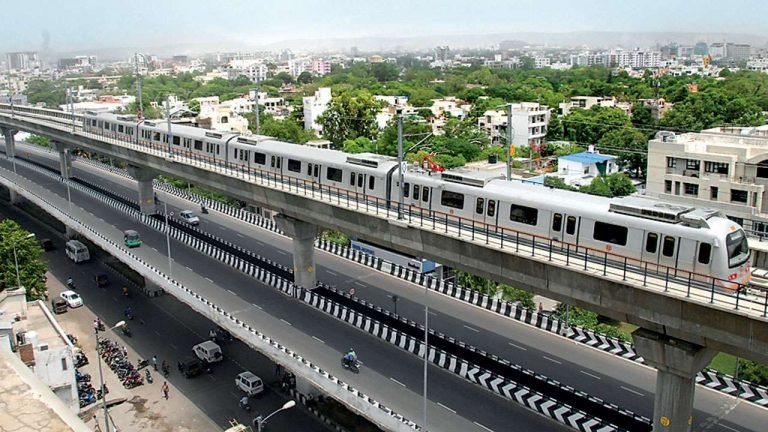
To fund future Metro projects JMRC to sell land

JAIPUR (Metro Rail News): The Jaipur Metro Rail Corporation (JMRC) has begun an exercise to create a dedicated Metro fund by selling its land for future expansions. According to JMRC officials, the corporation will auction its prime land, approximately 1.5 lakh sqm near B2 Bypass, to raise funds. E-auction for the scheme named as ‘Metro Enclave’ started on October 18 and will continue till November 18.

The amount received will be deposited in the dedicated Metro fund. “The JDA will auction the land on the behalf of JMRC. The amount will be transferred to JMRC’s account that will be used for expansion of projects,” said a JMRC official. Sources said the fund would be created soon and the Urban Development and Housing (UDH) department will issue a notification after examination of the nitty-gritty.

The fund will be collected under three heads — levying entry tax on heavy vehicles, selling land and providing premium floor area ratio (FAR) along the metro corridor.

“The government is hesitant to levy entry tax on heavy vehicles. The proposal is being considered again. Once approval is given, a notification will be released and a committee will be constituted to monitor the funds.” To increase non-fare revenue, the JMRC is also mulling a proposal to lease out the land.

As per the (JMRC) assessment, the project is staring at an annual operating loss of Rs 41 crore for the next five years. The loss is calculated at 60% of the ridership. The amount will rise up to Rs 71 crore a year if the loss is calculated at 20% ridership.

 As phase IB corridor is delayed and no earning has started yet it would be also a challenge to repay the Rs 969-crore loan taken from the Asian Development Bank (ADB). The state government’s installment will start in June 2021. For example, even if JMRC receives 60% ridership in 2020-2021, annual losses for operational purposes will be Rs 29 crore.

“The route is very short and not feasible. Serious efforts are required to bridge the gap between operational cost and expenses,” added sources.

Alstom and MMRC unveil life-sized mock-up of Mumbai Metro Line 3 (Aqua Line) Rolling Stock

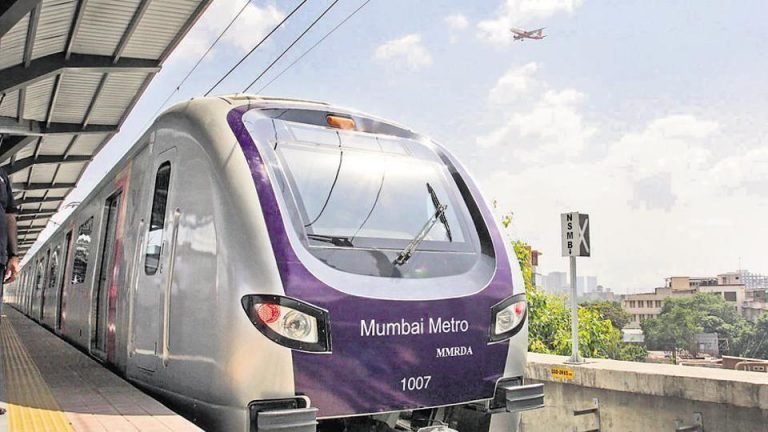
Mumbai (Metro Rail News): Alstom and Mumbai Metro Rail Corporation (MMRC) unveiled the life-sized mock-up of the trainset for Mumbai Metro Line 3 (Aqua Line). The new, iconic and exclusive design for Mumbai meets all technical and manufacturing parameters. The mock-up provides a glimpse of the advanced features that will make daily commute substantially easier for millions of citizens in the city.

Once operational, the Aqua Line will reduce vehicular congestion by offering a better alternative that will be fast, efficient and sustainable. Earlier, in August this year, the scale model of the rolling stock was unveiled by Devendra Fadnavis, Chief Minister of Maharashtra in presence of Ashwini Bhide, Managing Director of MMRC along with senior officials. At the same event, Line 3 was christened as Aqua Line, inspired by the vital flow of the sea which is an integral part of the city.

Speaking of this milestone, Alain Spohr, Managing Director, Alstom India and South Asia said, “Our objective was to create an appropriate, future-proofed design that is relevant to the people, the city and their expectations. This theme is called – Dynamic Fluidism. All technical and manufacturing parameters have been met in respect to the high interior density layout and space efficiency. We are proud to present this ‘New Face of Mumbai Transportation’. Alstom is committed to support MMRC in easing the transportation challenges of Mumbai. With the project stipulating more than 80% localized manufacturing, this contract further reinforces Alstom’s commitment to invest, grow and Make in India.”

The design takes inspiration from the positive energy of Mumbai and architecture of the city–which is an amalgamation of different styles from around the world. The theme captures evolution of the city’s architectural landscapes over the years.

The exterior theme is a tribute to the energy flowing through the city of Mumbai–the city that never sleeps. Inspired by the vital flow of water and aspiring to be a fast, efficient and sustainable mode of travel, to become the new lifeline for the people of Mumbai.

The interior colour harmony is inspired by the people of Mumbai–always on the move, who turn to the sea for peace and are soothed by its waves and breeze. This inspired the idea to use a unique blend of comfort (beige) and freshness (arctic green) to provide a relaxing and refreshing travel experience.

The trainsets for Aqua Line will be equipped with regenerative braking system aiding significant reduction in carbon emissions. The 177.2 meter-long trainsets will have higher capacity capable of ferrying around 3,000 passengers in one trip to accommodate high passenger flow.

Aqua Line trainset will have safety features that include CCTV cameras, smoke detectors, emergency intercoms, fire extinguishers with large detrainment doors to quickly evacuate passengers in an emergency. The trainsets have appropriate signages, three rows of grab rails, grab handles, poles for holding and dedicated space for passengers with luggage. The design also ensures easy accessibility and comfort for the differently abled, with dedicated space for wheelchair in every car.  

MMRC awarded Alstom a contract worth €315 million to supply 31 lightweight, fully-furnished modern passenger trainsets of 8 cars each (total 248 metro cars) for Mumbai Metro Line 3 (Aqua Line) in September 2018. Along with rolling stock, Alstom will also execute the power supply contract and equip Line 3 with Urbalis 400, its latest generation of CBTC signalling technology. The scope of the signalling contract (worth €100 million) includes unattended train operation (UTO), computer-based interlocking and centralised train supervision, platform screen doors, as well as the electrical and mechanical supervisory control and data acquisition system (E&M SCADA).

The Aqua Line has 27 stations (26 under-ground & 1 at-grade), 33.5-km long underground stretch connecting the busiest and most congested regions in Mumbai – one of the fastest growing cities in India. The metro line will connect Cuffe Parade business district in the extreme south of the city to Santacruz Electronics Export Processing Zone in the north-central. The Aqua Line will be the first underground metro line in Mumbai and will be one of the longest underground continuous stretches in India.

Mumbai Metro one Crosses A Staggering 600 Million Commuter Mark

MUMBAI (Metro Rail News): Reliance Infrastructure promoted Mumbai Metro One crossed a significant landmark on Saturday by carrying 600 millionth commuter within just 5 years and 5 months of its operation. This unparalleled achievement has been backed by world-class service, customer-centric experience, and flawless operational excellence.

Year after year, Mumbaikars are using Mumbai Metro One as their preferred choice of commute to reach their destinations. Every additional growth in ridership by 100 million Mumbai Metro One commuters is noteworthy as the number of days it takes to reach is consistently decreasing, thus reinforcing that it is indeed the new lifeline of Mumbaikars in the Versova-Andheri-Ghatkopar corridor. Considering the timeline, Mumbai Metro One took 398 days to carry its first 100 million commuters, 388 days to add another 100 million, while its third 100 million marks were achieved in 337 days. The fourth 100 million commuters have been added in only 300 days, the fifth 100 million commuters have been added in 273 days. And now the sixth 100 million milestones adding to a total of 600 million commuters have been completed in a record time of 264 days.


Milestone (in 100 Millions)
Days taken to achieve
1st 398
2nd 388
3rd 337
4th 300
5th 273
6th 264

While achieving the landmark figure of 600 million, Mumbai Metro One witnessed growth in various routes in last year. Here are the top 3 routes.

Route Sep-19 Sep-18% Growth
Andheri-Western Express Highway-Andheri3,40,732 2,68,520 27%
Andheri-Chakala,JB Nagar-Andheri6,17,105 5,28,823 17%
Ghatkopar-Western Express Highway- Ghatkopar5,49,008 4,86,890 13%

This increase has established Mumbai Metro One as a preferred mode of transport for traveling between suburban stations of Andheri and Ghatkopar, and shorter distance stations.

Ridership – Emerging stations

Apart from the connecting stations Ghatkopar and Andher, the next top 5 emerging stations are Saki Naka (48,544), Chakala (38,154), Marol Naka (38,149), Western Express Highway (28,038) and Airport Road (21,398) on a typical weekday.

Currently Mumbai Metro One operates 422 daily trips on weekdays. The year also marked high-performance levels in punctuality and availability of trains. It operated 1,35,248 train trips from Oct’18 to Sept’19 with a punctuality performance of 99.9% and train availability of 100%.
buy viagra sublingual online no prescription
Operational excellence is benchmarked also in Peak Hour Peak Direction Traffic (PHPDT) which is approximately 25,326 commuters.

An MMOPL spokesperson said, “As Mumbai’s first Metro line, we have redefined MRTS commuter experience in the country. The impressive growth in the number of commuters is attributed to our persistent efforts to provide safety, security, cleanliness, reliability and comfort to our esteemed commuters. Because of our customer-centric approach and world-class standards, Mumbai Metro One has become a unanimous choice for commuters, advertising brands, retail partners. We are grateful to Mumbaikars for their continued patronage and unflinching support in achieving these milestones.”

DMRC lauded for tapping energy from Sun

NEW DELHI (Metro Rail News): A delegation of ministers and delegates from the International Solar Alliance (ISA) member countries visited the Delhi Metro Rail Corporation (DMRC) on Friday and lauded DMRC saying the company is a role model for many other organizations to follow for its successful use of solar energy for operating metro stations and its premises.

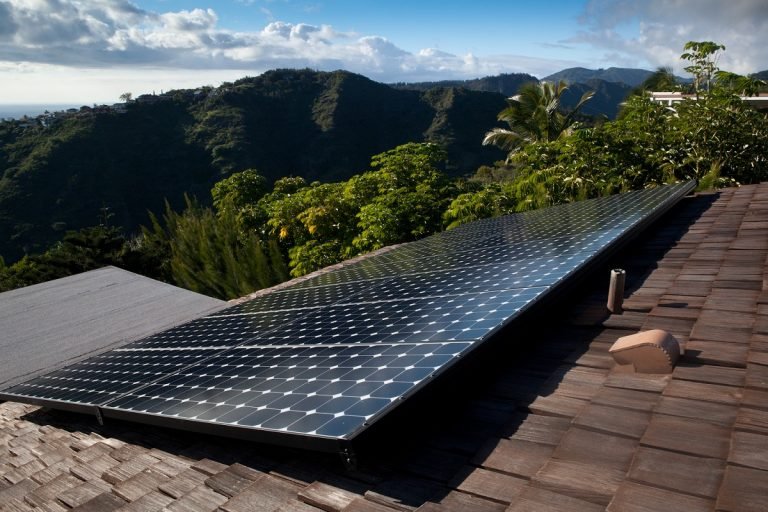
Delhi Metro has set up a target to install 50 Mega Watts Solar Plant on flat/curved roof of the stations, Train Depots and other buildings owned by DMRC by 2022, and to date has commissioned 32.4 MW on DMRC premises.

DMRC has also showcased the initiatives taken by Delhi Metro, which involves both long term tie-up of the utility-scale solar project and rooftop solar projects on Metro stations. It was also discussed how it has economically benefitted the organization besides achieving the distinction of being the first Metro in the world to go green.

“Delhi Metro is meeting 35 percent of its total energy requirement (of approximately 1100 Million units) from Renewable sources and is one of the greenest metro systems in the world and will continue to further redefine its energy mix by using more renewables, progressively,” said Mangu Singh, Managing Director, DMRC.

DMRC started its solar journey in October 2012. DMRC has become the first metro this year to procure solar power from the 750 MW plant located on a Renewable Energy Service Company (RESCO) basis through an inter-state open access arrangement, where the complete installation cost of solar plant is borne by the solar developer and DMRC only pay for the energy generated by these plants at a rate as agreed in power purchase agreement.

The power received from Rewa is also being utilized for all the operational requirements of the Delhi Metro, including the operation of metro trains.

ISA was launched in 2015, with the intent of bringing together all the countries lying fully or partially between the tropic of cancer and Capricorn on to one international platform.
buy Bactroban generic andnewonlineblo.com over the counter
Since then ISA has grown to have 121 prospective countries with 79 signatory member countries and it is the first international body to have a secretariat in India, located at Gurugram.

CSIR-IICT sign MoU for Science Corridor

HYDERABAD (Metro Rail News): Memorandum of Understanding (MoU) has been signed between The Hyderabad Metro Rail Limited, Indian Institute of Chemical Technology (CSIR-IICT) and L&T Metro Rail (Hyderabad) Limited at Hyderabad Metro Rail Bhavan to develop a Science Corridor between Secunderabad East and Nagole Metro Stations.

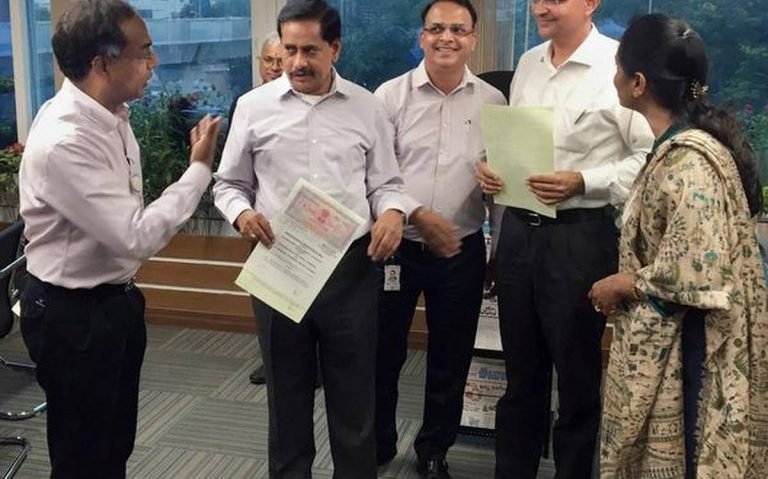
The MoU for the unique initiative was signed by Dr. D.Shailaja, Sr. Principal Scientist IICT, Mr. B.N. Rajeshwar, GM, HMRL, and Mr. Chandrachud D.Paliwal, Company Secretary, L&TMRHL in their presence and was Conceived by HMRL MD NVS Reddy and Director CSIR-IICT, Dr. S Chandrasekhar.

Speaking on the occasion, NVS Reddy said in order to create scientific temper in the common public and children in particular and to provide an opportunity to observe and appreciate the utility of science in daily life, HMRL and L&TMRHL have tied up with CSIR-IICT to develop a science corridor in the city.

Reddy said it was also contemplated to organize scientific promotional activities like theme-based science and technology exhibitions at a few metro stations. Making use of the presence of Railways and several national science laboratories and research institutions along this route, this route of about 8 km was being developed as a Science Corridor, he said.

Director CSIR-IICT, Dr. S. Chandrasekhar thanked the HMRL MD for considering their request and said it was for the first time in the country that an exclusive science corridor was being developed to inspire young minds.

He stated that the allotted Metro pillars and station areas would be utilized for display of periodic table elements in view of 2019 declared by UNESCO as International Year of Periodic Table and also for display of legendary scientists reflecting their great contributions in improving quality of life and human welfare.

COO, L&TMRHL AK Saini said engineering and science students would be encouraged to visit the Metro Rail Museum at Uppal Depot to appreciate the development of the transportation sector and the sophisticated technologies used in the Hyderabad Metro Rail project.

Delhi Metro Smart Card To Be Linked With Your Aadhaar Card

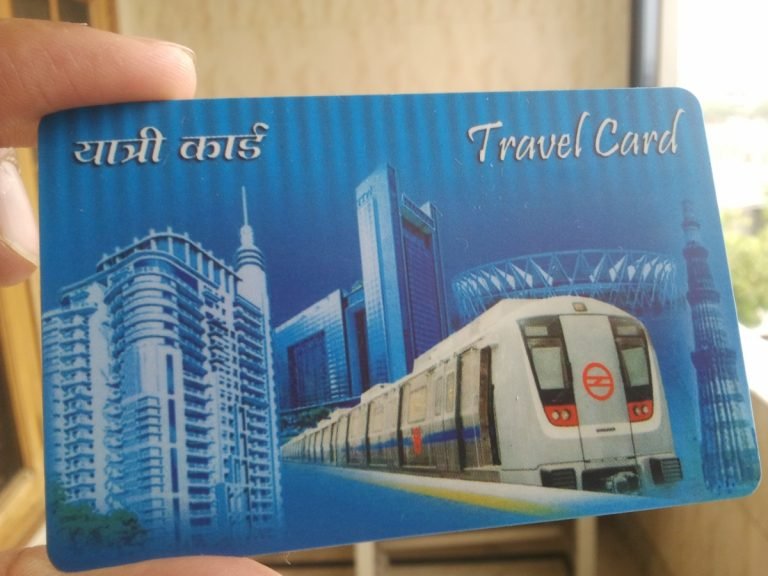
NEW DELHI (Metro Rail News): Delhi Metro Rail Corporation (DMRC) is aiming to link Delhi Metro passenger smart cards with the identity of the cardholder soon. The reason behind this is to offer concessions and discounts to a specific group of commuters, like students and senior citizens, says a recent report.

The move is in line with the authority’s attempt to provide concessions to the above-mentioned segment of Delhi Metro users. For now, these concessions have not been decided upon, as per the housing and urban affairs minister – Hardeep Sigh Puri. These, however, will soon be finalized upon by the Delhi Metro Fare Fixation Committee (FFC), the minister confirmed in a report.

It is also unclear as to how the smart cards will be linked to the holder’s identity. Speculations suggest that DMRC might go for biometric authentication for the same – most likely your Aadhaar card. There are a handful of other options too. Though whichever one DMRC opts for, linking the smart card to a specific identity will render the smart cards non-transferable to other users.

In a recent report, DMRC Managing Director Mangu Singh mentioned, “When the solution is implemented, Delhi Metro travel smart card will not remain transferable.”

The smart cards work on radio-frequency identification (RFID)-based system for now. With a biometric system in place, the ownership of a smart card will remain exclusive. From what can be figured though, this will not impact the ability of these cards to be used by anyone.

This is simply because there will be no system in place to check the biometric data at the station itself. So the smart cards will work something like the present Debit/ Credit card. While they will house information of a single person, anyone with access to that information will be able to use the cards.

ASCL gives NOC for Agra metro rail project

AGRA (Metro Rail News): The special purpose vehicle, Agra Smart City Limited (ASCL), which is managing the smart city project works, has provided a no-objection certificate (NOC) to the Uttar Pradesh Metro Rail Corporation (UPMRC) for implementation of the Agra metro rail project.

The ASCL is headed by divisional commissioner, Anil Kumar. ASCL has placed a few terms and conditions to carry out the construction work in the city. UPMRC will have to take responsibility and repair the damages which it may incur on the smart city project works during the construction of the Agra metro rail infrastructure.

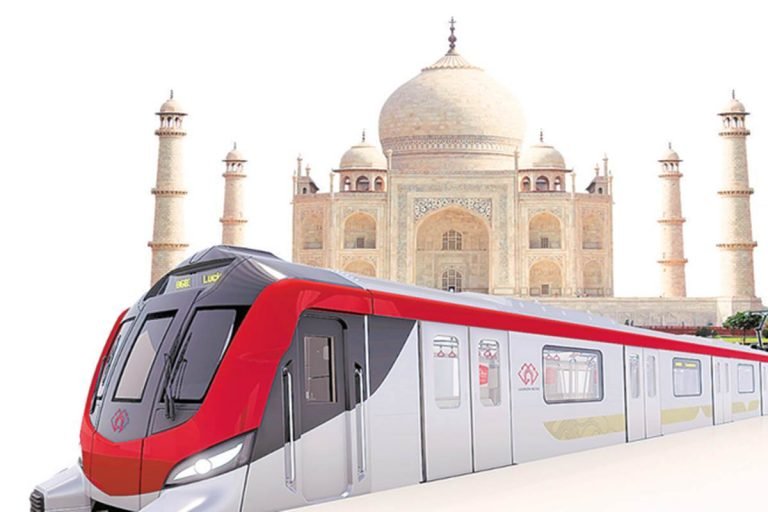
According to the detailed project report (DRP) approved by the union cabinet, the Agra Metro Rail Project will have two corridors which will pass through the heart of the city and will connect prominent tourist places including Taj Mahal, Agra Fort and Sikandra as well as ISBT, Raja Ki Mandi Railway Station, Medical College, Agra Cant Railway Station, Collectorate, Sanjay Place and surrounding densely populated residential areas.

Under the smart city project, various beautification and drainage upgradation works are being carried out on Fatehabad road. These works are estimated to cost Rs 108 crore. According to the Agra Municipal Corporation (AMC) officials, the first corridor of metro rail is proposed to pass through Fatehabad road.

Construction work of the metro rail may damage the development work done on Fatehabad road. In such a case, UPMRC will have to fund the repairing work. Additional municipal commissioner KB Singh, who is also the deputy chief executive officer of ASCL, said, “Agra metro rail project is a significant scheme for the development of the city. Therefore, NOC has been provided with a few terms and conditions to ensure work done under the smart city projects are not affected.”

The UPMRC has managed to take approval for the implementation of the Agra metro rail project from the municipal corporation and public works department (PWD). However, it is yet to take approval from the Taj Trapezium Zone (TTZ) authority, ministry of environment and the Supreme Court. According to DPR, the first corridor from Taj East Gate to Sikandra is proposed to be 14.00 km-long which is partly elevated and partly underground.

This corridor would comprise of 13 Stations (6-Elevated and 7-Underground). The length of the second corridor from Agra Cantt to Kalindi Vihar would be a stretch of 15.40 km comprising 14 stations (all elevated). The entire project is targeted to be completed by the end of 2024.

OTP Based Refund against Cancelled Ticket or Fully Waitlisted Dropped Ticket Booked by IRCTC Authorised Agents

NEW DELHI (Metro Rail News): Indian Railways introduces a new OTP based refund system for tickets booked through authorized railway ticketing agents. This is aimed to bring in a transparent and customer-friendly refund system for reserved e-tickets that are canceled or which are fully waitlisted dropped tickets. This new system will be implemented by Indian Railways PSU, Indian Railway Catering & Tourism Corporation Limited (IRCTC).

The OTP (One time Password) will be received as SMS on the registered mobile number of the passenger (provided by the customer/passenger to the agent at the time of booking). The customer/passenger will be required to share the OTP with the agent who booked the ticket, for getting the refund amount.

Through this user-friendly facility, the passenger will come to know about the exact refund amount received by the agent on his behalf against canceled tickets or fully waitlisted dropped tickets.

The objective of the scheme is to streamline the cancellation refund process further so that the cancellation amount is refunded timely to the customer by the agents.

Delhi Metro finalises plans for Dwarka-Kirti Nagar Metrolite service

NEW DELHI (Metro Rail News): The Delhi Metro Rail Corporation (DMRC) has planned the Kirti Nagar-Dwarka Sector 25 and the Rithala-Narela sections for setting up the Metrolite corridors.

A DMRC spokesperson told that the Dwarka Sector 25-Kirti Nagar Metrolite project will be planned along the central verge sharing road space with vehicular traffic, similar to the scrapped bus rapid transit (BRT) corridor of South Delhi. However, the 19.09 km long Metrolite corridor will not hinder usual vehicular traffic on the roads and DMRC has addressed all such issues in this project, which earlier plagued the BRT corridor.

According to DMRC, the BRT corridor had to be dismantled as the vehicular traffic on the road was severely affected. Taking this into consideration, DMRC has planned the Dwarka Sector 25-Kirti Nagar Metrolite along the central verge and has also planned to make it elevated wherever necessary, in order to avoid any hindrance with vehicular movement.

Delhi Metro has completed the feasibility study of the Dwarka Sector 25-Kirti Nagar Metrolite and the project has also been approved by the Ministry of Housing and Urban Affairs (MoHUA) as well as the DMRC board. MoHUA is backing the Metrolite projects in Delhi as they are less capital intensive.

The Metrolite will ply on dedicated corridors and at major crossings or intersections, it will go underground in order to ensure the smooth movement of trains. DMRC has also planned for smooth passenger movement for reaching the Metrolite stations and subways which will connect the pavements on the roadside with its stations to the center.
buy vigora online https://myhst.com/wp-content/themes/twentytwentytwo/inc/patterns/en/vigora.html no prescription

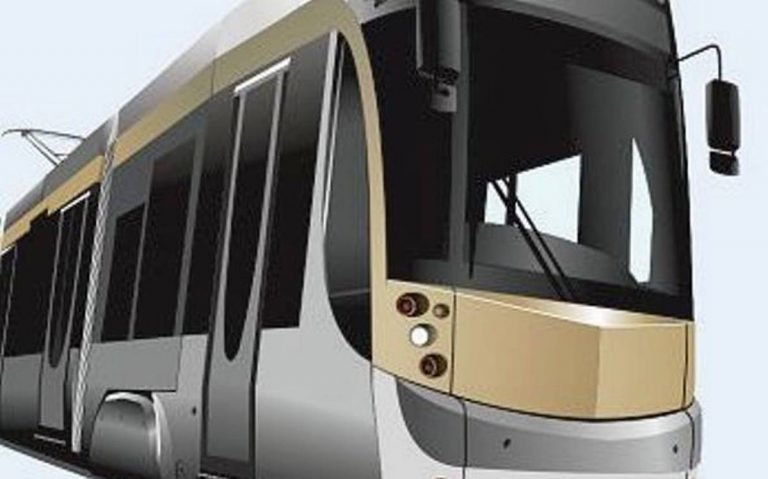
The Metrolite project is basically a smaller metro system with three coaches and has a carrying capacity of 300 passengers. It is a cost-effective project for DMRC as it costs 30-40 percent less than the Delhi Metro trains. The Metrolite corridors are usually effective in areas where large scale metro lines are not required. The Metrolite corridors will have a simple fare collection system inside the trains.

The 19.09 km long Dwarka Sector 25-Kirti Nagar Metrolite corridor will have 21 stations, out of which 16 stations will be at-grade, while five will be elevated. This will make approximately 11.8 km long distance of the corridor to be at grade, while 6.6 km long to be elevated. The corridor will pass through densely populated areas such as Mayapuri, Dabri, Bamnoli and Dhul Siras in the capital.