New Delhi: Prime Minister Narendra Modi has flagged-off the Delhi-Faridabad Metro Line that would allow hassle free travel for around two lakh daily commuters between the national capital and the industrial hub in Haryana.
The extension of the Delhi Metro connects Badarpur to Escorts Mujesar in Faridabad.
The total cost of the project from Badarpur to Escorts Mujesar is nearly Rs. 2,500 crore. Out of this, Rs. 1,557 crore was borne by the Haryana Government, the Centre contributed Rs. 537 crore, while the Delhi Metro provided Rs. 400 crore.
All these are elevated and located on either side of the Delhi-Mathura Road (NH-2).
“The nine-station metro corridor which was 95 per cent indigenously built will provide people a safe, affordable, quick, comfortable, reliable, environment-friendly and sustainable transport facility,” a Haryana government spokesperson said.
Haryana Chief Minister ML Khattar, addressing a press conference on Saturday, had thanked the Prime Minister for “gifting” the Metro service which would take the city to “another level of progress” with better connectivity with other NCR towns.
He had also said that the Prime Minister would be announcing the go-ahead for connecting Gurgaon with Faridabad by Metro.
CHENNAI (Metro Rail News):Chennai Metro Rail Ltd (CMRL) in association with Flyy Rental Service has launched a fleet of keyless, smart and eco-friendly electric scooters for ₹1 per minute.
The electric
scooters can be picked up from Alandur metro station by using the Flyy app
available through Google Play.
At present,
a total of six electric scooters are available at Alandur metro station which
will be extended to 15 scooters as the demand increases, says a press release
from CMRL.
MUMBAI (Metro Rail News): The Maha-Metro’s final detailed project report (DPR) or the techno-economic feasibility report, on the stretch between Katraj-Swargate, has been submitted to the civic body in October with a proposed cost of underground metro rail for 5.4km pegged at Rs4283.72 crore.
The DPR
although mentions other possible options like an elevated stretch between
Katraj and Swargate via Market Yard, but stresses on the underground stretch.
According to DPR, the proposed cost per kilometer underground metro rail will be Rs 783.85 crore. The option of an underground stretch has been highly recommended in the DPR over the elevated one even though the proposed cost of the latter is cheaper.
According to
the DPR, if the metro rail corridor is elevated, it has to pass through areas
adjacent to Pune-Satara road, as a result of which the distance will increase.
The construction of the elevated track on Pune-Satara road, which is 5.5 kilometers, seemed difficult as the route has multiple obstructions, including a number of flyovers. So Maha-Metro was exploring a diverted route via Market Yard, which would have increased the length of the route.
NCP MLA from
Hadapsar and party city unit chief Chetan Tupe said, “The administration and
Maha-Metro officials must give a detailed presentation to the general body and
only then can we comment on whether we want an underground or elevated
corridor.
The Nagpur metro project report was submitted after the Pune metro report, but the BJP government diverted all the funds for the Nagpur project which is why the Pune metro got delayed. However, we will ensure that we get the funds for the stretch soon.”
The route is
estimated to have a daily ridership of 95,000 riders in 2027 which will rise up
to 1,97,000 by 2057. The Maha-Metro estimates a total cost of Rs 27.61 crore
for rehabilitation and resettlement while Rs 111.6 crore for land acquisition
for the project.
Managing
director of Maha-Metro, Brijesh Dixit said, “The underground stretch between
Swargate and Katraj is more feasible because the elevated straight stretch has
a very narrow road and also there are many flyovers on that road. We have
submitted the plan for the detour elevated route which goes via market yard.
Although the construction cost of the detour elevated stretch is lesser than
the underground metro. We have to consider the ridership, operation and
maintenance cost and lifetime costs. The Maha-Metro has considered the
underground direct stretch between Swargate and Katraj to be the most feasible,
but again it is for the PMC to decide the final option. We have given
recommendations based on our expertise.”
However, a senior civic official who is associated with the project, said, “The DPR does not explore the option of the elevated stretch significantly. That too needs to be studied since it would be cheaper. The question of flyovers is not of great concern since there is a flyover at Paud road and still the metro is elevated.”
“We have explored all possible options in the DPR. It is in consultation with stakeholders, state and central government and PMC. We will take the right step,” said Hemant Sonawane, general manager, PR, Maha-Metro. The DPR mentions that the traffic survey, economic assessment, and social impact assessment was conducted for the same.
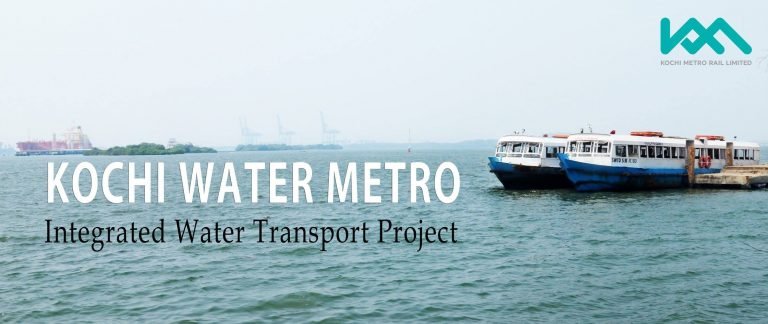
KOCHI (Metro Rail News):Kochi Metro Rail Limited (KMRL), Government of Kerala, and German funding agency KfW signed an agreement of ‘accompanying measures’ (grant of 1.8 million Euros) for the ₹740-crore Water Metro Project here on Thursday.
The grant is
for identifying the needs of capacity building for the operation and
maintenance wing of the project. It includes training needs and modalities of O
and M structure and the training of trainers.
KMRL
Managing Director Alkesh Kumar Sharma, Principal Secretary (Transport) K.R. Jyothilal,
and Angelica Angelika Zwicky, Project Manager–Urban Development and Mobility of
KfW, signed the agreement.
“We are happy that the tripartite agreement of accompanying measures is signed. This will give a boost to the setting up of O and M wing of Water Metro, especially the training for employees. KMRL is committed to the time-bound completion of the project,” Mr. Sharma said.
Mr. Jyothilal said that water transport in the country is an unexplored sector and the State government is glad to be part of the project. buy premarin online https://www.parkviewortho.com/wp-content/languages/new/prescription/premarin.html no prescription
“Water Metro will be a unique project where it will integrate with Kochi Metro, with a single card. Ushering in of clean and green mobility is another unique aspect of the project,” he said.
Officials of KMRL discussed various aspects of the implementation of the Water Metro Project with Ms. Zwicky. She expressed KfW’s eagerness to support the project and extended all support for its successful completion.
JAIPUR (Metro Rail News): Metro stations in the city may soon be named after big brands or companies. On the lines of big cities, including Delhi, Jaipur Metro Rail Corporation (JMRC) has planned to give branding and ‘semi-naming in rights’ to companies whose name may appear as a prefix to a station’s name. JMRC has floated a tender to give the rights for Mansarovar station on corridor Phase I.
“Auctioning of semi-naming and branding rights at the station would generate non-fare revenue for the corporation. The technical bid will be opened on December 19,” a JMRC official said.
In other cities such as Delhi, Chennai apart from generating direct revenue through auctioning of naming rights, the corporation has received added benefits. Explaining the concept, an official said, at stations, the undertakings that have bought the naming right, also do the branding of the stations with colors associated with the respective companies, an official said.
He said this adds to the aesthetic value of the station. Also, with the company maintaining the exterior of the stations, JMRC will not have to worry about maintaining it.
To make the project viable, the JMRC is making desperate attempts to increase the non-fare revenue. As per the (JMRC) assessment, the project is staring at an annual operating loss of Rs 41 crore for the next five years. The loss is calculated at 60% of the ridership. The amount will rise up to Rs 71 crore a year if the loss is calculated at 20% ridership.
As phase IB corridor is delayed and no earning has started yet it would be also a challenge to repay the Rs 969-crore loan taken from the Asian Development Bank (ADB). The state government’s installment will start in June 2021.
Sources
added, “The route is very short and not feasible. Serious efforts are required
to bridge the gap between operational cost and expenses”.
The report
surfaced after Maharashtra Chief Minister Uddhav Thackeray promised a “review”
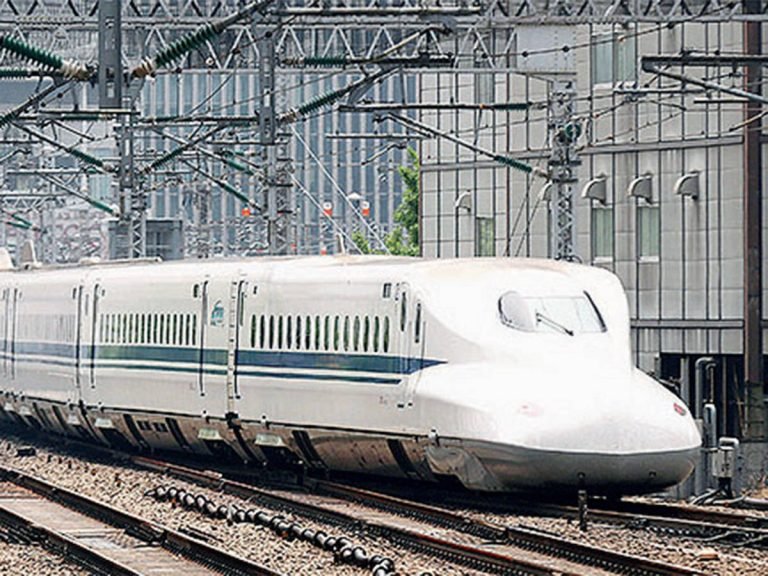
of the Indo Japanese joint venture of augmenting bullet trains in the western
region of India.
According to the report, four companies Cube Construction, Vibhui Organisers, KR Savani, and Dhanji K Patel were allotted tenders to have major stakes in the bullet train project.
Cube Construction has been allotted a tender for “Leasing of space for computerized reservation system complex of Western Railways near Vadodara Station” for the MAHSR project in January 2019.
As per the information revealed by the BJP, Cube Construction has made a donation up to ₹55 lakh in three separate transactions between 2012-13 and 2017-18 to the saffron party.
KR Savani has been tendered with the responsibility of constructing various service buildings at Vadodara station in connection with MAHSR. The tender was given to them in May 2018. The donation made by them to the BJP was of ₹2 lakh in 2012-13.
Dhanji K Patel has been given the tender for miscellaneous work between Vatva to Sabarmati for MAHSR. The tender was given in November 2018 and they made a donation of ₹2.5 lakh in 2017-18 to the BJP.
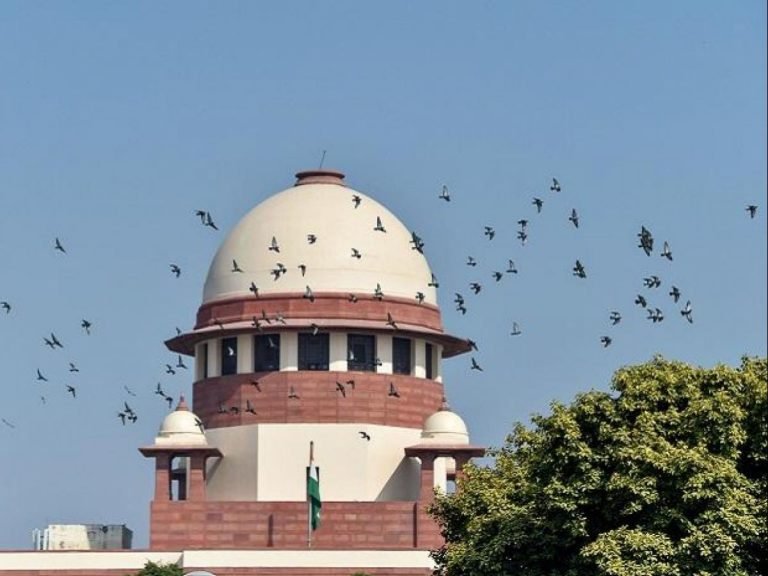
NEW DELHI (Metro Rail News): On Wednesday, the Supreme Court asked the Central Empowered Committee (CEC) to consider a proposal for setting up a metro rail project in Agra and submit a report on the issue.
A bench
headed by Chief Justice S A Bobde also directed the panel formed by the apex
court to consider the impact of the project on the environment.
‘Aishwarya Bhati, appearing for Lucknow Metro Rail Corporation Ltd, seeks permission to permit a metro service within the city of Agra. We, accordingly, refer the matter to the CEC for considering its impact on the environment. buy synthroid online https://nouvita.co.uk/wp-content/themes/twentynineteen/fonts/en/synthroid.html no prescription
For such a project, the CEC shall submit a report within a period of four weeks,’ the bench, also comprising justices B R Gavai and Surya Kant, said.
The Union Cabinet had earlier approved the Kanpur and Agra metro rail projects, a move to boost public transport connectivity in the two Uttar Pradesh cities.
According to the government, the Agra rail project will have two corridors, which will pass through the heart of the city and connect prominent tourist places like the Taj Mahal, Agra Fort, and Sikandra, as well as the interstate bus terminal, railway station, medical college, and others.
The
estimated cost of the Agra metro project is Rs 8,379.62 crore and it is
expected to be completed in five years.
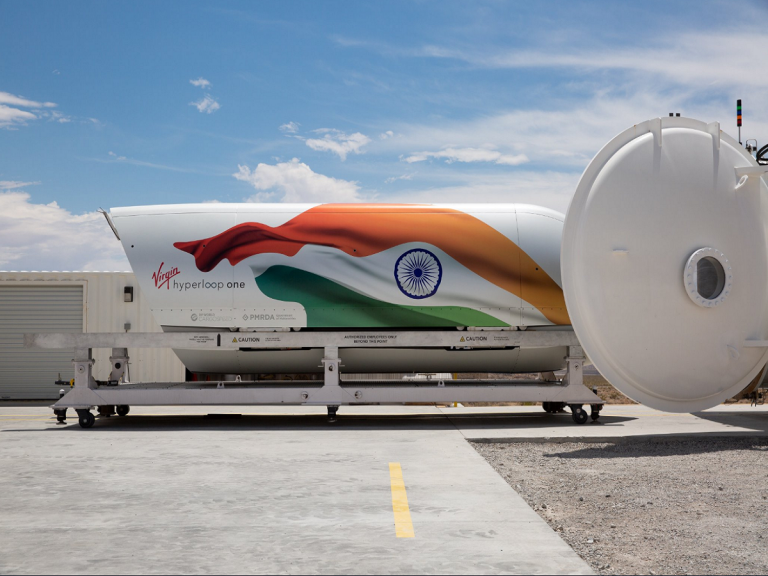
MAHARASHTRA (Metro Rail News): It has emerged that the Maha Vikas Aghadi (MVA) government bringing together the Shiv Sena, Nationalist Congress Party (NCP) and Congress may be all set to scrap the plan that was to be implemented by Virgin Hyperloop One. Now, the project has been placed under review.
They also clearly stated that they will
be scrapping the project till the time such experimentation comes into reality.
Meanwhile, on a slightly more cautious note, Shiv Sena leaders stated that any
final decision in the matter will only be made after a review.
The latter was going to conduct a preliminary study to identify potential routes and analyze the high-level economic impact and technical viability of hyperloop transportation solutions in India. According to planners, the project would make it possible to travel between Mumbai and Pune in just 14 minutes. In June 2018, then Chief Minister Devendra Fadnavis had also visited the hyperloop test site in the US.
The first
phase of the project was to be 11.8 km long and cost Rs 3,550 crore the second
phase would then cost over Rs 57,000 crore. It was being touted that work on
the project (experimental) would begin in 2020.
However, within days of the MVA government coming to power, the Mumbai-Pune Hyperloop has come under scrutiny. This is one of the numerous announcements over the last week, scrapping or putting various projects for review, including the controversial Metro car shed at Aarey Colony in Mumbai, the Samruddhi Mahamarg (Mumbai-Nagpur Expressway), Mumbai-Ahmedabad Bullet Train, and other such major infrastructure initiatives that would require a huge investment.
The
government need not be wasting money on experiments that we don’t know will
become a reality. Hence, we have decided that this should be reviewed and
scrapped.” According to BJP leaders, this is an “unfortunate” move. BJP
spokesperson Keshav Upadhye told Mirror, “This was a futuristic experiment that
our government was trying to do.
It is unfortunate if the ruling party now feels that it is a waste of money. Citizens of Pune and Mumbai will miss out on an interesting and important project if such a decision is taken.” However, there is no final word on it just yet. Shiv Sena leaders have stated that a decision will be taken post a study of the project. Shiv Sena leader Neelam Gorhe, who is deputy chairman of the Legislative Council, said, “CM Uddhav Thackeray is reviewing the project at present. Based on the report that he receives, he will make a decision.
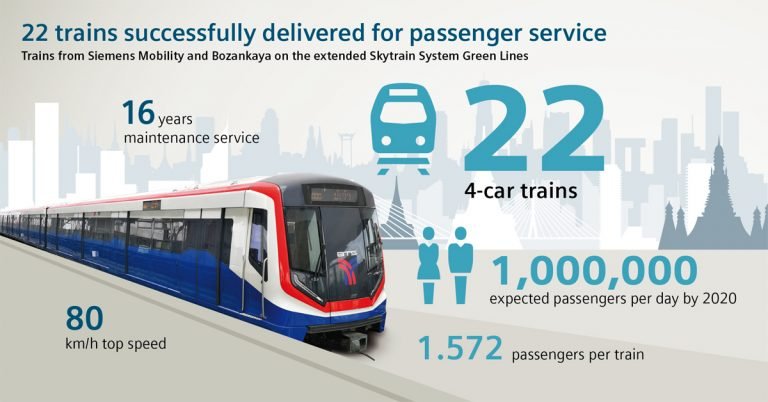
BANGKOK, THAILAND (Metro Rail News): The consortium of Siemens Mobility and Turkish railway manufacturer Bozankaya successfully completed the delivery of all 22 metro trains to Bangkok Mass Transit System Public Company (BTSC) on Dec 4, 2019. All trains are now in operation on the existing BTS (Skytrain System) Green Lines including its extensions.
The last train entered service on the inaugurated Green Line extensions in October 2019. By the 4th of December 2019, Bangkok Mass Transit System Public Company (BTSC) will commence passenger service on the newly completed section of the Green Line from Kheha Station to Kasetsart University Station.
In total, 22 four-car trains have been delivered with the scope of Siemens Mobility delivering bogies, drive and brake systems, auxiliary services as well as the project management, engineering, design and commissioning of the trains. The trains were built at the Bozankaya plant in Ankara, Turkey. Siemens Mobility will maintain the trains over a period of 16 years.
Sabrina Soussan, CEO of Siemens Mobility, said:
The BTS Skytrain System is a very special success story for us: It’s the first public rail transport system to be completed in the Thai capital and Siemens Mobility has delivered the elevated system as a turnkey project. We’ve provided full service for the system since its commissioning nearly 20 years ago and will continue to do so until 2029, ensuring that over 99 percent of the existing trains are available for service every day. With the addition of our new trains, capacity on the Green Lines will increase to over one million passengers a day while at the same time, offering users optimal passenger experience.
In May 2016, the BTS Skytrain System operator BTSC awarded the consortium a contract to deliver the 22 trains. Siemens Mobility is also supplying the traction power supply for the Green Line extensions. The order was placed as part of BTSC’s expansion plans to provide more trains on the existing route and its extensions.
The southern extension inaugurated in December 2018 connects the provincial capital Samut Prakan, which lies around 25 kilometers south of the city center of Bangkok, with the capital. The elevated extension to the south begins at the current Skytrain terminus at Bearing, is around 13 kilometers long and consists of nine stations.
The extension to the north starts at MoChit Station, consists of sixteen stations and is appr. 18.4 km long. The opening of the extended line to Kasetsart University station is part of the BMA’s initiative to alleviate traffic congestion, with a further extension to Kukot planned to be completed by the end of December 2020. buy clomiphene online https://pavg.net/wp-content/themes/twentytwentyone/inc/en/clomiphene.html no prescription
CHANDIGARH (Metro Rail News): The Punjab government is exploring the feasibility of connecting major city the state through hyperloop transport system so on Tuesday signed a memorandum of understanding (MoU) with the US firm Virgin Hyperloop One to conduct a pre-feasibility economic study for a proposed Hyperloop corridor between Amritsar, Ludhiana and Chandigarh. Hyperloop is a rapid transport system which will provide travelling speeds of up to 1,000km/hr and more
The study of another hyperloop project in India is expected to take up to six weeks. Virgin Hyperloop One is already in discussions with Haryana for a separate MoU to evaluate the feasibility of a Hyperloop system that could potentially extend the route from Punjab to NCR.
Punjab chief minister Amarinder Singh said that Punjab is keen on becoming the second state in India, after Maharashtra, to build a Hyperloop system. Specifically, we would like to explore a Hyperloop project through Punjab, connecting with other metropolitan centres in the country. In future, this project could link beyond Punjab to connect to the NCR. After the pact was signed.
In Hyperloop mode of transport, electromagnetically levitated pods, each with a seating capacity of 78 people, are propelled through tubes/tunnel in near-vacuum conditions at speeds between 1,000km/hr and 1,300km/hr. Punjab additional chief secretary Shri Vini Mahajan, Investment promotion said the objective was to improve inter-city transport in the region and make it seamless. Los-Angeles based Virgin Hyperloop One is supported by Dubai-based DP World, its largest investor, in the project.
The MoU was signed by Punjab secretary (transport) K Siva Prasad, and Harj Dhaliwal, Virgin Hyperloop One managing director for the Middle East and India, in the presence of Captain Amarinder, and DP World Subcontinent CEO and managing director Rizwan Soomar
Travel Time reduce from 5 hours to less than 30 min
The Hyperloop project along the Amritsar-Ludhiana-Chandigarh corridor could reduce travel time from five hours by road to less than 30 minutes as per Virgin Hyperloop One’s initial estimates. “The pre-feasibility study will be completed in six weeks. It will evaluate several measures such as cost, demand, and socio-economic benefits of the corridor,” added Invest Punjab adviser Moshe Kohli.
“The Hyperloop route in Punjab can be transformative for the state and we look forward to moving ahead on this project, just as have we done in Maharashtra. There is tremendous economic potential in connecting some of Punjab’s biggest cities, such as Amritsar, Ludhiana and Chandigarh among others, in northern India,” said Dhaliwal. “DP World and Virgin Hyperloop One are pleased with the discussions with the government of Punjab. This marks a second state, after Maharashtra, for a prospective Hyperloop network in the country,” said Soomar.
In conversation with Mr. Harsha Kadam, CEO Schaeffler India & President Industrial business during the International railway equipment exhibition (IREE) 2019 at New Delhi, India. Here are the edited excerpts
What’s the focus on engineering and innovation at Schaeffler India?
Mr. Harsha Kadam: Schaeffler has always been the front runner in terms of understanding market trends and future technologies. We are continuously emphasizing on R&D and localization projects to take advantage of the latest technology trends and develop application-specific solutions to improve their overall efficiency. For us, innovation is a key factor sustaining our competitive advantage. Earlier this year, we set up an Incubator Competency Centre for two-wheelers in our Pune plant along with a new state-of-the-art R&D Centre, which has been approved by DSIR. Our aim is to transform it into a global hub for R&D for mechatronics and software.
Tell us about the recently developed product of your company for Metro Railway?
Mr. Kadam: One of our solutions has been the TAROL Class C bearings going into the metro trains and this is the product that has been utilized with the axle boxes. This is a complete set where the bearing sits inside the axle box and we supply the box to our customers, thereby taking over the responsibility of providing the entire subsystem to our customers.
TAROL bearings for passenger coaches
Another product which we have brought to the market is the Current Insulated Bearings. With more electrification coming in you could realize that any current leakage could damage your bearings. It is here where we bring the capability of supplying bearings which will prevent the current leakage from damaging the bearings. The product is called Insulation coated bearings. Presently, we are the only bearing manufacturers who have the capability today to make these bearings in India. We are already in series production on this product as we launched the product last year and we have been growing the market for this. And this is not just used in the metros but also in the railways.
Having products is one aspect, but to test them to suit the Indian market needs enough time. That’s one challenge a lot of companies face. What’s your view?
Mr. Kadam: The rules of the game in the railway sector is getting redefined. One of the biggest challenges and requirements being set are in terms of product reliability and performance. With Government’s focus towards developing high-speed trains in India, meeting performance, reliability and safety standards of trains are of topmost priority. Schaeffler India is committed to bringing in a lot of value in this regard in India and is constantly working towards investing in new capabilities to develop products and systems which will help modernize the railway sector. Furthermore, by embracing digitalization, Schaeffler India is enhancing its core offering by opening up a lot of opportunities to check the health of the bearings as it is running on the wagons or on the coaches. For instance, we provide axle box bearings integrated with sensors which enable digital feedback where we can monitor the position of the bearings.
Talking about engineering challenges, what was the most challenging part of your journey till now? How did you overcome those challenges?
Mr. Kadam: One of the challenges that we still face is on developing capable suppliers and that’s something we will have to look into. In spite of the Indian supplier industry evolving and coming of age, the lead times that we take to develop the products are still long enough which needs to be reduced. Some of the bearings require special coatings and special treatment facilities which are not available, so there’s a lot of handholding for the supplier community that we will have to look into.
Currently, how many Metro Projects are you serving?
Mr. Kadam: In India, we are already there on the Bangalore and Mumbai metro. We are working to get on the Pune metro, Chennai we have started. Surat and Lucknow metros are coming up, so we will be soon there as well. Outside of India, our Made in India products are already present in the metros in Sydney, Melbourne, Perth (Australia) as well as in Brazil. We are working on Montreal metro for Canada.
Besides, there are a lot of opportunities in the European market as well. A lot of big players of metro trail manufacturing are using India as a hub and we see a lot of opportunities there. Going forward, Schaeffler is committed to growing in the railway’s sector and are continuing to invest in capacities in this regard.
Do you serve any other industry apart from the metro rail?
Mr. Kadam: Yes, our Industrial business is very widespread. Our products cater not only to railways but across a vast number of industries such as Mining, Cement, Textiles, Steel, Power, Wind, Aerospace, Industrial Automation etc. Our Industrial division offers a wide portfolio of bearing solutions, ranging from high-speed and high-precision bearings with small diameters to large-size bearings several meters wide. Our Industry 4.0 solutions are customized to suit the respective applications in drive technology, logistics or machine tool digitalization. Overall, our products and solutions are essentially present across almost every industry that we come across in our daily lives.
What’s your view on Metro Neo and MetroLite?
Mr. Kadam: A light rail-based transit system makes more sense for Indian cities, particularly the non-metro ones. The metro rail system being developed at present is of high capacity which is required for, bigger cities. Metro-Neo, which runs on rubber tyres instead of steel wheel as it is in the case of Metro Rail or Metrolite.
Metrolite is less expensive, but
people will get all the comfort of travelling in a Metro in these trains. In
addition to less capital cost, the operation and maintenance cost of Metrolite
would also be less making the system more viable. In both Metrolite and
Metro-Neo systems, you don’t need big stations, rail tracks etc.