Home Blog Page 580

Decks cleared for revise Metro Rail project in Vizag

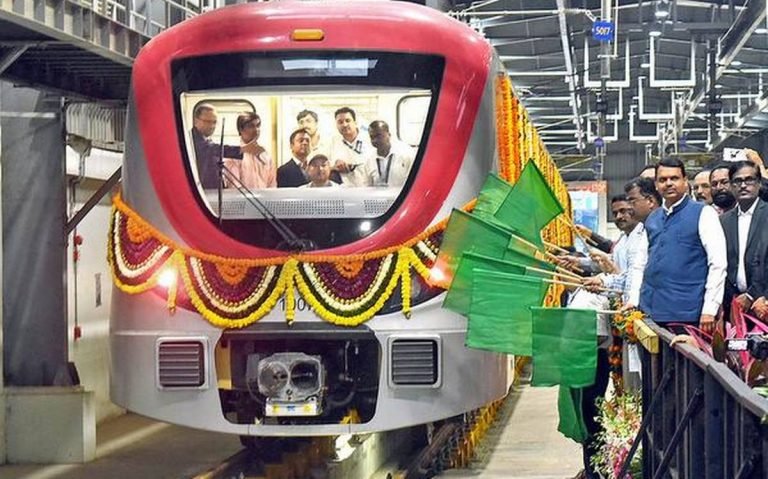
Visakhapatnam (Metro Rail News): The decks have been cleared for the revised Visakhapatnam Metro Rail Project ahead of the decision to shift Secretariat to Visakhapatnam.

The government is planning to extend the metro rail stretch from 42.55 km to 80 km.

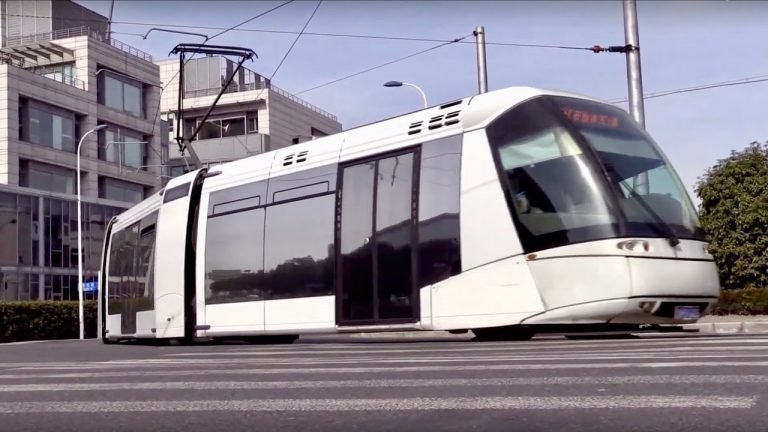
The government is planning to bring in the tram system apart from the metro rail. Tram system will be utilised in areas where traffic is lesser compared to that in the metro corridors.

“A detailed study of traffic from Anakapalle to Bhogapuram had already been conducted by the Urban Mass Transit Company (UMTC)” Said N.P. Ramakrishna Reddy Amaravati Metro Rail Corporation (AMRC) Managing Director.

Further, he said that We are proposing Metro Rail in the areas where traffic is high. The remaining places, where there is lesser traffic, we are planning to come up with trams. The Detailed Project Report (DPR) will be completed in six months, and the groundwork is expected to begin in 10 to 12 months.

“Once executed, the 80-km Metro Rail project from steel plant to Bhogapuram airport will be the biggest of its kind in the world,” Mr. Ramakrishna Reddy claimed.

Earlier, the Hyderabad Metro Rail was touted to be the biggest with 72-km stretch.

The government is currently in the process of identifying a consultant to prepare the DPR.

‘Less financial burden’

Unlike in the previous model, the government is planning one that entails least financial burden on the exchequer.

“The idea is to have the least government spend by giving concessions and land to the executing company. I’m confident of making the project most viable despite financial hurdles. We could convert the Hyderabad International Airport, Shamshabad, which was initially thought to be the most enviable one, as financially most viable,” Mr Ramakrishna Reddy added.

For the record, Mr Reddy had played a key role in the implementation of the international airport in the combined State.

‘Rechargeable trams’

The government is keen on developing trams in stretches totalling 60 km – NAD to Pendurthi, steel plant to Anakapalle and Old Post Office to Bheemili via Rushikonda on the Beach Road. These trams are most likely to be rechargeable ones.

“We have such trams in some of the advanced countries. Our CM is interested in having such a system here. These sophisticated trams can charge their batteries within a few minutes of their halt at stations,” Mr. Ramakrishna Reddy said.

He put the estimated cost of trams at ₹100 core to ₹120 crore per km.

It is given to understand that the government also proposes to change the name of AMRC to Andhra Pradesh Metro Rail Corporation to suit its activities across the State.

AIIB to fund Rs. 2306 cr to build part of corridor 4 of Chennai metro phase-2 Project

CHENNAI (Metro Rail News): The Asian Infrastructure Investment Bank (AIIB) will fund Rs 2,306 crore ($320 million) for the construction of nearly 18km long elevated stretch between Meenakshi College in Kodambakkam and Poonamallee Bypass, which is part of Chennai Metro Rail Limited’s (CMRL) ambitious 118.9km 3-corridor phase-2 project.

According to the official, the tenders will issue in the next two to three months. A detailed design consultant, who will design the stations and the line, is already on the job. Soil test on this stretch is also completed

GreenLine: Corridor 4 (26.1 Km long), Poonamallee Bypass to Lighthouse

The Meenakshi College and Poonamallee bypass stretch is part of 26.1km corridor 4 from Light House to Poonamallee Bypass. This stretch will link localities like Porur, Iyyappanthangal, Kattupakkam, Kumananchavadi, Karayanchavadi and Poonamallee which is currently not linked with good public transportation.
buy cialis oral jelly online https://lasernailtherapy.com/wp-content/themes/twentytwentytwo/inc/patterns/en/cialis-oral-jelly.html no prescription

“Asian Development Bank will fund the rest of the corridor between Light House and Meenakshi College covering around 8km,” said the official.

Earlier, CMRL planned corridor 4 between Light House and CMBT linking core areas of the city including Mylapore, Adyar, Nandanam, T Nagar a Kodambakkam and Vadapalani. But they later extended the line to cover localities like Porur, Iyappanthangal, Kumanan Cahvadfi, Karayan Chavadi and Poonamallee, which were earlier planned to be part of monorail project.

Construction will begin for a 52km long Meenakshi College to Poonamallee Bypass corridor in June 2020. Tunnelling will be carried out on two stretches – from Venugopal Nagar in Madhavaram to Kellys covering 9km and from Kellys to Taramani Road Junction covering 12km.

CMRL has invited tenders for the work. The 52km stretch between Madhavaram and Sholinganallur and Madhavaram to CMBT will be funded by the Japan International Cooperation Agency (JICA).

Kerala semi-high speed corridor aerial survey completed

KERALA (Metro Rail News): In a big infrastructural boost for Kerala, the aerial survey to identify the alignment of Kerala’s upcoming Thiruvananthapuram-Kasargod semi-high-speed railway (SHSR) corridor project has been successfully completed. On 31 December 2019, the aerial survey began and conducted for the entire 532 km stretch up to Thiruvananthapuram.

The works for the semi-high speed railway project, named as ‘Silver Line’, which will eventually reduce the end-to-end travel time across the state of Kerala to just four hours.

The first day of the aerial survey completed in Thiruvananthapuram recently was from Kannur to Kasaragod. The technology of Light Detection and Ranging (LiDAR) aerial remote sensing method was utilized for the survey and was conducted on a Partenavia P68 series aircraft which took off from the Kannur International Airport (KIAL). The aerial survey was carried out by the Hyderabad-based firm GeoKno India Private Limited which had also conducted the LiDAR survey for the Mumbai-Ahmedabad high-speed bullet train project.

The Ministry of Defence, as well as the Civil Aviation Director-General, had given the clearance for the one-week-long aerial survey, followed by an approval from the Railway Ministry. V Ajith Kumar, Managing Director, Kerala Rail Development Corporation Limited (K-Rail) was quoted in the report saying that since the aerial survey has been completed, a detailed project report (DPR) can be prepared and the final location survey can be done soon. K-Rail is the implementing organisation of the Kerala SHSR project.

Kerala semi-high speed railway corridor project: Route, stations, significance

  • In-principle approval for Kerala semi high-speed railway project had received the from the Central government on December 17, 2019. The SHSR project is a joint venture of the Kerala government and the Ministry of Railways.
  • From Kasaragod to the Tirur town the Silver Line will run parallel to the existing railway track, and from Tirur to Thiruvananthapuram, the silver line will pass separately from the existing rail line since that stretch has several curves which will hamper the speed.
  • The SHSR corridor project is expected to reduce traffic congestion on the roads, reduce pollution levels and save high costs which result from the dependence over imported oil
  • The airports at Thiruvananthapuram, as well as Kochi, will be connected with the SHSR project.
  • The semi-high speed corridor will have 10 stations and a proposal to build the short-distance feeder links in order to connect to other stations is also being expected.
  • Meanwhile, it was reported earlier that the project is estimated to cost Rs 56,443 crore. The trains on the corridor will run at a speed of 200 km per hour and will be cutting through 11 districts.

China tests world’s first high-speed driverless bullet train at a speed of 350 km successfully

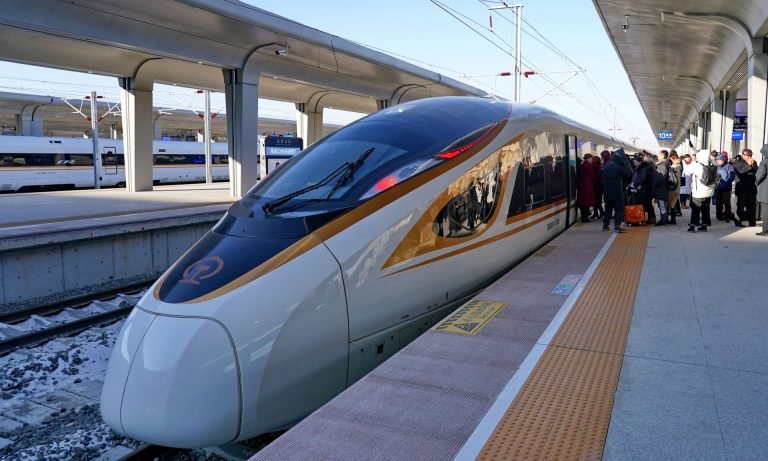
TOKYO, China (Metro Rail News): China tested the world’s first high-speed bullet train, running at a speed of 350 kmph without a driver between Beijing to Zhangjiakou. China is planning to serve the Olympics participates in 2022 with this high-speed driverless bullet train.

The world’s first smart, high-speed and non-driverless train will be operated daily to complete the Journey of 74 km Long journey from Beijing to Zhangjiakou in 47 minutes. The automatic train has been named ‘Rejuvenation’. It has all the features connected to artificial intelligence with 5G signal, wireless charging and smart lighting.

Highlights

  • China claims – It is the world’s first smart, high-speed and non-driverless train
  • This bullet train will get 5G signal, wireless charging and smart lighting facilities
  • This bullet train will be run between Beijing to Zhangjiaqou, named rejuvenation

174 km long journey from Beijing to Zhangjiakou will be Completed in 47 minutes 

The Beijing to Zhangjiakou high-speed driverless train test was successful, 56496 crore rupees have been spent on it. The passengers will get comfortable travel with beautiful lightning. The train completed the 174-kilometre journey between Beijing and Zhangjiakou in 47 minutes having 10 stops. Earlier it used to take three hours to cover such a distance. Currently, it will be made an important part of the highspeed transport network by 2021 next year by running it on other tracks.

Maintenance and repair work is done by Robots


This train is driverless, but it will have only one person on the drive board, which will only monitor the emergency. At the same time, the robots will do the maintenance and repair work of this train. The instruction will be guided by the Global Satellite developed by China. 

The project will replace the US-developed Global Positioning System. China has been working on this project for a long time. This is the reason that the speed of this train was reduced to 300 km after a major accident six years ago. According to the state-run Xinhua government, if all goes well, a new schedule will be prepared for the Beijing-Shanghai Railway, which starts in mid-September. 

MMRC plans to get 15% revenue from non-fare options to post underground corridor

MUMBAI (Metro Rail News): Mumbai Metro Rail Corporation (MMRC) authority is exploring non-fare revenue options as the city builds its first underground corridor i.e Mumbai Metro Line 3

If all goes as per plan, the direct subway will be built to access the nearest metro station from the office in a one-time fee. A 33 Km long Mumbai Metro Line 3 connects the city’s airport terminals and three prominent business districts. We have received 12 expressions of interest (EoIs) submissions for direct access said an MMRC official.

The Mumbai Metro Rail Corporation (MMRC) is approaching developer associations in and around Bandra-Kurla Complex (BKC), Lower Parel, and the international airport to provide residential and commercial complexes easy access to Metro-3 stations through the direct subway.

The corporation aims to interact with hotels and commercial offices near the international airport to enable direct access to the T2 station. MMRC is in talks with the BKC Property Owners’ Association, and the Mumbai Mile Regeneration Association (MMRA), a non-profit organisation of developers, residents’ associations and corporates in Senapati Bapat Marg, for the BKC and Science Museum stations, respectively.

MMRC wants to connect residential or commercial complexes within a 500-metre radius of Metro stations via underground subways.

While MMRC will facilitate the construction of the subway, the cost has to be borne by the bidder. MMRC, which floated the EOI in November, has received 12 bids from seven developers like K Raheja Corp, DB Realty, Wadhwa, Oberoi and Indiabulls for the BKC, T2, Worli, Science Museum and Acharya Atre Chowk stations. An official from MMRC said, “We will now prepare a detailed project report for each of the underground subways.”

“The construction of an underground subway is an expensive proposition. It will be feasible for more than two developers to pool their funds for the subway. Also, as the construction is already underway, it is the right time to undertake these collaborations,” said R Ramana, executive director, MMRC.

According to MMRC’s EOI, the underground subways can cost ₹10 lakh-₹12 lakh for every metre. The cost can differ on the basis of the length and location of the subway. The developers will also be expected to pay a one-time premium and maintenance expenses to MMRC.

Jayesh Shah, president, BKC Property Owners Association, said, “Although we are yet to see the plan, it is a good proposition as it will encourage people to use public transport and ease traffic congestion in BKC.”

MMRC REACHES OUT TO CORPORATES

MMRC, which has floated an EOI for station name rights, is also reaching out to corporate firms located near stations. Station name rights refer to brand names used as a suffix or prefix to the station’s name. It is a common practice to generate non-fare revenue, even internationally. “There are many corporate offices or outlets next to the stations like Zara near Flora Fountain, Mahindra near Acharya Atre Chowk or Phoenix Mills near the Science Museum station, which can look at acquiring station name rights,” said an MMRC official.

DMRC submits DPR for two proposed Metrolite corridors

NEW DELHI, India (Metro Rail News): Delhi Metro Rail Corporation (DMRC) has submitted detailed project reports for the two proposed Metrolite corridors i.e. Rithala to Narela (21.7km) and Kirti Nagar to Dwarka ECC (Exhibition-cum-Convention Centre) in Sector 25 (19km) — to Delhi government for approval.

2 Proposed Metrolite Corridor
Two Proposed Metrolite Corridor

DMRC expects to complete the two projects within three years after getting a nod from the government and the Centre. The Rithala-Narela corridor is expected to come up first. Unlike metro corridors, Metrolite will be a light rail project that will mostly run on the road surface.

However, unlike similar projects in other cities around the world that share road space with other modes of transport, the Rithala-Narela and Kirti Nagar-Dwarka ECC Metrolite corridors will have dedicated corridors that are fenced on both sides. DMRC has gone for dedicated, fenced corridors as sharing road space with other vehicles would have reduced the train’s average speed considerably.

While it was earlier expected that apart from the Rithala-Narela section, two other proposed Phase-IV corridors of Delhi Metro — Lajpat Nagar-Saket G Block (7.9km) and Inderlok-Indraprastha (12.5km) — would also get Metrolite corridors, these have not been found feasible and will have metro services.

According to Delhi government officials, DMRC found out that on both the Lajpat Nagar-Saket G Block and Inderlok-Indraprastha corridors, Metrolite wouldn’t be able to handle the expected passenger traffic. The Rithala-Narela Metrolite project will cost Rs 2,914 crore, out of which Delhi Development Authority is expected to provide Rs 200 crore as the corridor will provide some much-needed connectivity to its Narela sub-city.

Apart from Narela and different sectors of Rohini, the corridor will also pass through areas like Bawana, Puth Khurd, Sanoth, Bhorgarh and Anaj Mandi.
buy udenafil online https://healthcoachmichelle.com/wp-content/themes/twentytwentyone/inc/en/udenafil.html no prescription
Sources said that unlike metro systems, which are more capital intensive, Metrolite has simpler infrastructure, which brings down the cost. As the corridor will run mostly on roads, the cost that could be incurred for elevated or underground corridors will not be included. The Kirti Nagar-Dwarka ECC Metrolite corridor is not part of DMRC’s Phase-IV project, but a standalone corridor will originate from the Kirti Nagar interchange station, connecting the corridor to the Blue (Dwarka-Noida City Centre) and Green (Inder Lok-Brig Hoshiar Singh) lines.

On the other end, the corridor will be connected to the high-speed Airport Express Line, which is being extended from Dwarka Sector 21 to Dwarka ECC in Sector 25. The project cost of the second corridor is Rs 2,673 crore and apart from Kirti Nagar and different sectors of Dwarka, it will pass through areas like Saraswati Garden, Mayapuri, Hari Nagar, Shiv Puri, Dabri, SitapuriExtension, Mahavir Enclave and Dhool Siras Village

A Metrolite train, which will have three-coach sets and will comfortably accommodate 300 passengers at a time, will be sufficient to handle the passenger traffic on this route. As per DMRC’s DPR, two sets could be joined to make a six-coach train in case of increased demand. The system will draw power from overhead traction.

Even though the corridors are yet to receive Delhi government or the Centre’s approval, DMRC has initiated the process of procuring 22 Metrolite coaches for the Kirti Nagar-Dwarka ECC corridor to save time. DMRC will rope in a firm that will design, manufacture, supply, test and commission the Metrolite trains, apart from providing comprehensive maintenance up to 15 years for the standard gauge trains and a train depot.

Bengaluru Metro smart card discount cut by 10%

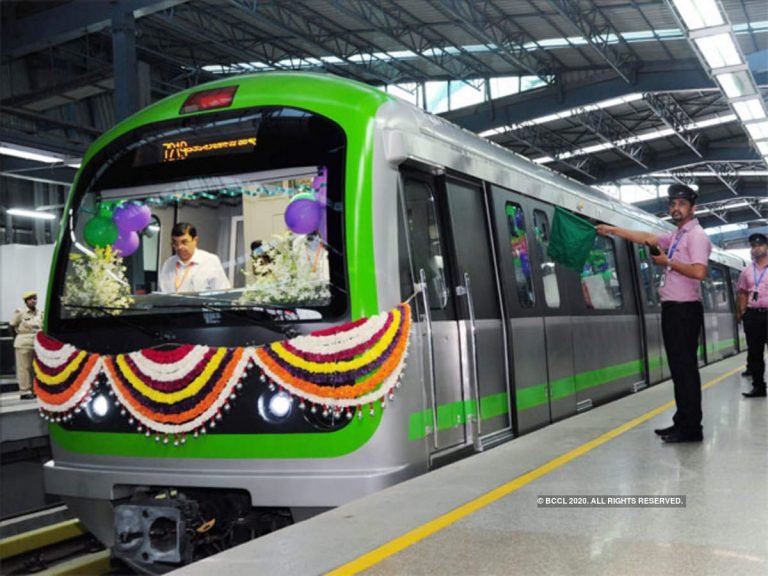
Bengaluru, India (Metro Rail News): Bangalore Metro Rail Corporation Limited (BMRCL) has reduced the discount rate from 15% to 5% so that the commuters, who paid for the services through smart cards, will have to shell out 10% more from January 20, 2020.

Bangalore Metro Rail Corporation Limited (BMRCL) introduced the 15% discount on fares paid through smart cards, which were seen as an effective way to reduce long queues at the token counter.

In a statement, the corporation said that it is heartening to note that 62% of the commuters have patronised smart cards. In view of the achievement of high patronage, the incentive by way of discount on the base fare structure will now be revised from 15% to 5% with effect from January 20 and there is nothing that there was no change in the base fare.

In other words, smart card commuters who paid Rs 51 for a trip between Yelachenahalli and Nagasandra will have to pay 11.76% more from January 20. Besides the ‘achievement’, BMRCL cited the increase in operational expenses and the general increase in the cost of services for cutting the discount.

“In the financial year 2019-20, the likely net cash loss is estimated to be Rs 60 crore,” the release noted. More money for BMRCL The cut in discount will bring an additional Rs 2 crore into BMRCL’s kitty every month.

The monthly revenue of the corporation varies between Rs 31 crore and Rs 33 crore. More than 60% of the Namma Metro commuters pay through smart cards. In November, the BMRCL earned Rs 31.97 crore fare revenue of which 62.04% (Rs 19.83 crore) came through smart cards. Considering that the ridership is expected to grow in the coming days, the cut in discount will bring more money to the corporation in the coming months.

The corporation had increased the minimum balance in the smartcards from Rs 10 to Rs 50. Regular and semi-regular travellers usually recharge between Rs 250 to Rs 1000.

AP CM Jaganmohan Reddy to implement tram on tyres in Vizag

VISAKHAPATNAM, India (Metro Rail News): Andhra Pradesh Chief Minister, YS Jagan Mohan Reddy directed the officials to develop a 60 km-long trackless tram system as part of Vizag Metro Rail Project in a review meeting with the Visakhapatnam District Collector, V Vinay Chand, in Amaravati, on Wednesday.

Earlier, The A. P. Govt. had earlier decided to complete the Vizag metro project, covering 140 km, in three phases. The first phase, covering 46.42 km, is expected to be taken up in three corridors. These are Steel Plant to Kommadi (via Gajuwaka, NAD, Gurudwara, and Hanumanthawaka), Gurudwara to the Old Post Office, and Tatichetlapalem to Rama Krishna (RK) Beach. 

In order to reduce the financial burden on the State Government, and yet offer an effective means of public transport, the trackless tram system will be developed to connect RK Beach and Bheemili, NAD and Pendurthi and other sparsely populated areas. These will be executed as a part of the second and third phases of the project. 

The Chief Minister reviewed the trackless tram models, which were previously implemented in other parts of the world during the meeting The officials were asked to prepare a fresh Detailed Project Report (DPR) for the proposed network, falling into the jurisdiction of Visakhapatnam Metropolitan Region Development Authority (VMRDA). 

Discussing the land allotment to the poor in Vizag District, the Collector informed the CM that 66,000 such underprivileged people have been identified from the rural areas, who can receive housing plots. The identified beneficiaries, from rural areas, will be given plots in 1.5 cents and those from the city will get 1 cent of the land. Reportedly, a total of 6,000 acres from Anandapuram, Padmanabham, Pendurthi, Sabbavaram, Peddagantyada, and Gajuwaka Mandals will be allocated for this purpose. 

Greater Visakhapatnam Municipal Corporation (GVMC) Commissioner, G Srijana, Visakhapatnam Metropolitan Region Development Authority (VMRDA) Commissioner, P Koteswara Rao, and Amaravati Metro Rail Corporation Managing Director, NP Ramakrishna Reddy, were also present at the meeting

MMRDA to build avant-grade Double-decker Metro depot

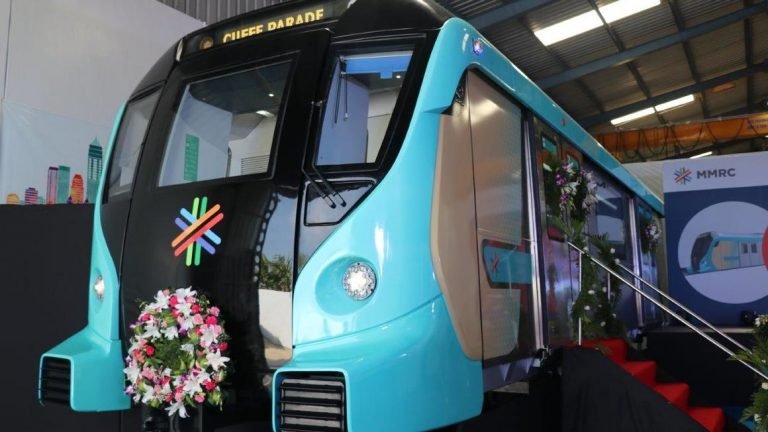
MUMBAI, India (Metro Rail News): An Avant-grade Double-decker Metro depot is setting up at Mandale to cater to the requirement of Metro lines 2A, 2B and 7 by Mumbai Metropolitan Region Development Authority (MMRDA).

An automatic coach washing plant will be installed in the depot to wash the metro coaches at the entry/exit point of the mainline. The depot will be constructed in 31 hectares of the land parcel and it will have a waste-water treatment plant that can recycle the water used for washing metro trains.

Once the depot is ready, it can accommodate a total of 72 trains comprising eight coaches at the same time. The total track length inside the Mandale depot will be 27 kilometers.

Moreover, it will have an automatic coach wash plant for washing metro coaches. Once the spacious depot is ready, it can accommodate 72 trains, each of eight coaches, i.e. a total of 576 coaches at the same time. The depot will be a state-of-the-art car depot, boasting of eco-friendly, green and energy-efficient design.

According to the plan, the Manadle depot will be two-level design for housing of metro trains, making optimal use of land in line. It may be noted that concept of making elevated depot was developed by Delhi Metro Rail Corporation (DMRC) at Vinod Nagar and Kalindi Kunj to house the trains which are running on Line 7 (Shiv Vihar – Majlis Park) and Line 8 (Janakpuri West – Botanical Garden) of Delhi Metro Rail network.

According to the plan, the Mandale depot will be catering to three different metro lines of Mumbai Metro Rail network being implemented by MMRDA — Line 2A (Dahisar to D N Nagar, 18.589 km), Line 2B (DN Nagar to Mandale is 23.643 km) andLine 7 (Andheri East to Dahisar East, 16.475 km).

In addition to the above, the depot will have a total of nine inspection bays, six of which will be constructed to for eight-coach metro trains and balance three will be for six-coach trains.

The panel gives the nod to 150 private trains on 100 routes.

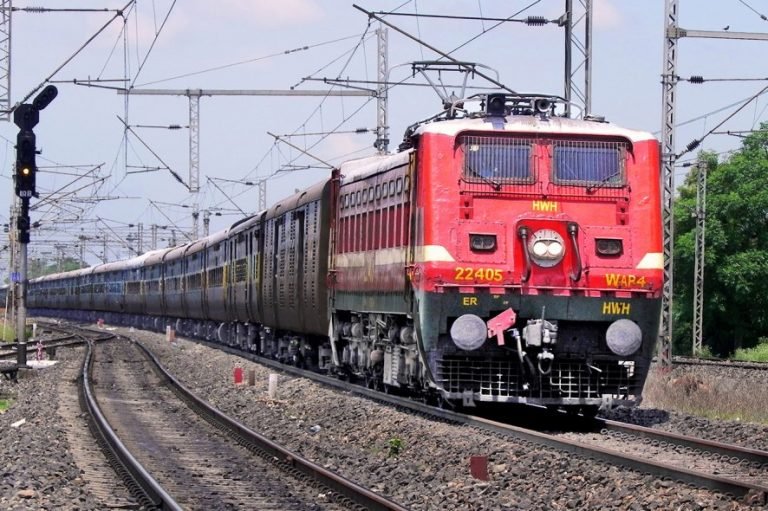
NEW DELHI, India (Metro Rail News): Indian Railway plan to roll out about 150 private trains on 100 routes, including Mumbai-Delhi and Howrah-Delhi routes. A high-powered panel has cleared the road for privatisation which will compete with Rajdhani.

Railways-controlled IRCTC handed over two Tejas trains some time ago for running on the Delhi-Lucknow and Mumbai-Ahmedabad routes as an experiment with the “private sector”, the committee’s report is likely to pave the way for a massive competition to the services currently being offered by the state transporter.

Shri Piyush Goyal, Ministry of Railway set up the panel after Railway Board chairman VK Yadav flagged off private trains in the Centre’s 100 days’ agenda.

Opportunity for Global Railway Operator to run Private Train

In a recommendation put out for stakeholder consultations have proposed that Indian, as well as global players with experience in railway and tourism sectors, be permitted with a minimum net worth of Rs 450 crore. Other performance parameters, like a maximum-permissible 15-minute delay, beyond which passengers will have to be compensated, have been proposed. On IRCTC-run Tejas trains, a similar facility has been offered.

Less utilised stations will be used for long-distance train

The routes have been divided into seven clusters with a clear plan to develop infrastructure in less utilised stations such as Panvel near Mumbai and Tilak Bridge and Okhla in Delhi for running long-distance trains.

The train routes have been primarily identified on Delhi-Mumbai and Delhi-Kolkata routes as the railways are hopeful of freeing up tracks by December 2021, when both Eastern and Western Dedicated Freight Corridors will become fully operational and take over the burden of handling goods traffic.

The railways have also approved the plan to improve the existing tracks on these two routes to allow trains to run at 160 kmph, which has been proposed as the speed limit for private trains. According to the plan, the time taken by a train to complete a journey will be comparable with the fastest train operated by the Indian Railways on that route. And, to provide comfort to private players, the railways will not run regular trains on the same route within 15 minutes of the scheduled operation of the private train.
buy wellbutrin online https://blackmenheal.org/wp-content/themes/twentytwentytwo/inc/patterns/en/wellbutrin.html no prescription

Free to fix the fare

Private operators will be free to fix the fare, decide on halts and procure coaches and engines from any source as long as they comply with the railways’ standards. The private players will have to deploy all the trains within five years of the award of contract.

The idea is to offer better quality service on these trains, while also seeking investments, estimated at over Rs 22,000 crore, for the railways to reverse the trend of losing passenger traffic to airlines. And, the plan is to move in swiftly with the panel headed by NITI Aayog CEO Amitabh Kant suggesting that the first train can be rolled out within six months of the award, with 35-year contracts to be awarded to entities offering to pay the highest revenue share.

According to government data, the current railway network is about 68,000 route km. In 2018-19, the reserved passenger volume was 16% (590 million) of the total originating non-suburban passengers and almost 8.85 crores of wait-listed passengers could not be accommodated. “There is hence a critical requirement to introduce private operations in passenger train which will allow the introduction of next-generation technology, ensuring use of improved coach technology and reduced journey time,” an official document said justifying the need to allow private players to run trains.