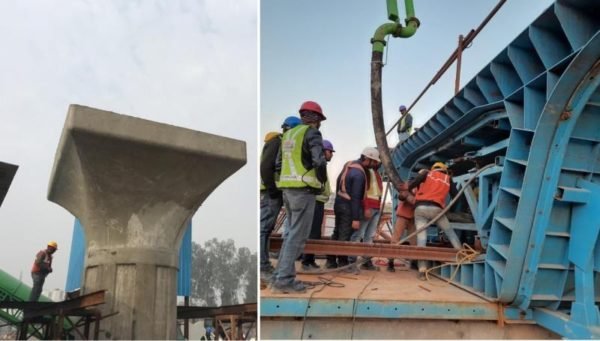
New Delhi: Prime Minister Narendra Modi has flagged-off the Delhi-Faridabad Metro Line that would allow hassle free travel for around two lakh daily commuters between the national capital and the industrial hub in Haryana.
The extension of the Delhi Metro connects Badarpur to Escorts Mujesar in Faridabad.
The total cost of the project from Badarpur to Escorts Mujesar is nearly Rs. 2,500 crore. Out of this, Rs. 1,557 crore was borne by the Haryana Government, the Centre contributed Rs. 537 crore, while the Delhi Metro provided Rs. 400 crore.
All these are elevated and located on either side of the Delhi-Mathura Road (NH-2).
“The nine-station metro corridor which was 95 per cent indigenously built will provide people a safe, affordable, quick, comfortable, reliable, environment-friendly and sustainable transport facility,” a Haryana government spokesperson said.
Haryana Chief Minister ML Khattar, addressing a press conference on Saturday, had thanked the Prime Minister for “gifting” the Metro service which would take the city to “another level of progress” with better connectivity with other NCR towns.
He had also said that the Prime Minister would be announcing the go-ahead for connecting Gurgaon with Faridabad by Metro.
KOCHI (Metro Rail News): Kerala Finance Minister Thomas Isaac announced that the semi-high-speed rail project, connecting Kasargod and Thiruvananthapuram, will be completed in three years while presenting the Kerala budget for 2020-21 on Friday. He said the land acquisition would start this year. “The fare from Kasargod to Thiruvananthapuram would be Rs1,450,” he said.
What did we know about the project?
The 540-km project envisages the reduction of travel time from the northern to southern extremes of Kerala from 12 to four hours. A joint venture (JV) of the Kerala government and Railways, the project could go a long way to address transportation problems in the state.
State cabinet had approved the project after a year-long feasibility study, conducted by the Kerala Rail Development Corporation Ltd (KRDC).
Is the project feasible?
Delhi Metro Rail Corporation (DMRC) principal advisor E. Sreedharan, had expressed doubts over the economic feasibility of the project.
Apart from the expenses, Sreedharan has flagged the massive rehabilitation that would have to be undertaken for the project.
The criticism has not changed the Kerala government stand. It is going along with its efforts to prepare investment for the project. Chief Minister Pinarayi Vijayan, during his last visit to Japan, reportedly held discussions with a few companies.
How much will the project cost?
The project is predicted to cost Rs 56,443 crore it s can go up to Rs 66,079 crore at the time of its completion. It would employ 11,000 during its implementation, the project would generate 50,000 jobs.
Trains on the track, which cuts across 11 districts, will run at a speed of 200kmph.
DELHI (Metro Rail News): The Ministry of Railways said that there is no plan to privatise Indian railways operation except outsourcing the commercial and onboard services for some trains, allowed private suppliers to induct new parts for running trains on the specific corridor.
“There is no plan to privatise the operations of Railways. buy levitra soft online https://www.facebeautyscience.com/wp-content/themes/twentyseventeen/inc/en/levitra-soft.html no prescription
Although there is a plan to outsource the commercial and onboard services of a few trains and to allow private players to induct modern rakes to run trains on select routes to provide better service delivery to passengers,” Railway Minister Piyush Goyal said in a written reply in the in Rajya Sabha.
He said that specific services, like station cleaning, pay-and-use toilets, retiring places, parking and platforms maintenance, are being outsourced as and when required, to better cleanliness and other services of trains.
Railways Hiked Fares Up To 4 Paisa/km, It Will reimburse Barely 5% Of Rs 55000 Cr Losses: Goyal
Indian Railways to be given indigenous designs
The Ministry of Railways said on Fridays that the government is not seeing the complete redesign of railway coaches and even procurement of full train rakes from foreign suppliers.
“There is no plan to start the import of complete train sets from foreign suppliers,” Railway Minister Piyush Goyal in a written reply to a question in Rajya Sabha.
“A Transfer of Technology (ToT) contract for the development of efficiency from production to commissioning, which includes design, development (prototyping), manufacturing and testing of Aluminium Body passenger coaches of eight variants (five of Broad Gauge loco-hauled coaches and three variants of Standard Gauge Metro coaches) has been awarded by Modern Coach Factory (MCF) in Uttar Pradesh’s Rae Bareli to a Korean company,” Piyush Goyal said
The Railway Minister said that based on these facilities, coaches shall be manufactured at MCF and “not through import”.
AMARAVATI (Metro Rail News): The Andra Pradesh GovernmentCancels the Essel Infra Consortium contract and issued orders for calling quotations for preparation of Detailed Project Reports (DPRs) in respect of Visakhapatnam light metro for a length of 79.9 Km across 10 corridors in the city as well as transaction advisory from Delhi Metro Rail Corporation (DMRC), RITES Ltd and Urban Mass Transit Company (UMTC) Ltd.
Government-issued orders cancelling the bid received from M/s Essel Infra Consortium for the development of Visakhapatnam Metro Rail Project, on Friday.
Visakhapatnam light metro Rail
In the GO MS No 99, J Syamala Rao, Secretary, Municipal Administration and Urban Development department stated that “Government decided to appoint a new consultant for preparation of the revised DPR for the development of Metro Rail Project at Visakhapatnam”.
The Managing Director, Amaravati Metro Rail Corporation Limited (AMRCL), Vijayawada stating the Terms of Reference (ToR) for preparation of the works has requested to permit him to appoint consultants for calling quotations from DMRC, RITES and UMTC.
The DPR for the Light Metro Rail Corridors covering a length of 79.91 Kms duly updating the existing DPR of 42.55 Kms and preparation of fresh DPR for balance 37.36 Kms network and Tender Processing for selection of Developer on Success Fee basis simultaneously. In addition to that, DPR Modern Tram Corridors covering a length of 60.20 Kms.
The Managing Director, Amaravati Metro Rail Corporation Limited, Vijayawada, was directed to take immediate necessary action accordingly.
The AMRC had also sought permission for the preparation of another DPR for a modern tram system covering 60 km more. The MAUD Department is expected to give clearance for the same shortly. The project is proposed to be taken up in the second phase after 2023 and before 2028.
Phase 2 of the metro rail project Modern tram, corridors 7, 8 and 9 planned for 2023-28 and corridor 10 for 2027-29 Corridor 7 NAD Junction to Pendurti – 10.2 km Corridor 8 Steel plant to Anakapalle – 18.2 km Corridor 9 Old post office to Rushikonda beach – 15.4 km Corridor 10 Rushikonda beach to Bheemili beach – 16.4 km Total length 60.2 km
MUMBAI (Metro Rail News): Mumbai Metro Rail Corporation (MMRC) has received a remarkable response from various organizations to acquire rights to name stations on the Colaba-Bandra-SEEPZ Metro-3 corridor. In all 28 organizations have expressed their interest in naming rights, with many of them showing interest in multiple stations.
In all, 87 Expressions of Interest (EOIs) receives for 18 stations. Bandra-Kurla Complex Station, being the most meaningful business district in the city, was the most sought-after station with 12 EOIs. Dadar and Airport Terminal 2 stations were joint second, receiving 9 EOIs each; followed by Airport Terminal 1 and CSMT with 7 EOIs each.
The organizations from various sector have shown interest including PSUs like LIC, Indian Oil banking & financial institutions like SBI, Bank of Baroda, UTI, Kotak, IDFC First, HSBC, airlines like Indigo, SpiceJet, other corporates like JSW, Glaxo Smith Kline, TimesGroup, Blackstone, Phoenix Mills, realty firms like Piramal, Oberoi, DB Realty and several others. The EOI process was managed by Auctus Advisors and StudioPOD, our non-fare revenue consultants.
This level of response confirms our view that organizations and businesses in Mumbai place a significant commercial value to a long-term association with the metro network. Given its high ridership and reach, the organizations appreciate the impact and visibility it provides.
“Non-fare revenue is critical for the sustainable operations of any transportation network, which helps keep passenger tariffs under check. Stations Naming Rights is a critical source contributing significantly to the overall of non-fare revenue. The response from various organization to the EOI has been encouraging,” said Ranjit Singh Deol, MD, MMRCL.
“The organizations will also benefit by naming stations and associating with a vital metro corridor which will change the way Mumbaikars travel today,” Deol added.
Revenue generation for Indian Railways is very important, as it
cannot survive without increased revenues. The public, in general, is in the
habit of criticising every price increase by railways without considering that
the price increase is a compulsion and ultimately, is in the interest of the
public itself, however indirectly.
Railways are the backbone of the nation and economy, and it cannot
go on without increasing the prices with growing inflation. Existence of
Railways is important on account of many factors. One of these is that Railways
is the biggest employer also. Considering the indirect
employment, the railway provides through the creation and maintenance of
infrastructure; perhaps no other organisation can match Indian Railways, as far
as employment generation is concerned. Thus, the nation’s employment ratio is heavily dependent on
Railways.
Till now, Indian Railways has struck a laudable balance between
price increase and burden on the poor, and it does deserve kudos for the same.
Few people know that Indian Railways recovers only 57% of the cost of travel on
an average. No organisation can run on losses for a very long time and time is
ripe that Indian Railways also find ways to increase its revenues and offset
the losses.
The Indian railway’s charges fees on cancellation of tickets, which is a justified practice and is established in any service sector. If one books a hotel or flight or restaurant, similar cancellation policies are the norm everywhere. Indian Railways hiked the cancellation charges nearly to double since November 2015. There were various justifications behind this. Some of the justifications, among other things, are checking touts and increasing public convenience.
Indian Railways have been suffering from losses; traditionally, they
must find new sources of revenues. While deciding on this, they have always
taken care of their poor customers and in this way, have done their duty
towards the Nation. This time (while increasing the cancellation charges),
their balance between the rich and the poor does not seem up to the mark. The
revenue generation ideas should be such, as should be heavy on rich passengers and
should have the least impact on the poor ones. There is no harm in subsidising
the poor out of the revenue generated from the rich.
Indian railways have been successful in increasing its revenues
on this count (increased cancellation charges), which is good news and is
crucial for keeping Indian Railways going. It is also crucial for strengthening
the rail infrastructure and increasing the amenities for the public.
As per the New Indian Express, “From cancellation charges, Indian
railways earned in 2017-18 Rs 1,205.96 crores., which increased to Rs 1,852.50 crores.
In 2018-19. In the same manner, Southern Railway earned Rs 176.76 crore in
2017-18, which jumped to Rs 182.56 crore in 2018-19. Shockingly, ticket
cancellation revenue of the neighbouring South Central Railway whose
jurisdiction currently spreads over Telangana, Andhra Pradesh and parts of
Maharashtra and Madhya Pradesh has jumped from Rs 127.22 crore to Rs 690.80
crore — 500 per cent increase”.
Some of the cancellation rules
are: If a confirmed ticket is cancelled more than 48 hours before the scheduled
departure of the train, flat cancellation charges shall be deducted at the rate
of Rs 240/- for First AC Class/ Executive Class, Rs.200/- for 2 tier AC, Rs 180
for III AC / AC Chair car / 3 AC Economy and Rs120/- for Sleeper Class. For
Second Class, Charges are Rs 60/-. Cancellation charges are per
passenger.
As is evident from the
above, charges for AC classes are not much higher in comparison to sleeper
class. While we know that the status and income of an AC class passenger is
many times more than that of a sleeper class passenger, it would have been
worthwhile to address that gap in cancellation charges also. A typical formula
could be that AC 3 class passengers should bear double of sleeper class, AC 2
Class passenger should bear one and half times of AC 3 class, and AC First
class passengers should bear double of AC 2 class. In a tabular form, it can be
represented as under.
Class
Cancellation charges
Second class
Rs x
Sleeper
Rs 2x
AC 3
Rs 4x
AC 2
Rs 6x
AC 1
Rs 12x
Though increasing cancellation charges is not a bad idea, the gap
between the rich and the poor need to be properly addressed.
Further, there is a need to see the two justifications discussed
above with some other angles also. We can discuss them as below.
Justification of Discouraging
touts:
It is assumed that high cancellation fee will be a
discouragement to touts, as in case they fail to sell it, they will have to
bear hefty cancellation fees.
This is an example of “when buffaloes fight, the crops suffer”.
Here, crops represent the poor public. Instead of finding a better way to check
touts, doubling of cancellation fees is like awarding punishment to crops for
the crime done by the buffaloes.
Increasing the ARP (Reservation period) to 120 days has given
more opportunity to the touts who know the rush period and get booking of
tickets in bogus names and then sell them to the needy at a premium. Members of
the public in general usually do not know their exact travel dates in so much
advance. When they are ready with their dates (after getting the leaves
sanctioned or confirming the exam dates of the children etc.), they
often find only waiting lists, as usual for peak season, and touts have already
taken hold of the tickets, taking advantage of 120 days of ARP.
To discourage touts, the Government has taken some steps, yet
scope remains to do something more. They can take following more steps viz.
Touts generate a ticket in advance in bogus names and then they
sell it to customers who travel with a fake identity. Getting a Fake identity
is nowadays an easy task, which can be vouched from the websites. One such
website is https://www.fake-id.com/en,
which claims to create fake IDs.
Aadhaar quoting in e-tickets be made compulsory and it should be
the only eligible method for identification. But before implementing this, the Government
have to ensure that every citizen does have Aadhaar.
Justification of Increasing public convenience:
Earlier, when cancellation charges were less, people used to buy
additional tickets if they were not sure about their travel dates. In such
cases, for the same journey, they used to buy tickets on more than one date and
would cancel unutilised tickets. This reduced the probability of getting a
confirmed ticket for other genuine buyers who were sure to travel. Now, if the
cancellation charges are high, they will be discouraged to buy multiple
tickets. Prima facie this seems to be a genuine justification. However, this is
not a very strong justification due to following two reasons.
a. This methodology is
not expected to increase revenue for Indian Railways, as many cancellations per
person will be lesser. For example, Mr. X earlier used to buy two tickets and
paid cancellation fees on one of them. This time, he will be purchasing only
one ticket (after getting his plans duly finalised) which he will be utilising
and thus, avoiding any cancellation charge unless some exigency is there.
b. This is also not expected
to increase convenience to the passengers as expected. Even if a passenger
used to purchase more tickets than actual requirement, ultimately, he used to
cancel extra tickets, which were allotted to other passengers in waiting list.
Thus, ultimately the berths were utilised. But, now, due to heavy cancellation
charges, especially in sleeper class, some people may not bother to get the
tickets cancelled when the refund amount is paltry. For example, if a ticket of
sleeper class costs Rs 150 and cancellation charges are Rs 120, the passenger
may not bother to get the ticket cancelled for a paltry amount of Rs 30. Thus,
the chances of such berths remaining vacant due to “no-show” (no-show is a term
used by airlines for the passengers whose confirmed seat remains vacant due to
non-arrival of him/her), are high, but in the reservation chart, these will not
appear vacant. Now, this berth will be given unethically by the TTE to some other
person for a bribe and railways will not know that there was “no-show” because
as per chart, the original passenger is travelling.
While if the passenger had
got it cancelled against cancellation fee, Railways would have got some additional
revenue (in the form of cancellation fee), and it would have been more
convenient for public also, as another member of public would have got reservation
against that cancellation at a genuine price instead of giving bribe to the
TTE. Thus, it would have been a win-win situation for both the public and
Railways. But, for this to happen, it is important that the passenger (who
wishes to cancel his ticket), must get some considerable refund, which is
possible only if cancellation charges for lower classes are reasonable. One way
to ensure this could be to reduce cancellation charges to 50% (minimum Rs 60)
of the ticket price, in cases where ticket price was less than Rs 180.
Conclusion: Increase in cancellation
charges is justified in terms of making Railway profitable, viable and capable
of providing more facilities to the public. It is also necessary to cope up
with inflation. But Railways should keep three things in mind.
a. There should be revenue
generation, which is important for existence.
b. The burden on the poor
should be minimum. The poor should be subsidised by the revenues generated from
the rich.
c. The policies should be such,
as to discourage touts and also bribery by railway staff.
Finally, the public welcome the moves of Indian railways for
revenue generation and railways must continue to differentiate between the rich
and the poor, as far as fares and charges are concerned.
(The views and opinions expressed in the
article are the author’s personal opinion and not of his employer
company.)
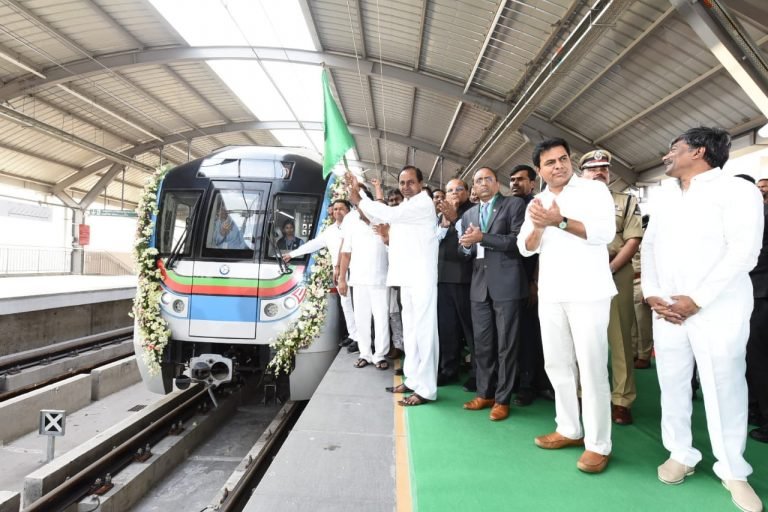
HYDERABAD (Metro Rail News): Chief Minister K Chandrashekhar Rao inaugurates the much-awaited Hyderabad Metro’s Green Corridor, (JBS-MGBS) on February 7, 2020, at 4 pm, extending yet further public transportation convenience for passengers shuttling between the north-south ends of the city.
“Hon’ble CM felt very happy with the way metro stations were built, the latest technologies we adopted, etc. He said JBS & MGBS stations are like modern airports & they would soon be buzzing with people & activity” said MD HMRL
Hon’ble CM Mr KCR stated that Hyderabadis have started enjoying the sweet fruits of metro & that we need to prepare a master plan to extend the metro to all parts of the city to reduce pollution & make Hyderabad a global city
He was in a very jovial mood & when I took him to driver’s cabin, he kept on mentioning the names of different galleries, theatre & road names etc., near different stations of the JBS-MGBS corridor.
“Hyderabad metro is superior to Delhi metro in terms of technology & vision & he asked me to maintain that edge in future as well. He allowed the engineers & officers of HMRL & L&TMRHL to be photographed with him in different groups” MD HMRL Added further.
Hyderabad Metro already extends east-west connectivity in the city with services on the LB Nagar-Miyapur and Nagole-Raidurg corridors. With the commence of commercial operations on the JBS-MGBS route, another 11 km of Metro network added to the existing 58 km. The 69-km network signals the end of Phase I of the Metro project in the city.
Commissioner of Metro Rail Safety (CMRS) had published the necessary safety certificate for the route last month. JBS-MGBS section is one of the parts of JBS-Falaknuma corridor. It has nine stations — JBS-Parade Grounds, RTC Crossroads, Secunderabad West, Gandhi Hospital, Musheerabad, Narayanguda, Chikkadpally, Sultan Bazaar and MGBS.
Presently, around four lakh passengers are travelling every day on the other two corridors. Every day, about 780 trips are being served, covering 18,000 km, with the punctuality of 99.8 per cent.
The metro services between Jubilee Bus Station(JBS) to Mahatma Gandhi Bus Station(MGBS) will be operational to our passengers tomorrow on February 8 from 6:30 am.
Municipal Administration and Urban Development Minister KT Rama Rao (KTR), DGP Mahender Reddy, Hyderabad Metro Rail Limited (HMRL) managing director NVS Reddy were present at the inaugural ceremony.
Getting to the JBS parade grounds metro station that is placed closer to the JBS bus station was constructed at 66 ft with five levels — street, lower concourse, upper concourse, lower platform, and upper platform.
The MGBS interchange metro rail station is termed as one of the biggest metro rail stations in Asia which connects Miyapur-LB Nagar stretch of Corridor I and JBS-Falaknuma of Corridor II.
Hyderabad Metro Rail becomes second-largest metro network in India
By the launch of another 11-km stretch on Friday, Hyderabad Metro Rail has become the second-largest metro rail network in the nation after Delhi. Hyderabad Metro Rail, the world’s largest public-private partnership project, is now the second-largest operational metro network in the country covering 69.2 km, the officials said.
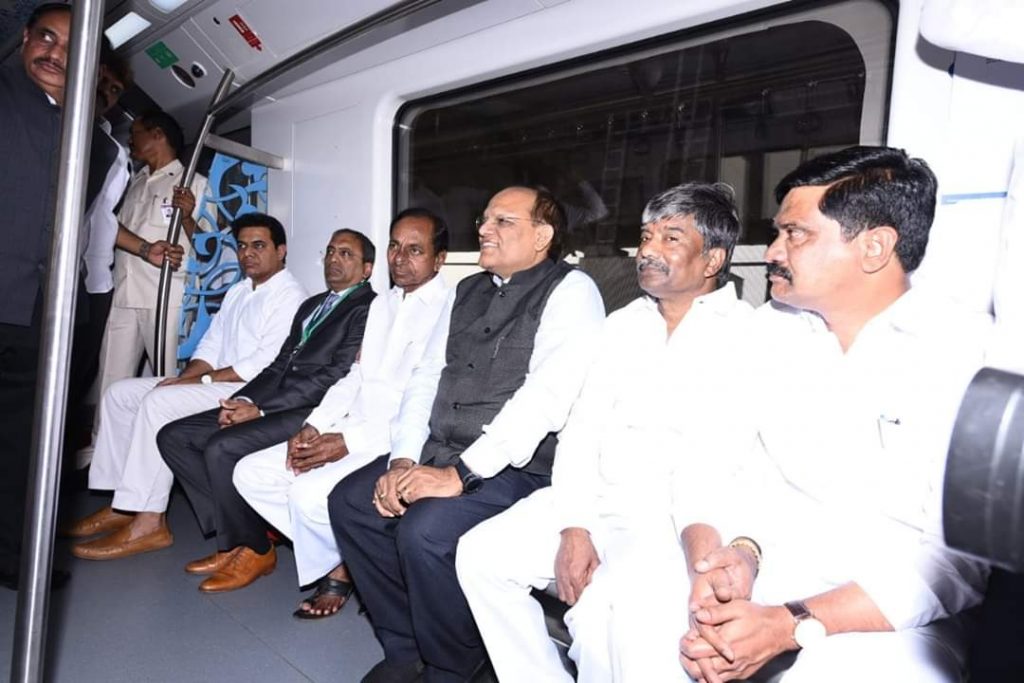
After introducing the stretch, the Chief Minister, along with some of his cabinet colleagues and senior officials, travelled from JBS to Chikkadpally.
New Delhi (Metro Rail News): The National Green Tribunal has approved the Delhi Metro Rail Corporation (DMRC) to construct a bridge on the Yamuna flood plains under Phase-IV of the project.
A bench addressed by NGT Chairperson Justice Adarsh Kumar Goel passed the order after noting the recommendations of the Principal Committee which said that the project can be encouraged subject to certain conditions.
The tribunal does not have any assistance to any rival viewpoints to deal with the present issue so as to go into any possible exception to legality – substantive or procedural, it stated.
“Having regard to the nature of the project and opinion of the Principal Committee, we do not see any prima facie objection to the project. The same must, however, comply with legal requirements and procedures,” said the bench, also comprising Justice S P Wangdi.
To ensure additional environmental safeguards on account of such activities in future, besides individual evaluation of such projects on the environmental model, cumulative impact assessment (CIA) is required to be carried out, it stated.
To capture a holistic picture in terms of the impact of such future developmental activities and the required mitigation measures the CIA would be able, it stated.
“The Principal Committee may also consider setting up of artificial wetlands, bio-diversity parks and other necessary mitigation measures, including phytoremediation at the mouth of drains leading to the river, at the cost of project proponents. The study may be got conducted by Principal Committee, by apportioning the cost amongst project proponents based on the quantum of development and their environmental footprints,” the bench said.
The Principal Committee had advised that all the construction activities should be carried out with DMRC with minimum effect on the flood plains.
“Restoration of the flood plain that may be impacted adversely or otherwise by the construction of bridge alignment in the Yamuna flood plain/ pillars. The muck/debris generated should be disposed off scientifically and no dumping shall be allowed on the flood plains. Compensation of the trees to be cut during construction/ operational phase of the project to be carried out by DMRC without fail,” the committee said.
The appearing lawyer for the DMRC referred to the Supreme Court’s order that stated that phase-IV of Delhi Metro project be executed without delay.
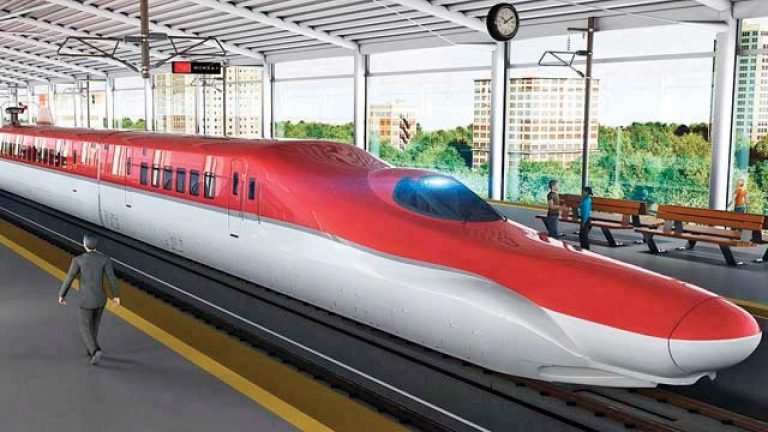
Mumbai (Metro Rail News): The Railway Board has provided a big boost of ₹5,000 crores to the Mumbai-Ahmedabad High-Speed bullet Rail Project through extra-budgetary resources, as per to its pink book released for the financial year 2020-21.
The project has been in the centre of a political storm ever since the Maha Vikas Aghadi came to power in Maharashtra. The revised outlay for the project for 2019-20 has been pegged at ₹1,000 crores, most of which, senior railway officials said, has gone towards land acquisition.
The overall length of the corridor is 508.17 km, with 155.76 km in Maharashtra and 348.04 km in Gujarat. “In Gujarat, most of the land required for the project has been acquired, but in Maharashtra, its only 50% of the required land has been acquired, most of which is govt land,” a senior railway official associated with the rail project said.
Saying the project a “white elephant”, The Chief Minister Uddhav Thackeray said on Tuesday a decision on moving forward with the Mumbai-The bullet train project will be taken only after he is convinced it will boost the State’s industrial development.
To execute the project the ₹1.08 lakh-crore is being financed with the help of a tied loan from the Japanese International Cooperation Agency, that is financing 80% of the expense, with ₹10,000 crores being borne by the central government and ₹5,000 crores each being provided by the Gujarat and Maharashtra governments.
MUMBAI (Metro Rail News): The Mumbai Metropolitan Region Development Authority (MMRDA) has cancelled another contract of Metro 2B awarded to RCC-MBZ JV and Simplex Infrastructure Limited. The Authority also encashed bank guarantee amounting to Rs 100 crore submitted by the contractor, after cancelling the contract and encashing bank guarantee amounting to Rs 35 crore from Simplex Infrastructure Limited over extensive delay in construction work.
Due to the extensive delay in the execution of the project by the RCC-MBZ JV and Simplex Infrastructure Limited, The decision was taken notwithstanding several notices served by the MMRDA.
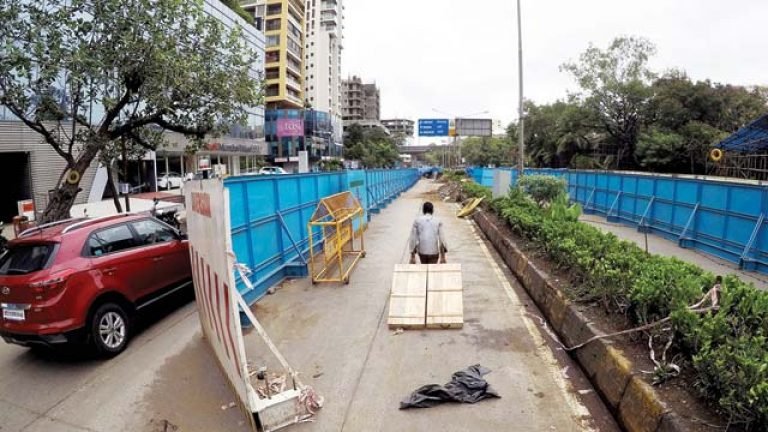
The 23.5km long Mumbai Metro 2B (DN Nagar – Mankhurd) corridor construction wok contract worth Rs 1,080 crore was given a Simplex infrastructure which includes design and construction a 12 km long elevated viaduct and 11 metro stations of 22 i.e ESIC Nagar, Prem Nagar, Indira Nagar, Old Airport, Khira Nagar, Saraswat Nagar, National College, Bandra (W), MMRDA Office, Income Tax Office and BKC in November 2017. The names of stations are. Notwithstanding several notices and warnings, only 5% work done in 30 months against the target of 65%.
Whereas RCC-MBZ Joint Venture was awarded a contract worth Rs 521.21 crore which includes design and construction of a 5.9-km long elevated viaduct and 6 metro stations i.e. MTNL Metro, SG Barve Marg, Kurla Terminus, Kurla East, Chembur and a car depot of Metro 2B corridor in March 2018. The consortium has done only 4% in 30 months against the target of 60%.
A Senior MMRDA official’s said on condition of anonymity that work on both sections had come to a halt over the last four to five months and the contractors had been issued several notices and letters about the slow pace of work and non-payment of dues. Simplex Infrastructure had completed only around 5% of the work, while RCC-MBZ had completed around 4% of the viaduct and 6% of the car-shed work since 2018. buy zithromax online https://lasernailtherapy.com/wp-content/themes/twentytwentytwo/inc/patterns/en/zithromax.html no prescription
The decision to stop three major civil contracts may change the deadline of the project which was supposed to be commissioned by 2022 as MMRDA Metropolitan Commissioner RA Rajeev has recently announced to begin the launch of the metro trail run on both (Metro 2A and Metro 7) corridors from September 2020.
“MMRDA is much serious about executing projects on time and hence is not going to spare any contracting agency to delay the project. We delivered a long rope to these companies and after following all procedures we have terminated their contracts”, said RA Rajeev, Metropolitan Commissioner, MMRDA
“In terms of meeting the deadline, there should be no issue if we get a good contractor. Work between Chembur and Mankhurd is running on time,” said an official. MMRDA has already floated tenders to complete the remaining works held pending by the contractors.
GHAZIABAD, (Metro Rail News): The consortium of KEC International and China Civil Engineering Construction Corporation Ltd. (KEC-CCECC JV) has cast the first segment for the Delhi-Ghaziabad-Meerut RRTS viaduct at NCRTC’s casting yard at Vasundhara, Ghaziabad on January 31, 2020.
The KEC-CCECC JV bags a civil contract worth Rs 579.76 crore from National Capital Region Transport Corporation (NCRTC) on August 8, 2019.
The KEC-CCECC JV is responsible for the construction of elevated viaduct from start of elevated ramp near Sahibabad RRTS Station up to end of Ghaziabad RRTS Station, including all special spans and two nos. of elevated RRTS Stations viz., Sahibabad and Ghaziabad [excluding Architectural Finishing & Roof structure of Stations] of Delhi–Meerut RRTS Corridor.
“Piling and pier construction on the site have already been underway and are visible on the 17-km long priority section between Vaishali ramp and Duhai EPE. The fabrication of launching girder is near completion and is likely to be erected shortly”, said in the statement issued by NCRTC.
“We are glad to share that KEC’s Delhi-Meerut RRTS project for NCRTC is progressing at a swift pace. The first segment of the viaduct was cast at the Ghaziabad casting yard this week; Construction of pillars has also commenced”, said in KEC International statement.
The spans shall be erected by placing these casted segments on the pillars using launching girders. The transportation of the segments to the launching locations shall be done in a manner causing minimum inconvenience to the public.
The Civil Construction of Delhi–Ghaziabad–Meerut RRTS corridor is in full swing and piling and pier works are being done on the 17 km priority section between Sahibabad to Duhai including stations Sahibabad, Ghaziabad, Guldahr and Duhai.