Home Blog Page 566

TBM reaches Shivajinagar station site of Pune Metro

PUNE (Metro Rail News): The 1st tunnel boring machine lowered from the Agriculture College in mid-December reached the Shivajinagar site underground Metro station after digging about 1km tunnel around 20m below the ground-level on 1st March, almost 3 months before the schedule.

The Maharashtra Metro Rail Corporation Limited was requiring regular progress of about 8m. But the uniform strata served to push up the everyday tunnelling work around 12-14m and even more than on some days. The 2nd TBM lowered in the 1st week of January has also reached near the Shivajinagar station location and is supposed to progress up to the station in several days.

Shivajinagar would be the 1st underground Metro station on the Pimpri Chinchwad-Swargate route. It has started work. The Maha-Metro official said, “The progress of the tunnel work has been very better than the expectation. We were anticipating that the tunnelling work will reach up to Shivajinagar around June. But the work progressed at a faster pace mainly because of the uniform rock all along the tunnel’s alignment,” the official stated.

MahaMetro is now working on a plan for additional progress of TBMs towards Civil Court the following station on the route. The MahaMetro said by the Shivajinagar station’s work was still unfinished, it will not hamper the tunnelling work.

Many technical options were under review to ensure that the tunnelling work progressed towards Civil Court around 1km from Shivajinagar station. The underground Metro stretch by Agriculture College to Swargate is nearly distance with 5km.

Luxembourg becomes the first country to make public transport free

Luxembourg (Metro Rail News): Luxembourg has reportedly become the first country in the world to completely abolish fares from all the public transport including trains, trams and buses nationwide. The government has said it is tactic to handle road congestion and pollution, as well as supporting low earners

All standard-class journeys on public transport in the European country are now free of charge, compared to an annual pass worth 440 euros ($485) before. Travellers can still, however, pay for first-class, at a cost of €660 euros a year.

“For the people with low incomes or the minimum wage, for them, it’s substantial,” Said Transport Minister, Francois Bausch. “The main aim is to have a better quality of mobility, and another reason is an environmental problem.”

Luxembourg has just over 600,000 citizens, but 214,000 people reportedly travel into the country comes for work every day from Germany, Belgium and France, which often causes major congestion. As the majority of workers travel by car and more than half of Luxembourg’s greenhouse gas emissions come from transportation. 

To handle many travellers, Luxembourg plans to invest 3.9 billion euros in railways from 2018-28, upgrade the bus network and add more park-and-ride sites on the border. 

 Despite these investments, the government has stated that it expects 65 per cent of commuters to get still to work by car in 2025 (down from 73 per cent in 2017).

Luxembourg is the first country to roll out free transport, but some cities, including Estonian capital Tallinn, have also experimented with the idea. 

How Delhi can learn from Luxembourg

Luxembourg, a country double the size of Delhi, has made all forms of public transport free from March 2020.

The 2nd -smallest country in the European Union, has issued similar to NCT Delhi, India. Due to expensive housing, around 214,000 people commute every day from a neighbouring country like France, Belgium and Germany for work. Due to this, Luxembourg has the highest car density in the European Union.

In 2017, Luxembourg had 670 cars per 1,000 people, as per the European Commission statistical wing Eurostat. 

Luxembourg capital is the 53rd most congested city in the world, stated from the 2020 traffic index via navigation company TomTom. People driving in city lost 163 hours into traffic, up from 149 hours in 2018, the index added.

This initiative is “an important social measure”, pointing that improving the environment or traffic congestion which is not the main concern said François Bausch, deputy prime minister and mobility minister of Luxembourg.

“The loss of the revenue has been taken in account in the national budget and will be financed by taxes,” said Frank.

This statement is backed with steady planning and investment that has improved the overall public transport infrastructure in-country. 

In the year 2018, the govt brought in free transport for everyone who is under the age of twenty.

A bit later, it launched an elaborate sustainable mobility plan, Modu 2.0, which aims to reduce rush-hour congestion and boost the number of people using public transport by 20% from 2017 to 2025. And now it has abolished all tickets, except for first-class travel on trains.

Where Delhi falters

The government of Delhi started a similar initiative last October when it announced free rides of the bus for women. The national capital, that the TomTom survey ranks the 8th-most congested city in the world has had a mixed experience so far.

During the scheme is growing women ridership, it is financially draining the Delhi Transport Corporation. “Women constituted 30 % of the total DTC ridership at the commence of the scheme (0.5 million women commuters daily). Their share has not increased to 45% (0.8 million),” stated Ravinder S Minhas, spokesperson, DTC.

The Delhi govt pays the bus operators Rs ten for every woman rider. The amount is surprisingly the same for all AC and non-AC buses and is free of the distance travelled. The govt has plans of extending the scheme to the students and senior citizens in the future. This can backfire as the loss-making state transport corporation has a shortage of buses. DTC in Feb for the 1st time had its biggest bus fleet at 6,233. In 2001, the Supreme Court had assessed that the city needed 10,000 buses.

As per the Delhi Master Plan 2021, fleet size should be 15,000. Another problem is that 15 per cent of all bus trips in a day is cancelled because of poor maintenance, showed Central government’s Review of the Performance of State Road Transport Undertakings for April 2015-March, 2016. Meanwhile, the DMRC remains expensive for most. “Our studies have shown that given the income profile at least 34 per cent of Delhiites cannot afford the minimum bus fare concerning how much of their income they can spend on transport. 

Therefore, the public transport will have to be modernised and yet kept affordable for all,” said Anumita Roychowdhury, head of the air pollution and clean transportation programme at Delhi-based non-profit Centre for Science and Environment.

In Delhi, it is cheaper to travel by 2-wheelers than Metro rail if the distance is up to 32-km. Even cars are more economical than Metro if the range is around 7-km.

“Delhi has ambitious targets under the 2021 Master Plan. What it needs is a steady investment to overhaul the public transport system,” added Roychowdhury. And in this respect, Delhi can learn a thing or two from Luxembourg.

Free sanitary pads on all 21 Noida metro stations, from International Women’s Day

NOIDA, India (Metro Rail News): Noida Metro is taking wonderful steps towards women safety. From 8th March i.e. International Women’s Day, all the 21 metro stations of the Noida-Greater Noida Metro stations will have sanitary pads available for free of cost, said officials on Thursday.

NMRC, that manages and operates the Aqua Line, will also designate 2 Metro stations that are Sector 76 in Noida and Pari Chowk in Greater Noida as the ‘pink stations‘. “Apart from the cosmetic changes, these pink stations would have facilities for women like baby-feeding room, diaper-changing facilities and a vanity-cum-changing room,” an NMRC official stated.

The Noida Metro is also intending at having entirely women staff on these both metro stations. Except for the security personnel, a job outsourced to a private firm all other staff would be female on both metro stations, the official added.

The Metro operator will have vending machines for sanitary pads as well installed at every one of its 21 stations. “Any passenger will have to get a token at the Metro station which could be used at the vending machine to get a sanitary pad completely free of cost,” said an official.

Managing Director of NMRC, Ritu Maheshwari is may inaugurate the 2 pink stations and the vending machine service on 8th March on Women’s Day– as per the official.

The initiative to encourage menstrual hygiene is maintained by real estate group Ace. “Ace Studio, the part of Ace group, would bear the expenses of sanitary pads for 1 year,” a company spokesperson stated.

Govt to prepare DPR for six bullet train corridors

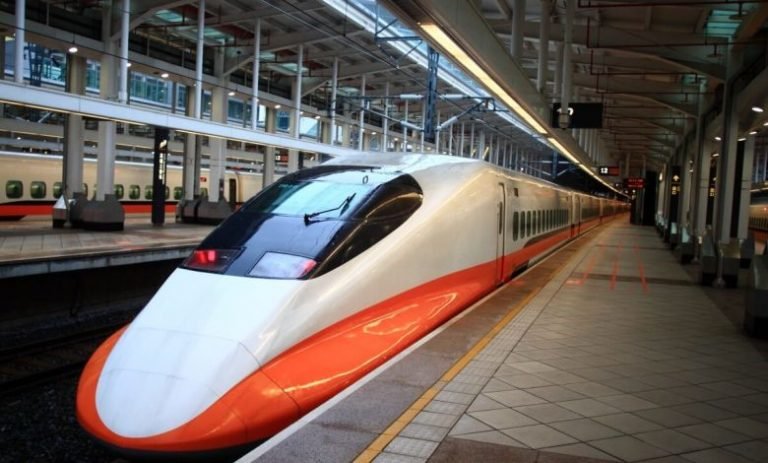
NEW DELHI (Metro Rail News): Railway Ministry is conducting a detailed study for 6 high-speed Rail corridors or for running bullet trains with a complete length of 4,109 kilometres, on Wednesday Piyush Goyal informed Lok Sabha.

In a written answer, the minister told the 9 corridors are Delhi–Varanasi by Noida, Agra and Kanpur, Delhi-Ahmedabad by Jaipur and Udaipur, Mumbai-Nagpur through Nasik, Mumbai-Hyderabad by Pune, Chennai-Mysore through Bangalore and Delhi-Amritsar by Chandigarh, Ludhiana, Jalandhar and Amritsar.

On Feb 23 in 2019 had initially reported about ten proposed bullet train corridors including these 6.
buy amoxicillin UK www.calmandgentledentalcare.co.uk/wp-content/languages/new/uk/amoxicillin.html no prescription
The railways expected around Rs 10 lakh cr investment in these projects. He stated the responsibility to prepare DPR has been given to the National High-Speed Rail Corporation, that is implementing the Ahmedabad-Mumbai bullet train project.

The minister stated, “The railways is undertaking measures for improving the speed of both passenger and freight trains. Improvement in the average speed of trains is a continuous exercise for railways…At present, Mumbai-Ahmedabad High-Speed Rail corridor is the only High-Speed Rail project which is sanctioned and the same is under execution with the technical and financial cooperation from the Government of Japan.”

Chennai Metro lights up elevators, entrances at 2-metro stations

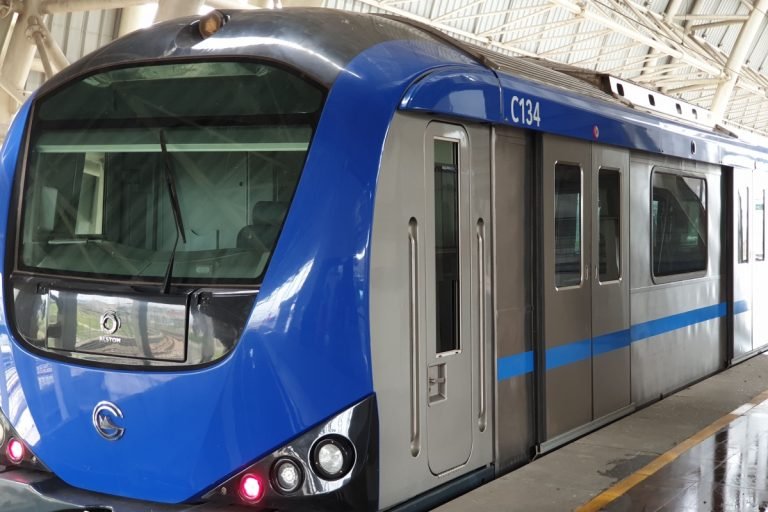
CHENNAI (Metro Rail News): Getting inspiration from the iconic structures like the India Gate and Rashtrapati Bhavan, Chennai Metro Rail has lighted up glass elevators and entrances in Central and Govt both Estate metro stations. CMRL stated in a release that it had installed a façade wall washer light which switches colour every second inside the twelve glass elevators at Central Metro that takes commuters from the street to the platform level at 30-meter depth. 6 entry points at the undercover transit hub have also been lit up.

“Chennai Central Metro station is one of the interconnecting hubs and thousands of passengers walk around at the street level to reach metro, suburban, mainline and MTC to reach their destination daily. CMRL decided to turn this location iconic,” the release stated. It more said the lighting was an inspiration from some popular landmarks like Canton Tower, China, Seoul Tower and Howrah Bridge.

Chennai Metro Rail is also creating other facilities at the street level near Central like seating area, lawns, fountains and walkways as section of Central Square project.

There are 2 open type glass entry positions at Govt Estate Metro station have also been lit up. “The lights have been programmed to a particular colour at the same,” stated an official.

Kerala semi-high speed rail to get Japanese coaches for the project

THIRUVANANTHAPURAM (Metro Rail News): The Japan companies have moved here to review on the Kerala semi-high speed rail project with Thiruvananthapuram-Kasaragod. This kind of companies which develop coaches and signals for bullet trains and will make talks with the Railway Development Corporation to manufacture coaches and signals for the determined project.

The coaches would cost Rs 4000cr where Ro-Ro service coaches that transfer goods truck would cost Rs 1000 cr. The telecom and signal systems would cost Rs 3000 cr. The entire estimated cost for this semi-high speed rail is around Rs 66,405 cr but it will most probably cost approximately Rs 70,000 cr once the project finishes in 2024.

The govt would have to avail of foreign loans of Rs 35,000 cr. JICA has initiated forward offers. The interest rates will be within 0.2% to 0.5%. This can be up to 6% because of the variations in dollar rates. The payback time is 20-30 yrs and the moratorium time is 10 yrs. The last alignment of the high-speed rail would be made this week.

The Railway Development Corporation would get the details of land which needs to be acquired. The rail for the project requires to be formed parallel to the existing rails. The railway has two hundred hectares of land and will need to acquire a more 1226 hectares.

Earlier finished a journey in the semi high-speed rail from the capital to Kasaragod will take only four hours. The rail coaches could travel at a speed of 200 kilometres per hour. The coaches would be air-conditioned. The advanced telecom system will be effective in any climate. Stations and yards will be of the world-class level.

Chennai Metro partnered with SugarBox, offers free WiFi in Metro

CHENNAI (Metro Rail News): The passengers using Chennai Metro are in, for a treat as Chennai Metro Rail Limited (CMRL) has partnered with SugarBox Networks to provide trains with a technology which enables users to access apps. SugarBox Zones have been set up in many Metro trains over the city where the passengers can sign in to SugarBox and enjoy their favourite movies or listen to music at a button click.

The SugarBox is a local Wi-Fi network that eliminates the users’ dependence on mobile data and gives them continuous access of apps. Currently, there are no data charges or usage limits over apps on SugarBox. Users could access content on the SugarBox app on both iOS and Android devices. As per a press release, Rohit Paranjpe SugarBox Networks CEO stated, “It is a matter of great honour to have been taken by Chennai Metro.

We would install SugarBox servers in all Chennai Metro Rails. Users would be able to run movies and TV shows through their commute. In the long run, the SugarBox platform would also support e-commerce, gaming, music streaming, last-mile transport booking, food ordering and many other relevant value-added services. This enables users to continue using their desired apps in places without internet connectivity as well as without any data cost.” 

Process of SugarBox work on Chennai Metro

  • Firstly, find the ‘SugarBox’ in your WiFi settings, and connect that
  • Open SugarBox app, register by putting your mobile number
  • Stream and download movies without any buffer or data charges

21 residents shifted from Kolkata Metro cave-in zone

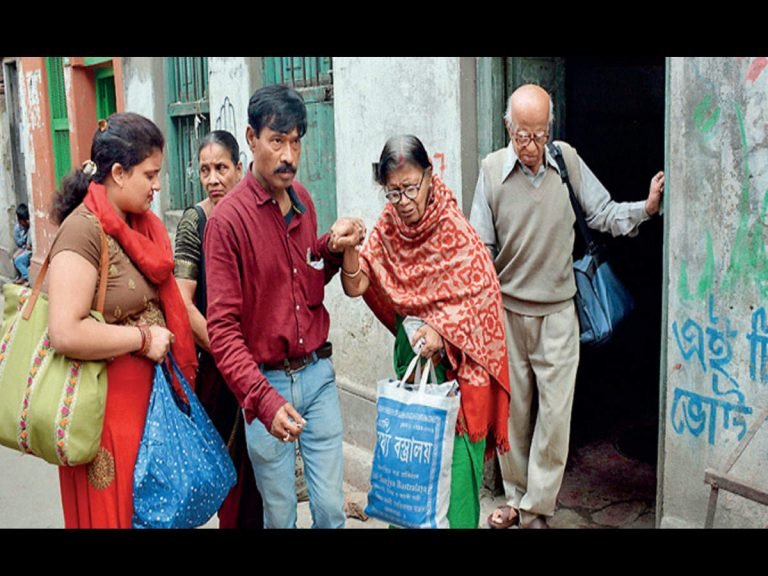
KOLKATA (Metro Rail News): As tunnel-boring machine Urvi went into the cave-in zone on Tuesday, a total of 21 residents from Gour De Lane off Bowbazar were evacuated. The range of subsidence that found out the buildings fall like a pack of cards begins here. KMRC, the agency executing the Kolkata East-West Metro project, had commenced evacuation on Sunday by shifting twelve residents.

Kolkata Metro Rail is extremely cautious this time. Nobody wants a repeat of 31 August when the TBM digging the westbound tunnel of the Kolkata Metro project hit an aquifer and water flooded the tunnel, bringing with it sand and soil. Several buildings had fallen and many others were damaged in the subsidence that could be arrested only after twelve days. “On that time, our house was destroyed even though the TBM was digging at a distance. This time, the tunnelling will be carried out right below our building. We all are extremely worried,” stated Suneet Sarkar of 4B, Gour De Lane.

The Durga Pithuri Lane and Shyakrapara Lane were the worst-hit.
buy valtrex online https://www.facebeautyscience.com/wp-content/themes/twentyseventeen/inc/en/valtrex.html no prescription
Buildings of Gour De Lane nearby Shykrapara Lane were also affected. “The last time we had to wait in a hotel for around 28 days. When we got back, found some cracks in the walls of the house,” the 68-year-old told. “The Kolkata Metro Rail Co. notice tells we can return on Sunday but so many people haven’t been able to return on the scheduled date. The tunnelling we were said, is slow and hence the delay,” Sarkar said.

Although 5 homes can be evacuated Somnath Banerjee of 2B Gour De Lane denied to leave his house. “I shall not move until my nephew gets the Rs five lakh compensation. He denies to pay the electric bills and house tax because I got the money and he didn’t,” said Banerjee.

Urvi’s twin Chundee which hit the aquifer is presently lying defunct below Durga Pithuri Lane. It was building the westbound tunnel. Urvi was building the east-bound tunnel also had dug till the Nirmal Chunder Street-Chaitan Sen Lane crossing at the same time of the tunnelling fiasco and had been stuck ever since.

As per a Calcutta high-court order to continue tunnelling works, it continued digging on Feb 18. It has made around 1,100 rings till now. As the TBM burrows an industrial robot places segments of a 1.2meter extended pre-cast concrete ring. And thus a 12meter stretch of the tunnel gets built regularly. But thanks to Urvi’s slow progress, only around 100meter has been covered in the last fortnight.

HMRL beats Hong Kong metro in terms of lowest manpower

HYDERABAD (Metro Rail News): Hyderabad Metro which is the 2nd largest metro project in the country after Delhi metro has now created its mark globally by attaining lowest manpower in terms of its services.

As per the Hyderabad Metro Rail Ltd managing director NVS Reddy, Hyderabad metro has beaten Hong Kong metro in lowest manpower. “While the Hong Kong metro has 25 personnel per km for its operations HMRL has eighteen personnel for each kilometre,” stated Reddy adding that the achievement shows the efficiency of Hyderabad metro.

The Hyderabad metro rail ltd is termed as the largest metro rail network carried out in Public-Private Partnership model. “More of the services will be implemented soon for the convenience of the passengers,” declared NVS Reddy.
buy suhagra online https://pavg.net/wp-content/themes/twentytwentyone/inc/en/suhagra.html no prescription

The HMRL has now moved its focus on the phase-2 after the launch of services between Jubilee Bus Station (JBS) and Mahatma Gandhi Bus Station (MGBS). Phase-2 of the metro is may have 3 corridors out of that 2 lead to the Rajiv Gandhi International Airport (RGIA).

Bullet train project has been acquired only 40% of the land

GUJARAT, INDIA (Metro Rail News): In Gujarat state assembly released information that only around 40% of the land has been required for the bullet train project between Ahmedabad-Mumbai. The state govt tabled the third annual report 2018-19 of the central government’s flagship project. info@indomedtrip.com

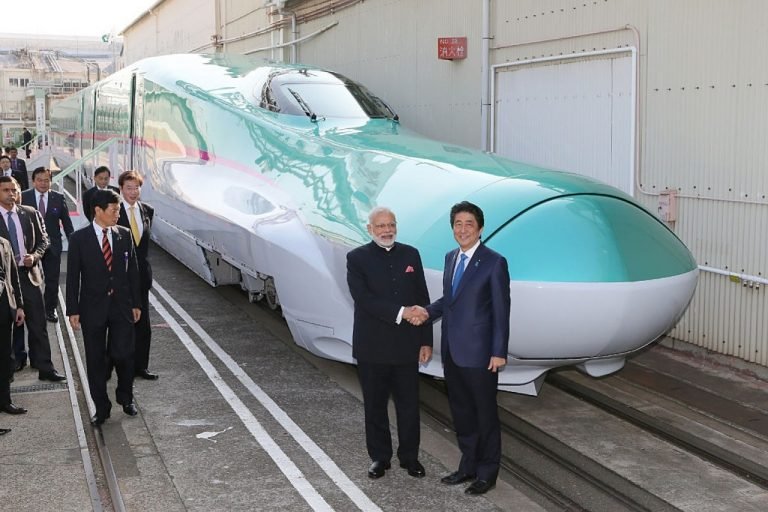
On Monday, Gujarat Deputy CM Nitin Patel tabled the 2018-19 annual report of the ‘National High-Speed Rail Corporation Limited’. As per the report, only about 40% of the land requirement for the PM Narendra Modi dream project bullet train between Ahmedabad-Mumbai, is acquired. The acquisition is based upon the joint measurement survey. The total land needed for the complete project is 1,380 hectares, where 939.69 hectare comes in Gujarat, 431.2 hectare comes in Maharashtra along with 8.70 hectares in Dadra and Nagar Haveli.

The NHSRCL has envisaged integration of commuter terminals of the bullet train with the Railways and Metro at Sabarmati and Ahmedabad. For this integration, many Railway facilities will be needed to be shifted. Also, electrical overhead lines and civic utilities such as water and Drainage pipes, roads, telecom cables and infrastructure would also be needed to be shifted to accommodate the bullet train network.

NHSRCL company has obtained many environmental clearances like the CRZ clearance across Narmada river in Bharuch district, the wildlife clearance for Thane Creek Flamingo wildlife sanctuary and the Sanjay Gandhi National Park and Tungareshwar Wildlife Sanctuary. NHSRCL has also carried out tree transplantation at many areas in Ahmedabad. About 3,000 trees would be axed for the project in Ahmedabad as per the project.