New Delhi: Prime Minister Narendra Modi has flagged-off the Delhi-Faridabad Metro Line that would allow hassle free travel for around two lakh daily commuters between the national capital and the industrial hub in Haryana.
The extension of the Delhi Metro connects Badarpur to Escorts Mujesar in Faridabad.
The total cost of the project from Badarpur to Escorts Mujesar is nearly Rs. 2,500 crore. Out of this, Rs. 1,557 crore was borne by the Haryana Government, the Centre contributed Rs. 537 crore, while the Delhi Metro provided Rs. 400 crore.
All these are elevated and located on either side of the Delhi-Mathura Road (NH-2).
“The nine-station metro corridor which was 95 per cent indigenously built will provide people a safe, affordable, quick, comfortable, reliable, environment-friendly and sustainable transport facility,” a Haryana government spokesperson said.
Haryana Chief Minister ML Khattar, addressing a press conference on Saturday, had thanked the Prime Minister for “gifting” the Metro service which would take the city to “another level of progress” with better connectivity with other NCR towns.
He had also said that the Prime Minister would be announcing the go-ahead for connecting Gurgaon with Faridabad by Metro.
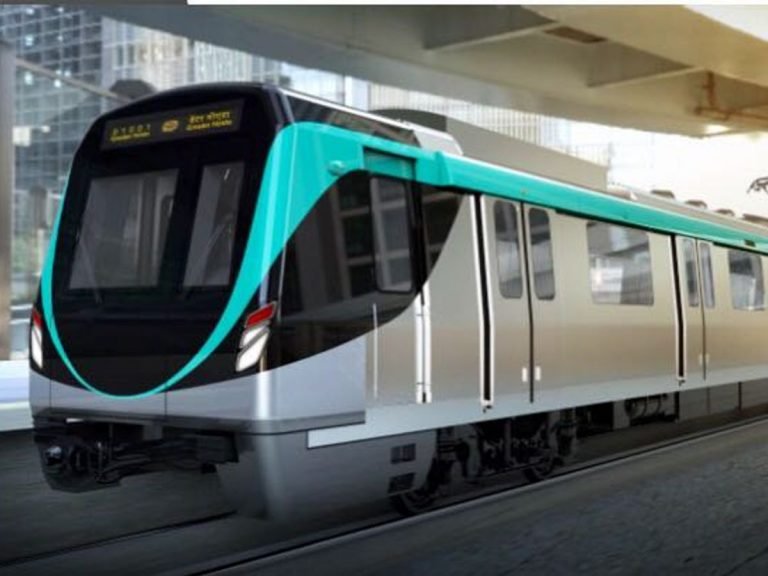
NOIDA (Metro Rail News): The Noida Metro Rail Corporation is going to start construction work of the Greater Noida West Metro in a month On 3rd December 2019, the UP Cabinet had passed a 14.95-km long extension corridor of Noida Metro’s Aqua Line comprising 9 stations from Noida Sector 51 to Knowledge Park V in Greater Noida. buy nolvadex online https://www.ecladent.co.uk/wp-content/themes/twentyseventeen/inc/en/nolvadex.html no prescription
NMRC’s MD Ritu Maheshwari said that the corporation was striving to provide the best travel experience to passengers. “Aqua Line of NMRC at present records an average 25,907 passengers every day. We are working on the metro network to expand and connect more areas and more commuters. Last year in December, the UP govt had passed the Greater Noida west metro extension corridor. We are going to commence construction work on this route in one month,” she stated, adding a vital number of people would be connected with the metro network in this route.
The 9.15-km long first phase would have 5 Metro stations i.e. Sector 122, Sector 123, Greater Noida Sector 4, Ecotech and Greater Noida Sector 2.
In the 2nd phase of 5.8-km long, 4 Metro stations that are Greater Noida Sector 3, Greater Noida Sector 10, Greater Noida Sector 12 and Knowledge Park V would be developed. The Noida Metro Aqua Line’s Sector 51 station would become an interchange for the extension corridor. NMRC expects to finish the 1st phase by 2022.
The Noida Metro Rail started operations of the Aqua Line including 21 stations from Sector 51 in Noida to Depot station in Greater Noida on 25th January 2019. This corridor has 15 stations in Noida and 6 stations in Greater Noida. The 29.707-km long Aqua Line was developed at a completion cost of ₹5,503 cr. The average regular ridership in February 2020 stood at 25,907. The average regular revenue in February 2020 is Rs 7.53 lakh.
Maheshwari told Noida Metro Rail Corporation was also incorporating some out-of-the-box ideas to improve metro ridership and revenue. NMRC newly floated a tender to set up electric vehicle charging stations at entire 21 stations of the Aqua Line.
CHENNAI (Metro Rail News): The Chennai Phase-I extension project from Washermanpet-Thiruvottriyur / Wimco Nagar with a total distance of 9.051 km is supposed to be finished in June 2020. The project is being implemented at an expected completion cost of ₹3,770 crores.
While all the ten metro trains sets for Chennai Phase-1 extension had reached Chennai Metro Rail Ltd Depot at Koyambedu declares a press release from CMRL. Chennai Phase-I of Chennai Metro project covering a distance of 45 kilometres went completely operational on Feb 10, 2019.
For the Chennai Phase-I extension project, CMRL awarded the contract in March 2018 to the consortium of Alstom Transport, France and Alstom Transport India Ltd for the supply of ten trainsets with the same configuration and specifications as provided to the Phase-I project.
The trainsets were built at Alstom’s factory at Sri City Andhra Pradesh. The manufacturing of the train sets had commenced in February 2019. The cost of supply is around ₹200 cr with loan assistance from JICA.
The trains have undergone so many tests and reviews such as car body dimensional checks, static routine traction and brake tests, water tightness check which was witnessed and confirmed by CMRL.
The 1st Metro train was dispatched on October 19, 2019. The 10th trainset arrived at the CMRL depot on Thursday, as per the release declared.
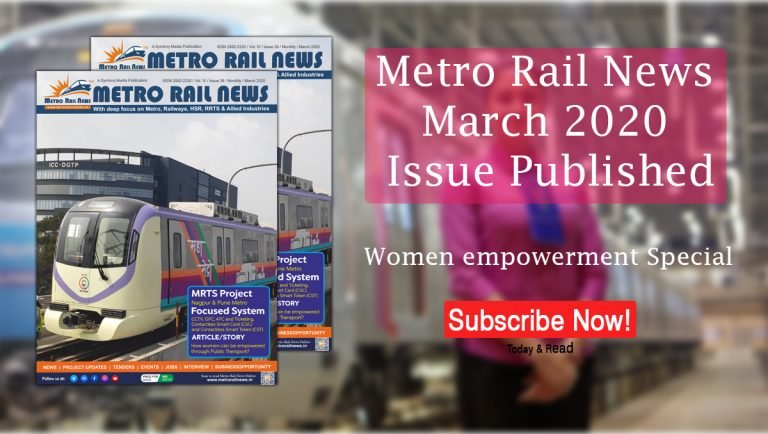
Metro Rail News published March 2020 – Women Empowerment Special issue, which endorses women to grow up independently and finds an opportunity to become a successful person. Along with we are praising women’s for whatever they are doing for the country’s growth.
Our March issue focuses on interesting topics like Women Empowerment through public transport and also provides a cover story on Intelligent fare management and smart ticketing, Nagpur Metro is chosen as our project of the month and exclusive Interviews of Mr H K Raghu ED, RDSO and Subrat Nath, MD, Talgo. Apart from this, other regular columns like pre/post-event coverage, technology updates, Article, opinions, Awards, appointments, live tenders, Industry news, case study and current job openings.
We are so grateful for our supporter and contributors who help us to publish a unique and informative magazine every month for our valuable readers.
To read the Metro Rail News March 2020 issue, kindly subscribe
Know about the Latest Innovation Strategy of Metro Rail News to promote your sales, branding, increase market share in Metro & Railway Industry of India.
MUMBAI (Metro rail News): The first budget of the Maharashtra CM Uddhav Thackeray government introduced in the assembly on Friday, that provides a boost to the development of infrastructure in the state by proposing an outlay of around Rs 30,000 cr.
In which for the various metro projects in the state allocates Rs 1,657 cr, in 2020-21 budget. Under Pune metro, Maan-Hinjewadi-Shivajinagar route there are 2 new lines that are Shivajinagar to Shevalewadi and Maan to Pirangut would be completed along with the new Pune Metro line from Vanaz-Ramwadi would also be expanded by extending the line from Vanaz-Chandani chowk and Ramwadi-Wagholi.
Nagpur Metro rail allocates Rs 245.34 cr for the financial year 2020-21 that includes Rs 44.55 cr as equity and Rs 200.79 cr as sub-ordinate debt. This would help in facilitating the Nagpur Metro project.
MLA from Baramati in Pune stated that “The length of the Pune metro from Pimpri to Chinchwad to Swargate will be increased and extended from Swargate to Katraj and Pimpri to Chinchwad to Nigdi. buy azithromycin online https://blackmenheal.org/wp-content/themes/twentytwentytwo/inc/patterns/en/azithromycin.html no prescription
More funds would be provided this year than the amount last 5 years for Pune metro.
₹2,100 crores to be set aside for women’s safety
Minister Ajit Pawar stressed the importance of women’s safety and pledged an amount of ₹2,100 crores for the Women and Child Welfare development department.
“For us, women’s safety is of utmost priority. One all-women’s police station will be started in every district,” he said.
The Minister added that the government will take measures to ensure that sanitary napkins are made available to every girl in every secondary school in the State.
On the infrastructural front, a 170-km ring road has been proposed at Pune. “We will start land acquisition and complete it in four years. Maharashtra will only pay for land acquisition whereas the construction cost will be borne by Centre,” said Mr. Pawar.
He said that all roads leading up to major markets in every city in Maharashtra will be revamped, and an amount of ₹1,000 crore has been proposed for this.
Two new Metro lines in Pune and expansion of existing proposed Metro lines have also been proposed, and for this, more funds have been set aside for Pune Metro than previous years, he said.
MEERUT (Metro Rail News): The country’s 1st-ever Delhi-Meerut RRTS project is now hitting at Meerut’s door for developing yards and other base infrastructure by both centre and state funds Buoyed. Meerut Development Authority is drafting the final plan to provide 4 large land parcels from their land bank for making it easy work for the Rs 30, 274 cr ambitious project.
The work is in full swing currently in the Duhai-Sahibabad priority sector. The National Capital Region Transport Corporation is the nodal agency trusted with the task of elaborating the mammoth project. The vice-chairperson of Meerut Development Authority, Rajesh Kumar Pandey stated, “We have 4 land parcels situated on the outskirts of the city on Delhi Road. The NCRTC wants to buy 3 of them and take the fourth one on lease. The process is on.”
All the 4 land parcels asked by NCRTC are located at Rithai which is a village bordering Ghaziabad district. During giving the details the chief town planner Ishtiyaq Ahmad also the nodal officer for RRTS project in Meerut told, “The NCRTC is interested in buying land parcels for setting up a power station, a railway yard, etc. Besides it also desires a 40,000 sqm plot for using it as a casting yard. buy premarin online salempregnancy.org/wp-content/languages/new/premarin.html no prescription
This one will be given on a 5-year lease.”
The UP govt marked Rs 900 cr in their annual budget tabled newly in the legislative assembly for the ambitious Delhi-Ghaziabad-Meerut RRTS corridor that once finished, would reduce the travel time between the national capital and Meerut to just an hour.
The current budgetary boost for the project comes soon after the Union govt offered Rs 2,487 cr for it in its Union budget. The 82-km long RRTS is supposed to be thrown open to the public by 2025.
The RRTS corridor would start from Sarai Kale Khan bus station in Delhi and the last stop would be in Modipuram. In the initial phase, the Meerut-Ghaziabad-Delhi corridor would be finished at a cost of Rs 30,274 cr by 2025.
The implementing agency of RRTS, NCRTC is a JV of the Centre 50% and the state govt of Haryana 12.5%, NCT Delhi 12.5%, UP 12.5% and Rajasthan 12.5%. It is necessary to design, build, finance, operate and maintain RRTS in the NCR and operates with the administrative control of the Union ministry of housing and urban affairs.
CHENNAI (Metro Rail News): The ten new train sets for the line reached Chennai Metro Rail depot at Koyembedu in the early morning of Thursday. Even as the nine-kilometre metro corridor in North Chennai is preparing for a June 2020 opening. In a release, Chennai Metro Rail Limited released the new trainsets will now a series of tests as speed (slow and high) routine tests at the depot and the mainline before they are deployed for commuters services.
The trains would be run on the nine km long phase-1 extension line between Washermenpet-Wimco Nagar. The trainsets were being manufactured at Alstom’s factory in Sri City, Andhra Pradesh. The expense of the supply is around Rs 200 cr with loan assistance from JICA. buy propecia online gaetzpharmacy.com/propecia.html no prescription
The manufacturing of the trainsets had started in Feb 2019. Trains have gone through many tests and inspections like car body dimensional checks, static routine traction, water tightness check and brake tests. that was witnessed and confirmed by CMRL. The 1st metro train was given on 19 October 2019.
The phase-1 of CMRL Project comprising a distance of 45 km has been fully operational by Feb 10, 2019. The Phase-1 Extension project from Washermenpet-Thiruvottriyur/Wimco Nagar is being implemented at an evaluated completion expense of Rs 3,770 cr, declared the release.
CMRL awarded the contract in March 2018 to a consortium of Alstom Transport, France and Alstom Transport India Ltd for the supply of ten trainsets for the phase-1 extension project.
BENGALURU (Metro Rail News): On Thursday Karnataka CM BS Yediyurappa declared an initial allocation of Rs 500 cr for the suburban rail project as a part of efforts to ease traffic flow in Bengaluru. This follows Nirmala Sitharaman, the Union finance minister announcement of full support to the project at a current media interaction in Bengaluru where she told the finance ministry would help with funds as committed as the paperwork moves onward.
The project is expected to cost Rs 18,600 cr. Of this, the Centre and the state govt would give 20% each as equity. The Centre will also facilitate debt from multilateral lending agencies through providing a sovereign guarantee. The 148 km long suburban rail project with 55 stations would provide railway connection to fields like Outer Ring Road and Electronic City where a huge number of IT companies are established.
Citizens’ groups have been searching for implementation of the project without any further delay. Yediyurappa also told the state govt would bear half the project cost for doubling the Baiyappanahalli-Hosur and Yeshwanthpur-Channasandra railway tracks that he said, will help more suburban trains on these areas.
The budget also extended support to the struggling Bangalore Metropolitan Transport Corporation to increase its fleet of buses. Yediyurappa told BMTC is in the process of purchasing 1,500 diesel buses at a cost of Rs 600 cr and the govt will also support the utility with a loan-subsidy by issuing Rs 100 cr per year over the next 7-years.
The govt has decided to get diesel buses in a phased manner. The BMTC had slowed down on expanding its fleet shortly as the National Green Tribunal had stayed the corporation’s decision to buy diesel buses rather than those run on clean energy.
The government has earmarked Rs 100 cr for buy 500 ordinary electric buses that yediyurappa told was in line with the plan to get 300 AC electric buses under the central govt’s ‘Faster Adoption and Manufacturing of Electric’ vehicles scheme.
NEW DELHI (Metro rail News): All the Metro corporations have decided to undertake so many measures campaign to promote cleanliness in Metro Rail including Metro stations, Coaches etc to prevent the spread of the novel coronavirus infection.
— Delhi Metro Rail Corporation (@OfficialDMRC) March 4, 2020
Delhi Metro has also declared Do’s and Dont’s in both languages English and Hindi concerning the virus infection. “Displays at few other major stations transmit across the network will also be made with informative messages to generate awareness amongst its commuters on the basic protective measures in this regard,” it stated.
As well as the Hyderabad Metro Rail Limited has started several protective measures to prevent the spread of the virus infection. It added Metro employees have all been made aware of preventive actions to be taken including hand hygiene and reporting sickness, Metro stations, trains and touch surface ranges, escalators and handrails will be washed with soap or detergents after operational times.
In view of the coronavirus COVID – 19 cases around the world. KMRL, today carried out special sanitation drive across all its stations and metro premises. pic.twitter.com/qdzzsHP9Rk
BENGALURU (Metro Rail News): Karnataka Chief Minister BS Yediyurappa declared in his budget speech that the Outer Ring Road-West Metro and Magadi Road-Metrolite corridor will be developed by a public-private partnership (PPP). The Outer Ring Road Metro project would connect Hebbal and JP Nagar it will help to ease traffic congestion on Outer Ring Road (ORR).
The public-private model has been proposed the first time for a Metro rail project in the city. Till now, Bangalore Metro Rail Corporation Ltd has handled the works through connecting contractors. Following the proposed model an eligible private company can develop and run Metro systems.
The Delhi airport Metro line and segments of Hyderabad–Mumbai Metro were built following this model. “The preparation of the DPR for ORR-West Metro and Magadi Road Metrolite will be taken up; it is proposed to be implemented by a public-private partnership,” Yediyurappa stated during unveiling his budget proposals.
As per BMRCL officials, the project report for the 30-kilometre ORR-West line and 14 kilometre Magadi Road Metrolite would be drawn up in some months. Metro rail projects are usually funded by central and state govt. with loans from financial institutions. “Whether private firms will entirely build, operate and maintain Metro systems would be decided based on a project’s financial viability and ridership estimation,” said a BMRCL official.
Just like a monorail, the Metrolite is a transit system with smaller coaches. It is more affordable than the regular Metro. “The construction work of the 56km long line from Central Silk Board to Kempegowda International Airport through KR Puram and Hebbal at an expected cost of Rs 14,500 cr will begin in 2020-21,” stated Yediyurappa.
The CM added that Mysuru Road-Kengeri and Yelechenahalli-Anjanapura township corridors will be commissioned this year. Road cross-over conveniences for non-Metro passengers would be presented at 24 metro stations.
In the budget, there was an important focus on public transport.“Public transport systems require to be strengthened and extended in terms of reducing traffic density in Bengaluru,” said Yediyurappa. He declared that Rs 500 cr will be earmarked for the long-pending Bengaluru suburban rail project in 2020-21.
However, the project is awaited to cost Rs 18,000 cr, is still waiting to be confirmed by the central cabinet committee on economic affairs. “This project will be a major step in the way of developing a public transport system in Bengaluru,” he added.
The state govt has also chosen to shoulder 50% of the project expense for the doubling of Byappanahalli-Hosur and Yeshwantpur-Channasandra rail tracks. It had insisted first on 20:20 model with the railways, stating the left 60% of the funding requirement should be filled by loans.
The govt will provide Rs 100 cr per year for a 7-year period in the terms of loan subsidy to bus operator BMTC so that it can purchase 1,500 diesel buses at a cost of Rs 600 cr. In addition to this, a reward of Rs 100 cr has been allowed for the addition of 500 ordinary electric buses for BMTC’s fleet.
To reduce the traffic congestion there are also various steps will also be taken in Hebbal, Silk Board and KR Puram junctions. “Infrastructure facilities, transit-based development and essential regulatory measures will ensure that the utilisation of public transport increases from 48%-73%,” he replied.
India is a country which is known for its cultural heritage, traditions and rituals since ancient times. Where no doubt, women faced a lot to get equal rights in society. They have gone through an arduous struggle to put community out of their ways of judging of male and female. However, women’s have faced a lot through the years they have treated almost non- existence. So, it is needed to empower women to make them sturdy and capable of deciding for themselves. Women empowerment is necessary for the betterment for the country’s growth as women are playing a vital role in the country’s improvement as well as her house and its specific example is our Finance Minister Smt. Nirmala Sitharaman, who’s leading the post tremendously.
Most of the narrow-minded people feel sad when a baby girl is born and also oppose women education. They do not even get that equal respect & importance as the men in our society of, getting. Despite that they are playing a vital role of various characters in our life, sometimes mother, sometimes wife, sister and daughter. Swami Vivekanand once said, “It is impossible to think about the welfare of the world unless the condition of women is improved. A bird can’t fly on only one wing.”People need to understand that what is the real Place and value of women in society. To improve this, Delhi’s Chief Minister, Arvind Kejriwal has announced a plan recently that women can take free rides in the Metro and buses. So that woman can come out from home and go for work and achieve all the possible levels of life.
The purpose of free public transport is there are still many families who choose to stop girls from going out for job or education because travel is costly and distant from home. Now Women’s don’t need to think about the expenses on travel fares as Delhi starts steps towards empowering women by offering free rides in buses. It will help in the various direction so that women can fulfil their dreams, and it will also open many creative paths to them.
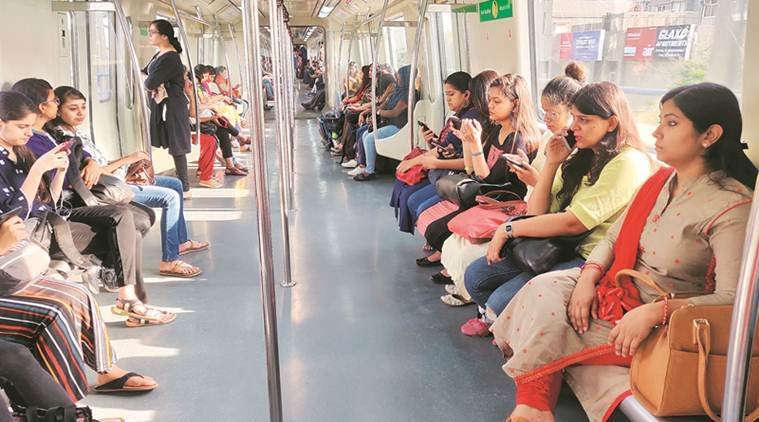
Further Delhi Metro Rail Corporation (DMRC) reserved the first coach in the moving direction along with 2-4 seat is reserved in rest of the coaches for women’s. It enables them to go out and live their life independently, without worrying about wearing a sleeveless shirt or having a loud talk, space is hers, and they feel safe and comfortable inside. Now Metro has become women’s favourite mode of transportation just because it has one of its reserved coach for women. Being a woman, I feel safe while travelling in metro women’s coach because I don’t have to worry about being groped or stared by any creepy men and that’s why somehow our parents are also relaxed. Even I prefer Metro instead of a cab to travel in Metro Cities. Apart from that Noida Metro is taking beautiful steps towards women safety and security on the International Women’s Day from 8th March, all the 21 metro stations of the Noida-greater Noida Metro stations will have sanitary pads available for free of cost. Along with that, they also provide the facility for women like baby-feeding room, diaper-changing facilities and a vanity cum changing room facility. I think all the Metro Rail operators can initiate in terms of empowering women in the country.
Besides, all the Noida Metro is also intending at having women entirely staff on these both metro stations. Except for the security personnel, a job outsourced to a private firm all other staff would be female on both metro stations. This is also very appreciating at least now women would not think of the safety in night outs as well. Delhi Transport Corporation (DTC) is also free for women and Buses are also the safest and secure for travel options as there is a lady constable present in every bus; also it encourages women to use public transport. This free public transport for women, for at least buses, are surely allowing so many women to access opportunities which they couldn’t before.
According to research, the most powerful and winning symbolism of women leaders in the hope that they would make a significant change. For further changes to empowering Women, banks can also reserve some percentage of a seat in the banking field for women. This may help in the growing financial state of our country.
Funding agencies like JICA, KFW, AIIB and ADB can mandate the involve more no of women employee to implementing agency of Infrastructure project with the help of MoHUA, and this will also help in women empowerment. Apart from this, let’s treat our kids on an equal scale, whether they are boys or girls at home. When parents teach their kids from their childhood that boys and girls are the same, it will help them to understand that inequality reduces in the country and When they become the part of society and act accordingly. It will also help in the country’s growth.
There are also several government schemes for women empowerment which are:
Beti Bachao Beti Padhao – In this social campaign, the govt intended at the end of female foeticide and raise awareness on safety services aimed for young Indian girls.
One-Stop Centre Scheme – It is widely known as ‘Shakti’. It was implemented for providing shelter, Police desk, legal, medical and counselling services to the sufferer of violence over the roof integrated with 24 hr helpline.
Working Women Hostels – This scheme aims to encourage the availability of secure and conveniently located house for working women along with the day-care facility to their kids.
Mahila E-Haat – In this scheme govt will help women to make financial and economic choices that will allow them to be a part of ‘Make in India’ or ‘Stand Up India’ initiatives.
Support to Training and Employment Programme for Women (STEP) – As the Support to Training and Employment Programme for women, this scheme targeted to provide skills which allow women to become self-employed or entrepreneurs.
Nari Shakti Puruskars – The Nari Shakti Puruskars is the National level awards for recognizing the works done by women and the institutions in rendering notable services for the cause of women’s in the society.
This is how the Indian government has acknowledged women issues and their contribution to the country’s economy. The government and the public as well, need to play some significant roles to allow their welfare in various sector, to ensure that the women are empowered. It may be either providing free gas for cooking, schemes related to education or enable women to leverage technology etc. Also, the time has come to an end to discrimination opposed women in the name of religion, custom or personal laws like in the case of triple talaq in our country.
The condition of women is gently improved in the last decades and started recognizing her potential. She has commenced breaking the barrier and gained a respected position in the world. As you can, in example P.V. Sindhu, Neeta Ambani, Saina Nehwal and Mamata Banerjee. There is not any single field left, which remains unconquered by Indian women, whether it is in the field of sports, entertainment, technology or politics.