New Delhi: Prime Minister Narendra Modi has flagged-off the Delhi-Faridabad Metro Line that would allow hassle free travel for around two lakh daily commuters between the national capital and the industrial hub in Haryana.
The extension of the Delhi Metro connects Badarpur to Escorts Mujesar in Faridabad.
The total cost of the project from Badarpur to Escorts Mujesar is nearly Rs. 2,500 crore. Out of this, Rs. 1,557 crore was borne by the Haryana Government, the Centre contributed Rs. 537 crore, while the Delhi Metro provided Rs. 400 crore.
All these are elevated and located on either side of the Delhi-Mathura Road (NH-2).
“The nine-station metro corridor which was 95 per cent indigenously built will provide people a safe, affordable, quick, comfortable, reliable, environment-friendly and sustainable transport facility,” a Haryana government spokesperson said.
Haryana Chief Minister ML Khattar, addressing a press conference on Saturday, had thanked the Prime Minister for “gifting” the Metro service which would take the city to “another level of progress” with better connectivity with other NCR towns.
He had also said that the Prime Minister would be announcing the go-ahead for connecting Gurgaon with Faridabad by Metro.
MUMBAI (Metro Rail News): Metro line 7A Civil work that will connect Mumbai airport-Andheri East Metro station has started and will be finished by December 2021. This would be the 2nd underground Metro line the other being the Colaba-Bandra-Seepz Metro line 3. Another underground corridor is planned between Wadala-GPO.
An extension of Metro line 7A which connects Andheri East-Dahisar East will have 2 stations. In 2018, the MMRDA accepted the green signal from BJP-Sena govt for extending Metro line 7 till Mumbai airport and on Dahisar side till Mira to Bhyander.
Metro line 7A Work was assumed to begin in January 2019 but fund-sharing issues with airport authorities delayed the project, according to sources.
The MMRDA in charge of the Metro corridors in the city and Mumbai Metropolitan Region has awarded the civil contract for Metro line 7A to J. Kumar Infrastructure.
Metro line 7A is a 3.2 km long corridor 0.98 km elevated and 2.915 km underground. This would be 2 tunnels. The expected cost of the project is Rs 6,607 cr.
BENGALURU (Metro Rail News): Religious places are acquired for the Bengaluru Metro project only when it is necessary, said Bangalore Metro Rail Corporation Limited on Monday.
“For Bengaluru Metro Phase 2 project work 33 religious places in which, 30 temples, 2 churches and 1 mosque were acquired,” said BMRCL senior manager, TL Ravi Prakash. buy viagra super fluox force online no prescription
BMRCL said there won’t be any damage to the church because of the construction works, responding to protests staged by the All Saints Church for nearly 300 days.
“Metro alignment on Hosur Road is 36 m distant from the All Saints Church building and does not pass below it. An open area of 1,140 sqm with some trees in front of the church building is needed for construction of the underground Metro station,” he replied.
Also, he stated the area needed in vacant land on a temporary basis for 3 years of period and number of trees to be cleared only 26.
“There will not be any damage to church structure by Metro construction work. One of such work was that of Cubbon park underground Metro station which was constructed at a distance of just 3 m from more than 100 years old CTO building without causing any damage” continues the release.
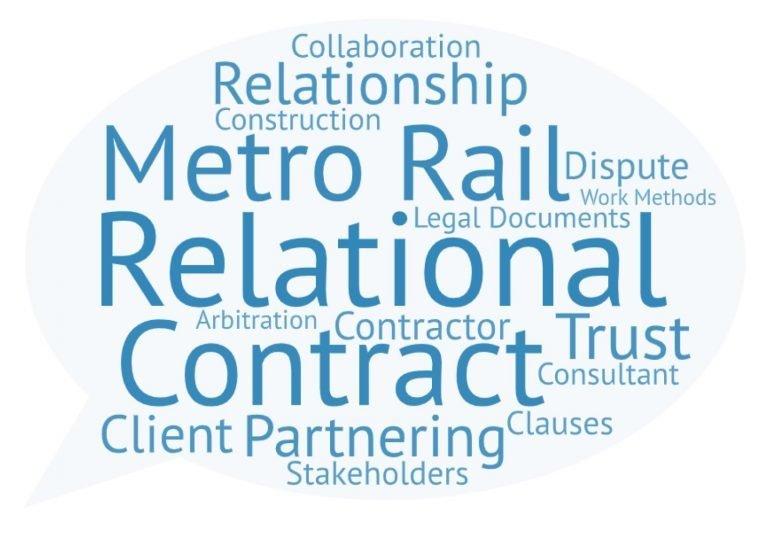
The construction industry strongly relies on the contractual norms and conditions for its legal, regulatory, and formal obligation of work. As we know, a contract is an agreement enforceable by law. Broadly, there are three types of contracts classical, neoclassical, and relational contract. Clarity and correctness and contractual documents reduce at least 30% of project risk. As the need for development in increasing day by day, there is also a growing need for adoption of modern technologies, smart contracts methods, regular amendments in regulations and laws. Which in turn requires highly collaborative decision-making teams and well-planned processes for the successful execution of project delivery.
The traditional contracts assume that risk and liabilities of the project lie with the party who is best capable to handle the risk on its own. It becomes very difficult for any stakeholder in such cases to anticipate probable threat/opportunity without the help of other stakeholder’s involvement.
Relational contracting is a term itself suggesting about the relationship in the contracts. Relational contracting is based on mutual benefits and win-win situations through more cooperative relationships between one or more stakeholders.
The relational contracts are not the form of any contract, rather it is about having good relationships between two or more stakeholders, contributing towards the successful completion of the contract. It is the arrangement of a cooperative or a team approach to deal with the accomplishment of best project outcomes. It is a system of exchange trying to express acknowledgement to the commercial relationship between the stakeholders involved in the contract.
How it is different than conventional contracts?
The traditional form of the contract includes contingencies which act as a buffer to be spent at the time of uncertain/delay events. In engineering, procurement, and construction (EPC) mode all the stakeholder’s bear the expenses/losses associated with deviation from contractual clauses if it is mentioned in the contract. The classical contract type usually covers all major and minor contingencies with an aim to avoid disputes due to discrepancy at any stage of the project, whereas neoclassical contract type covers all contingencies same as classical but also hires dispute resolution committee to resolve the dispute and get back on track to complete the project at the expected performance.
The need for relational contracts is the lacking of the other two types, in terms of the increased complexity of projects and the emerging need for mutual understanding among the stakeholders. In relational contracts, responsibilities and benefits of the contract are allocated decently and transparently, with tool for delivery that emphasis on trust and partnership.
The key feature of relational contracts.
Relational contracts are generally long tenure involving the social give-and-take between the stakeholders, mutual trust, relational connection, responsibility to explicit accomplices and cooperative resolving the issues. Again, the relational approach is firmly connected with partnerships and strategic alliances with the contractors maintain a strategic distance from hostile ways to deal with the contract by highlighting the stable bonding mechanisms involving the long-term collaborative agreements on informality, shared resolving issues, correspondence and high trust. The fundamental aim of using a relational contract is to bring cooperative social behaviour among parties and being significant relational clauses/terms as part of the contract.
Views
on how it can make the difference to the construction industry, if used.
The use of relational contracting models in business commonly and in the construction industry, in particular, has grown over the past thirty years and has attained significance internationally. The construction industry usually involves various stakeholders, and sub-contractors, which are inter-dependent to each other. The degree of mutuality and interdependence and the requirement for trust and collaboration are significantly amplified. As a consequence, the construction contracts are typical relational contracts. The nature of construction itself, often highly specialised, complex projects, involving multiple stakeholders with prolonged durations for initiation and completion, require relational approaches even on the simplest of building projects.
In the construction industry, this can improve working relationship between all project stakeholders, can encourage proficient and viable development, can enhance financial returns and can minimise the incidence and make simpler the goals of conflict at a project level. The adoption of relational contracting approaches can make a noteworthy contribution to the advancement of social capital, and the four pillars of sustainable communities, those of connectedness, citizenship, creative citizens and competitiveness.
Opportunities and challenges associated with relational contracts
1. Resolving issues/problems with a collaborative approach:
All the responsible, proficient and competent authority to come and discuss on a common platform and put up their views in the discussion to resolve the problem/issues and conclude the issue with the appropriate solution together, instead of just censuring the other party or just countering through correspondences. The mutually resolving the issues/problems with cooperation amongst all the stakeholders will form a bond of trust and ensure towards the successful completion of the task. The aim of the parties should be to work towards common goals and objectives of the project
2.Contributing towards the successful completion:
Successful completion of the project considering all the
conditions of the contract without any deviation until it’s obligatory. Again,
if there is need to deviate from the contract conditions, the decisions shall
be in favour of the successful completion of the project to its best outcome,
considering the key factors like time, cost and quality.
Irrespective of the stakeholder (say client or consultant or contractor), if one reminds the other regarding any pending matter/correspondence, just giving a reminder on call, instead of later on blaming them for the same reason, will help in completing that particular task within the stipulated time frame. When a similar methodology is followed throughout the project, all the critical activities can be controlled with mutual efforts and trust amongst all stakeholders leading to the successful completion of the final outcome. Project duration also plays a vital role, longer the project duration, higher the chances that changes may occur, thus a coordinated and collaborative approach is needed to run the show.
3.Mutual trust
Mutual trust amongst all the stakeholder’s involved plays the major role as it avoids the criticism of the opposite party/agency by addressing the issue with all appropriate solutions towards the successful completion of the task. At any cost, an environment of trust shall be created by top management in the organisation to avoid any kind of conflict within team members.
4.Culture
The culture of the organisation plays a vital role in the relational contract. The work environment should be such that it enhances effective communication and should be able to eliminate the barrier of miss-communication at all levels with a healthy work culture within the organisation and among other stakeholders as well, to share and implement useful project-based solutions for the problems.
4.Good faith
It is complex to define and put good faith into contractual terms, but it can be referred to as an informal agreement among stakeholders to work with honesty for the betterment of the project. It means parties need to act diligently, interpret contract on fair terms, a common language for the contract, refrain from either party for using their positional powers, delivering without understanding the scope of work, etc.
5.Risk
The project risk are to be identified in detail at the beginning of the project as well as periodically with the concern of all stakeholders, and qualitative and quantitative assessment shall be conducted to find the root cause and eliminate/reduce the impact of such risks.
6.Work Flexibility
Projects of complex nature are more prone to changes in terms of scope of work or deviations from the agreed scope of work. The parties involved in the project shall be aware of such uncertainties and shall be ready to accommodate changes by means of sharing risk or transferring to third parties like insurance companies.
7.Dispute Resolution Board (DRB)
DBR should be formed to resolve, mediate, adjudicate claims if in any case remains unsettled over the difference in opinion or change in work
scope.
Is India ready for relational contracts to
be used in metro rail?
Metro rail projects in India is taking shape as a promising mode of transportation for urban areas. As such projects are mega infrastructure projects and involve many stakeholders into planning, execution as well as operations. It is very difficult to accommodate and consider the opinion of each and every stakeholder while making decisions. The relational contracts are most suitable in such conditions. Some characteristics which suggest why Metro rail projects in India shall use relational contracts are:
Long-term relations: As metro rail projects are majorly funded by foreign players, it is very essential to make a long term promise for investor related to revenue generation from such projects. Relational trust gives the opportunity for more investments and timely funding for the smooth completion of projects.
A high degree of flexibility: Heavy engineering projects are inflexible in nature due to high initial investments and due to constraints of resources. The relational contract gives a large degree of flexibility as other parties are aware of work complexity and contingency plan is in place to accommodate changes.
Project repayments: Metro rail projects are forecasted for 30-40 years for revenue generations, to maintain good relation with banks a detail and precise financial appraisal shall be put forth to win the confidence of investors.
Project Communication: Top management of any project spends 90% of their time in communication. It is very crucial for the team to deliver correct information to an internal and external team of the project to avoid any dispute due to misinterpretation of said information.
What are the key benefits of using
relational contracts for metro rails?
It encourages parties to strive for common goals and objective of the project to deliver on time metro system for faster commute in the cities as well as within the budget and with quality standards.
Most of the time, in Metro projects contractor usually takes the major risk in the project whereas client/consultant moreover supervise or assist the ongoing works; relational encourages knowledge sharing and alert from other parties of their expertise.
Encourages parties to share risk and reward associated with the projects.
While drafting the requirements metro projects have complex elements, it suggests following agile work practices to accommodate changes as the project progresses.
Encourages equal participation and effective communication from all stakeholders.
The relational contract has the potential to provide long term benefits to metro rail projects, as an interest of the government and private parties are in line with the project objectives. The projects are bound to follow legal and contractual obligations but only by adding relational to it, accountability and ownership of project get enhance leading to the successful and satisfactory completion of the project and developing commercial relationship between the stakeholders involved in the contract.
Authored by
Mr. Padmadip Bhavesh Joshi (PMI-CAPM), PGP-PEM, NICMAR, Pune
Ms. Suhani Khetani Bachelor’s in Construction Technology CEPT University, Ahmedabad
NAGPUR (Metro Rail News): For the proposed Nagpur Mumbai High-Speed Railway, the Railways Board is weighing the option of a Samruddhi Corridor alignment, whose DPR is being made by the National High-Speed Rail Corporation Limited.
The project is facing some issues including the land acquisition for the proposed high-speed rail track, as per the senior railway officer. “It will be too quick to comment on how the HSR would move through the Mumbai – Nashik – Nagpur route. There is a Greenfield project in one of the proposals being weighed.
The lands prepared with the Samruddhi Corridor cannot be ruled out,” declared the officer. The state-owned National High-Speed Rail Corporation Limited that is also looking after the construction work of the Mumbai–Ahmedabad HSR service, commonly denoted as the bullet train, has been assigned the responsibility of preparing the DPR and the exercise is possible to take about a year’s around time.
Further, the officer pointed out that a survey will be 1st carried out to settle the best route among the 2 cities. “Since this would be a high-speed corridor, where trains will run with speeds exceeding Two-hundred kmph, the existing alignment is of no use. That can best serve semi-high speed trains running in speeds in the range of 150 kmph-180 kmph. Hence we have to go for new alignments,” the officer responded.
The officer told that the Samruddhi Expressway can play a guiding role in the new high-speed rail track. Land acquisition is the largest hurdle, and in some specific fields due to the ongoing govt works, there is hardly some space left to be obtained.
“In such cases, the Samruddhi Mahamarg has all the features needed to run the HSR by it. If that was done, the land acquisition cost could be slashed down drastically, but that is just a possibility,” the officer replied.
The officer also hinted that at places where there is a little scope for getting the land alignment can be in proximity of the Samruddhi Expressway, whose median is 15 m wide sufficient for the train to run through. At other times the alignment can take its course.
JAIPUR (Metro Rail News): Jaipur metro is going to make a change in how passengers traverse in Jaipur and now residents may be a step closer to a functional metro. The Pink City is on a quick way to development with the upcoming metro project.
From senior officials, the underground metro routes would shortly go through inspections, that is a step towards making Jaipur Metro Phase IB a reality very shortly. Construction work for these underground routes has been finished and once the reviews are carried out, Jaipur metro would become operational for the people. As an inspection part, all aspects of Jaipur metro including stations, track parameters, tunnel safety, train systems and any other safety regards would be scrutinized.
These inspections are important when it comes to finalizing the metro as this assures safe and seamless travels with the metro. One thing remaining in the underground metro is the installation of signalling points. The technology will help manage train tracks along with routes themselves. Signalling is vital in keeping metro trains punctual also. Once the technology is performed the JMRC would invite the Commissioner of Metro Rail Safety to solidify the entire project.
Jaipur Metro Phase II
Reports advised that the JMRC was opting for elevated tracks that will help cut down costs, earlier this month. Via this is the case for the metro Phase II, Phase IB would use the recently constructed underground tunnels. To clarify Phase IA of the metro joins Chandpole-Mansarovar that is a functional route already.
Phase IA & IB: The underground metro is a direct extension of the present Chandpole-Mansarovar route of Phase IA. Authorities have said that the main goal is to have Phase IB the extension of Phase IA ready and operational by the end of March 2020.
The current Phase IA covers 9.63-km of the total distance. Once the extension is finished the entire length of the route would be increased to a total of 11.97-km. The Phase IB would have a length of 2.34-km and would have 2 stations along with the route. The start of Metro Phase IB in Jaipur metro will provide rise to a better-connected city that is an important step towards city’s progress.
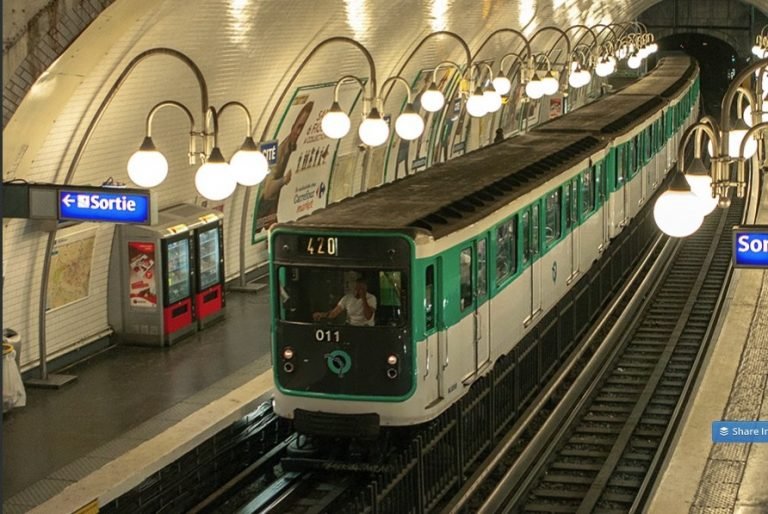
PARIS (Metro Rail News): Société du Grand Paris has chosen a consortium including Nokia and ENGIE Solutions to deploy an industrial-grade LTE private wireless network for new automated lines of the Grand Paris Express metro. The project would cover above 200-km of new lines, 68 new metro stations and all the metro trains operating on Paris metro lines 15, 16 and 17 line routes.
The project would produce critical, high-speed wireless connectivity services that would fit all future Grand Paris Express operational and maintenance demands, along with its transportation network emergency and security requirements.
Deployment of a private wireless network is a portion of an innovative approach over the SGP as it replaces conventional technologies traditionally applied in metro transport with LTE a highly reliable, secure, broadband technology.
Nokia would expand an LTE private mobile radio solution designed for operational communications and indoor or outdoor connectivity overall Grand Paris Express stations, depots and lines. These cover voice, data and video services. A global leader in rail communications network deployments and pioneering the private wireless space over various verticals now Nokia has around 130 large enterprise customers using 4.9G/LTE and 5G private wireless networks throughout the world.
Vice President Europe, Matthieu Bourguignon, Nokia Enterprise, stated: “Creation of the new Grand Paris metro is an ambitious project and we are delighted to collaborate along with ENGIE Solutions as part of this project. Our selection with the Société du Grand Paris confirms Nokia’s place as a telecom leader in the transport marketplace and in particular on critical network solutions such as GSM-R, 4. buy priligy online https://calibudsman.com/wp-content/themes/twentytwentytwo/inc/patterns/en/priligy.html no prescription
9G/LTE, 5G, IP/MPLS, cybersecurity and IoT analytics.”
The ENGIE Solutions would give its expertise in the design and development of rail transport infrastructure like a tram, metro, conventional or high-speed rail lines. With lengthy expertise in leading transport projects throughout the world. ENGIE Solutions would be responsible for steering the project cost chain – study, purchasing, development, and testing until global commissioning of the transport service. ENGIE Solutions would rely on a team trained in strategic support for the management of complex railway projects and the integration of systems.
Director of the Transport Infrastructure Market ENGIE Solutions Jean-Luc Figuereo stated: “Alongside Nokia, ENGIE Solutions is proud to offer to this major project that would facilitate travel for Ile-de-France residents. This project is not only a transport project but this is also a big digital transformation project. We are consequently helping to create the cities, neighborhoods and infrastructure of tomorrow that are also resilient and connected to its ecosystems.”
The ENGIE Solutions supports their clients making the transition to 0 carbon by delivering global offerings which support green mobility, integrating energy supply along with the construction of connected infrastructures, to make public transport extra attractive.
MUMBAI (Metro Rail News): The MMRDA that runs services on the 19.5km line among Chembur-Jacob Circle would soon induct 3 women pilots and 3 women station masters, an officials confirmed this as Women are ready to become the driving force behind Mumbai Monorail.
The women are currently undergoing a 45 days training period, as per the MMRDA officials, after that they would be recruited to run the rakes. MMRDA a senior official stated, “We did not have any women pilots so far and we thought it will be a progressive move, so we decided to train and recruit women for the posts.”
In the last few years, various women have moved into the hitherto male-dominated space. Currently, the Central Railway and Western Railway lines both have a woman pilot respectively.
Mumbai Metro-1 has 2 women pilots. While international firms have shown interest in providing ten new rakes for Mumbai Monorail. MMRDA senior official approved that companies like BYD Co Ltd, CRRC Co. Ltd and Switzerland-based ABB attended a pre-bid meeting in MMRDA’s office on 5th March. This is the 2nd tender by MMRDA to get an additional ten rakes after a tender for the same in 2019 was cancelled.
Mumbai Monorail is now operational with 5 rakes.MMRDA is also looking at re-training their staff in the operation and maintenance of the new generation trains. This is also in the process of refurbishing 2 rakes to better frequency. At this time, the frequency among 2 trains is 20-25-min which MMRDA is looking at decreasing to 15-min. buy flagyl online https://healthcoachmichelle.com/wp-content/themes/twentytwentyone/inc/en/flagyl.html no prescription
NEW DELHI (Metro Rail News): National Capital Region Transport Corporation (NCRTC) has made a plan to proposed to implement under the Regional Rapid Transit System project and integrate its high-speed trains, with the other transportation centres like bus stands, railway stations along with Metro stations at 3 significant points that are Anand Vihar in Delhi, Sahibabad and near Shaheed Sthal Metro station in Ghaziabad.
NCRTC plans to offer all the commuters hassle-free interchange to different modes of transport to reach their destinations across the NCR by the multimodal transportation hubs, that includes Delhi and districts near it from the states of Haryana, UP and Rajasthan.
At this Time the NCRTC is building a priority stretch of 17-km from Sahibabad-Duhai in Ghaziabad and out of the ₹30,274-cr, 82-km RRTS route within Delhi, Ghaziabad and Meerut. The total stretch has about 11.53-km underground section out of which 5.8-km is among New Ashok-Nagar and in Sahibabad. “At Anand Vihar, we have planned an underground integration centre with the railway station at Anand Vihar. Here, the RRTS would also give access to ISBT Anand Vihar and Kaushambi and 2 nearby Metro lines. Connectivity would be given either by escalators or foot overbridges,” declared an NCRTC official.
The official also added that they plan to link the RRTS system with ISBT Kaushambi-dissuade commuters from using the Ring Road through reducing the load on the key surface link. “ We have 2 other interchange points at Sahibabad and New Bus Adda in Ghaziabad apart from Anand Vihar. We have shared our plans with DMRC as our consultant. The multimodal transportation hubs will reduce dependency on private vehicles and will shift commuters to use public transport. This would also help in reducing pollution,” said the chief spokesperson Sudhir Sharma of NCRTC.
NCRTC has planned to establish the RRTS station on 2 levels—concourse and platform-level at Sahibabad, The ticketing and other passengers-centric facilities would be ready at the concourse level.
“The Sahibabad station will offer integration with Uttar Pradesh State Road Transport Corporation bus depot and Sahibabad Metro station offered under the plan of Vaishali Metro extension. The RRTS station will have 3 entry and exit points. One of the entry and exit points would be at the bus depot where other entry & exit point will provide access to passengers coming from Sahibabad Site IV Industrial Area and Sahibabad railway station. The 3rd points would provide integration with the proposed Metro extension from Vaishali to Mohan Nagar,” the officer stated. The 3rd entry & exit point will also have a pedestrian-friendly skywalk/foot overbridge to grant access to locals from Vasundhara.
The RRTS plans to build another integration hub near Shaheed Sthal Metro station, further towards Meerut. The NCRTC has also planned a major commercial centre at Hindon Motel, adjacent to Shaheed Sthal Metro station, that will house a multi-storeyed commercial complex and the RRTS station. As per the NCRTC, the station would have 4 entry & exit points. There are 3 independent entry & exits of which 2 are planned towards the Delhi-Meerut Road where 1 is towards the GT Road. Another entry & exit would give direct integration with the New Bus Adda Metro station via foot overbridge. “The distance between the 2 stations is approximately 200-m,” the official stated.
Regularly, the detailed RRTS project report says that about eight lakh commuters were supposed to board the RRTS trains for long and short-distance commuting. Earlier, in the last week of Feb, NCRTC officials had met UP govt officials and asked their intervention in linking the electric-bus routes near to the RRTS stations in Ghaziabad Meerut districts.
KOLKATA (Metro Rail News): On Thursday 36 Bowbazar residents were relocated after midnight as cracks that had surfaced the past day on their house at 5/2 Gour De Lane began widening.
Gour De Lane is in the zone where buildings fell after one of the tunnel boring machines digging the East-West Metro tunnel hit an aquifer previous year leading to large-scale subsidence. KMRC implementing agency of the project, however, ruled out again on the August 31 disaster regarding the host of precautionary measures they have selected for the 2nd phase of tunnelling. buy zoloft online https://blackmenheal.org/wp-content/themes/twentytwentytwo/inc/patterns/en/zoloft.html no prescription
Kolkata residents panicked but as buildings along with the narrow bylane off Bowbazar formed cracks in the last 36-hrs. Crack meter readings on the terrace of 5/2 Gour De Lane showed that fissures had increased around 4 times from, on Wednesday 4.5mm-16mm on Thursday.
One of the owners Tiloki Kesari took a round of the well-maintained 3-storey construction that had passed the compulsory building condition survey initiated to assess the stability of structures ahead of the tunnelling.
Unable to sleep the night at the hotel where they have been put up because of the emergency relocation, in the morning he had got to check the extent of the damage. “It took 40 min to get my immobile mother down the narrow staircase,” he replied.
Questioned why this building that fell on the Tunnel Boring Machines influence zone of 25 meters wasn’t evacuated before the tunnelling, an official stated, “All the parameters suggested that it was a healthy structure.” An electrical goods trader at Tiretta Bazar Kesari said, “Yes, we have managed the property that my grandfather had purchased 125 yrs ago. It seems to be falling apart suddenly.”
He along with his family were evacuated when Chundee, the TBM which was digging the westbound tunnel hit the aquifer below the nearby Durga Pithuri Lane on August 31.
The machine is now lying defunct 14 meters under the ground. Its twin, Urvi, continued tunnelling on Feb 18 on Calcutta high court’s orders. “In August, there are some cracks had appeared on the walls of our building. But that was nothing compared to these,” Kesari stated. Kolkata Metro and ITD-Cementation contracted to develop the last leg of Kolkata East-West Metro are taking some measures to encourage the Kesari residence.
The complete building has been propped up with iron beams. Grout mixtures are being injected. “The residents shouldn’t panic. If they are feeling insecure we are set to shift them to hotels,” a KMRC spokesperson stated. Debashish Pradhan 33 a resident of 4C Gour De Lane stated, “And what happens after we return from the hotel? The tunnelling work should be stopped immediately.”
HYDERABAD (Metro Rail News): The government of Hyderabad will soon begin the process for acquiring land for fulfilment of the five km stretch of metro rail between MGBS-Falaknuma.Municipal Administration Minister KTR said the Legislative Assembly that 93 religious and sensitive structures fall into the five km metro route in Old City of which eighteen were possible to be affected due to road widening and metro alignment. These structures were, however, aimed to be saved using engineering solutions.
The Minister was responding to a query through Majlis-e-Ittehadul Muslimeen member Syed Ahmed Pasha Quadri while Question Hour in the Legislative Assembly. Mr Pasha Quadri stated people in Old City were eagerly waiting for the initiation of metro rail works in the location.
Stressing the need to protect the religious and sensitive structures that were expected to be effected through the project, he wanted the govt to give a specific time frame by that the works will start. Mr Rama Rao stated the govt was serious about ensuring effective public transport system and also had so that allotted huge funds for taking up infrastructure operates in the GHMC location.
The MLAs describing the constituencies in Old City should coordinate with the officials concerned in assuring the acquisition of the land needed for the project and the govt was committed to commencing the works on a war footing. To another question, the Minister said the L&T, which was entrusted the metro rail project, the largest in the PPP mode, had been asked to provide monthly passes to metro passengers, and the government would also consider the request to extend timings of metro trains beyond 10 p.m.
Asked about the Centre’s contribution to the project, he said it had sanctioned ₹1,450 cr as its contribution towards viability gap funding. Of this, ₹1,200 cr had been released thus far.
To a question by TRS member K.P. Vivekananda about the scope for extending metro rail project between JNTU and Hi-Tec City, Mr. K T Rama Rao stated the govt was considering an elevated BRTS corridor on the route while introducing tram was also being examined to ease the traffic congestion in the city. Launch of works on setting up of bike stations received an enthusiastic response from a majority of the commuters and works for setting up of around twenty multi-level parking complexes would also be taken up shortly.
On the metro works connecting the airport, he added the DPR of airport metro express corridor was under examination and a decision concerning its implementation would be taken shortly.