Home Blog Page 562

Country’s first RRTS hubs to connect with Delhi Metro, Railways station

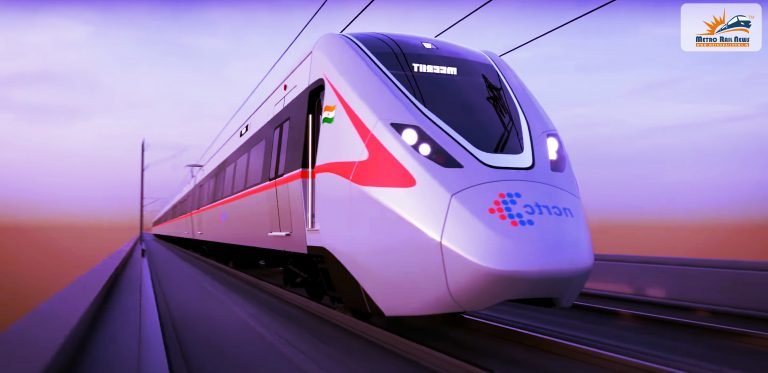
NEW DELHI (Metro Rail News): The Delhi-Ghaziabad-Meerut Regional Rapid Transit System (RRTS) corridor is expected to have 3 major multimodal transportation hubs between Delhi-Ghaziabad. It is the country’s first RRTS corridor. The National Capital Region Transport Corporation (NCRTC) who is executing the RRTS project in the national capital region (NCR) has formed a plan to combine the semi-high speed corridors with some other public transportation hubs like Indian Railways stations, bus terminals along with Delhi Metro stations. An NCRTC official told that 3 multimodal transport hubs have been planned at Delhi Anand Vihar at Shaheed Sthal and at Sahibabad in Ghaziabad.

NCRTC intends to offer seamless, hassle-free interchange convenience among other modes of transport by these transport hubs that include districts encircling from the states of UP, Haryana and Rajasthan. The 82-kilometre long Delhi-Ghaziabad-Meerut RRTS corridor would decrease the travel time for the passengers among Delhi-Meerut to just 55 minutes. The major line of the corridor is the 17 km long Sahibabad-Duhai section that has been targeted to be operational by 2023. Multimodal transportation hubs would reduce the dependency on private vehicles and help in reducing pollution.

Multimodal transport hubs Delhi-Ghaziabad-Meerut RRTS

  • An underground integration hub has been designed with the Anand Vihar railway station. Here, combination with the inter-state bus terminal Anand Vihar & Kaushambi and 2 nearby metros are also being planned. The connectivity would be given by foot over bridges and escalators.
  • At the Shaheed Sthal station, a major commercial place at the Hindon Motel has been designed, adjacent to the metro station corridor. The station would have 4 entry & exit gates. 2 entry & exit gates have been designed towards the Delhi-Meerut road and 1 has been designed towards the GT road. Other gates would provide direct connectivity with the New Bus Adda metro station by a foot over bridge.
  • At the Sahibabad station, 2 levels have been planned to be built, 1 level for the concourse and other is for the platform. At the concourse level, ticketing and other passenger-friendly conveniences would be available. The station would be combined with the UP state road transport co. bus depot and the Sahibabad metro station that has been submitted under the Vaishali Metro expansion project. This station would have 3 entry & exit gates. 1 entry & exit point would be at the bus depot where the point would have connectivity for the commuters coming from the Sahibabad railway station along with the Sahibabad site IV industrial area. The 3rd entry & exit point would have to join with the proposed Vaishali-Mohan Nagar metro expansion. This point would have a pedestrian-friendly foot over bridge and skywalk convenience.

Namma Metro Outer Ring Road line tender receives 14 bids

BENGALURU (Metro rail News): The Bangalore Metro Rail Corporation Limited (BMRCL) tender for the Outer Ring Road (ORR) Line has received a good response of 14 bids, which deadline for that expired on 13th of March.

The tender was divided into 2 packages for the 19.5 km range from Silk Board-KR Puram out of the 55 km line running up to the Kempegowda International Airport on 20th of Dec 2019.

Work under the 1st 2 packages comprising thirteen metro stations is expected to cost 1,325.43 cr. Managing Director of BMRCL, Ajay Seth said that we received 6 bids for the 1st package and 8 for the 2nd. While L&T and Afcons Infra have taken part in multiple packages, ITD Cem has become part in one package.”

First package running to 731.18 cr consists of elevated structures both viaducts and 6 stations and those are Central Silk Board, HSR Layout, Agara, Ibbalur, Bellandur and Kadubesanahalli with loops, ramps for road flyover at Central Silk Board for a distance of 2.84 km and allied works of RV Road-Bommasandra Line.

Second package running to 594.25 cr includes elevated structures of the 7 metro stations of Kodibeesanahalli, Marathahalli, ISRO, Doddanakundi, DRDO Sports Complex, Saraswathi Nagar and also KR Puram with a 1.097 km link to Baiyappanahalli depot. All of them has a conclusion end date of 27 months after the tender awarded.

Tenders for 3 other packages on the KR Puram line to KIA line would be called by end of the March. Asked about the status of the TBM needed from China for the underground segment of the Nagawara-Gottigere Line the Managing Director told that 2 TBMs had appeared in Chennai sometime ago when 1 was in Bengaluru. “L&T is assembling it here. We have not been able to bring manpower because of visa restrictions. That can be handled later and would not pause the project as such,” he replied.

Bengaluru Metro declares All Saints church will not be affected by construction

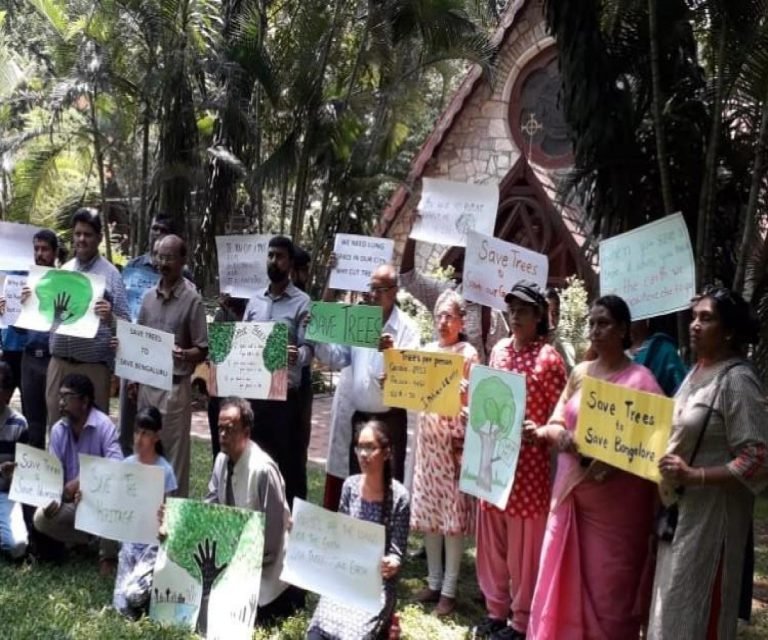
BENGALURU (Metro Rail News): The Bengaluru Metro Rail Corporation Limited (BMRCL) has answered to allegations made by all the members of All Saints Church and declared that the metro alignment in Hosur road is 36 m apart from All Saints Church building and does not pass under the church building. As per the Metro, only an open area of 1140 sqm with some trees near the church building is needed for construction work of the underground metro station.

Bengaluru Metro response appeared to an article on the protest at the church that has been going on for 300 days. BMRCL intended to clarify all the concerns of the church members by the press statement members state that they are hardly satisfied throughout metro construction”, the BMRCL statement says.

The metro officials also tried to convince the Church members that the 150-year-old building structure is under no threat. “There will not be any harm to church structure by metro construction activities. All the necessary care to protect the church building will be taken through BMRCL. We have effectively carried out such similar construction for the underground stations in phase-1. One of the works was that of Cubbon park underground station build at a distance of just 3 m from more than hundred years old CTO building, without causing any damage.”

However, the church members state that yet they fear that the heritage building would be threatened by the metro work, including drilling. In a statement, the church members told, “The construction work would necessitate excavation up to a depth of 80 feet. In the process, if it encounters a hard rock, it would have to be blasted, thereby endangering the church. The BMRCL has not returned any tests to determine the structural strength of the church by entrusting reputed engineers like from Archaeological Survey of India.”

One of the members Ebenezer Premkumar stated, “The CTO building that Bengaluru Metro Rail Corporation Limited refers to is a granite structure, and cannot be compared to the heritage church building. The church is a limestone and masonry building, and will be adversely affected by the Metro construction activities,” he added.

He additional stated that the church, “is the only one of its type built in the Indo-Saracenic oeuvre in the year 1870, it’s foundation is done of lime and mortar and in all probability would collapse due to the construction activity nearby.”

The BMRCL also says in its statement that this was not only a religious place that is affected by the metro construction work. “Religious places are received for the Bengaluru metro rail project only when this type of acquisition is inevitable. For phase-2 works 33 religious places have been acquired that includes 30 temples, 2 churches and 1 mosque.”

However, all the members of All Saints church stated that as per the original detailed project report the plan did not even touch the church but instead was planned for the other side of the road.

“The original metro DPR plan was supposed to affect the Shia Mosque located near the Johnson Market but that turned to affect All Saints Church alternatively. We believe that the plan was changed because of the use of political influence so as to not affect the mosque but crossed the road and to make it here instead,” Ebenezer answered.

Press release from the Metro shows that “Open area required for metro construction work is small compared to the total field of the church premises. Area needed is only vacant land that too on a temporary basis for a period of around three years. Number of trees to be cleared for Metro construction work in the area needed on a temporary basis is only twenty-six. Also, some of the trees could be transplanted in the church premises itself.” Bengaluru Metro says All Saints church would not be affected by the metro construction, church members refute.

Pune Municipal Corporation approves metro extension from Swargate-Katraj

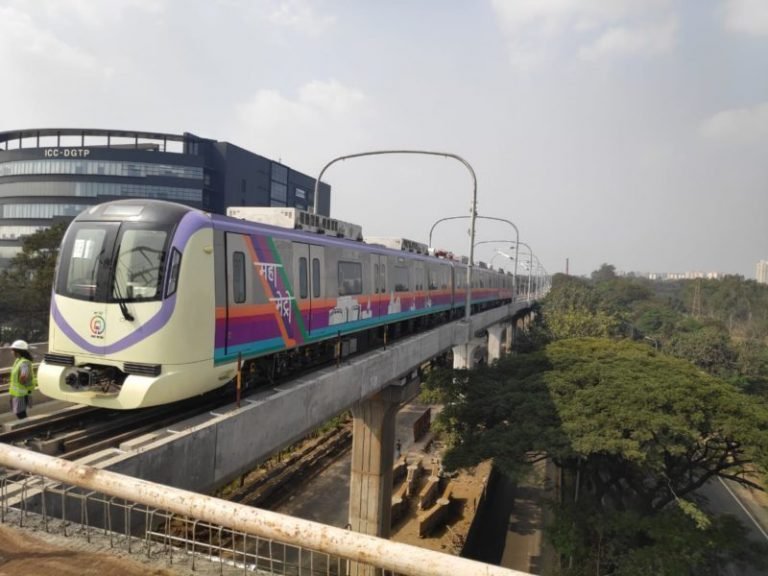
PUNE, INDIA (Metro Rail News): On Tuesday Pune Municipal Corporation’s (PMC) standing committee approved to complete the proposed metro corridor extension from Swargate-Katraj.

The extended corridor length 5.4 km long will be an underground metro route and expected to completed by 2028, according to officials. Maha-Metro has already begun the civil work of the initial phase of Metro in Pune, and Pimpri Chinchwad, 2 corridors of that are supposed to cover 33 km long distance.

The standing committee chairman Hemant Rasne said that the standing committee has approved the DPR submitted by the Maharashtra Metro Rail Corporation (Maha-Metro) for the extension of a corridor from Swargate to Chinchwad. Now the route has been extended till Katraj.

The committee has provided its go-ahead for allotting Rs 233.75 cr for the Swargate to Katraj Metro corridor extension that is supposed to cost Rs 4,283 cr.

Ajit Pawar Pune’s guardian minister recently suggested executing all the extension of the metro corridors as this will help to get more ridership and enhance the use of the metro. The Metro extension up to Katraj has been given in the city’s 2017 DP. The committee has offered to introduce the latest moves in DP maps.

The standing committee has given the DPR approval now it is expected that the general body will also approve it and submit it to the state govt for approval.

Maha-Metro installing solar panels over stations

NAGPUR (Metro Rail News): MahaMetro is installing panels atop its stations at a fast pace as it aims to meet 65 per cent of its energy requirement from solar. Its aim is to install a total 14 MW and so far 1 MW has been installed and the work is going on other 1.5 MW.

A Metro official told that solar energy was a win-win situation for the agency. “A private operator installs the panels by Solar Energy Corporation of India (SECI), a central govt undertaking. We don’t spend a penny on it. We just provide the space in our stations. The operator sells power to us when the panels are installed. We get electricity at less than half of MSEDCL’s power tariff,” he said.

“At present, we are meeting 85% of the electricity requirement of our stations by solar. Panels have been installed atop 6 stations and Metro Bhavan. The monthly average generation is more than 1 lakh units. Till date, we have exported over 2.5 lakh units of electricity to MSEDCL. More than 10.5 lakh units of solar energy has now been generated that saved more than Rs 82 lakh for Nagpur Metro Rail Project so far,” stated the spokesperson.

Further, he added that installation work at 2 depots and 5 Metro stations for 1.5 MW capacity was in progress. Maha-Metro is in the process of signing agreements for the construction of another 3 MW for upcoming ten stations and depots.

More than 5 MW would be installed by March 2021. Maha-Metro is one of the 1st Metro Rail agencies to go for solar energy right from inception. Various agencies began switching to solar when they were asked by the central govt and when their electricity bill ran in crores.

Going green helped Maha-Metro assured loans worth around Rs4,500 cr from German agency KfW and French agency Agence Francaise de Development. As per the foreign lending agencies prefer projects that are green spokesperson.

“We are using green energy wherever possible as it is our aim to reduce pollution in Nagpur. Our feeder vehicles would run on electricity or LPG. Our stations have bio-digesters to recycle water. Our stations have got Indian Green Building Council ratings,” he said.

IIT Madras hosting India’s first Global Hyperloop Pod contest

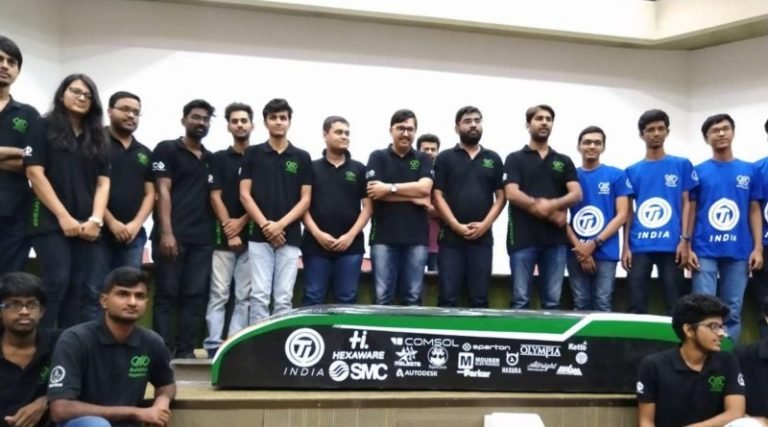
CHENNAI (Metro Rail News): Indian Institute of Technology Madras is regulating India’s first Global Hyperloop Pod Competition in a bid to raise awareness and enthusiasm regarding Hyperloop in India, according to a statement from the institution on Wednesday.

The competition is open globally and in July 2020 the final round would be held in the IIT-Madras campus. Called the ‘Indian Hyperloop Pod Competition,’ the objective is to promote student teams in India along with abroad to develop a Hyperloop Pod and compete to make the fastest, most innovative & efficient design and prototype of the related technologies in the range, as per the statement.

Hyperloop is the fifth mode of transportation a high-speed train that travels in a near-vacuum tube. The decreased air resistance provides the capsule in the tube to give speeds of more than one thousand kmph conveying people or objects at high-speed where being very effective.

This competition is for all the engineering colleges over the world to ideate, design and executes their ideas for the Hyperloop Pods. Moreover, can be obtained from the event website – https://ihpc2020.web.app/’. 1000 kmph Decreased air resistance provides the capsule in the tube to reach speeds more than 1000 kmph.

Bengaluru Metro Phase-II acquisition hurdles to blame for the delay

BENGALURU (Metro Rail News): The Phase-II Metro is in limbo because of land acquisition issues. Bangalore Metro Rail Corporation Ltd. (BMRCL) is still to hand over land to the contractor to start the construction work. The most critical of the acquisition issues faced by it is for NICE and forest lands as per BMRCL’s fresh newsletter.

“The work on Nagasandra-NIEC corridor is held up because of non-availability of NICE lands. The Karnataka high court stayed the proceedings of acquisition of NICE land for Bommasandra-RV Road corridor and 2 properties in Nagasandra-BIEC corridor,” shows the newsletter.

On forest lands, the state govt has provided BMRCL approval to acquire 18.1 hectares in Kadugodi plantation and also 0.7 hectares in UM Kaval required for Kadugodi & Anjanapura depots sequentially.

“The expert committee constituted by the govt has investigated the area and is still to give permission for cutting/translocation of trees,” said BMRCL. Though the state govt mooted a Mumbai, like war room previous year to fast-track the Metro projects, it’s still to take off.

Given that Namma Metro’s average speed of work is 4 km every year as against 25 km every year in Delhi Metro, experts have urged the govt to resolve land acquisition issues. India’s Metro Man E Sreedharan had said that per day’s delay will cost BMRCL about Rs 1.5 cr higher every day.

Land acquisition for the much-delayed underground corridor among Dairy Circle-Nagawara with 14 km long distance is also expected to be a challenge. The previous year L&T got bids for executing the underground sections from Vellara Junction-Shivajinagar with 2.7 km long distance and Shivajinagar-Pottery Town with 2.8 km distance. It also ordered 4 TBM but the land acquisition issues on certain sections are still to be solved.

Bengaluru Metro has said that it is still to start work on the stretch connecting Tannery Road-Pottery Town as the Wakf Board has not been able to convince its tenants to vacate its shops.

UPMRC takes steps to prevent the spread of coronavirus

LUCKNOW (Metro Rail News): Uttar Pradesh Metro Rail Corporation (UPMRC) has taken precautionary steps and issued advisories in keeping in mind the public interest, health and safety aspects of its passengers because of the coronavirus threat, an official stated on Tuesday.

According to them, measures have been undertaken for sanitation and personal hygiene of commuters at all the Metro stations from the Chaudhary Charan Singh airport-Munshi Pulia.

The actions taken by the Metro staff include the periodic announcements in the trains and at the Metro stations via public announcement system, they told adding that the corporation is transmitting awareness by video messages and posters.

Customer care centres, ticket counters, TVM machines, entry & exit gates, hand railings in the trains and at the Metro staircase are being cleaned and sanitised regularly at frequent intervals. Station controllers, security personnel and customer relation assistants are wearing gloves and masks during dealing with passengers.

There is a provision for tissue papers and sanitisers for commuters at every washroom, as per the officials, adding that a special emphasis is being laid on mopping and cleanliness. MD of the corporation Kumar Keshav has urged all the passengers to comply with the guidelines declared by the WHO.

Kochi Metro phase II yet to get the Centre’s sanction

KOCHI (Metro Rail News): Kochi Metro project Phase-II from Jawaharlal Nehru International Stadium (JNIS) Kaloor-Kakkanad, is still to get the Centre’s sanction.

The Centre should accord it all necessary clearance since the stretch is one of the most essential infrastructure requirements of the city including the nod from Public Investment Board, stated Ernakulam MP Hibi Eden during the zero hours in the Parliament on Tuesday. 

He said the initial stretch of the metro among Aluva-Palarivattom and Palarivattom-Maharaja’s College was commissioned in 2017 where the 2nd line from Maharaja’s College to Vyttila was commissioned in 2019.

“It was after overcoming many hurdles that Kochi Metro became operational. However, the phase-II and related extension plans are lagging. Hibi declared where PIB cleared various metro rail projects in 2019, it ignored Kochi Metro,”.

The 11.3 km long extension from the Kaloor stadium under the phase-II would have eleven stations including Palarivattom Junction, Palarivattom Signal, Chembumukku, Vazhakkala, Kunnumpuram, Kakkanad Junction, Cochin Special Economic Zone, Chittethukara, Rajagiri, Infopark-I and Infopark-II. 

“According to the feasibility report, the stretch ensures a minimum ridership of 50,000 commuters every day. Further, the travel woes of people would also be solved to an extent. Woman commuters would also be profited,” said Hibi.

Rail Freight Transport Is Seeing Explosive Growth by Future Industry Winners

The execution of trend setting innovations, for example, following frameworks, programmed taking care of frameworks, electronic information exchange, and so on aides in expanding effectiveness. In this way, interests in the reception of bleeding edge advancements by numerous administrators are developing and is relied upon to further quicken the development of the market. Furthermore, the interest for multimodal coordination with following advances that take into consideration start to finish shipment perceivability is additionally expanding.

Some of the key players in the global rail freight transport market include Union Pacific Railroad, CSX Transportation, Canadian National Railway, Norfolk Southern Railway, Swiss Federal Railways, BNSF Railway, DHL, United Parcel Service (UPS), DB Cargo, and Canadian Pacific Railway.

Newer projects implemented by government are helping the market to expand at a most lucrative CAGR in the coming years:

The street transportation is the overwhelming method of transportation and records for over half in a large portion of the nations. Be that as it may, expanding street blockage, expenses, and discharges is moving the concentration toward the rail freight development.

As of late in July 2018, China has declared that it is intending to expand the rail freight, so as to battle against the developing exhaust cloud. This displays an enormous open door for the administrators in rail freight transport and administrations market.

China’s aspiring One Belt One Road activity, which incorporates transport halls associating east and west, the rail transport in Central and Eastern Europe is required to become further alongside China and other Central Asian nations.

The global rail freight transport market is relied upon to observe high development during the estimate time frame inferable from the expansion on global exchange, which is setting off the interest for transportation exercises.

The quickly developing economies of the created and creating nations, urbanization and rising extra cash, and so on are prompting an expansion in the progression of merchandise. Creating framework, reception of cutting edge innovations, and so forth are a portion of the key elements driving the development of the rail freight transportation and administrations.

Be that as it may, the activity of the railways by government in a portion of the nations may prompt wastefulness and ascend in expenses. The components, for example, limitations forced on outside section and different boundaries, are restrictions to the development of the market in certain nations.

The rail freight transport is shabby when contrasted with different methods of transportation and is increasingly effective as it enables bigger volume of payload to be transported to long separations. The transport of merchandise via train lessens the measure of fuel and discharges.

Get More Information Here@ https://www.transparencymarketresearch.com/rail-freight-transport-market.html