Home Blog Page 554

Avenues for Increased Revenue and Cost Cutting Methods in Metro Rail Systems

Avenues for Revenue Increase

Fare Box Revenue

Last Mile Connectivity
  1. Last Mile Connectivity
  2. Single Ticketing

Other Avenues

  1. Dedicated Connectivity to commercial enterprises, bus stands, railway stations, malls through an elevated walkway
  2. Encouraging schools to use the metro as the primary mode of transport.
  3. Pick up and drop to nearest metro stations
  4. Pricing strategy for non-peak hours.
  5. Extensive promotion of Metro Card.
  6. Group Bookings for Schools/Colleges/Tourists

Non-Fare Box Revenue

  1. Co-Branding of Stations: Encouraging brands to co-brand the stations
  2. Property Development: Property development with a unique mixture of food, entertainment and shopping
  3. Advertisement Inside/Outside Stations, trains, pillars & medians
  4. Interconnection Bridge
  5. Unit Cell (Telecom Towers) On Metro Pillars

Other Avenues

  1. Advertisements to change from static to dynamic
  2. Segmentation of the retail area as per the customer preferences in the catchment area and as per the geography of the metro stations
  3. Delivery/pick up points for online e-commerce companies and food companies
  4. Client exclusive – Promos & Events on the Metro Train

MULTIMODAL INTEGRATION

Our approach has been not only to enable us to cover its cost on a long-term basis but also to ensure affordability and provide efficient and high-quality feeder services to ensure continuous patronage. It will provide Shared Bicycles, Electric Cycles, Electric Scooters, E-rickshaws and E-vans.

ALTERNATE REVENUE SOURCES FOR METRO RAIL PROJECTS

  1. In most public utilities, there is a limit to which the service charge can be raised. The revenue from this service charge is not sufficient to recover the cost and even to meet the operational expenditure.
  2. Therefore, to remain financially viable and sustainable in the long run, these public utilities must look for alternate revenue sources.
  3. Most of the Metro Rails are making an effort to boost revenues from alternate sources, and the success of MTR Hong Kong is noteworthy
  4. Transit-Oriented Development: Metro Rail Corporations are not just about running trains, but are in the business of creating markets that will fill those trains TOD is the Solution
    1. Densification of population along the Metro Corridor by an increase in Floor Space Index (FSI).
      1. Premium earned from this increase in FSI serves as an alternate source of revenue.
      1. The premium will be shared equally between the Municipal Corporation and the Metro Rail implementing agency
      1. The benefit of increased FSI will also be carried forward to the Property Development done by the Metro Rail Implementation Agency
  5. Value Capture Financing Betterment Levy – Increase in Stamp Duty Development ChargesTransfer of Development Rights Joint Property Development
  6. Advertising – Digital, On-site, Train wraps.
  7. Station Naming Rights.
  8. Project Management Consultancy Fees.

Cost Reduction in Construction

Novel Designs and Innovative Strategies

Nagpur Metro Design
Nagpur metro Rail Design

Applying novel designs and innovative construction methodologies & strategies to save cost and time and improve quality and functionality

 Civil Infrastructure:

  • Viaduct width optimized from 10.3m to 8.5m
  • Right of Way for land rationalized from 20 m to 18 m.
  • Construction of Viaducts made independent of the stations. Viaducts have been designed in such a way that it allows for the commissioning of the whole line, even with few functional stations.
  • Station Platform length rationalized from 140 m to 75m for three coach configurations—kept scope for future extension.

Depots:

  • The maintenance shed in depots: Size reduced to half compared to DPR.
  • Stabling lines: Trains are to be maintained in depot once in three days. Only trains requiring maintenance (one third) to be stabled at Depot and remaining trains (two-third) to be stabled at Terminal Stations.
  • No roof covering for stabling lines.
  • Overall track length of depots reduced to 8km from 10 km.
  • Reduction in length of inspection bay lines and repair bay lines to 80m from 166m
  • Elimination of procurement of jigs & fixtures for repairs of electronics equip included in AMC of OEM
  • Heavy repair shop only in one out of two depots

Signalling Requirement Rationalized:

  • Elimination of sub-master clocks and servers thereof at stations.
  • Virtualization of Telecom subsystem servers in OCC leading to hardware optimization.
  • Elimination of 48 Volts DC supply in the Telecom system design.
  • Signalling rooms eliminated from stations not having interlocking.

Rolling Stock:

 • Rationalization of technical requirements, a new and unique design, liberalization of eligibility criteria – achieving 20% lower rate on technical parity

Traction:

 • Traction substations rationalized from 4 to 2.

• Hollow tubular Portals instead of solid section vertical masts to support OHE TRACK (P-WAY) :

• 25 m long rail of grade 1080 (HH Rail) procured first time in the country, which will reduce total number of joints to be welded. This will lead to improved safety, riding comfort, maintenance and overall cost reduction

Multiple Utilities Sharing the Same Right of Way

3 and 4 layered transport system totalling 9 km is being executed along metro corridors.

3 and 4 layered transport system
  • Being done jointly with NHAI on National Highway 44 passing through the city.
  • This will result in 15-20% Cost saving.
  • Thus, achieving Space, Cost and Time efficiency along with better aesthetics & avoiding urban clutter

Innovative and Unique Financing Model For AFC System Based on PPP

Nagpur Metro Card
Nagpur Metro Commuter’s Card
  • Open-loop chip-based Contactless Smart Card in compliance with the NCMC mandate of GOI.
  • EMV based Common mobility card is being used as payment media for Transit as well as Non-transit transactions.
  • One card for Metro, Buses, Parking, Feeders, Parking, Utility and other Retail payment.
  • No CAPEX: No investment in capital expenditure by Metro Corporations, resulting in a saving of Rs. 250-260 Crores.
  • The CAPEX and 10 Year OPEX is being done by SBI Consortium.
  • The consortium will get 4% Revenue share on all transit transactions.
  • Metro companies will also get a royalty.
  • AFC system at the place in 07 stations.
  • Till 31.03.2019 Rs. 2.4 crore of royalty received. Another Rs. 9.6 crore expected in May 2019

COST REDUCTION IN O&M

The major cost components in O&M:

  1. Energy Costs
  2. Manpower/Staff Costs
  3. Maintenance Costs

SOLAR POWER

Solar power generation right from inception to meet 65% of the total energy requirement to capitalize on high solar radiation in Nagpur – Setting a new International Benchmark

Follows RESCO Model where investment is to be done by a PPP service provider

Energy Cost Savings

  • Only LED Lighting on a universal basis over the entire Metro system, including the station and administrative buildings.
  • Regenerative VVVF drive for Lift and Escalators also saving 20% energy.
  • Rolling Stock with unique design and 3 car configuration, 25kV AC Traction and 16T axle load (66.67% powering).
  • 35% Regeneration by regenerative braking from 70 Kmph up to 10 kmph has helped in bettering the Specific Energy Consumption (SEC) of train
  • Air Conditioning in Rolling Stock with VVVF drive

The energy-efficient coaches will result in 15-20% of savings in Total Energy consumption by Rolling Stock

Maintenance Cost Savings

  • 10 years maintenance of Electronic components of Rolling Stock included in the tender.
  • 10 years Annual Maintenance Contract included in all System Packages

The Article first appeared in Metro Rail News April 2020 (Volume IV, Issue 40, Page No 44-45) | Subscribe Now
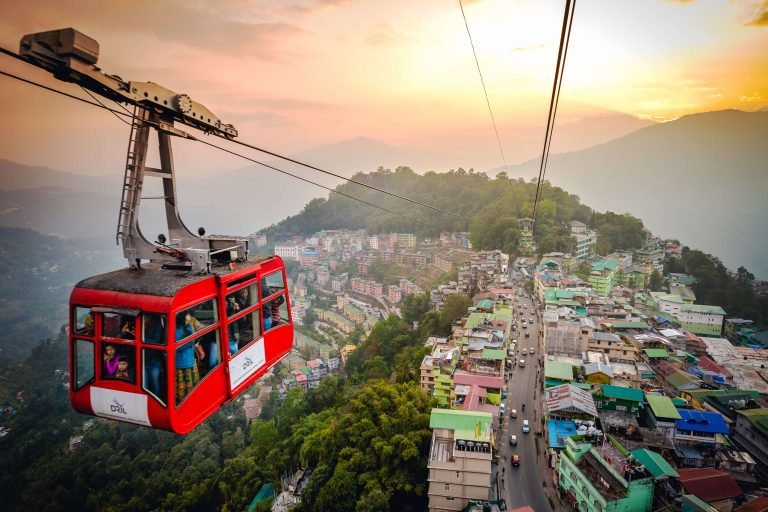
Ropeway and PRT as MRTS

Since the Metro Rail projects are being rejected from Uttarakhand and many other states, especially in hills area and mountainous regions, now many state governments are looking forward to establishing the PRT, Cable cars and Ropeway systems as the public transport to increase the reach in their state. 

The government is taking an interest in the passenger’s ropeway systems. It is also taken into consideration that the Ropeway system can be an alternative for offering urban transport.

Ropeways system is a sort of naval lifting device mainly used to transport light stores and facilities over rivers or ravines.

Personal rapid transit (PRT) which is referred to as pod cars. This is a public transport mode emphasising small automated transports working on a network of specially built guideways. Personal rapid transit is a kind of automated guideway transit, a class of system that also involves larger carriers to small subway systems.

To implement this Ropeway system, the govt has asked to Delhi Metro Rail Corporation (DMRC) to execute this ahead. This step by the government to improve the transportation system seems to be very necessary as there is no option of Metro apart from Ropeways, Cable cars or PRT.

This transit system has a lot of benefits also which are as follows – it is low pollution and crowding removal transit because this system has the lowest carbon emissions in the comparison of all the other transit options. Also, this transit system option is an old tested and tried option that is operating successfully across the world. Ropeways system are very environmentally friendly till now because as we can see, there is no need to cut forests as they could not be under the corridor of the transit system.

Apart from this, the government has also gone through the safety and grade of the services NITI Aayog has suggested globally accepted European CEN standards. Also, there are different standards available like Canadian/American standards but among that so many of the technologies to make sure the security of the ropeways throughout market segments commencing urban transport, tourism, adventure, leisure, etc have taken by CEN standards as a standard for safest, high-quality and the reliable ropeways systems.

An MoU signed between Urban Development Minister Madan Kaushik for Uttrakhand Metro Rail Corporation and S.D. Sharma, Director (BD) of Delhi Metro Rail Corporation in Dec 2019. The DMRC was entrusted with the task of preparing a detailed project report (DPR) for the development of ropeway in Dehradun, Uttrakhand. DPR will be ready within the next four to six months. After this, the transport system will be started through ropeway in about two years.

 Madan Kaushik, Uttarakhand Urban Development Minister, said that the number of tourists in Dehradun is continuously growing and the requirement of the population is also increasing regularly. 

In such a condition, the Govt has taken this significant step for the betterment of the public transport. If everything goes as per plan, it will take two and a half years to complete . This project will cost ost around Rs 2,000 crore will be much lower cost than the metro rail transit system(MRTS).

Initially, two corridors will be developed for the ropeway project. There will be pods/cars having 10-12 passengers capacity which will run on the ropeway. The 1st corridors will be built up to Respna via Ghantaghar from FRI, and the 2nd corridor will be built from ISBT to Rajpur Road. 

It is acknowledged as a breakthrough to improve the transport system of Dehradun. The Uttarakhand government insists that till now the ropeway system is not being used for public transport in any other place and city of the country. In such a condition, Doon city will be the first city in India to have a ropeway system as public transport.

After signing the MoU, the Uttarakhand government has also issued the first instalment of Rs 43 lakh to DMRC for making the DPR.

It is pertinent to mention here that the Uttarakhand Government has spent over Rs 5,000 crore in conducting feasibility and finalising detailed project reports of Dehradun Light Metro Rail.

Dehradun Ropeway Project Highlights

  • Ropeway will run within 20 to 25 km.
  • Rs 2000-2200 crores will be spent on the ropeway project.
  • The DPR of the ropeway project will be ready in 6 months.
  • The project has to be prepared between 2 years after the tender.
  • Initially, two routes will be constructed under the Ropeway project.
  • The first route will be made from FRI to Respna via Ghantaghar
  • The second will go from ISBT to Rajpur Road (Kandoli).
  • The transport capacity of a ropeway will be about 10-12 passengers.

The Article first appeared in Metro Rail News April 2020 (Volume IV, Issue 40, Page No 42-43) | Subscribe Now

Connectivity on track with Trulifi

Across the globe, metro train travel is having something of a moment.  Metro is not only about connectivity – it’s about convenience, too. For time-constrained travelers, it’s easy to see the appeal of riding the metro trains: avoiding the road traffic downtime, arriving directly at your destination instead of having to drive for an hour or looking for parking, and clawing back your travel time that can be used more productively, whether that’s catching up on your emails, or relaxing with a Netflix binge. The destination matters, but increasingly, the journey does, too. Today’s metro train operators have a challenge that didn’t exist in the golden age of the steam engine: keeping all those passengers and their devices online.

Light years ahead

As the leader in lighting innovation, Signify is addressing the challenge of connectivity on board, and amazingly, we’re doing it all through the power of lighting. Not only can lighting now provide connectivity on the go, but it does so at blistering speeds that far surpass the WiFi connections we’re all used to. And this flawless connectivity is of course in addition to great quality lighting.

Signify’s latest offering called Trulifi is a connectivity technology that uses light waves to enable an internet connection that’s fast, stable and reliable. It’s great for super speed internet in the workplace, and for transportation services like metro rail, the benefits are further multiplied. What’s more, unlike the radio spectrum, the light spectrum is license-free. This means no upfront investment for network operations in government-issued spectrum licenses.

No compromise

Indeed, internet connectivity is one distinct advantage that the metro has over other forms of transport, and it’s a topic on which travelers are unwilling to compromise. Going forward, passengers expect to stream high definition movies, upload heavy files, and make video calls, every kilometer of their journey. And in our connected world, the train itself has connectivity requirements; for example, high definition cameras collect security footage that must be offloaded on physical hard disks for processing.

When you look behind the curtain, how to keep the connection going is a substantial question that operators must face. At home, our WiFi router passes a radio signal to our TV or smartphone in more or less a straight line. A large, moving vehicle however presents more challenges. Trains are full of metal surfaces and also full of people. Both of these elements affect the ability of radio transmissions to reliably hit their destinations. Heavy, constantly-moving carriage couplings that lie open to the elements do not play well with the data cabling needed to link carriages to one another. And linking the train to the outside network requires costly cellular data connections, which are also unable to penetrate tunnels or mountains along the way.

Stellar speeds

By adding Trulifi to the connectivity mix, seamless connections and stellar speeds become possible. High definition streaming and even online gaming are on the table.   

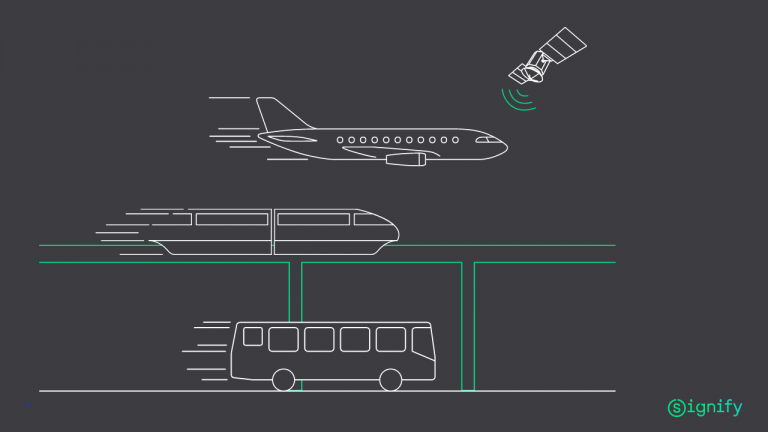
Right now, Signify is already working with Latécoère to provide Trulifi on commercial aircraft, connecting seat-back screens to fast Internet with a speed up to 250 Mbps. Trains and buses are a logical extension.

Connectivity could also be extended to passengers’ own devices through a seat point USB connection in the future. As we witnessed with the adoption of WiFi; when the infrastructure becomes more widespread, we’ll likely see LiFi receivers built into a new generation of laptops, tablets and eventually, smartphones, rendering a wired connection unnecessary.

In future, LiFi can revolutionize the way we make the connection towards the train. LiFi-equipped poles, paced at intervals along the track, follow the moving vehicle, beaming high speed internet underground, through tunnels and even hilly terrain.

Trains that talk

Behind the scenes, Trulifi offers a robust wireless platform to connect the growing demands of digital equipment and IoT sensors between train wagons. It offers the connected train greater reliability and safety and also provides “plug and play” wireless communication when regrouping trains or doing maintainance.

Those chunky security video files that are currently stored on local hard disks in the train along with other data can be downloaded and processed at high speeds the moment the train pulls into a station, improving passenger safety.

Arthur C Clarke famously said that sufficiently advanced technology is indistinguishable from magic. You could also say that really effective technology is completely invisible. For passengers, uninterrupted high-speed internet connection is something that’s supposed to just work. Meeting that expectation is a differentiator that can help keep metro train travel on its upward trajectory – and help people and the planet too.


The Article first appeared in Metro Rail News April 2020 (Volume IV, Issue 40, Page No 39-40) | Subscribe Now

Railways to run Parcel special train from Gujarat on April 22

THIRUVANANTHAPURAM (Metro Rail News): On Monday the Railways would operate a parcel special service train from Gujarat-Thiruvananthapuram to dispatch necessary commodities across the country. Okha-Thiruvananthapuram parcel special service train No. 00933 would leave Okha at April, 1.10 pm & reach Thiruvananthapuram at 12 pm.

Train No. 00934 Thiruvananthapuram-Okha parcel service train will return on 22 April 11 pm and reach Okha by 9.40 pm on April 24. The trains would have 5 high-capacity parcel vans & 1 luggage-cum-brake van.

They would halt at different towns like Jamnagar, Rajkot, Ahmedabad, Vadodara, Anand, Surat in Gujarat, Vasai Road & Panvel in Maharashtra.

It would take the Konkan route to reach Kerala. The Railways would also run the regular parcel service trains among Thiruvananthapuram-Kozhikode till 3rd May. The service had been continued to Nagercoil until Sunday. 

NCRTC conducts pre-bidding meetings by video conferencing

MEERUT (Metro Rail News): With the development steps coming to a grinding halt on Thursday the Delhi-Meerut rapid rail project saw progress on a various front when a nodal agency tasked to finish the ambitious Rs 30,274 cr project conducted global pre-bidding meetings by video conferencing for 2 critical packages.

The agency, National Capital Region Transport Co(NCRTC), said that the meetings garnered excellent answer from the industry. Other than Indian entities, prospective bidders from the globe like Japan, China, South Korea, Germany & Turkey also engaged actively in the meeting, it announced.

As per the NCRTC sources, the 2 packages are Package 29 & Package eight for that the pre-bidding meetings were taken place. The Package 29 entails design, manufacturing, supply and supply & supervision of installation of spherical frames set for elevated viaduct of the RRTS Corridor. About 11.53 km part of 82 km long corridor would be underground. Rest 70.5 km is elevated.

The underground portion comprises 5.8 km stretch among New Ashok Nagar RRTS Station-BEL and 5.73 km stretch among Meerut’s Brahmpuri Metro Station & MES Colony Metro Station .

Where Package eight entails design & development of tunnels from Bhainsali Bus Stand-Begumpul sector in Meerut. In Meerut, there would be 3 underground stations: Meerut Central, Bhainsali & Begumpul.

As the COVID-19 outbreak and the subsequent lockdown have adversely affected every individual & disrupted every social & economic activity across the globe. NCRTC team is leveraging technology to Effectively Work from Home. Tools like video conferencing, Microsoft Teams, Common Data Environment are being utilised for timely completion of project-related tasks like detailed architectural & structural drawings, finalisation of method statements, proof-checking, optimising construction planning and sequencing in emerging situations, bid process management, on-line pre-bid meetings and all other things to lessen the influence of the pandemic. The preparation of documentation for obtaining multiple approvals from Statuary Authorities Railways DMRC & ADB is on the way, stated NCRTC spokesperson Sudhir Sharma.

The RRTS corridor would start from Sarai Kale Khan station in Delhi & Modipuram in Meerut would be the last stop. In the 1st phase, the Meerut-Ghaziabad-Delhi corridor would be finished with a cost of Rs 30,274 cr by 2025.

NCRTC is necessitated to design, finance, construct, operate & maintain RRTS in NCR & construct under the administrative control of Union ministry of housing and urban affairs.

Semi-high-speed train to have an additional station at Nedumbassery

THIRUVANANTHAPURAM (Metro Rail news): The semi-high-speed railway line would have an additional station in Kochi. The Detailed Project Report was sanctioned the other day allotted a new station near the Nedumbassery airport besides Kakkanad in Ernakulam district. Nedumbassery airport has the largest no of flight services in the state.

The govt had declared that the semi-high-speed track would connect all airports & IT parks in the state. But Thiruvananthapuram airport is five km away from Kochuveli. However, the line is not directly linked with Karipur-Kannur airports. Allegations arose that the semi-high-speed line would not profit these airports as assumed.

People from anywhere in Kerala also from Malabar areas can join Nedumbassery airport within 2 hours in the semi-high-speed train. It takes more than 1 hr to arrive at Karipur airport from Kozhikode town through the bus. Also, around 1 hr is expected to reach Kannur airport from Kannur town via bus. Some allegations arose that the judgment to allow a new stop at Nedumbassery is with some business interests.

When Kerala Rail Development Co. introduced the project, there was no station at Nedumbassery. Though people’s deputies showed out that the airports in Malabar area should be linked with the new line, as it was not viewed in the DPR. Only Chengannur station was allowed for Pathanamthitta-Alappuzha districts.

The new line would be built far from the existing railway line from Thiruvananthapuram-Tirur & then parallel to the existing one till Kasaragod.

Works would start this yr and finished within 5 yrs as according to the plans. As per the claims of K-Rail, the semi-high-speed train can travel 530.6 km from Thiruvananthapuram-Kasaragod in 4 hrs. The project is still to be confirmed by the central govt & the Niti Aayog.

Indian Railways earns around Rs 7 cr during the lockdown period

NEW DELHI (Metro Rail News): During the nationwide lockdown Piyush Goyal led Indian Railways marks noteworthy earnings by Parcel trains services, transportation of necessary products & items like medical equipment, medical supplies, dairy products, food, oil, etc. in small parcel quantities is very crucial.

So, to fill in this essential requirement the national transporter has built Indian railway parcel vans accessible for quick mass transportation via e-commerce companies along with other customers including state govt. By the operation of these Parcel Special trains since the lockdown began, Indian Railways has registered an earning of around seven cr. To assure a continuous supply of essential items, Indian Railways is working time-tabled Parcel Special trains on selected routes.

As per the Ministry of Railways, the zonal railways are recognising & notifying railway routes daily for running these Parcel trains. Now, these Parcel trains are being run on 65 routes over the Indian Railways network. These railway routes have been recognised to include the following points –

  • Proper connectivity of railways among major Indian cities, viz Delhi, Kolkata, Chennai, Hyderabad & Bengaluru
  • Rail connectivity from capitals of states or major cities to all the parts of the state
  • Assuring railway connectivity to the North-East part of the nation
  • Supply of milk & other dairy products from surplus zones like Gujarat, Andhra Pradesh to high demand regions
  • Transport of other key items like medical supplies, medicines, agricultural products, etc. from producing sectors to different other parts of India.

On 14 April 2020 till 6:00 PM as per a statement through Railway Ministry, as many as 77 train services were conducted out of that 75 trains were time-tabled Parcel trains. Moreover, in just single day materials of 1835 tonnes were loaded, giving Indian Railways Rs 63 lakh earning.

From the opening of lockdown, a total of 522 train services were conducted in which 458 services were time-tabled trains. Accordingly, a total of 20, 474 tonnes of consignments have been loaded & the earnings of Indian Railways by Parcel Special Trains have been nearby Rs 7.54 cr the ministry declared.

Hyperloop network from Paris-Amsterdam in 90 minutes

NETHERLAND (Metro Rail News): Proposals to formulate a Hyperloop network that will take commuters from Amsterdam-Paris in less than ninety mins are under consideration in the Netherlands after a study which says the hi-tech link can be economically viable.

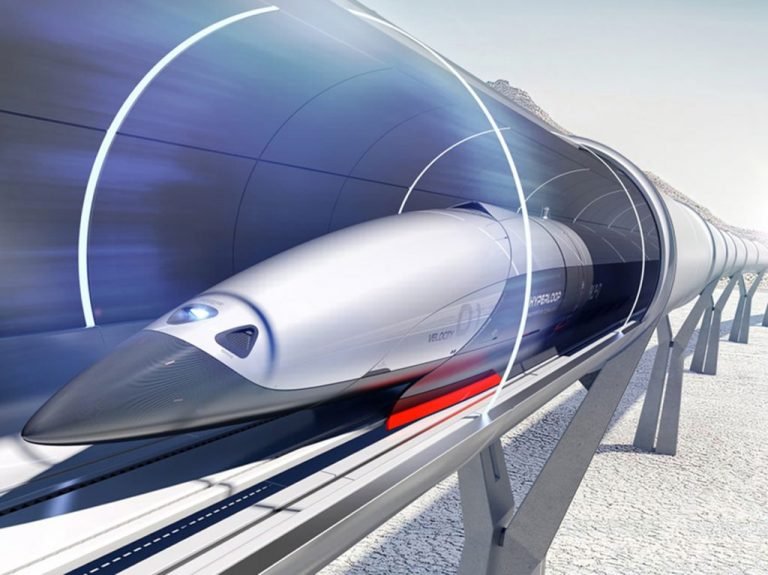
Hyperloop is an intended transport mode which includes travelling in a sleek, pod-like capsule which propelled by a low-pressure steel tube at the speeds of above six-hundred miles every hour.

Probably many sustainable than aviation & speedier than current top-speed trains, Hyperloop’s advocates tell it’s the future of cross-country, & also cross-continental, travel.

Beginning of this month the Dutch start-up Hardt Hyperloop declared the results of a study conducted out in collaboration with the province of North Holland that tested the experimental travel plan.

The report revealed that a European-wide Hyperloop network will significantly curtail travelling times from European cities, blurring borders & offering unusual economic gains.

The study recommended that more beneficial to connecting the Amsterdam Metropolitan Area with other European hubs will enhance business travel and strengthen the economic condition of the province.

According to a report, Hyperloop can ferry 200,000 commuters every hour through the direction. Travelers can reach Paris in just ninety minutes. From Amsterdam-Brussels will need less than an hour by Hyperloop.

The company’s CEO & co-founder Tim Houter stated CNN Travel that Hardt Hyperloop’s offered European network will present an alternative for the polluting short-haul flights, last yr. On paper, it reflects like a gain but the questions still over Hyperloop’s feasibility.

A part of technologies request its sci-fi credentials the plan of sleek, streamlined pods and levitating in a tube over the county but the concept’s remain in their early stages.

That’s why we would engage in discussions with other authorities to progress the research, he added in a statement. Other Hyperloop companies throughout the world remain its efforts to improve the technology, originally the brainchild of Tesla boss Elon Musk.

Virgin Hyperloop One built a complete-size pod that has reached speeds of 387 km each hour on a test track in Nevada, in 2017. Virgin Hyperloop 1 & Dubai-based supply chain firm, DP World, received the green signal by a state govt in India in 2019 to form a Hyperloop line from the cities of Mumbai-Pune.

Chris Dulake, global railways & transit leader at consultancy Mott MacDonald, a company which served on the London Underground & Heathrow Airport’s Terminal 5, expected 2030 was the earliest any of the Hyperloop competitors would lead certification, Speaking to CNN Travel in 2019.

Dulake also added, once one of Hyperloop’s advocates successfully make it operate more would be expected to follow suit.

BMRCL invites tenders for common mobility card

BANGALORE (Metro Rail News): Namma Metro operations might have been delayed because of the lockdown 2.0 yet the officials are working to prep up operations for the future to improve the mobility card infrastructure through the end of this year.

Bangalore Metro Rail Co Ltd (BMRCL) has invited bids for acquiring & announcing open-loop National Common Mobility Card (NCMC) for Phases 1 & 2, without for the Gottigere-Nagawara line.

Also, it proposes to upgrade the automatic fare collection (AFC) mode at the current stations in Phase-1 by June 2020. “The Phase-2 AFC system is now under implementation.

Since the current AFC system in Phase-1 does not carry the NCMC, the up-gradation of Phase-1 AFC system has also been designed to be performed via BMRCL,” the bid report says.

In Phase-2, the installation of the Yelachenahalli to Anjanapura expansion line would be performed by the 2nd quarter, where work on the Mysore Road to Kengeri line is supposed to take 3 more months.

The deadline for rest lines goes up to the 1st quarter of 2021-23. The tenders, that involve 7 yr contract in implementing the payment system, would be opened on 5th June & are supposed to be awarded by July after the technical & financial evaluation.

HS2 Ltd issues notice to start the work For high-speed rail network

LONDON (Metro Rail News): With the decision to move ahead with HS2 earlier this yr, HS2 Ltd has on April 15, 2020, marked the next action for the project after publishing Notice to proceed to the companies which would move construction work on Britain’s new High-Speed Rail network.

Project-Highlights

  • High Speed-2 project reaches the next stage as JV companies get approval to start detailed design & construction phase
  • Notice to proceed process marks formal permission for the main development works to start the following a decision earlier this yr to continue with the project
  • Development to start in line with Public Health England advice meanwhile the coronavirus outbreak

After deliberate consideration of the independent Oakervee review, the PM proved to Parliament in Feb 2020 that the project can start to deliver vital changes to capacity & connectivity over the Midlands & North, alongside a reform package to enhance governance at HS-2 to assure the project is passed better & more efficiently. A time when the development area faces uncertainties through the coronavirus outbreak, issuing Notice to proceed gives a vote of confidence in companies and the wider supply chain financing HS2.

Following the decision ahead this yr to continue with the project, this next step gives thousands of development workers and businesses over the country with conviction at a time when they want it and means that work can begin on delivering this transformational project.

The four work packages are for complete detailed design and development of HS2 Phase-I railway. By the contracts, small & medium businesses have the guarantee of a pipeline of action for the future serving to protect jobs & increase certainty for them in the existing climate.

The JV that are responsible for each package of work would be able to start work in line with Public Health England’s guidance throughout development work continuing while the coronavirus COVID-19 outbreak, in a way both secured to the workers and the public.

Joint Ventures Names, originally awarded tenders by HS2 Ltd in July 2017:

However, Stations, rolling Stock, railway systems and other non-civils contracts are not part of the contract already awarded.

ContractorJoint venture Contract Valuework scope
SCS RailwaysSkanska Construction UK Ltd, Costain Ltd, Strabag AG£3·3bndevelopment of Euston Tunnels and Approaches, Northolt Tunnels
Align JVBouygues Travaux Publics SAS, a subsidiary of Bouygues Construction, Sir Robert McAlpine and VolkerFitzpatrick, a subsidiary of VolkerWessels UK£1·6bndevelopment of Chiltern Tunnels and Colne Valley Viaduct
EKFB JVEiffage Genie Civil SA, Kier Infrastructure and Overseas Ltd, BAM Nuttall, Ferrovial Agroman£2·3bndevelopment of North Portal Chiltern Tunnels to Brackley, Brackley to South Portal of Long Itchington Wood Green Tunnel
BBV JVBalfour Beatty Group Ltd, VINCI Construction Grands Projets, VINCI Construction UK Ltd, VINCI Construction Terrassement£4·8bndevelopment of Long Itchington Wood Green Tunnel to Delta Junction and Birmingham Spur, Delta Junction to West Coast Main Line Tie-In (Handsacre Junction)

The Transport Department has also published the complete business case HS2 Phase-I setting out the strategic & economic case for the project and outlining how it would deliver a positive result on investment, alongside boosting capacity & connectivity needed in towns & cities over the country by delivering on the govt levelling up plan.