Home Blog Page 553

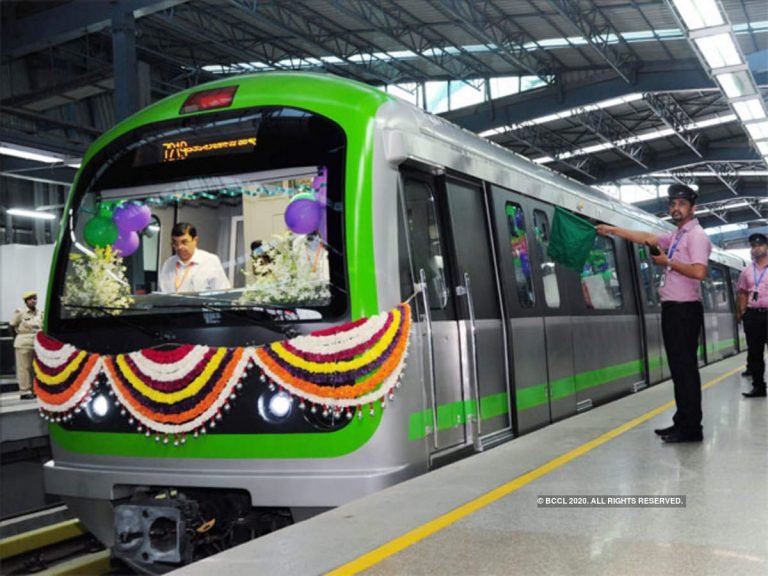
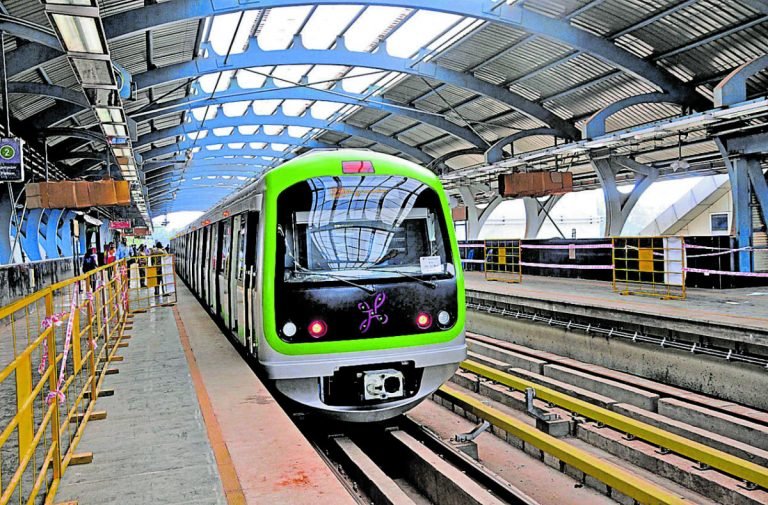
Siemens wins Rs 251 cr signalling contract of Bangalore Metro’s Line 3

BANGALORE (Metro Rail News): Bangalore Metro’s Line 3 Signalling contract financial bids opened by Bangalore Metro Rail Corporation Limited (BMRCL) on 24th April 2020.

Siemens India Limited – Siemens AG Joint Venture has been emerged as the lowest bidder (L1) for providing design, manufacture, supply, installing, testing and commissioning of the communications-based train control (CBTC) signalling solution for Bangalore Metro’s Line 3 project.

There are total three bidders participated in the contract against which the bids were called in October 2019 and according to the comparison sheet shared by BMRCL, Below is the rates quoted and position of each bidder:

Bidder NameValue (In Crores)Rank
Siemens India Limited – Siemens AGRs 250.90L1
Hitachi Rail (Ansaldo STS)Rs 315.72L2
Alstom Transportation IndiaRs 331.99L3

Bangalore Metro’s The Line 3 project is also known as Yellow Line connecting R V Road to Bommasandra with a total of 16 elevated metro stations. This line is part of Phase II of the Bangalore Metro Rail project.

Others Signalling contract

In September 2009, the consortium which led by Alstom and composed of Alstom Transport SA, Thales Group Portugal S A and Sumitomo Corporation has conferred a contract worth Rs 563.4 crores to design, manufacture, supply, installing, testing and commissioning of the train control and signalling system for Phase I of Bangalore Metro Rail project.

Thales was awarded the contract to provide the design, installing, testing and commissioning of the telecommunication system for the metro trains being operated in Phase I corridors of the project. The contract includes the Urbalis 200 Automatic Train Control system which will ensure optimal safety, flexible operations and heightened passenger comfort.

BMRCL to make Power substation for ORR Metro

BANGALORE (Metro Rail News): The Bangalore Metro Rail Co Ltd (BMRCL) is in the method of acquiring a part of Lowry Memorial School in KR Puram to make a power substation for the future Outer Ring Road (ORR) Metro. Once finished, the transport utility would get possession of all the sections needed for building the 18 km Metro line on the city’s tech corridor.

The BMRCL declared a preliminary notification to get 4,562 square metres of land in KR Puram, on Tuesday. The notification would restrict anyone from taking up new development actions on the land that has been known for acquisition.

Procuring custody of the 1-acre land would also put an end to the yr long work of getting properties needed for the 18 km Metro work moved among Central Silk Board & KR Puram. The BMRCL had commenced acquiring land for Phase II-A Namma Metro project sometime through mid-2019.

We have already bought the properties needed for the ORR project including where the viaduct and stations would come up. One property owner had approached the court but the dispute has now been settled, Channappa Gowdar, Special Land Acquisition Officer at BMRCL, stated. Only about 1 acre of land is needed for the electrical substation. We may require 2-3 months to get it, he added further.

A representative of Lowry Group of Institutions was not willing to be part of the story. The BMRCL has received about 44,000 square metres of land for the ORR Metro project. That translates roughly into eleven acres that is less compared to other projects. The Metro line is planned to run on the broad median along with the ORR that was mainly designed to function a Bus Rapid Transport System.

The BMRCL had the necessity to acquire additional properties only in places where the Metro stations are prepared. It is learnt that the BMRCL has put on hold other actions like opening the tenders called for the development of the Metro line on the ORR. It is not known at the authorities to plan to open the tender, although tenders were floated way back in Dec last yr. The officials are also silent about whether the Union Govt has allowed the funding of the ORR project yet.

China-Europe freight trains help stabilize global supply chain

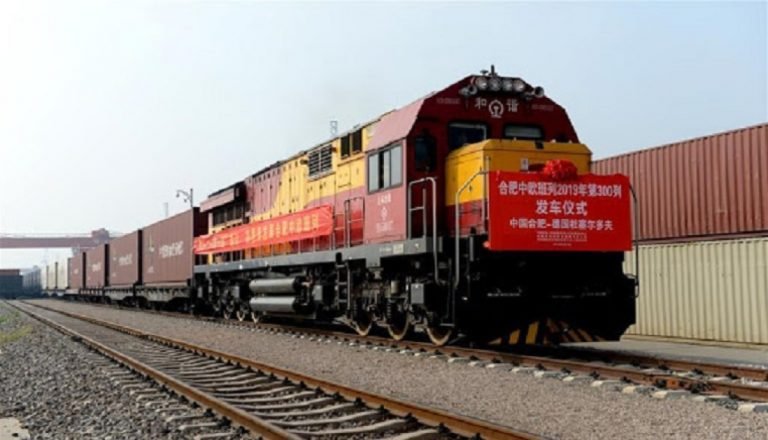
SHENYANG (Metro Rail News): The base where China-Europe freight trains are ready to depart in Shenyang the provincial capital has seen constant departures since early April as the novel coronavirus outbreak ebbs away.

With the global supply chain being affected through the restrictions in the land, air, and port travel because of the global pandemic China-Europe railway has been playing a major important role as declared by experts.

The train was performed by different sections staff that means it does not need to cross-border personnel health inquiries giving it advantages throughout the pandemic, said Shan Jing an industry insider. A total of 809 China-Europe freight trains transporting 73,000 containers were shipped over China, in March. Both numbers hit a monthly release.

At the Shenyang logistics base, trains depart to travel by Russia, Belarus, Poland & now reach Germany in around eighteen days. As of 13th of April, a total of 130 trains transporting 11,200 standard containers had diverged from the base. “The province carries a stable number of 5 trains every week,” replied He Ruofan, a business manager.

The stable work has given the route a top choice for several Chinese enterprises, stated Yao Xiang, a manager with logistics group Sinotrans’s northeast company. “Multiple shipping routes have been cancelled, and the remainder is very costly amid the epidemic,” stated Yao, noting the cost for air cargo surged 5-10 times the normal price as flights reduced from China-Europe.

With expanding departing trains, returning trains on the route have also been growing, Yao replied. With the 130 trains that have been transferred from the Shenyang base yet, this yr 33 returned, carrying construction supplies, car parts, mechanical equipment, and regular products.

As of 18th of April, a total of 448,000 pieces of medical equipment weighing 1,440 tonnes had been sent to European countries through the route, as per China State Railway Group Company, Limited. “China-Europe freight trains have given great service capabilities throughout the epidemic,” replied Shan.

Congress flays govt’s ‘Inhumane’ move to freeze DA instead of Shelve Bullet Train

NEW DELHI (Metro Rail News): Observing that it was insensitive & inhumane to freeze dearness allowance on Friday the Congress told instead of hurting the middle-class workers and pensioners the govt should shelve bullet train & Central Vista redevelopment projects to save money against the coronavirus fight.

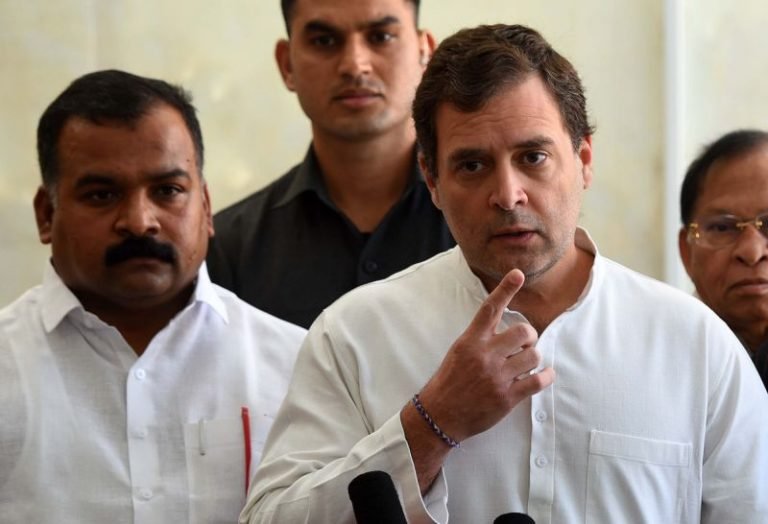
It is very insensitive and inhumane on the part of the govt to cut the DA of central workers, pensioners & jawans who all are serving the public during this pandemic rather than suspending the bullet train project & the Central Vista beautification project of lakhs of crores, the Congress leader Rahul Gandhi stated in a tweet.

Randeep Surjewala Congress spokesperson questioned the govt to curtail 30% of its own costs and shelve the Central Vista redevelopment and bullet train projects to save money. The govt of India instead of helping people through providing them financial support in this crisis is bothering them.

Instead of reducing its own un-necessary expenses, the govt is cutting the money of the middle-class people, he started an online press conference.

On Thursday the govt froze inflation-linked allowance for the 1.1 cr workers and pensioners a move states are supposed to replicate, helping save a combined Rs 1.2 lakh cr that can be used to combat the coronavirus outbreak.

3 Mega Projects in Malaysia to start construction with former Official

MALAYSIA (Metro Rail News): Bernama informed that a former secretary-general of the Finance Ministry has requested the Malaysian govt to roll out 3 big-ticket development projects that have been in the pipeline for some time to start the countries after COVID-19 economy. Tan Sri Mohd Sheriff Mohd Kassim told the 3 multi-billion ringgit projects, the East Coast Rail Link, Kuala Lumpur-Singapore High-Speed Rail & National Fiberisation and Connectivity Plan, could spur the sleeping economy & improve the economic loss due to the pandemic.

He said Bernama that the govt has not responded much to say the public when these 3 projects would begin rolling out so as to produce work orders for the professional firms, construction companies & employ the lawyers, engineers, accountants, technicians and general workers.

And when they work & get salaries they would spend on nasi lemak, fried bananas, fried mee, teh tarik, so bringing back economic ventures.

But the bigger question will be the project budget. He asked “Does the govt have the budget to begin the mega projects? If it is not money what is the problem in beginning the projects?”

It was published earlier that the RM44 billion ECRL project that would connect Port Klang & Kota Bharu in Kelantan is 15% done. Malaysia Rail Link Sdn Bhd is the project & asset owner of ECRL & China Communications Construction ECRL Sdn Bhd is the major contractor.

The RM60 billion KL-Singapore HSR project will be resumed but it might need certain adjustments to decrease the costs. On the NFCP, the Malaysian Communications & Multimedia Commission has declared allocation of RM3 billion to roll out 6 projects this yr.

Delhi Metro decided to mandate mask and Aarogya Setu pass

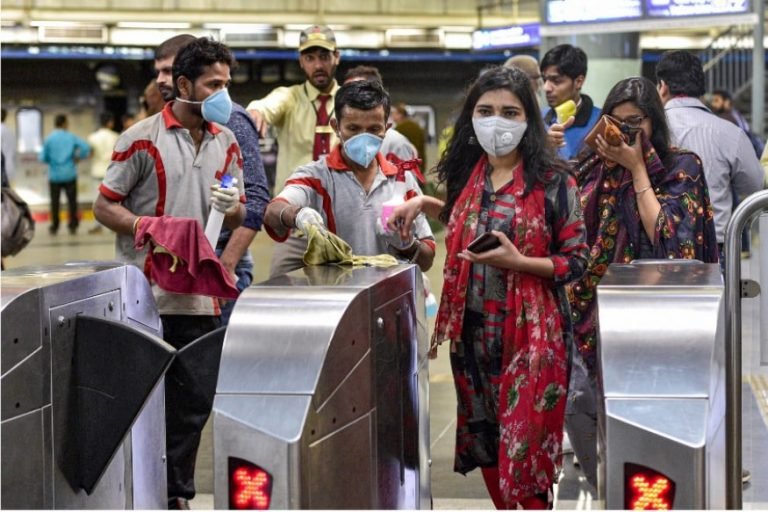
NEW DELHI (Metro Rail News):  Delhi Metro commuters are now intimated that after the resumption of DMRC services, would have to take out any metallic object on their body before frisking, use face masks, have the ‘Aarogya Setu’ app, but those with flu-like symptoms will not be permitted as per a proposal made by the CISF on Thursday.

The paramilitary force that guards the network running over the national capital region (NCR) has formulated a business continuity plan for safety & security of commuters and staff working at the facility.

The intended steps according to the plan accessed by PTI would be executed by the force in consultation with the Delhi Metro and the controlling ministry of Urban Development. The plan has been developed to ensure public confidence in the sense of the rapid rail network to deliver under any condition and to thwart evil designs of disruptive forces to hit the smooth operating of the network.”

According to the plan envisaged through the force that deploys around 12,000 men & women personnel to guard above 160 metro stations the rail network services should be continued in a phased manner.

“Aarogya Setu app with inbuilt e-pass option can be employed for identification of doubted persons having COVID-19 infection. Somebody with high risks for both spreading and contracting infections should be restrained from using the metro,” as per the plan. Every person entering metro premises would be must wearing masks. Hand sanitisation or handwash facility to be available at the entry points.

Along with this the thermal screening of all entrants to be managed at the entry point of stations & those found with abnormal temperatures would not be permitted to enter and persons with cold, cough & other flu-like symptoms would be disallowed entry.

CISF Director General Rajesh Ranjan stated that the news agency that the plan has been made keeping in mind that the speed, safety & security of the commuters, force personnel, DMRC staffers and any other present in the area is secured. The force has also advised that all the commuters would have to take out metallic objects like belts and buckles before frisking and keep them in their bags that would be scanned by an x-ray machine.

A person without bags but taking metallic items would be provided trays as in the case of airport security. Strict distancing norms would be followed during the station area & proper queuing area before the security screening point would be maintained.

At least 2 meters distance will be kept between the security screening place & line-up points and a meter among commuters waiting at the security screening place. The CISF intends to keep at least 2 personal protective equipment (PPE) sets at all metro stations to manage suspected commuters or baggage.

Four PPE suits would be kept as standby. CISF personnel would carry regular uniforms with sleeves completely covered, gloves with masks covering nose & mouth. Friskers and x-ray baggage screeners should additionally carry face shield or visor to protect their face mainly eyes from the exposure approved.

DMRC will advise commuters by regular announcements to keep social distancing. Shops or other commercial establishments to ensure social distancing at their locations via means of markings. The CISF has also asked the Delhi Metro to deploy adequate staff at paid sectors with automated fare collection gates & platforms for maintaining COVID-19 protocols.

Commuters would be advised constantly to refrain from touching any surface in the metro stations or trains, the CISF plan stated. It has also suggested that the whole station area be sanitised with chemicals & security fixtures, equipment and x-ray tables should be sanitised frequently.

After the lockdown, our personnel would come in close contact with a large number of passengers daily while performing security duties, mainly during security screening of commuters and baggage and hence they will be more exposed and susceptible to the virus.

How Indian Railways can use COVID-19 as an opportunity to improve

Indian Railways plays an important position in the economy and the lives of people in India. While the overall intermodal share of rail in freight traffic is around 35 per cent, it continues to account for a major share in transportation of bulk commodities – such as coal, iron ore, cement and food grains – which are drivers of the economy.

The year 2020-2021 will see the national and international economy bear the consequence of the COVID-19 pandemic, which will also reflect on the transportation sector, including Indian Railways (IR). Rail freight had already begun to show signs of marginal decline in the third quarter of 2019-2020 due to the deceleration of growth in core sectors of the economy. The economic impact of this pandemic shall linger much longer than the pandemic itself.

However, as it is said, it often takes a crisis to seize opportunities. IR has the choice to consider the current crisis as an opportunity and completely overhaul its passenger and freight transportation segments. This is the right time to look beyond the current year and chart a growth map for the next five to 10 years.

This is the right time to look beyond the current year and chart a growth map for the next five to 10 years.

Railways, besides possessing remarkable resource mobilisation capabilities and disciplined manpower, have demonstrated agility and ingenuity to cater to completely new requirements that arose in India’s fight against COVID-19. It has played a crucial part in maintaining the supply of essential items and helping livelihoods by stepping up the transportation of goods – such as foodgrains, milk and dairy products, farm produce, medicines etc. – by: Changing the traditional traffic routes, wherever required; aggregating small parcels and operating parcel cargo trains; and transporting critical medical equipment and Personal Protection Equipment (PPE).

Indian Railways has leveraged its resources and demonstrated the capability to manufacture PPE, ventilators, hospital beds and COVID-19 isolation coaches. It has also used its outreach to distribute food and rations in far-flung regions. The ingenuity came alive in operating ‘Anaconda’ trains, which are thrice the standard length, and the launch of ‘SETU’ – a one-stop helpline for parcel traffic to bridge the gaps in the supply chain. It has helped that IR has always been ahead of others on the IT curve, with almost all of its freight and passenger operations, as well as customer service, being completely online.How Indian Railways can use COVID-19 as an opportunity to develop

Rail freight has played a crucial part in maintaining the supply of essential items across India by stepping up the transportation of goods.

The focus during this year should be on acting as a catalyst to restart the economy, which can be done by offering the right freight rates and by assisting the customers in reaching out to the railway, i.e. to enhance the ease of doing business.

There are three focus areas that can enable the railway to turn-around and create a new business model:

1. Reorganise the passenger segment

Indian Railways has, for a long time, recognised the need to reduce cross-subsidy from freight to the passenger segment. Since most of the passenger services are priced much below cost and continue to incur heavy losses, it is necessary to first reorganise the passenger segment. At this point in time, passenger services are completely suspended, so now is the time to assess the entire passenger segment from the point of view of necessity and viability.

This is the time to conduct a zero-base analysis, based on which passenger services should be retained and which others should be discouraged.

These two criteria can be ascertained through factors like availability of alternative modes of transportation, the affordability of rail compared to other modes, distance and time leads, etc. There are segments which have well-developed road or mass rapid transport systems, like Metro railways. This is where the railway can work towards a reduced presence. Similarly, the road and air sectors have emerged as the preferred modes of travel for short and very long distances respectively. The railway must decide on a sector-by-sector strategy of pruning down less preferred services, keeping in view the specific local requirements.

As all passenger services remain suspended, and the booking for later periods like June to July is also significantly lower, it provides a blank slate for IR to overhaul the passenger segment from scratch. It is reasonable to expect that only essential travel will be undertaken for quite some time, even after the pandemic situation starts clearing up, and the rest of the journeys will be either canceled or postponed. Therefore, this is the time to conduct a zero-base analysis, based on which passenger services should be retained and which others should be discouraged.

2. Re-model the freight business

The cost of logistics in India is far higher than in developed economiesThe social obligations of the passenger segment have been a defining factor in the pricing of freight traffic. Once the passenger segment has been reorganised, it would allow IR to focus more of its resources on freight traffic, including network capacity, rolling stock and manpower. This is also expected to result in more efficient transportation and, thus, a significant increase in the volume of freight traffic. This is when it will be possible to rate the freight services more on actual economics and less on other considerations. Better efficiency and higher volumes will enable IR to bring down the freight rates, while increasing freight earnings.

Once the passenger segment has been reorganised, it would allow IR to focus more of its resources on freight traffic, including network capacity, rolling stock and manpower.

A more competitive pricing of freight will also be necessitated by a fierce pricing competition from road transportation as soon as normalcy starts to return, as trucks (and drivers) would have been idling for long. This may potentially be a time when the railway will be at risk of losing its customers to road, but will also have the opportunity to gain traffic.

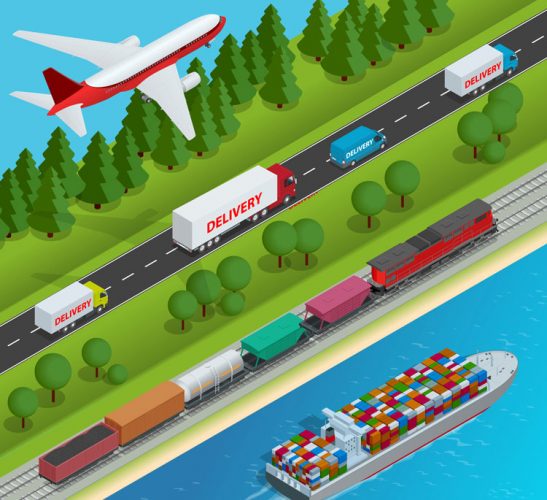
This competition can be turned into collaboration and, in fact, it would be an opportune time for uniting forces with road to form rail-road-rail or road-rail-road bridges and offer complete logistics solutions to customers. It is extremely important to bridge this gap in door-to-door logistics.

This will not only help IR financially, but will also have a cascading positive impact on the economy. The lower cost of transportation will expedite the economic recovery of most sectors.

3. Diversification of freight traffic

This is another area where IR has been making attempts to improve and has only had moderate success so far, with various alternatives like container services, parcels, cargo express trains, RO-RO, road-railer etc. Industries in India have been undergoing a transformation in the way their transportation supply chains mesh with their manufacturing processes for a long time now. One of the major aspects of these changes has been a consistent cutting down of the transit time of inventory. Longer transit time, as well as any uncertainty in transit times, is not favoured.

Two major limiting factors drive IR’s inability to provide either scheduled or assured transit times and comparative higher revenue from these models vis-à-vis the bulk goods carried at both higher volume and higher rates. This vicious cycle seems to have been broken as an unintended fallout of COVID-19, as passenger services and traditional goods traffic have shrunk. The current crisis has given IR the opportunity to start with a much-needed trial of scheduled parcel trains and container cargo trains. In this period, the railway has successfully aggregated and transported parcels over long distances through scheduled parcel trains. These gains need to be consolidated and multiplied by chartering a medium- and long-term strategy for similarly scheduled parcel trains.

Summary

It is reasonably expected that efficiency in freight operations and the reorganisation of passenger services will give IR the ability to achieve punctuality in freight operations, and thus attract time-sensitive cargo to rail – for example, fast-moving consumer goods, pharmaceutical, fruit and vegetables, machine parts etc. Indian Railways can form a powerful supply chain by joining hands with e-commerce giants and road logistics providers.

As American politician Rahm Emanuel once said: “You never let a serious crisis go to waste…it’s an opportunity to do things you think you could not do before.” This is the time for IR to do zero-base assessments of services; to make rail freight more competitive and a preferred option for larger sectors of the Indian economy; and use this opportunity to emerge as a more agile force in the Indian transportation sector.


The Article first Appeared on Gobalrailwayreview.com

DMRC to resume Kochi Metro Construction works from Friday

KOCHI (Metro Rail News): The Delhi Metro Rail Co. (DMRC) expects to continue the work of Kochi Metro among Thykoodam-Petta on Friday. The Metro authority notified that by the time the builders would be able to mobilize labour force needed to proceed with the works.

A DMRC official stated that the contractors of Vyttila and Kundannoor flyovers have been allowed with the permission to restart the works. If Kochi Metro’s contractors get permission from the state govt, they can continue with the work.

It is contractor responsibility to get the sanctions. The Metro authority also informed that in all possibility their office would begin functioning from Monday. The tentative plan is to take disinfection activities on Saturday & Sunday. “However, those officers and employees having their own vehicles & residing in Ernakulam and neighbouring districts would be able to report for work,” he stated.

Earlier, DMRC supposed to finish the work by 31st of March. But because of the nationwide lockdown, all works of Kochi Metro’s sites were stalled. A Metro authority has to finish the civil works & KMRL would have to undertake finishing works.

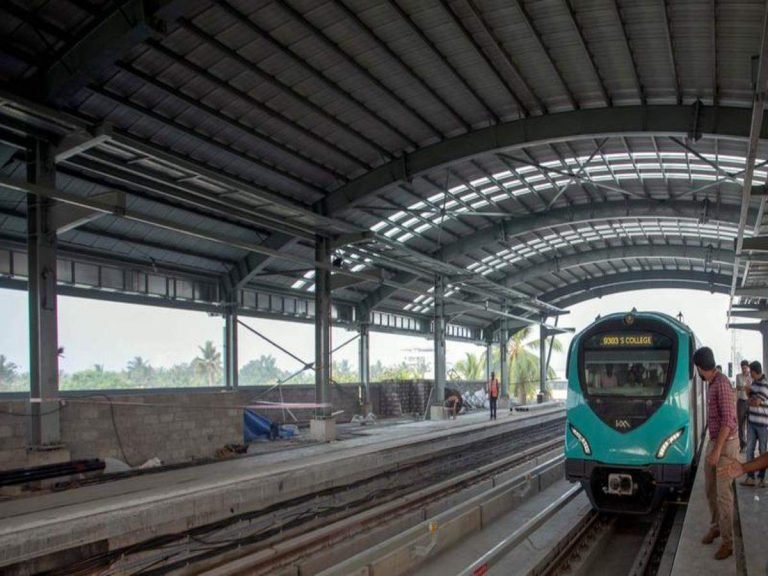
The Metro agency has organised a trial run with the Thykoodam-Petta stretch. Delhi Metro spokesperson stated that they would be able to start commercial operations with the stretch once the Commissioner for Metro Rail Safety (CMRS) announces clearance.

Urban transport testing revised seating arrangement

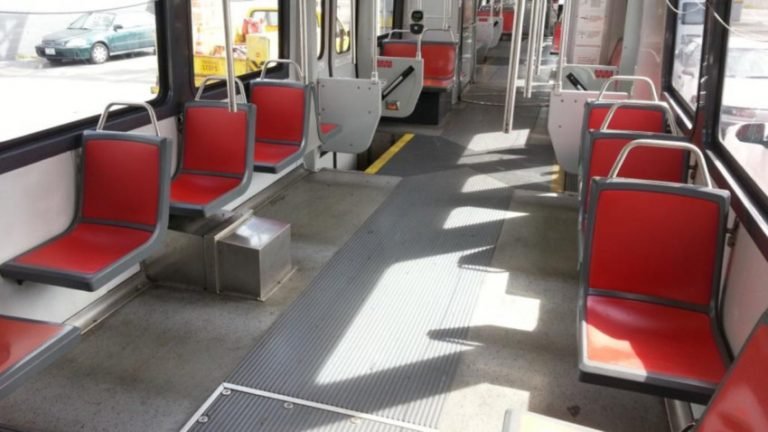
NEW ZEALAND (Metro Rails News): An updated seating arrangement is being tested on the Praha metro. The existing seats are designed in a 2+1 transverse shape but in the newly arranged single seats are directed 90º to face the aisle.

Already the commuters were sitting sideways on these seats and DPP feels that the difference can suit everyone’s preferences as well as enhancing traveller flow.

Creation of Auckland’s NZ$4·45bn City Rail Link is to continue on 28th of April with changes with a restricted way to sites, protective clothing, physical distancing & new cleaning regimes.

Since ever the nationwide lockdown started a few weeks ago there has been much desk-top planning for a quick re-start & we’re well made to come out of the opening blocks fast, told the Chief Executive Dr Sean Sweeney on 21 April. We are already examining all CRL sites and preparing them ready for a safe return to work for the coming week.

The Junta de Andalucía’s Public Works Office has awarded Kapsch TrafficCom a €2m three-year contract for maintenance of signalling, radio, optic fibre and telephone communications networks, passenger information systems, CCTV and ticket vending machines on the Cádiz tram-train line that is now on test ahead of opening.

Swiss federal transport office BAV has granted planning approval for an SFr44m depot to serve Zürich’s Limmattal light rail project, with capacity for fourteen vehicles. Development is because of commencement in May for fulfilment in 2022.

Euskotren reintroduced full peak hr service frequencies on Line-3 of the Bilbao metro on 20th of April so that riders can manage social distancing.

There are now eight trains per hr in every direction among Kukullaga in the eastern suburbs & Matiko to the west of the city centre. Outside the peaks, there are four trains per hr in every direction.

Kochi Metro restarts its construction work on site

KOCHI (Metro Rail News): Kochi Metro Rail Limited (KMRL) development activities of that had been suspended due to the nationwide lockdown which is now been resumed on Wednesday.

The works comprise the construction of Kochi Metro’s Phase-I at Thykoodam-Petta & Phase-I extension from Petta-SN Junction besides other civil work.

Managing Director of Kochi Metro, Alkesh Kumar Sharma said that we are strictly following all the orders laid down by the Ministry of Health & Family Welfare and the state govt. KMRL officials are making all efforts to ensure proper transportation of workers, compulsory medical checkups, provision for hand wash & sanitisers and disinfection of work sites.

As part of COVID-19 preventive steps, a marshal would be deployed at every location to monitor the works. Thermal scanners have been placed at entry points and all workers are being checked. Spitting in public is strictly forbidden as is the use of gutka and other tobacco products.

Extra precaution is being taken considering the safety at the camps. Workers are adhering to social distancing practices and are using masks, Alkesh Kumar Sharma added. There are assigned areas for consuming food. The entry of non-essential visitors is restricted at the sites. Kochi Metro Rail Ltd was forced to reschedule the commissioning of the metro’s Thykoodam-Petta stretch, originally slated to be held in April because of the current scenario.