New Delhi: Prime Minister Narendra Modi has flagged-off the Delhi-Faridabad Metro Line that would allow hassle free travel for around two lakh daily commuters between the national capital and the industrial hub in Haryana.
The extension of the Delhi Metro connects Badarpur to Escorts Mujesar in Faridabad.
The total cost of the project from Badarpur to Escorts Mujesar is nearly Rs. 2,500 crore. Out of this, Rs. 1,557 crore was borne by the Haryana Government, the Centre contributed Rs. 537 crore, while the Delhi Metro provided Rs. 400 crore.
All these are elevated and located on either side of the Delhi-Mathura Road (NH-2).
“The nine-station metro corridor which was 95 per cent indigenously built will provide people a safe, affordable, quick, comfortable, reliable, environment-friendly and sustainable transport facility,” a Haryana government spokesperson said.
Haryana Chief Minister ML Khattar, addressing a press conference on Saturday, had thanked the Prime Minister for “gifting” the Metro service which would take the city to “another level of progress” with better connectivity with other NCR towns.
He had also said that the Prime Minister would be announcing the go-ahead for connecting Gurgaon with Faridabad by Metro.
MAHARASTRA (Metro Rail News): Migrant labourers want to come back to Maharasthra to re-join work from their hometowns. Maharashtra Metro Rail Corporation Limited is performing metro rail work in Pune has got requests from the labourers to manage to come back from Madhya Pradesh, UP, Bihar, West Bengal and other states.
As per officials, around 50% of total 2,800 Maha-Metro workforces have turned to their hometowns, obstructing the work here. Maha-Metro director Atul Gadgil said that we have got requests from various labourers that they need to join work again after the break of 2 months. Because of a pandemic, they returned to their states but now want to return.
He further added that as train and bus operations are not allowed, Maha-Metro has drafted letters to several district administrations in other states especially Madhya Pradesh, UP, Bihar, West Bengal and other states & asked to arrange for these labourers to return in Pune.
Because of the COVID-19 pandemic in India & Maharashtra, numerous labourers moved home in March. No, as there is no income source is available for them they want to turn back to work. That’s why they have demanded us to arrange for their return journey.
Maha-Metro is performing the metro work on multiple corridors in between Vanaz-Ramwadi & Pimpri-Swargate. Metro will need 7,000-8,000 workers for taking out the work on many corridors.
BANGALORE (Metro Rail News): Metro depot construction work in Kothanur, off Bannerghatta road, is expected to start soon. The Noida-based ISGEC Heavy Engineering Limited has appeared as the lowest bidder for constructing the Kothanur metro depot, meant for expediting stabling & maintenance of trains which move on the Gottigere to Nagawara section of Phase II project.
Among all the 9 companies had competed in the bids floated through the Bangalore Metro Rail Co Ltd (BMRCL) in Dec the last yr. The construction work, supposed estimated to cost about Rs 163.44 cr, included the construction of Metro rail depot structures, site development works & internal roads in 33-acre depot area at Kothanur for Reach six-section that concluded both underground & elevated corridors.
The stretch is programmed to be available in 2024. The Noida-headquartered firm, that is selected as the lowest bidder, quoted Rs 150.83 cr that is Rs 12.61 cr less than the BMRCL’s appraisals.
The 2nd lowest bidder Lisha Engineers a UP-based company missed the competitive bid as they quoted just Rs 88 lakh more than the lowest bidder. At least 3 companies had quoted more than the BMRCL’s appraisals.
Officials announced the work order would be issued after making a few procedures with the bank guarantees submission to the Namma Metro.
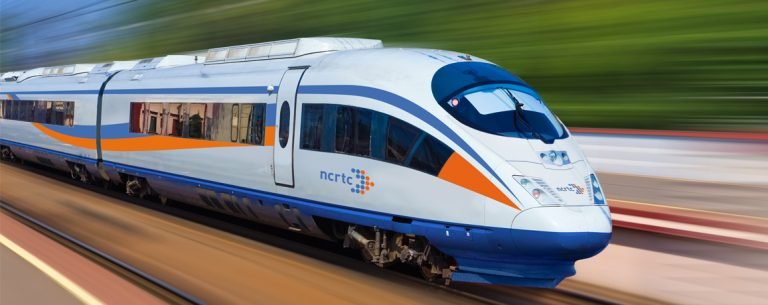
NEW DELHI (Metro Rail News): The Delhi residents may enjoy the ride of the much-awaited rapid rail system in the upcoming 2 years, as the National Capital Region Transport Corporation has started the pre-construction on Sarai Kale Khan-Panchgaon route under the phase-II of the Delhi-Gurugram-Shahjana-Neemrana Behror RRTS corridor.
Delhi would be mainly covered under the phase-II, with 4 stations at Sarai Kale Khan, INA, Munirka and Aerocity being built. The rest stations at Udyog Vihar, IDPL Complex & Panchgaon are in Gurugram.
The phase-II construction under the ambitious project is supposed to be developed in 2022. The construction of phase-I of Delhi-Ghaziabad-Meerut corridor is already started.
“The main construction work tender among IDPL Complex – Rajiv Chowk has begun and under evaluation. Once the lockdown is lifted, award work would be passed through the centre & construction will start,” told a senior official of the NCRTC.
The pre-construction under the Delhi & Gurugram regions like designing, road-widening, utility diversion, pile load testing, a geotechnical survey amid others has begun. The NCRTC has floated for the project.
The Sarai Kale Khan station is moving developed as the country’s 1st mega transit hub where the 3 RRTS corridors would converge. The corridors would be interoperable for easy travelling & interchange facility so that commuters can travel easily.
For line 7 of the DMRC and Hazrat Nizamuddin Railway station and Inter-State Bus Terminal, The Sarai Kale station would be an interchange station.
A DPR of the corridor has already been confirmed by the concerned state govt and is under active consideration of the Central govt.
The Delhi-Gurugram-SNB corridor would be executed in 3 stages. In the first stage, the Delhi–Gurugram–SNB Urban Complex would be built. In the second stage, the extension from SNB Urban Complex – Sotanala will be held, and in the third stage, SNB Urban Complex – Alwar would be created.
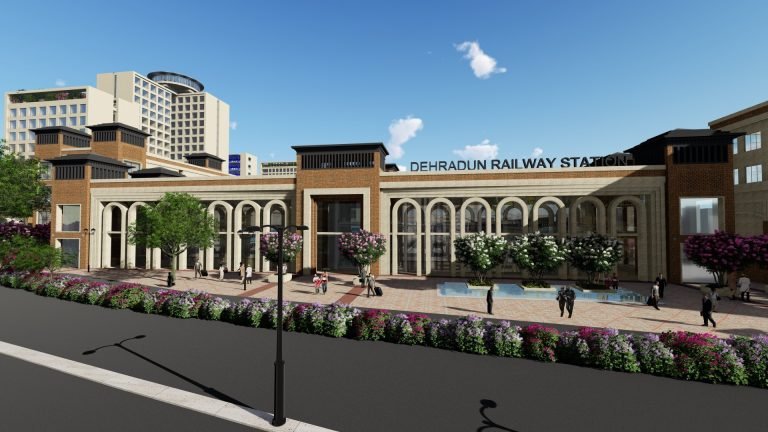
NEW DELHI (Metro Rail News): Amidst National Lockdown due to ongoing pandemic arising out of Covid-19, Rail Land development Authority (RLDA) successfully conducted the online pre-bid meeting for the redevelopment of the Dehradun railway station. This RFQ was invited by RLDA during lockdown period on 13.04.2020 and the bid submission date for RFQ is 05.06.2020. Over 22 developers including GMR Group, Omaxe developers, Experion Developers, I Squared Capital, Adani Road transport Ltd, Mahindra Lifespaces, Pacific Developers, Thoth Infra, etc participated in the meeting. The meeting was attended by Vice-Chairman, RLDA Sh. Ved Parkash Dudeja and Vice Chairman, Mussoorie Dehradun Development Authority (MDDA) Sh. Ashish Srivastava.
The pre-bid meeting received an overwhelming response from the developers during the pre-bid meeting, various queries of developers were addressed then and there and also for any further query, developers were requested to send emails so that RLDA can reply to them accordingly. Main queries were related to EIA approval, tree cutting permissions, and approval of plans which were explained by the authorities during the conference.
PIC 1: Depictional View of Dehradun Railway Station
“The Dehradun station will be developed on PPP (Public-Private Partnership) model by leveraging the real state potential of available land surrounding station. We successfully conducted the online pre-bid meeting for the redevelopment of Dehradun railway station which is one of our and Indian Railway’s dream projects.” said Sh. Ved Parkash Dudeja , Vice Chairman, RLDA.
The total area of land under consideration of is about 25 Acre wherein about half the land is allocated for Railway mandatory development such as Station building and railway passenger amenities including offices and the remaining 50 % land will be allocated for real State development. In the real state component 40% builtup area will be allocated to the housing project and 60% built-up area will be allocated to commercial components such as Mall, Hotel, retails, multi-level parking and office space. The railway station will be developed under PPP model and the railway station’s mandatory cost will be Rs. 125 Cr.
PIC 2: Depictional View of Dehradun Railway Station
It is to note here that RLDA has entered MOU with Mussoorie Dehradun Development Authority (MDDA) for re-development of Dehradun station, wherein, work of master planning, bid processing and construction supervision for this project is assigned to MDDA. During the meeting, VC, MDDA told that MDDA will facilitate approval of all requisite plans expeditiously to give a kick start to the project so that aim of completion of mandatory development of station in 3 years is achieved. 40% of the Estate development of the project will be achieved not later than 8 years.
After, finalization of eligible developers (bidders) through RFQ, request for proposal (RFP) will be floated by RLDA sometimes in July-2020. Thereafter, concession the agreement will be signed between developers and authority (RLDA) before taking up the physical construction of the Project. This project is a dream project of Ministry of Railways which will not only improve connectivity to the station, better passenger amenities to world class level but also enhance the tourism potential of the city and gel in with the overall master planning of Dehradun smart city among 100 smart cities of country.
RLDA is the nodal agency for the redevelopment of railway stations across the Indian Railway network and the major Project Development Agency. A total of 62 Railway Stations across India will be re-developed by RLDA on a PPP Model as a part of Smart City Projects launched by the Government of India. The entire cost of re-development will be met by leveraging commercial development of spare railway land/airspace in and around the station.
Rail Land Development Authority (RLDA) is a statutory body under the Ministry of Railways, for the development of vacant Railway land for commercial use in line with the objective to generate revenue by non-tariff measures. Currently, the Indian Railway has approximately 43,000 hectares of vacant land across India. RLDA is emerging as a preeminent Land development Authority with an object of creating value through re development of land and air spaces, residential, commercial, and station
PATNA (Metro Rail News): The proposal to make Anand Kishore, Managing Director of Patna Metro has been rejected by the Central Government. It is said that he has also many charges of State Government. In a letter from the Union Ministry of Housing and Urban Affairs, it is declared that Metro project is a very important project and it will be completed within a time limit.
There are two corridors approved in Patna Metro and a special purpose vehicle formed to the operation of Metro which is registered by company act. This company has now been 20-20% ownership of State govt and central govt.
The Center had recently nominated other directors including the chairman. Then the state government nominated Municipal Development Secretary Anand Kishore as MD This proposal was sent to the central government for approval.
Now, Under Secretary Jasbir Singh of Union Ministry of Housing and Urban Affairs, Government of India has informed about the non-acceptance of the proposal to nominate Anand Kishore as Managing Director of Patna Metro.
We got to know that Anand Kishor has some other responsibility of Government of Bihar. The metro project is a cost-based to be completed in given deadline. And MD needs to do complete focus in the project which is not possible.
The Center has asked the state government to appoint a full-time MD for the metro, which should not be given any additional charge.
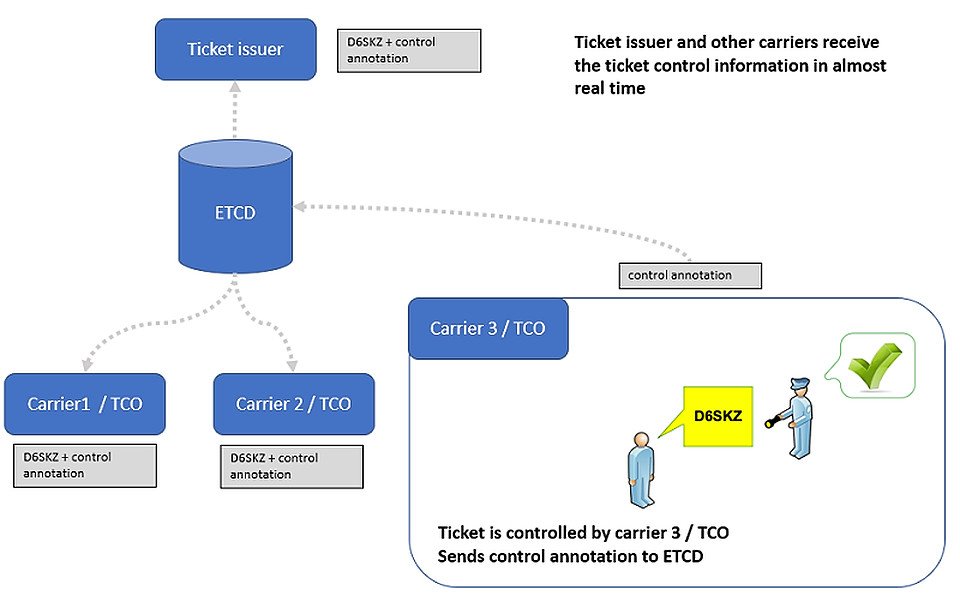
A system for the real-time management of information & ticket exchange technology has been enabled for interfacing with travellers. This new technology is known as Electronic Ticket Control Database (ETCD); this methodology will help in preventing fraud and ease ticketing process smartly. It has been in service since Feb 2020, and already some European ticket issuers & passenger carriers are making bonds to it.
Recently, International Union of Railways (UIC) has awarded the Rail IT specialist Hit Rail B.V. a contract for the supply of its Electronic Ticket Control Database. The validation of this contract is up to five years from January 1, 2020. Now the UIC providing a centralised, real-time commuters ticket management system for all the Railways across the world.
The major purpose behind this initiative is the online ticket exchange among the ticket issuers and commuters, along with enhancing the security and fortify of e-ticketing. This new technology ETCD offered Software-as-a-Service (SaaS) mode by Hit Rail.
The ETCD service matches the demanding scalability, review and security aims created by the UIC. ETCD uses cloud technologies & is designed from the start to meet a large number of tickets and downloads and to be proficient of supporting following UIC services in the future, requiring the collecting or checking of ticket data.
UIC Electronic Ticket Control Database (ETCD) service, source: UIC
The Technical Director & ETCD Project Manager at Hit rail, Enrique Ruiz says “The ETCD is a significant technological leap forward into utilising leading-edge cloud services, like serverless applications along with cloud databases, to deliver a robust & secure service potentially connecting millions of railway tickets.”
UIC Passenger Director, Marc Guigon says: “ETCD technology is a new UIC IT solution that is a major application in UIC’s Rail Distribution ecosystem. Surely, in combination with MERITS (Timetables), PRIFIS (Prices) & Hermes (Reservations), ETCD would make the UIC IT distribution framework to offer all European railways members a cost-efficient, robust with a standard solution for international rail ticket business.”
Some Major Benefits of ETCD System:
It will help to maintain social distancing in crowded places.
Prevent from scam.
Real-time ticket control management.
It creates an easy ticketing process.
Keep record on Cloud storage of passenger’s information for further queries.
Online exchange of tickets control information.
This new technology is substantially better than contactless ticketing. The ETCD can be used in our transportation sector or any places where a wide range of public interactions are taking place including Shopping malls, Cinema halls, Railways Stations, Metro Stations etc to keep people maintain social distancing as well.
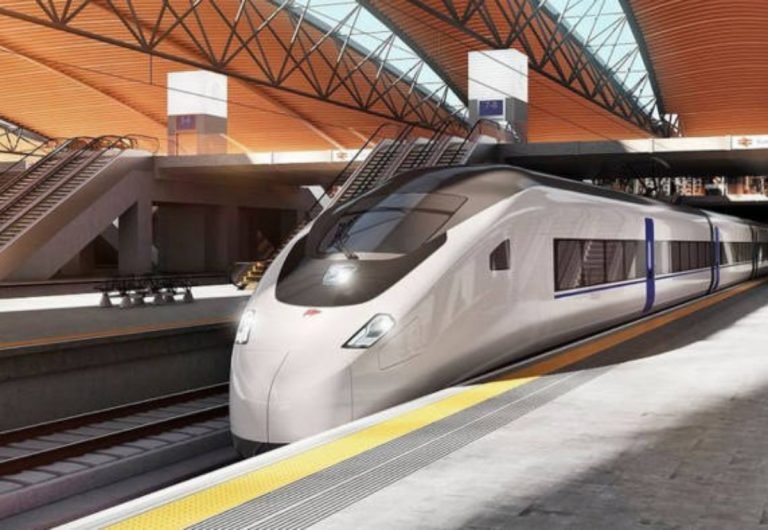
LONDON, UNITED KINGDOM (Metro Rail News): HS2 Ltd on May 15, 2020, has formally launched the process of selecting a contractor to design, supply and support Control, Command, Signalling and Traffic Management Systems for the future high-speed line.
The contracts with an estimated combined value of £540m will cover:
Design, supply, installation, commissioning and maintenance until handover of CCS & TM for phases 1 and 2a between London, Birmingham and Crewe;
a potential extension to cover Phase 2b;
CCS & TM works for Phase 2b alterations at London Euston station;
provision of technical support services for 15 years, with two five-year extension options.
The ETCS Level 2 is required to control trains travelling at speeds of up to 360 km/h, with automatic train operation Grade of Automation 2 (ATP and ATO with driver) over ETCS.
The controller workstations and centrally located equipment cubicles will be at the Network Integrated Control Centre in Washwood Heath.
HS2 Ltd’s Procurement and Commercial Director, David Poole, said:
“Our state-of-the-art Command and Control Systems and Traffic Management systems will allow HS2 to offer fast, frequent and reliable low carbon journeys for millions of people every year. I look forward to our team working with the suppliers who come forward and together, ensuring that we deliver the best quality and value for the project.”
The successful contractor will be required to estimate the price and whole-life cost of implementing ETCS with hybrid Level 3 functionality once the EU Agency has published the technical standards and specifications for this functionality for Railways.
If the cost and benefits of Level 3 functionality are more advantageous than Level 2, HS2 Ltd will have a contractual right, though not an obligation, to require the contractor to implement hybrid Level 3 functionality in some or all areas.
Requests to prequalify should be submitted by July 7. HS2 Ltd expects to invite four applicants to tender in January 2021, with the contract to be awarded in 2022.
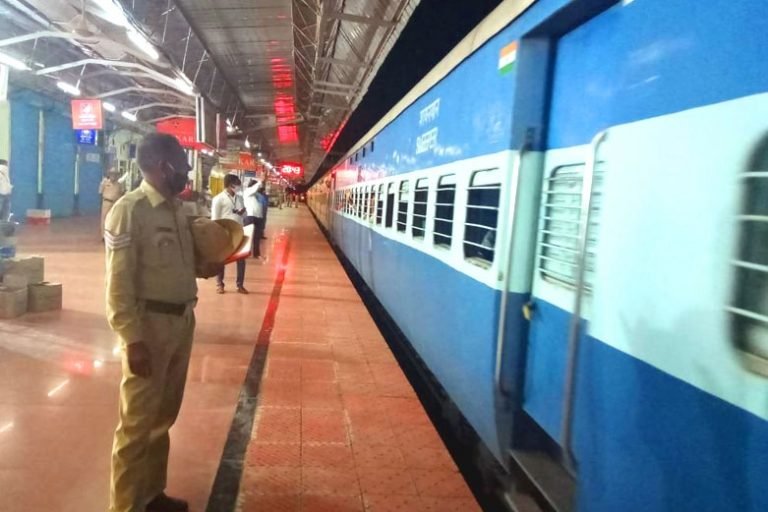
NEW DELHI (Metro Rail News):Indian Railways has decided to start 200 train set from 1st of June 2020 in terms to help the passengers reach their destinations, as part of the relaxations declared in lockdown 4.0.
Railways Ministry in consultation with Ministry of Health and Family Welfare & Ministry of Home Affairs giving a big change to the workers has determined that train services on Indian Railways would be further partially renewed w.e.f. from 1st of June 2020.
Booking has been started of all these trains today from 10 am. These special services would be in addition to the existing of the Shramik special trains being operated since May 1st and Special AC trains being operated since 12th of May 2020.
Other regular Commuter services with all mail/express, passenger & suburban services will remain cancelled until further information, as per Piyush Goyal Statement on Twitter.
All the trains will be completely reserved with both AC and non AC classes. General coaches will also have reserved seat for sitting. There is no unreserved coach on the train. The fare will be as usual & for General coaches being reserved 2nd seating fare will be charged & seat would be given to all the commuters.
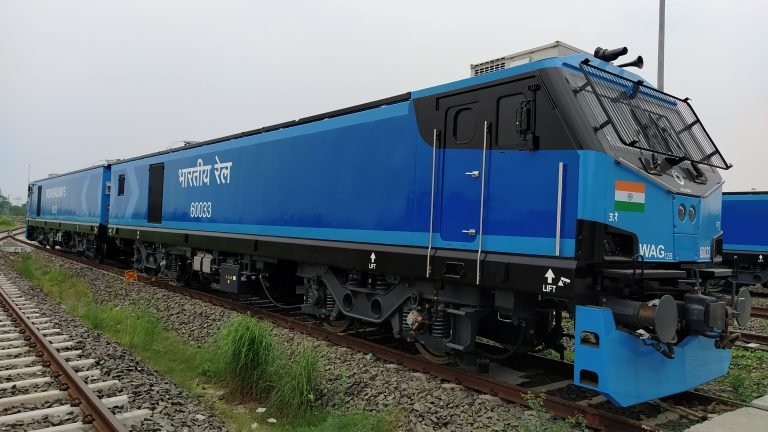
NEW DELHI (Metro Rail News): Alstom has started deliveries of the 12000 hp, WAG-12B electric locomotives which are built by Alstom, certified by Ministry of Railways & Commissioner of Railway Safety (RDSO), to Indian Railways, that is all set to revolutionise freight logistics in India. These WAG 12B engines are the most-powered locomotives that would run on Indian rails.
The entry of WAG 12B (e-loco) would allow faster & safer transfer of heavier freight trains capable to haul ~6000 tonnes at a top speed of 120 km/h. Planned to be deployed for services on Dedicated Freight Corridors (DFCs), these e-locos would raise the average speed of freight trains in the country by at least 20-25 kmph.
Equipped with Insulated Gate Bipolar Transistors (IGBT) based propulsion technology, it will begin to significant savings in energy consumption because of the use of regenerative braking. Further, this progress would not only bring down operational expenses but also decrease the congestion faced by Indian Railways.
The project has a strong impetus on indigenous manufacturing with 90% localization and as per the delivery schedule, hundred locomotives would be delivered annually.
Currently, Alstom is executing metro projects in various Indian cities, including Mumbai, Chennai, Kochi & Lucknow, where they are supplying rolling stock manufactured out of their state- the of-the-art facility in Sri City.
Managing Director of Alstom India & South Asia said that Alstom is happy to begin delivery of the electric locomotives to Indian Railways. Initiation of induction into the IR fleet testifies our commitment towards the country. This is a revolutionary product that would be faster, safer & eco-friendly.
Also, it is scripting a fresh chapter for India’s sustainable mobility journey & we are pleased to be partnering in this.
With the Make-in-India mandate, all 800 e-locos are being manufactured indigenously. Designed at Alstom’s Engineering Centre in Bengaluru, these e-locos are being made in one of India’s largest integrated greenfield manufacturing facilities at Madhepura in Bihar.
Spread across 250 acres, with a production capacity of 120 locomotives every annum, the Madhepura industrial site is organised to international standards of safety & quality. According to the plan, multiple ultra-modern maintenance depots in Saharanpur & Nagpur would ensure high service availability of the locomotives.
The Saharanpur depot is previously functional and the Nagpur is under construction. Equipped with ultramodern features, these depots would play a critical role in maintaining India’s most advanced freight locomotives at significantly lower expenses.
The loco is named WAG12 with Number 60027, departed from Deen Dayal Upadhyaya Station at 14:08 hrs in long haul formation for Dhanbad Division of East Central Railway, consisting of 118 wagons which travelled from Pt DeenDayalUpadhyayaJn to Barwadih via Dehri-on-Sone, Garhwa Road.
India’s most powerful locomotive, the WAG12B has joined the huge network of Indian Railways. WAG12B is equipped with 12000 HP and has been manufactured by French company Alstom.
The locomotive began its services from Pt.Deen Dayal Upadhyay railway station in Uttar Pradesh. The locomotive is capable of taking heavy consignment of freight and will be used in the Dedicated Freight Corridor(DFC).
The loco is named WAG12 with Number 60027. The train departed from DeenDayalUpadhyaya Station at 14:08 hrs in long haul formation for Dhanbad Division of East Central Railway, consisting of 118 wagons which travelled from Pt DeenDayalUpadhyayaJn to Barwadih via Dehri-on-Sone, Garhwa Road.
India became 6th country in the world to join the elite club of producing high horse power locomotive indegenously.
Railway Minister Piyush Goyal tweeted on Monday that, “Bolstering PM @NarendraModi Ji’s vision of Make in India, first WAG12B (12000 HP) loco departed from Pt. Deen Dayal Upadhyaya station in Uttar Pradesh today. Powerful and capable of high speed, the locomotive is a significant addition to the Indian Railways.
Bolstering PM @NarendraModi ji’s vision of Make in India, first WAG12B (12000 HP) loco departed from Pt. Deen Dayal Upadhyaya Station in Uttar Pradesh today.
Powerful and capable of high speed, the locomotive is a significant addition to the Indian Railways. pic.twitter.com/GD6opgWXrR
Praised as the largest Foreign Direct Investment (FDI) projects of Railways, the Ministry of Railways and Alstom came together in 2015. An agreement worth 3.5 billion Euro was signed to manufacture 800 electric locomotives for freight service and its associated maintenance.
Features of 12000 hp, WAG12B electric locomotives
These locomotives are state of art IGBT based, 3 phase drive, 9000 KW (12000 horse power) electric locomotive.
The locomotive is capable of the maximum tractive effort of 706 kN, which is capable of starting and running a 6000 T train in the gradient of 1 in 150.
The locomotive with twin Bo-Bo design having 22.5 T (Tonnes) axle load is upgradable to 25 Tonnes with a design speed of 120 mph.
The locomotive will be used in the Dedicated Freight Corridor (DFC) for the faster movement of goods, especially coal and iron ore.
The locomotive is supposed to be a game-changer for movement of coal trains in the DFC of Indian Railways. The locomotive will allow faster and safer movement of heavier freight trains.
The new locomotive will not only bring down the operational costs for railways but will also reduce the congestion faced. The project is expected to give a boost to the government’s “Make in India” initiative.
More than ₹2,000 crores has been invested in the project already with one maintenance depot already established in Saharanpur. Work is starting on the second one at Nagpur.
More than 300 engineers from India and France are working in Bangalore, Madhepura, and France on the Project. In two years time, more than 90% of the parts will be manufactured in India
MUMBAI (Metro Rail News): Mumbai Metropolitan Region Development Authority (MMRDA) has selected two new contractors to continue the construction works on metro line 7 with a distance of 17 km. It is among Dahisar and Andheri.
For the construction of Metro line 7, the MMRDA cancelled the contract of simplex infrastructure as it was provided with a contract for the distance of 5.5 km from Aarey junction on western Express Highway of metro line 7.
Metropolitan commissioner of MMRDA, RA Rajeev notified that they were serious of completing the metro projects within time. Simplex infrastructure ltd was provided was Rs 348 cr in April 2016. However, just 75% of the work has been completed.
RA Rajeev further added MMRDA is now searching for other 3 months delay with the migrant workers gone.
According to media reports, the MMRDA Metropolitan Commissioner, RA Rajeev informed that they were serious about finishing the metro projects in time. However, due to the delay in projects, the contracts have been terminated after following all procedures.
Now, the contract has been given to new contractors. J Kumar which has received the contract will work for viaduct while NCC will focus on the station work. MMRDA has already converted the bank guarantee of ₹35 crores from Simplex.
The Simplex Infrastructure Limited was given ₹348 crores in April 2016 to contract entire stretch of Metro 7 corridor between Andheri and Goregaon via WEH. However, only 75 per cent of the work has been completed.
Earlier, RA Rajeev informed that Mumbaikars will have to wait for three more months than what was scheduled to hope on a ride on Metro 2A (Dahisar-DN Nagar) and Metro 7 (Dahisar East -Andheri East). The two metro rail corridors were to be operational by December this year.
Since the lockdown, despite having 11,000 labourers as workforce at various sites, the development authority could not commence any work for a month or two. The MMRDA is now looking at another three-month delay with the migrant worker gone, Rajeev added.