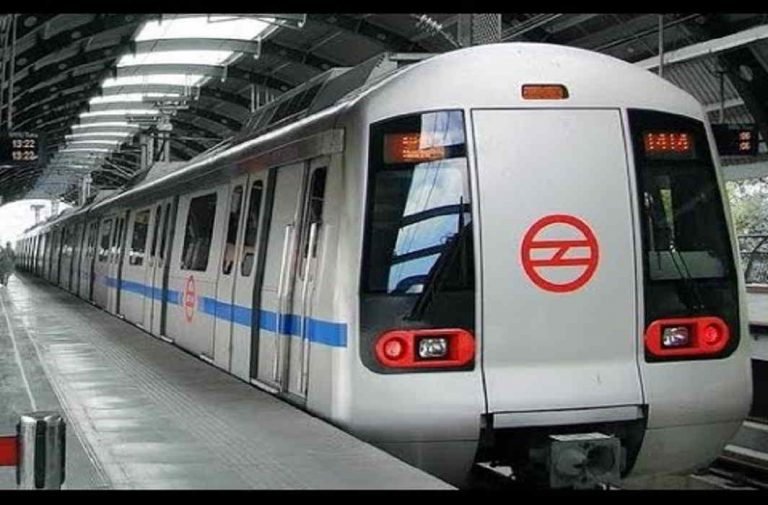
New Delhi: Prime Minister Narendra Modi has flagged-off the Delhi-Faridabad Metro Line that would allow hassle free travel for around two lakh daily commuters between the national capital and the industrial hub in Haryana.
The extension of the Delhi Metro connects Badarpur to Escorts Mujesar in Faridabad.
The total cost of the project from Badarpur to Escorts Mujesar is nearly Rs. 2,500 crore. Out of this, Rs. 1,557 crore was borne by the Haryana Government, the Centre contributed Rs. 537 crore, while the Delhi Metro provided Rs. 400 crore.
All these are elevated and located on either side of the Delhi-Mathura Road (NH-2).
“The nine-station metro corridor which was 95 per cent indigenously built will provide people a safe, affordable, quick, comfortable, reliable, environment-friendly and sustainable transport facility,” a Haryana government spokesperson said.
Haryana Chief Minister ML Khattar, addressing a press conference on Saturday, had thanked the Prime Minister for “gifting” the Metro service which would take the city to “another level of progress” with better connectivity with other NCR towns.
He had also said that the Prime Minister would be announcing the go-ahead for connecting Gurgaon with Faridabad by Metro.
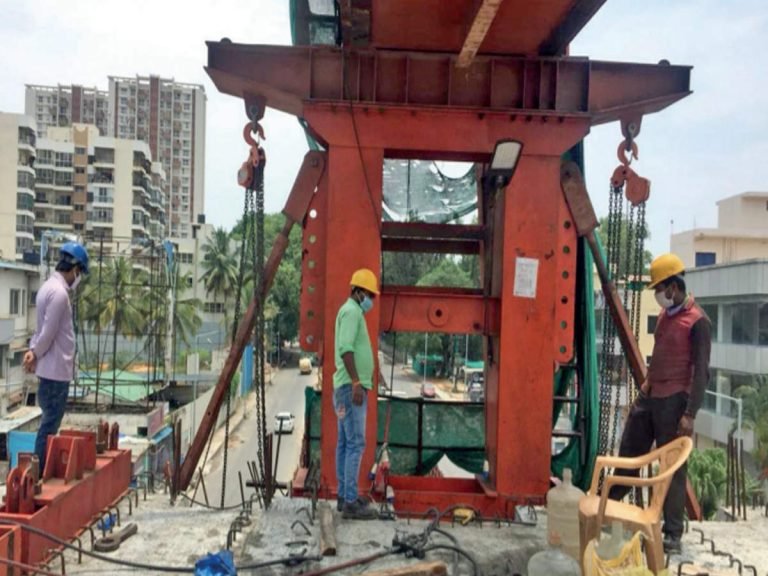
BENGALURU (Metro Rail News): The Phase 2 work is expected to be hindered as 3,500 migrant labourers have left Bengaluru and go back to their respective hometowns. Bangalore Metro Rail Corporation with private contractors had hired 9,100 workers for under construction as part of phase 2 with a distance of 72 km stretch.
BMRCL MD, Ajay Seth stated that the workforce has shortened as only 5,600 of the 9,100 workers now remain. Both additions in line Kanakapura Road and Mysuru Road will be available by 2020.
The deadlines for both construction lines are August 2020 & October 2020, respectively, but now it is expected to be extended as civil work is still to be finished.
For another 4 lines, the dates are supposed to be shifted due to the Covid-19 crisis and lack of migrant workers. The Centre is still to allow the Silk Board-KR Puram-Kempegowda International Airport line, that is supposed to be operational by 2024, so civil work is still to start.
E Sreedharan, India’s Metro Man & DMRC principal adviser had declared that for every day Metro is stopped it would cost Bengaluru Metro nearly Rs 1.5 cr almost.
The 14 days mandatory home quarantine rule became another issue. It’s not easy to keep the workers from other states in the quarantine facility. They state camps are already located in isolated areas so there is the least contact.
PUNE (Metro Rail News): For the underground section of the Pune Metro rail project, the tunnel being excavated as progressed beyond the Shivajinagar station, despite a 25 per cent dip in work productivity due to the lockdown.
MahaMetro officials accused the decrease in work efficiency due to a lack of workers at the construction site for over a month. The tunnelling work is being performed in a single shift that had started last Dec, as opposed to the earlier multiple shifts.
A MahaMetro official said that in spite of the difficulties, the underground tunnel has progressed. Of the 2 tunnel-boring machines, the one has passed 200 metres away from Shivajinagar station where the other is 20 metres past the location.
The machines will reach the Civil Court by Simla office chowk & CoEP ground. Currently, only one-thousand workers are on duty at the many Metro sites across the city and before lockdown, it was 2,800.
MahaMetro added they have approached the respective district administrations in Bihar & Madhya Pradesh when workers showed a desire to return to Pune. Also, it has expedited viaduct and pillar work on some crucial stretches, RTO & Pune railway station and Paud Phata & Paud Road.
An official stated that work on the depots also at the College of Agriculture & Vanaz, is also progressing steadily.
THRISSUR (Metro Rail News): Silver Line Thiruvananthapuram to Kasaragod Semi-High Speed Rail of Thrissur station proposed line will be elevated.
Kerala Rail Development Corporation released the details regarding this, that performs the project. It will be located near the 2nd gates of the existing railway station. The station will be at the peak of the parking lot.
The rail line will be elevated from Vadukkora region while coming from the south, it has been designed in such a way. Hence the station will also be elevated. Along with this, there will be lift & escalator services to bring commuters from the old station to the new station.
The new station will be established in Muriyattu for the transportation of goods from Thrissur district. The station will have the convenience for assets trucks to enter the train & to exit from the train.
NEW DELHI (Metro Rail News): After four years of delay the construction of Delhi Metro’s Phase-IV had eventually kicked-off at the end of 2019. Following a long pause, on Dec 30, 2019, DMRC had commenced the construction of Phase-IV by piling work at Haiderpur Badli Mor that will be an interchange point among the Yellow Line and upcoming Phase-IV corridor of Janakpuri West-RK Ashram Marg.
Under Phase-IV there are 6 corridors have been planned, only 3 have got final permission by the Centre with a length of 61.6 km. While the 1st corridor where construction began is Janakpuri West-RK Ashram Marg, tenders were floated for other sections of this corridor & another two.
When in May, when construction work was approved with safety precautions the DMRC had only a 3rd of workers available as compared with the workforce before the lockdown because so many migrants workers had left for their native villages.
The number was around 3,500 workers available before the lockdown and now it’s between 1,000-1,500, as per DMRC.
Anuj Dayal an executive director of DMRC said that we are resuming work with the rest workforce but the pace of work is suffering.
Mr Dayal further added that adding that Phase-IV construction is still in preceding stages & contracts are being gradually conferred, the progress of the work will be impacted by the less number of labourers and the deadlines will also have to be modified accordingly.
The approved corridors of Delhi Metro Phase-IV
Aerocity to Tughlaqabad (20.2 km)
Maujpur to Majlis Park (12.5 km)
Janakpuri West to RK Ashram (28.9 km)
DMRC had prepared an online mechanism, Building Information Modelling by which designs, drawings & 3D models were being posted and confirmed online.
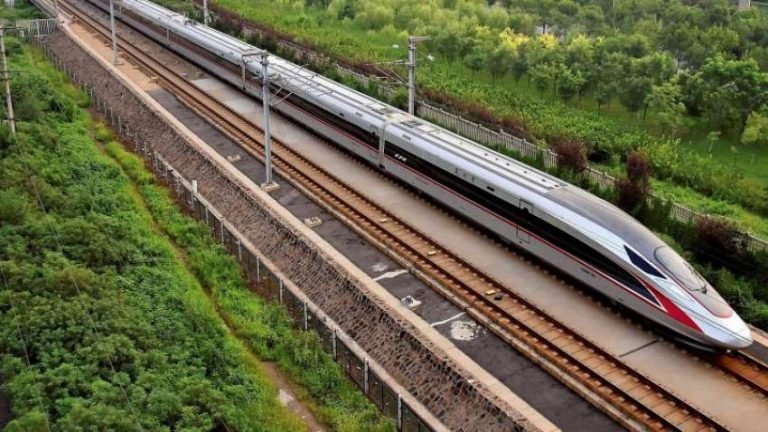
MUMBAI (Metro Rail News): On Thursday, The Pune-Nashik rail line project was given the go-ahead, and ready to connect 2 essential powerhouses of India’s most vibrant. The state-run Maharashtra Rail Infrastructure Development Co Ltd (MRIDC) completed the DPR for the high-speed rail in Feb and posted for Railway Board & Maharashtra govt permission.
According to the diagram, above rail network shows, there is no direct rail connectivity among Pune-Nasik. Rail network has to go via complicated route by Lonavala, Karjat, Panvel, Diva, Kalyan, Igatpuri till Nasik. This rail project will be the world’s 1st semi high-speed corridor over the broad gauge, Maharail declared.
MRIDC/MahaRail will be completing the semi-high-speed double line project that will reduce the travel time aims to bring the travel time from Pune-Nashik for almost a couple of hours.
This semi-high speed corridor including double railway broad gauge lines from Pune to Nasik will allow the trains to operate at a speed of up to 250 km/h in the future.
As Pune and Nasik both are equally fastest rising cities of Maharashtra and together constituting 18 per cent of the population of the state & contributing 19% Gross Value Added to the state.
The corporation stated in a release that the MRIDC has aimed to operate the Pune-Nashik broad gauge rail line with the commercial speed of 200km per hr with coming addition up to 250 km per hr.
The Railway line will touch 3 districts of Maharashtra which is Pune, Ahmednagar & Nashik by serving seamless connectivity to industrial zones of Pune & Nashik like Alandi, Chakan, Khed, Manchar, Narayangaon, Sinnar & Satpur.
BENGALURU (Metro Rail News): In the National Stock Exchange mandatory disclosure the Bangalore Metro Rail Co Ltd has declared that it suffered a loss of Rs 74 cr in fare and non-fare revenue because of the closing of Namma Metro in April & May.
The BMRCL’s safety standards had limited the number of riders before the lockdown. In March, officials had supposed the revenue to run Rs 40 cr but the collection at the end of the month remained at Rs 24.35 cr.
For the year 2019-20, the result was marginal as the revenue reached Rs 430 cr against the target of Rs 445 cr.
The corporation would suffer the impact of COVID-19 in the current financial year not just because of revenue loss due to the closing but also because of the recovery of operating costs is expected to be hard in the future.
The workers have moved from Bengaluru to their home states, the corporation expects the Phase II projects to be paused by 3-6 months.
However, it restated that some sections of the project will be operationalised in the 2nd half of 2020, most possibly the extension lines from Anjanapura & Kengeri.
Managing Director of BMRCL Ajay Seth explained that it was not a cash crunch. We have the project funds & can use a little part for a few months to fund fixed expenses such as salaries, essential maintenance, etc.
Ajay Seth replied to a question, the corporation’s loss every month is around Rs 25 cr when the services were closed. The govt gives support for cash losses based on audited accounts. We received funds for losses up to 2018-19. Would get funds for 2019-20 while this year.
Overview: The Biggest challenge for the Mass Transportation organizations and bus companies, as well as rideshare businesses and airlines, etc. staring at them is gaining the passengers confidence to resume travel. There are significant challenges as there is no “Post Covid Situation ‘in sight. The virus remains active while Scientists are on the job to find the cure. We all are staring at an unprecedented time wherein the recent pandemic has brought the world to a halt. The safety of the population has become the top priority of the governments across the globe and reactive versus pro-active approach is the way forward to contain the COVID 19 virus. At this point, it’s common knowledge that the COVID-19 virus is spread through person-to-person contact. But there is also compelling evidence that suggests the virus can remain active for hours ̶ even days ̶ on some types of surfaces. And this problem, especially for the transit industry. The New England Journal of Medicine just released a report that investigated claims – “how long the virus can remain viable on different kinds of “surfaces”
Their analysis revealed that COVID-19:“Was more stable on plastic and stainless steel than on copper or card board “The fact that COVID-19 is so virulent makes the cleaning and disinfecting (of course the difference between cleaning and “disinfecting” has to be understood) of every mode of transport ̶
be it train
plane
Bus
Taxi
Or subway, etc.
Contact mapping mass transit:
According to current evidence, COVID-19 virus is primarily transmitted between people through respiratory droplets and contact routes.In an analysis of 75,465 COVID-19 cases in China, airborne transmission was not reported. The mass transit system with huge SS interiors has high exposure to the virus – Coronavirus can survive for two to three days on plastic and stainless steel surfaces
“The virus that causes COVID-19 remains for several hours to days on surfaces and in aerosols, a new study published in the New England Journal of Medicine found” Cleaning versus disinfecting is the answer.
The study suggests that people may acquire the coronavirus through the air and after touching contaminated objects. “Scientists discovered the virus is detectable for up to three hours in aerosols, up to four hours on copper, up to 24 hours on cardboard and up to two to three days on plastic and stainless steel”
Note: Steel feels clean. After all, hospitals and labs use plenty of stainless steel surfaces in operating rooms and other sterile areas. However, when it comes to coronavirus, it may not be as safe as you think.
Measuring Methodology – How they measured it”
Scientists measured this by laying down a few drops of fluid containing COVID-19 viral particles.
They then collected samples at regular time points to measure how many viruses were still present on the stainless steel surface.
They compared this to other surfaces including plastic and cardboard.
By doing so, they were able to generate the model below:
Steel – COVID-19 decay
% Virus Alive Time in hours
100% 0h
80% 5h
60% 10h
40% 15h
20% 20h
As evident in the data above, COVID-19 corona viruses can live quite a long time on a stainless-steel surface.
While most corona viruses die quickly, some can live on but on steel it potentially remains infectious, for over a day.
Contact Audit / Mapping:
An important part of any program designed to fight the virus is to conduct a “contact audit or mapping” And, while it’s true that the passengers are more likely to be infected by coming into contact with a contaminated surface, it’s worth noting that “80% of bacteria are transmitted by hands which may touch the surface within the subway / planes / trains etc and 76 out of 100 people either don’t wash their hands at all or don’t use soap2.”
It should come as no surprise then that New York’s Metropolitan Transportation Authority (MTA) announced3 that all of its trains, buses, and other modes of public transports will be sanitized every 72 hours. Plus, they are going to disinfect often-touched surfaces in stations every day. San Francisco’s Bay Area Rapid Transit (BART) system also intends to implement similar practices on its vehicles and in stations and bus terminals.
A Daily Sterilization Checklist a must
We say a ‘daily’ checklist because it is often impractical to clean often-used vehicles more than once a day, even if you have reduced ridership. It takes about three hours to completely clean a city bus, according to the MTA. But they have 1,000 buses on the roads ̶ to say nothing of their immense subway system and suburban rail services ̶ so you can immediately see how daunting a task this can be.
Still, it has to be done, one way or another.
As such, transportation organizations and bus companies, as well as ride-share businesses and airlines, etc, need to have ‘to-do’ checklists in place so that every single cleaning assignment can be tracked and proper records kept. Among the tasks a company or organization should accomplish:
1. Disinfecting surfaces (not cleaning) and objects that are often touched.
On trains you should see to doors, handrails, seat head rests, seats themselves, floors, and windows; plus, in the bathrooms, doorknobs, lights switches, sink handles, toilets, toilet handles, mirrors, sinks and soap dispensers.
On planes, the same objects should be cleaned, as well as carpeting, headphone sets, tray tables, over-head compartments, etc.
On buses, ceilings, windows, window ledges, walls and floors should be wiped down with cleaning agents and disinfectants. Upholstered seats should be vacuumed, and damaged seats replaced. You should include stanchions, entry/exit-way grab rails, pull cords stop buttons, the top of the fare box and the driver’s area.
Getting Your Staff on Board
Organizations and transport operators companies having their own, dedicated cleaning staff or an outside firm that offers the service on a contract basis will come into effect to clean the mass transit. A word of caution “is it disinfecting?? Or is it cleaning!! A question to be asked and thoroughly deliberated “Cleaning cannot be categorized as disinfecting “
For operations that cannot justify the cost of such guaranteed assistance, the onus falls on them to bring the same level of cleanliness and hygiene to their operations. And by the way, this isn’t just a purely desirable goal. It’s a business imperative! Not being conscientious and committed to a thorough “disinfection” regimen can be a recipe for disaster! The reputation you spent years building can disappear overnight if your vehicles become known for their lack of hygiene, or, to put it bluntly, being downright infectious.
Options for Operators
Many products are available for decontamination of these critical spaces. There are differences in product effectiveness, cost, potential residual damage and operational limitations. Two particular methods, presented below, are being employed to reduce or eradicate hazardous microorganisms and viruses-
A. Biocidal Properties of Hydrogen Peroxide Vapor ( HPV) based Equipment’s
Hydrogen peroxide Vapor (HPV) is one of the effective way to sterilize and disinfect surfaces that are contaminated with undesirable microorganisms. The United States Environmental Protection Agency (EPA) classifies HPV as a disinfectant by virtue of its biocidal and pesticidal properties.
Sterilizing with HPV involves release of a known concentration of vaporized hydrogen peroxide throughout an enclosed space, such as a lab. This is typically achieved with a HPV generator. These generators first remove moisture from ambient air and then pass liquid hydrogen peroxide past a vaporization module to produce a concentrated gaseous form of the chemical.
The biocidal mechanism of action for hydrogen peroxide is attributed to chemical oxidation of cellular components. This oxidation rapidly interrupts vital chemical processes vital to microbial survival, and thus sterilizes the environment. For these reasons, HPV is used in many applications when personnel seek to disinfect environments contaminated by virulent microbes.
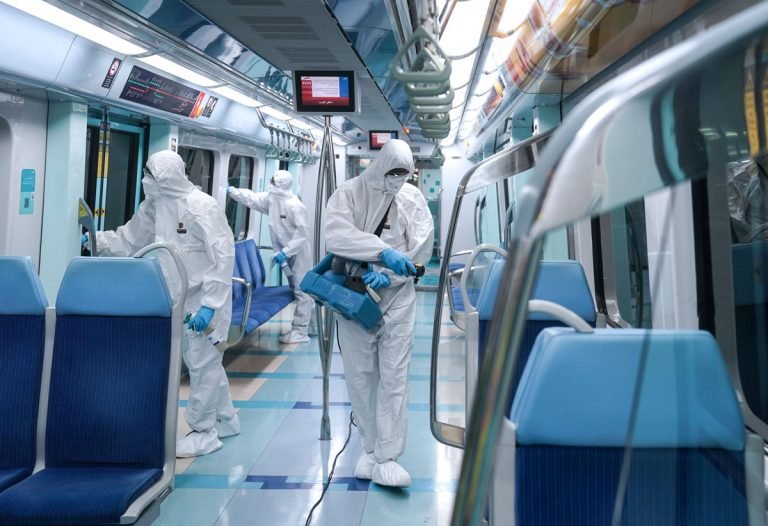
Various manufactures producing range of manual and IR based auto navigation robotic systems which are capable of spraying HPV at desired rate with very small droplet size as good as less than 10 microns which helps to dry the surfaces very fast and no strains on surfaces.
B.Shining a Ultra-violet light on Microorganisms (UV-C ) based Equipment’s
Ultraviolet germicidal irradiation has been a mainstay for killing and inactivating microorganisms for well over a century. This process utilizes short-wavelength ultra-violet C light to kill microbes. UV-C light encompasses a range of 100 to 280 nm, but the most effective wavelength for decontamination is between 250-260 nm.
Exposure to the light inactivates microbial genomic DNA. UV-C light creates lesions called thymine dimers, which cannot be resolved by cellular-DNA repair mechanisms. This injury to cellular DNA impairs vital cellular functions and ultimately leads to the death of the microorganism. Thus, ultraviolet germicidal irradiation can be an effective means of sterilizing surfaces, instrumentation and facilities
Which is better on what surface?
UV germicidal irradiation is only effective in sterilizing surfaces that are in the rays’ line of sight. Any portion of a surface that is “hidden” by other objects will not be exposed, and therefore not sterilized.
Operator safety is one obvious concern when using UV-C based decontamination systems. In the same way that UV-C light damages microbial DNA, irradiation can also cause DNA damage in humans. Thus, procedures need to include instructions for keeping personnel at a safe distance from these light sources.
As ultraviolet (UV) radiation consists of photons with high energy relative to visible light, it can cause degradation in the form of physical and chemical changes in susceptible materials.
HPV is arguably the most effective form of surface and facility decontamination, however quite hazardous to personnel. Therefore, carefully calculate and document two important factors: the concentration of hydrogen peroxide used during cycles, and the time allowed for these vapors to disperse.
How to overcome this various material surfaces challenge:
Withthis formula and some experiments one can find out the amount of time required for complete disinfection of target surface and it can be verified with UVC photosensitive paper dosimeters-
UVC- Photodegradation of Materials
The UV-C light can be detrimental to organic materials. If vulnerable materials are not shielded, substantial degradation can occur.
These damages are observed only after days or weeks of exposure at irradiances > 1 mW/cm2
For lower irradiances, very long exposure time (months) are required to damage materials.
Some common polymers such as PE show signs of degradation at UV doses (10-100 J/cm2) that are several hundred or even thousand time higher than those required to inactivate microorganisms
Thus, It can be concluded that with limited time applications such as the case of UV-C sanitizers, the material photodegradation is not that critical.
Comparison between UV-C and HPV
UV-C
HPV
Process Time
Less
More
Cost
Less
More
Biocidal Targets
Fewer
Greater
Decontamination reach
exposed surface only
all surfaces
Safety Concern
visual exposure
aerosol exposure
Measurement of efficacy
To ensure targeted areas are covered must be measured and reconfirmed sufficient dosage of UV-C is delivered and the target surfaces are fully disinfected
Very difficult to measure the disinfection level
Human Cleaning versus robotic cleaning
In the rush to clean and disinfect vehicles, there’s a better than even chance that some folks will forget ̶ and in certain cases, ignore ̶ some transportation facilities, such as bus and trains, waiting rooms, ticketing areas, and the conveniences they offer: Public seating, toilets and bathrooms, on-site retail stores, fast-food outlets (e.g. McDonald’s, Starbucks, Pizza Hut, Dunkin Donuts, etc.), gift shops, elevators and escalators and so on.
The problem: Any one these facilities can become a COVID-19 hotspot.
For example, New York’s Penn Station handles some 650,000 passengers every day, while the MTA provides subway services for 5,437,587 riders operating out of 472 stations. And practically everything in their facilities ̶ including stations and high-touch surfaces such as turnstiles, ticket machines, handrails, and so forth — have to be thoroughly disinfected at least once a day, more if possible.
The reactions to the COVID-19 pandemic and its effects on societies and economies around the world cannot be understated. Although scientists have warned of fast-spreading diseases, most governments were underprepared, and companies of all sizes are asking employees to telecommute or are facing shutdowns .
The novel coronavirus has increased interest in robots, drones, and artificial intelligence, even as some testing of autonomous vehicles pauses on public roads. These technologies can help deal with massive staffing shortages in healthcare, manufacturing, and supply chains; the need for “social distancing;” and diagnosis and treatment. We don’t yet know the long-term effects, but here are more examples of how robotics is addressing the challenges posed by the pandemic.
“With a global pandemic quickly on the rise, government officials will need to act quickly in search of a scalable solution that will help slow down the spread of coronavirus,”
Conclusion:
“Mass Transit is a critical component of the mobility ecosystem of all large cities, so as cities begin to cautiously re – open , encouraging passengers back will require that organization ensure rider safety and increased confidence is using the transit “
There are and will be many lessons to draw from the COVID-19 pandemic affecting public transit agencies. Looking inward at responses and outward at system actions in service
Public transit agencies will need to determine how best to prepare for and respond to various post-peak scenarios, ranging from complete virus eradication to an endemic situation with a low level of community transmission. This “new-norm” is completely uncharted territory and will require cooperation and collective action, including creating a Contagious Virus Response Plan, stockpiling and investing in solutions, technological or other, to offer more resilient to future disruptions.
Like flattening the curve, together, we can build back a resilient public transit sector that is vibrant and fit for the post-COVID-19 world.
Note : Author could reached at the following mail ids towards further questions or cost benefit analysis
Neeltje van Doremalen, Trenton Bushmaker, Dylan H. Morris, Aerosol and Surface Stability of SARS-CoV-2 as Compared with SARS-CoV-1, New England Journal of Medicine, March 2020. https://www.nejm.org/doi/full/10.1056/NEJMc2004973?query=featured_home
ibid.
MTA Issues Agency-Wide Update on Precautionary Measures Against Coronavirus, MTA Press Releases, March 2020. http://www.mta.info/press-release/mta-headquarters/mta-issues-agency-wide-update-precautionary-measures-against
Disinfectants for Use Against SARS-CoV-2, Pesticide Registration, Environmental Protection Agency, March 2020. https://www.epa.gov/pesticide-registration/list-n-disinfectants-use-against-sars-cov-2
Richard E. Fairfax, OSHA’s policy regarding the use of EPA-registered disinfectant, Standard Interpretations, Occupational Safety and Health Administration, February 2005. https://www.osha.gov/laws-regs/standardinterpretations/1999-07-15
Introduction to Subway Ridership, Metropolitan Transportation Authority, 2020.
Report by Terra Universal.https://www.laboratory-equipment.com/blog/two-leading-decontamination-methods-uv-c-vs-hpv/
KANPUR (Metro Rail News): Uttar Pradesh Metro Rail Co has made all 22 pillars of IIT Metro Station. UPMRC is now proposing to compensate for the time they lose for civil construction work of priority corridor because of the lockdown.
On May 15, after continuing civil construction work of corridor with the permission of district administration’s, the UPMRC engineers completed all the intended piers for IIT Metro Station.
UPMRC had finished 21 out of 22 proposed piers of IIT Metro station & in the post lockdown period rest one pier has also been made, before the announcement of nationwide lockdown because of Covid-19 pandemic.
Apart from this, the UPMRC has also made piling work till Kalyanpur Metro station. UPMRC Managing director Kumar Keshav congratulated Metro engineers and stated that after stagnancy of last some months because of lockdown, Metro engineers are going ahead with complete zeal and trying to recover the desired speed of work at the site & that have begun bringing results in the implementation of the Kanpur Metro Rail project.
BENGALURU (Metro Rail News): At Yerawada 13 labourers involved in metro rail construction, tested positive for COVID-19 test in the mid of Tuesday & Wednesday this week.
After 15 others from the Yerawada labour camp have been isolated leaving only five in place, petrified as they have shared common spaces like washrooms with the infected.
For less distancing and common loos, local corporators accused Maharashtra Metro Rail Co. The authorities denied that they received due caution with sanitisation & medical check-ups.
On Tuesday 1 labourer tested COVID positive after that twelve others tested on Wednesday were got infected with the coronavirus. Now, only 5 labourers are rest at the camp that has a capacity to host 700.
Many migrant labourers had already moved for their homes once shramik trains began plying. Despite some left-behinds, the chances of infection have increased questions about living conditions & preservation of norms at the site & living quarters.
But the contractors were ready to accuse the labourers’ irresponsible manners. Our force has been working for twenty-six days in the lockdown. They are in the habit of taking tea breaks & purchasing groceries from nearby shops located in COVID-19 hotspots.
He also tended out that they have put in place sanitisation tunnels & are continuing regular medical checkups. It was while one of these check-ups that a worker found positive out for treatment 15 others were also isolated and tested on Friday.
KOCHI (Metro Rail News): Last year after dangerous waterlogging in the city the followed through harsh criticism has set the Kochi Corporation on guard this period around all the councillors over party lines admit that still so much to be completed before the monsoon.
To resolve to waterlog, a meeting of all the agencies taking actions with Kochi Metro Rail & the district administration would be held shortly to review efforts & to evaluate the work done stated by Mayor Soumini Jain.
A 24-hour help desk working in coordination with the existing COVID-19 help desk would be set up to interrupt immediately when any issues happen related to rainfall.
Councillor representing Gandhinagar, Poornima Narayan said that problems are still unresolved unless the bund built on the Chilavannoor lake was destroyed the neighbouring areas would remain to drown in rainwater.
AS the normal water flow is blocked by a bund but water from many other channels collects at Chilavannoor. K.J. Antony, opposition leader stated that the range where the Perandoor canal drains into the backwaters near the Vaduthala bridge has still not been desilted. Furthermore, the field where the Kalvathy canal drains in the sea is gradually silted resulting in waterlogging, he further added.
As per V.P. Chandran, LDF councillor, in the last 6 yrs about Rs 120 cr has been given on work to fix waterlogging but there is no definite plan in place.
She further added that the concerned of agencies must not move away from its responsibilities. While work has been improving well, unscientific construction work with the of footpaths is mostly responsible for waterlogging, Ms Jain said.