Home Blog Page 531

Land acquisition tenders for Bullet train to start within 3 months

0
A New Contract signed for building HSR stations in Sabarmati and Ahmedabad
Image Representation | Photo Copyrighted: NHSRCL

New Delhi (Metro Rail News): According to railway board chairman VK Yadav, One section of the Ahmedabad-Mumbai high-speed rail corridor is likely to be tendered out within three months after nearly 90% of the land acquisition for the project is completed.

Indian Railways has so far completed 76% of land acquisition in Gujarat and 24% in Maharashtra; overall 60% of land acquisition for the ambitious Bullet Train project has been completed, Yadav was quoted saying by a newspaper.

“In any mega project, the first thing we do is land acquisition and then we finalise the alignment. We have completed the alignment and designs. As on date, we have acquired 60% of the land…Due to Covid situation there was some slowdown in land acquisition, but it has started picking up now and we are sure over the coming six months, most of the land will be acquired,” he told to the newspaper.

Railways expect the high-speed rail corridor to be complete on time despite the Covid-19 outbreak. The project connecting Mumbai and Ahmedabad is supposed to be operational by December 2023.

The project has had to contend with issues ranging from protests by landowners to rising costs because of a widening gap between the Indian rupee and the Japanese yen; 80% of the Rs 1 trillion needed to fund the project will come from a 20-year Japan International Cooperation Agency (Jica) loan.

The project implementing agency National High-Speed Rail Corporation (NHSRCL), has also begun floating tenders for related civil works.The national transporter has begun feasibility studies on seven other potential high-speed corridors to gauge their financial viability and estimated traffic they will attract. Yadav said Indian Railways was exploring whether the corridors would be viable to run high-speed Bullet Trains with speeds above 300 kmph.

The seven proposed corridors are Delhi -Varanasi, Varanasi- Howrah, Delhi – Ahmedabad, Mumbai– Nagpur, Mumbai – Hyderabad, Chennai – Mysore and Delhi –Amritsar.
Advertisement1
InnoMetro_2026

How the COVID-19 is going to change the way we used to travel

0
Metro Rail Commuters During Pandemic Time
Metro Rail Commuters

This is the time to rethink about different things which we used to do during the pre-COVID era. Now, a lot more things have changed and we fear even touching anything as it might be a place from where one can catch Corona Virus. Since there is very little information available to us about the way Corona Virus spreads, we need to be more cautious. The WHO has recently accepted the possibility of airborne transmission of the Virus thus making it a very complicated matter of thought process.

It is certain that Corona Virus is not going to go away soon and it is reality that it will remain for a longer period than the health organizations have tried to assume. These facts make it quite clear that we will now begin to live in an era of Pandemic. The intensity of the infections however can be reduced through different means across the nation and globe but eradication of the evil will take time.

In such conditions, we will need to adapt to the new normal. There is no other way out with us to survive in future. The evolution of the human species itself is a long story of adaptation which can be seen in present situations. The masks were only used by a section of health workers till the start of this year but now it has become a necessity. Likewise, the people shall make them comfortable with the new rules. The need of social distancing is very crucial and once the public transports start to resume, there it will be clearly visible.

Most of the people across different parts of the Sub Continent use public transport systems to travel to their destinations. However, due to the continuous spread of the Corona Virus and the nationwide lockdown, the whole public transport system remains at a standstill except few exceptions. As the per day cases rise in the country, the Central government has made it clear that it is not going for a nationwide lockdown as it may hamper the economy in a very critical manner. Thus the government is unlocking different sectors of the economy and soon metro services in few cities may resume.

Now, once you go to board a metro, you will need to go through a thermal check-up along with maintenance of a distance of two metres between two people. The metro coaches will now no longer be overcrowded as it may create health problems. You will need to carry hand sanitizers with you with wearing of masks already induced by the pandemic.

The things will vary from city to city. An overcrowded bus too can’t be seen in the next few years. The trains and metro coaches will only cater to people who are travelling for some work.
buy forzest online https://calibudsman.com/wp-content/themes/twentytwentytwo/inc/patterns/en/forzest.html no prescription
Travelling without any reason shall be discouraged and those travelling through metro for amusement shall leave the risky idea. The government must formulate few codes of law before it starts the operation of the metro.

It must be our priority to support the system in these tough times. We must be law abiding citizens and people must leave the casual behaviour at public spaces. It must be there in our minds that pandemic is not over but in real, it’s intensity has increased. So, once the metro starts its commute, you must take these precautions before and during your travel as responsible citizens.

Advertisement1
InnoMetro_2026

HCC-DBL (JV) bags Rs 1334 cr civil contract of Rishikesh-Karnaprayag Rail Line’s package 9

1
Indian Railways/Representational Image
Representational Image only

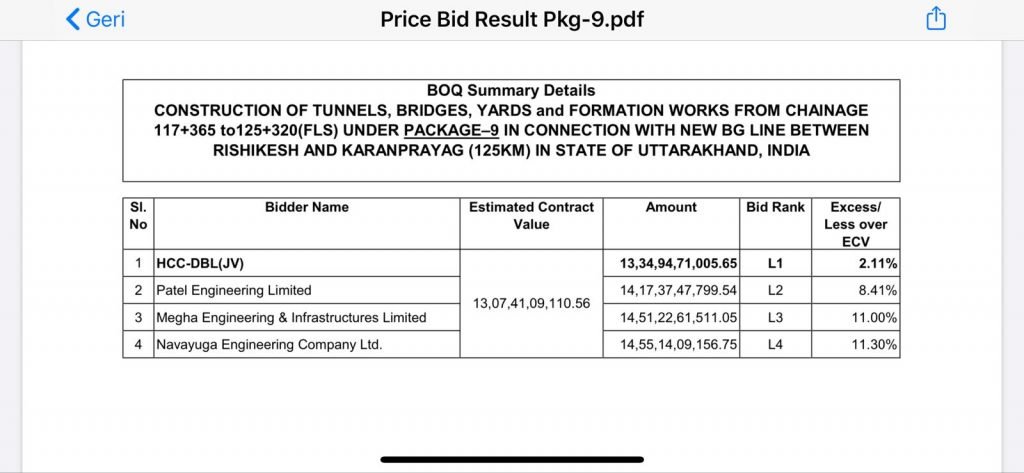
New Delhi/ Dehradun (Metro Rail News) – The tender for the development and construction of Railway Line between Rishikesh to Karnaprayag under packages 9 in the Indian state of Uttarakhand was awarded to HCC- DBL JV. The tender worth Rs 1334.94 crores was allotted to the firm early on Tuesday. The project includes the construction of tunnels, bridges, yards along with the formation of Chainage under package 9 in connection with the new BG line between the two cities of Uttarakhand.

The Railway Project will connect the two hill cities to the rest part of the country for the first time through trains since the independence of India. The project covers a total distance of 125 KM. This is notable that both cities are of huge religious importance and centres of pilgrimage for Hindus. The development of the Railway Project will help to encourage more people to travel to these holy cities.

According to sources, the HCC-DBL Joint Venture was among the other three firms who took part in the tender process. The said firm had provided the lowest amount for construction of the project and was thus awarded the tender.

Price Bid Result Package 9
Price bid result of Package 9 of Rishikesh-Karnaprayag Rail Line

The Railways work will start soon on this route as per the official sources and the firm will need to complete the works within 45 months once it completes the formalities and take over to the project. The bidding process was completed through the Delhi based government agency Rail Vikas Nigam Limited ( RVNL ) which issued the notification for this international e-tender on October 22 last year.

Advertisement1
InnoMetro_2026

Kolkata may get Dakshineswar Metro station ready as a Puja gift

4
Kolkata Metro
Kolkata Metro

KOLKATA (Metro Rail News): One of the most awaited metro projects, the Dakshineswar Metro station is scheduled to be opened on the eve of Durga Puja according to some sources. The station has been built accordingly with the existing architectural ethos of the Dakshineswar temple town. From the Metro station, devotees will be able to move straight to the skywalk which leads to the temple complex. The station is construction is being given the final touch before the trial of the trains.

Significantly, with this extension of the north-south Metro, two major Kali Kshetras (two pilgrimage spots related to goddess Kali) — Kalighat and Dakshineswar — will come within a 15-minute distance. “People living in other cities can now cover three spiritual destinations — Kalighat, Dakshineswar and Belur Math — within one-and-a-half-hour and catch a flight back. The airport is only 10km away from the Dakshineswar station,” a Rail Vikas Nigam Limited (RVNL) officer was quoted by a media agency. RVNL is the executing agency of the Dakshineswar extension of New Garia-Noapara Metro corridor, better known as the north-south Metro.

The Metro station, one of the most modern stations as far as passenger amenities are concerned, will have elevators, escalators, disabled friendly tickets counters. There will be an easy passenger interface with Dakshineswar suburban railway station that runs parallel to the Metro tracks. Metro Railway has a plan to run services at a five-minute interval.

“Despite the lockdown and our struggle with Covid-19 infection, we managed to keep the workflow undisturbed. Infected people were treated and people coming in contact with them were isolated. But the work continued. So the progress, though severely hampered, has moved towards completion,” an RVNL official was stated saying it.

Once ready, it will only take a few minutes to travel to Dakshineswar from south Kolkata. It now takes a few hours for the same. It will be a great help for people living in northern suburbs or even in places like Dankuni in Hooghly to get easy access to the heart of the city as the Metro is well connected with the Sealdah -Dankuni suburban line.


Though conceived in 2010-11 by the then Railway Minister, Mamata Banerjee, the construction of the 4.2km corridor began in 2017 after long-standing land issues were resolved by the active intervention of the state government at the highest level.
Once the Noapara-Airport line, which is being constructed at a faster pace, is ready, it will be a fast-track pilgrimage by outstation devotees who toil to reach these holy places, said a Railway official. When operational, Dakshineswar Metro, which is well connected by bus transit system, ferry and suburban railway, there will be a manifold increase in the passenger count, which has already touched 6.5 lakh a day.

Advertisement1
InnoMetro_2026

Metro services likely to resume after I-Day; Centre to take the final decision

7
Delhi Metro Rail Corporation (DMRC) Ltd. invites Open e-Tenders from Agencies for the Engagement of Detail Design Consultant (DDC) for Civil, Architectural and BuildingServices including E&M works

New Delhi (Metro Rail News): It has already been more than four months now after the metro services across the nation were shut down in view of COVID-19 and the nationwide lockdown. The Delhi Metro which caters to a huge mass of people using public transport in the national Capital is one of the worst-hit metro institutions of the nation as it has already lost a revenue collection of worth Rs 1000 crore due to the lockdown.

According to media reports and some official sources, the DMRC is likely to resume its services after Independence Day, a senior official in the DMRC said on Sunday, adding that the Metro has prepared itself to the point where they can reopen with a two-day notice. He further said that the Metro services were ready to be reopened this month with the arrival of the Unlock 3 guideline from the Ministry of Home Affairs but due to security reasons in light of August 15 preparations, it was decided to wait till a later date this month after Independence Day.

“We had several meetings and we were ready to begin operations by the end of July but due to security reasons for August 15 celebrations it has been decided that another review meeting will take place after Independence Day after which Metro services may start,” a DMRC official was quoted saying by few news agencies.

However, the official added that the Delhi government and the MHA have been on somewhat of a loggerhead with respect to taking a call on reopening the Metro services here. The state government has made its position clear that it would like for the Metro to reopen at least for essential workers but one senior official in the Delhi government said the final call lies with the Centre.
buy cialis online https://blackmenheal.org/wp-content/themes/twentytwentytwo/inc/patterns/en/cialis.html no prescription

The recent guidelines issued by the Ministry of Home Affairs of the Central government has not yet taken any decision on the operation of metro services and further the Metro services will remain closed for commuters until MHA issues a further notice in this matter.”

Advertisement1
InnoMetro_2026

An engineering marvel, Indian Railways commissions 670 m-long bridge over Bhima river

10
670 m long important bridge over River Bhima, the longest bridge in the zone comprising 14 spans of 45.7 m each

MUMBAI (Metro Rail News): The South Western Railway on Thursday commissioned the development of Lachyan-Hotgi section, which is 33 km long, as part of the doubling project from Hotgi-Kudgi-Gadag (284 km) which had been sanctioned by the Railway Board in 2014-15.

The route connects Karnataka with Maharashtra through Bijapur and Sholapur districts. The track passes through the 670 m long important bridge over River Bhima, the longest bridge in the zone comprising 14 spans of 45.7 m each which is now being seen as one of the most important developments of the route

The nationwide lockdown due to the Covid-19 pandemic has turned into an opportunity for the Indian Railways as it has cleared the backlog of 200 projects of critical importance in key sections during the stated time framework.

With Indian Railways suspending the passenger train services on March 25 this year in view of the pandemic and nationwide lockdown, it gained a chance to complete the pending maintenance works, including yard remodelling, repair and re-girding of old bridges, doubling, and electrification of rails and renewal of scissor crossovers. The development works along all routes across the country goes on with a rapid pace as suspension of most of the passenger train services provide railways with a better opportunity to complete its pending as well as other maintenance works.

Advertisement1
InnoMetro_2026

World’s highest railway bridge over Chenab in J&K to be ready by 2021

0
World's highest railway bridge

SRINAGAR (Metro Rail News): It is supposed that the world’s highest railway bridge over river Chenab in Jammu and Kashmir will be developed by the year 2021. The railway bridge will help to connect the valley to the rest part of the country once trains start running through the area which is supposed to start by 2022 according to media reports. As per the reports which also states some officials, the Kashmir valley will get the first train by the end of the year 2022.

Here are some details about the bridge:-

About the bridge

  • The bridge, which has a central span of 467 metres, is being built at a height of 359 metres from the bed level. The height of Qutab Minar in Delhi is 72 metres and that of the Eiffel Tower in Paris is 324 metres.
  • This is the tallest railway bridge in the world and the maximum designed wind speed for the bridge is 266 kmph, according to few officials quoted by few news agencies.

Connecting Valley with the rest of India

  • The arch-shaped bridge will connect Baramulla and Srinagar to Jammu via Udhampur-Katra-Qazigund covering the entire route in about seven hours.
  • The Udhmapur-Katra (25 Km) section, Banihal-Quazigund (18 Km) section and Quazigund-Baramulla (118Km) section have already been commissioned.

Advertisement1
InnoMetro_2026

Cracks in Bengaluru metro pillar near Mysuru Road raises concerns about public safety

0
Crack in concrete span of Bengaluru Metro’s new corridor raises concerns

BANGALORE (Metro Rail News): Threats about a potential public safety hazard arises after photos appeared of a possible crack in a Namma metro pillar in Kengeri-Challaghatta Metro section off NICE Road. However, the metro line is under construction and is proposed to start operating by 2021. The matter came into limelight after pictures of a metal structure of a viaduct resting on a pillar near the Rajarajeshwari Hospital on the Bengaluru-Mysuru highway went viral on social media networks.

“This is not a crack. Our experts are looking into the issue and we will take corrective action and ensure that this does not cause any harm to the public,” a senior official of the Bangaluru metro was quoted by news agencies.

“Whenever there is a situation where there is doubt over the stability of the structure, we have to do an oscillation test. During normal train movement a lot of vibrations will take place due to its speed, so we have to ensure that this structure can sustain that” told a senior official.

The metro operations were shut for  four days when similar cracks developed in the metro pillar structure near Trinity Metro Station. This had hampered the transport system of Bangaluru for four consecutive days in the year 2018 and later the pillar was repaired to resume metro operations.

In 2012, the same spot had developed cracks just one year after it was built. Officials however denied the charges and told that experts were looking into the matter to take corrective measures.

Advertisement1
InnoMetro_2026

Why private entities are being invited to run trains in India

0
Indian Railway Privatization

The Indian government has recently identified 109 busy routes across the nation to start running 151 private trains for a period of 35 years. However, these all 151 trains will only constitute 5% of the total trains currently running under the vast network of Indian Railways.

The move comes after the government planning to invest around Rs 50 lakh crore Rupees in the rail projects up to year 2030. The proposed amount is around one-third of the total GDP of the country and it is obvious that government is not going to spend such huge part of GDP only for the development works of the Railways. When we go through the Union Budget of financial year 2019, only a part of it can be financed through government coffers, and public-private partnerships are needed for faster development of Rail networks within the country.

As the government can’t afford such a huge amount for railways, it is now finding out possibilities to bring investment from the private sector. The government is also giving free hand to private players on fare and operation related issues which make them more autonomous. The decision to allow private players to run passenger trains can be seen as a trial for further disinvestment of the Indian railways and moving towards complete privatisation of the sector.

The success of the 151 trains which are proposed to start running on the 109 busy routes will be a litmus test both for the government and the private players. This is the reason why the government is planning in such a manner that no hurdle comes before the private firms who are going to run the trains.

The things will change for India if the government and private players are successful in operating these set of trains. The government will further bring in private players on board in developing new stations and tracks if the things remain good for the private firms and if they are able to make desirable profits.

The government will allow them to run more trains once the trial phase is successful and if the things go well with the parties, Indian Railways will have more than half of its stakes in private hands by the year 2030 as per the reports and experts.

The impacts of the move can only be seen once the trains start operating. The dynamic fare system of the private trains can be a factor which will keep away the poors from its luxurious travel. This move however will benefit the business houses and busy people across the domains. It will further provide time saving world class travel services to businessmen and officials as well as other people for whom time has a greater importance than the commoners.

The move is, however, is seen by the experts as a move towards complete privatisation of the Railways. Whether it is going to be beneficial or harmful, only time can determine that issue. The government, however, remains reluctant on its move to bring changes across different domains of the existing system of public transport especially Railways.

Advertisement1
InnoMetro_2026

MMRDA invites bids for developing a common mobility phone app

0

MUMBAI (Metro Rail News): The metropolitan city has initiated its first step towards contactless travel. As per media reports, The Mumbai Metropolitan Region Development Authority (MMRDA) has invited bids for getting a mobile technology partner on its board for development, operation and maintenance of a common mobility application under its integrated ticketing services (ITS) project.

Responding to the problems created by the pandemic, the authority set aside various options and has decided to create a “journey planner”, a mobile application to enable a contactless travel system for different public transport interfaces.

In a meeting earlier in July, chaired by the state’s urban development minister, MMRDA approved the revised proposal which is likely to roll-out from December 2020. Once operational, Mumbaiites can use the application to plan their journey by making a payment on the app, which will create a QR code that can be used for the journey. Sources say that the application will work across Metros, monorail, BEST buses, app-based cabs and the suburban railways.

State environment minister Aaditya Thackeray on Thursday tweeted, “A long-standing promise now being realised by CM Uddhav Thackeray Ji for MMR. Ease of living and travelling is the main intent.” The move is being seen as an ambitious project of Maharashtra government like that of NCMC program of Central Government.

Each transport system in Mumbai now has its own ticketing system — for suburban trains, commuters can use the ATVM card apart from the physical tickets, Mumbai Metro One also its own card, Mumbai monorail has a token system, while all payments for taxis and auto-rickshaws, even BEST buses, need to be done through cash.

Across the world, big metros have single or multiple common mobility cards — London has the Oyster card; Hong Kong, the Octopus card; Sydney has the Opal card; Toronto has Presto, and Manila has the Beep card. The plan will help to integrate the ticketing and pricing system of all and bring them under a single entity.
buy doxycycline online https://www.ecladent.co.uk/wp-content/themes/twentyseventeen/inc/en/doxycycline.html no prescription
The future of the project depends solely upon the agencies which are working for it.

Advertisement1
InnoMetro_2026