Home Blog Page 441

Agra Metro first station is now taking shape

0
First Station of Agra Metro

AGRA (Metro Rail News): Despite the extreme challenges created by the second wave of Covid-19, construction work for Agra Metro Rail Project continues as Uttar Pradesh Metro Rail Corporation (UPMRC) has prepared 50 pillar bases in just 5 months, while 18 pillars, 50 pile caps and 414 piles have been completed so far for the elevated section of the Priority Corridor between Taj East Gate to Fatehabad Road.

Along with this, the construction of horizontal beams for Taj East Gate Station has begun as a result the first station of Agra Metro has started taking shape.

For the Taj East Gate metro station, the work of piling in ‘A’, ‘B’ and ‘C’ grids have been completed. Six Piers are already ready in the ‘B’ Grid as a result construction of the Horizontal Beam has initiated here. At the same time, pile caps are being constructed for the ‘A’ and ‘C’ grids. Currently, three pile caps have been constructed in both these grids.

Construction of the median has also started after completion of the pillar work from the Taj East Gate metro station to the dead end with removal of the temporary boundary wall, making the road look wider as before. Just like Lucknow and Kanpur Metros, UPMRC will carry out plantation in median of both corridors of Agra Metro to provide greenery and aesthetic look to the metro project.

The Priority Corridor of Agra Metro comprises construction of 6 km long section from Taj East Gate to Jama Masjid with six stations. Contract is awarded to Sam India Built Well Pvt. Ltd. for the elevated portion of length 3 km with 3 stations namely – Fatehabad Road, Basai & Taj East Gate. However, tender is still pending for the underground section of length of 3 km that will run from Jama Masjid to Taj Mahal with three underground stations.

Uttar Pradesh Metro Rail Corporation (UPMRC) has set a deadline of March 2024 to start operation of metro trains on the Priority Corridor.

Line-1 (14.24 km) of Agra Metro is partly elevated (6.56 km) and partly underground (7.68 km) with 14 stations. These stations are Sikandra, Guru Ka Taal, ISBT, Shastri Nagar, RBS College, Raja Ki Mandi, Agra University, Medical College, Jama Masjid, Agra Fort, Taj Mahal, Fatehabad Road, Basai & Taj East Gate.

UPMRC is following a special strategy to maintain the pace of work in this difficult time of Covid-19. The most important aspect for the good pace of work is the workers and the health and convenience of the workers are being taken of utmost care under the Agra Metro Rail Project. Along with this, the guidelines issued by the government regarding Covid-19 are being completely followed.

Advertisement1
InnoMetro_2026

Kanpur Metro’s Priority Corridor Gets ISO Certification for Environment & Safety Management

0
Image for representation.

KANPUR (Metro Rail News): Kanpur Metro’s Priority Corridor, which is being built between IIT & Motijheel has attained the ISO certificates for environment & safety management. The corridor has been certified with ISO 14001 for environment management & ISO 45001 for safety management. After the rigorous audit by the auditors of United Registrar of Systems, Noida affiliated with UKAS, United Kingdom, Kanpur Metro has achieved this certification for its 9KMs long Priority Corridor.

United Registrar of Systems has certified that Uttar Pradesh Metro Rail Corporation Ltd. (UPMRC) has been fulfilling all the requisite standards required for the provided certification during the execution of the Kanpur Metro Rail Project’s Priority Corridor. To verify that the project has a proper system in place for enabling the policy of environment & safety management, proper execution, regular reviews and accordingly to execute the corrective measures; an audit team reviewed the project last month. UPMRC has already started planning to get these certifications for the whole Corridor-1 i.e. from IIT-Kanpur to Naubasta.

UPMRC always ensures the compliance of international standards during the project execution. Talking about the Lucknow Metro Project, it is to be informed that the 23 KMs long North-South Corridor of Lucknow Metro (CCS Airport to Munshipulia) had received this certification in 2018 i.e. before commencing the passenger services/revenue operations on the whole corridor in March, 2019.

Advertisement1
InnoMetro_2026

Wabtec’s FLXdrive all-battery electric locomotive reduces freight train fuel consumption by more than 11 %

0

Wabtec Corporation (NYSE: WAB) revealed today a rail industry first: the FLXdrive battery-electric locomotive reduced fuel consumption and greenhouse gas emissions by more than 11% on average over an entire train. That is the equivalent of saving over 6,200 gallons of diesel fuel and reducing nearly 69 tonnes of CO2 emissions.

These results are the culmination of a three-month pilot with BNSF Railway, the largest railroad in the United States, during which the FLXdrive, the world’s first 100% battery locomotive, was tested in revenue operation through more than 13,320 miles of hilly terrain in San Joaquin Valley, California – a region surrounded by mountains.

“The FLXdrive battery-electric locomotive is a watershed moment for freight rail, accelerating the industry’s transition to low- to zero-emission locomotives,” said Eric Gebhardt, Chief Technology Officer at Wabtec. “It strengthens the rail industry’s status as the most effective and environmentally friendly mode of transportation.

Wabtec, BNSF, and the San Joaquin Valley Air Pollution Control District received a $22.6 million grant from the California Air Resource Board for the California pilot programme. The pilot’s 430,000-pound FLXdrive has 18,000 lithium-ion battery cells. The battery locomotive was charged at the rail yard and recharged while travelling via regenerative braking.
buy viagra sublingual online no prescription
The Trip Optimizer system, an intelligent cruise control system designed by artificial intelligence to adapt to any twist and gradient of the track in the most energy-efficient way possible, manages the total train energy flow and delivery.

The aim of Wabtec is to create the next generation of zero-emission locomotives. The corporation has a direct roadmap to using batteries, hydrogen internal combustion engines, and hydrogen fuel cells to power new locomotives and repower existing locomotives. It is part of Wabtec’s strategy for the rail sector to play a vital role in the development of a renewable energy economy, reducing global carbon emissions by up to 300 tonnes per year.

Advertisement1
InnoMetro_2026

Tata Projects won Rs. 241 cr Railway Electrification contract from North Western Railway

4
Railway electrification
Representational image only

NEW DELHI (Metro Rail News): IRCON International Limited has issued a Letter of Acceptance (LOA) to TATA Projects Limited for the work related to supply and commissioning of railway electrification work for Pipar – Bilara, Makrana – Parbatsar, Merta Road-Merta City, Merta Jodhpur (Rai Ka Bag) & Merta – Phulera Sections of North Western Railway.

Tender Number: IRCON/ELECT/5033/RE NWR PKG 3/EPC/3

Name of Work: Design, Supply, Installation, Testing & Commissioning of Railway Electrification work for Pipar – Bilara, Makrana – Parbatsar, Merta Road-Merta City, Merta Jodhpur (Rai Ka Bag) & Merta – Phulera Sections of North Western Railway (Package No. 3) on Engineering, Procurement and Construction (EPC) Mode”.

Period of Completion: 450 Days

Contract Value: INR 241.06 Crore

The awarded contract value is 22.30% below the estimated cost of INR 310.25 Crore. A total of 13 firms submitted the financial bids for this contract and among them, TATA Projects Limited quoted the lowest bid value and bag the contract for this work.

Earlier this month, TATA Projects Limited has also won another railway electrification contract from IRCON. The details for that contract is given below –

Tender Number: IRCON/ELECT/5032/RE NWR PKG 1/EPC/2

Name of Work: Design, Supply, Installation, Testing & Commissioning of Railway Electrification work for Hanumangarh-Sriganganagar-Sarupsar-Suratgarh, Incl. Sarupsar-Anupgarh, Madar-Pushkar, Degna-Ratangarh, Hisar-Suratpura Sections of North Western Railway (Package No. 1) on Engineering, Procurement and Construction (EPC) Mode.”

Period of Completion: 600 Days

Awarded Value: INR 317.23 Crore

Advertisement1
InnoMetro_2026

Kolkata Metro completes entire tunneling work of East-West Corridor

1
Kolkata East West Metro Corridor

KOLKATA (Metro Rail News): Tunneling work for the 16.6 km-long East-West Metro corridor, which hit several hurdles over the last two years, has finally been completed, said KMRC Officials.

The tunneling work gets completed by Tunnel Boring Machine [TBM ] in East-West Metro Corridor with the breakthrough of “Urvi“ at Bowbazar, Kolkata on 15th May 2021. With this breakthrough, the entire TBM tunneling for the Kolkata East-West Metro Project is completed. The stretch was difficult for tunneling work as it had century-old buildings.

E1cKuGOVgAAeh C
TBM 2 Urvi breakthrough at Bowbazar, Kolkata on 15th May 2021

According to the statement by the Ministry of Railways, this challenging tunnel drive of 800 M has been completed successfully, and according to this pandemic situation, we follow all the necessary protocol and precautions during the completion of work.

“The Tunnel Boring Machine ‘Urvi’ that had earlier completed East Bound tunnel from Esplanade to Sealdah on 9th October 2020 was relaunched from Sealdah after necessary refurbishment and inspection 9th January 2021 to complete the balance 800 M tunneling work in West Bound tunnel from Sealdah to Bowbazar. This drive of tunneling has been completed and the tunnel boring machine break through at Retrieval Shaft at Bowbazar has been achieved Saturday on 15th May 2021.

This TBM [Urvi] has passed below Sealdah Flyover also for which vehicular movement on the Fly over was closed for 3 days for safety reasons. After completing this Tunnel Boring Machine drive, the tunnel boring machine ‘Urvi’ and the other stalled TBM ‘Chandi’ will be retrieved from this retrieval shaft at Bowbazar.

Excavation of shaft after ensuring the water-tightness of the shaft and the affected tunnel and retrieval of the TBMs are intricate activities that have to be done safely and hence will take time.

After completion of the entire excavation, both the TBMs will be retrieved in pieces from the shaft. The RCC flooring and roofing for the shaft area

Advertisement1
InnoMetro_2026

Chennai Metro Recruitment 2021: Apply for GM, AGM, DGM & 6 other posts

1
Chennai Metro
Image for representational purpose only

CHENNAI (Metro Rail News): Chennai Metro Rail Limited has sought applications to fill 8 posts of General Manager (GM), Additional General Manager (AGM) and Deputy General Manager (DGM) for its Chennai Metro Rail project.

Significantly, the contract period is initially for a period of 2 years and the same will be extended for a further period subject to the requirement and performance of the candidates as per the existing terms and conditions on mutual consent. The candidate engaged on a contract basis in CMRL will not be entitled to claim for any regular employment in CMRL.

Recruitment will be done for these eight posts

Candidates wishing to apply for the posts can check the notification on the official website of CMRL. Explain that out of the eight posts advertised for filling, 3 posts are for GM (Construction), 1 post AGM (Safety), 1 post AGM (Legal), one for AGM (QA / QC) and 2 posts for DGM ( Finance and Accounts).

Post / Courier or Email Application Form

Eligible candidates can submit their application through postal service / courier or via & nbsp; email on or before 4th June 2021. The email ID for sending the application is senthil.s@cmrl.in. At the same time, candidates sending the application by post / courier can send to this address – Joint General Manager (HR), Chennai Metro Rail Limited, CMRL Depot, Admin Building, Poonamallee High Road, Koyambedu, Chennai – 600 107.

Application fees

General category candidates applying to these posts will have to submit an application fee of Rs 300. At the same time, SC / ST candidates will not have to pay an application fee of Rs 50 and no fee to the disabled candidates.

Maximum age limit

Important dates to remember
Last date to apply: 4th June 2021

Advertisement1
InnoMetro_2026

DMRC services remain shutdown till 24th May 2021

0
DELHI Metro
Delhi Metro

DELHI (Metro Rail News): On Sunday, Delhi chief minister Shri Arvind Kejriwal extended the lockdown by one more week. Announcing the decision, Kejriwal said that Delhi has been recovering at a good speed, and the number of cases is on a steady decline. “But I do not want to lose the gains that we have achieved in the last few days. That is why we are extending the lockdown till 5 AM following Monday instead of ending it by Monday, May 17, 2021, the chief minister said.

Delhi has been under lockdown since April 19. All the restrictions will remain, including Delhi Metro operation, which will remain suspended until next Monday, i.e, 24th May 2021.

On Saturday, Delhi recorded 6430 cases with an 11 per cent positivity rate. The recovery was 11591, but the daily death number was still very high at

337. Till yesterday, the national capital had over 66000 active cases. So far, the national capital has recorded 21,244 deaths with a cumulative fatality rate of 1.53 per cent.

In Delhi, the cases started rising from the last week of March. By 5th April 2021, the daily infection breached the 5000-mark, and in the next two weeks, the daily tally was over 20000.
buy viagra capsules online no prescription
This prompted the government to press immediate restrictions to break the rapid transmission in the national capital.

The chief minister first announced a weekend curfew, but later it went for a week-long lockdown. On 19th April 2021, Shri Arvind Kejriwal said that the lockdown would be effective till April However, the restrictions were further extended as the case positivity rate was still very high. Delhi is among the ten worst-hit states in India. Maharashtra tops the list followed by Karnataka, Kerala, Uttar Pradesh, Tamil Nadu, Andhra Pradesh, Delhi, West Bengal, Chhattisgarh and Rajasthan.

Advertisement1
InnoMetro_2026

6000 Railway Stations in India now has Wi-Fi facility

0
Free WiFi at Railway Station

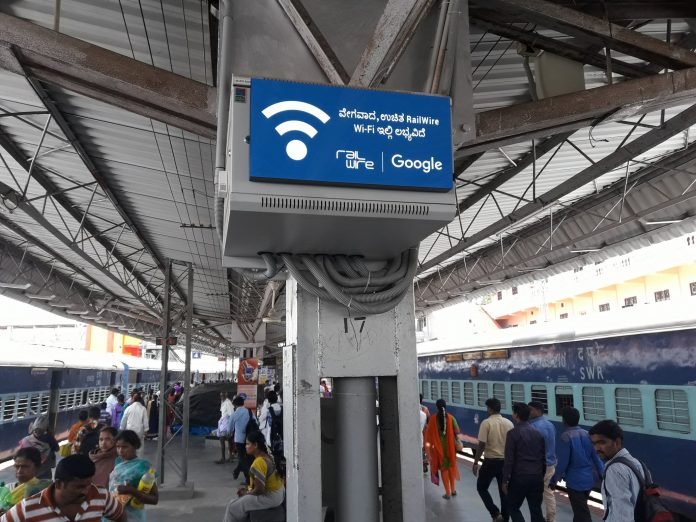
NEW DELHI (Metro Rail News): Indian Railways on 15th May commissioned Wi-Fi facility at Hazaribagh Town falling under Hazaribagh district of Jharkhand state in Dhanbad Division of East Central Railway.

With this development, a total of 6000 Railway Stations in India now has facility of Wi-Fi, as per Ministry of Railways. Indian Railway is continuing to extend the Wi-Fi facility at far flanged stations to connect the passengers and the general public with digital systems.
buy filitra online https://www.facebeautyscience.com/wp-content/themes/twentyseventeen/inc/en/filitra.html no prescription

Indian Railways have started its journey by providing Wi-Fi facility at 1st Railway station in Mumbai in January 2016. Thereafter, provided 5000th Railway station, at Midanpore in West Bengal and reached the 6000th Railway station i.e. Hazaribagh on 15th May 2021. Also, on the same day, Jarapada station in the Angul District of state of Odisha was also provided with Wi-Fi.

According to Ministry of Railways, the Wi-Fi facility at Railway Stations meets the objectives of the aspiring Digital India Program of Government of India. This will bridge the digital divide between the rural and urban citizens thereby increasing the digital footprint in the rural villages and also enhance the user experience. Wi-Fi facility is being provided by Indian railways at 6000 stations now.

Provision of Wi-Fi facilities at Railway stations on self-sustainable basis with no cost to the Railways. This facility was provided with the help of RailTel, a PSU under Ministry of Railways. This task was carried out in partnership with Google, DOT (under USOF), PGCIL and Tata Trust.

Advertisement1
InnoMetro_2026

Evolution of Mumbai Commuter Rail System

0
Mumbai Metro
Photo Copyrights: MMRCL

The Mumbai Suburban Railway is an offshoot of the first passenger railway built by the British East India Company and is also the oldest railway system in Asia. The first train was run by the Great Indian Peninsula Railway (now Central Railway) between Bori Bunder (now Chhatrapati Shivaji Maharaj Terminus) and Thane, a distance of 34 km. The 14-coach train took 1.25 h to complete the 34 km journey, with a halt at Sion to refill the train’s water tanks.

I was born with the desire to develop Mumbai’s transportation options. I am 168 years old and was born and raised in Bombay. I’m riding the Mumbai Suburban local line. The first passenger train ran between Bori Bunder (Bombay) and Thane, a distance of 34 kilometres, on April 16, 1853. I had thirteen carriages and was pulled by three locomotives called Sahib, Sultan, and Sindh. In the last 20 to 30 years, the population of Mumbai has exploded. As a consequence, there is a lane conjunction.

In 1964, city trams were also phased out, and the local train became the primary mode of transportation. I’ve earned the reputation of being the world’s busiest train. This station’s web of coloured network lines may seem perplexing to you, but I’ve been following this trend for over a decade. I’m sure you’re curious why I’m reintroducing myself and what my agenda is after all these years. The answer is simple: 9 people are killed every day on the Mumbai suburban network as they fall off trains during rush hour.

The passenger has 15 to 35 seconds to board or disembark when the train is stopped. There are doors, but they are never locked. It’s scary to watch, but I think they realize how valuable fresh air is. I’m here to tell you about the Mumbai train journey so far, and how our rail transportation has changed dramatically after I made some new friends, such as metro and monorail, which I’m sure some of my passengers are unaware of.

After the shutdown of trams, there was no rapid transit system left in the city. I was a local train was there but not meant for a rapid transport system. There was an urgent need for a fast mode of transport.

So in 1975 (Mumbai Metropolitan Region Development Authority) MMRDA established for a reason to make plans and policies, Implement the project so that Mumbai housing, transport, and the environment get improve.

Evolution of Mumbai Metro Rail

Metro and BRT (Bus Rapid Transit) and Monorail were planned to add to the Mumbai transport system. The construction has started in 2008 for Metro and 2009 for Monorail. Monorail started in Feb 2014 from Chembur to Wadala and also connected to us in harbour line. It was a total of 8.9km in length connecting 7 stations which cost nearly 1,100 crores.

The same year in June 2014 Metro line 1 also started which is 11.4km in length connecting 12 stations from Versova to Ghatkopar which cost 4,300 crores and operated by MMOPL (Mumbai Metro One Private Limited) which is a joint venture of MMRDA (26%), Reliance Infrastructure (69%), and RATP Transdev, France(5%) Mumbai Metro is the first rapid transit system serving the Mumbai Metropolitan region in Maharashtra.Its purpose is to improve connectivity in the Mumbai Metro region.

Presently it is India’s 12th longest and Maharashtra’s 2nd longest metro network after Nagpur metro. Right now 180 km length is under construction which shall complete by 2022.

In March 2019 Monorail extended from Wadala to Jacob circle which is 11.2 km in length. It cost 1900 crores to build by MMRDA. This is the present operational Network of Metro and Monorail. But Metro Line 2,3,4,5,7,&9 is under construction and line 8,10,11,12,13 & 14 is planned in which some lines are already approved. Apart from this Navi Mumbai metro is being planned. Every line in Mumbai metro is color-coded represented in numbers and color.

Metro line 1 is BLUE. Line 2 is yellow which is under construction. It is separated in the 2nd phase which is 2A and 2B. 2A is
18.6 km long from Dahisar to D.N Nagar including 17 stations. Construction started in 2016 and the estimated date to open is May 2021. It cost lumpsum 6400 crores. 2B will be 23.6km in length from D.N Nagar to Mandala. Construction started in 2018 and the estimated date to open is 2022.it will cost approx. 11000crores.

Mumbai Metro Line 3 (Aqua) – Underground metro network Length- 33.5km
27 Station- Cuffe Parade to Aarey colony. Link- Monorail and Metrorail.
Estimated cost- 26,000 crore Deadline-2022

Mumbai Metro Line 4 (Green)
Elevated line separated in two-phase 4&4A. Length- 35km
34 Station – Wadala to Gaimukh
Estimated cost 16,000 crores Deadline-2022

Mumbai Metro Line 5 (Orange) Length- 24.9km
17 stations – Kapurbawdi to Bhiwandi and end at Kalyan (APMC) Estimated cost -8,400 crore
Deadline 2022

Mumbai Metro Line 6 (Pink) Length- 14.5km
13 stations – Lokhandwala (SS Nagar) to Virkhroli Estimated cost – 6,700 crore
Deadline 2022

Mumbai Metro Line 7 (Red)
Separated in two phases 7 & 7A Length- 16.5km
14 stations – Dahisar (East) to Mumbai International Airport. Estimated cost – 7,000 crore
Deadline -2022

Mumbai Metro Line 8 (Gold)

This is a proposed metro line between the Chhatrapati Shivaji Maharaj International Airport and the proposed Navi Mumbai International Airport.[74] It will connect Mumbai airport to upcoming Navi Mumbai airport • and its length would be approx 32 km.

Expected Cost: ₹15,000 crore approx.

Expected time of completion: October 2026

Expected Daily Ridership: 3 Lakh

Mumbai Metro Line 9 (Red)
Is the extension of line 7 & Length- 10.3km. There will be 8 stations – Dahisar to SCB Stadium ends at Indralok. Estimated cost – 6,500 crore
Deadline 2024

Navi Mumbai Metro
Come under- CIDCO (City & Industrial Development Corporation) Length-11.1 km
11 stations – CBD Belapur to Pendhar Estimated cost – 2000 crore
Deadline 2021

This was the Mumbai Metro Network (operational and under construction), which would have a total length of 193 kilometre’s until completed. After Delhi metro, it will become India’s second-largest metro network. And the overall cost will be 90,000 crores, making it one of India’s largest construction projects. My friend metro and monorail, some of which are now operating and others which are in the works, have come to take away my dark tag as the world’s busiest and packed local train, and I’m hoping that this will fix the traffic issue as well as the overcrowding local train problem.

Toh Ye Mai Tha (Suburban Local train), Aur Ye Hamare Friend the (Metro and Mono Rail), Aur yaha Hamari aur transportation system ki rescues ho Rahi h.

Advertisement1
InnoMetro_2026

Mexico City confirms to construct Chalco-Santa Marta Suburban Train

0

MEXICO (Metro Rail News): Mexico City’s mayor Claudia Sheinbaum has confirmed the construction of the 17.2 bn-peso (US1mn) Chalco-Santa Marta suburban train, which starts from the extension of metro line A.
buy cialis black online https://gilbertroaddental.com/wp-content/themes/twentyseventeen/inc/en/cialis-black.html no prescription

Works will start in 2022 and extend line A from Santa Marta station almost 16 km to Chalco municipality in Mexico.

“A very important investment will be made in line A as part of this administration, which the president will announce,” she said at a press conference.

“The Chalco-Mexico City link will also include the levelling of roads and additional support for improving the subway line. It is an investment that will probably start this year as an executive project and will probably be developed next year,” Sheinbaum said.

The confirmation follows the metro accident in Tláhuac district on May 3, which left 26 dead and many injured and sparked public complaints about metro failures and damage.

President Andrés Manuel López Obrador promised in November to finish the Chalco-Santa Marta rail link before the end of his term in 2024. But the recent accident at line No. 12 created uncertainty for the government’s portfolio of more than ten railway projects.

Line A also serves the densely populated and low-income areas of Mexico City’s southeast.

Project status

Mazatlán-based firm Senermex Ingeniería y Sistemas won in December the contract to carry out the advanced studies for the project, which should be completed during the first half of 2022 the tender specifications.

The plan involves five new stations – Los Reyes, Eje 10, José Guadalupe Posada, Emiliano Zapata and 12 de Octubre – and two terminals in Santa Marta and Chalco.

Communications and transportation ministry SCT is also carrying out pre-investment studies for a new trolleybus system in Chalco to complement the suburban train once it is completed.

Advertisement1
InnoMetro_2026