Home Blog Page 432

7 Reasons Why CBTC Systems Need Cybersecurity Solutions

0
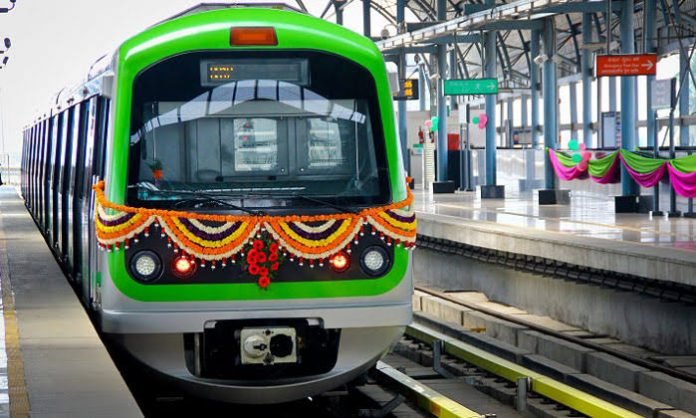
Moving Train
Image for representation purpose only | Image Copyright - Respective Authority

Public transport operators are leveraging more digital technologies to enhance their operational efficiency. Communication-Based Train Control (CBTC) systems are a key element of this strategy, using moving block principles to reduce the headway, enabling a drastic increase in metro network capacity. With fewer field-connected elements and transport flow optimization software, the newer CBTC generations not only increase transport availability and punctuality but reduce maintenance and operational costs. Many of these benefits are achieved through system interoperability and use of IoT technologies. However, this greater efficiency comes at a price. CBTC systems are no longer isolated from the outside world, and their attack surface is widening. Hence, they are becoming a more accessible target for cyber-attacks from external networks and more prone to attacks from within the network, as well as more susceptible to exporting risks to other business systems.

Top Threats to CBTC Systems

The top cybersecurity threats to urban transportation systems using Communication-Based Train Controls (CBTC) systems:

  1. CBTC Train-to-Ground wireless communication is prone to cyber-attacks that can result in train hijacking and serve as an attack vector to the operator’s network.
    • Description: CBTC Train-to-Ground communication is often based on WLAN technology to perform train control. WLAN is exposed to high vulnerabilities in key technologies such as authentication, encryption, and transmission. Furthermore, older CBTC implementations employ old Wi-Fi technologies (802.11X) with very weak cyber protection and may suffer from attacks such as sniffing, rogue AP, man-in-the-middle, Evil Twin Attacks and Denial of Service (DoS).
    • Impact:  A threat actor can exploit weak wireless protocols to hijack trains, potentially transmitting emergency commands or penetrating the operator’s network. An additional challenge is the handling of jamming which can lead to loss of availability by moving to a degraded operational mode. 
  1. CBTCs are insecurely connected to OT and IT networks
    • Description: CBTC systems are increasingly interconnected to systems with different safety levels to unleash the full potential of digitalization. Traffic optimization requiring connections between Traffic Management and Interlocking systems, or real time information display justifying links between the Operational systems and the Passenger Information Systems, are two examples. Often these connections are implemented without proper security measures that are able to inspect the application traffic.
    • Impact: Leaving the CBTC to potential penetration from the lesser critical networks. Such penetration can result in safety and availability affecting impact.
  1. CBTC Systems are hard or impossible to patch due to safety constraints, exposing the network to known vulnerabilities
    • Description: CBTC systems are subject to lengthy and complex safety approval processes. Yet, such systems have off-the-shelf software components and operating systems in wide use. OS and other firmware can be exposed to known vulnerabilities, which are difficult and costly to patch in a safety-critical environment.
    • Impact:  By using vulnerability exploitation, the attacker can gain system privileges, crash systems, and perform remote code execution.
  1. IT Security measures are not capable of “understanding” CBTC traffic, thus they are ineffective in stopping attacks on a CBTC system
    • Description: Most IT cyber solutions can protect against North-South traffic (in and out of a datacenter or internal segments) attacks on exposed IT vulnerabilities. Integrating such conventional peripheral protection within the safety-critical network would add latency without really being able to pick up East-West traffic (traffic between or within segments and components) attack vectors.
    • Impact: Many CBTC systems are only protected against IT exposed vulnerabilities and are de facto completely unsecured for East-West attacks.
  1. CBTC proprietary protocols running on the application layers, can be abused by threat actors to harm the safety of the railway system
    • Description: All CBTC vendors develop their own specific solutions,but they are missing cybersecurity by design.
    • Impact: The most dangerous attacks are semantic-based, as they can change the message content, creating unsafe conditions that can cause accidents.
  1. CBTC often include “hidden” applications for maintenance, built to provide suppliers with real-time enhanced troubleshooting capabilities, but without protecting the network access
    • Description: Many maintenance monitoring systems are added after the installation. To get access to the CBTC network, the maintenance team will create unstandardized interfaces with debug ports, debug messages or “hidden” features that can serve as an attack vector to operational devices. Because some of the maintenance activities are by nature intermittent, they create randomness that is difficult to pick up and may cause false positives.
    • Impact: Through pin sweep attacks, hackers can identify and use these unprotected channels, compromising the railway operational system. Furthermore, genuine maintenance activities to access failure logs may trigger false positives, affecting the system’s availability.
  1. CBTC commands are often unauthenticated nor encrypted, which expose them to spoofing safety affecting attacks.
    • Description: Authentication and encryption is usually not part of the requirements of CBTC’s safety protocols, as traditionally the systems were considered as isolated islands. In addition, sometimes safety constraints related to latency prevented implementing authentication or encryption on the application layers.
    • Impact: Current CBTC technology does not provide end-to-end data encryption. Hence, threat actors can easily spoof operational commands to harm the safety of the network.


Cylus helps metro and tramway operators protect their networks from cyber threats and risks, while ensuring safety and service availability. Cylus helps to detect malicious and abnormal activities that increase the risk to railway-specific, OT and IT assets, with real-time alerts and actionable insights, for better response. Cylus addresses the full spectrum of cybersecurity needs, including support for compliance requirements according to the new railway standard TS-50701 and professional services. Cylus is 100% railway and PTO-focused and its solutions are designed to be operated by security or rail professionals.
Advertisement1
InnoMetro_2026

The Namma Metro project in Bangalore has been approved in two phases by the Centre.

0

The metro project, which is expected to cost Rs 14,788.101 crore, would be finished in five years from the time it was approved.

According to an IE report, the central government authorised the Bangalore Metro Rail Project Phase 2A and Phase 2B on Monday, a 58.19-kilometer line between Central Silk Board Junction and Kempegowda International Airport through Hebbal Junction. The metro project, which is projected to cost Rs 14,788.101 crore, would be finished in five years from the date of approval, according to Union Minister for Chemicals and Fertilisers DV Sadananda Gowda.

The Bengaluru Metro Rail Corporation Limited (BMRCL) said in a statement that the metro project entails efficient and effective integration with existing Bengaluru urban transportation systems. The initiative, according to the Corporation, will simplify the city’s urban transportation system. The order for the authorization of the Bangalore Metro Rail Project Phases 2A and 2B was released today, according to the statement.

According to the newspaper, the Union Cabinet authorised the same two stages of the Bengaluru Metro Rail Project last month. These two metro stages are planned to facilitate travel to the state of Karnataka’s capital’s Information Technology (IT) and Biotechnology (BT) industries. According to a statement from the Union Cabinet, the project will streamline Bengaluru’s urban transportation system, which is currently stressed due to the city’s intensive development, heavy construction, and an increase in the number of private vehicles, putting strain on travel infrastructure as well as industrial activities.

The Namma Metro Phase 2 Southern Extension route from Yelachenahalli to Silk Institute Metro stations was launched earlier this year. According to the Ministry of Housing and Urban Affairs, the Metro expansion is a step toward the Bengaluru Mission 2022 aims of enabling speedier commutes and smart transport alternatives in the city.

Advertisement1
InnoMetro_2026

NHSRCL invites tender for construction of 8.2 km long high-speed double railway line for Mumbai-Ahmedabad HSR

0
Bullet train/ Representational image

MUMBAI (Mumbai): National High-Speed Rail Corporation Limited (NHSRCL) has invited tender from eligible and experienced applicants for the construction of an 8.2 km long double high-speed railway line elevated viaduct involving Vadodara station for the Mumbai-Ahmedabad High-Speed Rail Project.

Important Details

Package No. – MAHSR – C-5

Name of Work – Design and Construction of Civil and Buildings Works including Testing and Commissioning on Design-Build Lump Sum Price Basis for Double Line High-Speed Railway involving Vadodara Station, Confirmation Car Base, Viaducts & Bridges, Crossing Bridges and Associated works between MAHSR Km. 393.700 and MAHSR Km. 401.898 in the State of Gujarat for the Project for Construction of Mumbai-Ahmedabad High-Speed Rail.

Period of Completion of Work 1490 Days

Pre Bid Meeting Date – 09-Jul-2021 11:00 AM

Document Download Start Date – 05-Jun-2021 03:00 PM

Document Download End Date – 04-Oct-2021 03:00 PM

Bid Submission Start Date – 28-Sep-2021 09:00 AM

Bid Submission End Date – 04-Oct-2021 03:00 PM

Bid Opening Date – 05-Oct-2021 03:30 PM

For more information and detailed scope of works, applicants can download tender document from e-procurement portal of NIC – https://etenders.gov.in/eprocure/app 

Mumbai–Ahmedabad High Speed Rail Project is India’s first high-speed rail line connecting Mumbai with Ahmedabad with route length of 508 km. The project is expected to be completed by the end of 2023 but has been delayed due to land acquisition issues particularly in Maharashtra and now expected to become fully operational by 2027 with some portions in Gujarat to become operational by 2023 as 95% land is already acquired in Gujarat for this project in comparison to just 24% in Maharashtra. Civil construction activities have also began in Gujarat.

Once completed, the travel distance time between the two cities will reduced to 2 hrs with trains operating at top speed of 320 km per hour.

Advertisement1
InnoMetro_2026

Central Government approves Bangalore Metro Phase-2A & Phase-2B

0
Bangalore Metro
Image Representation Only

NEW DELHI: The Central Government on Monday has given approval to Phase-2A & 2B of Bangalore Metro Rail Project with total length of 58.19 km. The total cost of the project is expected to be INR 14,788.101 Crores.

Phase-2A comprises construction of 19.75 km long elevated corridor connecting KR Puram to Central Silkboard with 13 stations while Phase-2 comprises construction of 38.44 long corridor connecting K R Puram to the Kempegowda International Airport via Hebbal Junction with 17 stations on the route.

According to Union Minister for Chemicals and Fertilisers DV Sadananda Gowda, the project, estimated to cost Rs 14,788.101 crore, will be completed in five years from the date of sanction.

As per Bengaluru Metro Rail Corporation Limited (BMRCL), “The project involves integration with other urban transport systems in an efficient and effective manner and will streamline the city’s urban transportation system. The Sanction Order of Bangalore Metro Rail Project Phase 2A & 28 has been issued today.”

 A statement from the Union Cabinet said that the project will streamline Bengaluru’s urban transportation system, which is currently stressed due to intensive developments, heavy construction in the city and an increase in the number of private vehicles, putting stress on travel infrastructure as well as industrial activities. Once completed, the metro project will provide reliable, safe, secure, and comfortable public transport to the public.

In April this year, the Union Cabinet gave approval for these same two phases of Bangalore Metro. Both phases are expected to become operational in next 5 years.

The project is vital as it will ease traffic congestion on the roads leading to the airport and will also contribute in reduction of greenhouse gas emissions.

Advertisement1
InnoMetro_2026

Lisha Engineers bags architectural finishing contract for Pink Line Ext under Delhi Metro Phase-4

0
Delhi Metro
Representational image only

NEW DELHI (Metro Rail News): Lisha Engineers emerged as the lowest bidder for Pink Line Extension Corridor (Line-7) from Majlis Park to Maujpur (12.55 km) under Phase-4 for the contract related to architectural finishing work including design and construction of external facade and other works at 08 eight stations of this corridor.

Delhi Metro Rail Corporation (DMRC) invites bids for this work in January this year with an estimated cost of INR 86.23 Crores and completion period of 24 months. In February, technical bids revealed names of eleven bidders and based on evaluation, three bidders were qualified for financial bidding in which Lisha Engineers quoted the lowest bid value amounting to INR 78.65 Crores. Bid value quoted by other two bidders is –

  • Pioneer Fabricators (KMU-PFPL-GH JV) – INR 86.30 Crores
  • URC Construction – INR 93.92 Crores

Contract No. – DC-11

Brief Scope of Work – Architectural Finishing Works Including Design, Fabrication, Supply, Erection & Roof sheeting of Pre-Engineered Building (PEB) Structures and Design & Construction of External facade, Water Supply, Sanitary Installation, Drainage, Site development works at Eight (08) Elevated stations namely Yamuna Vihar, Bhajanpura, Khajuri Khas, Sonia Vihar, Soorghat, Jagatpur Village, Jharoda Majraa and Burari of Maujpur-Majlis Park –Corridor (line-7 Extension) of Delhi MRTS Phase-IV Project.

As the bid value of Lisha Engineers is well below DMRC estimated cost for this contract, it is likely that they will be awarded this contract in coming weeks.

DMRC has set a deadline of December 2022 for the operation of this 12.55 km long line from Majlis Park to Maujpur line which will have eight elevated stations.

Advertisement1
InnoMetro_2026

Mumbai Monorail has 3 bidders in race to supply 10 new Rakes with lowest bidder quoted INR 606 Crores

0
Mumbai Monorail
Mumbai Monorail COO Sacked Over Charges of Bribery and Corruption by MMRDA (Representational Image)

MUMBAI (Metro Rail News): Mumbai Metropolitan Region Development Authority (MMRDA) has three domestic rolling stock manufactures in race to design, manufacture and supply 10 new Monorail Rakes of four cars each for the Mumbai Monorail Project.

These three bidders are Bharat Heavy Electricals Limited (BHEL), Medha Servo Drives Private Limited – SMH (Malaysia) JV and Titagarh Wagons Limited. Earlier, MMRDA in August 2020, re-invited tender for the third time for this contract with an estimated cost of INR 546 crores and a completion period of 130 weeks. As per tender, there is a requirement of sourcing 50% local content in manufacturing these new trains which promotes Make in India policy of Union Government.

Technical bids were opened in March this year which revealed names of above given bidders. The latest update as per sources is that the MMRDA has opened the financial bids for this contract and the lowest bidder has quoted bid value of around INR 606 Crores. However, the name of the lowest bidder including bid values by other firms in still not known.

Contract No. –  MONORS3

Name of Work – Design, Manufacture, Supply, Testing And Commissioning Of 10 Nos. Of Monorail Train Sets Of 4 Cars Each And Training Of Personnel For Mumbai Monorail Project.

This contract aims to promote Make in India initiative of the Central Government as trains sets are to be manufactured in India with 50% local content rather than being imported. This new train sets will operate on the 20.21 km long operational monorail system from Chembur in Eastern Mumbai to Jacob Circle in South Mumbai.

These train sets will be equipped with a self-propelled system with first train is expected to be delivered in 14 months and all trains sets to be delivered by 2023-24.

Advertisement1
InnoMetro_2026

Mumbai Metro Line-3 cost escalated by Rs. 10,000 Cr in 5 years

0
Mumbai Metro Line 3
Mumbai Metro Line 3

MUMBAI (Metro Rail News): The cost of Colaba-Bandra-Seepz Line (Line-3) of Mumbai Metro has escalated by over INR 10,000 Crores to INR 33,406 Crores in 2021 from its original estimate of INR 23,136 Crores in 2016.

The cost escalation for the 33.5 km long underground metro corridor is mainly attributed to construction of the tunnel, stations and car depot. It was earlier estimated at INR 10,708 Crores, but the now the cost is escalated to INR 18,711 Crores. The land acquisition cost has also increased drastically for this corridor to INR 1,483 Crores which was earlier fixed at INR 590 Crores.

Other reasons include the difference Mumbai and Delhi’s terrain. According to an official, “The original project cost was based on the terrain of the Delhi metro. It was later found that Mumbai has a different terrain.”

As per the economic survey of Maharashtra of March this year, till October 2020, the state has spent 70% (INR 15,910 Crores) of the total expenditure of the nine projects of Mumbai Metropolitan Region (MMR) on Mumbai Metro Line-3.

The escalation proposal which was sent in February this year by Mumbai Metro Rail Corporation (MMRC) to the state finance department has been put on hold due to the uncertainty this metro line faces after the Bombay High Court, in December last year, stayed the decision to hand over the Kanjurmarg land for the car shed. “Since then, there has been virtually no initiative on the part of state agencies to vacate the stay,” a source said.
As per a government official, “There is a perception that no further cost should be approved till the controversy over the location of the car shed is resolved.
buy prednisone generic rxxbuynoprescriptiononline.net/prednisone.html over the counter

According to reports, the Japan International Cooperation Agency (JICA) which is funding almost 60% of the total project cost, has not released funds for this metro line for the past year. “It is not JICA’s fault. The agency is waiting for the cost escalation approvals by the state and Centre,” an official said.

In February, MMRDA also filed an application seeking that the stay order be vacated as a “public project was being gravely affected.”

“After filing the application, the MMRDA has done little to push the case in the court for an early hearing,” an official said.
According to a nine member government panel headed by the then chief secretary Sanjay Kumar, an integrated metro depot at Kanjurmarg will result saving in land and construction cost amounting to INR 1580 Crores and metro car shed at Kanjurmarg can accommodate 55 rakes in comparsion to only 30 rakes at Aarey.

As per panel report the 41 hectare plot at Kanjurmarg is big enough to be an integrated depot for Mumbai Metro Line-3, 4 and 6. Hope the issue get resolved at the earliest so that construction of depot finally kicks off which is imperative for Line-3 before its operation starts.

Advertisement1
InnoMetro_2026

Thales appoints Ashish Saraf as Vice-President and Country Director for India

0
Mr. Ashish Saraf Vice-President and Country Director, Thales India

New Delhi (India): French defence and aerospace group Thales on Monday announced the appointment of Ashish Saraf as Vice-President and Country Director for India with effect from June 1, 2021.

In this role, Ashish will lead the company’s India business and will be responsible for the strategic growth of Thales in the country across all of its markets, further strengthening local teams, collaborations and innovation. He succeeds Emmanuel de Roquefeuil who takes up a new role as the VP and head for Thales in the Middle East.

Prior to joining Thales, Ashish served as the President and Head of Region for Airbus Helicopters – India and South Asia where he led Airbus’ Helicopters’ Sales, Services, Training, Innovation, Industrial Partnerships and Government Relations functions across the Civil, Parapublic and Military markets in the region.

Mr. Ashish has also served as the Vice-President and Make in India Officer for Airbus, has headed the Tata–Sikorsky joint venture in Hyderabad and also worked with Deloitte Consulting and Dassault Systemes, mainly in the United States and Europe.

“I am pleased to welcome on board Ashish Saraf to the Thales Group, who joins us in extremely challenging COVID situation. Under his leadership, Thales will continue its decades-long partnership with our Indian stakeholders to support the country in this time of need, and once the pandemic behind us, contribute to India’s longer-term vision of building an ‘Atmanirbhar Bharat.”  Pascale Sourisse, Senior Executive Vice-President, Thales.

“I thank Pascale for her confidence and I am very pleased to join Thales where I will apply all my experience and energy to serve our activities and staff in India. I would like to express our solidarity as the country bravely battles the ongoing coronavirus pandemic.  We stand united with our employees, their families, our customers and the people at large, and look forward to overcoming this pandemic together. Ashish Saraf, VP and Country Director, Thales in India.

He holds degrees in Management and Engineering from University of London, Cornell University, Symbiosis Institute and NIT India. Additionally, he has also served as a Board of Director and Member of the Governing Council for Aviation and Aerospace Sector Skill Council (AASSC), a Governmental body dedicated to developing nationwide skills in the Aerospace domain in India.

Advertisement1
InnoMetro_2026

Noida Metro services to resume from June 9, 2021

0
Metro Services to Resume across the country

NOIDA (Metro Rail News): Due to partial COVID curfew, metro services on NMRC network were suspended with effect from 01-05-2021. As the curfew has been relaxed in Gautam Buddh Nagar, NMRC train services will start operating from June 9, 2021. Keeping in view the night curfew and also to discourage people to move out due to corona pandemic, trains will be operated from 07 AM to 08 PM on weekdays only i.e. Monday to Friday. As weekend curfew is still in vogue, train services will not be operated on weekends i.e. Saturday and Sunday. Following the schedule of train operation will be followed: –

Train frequency before partial curfewTrain frequency w.e.f. 09-06-2021
WeekdaysPeak hoursOff peak hoursPeak hoursOff peak hours
(Mon-Fri)7min 30sec 10 min15 min30 min
TimingsFrom 6 AM to 10 PM From 7 AM to 8 PM 
Noida Metro will start Train Services from 09-06-2021

Note:

  1. Peak hours of NMRC train services – from 8AM to 11AM and 5AM to 8PM
  2. No train services to be operated on partial curfew days i.e. Saturday, Sunday and any other nominated days.

NMRC is taking all necessary measures to ensure a safe journey for Aqua Line commuters. Following special measures are being adopted to prevent spread of corona virus –

  1. The NMRC trains are sanitized after each trip.
  2. The stations, platform and other “contact areas” like Call buttons of lifts, AFC gates, Handle belts of Escalators & Staircases, POS machines etc. are sanitized at regular intervals
  3. Passenger screening team will be deployed at each station to check masks, temperature and hand sanitization of commuters.
  4. Social distancing norms will strictly be followed in NMRC premisis and inside trains as well.  
  5. Only one Entry / Exit gate will be opened at the following stations: Sector – 101, Sector- 81, Sector -137, Sector-142, Sector-143, Sector – 144, Sector – 145, Sector – 146, Sector – 147, Sector -148, Alpha -1, Delta – 1 and GNIDA Office.
  6. The stations where both Entry / Exit gsates will be kept open are: Sector – 51, Sector –50, Sector –76, NSEZ, Sector-83, KP-II, Pari chowk, Depot Station.
  7. The Parking facility will only be available at the Sector – 51 station.
Advertisement1
InnoMetro_2026

Two trains crash in Pakistan, killed 30 and 50 injured

0

KARACHI, PAKISTAN (Metro Rail News): According to authorities, two trains crashed in Pakistan’s southern Sindh Province on Monday, killing at least 30 people and wounding 50 more.

According to Dawn news, the Sir Syed Express, which was travelling from Lahore to Karachi, collided with the Millat Express after it derailed on its route to Sargodha from Karachi.

According to the report, the severe disaster occurred at Dharki, a city in the Ghotki region of upper Sindh, when the bogies of the Millat Express train toppled.

Hospitals in Ghotki, Dharki, Obaro, and Mirpur Mathelo have declared an emergency.

According to Ghotki Deputy Commissioner Usman Abdullah, at least 30 persons were murdered and 50 were injured in the event.

Officials were also having problems retrieving persons who had become trapped within the crowded bogies.

Awaiting for more details.

Updated news

Several passengers were stuck in the crumpled debris caused by the crash at Daharki, in a remote section of rural Sindh province, for hours before rescue teams with specialized equipment could reach them.

According to police, at least 43 people were murdered and many were injured when a crowded Pakistani intercity train collided with another express that had crashed just minutes before.

Several passengers were stuck in the crumpled debris caused by the crash at Daharki, in a remote section of rural Sindh province, for hours before rescue teams with specialised equipment could reach them.

Huge crowds gathered from adjacent villages surrounding the wreckage of the upturned Pakistan Railways trains, with twisted and torn metal and heaps of baggage spilled over the ground.

The double collision occurred approximately 3.30 a.m. (2230 GMT), when the majority of the 1,200 people on the two trains would have been sleeping.

“We collided, but it wasn’t too fatal,” Akhtar Rajput, a passenger aboard the wrecked train, told AFP.

“Then another train came out of nowhere and slammed us much worse. When I recovered consciousness, I noticed folks laying about me, some of whom were attempting to exit the vehicle.”

“When the other train hit, I was dazed and trying to figure out what happened to us,” Shahid, another passenger, told AFP.

The Millat Express was travelling from Karachi to Lala Musa when it derailed, leaving its carriages scattered over the rails as the Sir Syed Express from Rawalpindi arrived minutes later, slamming into it.

According to authorities, the majority of the dead were recovered from the wrecked train.

According to Umar Tufail, a senior Daharki police official, 43 people were murdered and many were injured.

According to a representative for Pakistan Railways, the death toll is 33, although communication with the disaster scene was difficult due to its remote location.

To acquire a phone connection, one rescue worker said he had to stand on top of his car.

Farmers and peasants from the surrounding area were among the first to help passengers in attempting to extract survivors from the crumpled carriages by reaching through smashed windows and roof hatches.
buy amoxil online https://www.parkviewortho.com/wp-content/languages/new/prescription/amoxil.html no prescription

  • Communication Problem

The collision took place on a high part of road surrounded by beautiful countryside.

The track where the disaster happened, according to Interior Minister Sheikh Rashid, a former railroads minister, was erected in the 1880s and is “a shambles.”

Azam Swati, the current minister, called the section of railway as “very unsafe,” but claimed officials had been waiting for financing from the multibillion-dollar Economic Corridor project to improve the network.

“If there is a financial delay,” he stated, “we will reconstruct this track with our own money.”

Pakistan’s army and paramilitary rangers from adjacent bases were on hand to assist.

The disaster “shocked” Prime Minister Imran Khan, who vowed a complete investigation.

Communication issues, according to Gul Mohammad, who works for the Edhi Foundation ambulance service, are preventing the rescue attempts from being coordinated.

“I’m talking to you from the rooftop of my ambulance, where I’m getting a stronger connection,” he told AFP.

Train accidents are widespread in Pakistan, where the railway network has suffered for decades as a result of corruption, incompetence, and a lack of investment.

Advertisement1
InnoMetro_2026