Home Blog Page 414

Chennai Metro invites EOI to provide 42 trains on lease for Phase-2

0
Chennai Metro
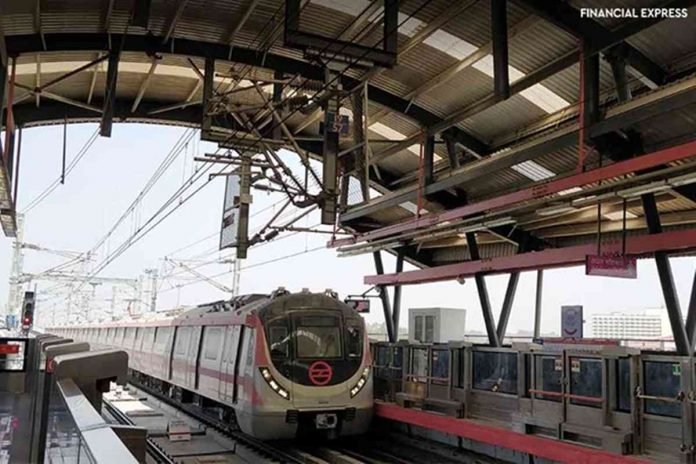
Representational image only

CHENNAI (Metro Rail News) : Chennai Metro Rail Limited (CMRL) invites Expression of Interest (EOI) for providing Rolling Stock of 42 trainsets of 3 cars each on lease basis for Phase-2 of Chennai Metro Rail Project and maintaining these cars during their life cycle against payment of lease/rental charges by CMRL on the basis of hourly running of trainsets for passenger operation.

Important Details

EOI Number – CMRL/PHASE-II/SYS/ARE04/EOI/2021

Name of Work – Expression of Interest for Providing Rolling Stock on Lease basis (42 Trains of 3-car configuration) for CMRL Phase-2 network.

Completion period of the Work – 39 Years (including 4 years for initial supply & commissioning of trainsets and balance 35 years for life cycle of Rolling Stock).

Pre Bid Meeting Date – 19-Aug-2021 11:00 AM

Document Download / Sale Start Date – 06-Aug-2021 11:00 AM

Document Download / Sale End Date – 21-Sep-2021 01:00 PM

Bid Submission Start Date – 13-Sep-2021 11:00 AM

Bid Submission End Date – 21-Sep-2021 01:00 PM

Bid Opening Date – 22-Sep-2021 03:00 PM

CMRL will operate 112 driverless metro trains on 3 lines totaling 118.9 km under Phase-2 which is expected to be completed by 2026. Recently, CMRL also floated tenders to procure 70 driverless trainsets of three coaches each for Phase-2 of Chennai Metro.

These three lines are – Line-3 from Madhavaram to Siruseri (45.81 km with 48 stations),Line-4 from Light House to Poonamallee (26.1 km, 28 stations) and Line-5 fromMadhavaram to Sholinganallur (47 km, 46 stations).

If

Advertisement1
InnoMetro_2026

Agra Metro invites tender worth Rs. 2200 Cr for underground section including 7 stations

6
Representational image only

AGRA (Metro Rail News): In big news for Agra Metro Rail Project, the Uttar Pradesh Metro Rail Corporation (UPMRC) has invited tenders for the construction of underground section of Line-1 from start of underground ramp near Fatehabad Road Metro station to end of ramp after RBS college Metro station for the Agra Metro.

The work also includes construction of seven underground stations namely – Taj Mahal, Agra Fort, Jama Masjid, S.N. Medical college, Agra college, Raja ki Mandi and RBS college along with architectural finishing, E&M and other works. The value of tender is INR 2200 Crores.

Important Details

Tender Reference Number: AGCC-02

Name of Work: Design and Construction of Tunnel from start of underground ramp (near Fatehabad Road Metro station) to end of ramp after RBS college Metro station including seven underground metro stations (viz. Taj Mahal, Agra Fort, Jama Masjid, S.N. Medical college, Agra college, Raja ki Mandi and RBS college) including Architectural finishes, E&M, TVS, ECS etc. on Corridor-1 of Agra MRTS Project at Agra, Uttar Pradesh, India.

Approximate cost of work: INR 2200 Crores

Completion period of the Work: 48 months

Pre Bid Meeting Date: 10-Sep-2021

Document Download / Sale Start Date: 05-Aug-2021

Document Download / Sale End Date: 12-Oct-2021

Bid Submission Start Date: 05-Oct-2021

Bid Submission End Date: 12-Oct-2021

Bid Opening Date: 13-Oct-2021

Recently, European Investment Bank (EIB) has given its approval to sanction loan for the Agra Metro which has enable UPMRC to float this tender for underground section including construction of seven underground stations for Line-1 of Agra Metro.

Line-1 (14.24 km) of Agra Metro is partly elevated (6.56 km) and partly underground (7.68 km) with 14 stations. These stations are Sikandra, Guru Ka Taal, ISBT, Shastri Nagar, RBS College, Raja Ki Mandi, Agra University, Medical College, Jama Masjid, Agra Fort, Taj Mahal, Fatehabad Road, Basai & Taj East Gate.

Once this tender is awarded, it will enable UPMRC to complete the underground section of Priority Corridor which comprises construction of 6 km long section from Taj East Gate to Jama Masjid with six stations.

Contract is already awarded to Sam India Built Well Pvt. Ltd. for the elevated portion of length 3 km with 3 stations namely – Fatehabad Road, Basai & Taj East Gate. Now this tender includes the construction of remaining underground section of Priority Corridor from Jama Masjid to Taj Mahal with 3 underground stations.

Advertisement1
InnoMetro_2026

Mumbai Metro Line-3 achieves 40th breakthrough at Mahalaxmi Station

0
Mumbai Metro Line-3 achieves 40th breakthrough at Mahalaxmi Station
Mumbai Metro Line-3 achieves 40th breakthrough at Mahalaxmi Station | Photocopy Right - Respective Authority

MUMBAI (Metro Rail News): Mumbai Metro Rail Corporation (MMRC) has now achieved the 40th breakthrough at Mahalaxmi Metro Station out of the total 42 breakthroughs planned for the 33.5 km long Colaba-Bandra-Seepz underground line (Line-3) of Mumbai Metro.

The Robbins Company made TBM (Tunnel Boring Machine), named Tansa-1, operated by Doğuş and Soma JV has completed a downline drive of 1135.5 meters from Science Museum Metro Station to Mahalaxmi Metro Station. TBM Tansa-1 took 325 days using 757 concrete rings to finish the breakthrough.

Package-3 (Mumbai Central–Worli) includes five stations namely – Mumbai Central, Mahalaxmi, Science Museum, Acharya Atre Chowk and Worli Metro stations. It is the longest stretch of the corridor and has now witnessed total four breakthroughs out of six breakthroughs planned under this package. The four breakthroughs which are completed are – (Science Museum to Worli – upline-2072m and downline-2057m) and (Science Museum to Mahalaxmi – upline-1117.5m and downline-1135.5m).

Two more breakthroughs are remaining, both under Package-3, finishing of these breakthroughs will mark the completion of the tunnelling work on this 33.5 km long fully underground line with 27 stations on the route.

“We have now completed twin tunnels beneath the western railway track between Mahalaxmi and Lower Parel Station.
buy clomiphene online https://gilbertroaddental.com/wp-content/themes/twentyseventeen/inc/en/clomiphene.html no prescription
Also, the tunnels are in close proximity of 17m deep MCGM underground sewer pumping station at Jacob Circle. I must say, our team has accomplished this daunting task skilfully”, said Mr. Ranjit Singh Deol, Managing Director, MMRC.

With this breakthrough, the overall tunnelling completed on the project is 53 km out of the total 54.50 km double line which is approximately 97% of the total project.

As mentioned earlier, Mumbai Metro Line-3 (Colaba-Bandra-SEEPZ) is a 33.5 km long fully underground line with 27 stations that would connect 06 business districts, 30 educational institutes, 30 recreational facilities and domestic as well as international airport terminals. It will have a total of five interchange points for the suburban railway and one each for Monorail and ‘Versova-Andheri-Ghatkopar’ Line-1.

MMRC, a joint venture of the Govt. of India and the Government of Maharashtra, is the nodal agency responsible for the implementation of Mumbai Metro Line-3 project.

Advertisement1
InnoMetro_2026

Union minister MoHUA, Hardeep Singh Puri and CM Arvind Kejriwal inaugurates Trilokpuri section of Delhi Metro’s Pink Line

0
Union minister MoHUA, Hardeep Singh Puri and CM Arvind Kejriwal inaugurates Trilokpuri section of Delhi Metro's Pink Line (image: twitter)

DELHI (Metro Rail News): The Pink Line’s Trilokpuri Sanjay Lake – Mayur Vihar Pocket 1 has been inaugurated at 10:25 a.m. on August 6th in the virtual presence of Hardeep Singh Puri, Union Minister for Housing and Urban Affairs, and Arvind Kejriwal, Chief Minister of Delhi.

The DMRC stated on Twitter that the Trilokpuri Sanjay Lake – Mayur Vihar Pocket 1 segment of the Pink Line would open for passenger service at 3 p.m. on August 6, 2021. The Pink Railway would save passengers time and money because the Trilokpuri gap on the line has been closed after much delay. The Pink Line, which runs from Majlis Park to Shiv Vihar, has 38 stops.

For the first time, the 289-meter Trilokpuri segment between Mayur Vihar Pocket 1 and Trilokpuri Sanjay Lake stations will connect the whole 59-kilometer Pink Line. It would also link key city landmarks like the Anand Vihar Railway station, Anand Vihar ISBT, Nizamuddin Railway station, South Extension markets, INA, and Lajpat Nagar.

The line’s gap was supposed to be filled by September 2020, but it was postponed owing to the COVID-19 pandemic’s ramifications, sources stated in early October.

This segment will connect the two ends of the Pink Line and provide seamless access to a wide range of locations in the National Capital Region once it is operational on August 6. There will be a 20-minute reduction in travel time from HUDA City Centre (Gurgaon) to Trilokpuri-Sanjay Lake or vice versa, officials said, because, after the opening of this section, there will be only one interchange station, namely Delhi Haat-INA, rather than the two interchange stations that exist now.

Travelling from Raja Nahar Singh-Ballabhgarh (Faridabad) to Trilokpuri-Sanjay Lake or vice versa will take 25 minutes shorter once this stretch is completed, since there will be just one interchange station, Lajpat Nagar, instead of the two that exist now.

Commuters travelling from NOIDA City Center or Botanical Garden to Trilokpuri-Sanjay Lake or vice versa will save 20 minutes once this stretch is completed, as there will be just one interchange stop, Mayur Vihar Pocket-1, instead of the two currently available. On the Delhi Haat-INA to Trilokpuri-Sanjay Lake or Lajpat Nagar to Trilokpuri-Sanjay Lake routes, travel time would be reduced by around 20 minutes in both directions.              

“In Phase-IV, the line will be expanded from Majlis Park to Maujpur, making it India’s longest single metro corridor at about 70 kilometres. The Pink Line will also become the country’s first Ring Corridor when Phase-IV is completed.

However, due to difficulties with an approach road to the station, the launch of the Najafgarh-Dhansa Bus Stand extension of the Delhi Metro’s Grey Line has been postponed for nearly two weeks, authorities said on Wednesday.

Advertisement1
InnoMetro_2026

Titagarh Wagons subsidiary rolls out the first train for Pune Metro

0
Joint Venture of Tata-Siemens will develop the metro corridor for Pune Metro
Image Source: Twitter

KOLKATA (Metro Rail News): Titagarh Wagons Ltd. wholly-owned Italian subsidiary Titagarh Firema SpA rolls out the first train for the Pune Metro Rail Project.

The first prototype of it was rolled out at a virtual ceremony in presence of Ambassador of India to Italy, Neena Malhotra, Ambassador of Italy to India, Vincenzo de Luca, Maharashtra Metro Cooperation Managing Director Brijesh Dixit and others, the company said. 

“Happy to learn that first train sets manufactured for Pune Project of MahaMetro by Titagarh Firema SpA Plant in Italy were flagged off for shipment today. They are scheduled to arrive Pune in September 2021,” as tweeted by Durga Shankar Mishra, secretary to the Ministry of Housing and Urban Affairs.

In September 2019, Titagarh Firema SpA won the contract of worth INR 1125 Crores to design, manufacture and supply 33 trains of 3 coaches each for the Pune Metro Rail Project. The ultra-modern Aluminium coaches will be manufactured for the first time in India.

As per contract, the first 3 trains are to be manufactured in Titagarh’s plant in Caserta, Italy while the remaining 31 trains will be manufactured in Titagarh’s plant in India.

These ultra-modern metro coaches combine the highest safety standards with modern Italian styling and are not only light weight, resulting in low carbon emission and fuel efficiency but also offer the most modern safety and convenience features in the trains.

Advertisement1
InnoMetro_2026

Delhi Metro’s Pink Line to be the longest corridor after Trilokpuri zone opens

0
Delhi Metro's Pink Line to be the longest corridor after Trilokpuri zone opens

Delhi (Metro Rail News): For the first time, the 289-meter Trilokpuri stretch between Mayur Vihar Pocket 1 and Trilokpuri Sanjay Lake stations will connect the whole 59-kilometer Pink Line.

From Friday, the Delhi Metro’s Pink Line will become the system’s longest operating corridor, saving commuters time and money after the line’s Trilokpuri gap was closed after much delay.

However, for a long time, a small section in east Delhi’s Trilokpuri region had been a bottleneck for the Delhi Metro Rail Corporation (DMRC), resulting in the line remaining disconnected for a short distance.

On August 6, the 289-meter Trilokpuri stretch between Mayur Vihar Pocket 1 and Trilokpuri Sanjay Lake stations will open, connecting the complete 59-kilometer Pink Line for the first time.

Officials said it will also connect significant city landmarks including the Anand Vihar Railway station, Anand Vihar ISBT, Nizamuddin Railway station, marketplaces in South Extension, INA, and Lajpat Nagar.

The much-anticipated completion of the Pink Line would also help residents and visitors to east Delhi, as the line was previously operated in two segments due to a gap at Trilokpuri.

The line’s gap was supposed to be filled by September 2020, but it was delayed due to the COVID-19 pandemic’s ramifications, sources claimed in early October.

Pink Line opened in segments during 2018. All of the line’s stations have also been opened. Due to a variety of challenges, including property acquisition, a piece of the metro segment was left unfilled for a few kilometres, rendering the Trilokpuri Sanjay Lake station a terminus.

This section will connect the two ends of the Pink Line and provide seamless access to a wide range of locations in the National Capital Region once it is operational on August 6.

DMRC officials stated on Wednesday that commuters will save time and money as a result of the seamless connectivity.

There will be a 20-minute reduction in travel time from HUDA City Centre (Gurgaon) to Trilokpuri-Sanjay Lake or vice versa, officials said, because, after the opening of this section, there will be only one interchange station, namely Delhi Haat-INA, rather than the two interchange stations that exist now.

Travelling from Raja Nahar Singh-Ballabhgarh (Faridabad) to Trilokpuri-Sanjay Lake or vice versa will take 25 minutes less once this stretch is completed, as there will be only one interchange station, Lajpat Nagar, instead of the two that exist now.

Commuters travelling from NOIDA City Center or Botanical Garden to Trilokpuri-Sanjay Lake or vice versa will save 20 minutes once this stretch is completed, as there will be only one interchange station, Mayur Vihar Pocket-1, instead of the two currently available.

On the Delhi Haat-INA to Trilokpuri-Sanjay Lake or Lajpat Nagar to Trilokpuri-Sanjay Lake routes, travel time will be reduced by roughly 20 minutes each way.

The full connection of the Pink Line will also save money for riders, as prices for the Trilokpuri to Mayur Vihar Pocket-1 segment and vice versa would be reduced by 30 percent, according to officials.

“A fare reduction of 20 percent will be implemented in 38 sections (to and fro) and important key locations such as Lajpat Nagar, Noida City Centre, Botanical Garden, and Mohan Estate to Trilokpuri or vice versa; a fare reduction of 10 percent will be implemented in 524 sections (to and fro),” according to the DMRC.

The Pink Line currently has 43 trains, including standby trains, operating on two different sections: Majlis Park to Mayur Vihar Pocket-1 has 30 trains, including standby trains, and Trilokpuri to Maujpur/Shiv Vihar has 13 trains, including standby trains, according to officials.

The same set of trains will be used after the missing link is installed. A comprehensive operating strategy, however, is still being drawn out, according to a senior official.

According to him, the Pink Line will now be connected end-to-end, making it the network’s longest operational line.

In Phase-IV, the route will be expanded from Majlis Park to Maujpur, making it India’s longest single metro corridor at roughly 70 kilometres. The Pink Line will also become the country’s sole Ring Corridor of Metro if Phase-IV is completed.

Advertisement1
InnoMetro_2026

KEC emerged lowest bidder for Electrification Contract of Patna Metro

0
Electrification system in Metro Railways

PATNA (Metro Rail News): Delhi Metro Rail Corporation (DMRC) recently opened financial bids for the supply of Receiving cum Traction (RSS + TSS) and Auxiliary Main Substation (ASS) including High Voltage Cabling from Grid Substation for Patna Metro Rail Project and KEC International Limited emerged as the lowest bidder for this contract.

This contract is the first electrification contract under Phase-1 of Patna Metro which will consist of two corridors (East-West Line & North-South Line) having a total length of 30.91 km with 24 stations. The first corridor (East-West Line) will have a length of 16.86 km from Danapur Cantonment to Khemni Chak while the second corridor (North-South Line) will have a length of 14.05 km from Patna Junction Railway Station to New ISBT.

DMRC invited tender for this work in September last year with an estimated cost of INR 116.74 Crores and a completion period of 36 months. Technical bids for this work were opened in November which revealed name of six bidders. Later, three bidders were disqualified based on technical evaluation and the financial bid values of the remaining technically qualified bidders are given below – 

  • KEC International Limited – INR 82.34 Crores
  • Siemens Ltd – INR 94.99 Crores
  • Kanti Prashad Mittal – INR 95.31 Crores

Contract: PE-01

Name of Work: Design, Supply, Installation, Testing and Commissioning of Receiving cum Traction (RSS + TSS) and Auxiliary Main Substation (ASS) including High Voltage Cabling from Grid Substation for Patna Metro Rail Project.

As the bid value of KEC International is well below the estimated cost of DMRC, it is highly likely that the contract will be awarded to the KEC International in the coming weeks.

Advertisement1
InnoMetro_2026

Trial run commenced up to Sealdah for East-West Line of Kolkata Metro

0
Kolkata East-West Metro Trial Run
Trial run commenced up to Sealdah for East-West Line of Kolkata Metro

KOLKATA (Metro Rail News): First trial run successfully completed from Phoolbagan to Sealdah for the East-West Corridor of Kolkata Metro. Integrated trial run of systems is imperative and is a prerequisite for getting mandatory clearance from Independent Safety Assessor (ISA) to start operation service for the commuters.

Metro Railway plans to extend East-West Metro services up to Sealdah by partially operating Sealdah station (East Bound line only). This section will add another 2.33 Km and one station (Sealdah) in 6.97 Kms already being operated in the East-West Metro corridor from Salt Lake Sector-V to Phoolbagan, as per Metro Railway, Kolkata.
buy strattera online https://calibudsman.com/wp-content/themes/twentytwentytwo/inc/patterns/en/strattera.html no prescription

“This is just the start of the trial runs and it takes about three months to do the certified trials,” said Manoj Joshi, General Manager, Metro Railway, who witnessed the commencement of the trial along with Manas Sarkar, Managing Director and other senior officers of Metro Railway and Directors of Kolkata Metro Railway Corporation Ltd (KMRCL).

Like earlier sections, this trial will check all systems before starting the revenue service. Once the trial is concluded and certification from ISA is received, Metro Railway will take further action for commencement of services up to Sealdah.

After reaching Sealdah, Manoj Joshi inspected the platforms, concourse, entry and exit gates, circulating area, lifts, escalators and other passenger amenities which will be provided at this station. Once opened, the Sealdah metro station is expected to cater to 45 thousand commuters every one hour. 

The 16.6 km long East-West Metro Corridor will connect Salt Lake Sector V with Howrah Maidan and is expected to become fully operational by mid-2022.

Advertisement1
InnoMetro_2026

Metro rail/Regional Rapid Transit System operational/under implementation in 13 States

0
Metro rail/Regional Rapid Transit System operational/under implementation in 13 States

DELHI (Metro Rail News): Urban transport, which is an integral part of urban development, is a state subject. Hence, respective State Governments are responsible for initiating, developing and funding urban transport infrastructure including metro rail projects.
buy stendra online https://myhst.com/wp-content/themes/twentytwentytwo/inc/patterns/en/stendra.html no prescription
Central Government considers financial assistance for metro rail proposals in cities or urban agglomerates, on the basis of extant policy, the feasibility of the proposal and availability of resources, as and when posed by the concerned State Governments. At present, metro rail/Regional Rapid Transit System (RRTS) are operational/under implementation in National Capital Territory (NCT) of Delhi, Uttar Pradesh, Haryana, West Bengal, Karnataka, Telangana, Tamil Nadu, Rajasthan, Kerala, Maharashtra, Gujarat, Madhya Pradesh and Bihar.

The government of Andhra Pradesh (GoAP)  was requested in 2017 to revise the proposals for implementation of Metro Rail Projects in Vijayawada and Vishakhapatnam in line with the provisions of Metro Rail Policy-2017.  GoAP has not yet submitted a revised proposal in this regard.

GoAP had also submitted a proposal for external financial assistance from Korean EXIM Bank for a Light Metro Rail Project in Visakhapatnam on Public-Private Partnership (PPP) mode.  The Korean side, after examining the proposal conveyed their inability to finance the Project. GoAP was, therefore, advised that the project proposal may be posed by them to some other bilateral/multilateral agencies for loan assistance through the web portal of the Department of Economic Affairs as per the extant guidelines. No fresh proposal for external assistance for Light Metro Rail Project in Visakhapatnam has been received from GoAP in this regard.

This information was given by the Minister of State in the Ministry of Housing and Urban Affairs, Shri Kaushal Kishore, in a written reply in the Rajya Sabha today.

Advertisement1
InnoMetro_2026

Delhi Metro’s Grey Line extension Flag Off postponed.

0
Delhi Metro
Representational Image

DELHI (Metro Rail News): Due to difficulties with an approach road to the station, the launch of the Najafgarh-Dhansa Bus Stand expansion of the Delhi Metro’s Grey Line has been postponed for nearly two weeks, authorities said on Wednesday.

Union minister Hardeep Singh Puri and Delhi Chief Minister Arvind Kejriwal were set to launch the extension line together with a stretch of the Pink Line at Trilokpuri on August 6.

The state of the approach road to the Dhansa Bus Stand Metro Station, according to sources in the Delhi transport department, was “not even accessible to the public,” let alone motorable.
Due to heavy rains on May 20, a major section of the road and a walkway near the station’s building site collapsed, leading municipal Transport Minister Kailash Gahlot to launch an investigation.

The next day, Gahlot examined the DMRC site at the Dhansa Stand Metro Station and Khaira Crossing, where the cave-in had happened.
According to sources citing Gahlot, a cave-in occurred in May 2020, and the DMRC had submitted several deadlines for completion of rehabilitation and reopening the road to regular traffic, but the “guaranteed timelines were never fulfilled.”

Meanwhile, when contacted, the DMRC stated that the inauguration of the Najafgarh–Dhansa Bus Stand Metro portion of the Grey Line has been “postponed for roughly two weeks” due to the “pending construction of a critical road giving access to the station from a part of the adjacent neighbourhoods.”

Due to building work on the reversing facility outside the Dhansa Bus Stand Station, a part of a crucial road link between Khaira Mor and Gopal Nagar had to be closed to heavy trucks. The road is currently being repaired and will be ready shortly, according to the DMRC, after tunnelling work in the reversal region was completed. This would provide easy access to the station from various interior locations beyond Najafgarh.

Following the completion of this ongoing work, the date for the inauguration of the Najafgarh–Dhansa Bus Stand portion will be announced. Meanwhile, as previously stated, the opening of the Trilokpuri portion of the Pink Line will take place on Friday, according to a DMRC spokeswoman.

The DMRC announced on Sunday that the Union minister for housing and urban affairs and the Delhi chief minister will launch the two sections through video conference.

The online inauguration will take place on August 6 in the morning, and passenger services will begin on the same day at 3 p.m. on both portions, according to the announcement.

However, due to the postponement of the Grey Line expansion, only the Pink Line portion will be available to the public.

The Najafgarh-Dhansa Bus Stand stretch, which is about one kilometre long (891 metres), will extend the metro farther into Najafgarh’s interior.

The people of the interior villages of Najafgarh, which is steeped in history, would greatly benefit from this expansion of the nearly 4.2-kilometer Grey Line (Dwarka-Najafgarh corridor).

In October 2019, the Dwarka-Najafgarh corridor opened, connecting the urban village region of Najafgarh to the rapid transit network for the first time.

The future Dhansa Bus Stand Station has been decorated with appealing artworks and pictures that depict the rich legacy, culture, flora, and biodiversity of this national capital neighbourhood.

The opening of the 289-meter Trilokpuri section between Mayur Vihar Pocket 1 and Trilokpuri Sanjay Lake stations will complete the 59-kilometre Pink Line and connect key city landmarks such as the Anand Vihar Railway Station, Anand Vihar ISBT, Nizamuddin Railway Station, markets in South Extension, INA, and Lajpat Nagar, according to officials.

The Pink Line, which runs from Majlis Park to Shiv Vihar, has 38 stops.

Advertisement1
InnoMetro_2026