Home Blog Page 371

Union Budget 2022 Reaction from Metro & Railway Industry

0
Union Budget 2022 Reaction form Metro & Railway Industry

DELHI (Metro Rail News): Union Finance Minister Mrs. Nirmala Sitharaman tabled Union Budget-2022 in the Lok Sabha on February 01, 2022. Beginning her presentation of the budget by expressing empathy with those who have been affected by the adverse health and economic effects of the COVID-19 pandemic, the FM said that India’s economic growth in the current year is estimated to be 9.2 per cent, the highest among all large economies. She also said that Union Budget 2022-23 seeks to lay the foundation and give a blueprint of the economy over the next 25 years. This is the sixth combined budget since the Rail Budget was merged with the Union Budget in 2017.

As a part of Atmanirbhar Bharat, the Finance Minister stated that 2,000 km of the rail network will be brought under the indigenous world-class technology KAWACH.

Key takeaways for the Metro & Railway sector:

  • Railways will develop new products and efficient logistics services for small farmers and Small and Medium Enterprises, besides taking the lead in the integration of Postal and Railways networks to provide seamless solutions for the movement of parcels.
  • ‘One Station-One Product’ concept will be popularized to help local businesses & supply chains.
  • As a part of Atmanirbhar Bharat, 2,000 km of network will be brought under Kavach, the indigenous world-class technology for safety and capacity augmentation in 2022-23.
  • Four hundred new-generation Vande Bharat Trains with better energy efficiency and passenger riding experience will be developed and manufactured during the next three years. These new trainsets are going to be made of light-weight aluminium, as opposed to steel, making each around 50 tonnes lighter in weight, consuming much less energy than their steel counterparts.
  • One hundred PM GatiShakti Cargo Terminals for multimodal logistics facilities will be developed during the next three years. Mass Urban Transport including Connectivity to Railways.
  • Innovative ways of financing and faster implementation will be encouraged for building metro systems of appropriate type at scale.
  • Rs 19,130 crore for all metro projects in the country
  • Multimodal connectivity between mass urban transport and railway stations will be facilitated on priority. The design of metro systems, including civil structures, will be re-oriented and standardized for Indian conditions and needs.

Here is how the industry leaders reacted to the Union Budget 2022 announced by the Union Finance Minister Mrs. Nirmala Sitharaman in the Lok Sabha.

Mr. Ashish P. Dhakan , MD & CEO, Prama Hikvision India Pvt. Ltd.

A pro-growth budget with a vision for the new emerging India:

India’s progressive Union Budget seeks to complement macro-economic level growth with a focus on micro-economic level all inclusive welfare. It has a pro-technology focus with futuristic vision. A special thrust on promotion of Digital India and adoption of emerging technologies, including 5G, AI, ML and Drones. The key highlights of union budget underlines the economic growth estimated at 9.2% to be the highest among all large economies. It promises 60 lakh new jobs to be created under the productivity linked incentive scheme in 14 sectors. It also highlights the Production Linked Incentive (PLI) Schemes, which has the potential to create an additional production of Rs 30 lakh crore. This budget has a roadmap for achieving the objective of ‘Make-in-India’ and ‘Atmanirbhar Bharat’. The customs duty rationalisation to incentivise domestic manufacturing is a welcome step.

The budget has the PM Gatishakti Scheme with ambitious plans to transform the transportation sector. The seven engines that are going to drive PM GatiShakti are Roads, Railways, Airports, Ports, Mass Transport, Waterways and Logistics Infrastructure. The big boost to infrastructure will help the security industry growth in the long term.

There is a greater focus on MSME sector in the budget and as a key stakeholder of the MSME Ecosystem, we feel this a very positive step for the security industry. The government has announced that Udyam, e-shram, NCS and ASEEM portals will be interlinked. The help is provided to 130 lakh MSMEs as additional credit under Emergency Credit Linked Guarantee Scheme (ECLGS). The extension of this scheme till March 2023 is a thoughtful decision. The firm focus on Skill Development is another positive aspect of the union budget. Digital Ecosystem for Skilling and Livelihood (DESH-Stack e-portal) will be launched to empower citizens to skill, reskill or upskill through on-line training. Overall a pro-growth budget with a vision for the new emerging India on global front.

Mr. Alain SPOHR, Managing Director, Alstom India & South Asia:

“We welcome the progressive and growth-oriented Union Budget presented by the Finance Minister for 2022-23. India is poised to regain its title of the fastest-growing large economy with a 9.2% GDP growth estimated for the coming year. With an enhanced capital expenditure outlay of 35% as compared to last year, core infrastructure segments including Railways and Urban Transport stand to benefit and will have a huge multiplier effect on the economy.

Highlight of the budget was the announcement to introduce 400 new Vande Bharat trains over the next three years, introduction of the state-of-the-art KAVACH TCAS signalling systems over 2000 kms of railway network, larger investments to provide for sustainable and integrated urban transport systems. The total budget estimates of Rs 23,875 crore for MRTS & Metro Projects will incentivise faster implementation of projects and the standardisation of metro design systems will provide the much-needed stability for manufacturers.

The development of 100 Cargo terminals over the next 3 years will also improve India’s competitiveness in faster and cleaner logistics and freight movement by rail. The announcement of a new legislation regarding Special Economic Zones is a welcome step as it will help India enhance the competitiveness of its exports and integrate successfully with global supply chains.

From a policy standpoint, launch of the next phase of Ease of Doing Business (EoDB 2.0), is a step in the right direction. Modernized rules for evaluation of complex tenders especially transparent quality criteria and provisions for payment of 75% of running bills mandatorily within 10 days will encourage faster dispute resolution.

Introducing PLI scheme for railway manufacturers and exporters promoting Make-in-India would have been ideal for fast-tracking the implementation of projects and supporting the manufacturing ecosystem. We were anticipating FM’s announcement regarding plans for the private train operations; however, this budget provides the overall push towards economic growth and addresses the key priorities of the Government.”

Mr. Sunil Mathur, Managing Director and Chief Executive Officer, Siemens Limited

We welcome the growth-oriented budget with a focus on the four pillars – productivity, climate action, financing investments, and PM Gati Shakti plan. These are concrete steps in the right direction, and over time should positively impact the economy. The increased Capex outlay of Rs.7.50 lakh crore further demonstrates the intent of the government to create the necessary impetus for the economy. Stability in tax policy is also a welcome step.

Maccaferri – Vikramjiet Roy, Managing Director of Maccaferri Environmental Solutions Pvt. Ltd 

‘This budget reflects the government’s push towards sustainable development. Encouraging safe and modern public transport, road  connectivity and infrastructure facilities to remotest parts of the country especially in the North East with a focus on renewables showcases the government’s push on reducing the carbon footprint. 

The policy push towards battery swapping will also significantly increase the rate towards EV adoption that will help towards India achieving its net zero commitment.’

Rajeev Singh Partner & Automotive Leader, Deloitte India

Massive focus this year on logistics infrastructure, additional multi-modal parks, cargo terminals, vande Bharat trains could help in reducing our logistics costs as well as overall inventory on wheels.

Ashish Gupta, Managing Director, Texmaco Rail & Engineering Ltd:

We welcome FM’s announcement of development of railway infrastructure in the budget. This will result in increase of railways share in overall freight and will have a cascading impact on the industries associated with railways. Overall a very positive budget for all the segments of railways like wagon manufacturing, EPC business etc.

Advertisement1
InnoMetro_2026

Budget will aid in recovering economy hit by Covid – 19, more funds likely for Namma Metro: Karnataka CM

0

BENGALURU (Metro Rail News): On Tuesday, Chief Minister Basavaraj Bommai said the Union Budget presented by Finance Minister Nirmala Sitaraman would assist stabilize the country’s economy, which had been impacted hard by the COVID 19 pandemic.

According to him, “It was a budget presented in the shadow of the pandemic but has the foresight of bringing the economy back on track. Moreover, since the finance minister addressed all the sectors, it will benefit the common man and the working class as well as the business class.”

He noted that funds for the rejuvenation of MSMEs had been increased from Rs 50,000 to Rs 5 lakh, stimulating entrepreneurship, including the hotel industry. It is a budget for economic reforms, stability, and growth, he added.

Under the shadow of Covid, it aims to reach a 9.2% economic growth rate. According to Bommai, the budget was proposed with a long-term objective of increasing capital investment and consumption. In addition, the budget would empower rural India by focusing on basic infrastructure and programmes such as the Jal Jeevan Mission, Pradhan Mantri Awas Yojana, and Pradhan Mantri Sadak Yojana. The budget has met the expectations of the general public, with a focus on drinking water, roads, and housing, according to Bommai.

As per Bommai, the budget also includes initiatives in digitalization, utilization of services of town planning experts, increased funding for urban transportation, and an emphasis on the constant development of urban and rural areas.
buy Accutane generic buynoprescriptionrxonline.net over the counter
Its goal is to attain agricultural self-sufficiency. Organic agricultural and oilseed cultivation has also garnered special attention.

As the budget has a significant increase in capital expenditure, the state is expected to get about Rs 3500 crore more under the capital account compared to last year. Karnataka is set to benefit from a big thrust for the railways, national highways and infrastructure projects. ‘Namma Metro’ is likely to get a more significant allocation under the urban transport sector, Bommai said.

When asked if the state’s wish list had been met, he replied that the state’s fiscal deficit had been maintained at 4%. Second, the CM hoped that the state would receive Rs 3,000 crore of its share because the Finance Minister increased the capital outlay for the states from Rs 10,000 to Rs 1 lakh crore to assist with investments in centrally sponsored programmes such as railways, highways, and the Prime Minister’s Gram Sadak Yojna.

He also stated that funds would be allocated to expand Bengaluru’s Metro rail project. In addition, Bommai praised the funding allocated to the development of 25,000 kilometres of roadways to boost surface transportation.

He commented that the plans to run 400 extra trains under the ‘Vande Bharat‘ programme and 200 TV channels to impart education to kids from Class I to Class XII under the Prime Minister’s e-Vidhya initiative the establishment of a digital university are visionary. In addition, Bommai believes that the green light given to the interlinking of rivers, particularly the Cauvery-Pennar, will help resolve the long-standing ‘controversial’ problem between states.

Advertisement1
InnoMetro_2026

Apex court’s crucial decision on Mumbai-Ahmedabad Rail project

0
NHSRCL has completed 33% of land acquisition in Maharashtra for MAHSR Corridor
Image Source: NHSRCL

NEW DELHI (Metro Rail News): The Supreme Court ruled on Monday that no company, including the Republic of India, may be allowed to violate any of the agreements’ terms and conditions, including the loan deed for the Mumbai-Ahmedabad rail project.

The Supreme Court overturned the Delhi High Court’s decision in favour of Montecarlo Limited, whose technical bid for many works related to the Bullet train project was rejected by an expert committee appointed by the Japan International Cooperation Agency (JICA).

Justices M R Shah and A S Bopanna were dealing with the question whether in the facts and circumstances of the case and concerning such a foreign-funded project, the High Court was justified in “interfering with the tender process in the absence of any specific allegations of mala fides and/or favouritism.”

The Supreme court released an 82-page judgement stating, “it is to be noted that under the contractual obligation, it was not open for the appellant – corporation and/or even the Republic of India to deviate from any of the terms and conditions of the loan agreement and/or the decision of JICC/JICA. Therefore, in the absence of any allegation of mala fides/arbitrariness and/or favouritism, we are of the opinion that the High Court has committed a grave error in interfering with a conscious decision taken by the JICC/JICA, which has been followed by the appellant.
buy plavix online blackmenheal.org/wp-content/languages/new/plavix.html no prescription

The bench accepted the appeal of the National High-Speed Rail Corporation Limited (NHSRCL), which is accountable for the Bullet train project, with Justice Shah saying that the 2021 high court ruling was “clearly unsustainable and the same deserves to be quashed.”

It said, “It cannot be disputed that the Bullet Train Project is a very important National project. However, the Bullet Train Project is a fully foreign-funded project, which was envisaged when the Japanese and Indian governments entered into a Memorandum of Understanding, pursuant to which it was agreed that the said project would be fully funded by a Concessional Official Development Assistance (ODA) loan of Rs.1 lakh crores by the Japan International Cooperation Agency.”

The communications of April 27 and 28, 2021 has been quashed,  in which the private firm was informed that its technical Bid had been rejected on the grounds that it was non-responsive. NHSRCL is a government company formed under the Companies Act of 2013, with equity participation from the Governments of India, the Government of Gujarat, and the Government of Maharashtra. It was formed to fund, build, maintain, and operate the planned bullet train project.

On October 22, 2020, the NHSRCL issued a tender notice seeking bids for ” Construction of Civil and Building Works for the Depot on Design-Build Lump Sum Price Basis for Double Line High-Speed Railway involving works for Site Formation, Abutment, Retaining Walls, Roadbed for the track, Box Culvert, Roads, Cable Duct, Foundations of OHE Masts, Piping, Drainage, Water Supply, Water Harvesting, Fire Fighting, Land-scraping, Boundary Wall, General Inspection Train Shed, Maintenance Depot and other Associated Works at Sabarmati.”

The NHSRCL opened the Technical Bids filed by several bidders, including Montecarlo Limited, on February 19, 2021. The original writ petitioner’s bid and four other bidders were declared unsuccessful.

Advertisement1
InnoMetro_2026

Five Bidders for Delhi Metro Phase 4’s 288 Coach Contract

0
Delhi Metro
Delhi Metro

DELHI (Metro Rail News): After the Delhi Metro Rail Corporation (DMRC) opened technical bids today, five train manufacturers filed bids to supply 288 coaches (48 trains) for Delhi Metro Phase 4’s Package RS17.

The DMRC had invited tenders for these train cars in June 2021, with a delivery deadline of 236 weeks (4.5 years). Their purchase is funded by Rs. 8,390 crore loan from the Japan International Cooperation Agency (JICA).

The new trains for Phase 4 must be 3.2 metres wide, lightweight, stainless steel, and adhere to the standard gauge track system. They must also be suitable for CBTC signalling for Unattended Train Operations (UTO) complying with Grade of Automation level 4.

Alstom Transport India Ltd., BEML Ltd., CAF India Pvt. Ltd., JSC Metrowagonmash and Titagarh Wagons Ltd. Were involved in the bidding process.

Trains will be stabled at the following maintenance depots:

  • Line-7 (Pink Line): Mukundpur (existing) and Vinod Nagar (existing)
  • Line-8 (Magenta Line): Kalindi Kunj (existing) and Mukundpur (upcoming)
  • Line-10 (Silver Line): Sarita Vihar (upcoming)

Some of the brief scopes are – PART A: Design, Manufacture, Supply, Testing, Commissioning, Training of 234 Nos. Standard Gauge Cars for Extended Sections of Line 7 & 8 AND PART-B: Design, Manufacture, Supply, Testing, Commissioning, Training of 54 Nos. of Standard Gauge Cars Including Comprehensive Maintenance up to Fifteen Years for These 54 Nos. Standard Gauge Cars for Aerocity – Tughlakabad Corridor.

The Russian company JSC Metrowagonmash is a surprise entry, but the other four are regular bidders for Indian rolling stock contracts.

All five bids have been submitted for technical bid evaluation, which can take several months. The financial bids of the technically qualified bidders will next be opened to determine who is the lowest bidder and most likely supplier.

As previously reported, DMRC introduced a condition allowing a maximum of 72 coaches (12 trains) to be manufactured in an off-shore factory outside of India to promote the government’s Aatmanirbhar Bharat (Make in India) mission. To meet the bid terms, the contractor must establish facilities locally, either independently or with an Indian partner.

The Delhi Metro now has 2294 coaches in its fleet, which will increase to 2582 after Phase 4’s RS17 order is completed by the end of 2028.

The contract consists of two parts:

  • 90 coaches (15 x 6 coaches) for the Pink Line’s 12.558 km extension (Mukundpur – Maujpur) and 144 coaches (24 x 6 coaches) for the Magenta Line’s 28.92 km extension (Janakpuri West – RK Ashram)
  • 54 coaches (9 x 6 coaches) for the 23.622 km new Silver Line (Aerocity – Tughlakabad)
Advertisement1
InnoMetro_2026

Union Budget 2022: Find out what’s in it for Metro Rail Sector

0
Union Finance Minister Nirmala Sitharaman

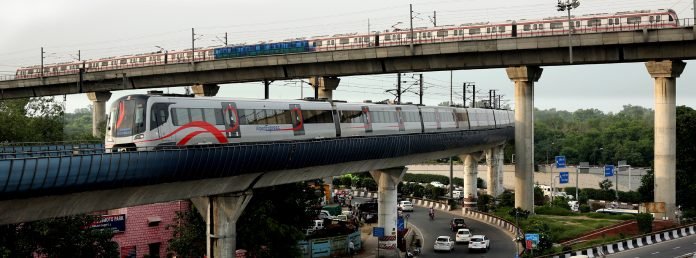
DELHI (Metro Rail News): The Finance Minister presented the Union Budget for this fiscal year in parliament on Feb 1, 2022. However, instead of just the Delhi Metro Rail Corporation (DMRC), the Finance Ministry has granted a budget for all Metro Projects in the country.

As a result, the allocation for all Metro projects in India has been made in the Union Budget for the financial year 2022-23. The Minister of Finance of India, Nirmala Sitharaman, has allotted Rs 3,702 crore in equity investment, Rs 1,272 crore in subordinate debt, Rs 14,156 crore in pass through assistance, and a total budget of Rs 19,130 crore for all metro projects in the country.

In her Budget Speech of 2022-23, the Finance Minister said that innovative ways would be encouraged for financing and faster implementation for building metro systems of appropriate type at scale.   In addition, the FM stated that multimodal connectivity between mass urban transport and railway stations would be prioritised in the country.

In addition, Sitharaman claimed that the design of metro systems in India, including civil constructions, will be re-oriented and standardised for Indian conditions and requirements. Meanwhile, the Finance Minister stated in her Budget Speech 2022-23 that the National Ropeways Development Program, which is environmentally sustainable, will be taken up on a public-private partnership (PPP) basis as a preferred alternative to conventional highways in challenging hilly locations.

According to the FM, the goal of this initiative is to improve commuter convenience and connectivity while also boosting tourism. According to the minister, the National Ropeways Development Program may also cover crowded urban areas where conventional mass transit is not practical. In the fiscal year 2022-23, contracts for up to eight ropeway projects with a total length of 60 kilometres would be awarded.

Advertisement1
InnoMetro_2026

How will you pay DAMEPL: Delhi High Court to DMRC

0
Delhi metro vibrations disturbs residents

DELHI (Metro Rail News): On Monday, the Delhi High Court ordered the Delhi Metro Rail Corporation to explain how it plans to repay money owed to Anil Ambani’s Reliance Infrastructure-backed Delhi Airport Metro Express Pvt Ltd. (DAMEPL).

“On the next day of the hearing, I don’t want to hear anything here and there,” Justice Suresh Kumar Kait declared while hearing a case related to the 2017 arbitral ruling pertaining to the Delhi Airport Metro Express Line. Otherwise, you may be subjected to an unfavourable order.

While the Reliance Infra-led firm is requesting that the DMRC pay Rs 6,305.40 crores into the Project Escrow Account immediately, the DMRC has already told the court that it only has a total of Rs 6,208.03 crores in its bank accounts, including Rs 1,014.69 crore in profits.

The Supreme Court upheld the 2017 arbitral judgement, which relates to the Delhi Airport Metro Express Line, in September 2021. Only revenues of the metro railway administration can be attached by a court in the execution of a decree or order, according to Section 89 of The Metro Railways Act, 2002.

The DAMEPL said in the latest application before the court that “The non-payment of Termination Payment since 2013 (for over eight years) by the Judgement Debtor [DMRC] has caused immense damage to the Decree Holder [DAMEPL] and its Promoter, Reliance infrastructure Limited. Reliance Infrastructure Limited has infused/funded Rs 2,513.04 crore to the DAMEPL until March 31, 2018, by taking loans from public sector banks. Accordingly, proceedings for liquidation have been initiated against Reliance Infrastructure Limited.”

Despite the Supreme Court’s upholding of the verdict, Reliance Infra has been suffering an enormous and irreparable loss on a daily basis, according to the statement. The DAMEPL has also said in the application that it does not agree to any debt assignment or takeover by the DMRC.

The DMRC said in an affidavit filed with the court earlier this month that it has a total of 1642.69 crore in earnings, but that Rs 514 crore is committed liability “due to employees on the account. Of leave salary and post-retirement expenses.” In addition, rs 114 crore is a portion of smart card security deposits refundable to commuters.

According to the information given to the court, the balance of the 6,208.03 crores available with the DMRC has already been allotted for its different projects, both within and outside Delhi. A significant sum – Rs 2,869.33 crores – has been aside for the Metro’s build stages III and IV.

The DMRC had claimed before the court on December 22 that paying the payment to the DAMEPL right away was a matter of national interest and that if the Metro is stopped, there will be a significant difficulty.

Advertisement1
InnoMetro_2026

Three metro stations in Gurugram to be equipped with facial recognition cameras

0
DMRC
Delhi Metro/Representational Image

GURUGRAM (Metro Rail News): The Gurugram Metropolitan Development Authority (GMDA) will deploy facial recognition cameras at three Metro stations in the city to boost security systems, authorities announced on Monday.

The Delhi Metro Rail Corporation has given approval for facial recognition cameras to be installed at Sikanderpur and MG Road Metro stations, according to authorities, while talks are underway to get permission for cameras to be installed at Huda City Centre station.

According to a senior official from the smart city division of GMDA “By February end, we will install facial recognition cameras at Sikanderpur Metro Station and MG Road Metro station with all permissions in place. Eight such cameras will be installed at these two metro stations. At Huda City Centre station, initially two cameras will be installed and we will increase the numbers later on. With both facial recognition cameras and other CCTV cameras in the city, crime and traffic surveillance will improve further.”

On Saturday night, Chief Minister Manohar Lal Khattar conducted a surprise inspection at the offices of the GMDA and the Municipal Corporation of Gurugram. Khattar performed a thorough investigation into the operation of the city’s CCTV cameras, which are monitored by the integrated command and control centre (ICCC).

During his meeting with senior GMDA personnel, the chief minister requested that a facial recognition system be implemented to monitor questionable individuals. According to Khattar, such a system is already operational in Karnal, which is also his hometown. He also advised that the city bus service’s activities be monitored from the control centre.

According to GMDA officials, a meeting between the IT and police departments will be held to explore how the project may be implemented. At the moment, ten facial recognition cameras have been put in Gurugram at Sheetla Mata Mandir and the Gurugram bus stand. The authority plans to install 50 facial recognition cameras across the city, according to officials, though no deadline has been set as areas are identified.

According to Sudhir Rajpal, GMDA’s chief executive officer “We are working with the departments concerned to find out if any specific software is required for enhanced surveillance, and how the tracking from ICCC can be improved. “The chief minister has requested that there be 24-hour surveillance and that traffic fines be levied for night movement, as well as the monitoring of the city’s sanitation vehicles.”

For the monitoring process, the smart city team obtains criminal data from the police department. Officials previously stated that if 60-70 percent of a person’s facial features match, an alarm is sounded at the ICCC, and a team is dispatched to the scene to identify the person.

To identify a particular individual, face recognition technology compares facial traits to the information stored in databases. However, there is a risk of incorrect recognition in these systems due to a variety of factors such as poor lighting and image perspective, according to the officials.

Advertisement1
InnoMetro_2026

Country’s first RRTS project receives Rs. 4710 cr in Union Budget 2022

0
Delhi-Meerut RRTS
Image Source: NCRTC

DELHI (Metro Rail News): In a major boost to regional connectivity in NCR, the Government of India has allocated Rs. 4,710 crores to the country’s first Regional Rapid Transit System (RRTS) project in the union budget presented today in the parliament.

Construction work on the entire 82 Km long Delhi-Ghaziabad Meerut RRTS corridor is in full swing. The corridor will have 25 stations, including two depots and one stabling yard.

More than 14,000 workers and 1100 engineers are working day and night at our sites. Despite the challenges brought in by the COVID-19 pandemic, the progress of the project has been as per scheduled timelines.

So far, 16 km viaduct of priority section, 1200 piers, and 9,900 piles have been concreted. Foundation work has been completed for 56 km of the corridor.

The 17 km priority section between Sahibabad to Duhai is scheduled to be operational by March 2023 and trial runs is expected to begin this year. The complete corridor will be opened to the public by 2025.

“RRTS is a strategic investment of the Governments to transform the mobility in NCR in line with the GatiShakti masterplan. The continued allocation to RRTS reinforces government’s focus on infrastructure expenditure to catalyse the economic revival after the impact of pandemic.” said Mr Vinay Kumar Singh, MD, NCRTC.

“Despite the impact of pandemic on the pace of work and capital expenditure, we are committed to work with our construction partners and other stakeholders to uphold the responsibility bestowed upon us by the Government in keeping the implementation of RRTS as per schedule”, he added

With a design speed of 180 kmph and an operational speed of 160 kmph, the RRTS trains will be unique and one of its kinds in India. The aerodynamic coaches will be self-propelled on electric traction with 25KV AC System. The RRTS trains are being designed with the state-of-the-art latest technology

NCRTC is a joint venture of the Government of India (50%) and State Governments of Haryana (12.5%), NCT Delhi (12.5%), Uttar Pradesh (12.5%) and Rajasthan (12.5%). It is mandated to design, construct, finance, operate and maintain RRTS in NCR and works under the administrative control of Ministry of Housing & Urban Affairs, GoI.

Advertisement1
InnoMetro_2026

2nd Edition of InnoMetro: Global Platform to Showcase technology & Innovation for Metro and Railway

0
2nd Edition InnoMetro 2022

New Delhi (Metro Rail News): After a huge success of the 2021 edition, InnoMetro is now coming back with a 2nd edition to serve as a global event platform for the discussion and presentation of ideas and innovations by some of the most eminent leaders and experts from the industry. The event is scheduled to be held from 28th to 30th April 2022 and aims to serve as a forum for all those willing to showcase their ideas, vision, and knowledge in the industry.

With an improved vision and approach to address the latest technology, implementation of innovative ways for building metro systems. The second edition of InnoMetro opens up the door to new and enhanced business opportunities, one-on-one networking systems and an excellent level of interactivity for future growth. 

Some of the key topics that the event focuses on include-

  • Realisation of Atmanirbhar Bharat
  • Make in India: Make for World
  • New modes of Transportation: Metro Neo, Metro Lite
  • Workforce Diversity & Technical Skill Gaps in Metro & Railway
  • Covid Protocol & Difficulties in Rail Transport
  • Ticketing and Payment Innovations
  • Automated Train Examination System: ATES
  • Asset Maintenance and Predictive Analysis
  • Transport Infra Financing: Public-Private Partnership (PPP)
  • Indigenous Exports of Rolling Stock
  • Advancements in Artificial Intelligence for Metro & Railway
  • Increased revenue systems and cost-cutting measures
  • Sustainable & Green Mobility
  • Improving Passenger Experience on ‘Moving Wheels’
  • Metro railways: Promoting Low carbon Transportation in India
  • Data-driven Mobility Systems
  • MaaS- Increasing the sustainability of Transport System

InnoMetro brings together delegates from Central & State government authorities, Ministry of Railways, Metro Rail operators, Architecture Consulting Firms, Smart Cities Development Authorities, Research & Development Organizations and other like-minded citizens & Urban Mobility Experts.

With a record of 100+ speakers, the 2nd edition now focuses on giving a platform to the views of more than 150+ speakers presenting their ideas and knowledge at a global forum to provide valuable insights into the metro and rail industry.

As a whole, the event serves as the perfect blend of product innovations and technologies with new rail infrastructure systems and informed decisions. Thus, the 2nd edition of InnoMetro invites all the industry experts to come, showcase, understand and experience the latest advancements that hold the capacity of shaping the future of the rail industry in the long run.

For more information about the event and to participate as an exhibitor, speaker or delegate, please click on the link below-

InnoMetro 2022 Teaser

Advertisement1
InnoMetro_2026

Union Budget 2022: FM Nirmala Sitharaman announces 400 Vande Bharat train in next three years

0

DELHI (Metro Rail News): On Tuesday, Nirmala Sitharaman, the Union Finance Minister, stated that 400 Vande Bharat Express would be introduced in the next three years. “One product, one railway station would be popularised,” Sitharaman said in her Budget 2022-23 speech. 

As per FM Sitharaman in Lok Sabha, “400 new generation Vande Bharat trains with better efficiency to be brought in during the next three years; 100 PM, Gati Shakti Cargo terminals, to be developed during next three years and implementation of innovative ways for building metro systems.”

Moving forward on this parallel track, we lay the following four priorities – PM Gati Shakti, inclusive development, productivity enhancement and investment, sunrise opportunities, energy transition and climate action & financing of investments, said Finance Minister while presenting the Union Budget for 2022-23 in the Lok Sabha.

An integrated approach to planning and coordinated implementation of infrastructure connectivity projects in the form of Gati Shakti touching on energy transition, climate action, logistics, and connectivity may arrest the bugbear of cost overruns and time overruns synonymous with Indian infrastructure.” The initial allotment of 20,000 crores towards the 100 lakh crores is commendable and a much-needed step.

However, it needs to be seen how the money will be implemented, and progress on infrastructure projects will be digitally enabled and monitored to eliminate infrastructure delivery bottlenecks. The sluggish pace of implementation has been attributed to several factors, including a siloed approach and environmental issues. However, the National Infrastructure Pipeline offered the initial building brick for rebuilding India’s energy and infrastructure.

According to Vishnu Sudarsan, Partner, J. Sagar Associates (JSA), “Integration and updation of National Infrastructure Pipeline with Gati Shakti with real-time updation on infrastructure projects will boost investor confidence, and rev up the private sector participation.”

Advertisement1
InnoMetro_2026