Home Blog Page 32

PM Modi Flags Off 4 New Vande Bharat Express Trains

0
PM Modi flags off 4 new Vande Bharat Trains

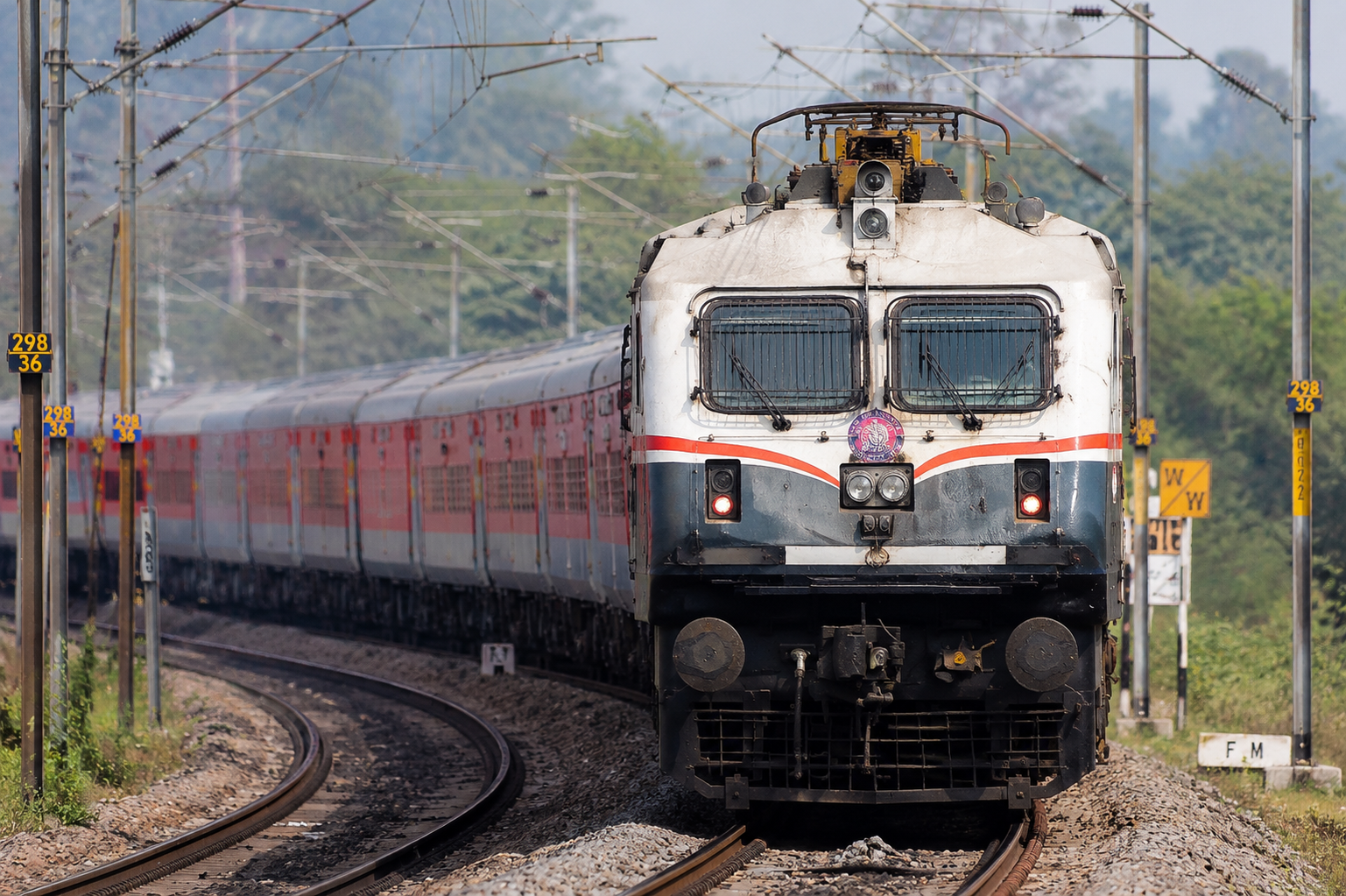
Prime Minister Narendra Modi flagged off four new Vande Bharat Express trains from Banaras railway station, expanding the semi-high-speed train network to new regions across the country. 

https://twitter.com/AshwiniVaishnaw/status/1987025995074015322?s=20

Uttar Pradesh Chief Minister Yogi Adityanath, Union Railway Minister Ashwini Vaishnaw, Kerala Governor Rajendra Arlekar, and several senior ministers, including UP Deputy Chief Minister Brajesh Pathak also attended the ceremony.

The new Vande Bharat Express trains will operate on the following routes: 

  • Banaras-Khajuraho
  • Lucknow-Saharanpur
  • Firozpur-Delhi
  • Ernakulam-Bengaluru 

Prime Minister Narendra Modi flagged off the Varanasi–Khajuraho Vande Bharat Express train and virtually flagged off the Delhi–Firozpur, Lucknow–Saharanpur, and Ernakulam–Bengaluru trains. 

PM Modi said that over 160 Vande Bharat trains are now operational nationwide. These trains symbolise India’s engineering capability and self-reliance. As reported by The Indian Express. 

According to officials, the newly launched Banaras–Khajuraho Vande Bharat Express will enhance connectivity between major cultural and religious destinations such as Varanasi, Prayagraj, and Chitrakoot.


To get real-time updates on metro and railway tenders, join our WhatsApp  Community:https://chat.whatsapp.com/GP8MIGQ7fP6Eapgbm3d8og?mode=ems_copy_c

Advertisement1
InnoMetro_2026

Ashoka Buildcon Bags Rs 539.35 Cr Electrification Contract from North Western Railway

0

Ashoka Buildcon Limited has announced that it has received a Letter of Acceptance (LoA) from the North Western Railway, Ajmer, for a major railway electrification project. 

G5NFUZUaQAAUMb4

Contract Value: Rs 539.35 Crore

Contract Duration: 24 calendar months from LoA issuance

Contract Scope of Work: The contract involves upgrading 660.81 Route Kilometers from 1x25kV to 2x25kV electric traction system and modifying existing Overhead Equipment for 160 kmph speed in the Ajmer Division. The project, to be completed in 24 months, covers AII-COR, COR-UDZ, MD-BWA & BWA-PNU Sections.

G5NFW3TbIAAZIys 1

This comprehensive electrification upgrade is part of Indian Railways’ broader modernization drive aimed at enhancing traction efficiency, achieving higher train speeds, and improving overall operational performance across key routes.


To get real-time updates on metro and railway tenders, join our WhatsApp  Community:https://chat.whatsapp.com/GP8MIGQ7fP6Eapgbm3d8og?mode=ems_copy_c

Advertisement1
InnoMetro_2026

Hitachi Rail Bags ₹76 Crore AFC Contract for Bangalore Metro 

0
Bangalore Metro
Bangalore Metro (Representational; Image)

BANGALORE (Metro Rail News): Hitachi Rail Gts India Private Limited has received a Letter of Acceptance (LoA) from Bangalore Metro Rail Corporation Limited (BMRCL) for a ₹76 Cr contract which involves the supply of Automatic Fare Collection System for the Bangalore Metro Phase 2A and 2B. 

LetterofAcceptance@4x

BMRCL invited bids for the contract with a completion deadline of 441 days. Technical bids were opened on 28 May 2025, revealing that five firms had submitted their proposals. The technical evaluation was conducted on 22 September 2025, during which bids from three firms were rejected. 

Subsequently, financial bids were opened on 24 September 2025, and the financial evaluation of the technically qualified bidders took place on 7 November 2025. During the evaluation process, one more bid was disqualified, and Hitachi Rail GTS India emerged as the lowest bidder. The same day, the firm was issued the Letter of Acceptance (LoA) for the contract.

Financial Bid Values 

Firm Bid Value 
Hitachi Rail Gts India Private Limited₹ 76 Cr 
TVM Signalling and Transportation Systems Pvt Ltd₹ 99.2 Cr 

Contract Scope of Work: Design, Manufacture, Supply, Installation, Testing and Commissioning of Automatic Fare Collection System (SLE, SC & CCS) for Phase2A & 2B and Integration with Existing AFC System. 


To get real-time updates on metro and railway tenders, join our WhatsApp  Community:https://chat.whatsapp.com/GP8MIGQ7fP6Eapgbm3d8og?mode=ems_copy_c

Advertisement1
InnoMetro_2026

Kanpur Metro: Efkon India Receives LoA for E&M Works Contract of Line 2 

0
Kanpur Metro Rail
Kanpur Metro Rail

KANPUR (Metro Rail News): Efkon India Private Limited has received a Letter of Acceptance (LoA) from Uttar Pradesh Metro Rail Corporation Limited (UPMRCL) for the electrical and mechanical system works contract of Line 2 of Kanpur Metro which spans 8.38 km connecting Agriculture University-Barra-8. 

Screenshot 2025 11 08 115004

UPMRC issued a tender for this contract. Technical bids were opened on 29 April 2025 revealing that 5 firms have submitted bids for the contract. On 24 September 2025, technical evaluation of the submitted bids occurred and during the evaluation round one firm’s bid was disqualified. 

On 3 October 2025, financial bids were opened and financial evaluation of the technically qualified bids took place on 24 October 2025. During the financial evaluation round, 3 firm’s bid was rejected revealing that Efkon India is the lowest bidder for the contract. On 7 Nov 2025, the firm received LoA from UPMRC for the contract. 

Financial Bid Values 

Firm Bid Value 
Efkon India Private Limited₹ 164 Cr
Blue Star Limited₹ 175.9 Cr 
Kalpataru Projects International Limited₹ 178.1 Cr
Universal Mep Projects & Engineering Services Limited₹ 231.4 Cr

Contract Scope of Work: Design Verification, Detail Engineering, Supply, Installation, Testing & Commissioning of Electrical and Mechanical System, DG Sets, Environment Control System, Tunnel Ventilation System and Building Management System for three underground metro stations (viz. Double Pulia, Kakadeo and Rawatpur Railway Station) of Corridor-2 of Kanpur MRTS Project at Kanpur, Uttar Pradesh. 


To get real-time updates on metro and railway tenders, join our WhatsApp  Community:https://chat.whatsapp.com/GP8MIGQ7fP6Eapgbm3d8og?mode=ems_copy_c

Advertisement1
InnoMetro_2026

ICF Chennai: From Vande Bharat to Hydrogen Train – Leading India’s Journey Towards Indigenous Rail Manufacturing

1
Shri U. Subba Rao, General Manager, ICF

Metro Rail News had the privilege of conducting an exclusive interview with Shri U. Subba Rao, General Manager, Integral Coach Factory (ICF), Chennai. During the conversation, Shri Rao highlighted ICF’s expanding role in the Indian railway sector. He discussed ICF’s contribution to the Make in India initiative through the production of Vande Bharat trains, which are 90% indigenous. Shri Rao also outlined ICF’s work on India’s first hydrogen-powered train and its potential impact in the coming years. He emphasised ICF’s efforts to make the production unit environmentally sustainable, including initiatives such as providing free EV charging for the public. Additionally, Shri Rao shared ICF’s long-term vision of entering the international rail market and expanding into the metro segment within India. He concluded the interview by encouraging industry stakeholders to participate in the Make in India initiative to strengthen India’s self-reliance in rail technologies. Here are the edited excerpts from the interview:

image 1

Could you share insights into your professional journey within Indian Railways? How does this experience enable you to make strategic and impactful decisions in your current role at ICF? What milestones has ICF achieved under your leadership? 

    I belong to the IRSME cadre (Indian Railway Service of Mechanical Engineers), so I am basically a mechanical engineer. I joined the Railways in 1989, which makes it nearly 36 years of association. I began my career in rolling stock maintenance, primarily with diesel locomotives. Over the years, I worked in several key areas, including coach manufacturing and the Rail Wheel Factory at Bangalore.

    As Chief Workshop Engineer at the Wheel Shop, we achieved a record production of 200,000 wheels in a single year, a record which was not broken for more than a decade. Later, I served as Divisional Railway Manager (DRM) of Salem Division, and then as Chief Workshop Engineer at Mysore, South Western Railway. 

    Mysore Workshop became the first in southern India to carry out major overhauling of LHB coaches. Although ICF-designed conventional coaches were dominant earlier, LHB coaches were introduced in India about two decades ago due to safety considerations. I can proudly say that Mysore was a pioneer in the south for handling LHB coaches, which were primarily based in Bangalore for periodic overhauling.

    As mentioned earlier, I worked as Chief Workshop Engineer at the Rail Wheel Factory in Bangalore, where we produced cast wheels. During that time, I was also associated with the design of cast wheels for EMU trains and later with the design development and validation process. For this, I visited the USA, where a full-load dynamometer was available for testing. Only a few places in the world have a dynamometer capable of testing wheels at full load, and one such facility is TTCI in Pueblo, Colorado, USA. I stayed there for almost two weeks to validate EMU wheels. The EMU wheels used in Trailer Coaches all over India are to this design these days. 

    Later, I served as Chief Mechanical Engineer (Planning) at South Central Railway, Principal Chief Mechanical Engineer (PCME) at South Western Railway, and Additional General Manager (AGM) at South Western Railway, Hubli, before taking over as General Manager (GM) of ICF. This long exposure to both technical and operational aspects of rolling stock design, development, maintenance, and passenger requirements helps me understand the pain points of common travellers. That experience is what I bring to my role at ICF.

    As for ICF’s milestones, the organisation had already embarked on a new journey in 2018 with the Train 18 project, which later became the Vande Bharat Express. After the prototypes, there was a pause for design improvements. We then started production of Version 2, initially with 16-car rakes, followed by 8-car rakes.

    By the time I joined ICF, production of Vande Bharat 2.0  had already started. Initially, trains were produced as 16-car rakes, followed by 8-car rakes. However, the demand soon shifted toward longer trains. We had to work with existing vendors, using the original scope of supply, to configure and produce 20-car rakes. This required some innovative negotiations with suppliers to meet the new requirements without going through lengthy tendering processes. 

    Today, these 20-car Vande Bharat trains are very popular, and the Railway Board has mandated that all such trains will have 20 cars. So far, ICF has produced more than 18 of these 20-car rakes, and six more are scheduled for production this year. For the Vande Bharat chair car version, the total order is 97 rakes, of which 91 have already been produced, with 6 remaining.

    Could you please outline the current manufacturing capacity of ICF? How is ICF evolving to meet the growing demands of the rail transport industry? 

      Whenever there is a new demand or challenge in the rail sector, ICF usually becomes the fallback for executing projects. We are generally assigned such projects. For example, one such project is the Amrit Bharat train. The first version of the Amrit Bharat train was produced before I joined ICF, and it was completed with not many changes to the existing LHB coaches.

      image 13

      We have been assigned a project to produce 50 Amrit Bharat trains. At the same time, another 50 trains are now being produced at RCF (Rail Coach Factory), but the design for all trains comes from ICF. On the Amrit Bharat trains, we have made changes in the interiors of the non-AC coaches. The layout has been modified so that passengers experience the same seating and space arrangement as in an AC coach, even though air-conditioning is not provided. We have also made improvements to the toilets and enhanced the overall ergonomics of the coaches. These changes were implemented efficiently, and the rakes were introduced within a record time of one year. The couplers have been completely redesigned with state of the art jerk free and anti-climbing features.

      Regarding manufacturing capacity, it is always a challenge. Production must align with demand, so we continuously look for innovative ways to optimise workflows and improve output. Since its inception in 1955, ICF initially manufactured almost every component in-house, from bolts to complete coaches, including processing raw materials like steel sheets. Over time, the factory shifted from this fully in-house model and began outsourcing many large sub-assemblies. ICF’s core activities, such as integration of major components and interior furnishing, are still performed within the campus, as integration requires specialised skills and ensures quality control.

      To increase manufacturing capacity, we made several upgrades to the facility. The workshop layout was optimised, new machinery and robots were introduced, and automation was integrated across production processes. Additional cranes were also installed to handle larger components efficiently.

      Last year, ICF produced 3,007 coaches. This year, the target has been set at 4,000 coaches. While there may be minor deviations, we are confident of achieving this target. The target for the following year is also set at 4,000 coaches.

      Collectively, the three production units produce approximately 10,000 coaches each year. These include both replacements for ICF coaches being phased out, as well as new production for EMU, MEMU, and Vande Bharat trains to meet additional demand for new trains being introduced regularly. 

      The Vande Bharat Express has been a flagship “Make in India” initiative. Could you elaborate on ICF’s role in its development and current production? Beyond Vande Bharat, what other projects are being executed by ICF currently?

        image 14

        Let me give some background on Vande Bharat and how it is manufactured. Over the years, the approach to producing trains has evolved. Earlier, when ICF started producing coaches in 1955, it was based on the transfer of technology (TOT). Similarly, the production of LHB coaches also involved technology transfer from the original developers.

        We also produced ALCO locomotives, which were also based on TOT. However, when it came to producing the Vande Bharat train, ICF adopted a different approach rather than relying solely on technology transfer.

        For Vande Bharat, instead of relying on full transfer of technology from a single partner, we adopted a modular sourcing approach. Since ICF already had expertise in train production, we began sourcing sub-assemblies from specialised suppliers. The brake systems, doors, propulsion systems, HVAC systems, and couplers were procured from the most suitable suppliers. The bogies were developed collaboratively by ICF’s design team along with an external design agency. This approach ensures that the technology and design ownership remains with ICF. This makes Vande Bharat a distinctly Indian train brand.

        Under the Vande Bharat brand, we are developing new variants, including a sleeper version. An order for 10 rakes was placed with BEML, but the complete design was developed by ICF. Only key sub-assemblies, such as propulsion systems, doors, and HVAC units, were procured externally, while BEML manufactured the car bodies. The bogies were also designed to suit the sleeper version and later integrated during assembly.

        image 12

        The first Vande Bharat sleeper rake has already completed oscillation trials successfully. The second rake is expected next month, and all 10 rakes are scheduled to be received by ICF by the end of the current financial year in March.

        The Railway Board has also assigned ICF to produce 50 Vande Bharat sleeper trains, which will differ from the BEML version. While the BEML trains have 16 coaches, ICF’s version will be 24 coaches long and will include a separate pantry car to support longer-distance travel. To improve passenger comfort, the pantry area within each coach has been slightly reduced, and each coach will feature four toilets. Many other upgrades are also being included as compared to the rakes produced by BEML 

        Even small changes require major design work. The layouts have now been finalised, and tendering for sub-assemblies has begun. The first prototype is expected to be rolled out between November and December 2026. Following the prototype rollout, production of the Vande Bharat sleeper version is planned at a rate of two rakes per month.

        In addition to the sleeper version, ICF is developing Vande Bharat-type freight trains. Initially, 2 freight rakes have been ordered, which are specifically designed for a 20-ton axle load, which is comparatively higher than that of standard passenger trains. This necessitates modifications to the bogies and traction motors compared to the passenger version, which results in additional development and testing time. The first freight rake is expected to roll out soon. 

        All the required materials for the Vande Bharat freight trains are now in place, and production has reached the final stages. Once manufacturing is complete, the trains will undergo market trials to assess their operational efficiency and commercial viability. These freight trains are intended to run on timetable-based schedules, targeting the transport of fast-moving goods for e-commerce players such as Amazon and Flipkart. They can also be deployed for long-distance freight services.

        This is an experimental project assigned by the Railway Board. It aims to evaluate the performance of freight-specific Vande Bharat trains. The first rake is expected to be ready by November, with the next rake scheduled for delivery in the first week of December.

        Honourable Railway Minister, Shri Ashwini Vaishnaw, recently announced that ICF Chennai will develop electronics technology for the Hyperloop project. Could you tell us more about this initiative and ICF’s capabilities in this area?

          The Hyperloop project is being developed in partnership between IIT Madras and a startup, TuTr Hyperloop. As a start-up, they required support in several areas, including sourcing vendors and developing propulsion systems. ICF is providing technical guidance and assistance wherever possible, offering expertise to help them develop a high-quality product.

          As highlighted by the Honourable Minister, ICF’s role is supportive rather than directive. The start-up will be responsible for producing the final train, while ICF ensures they have access to the knowledge, vendor connections, and technical advice needed to overcome challenges during the development process.

          How is ICF adopting new technologies like automation and advanced welding systems to enhance its manufacturing processes and efficiency?

            At ICF, we are using robotic welding in many areas, but there are still some parts where it can be added. This is a continuous process. One of our main goals is to reduce the total number of welding joints in a coach. Fewer weld joints mean less heat is applied during manufacturing, which improves the overall strength of the coach. We are also working on introducing laser welding for some parts of the coach where it is more suitable.

            In wheel manufacturing, earlier the process was mostly manual, where wheels and axles had to be moved from one machine to another by workers. About 3–4 years back, we set up a fully automated wheel manufacturing line. Now, wheels and axles are fed at one end, and the line takes them through 8–9 machines automatically, with each machine having one operator. Most of the work is robotic, which saves time and gives uniform quality.

            In the future, we will be looking at laser welding, unlike the conventional welding methods currently being used in some areas of the coach. The choice of welding method depends on the location and requirement, so each option has to be carefully evaluated.

            How does ICF envision its role in advancing the objectives of the ‘Make in India’ and ‘Atmanirbhar Bharat’ initiatives?

              The Vande Bharat train is about 90% indigenous. There is nothing in it that is not made in India. Most of the suppliers are Indian, and even in cases where some suppliers are foreign, the manufacturing is carried out in India. As per our tender documents, unless vendors meet the “Make in India” criteria, we do not consider them for procurement.

              As I mentioned earlier, the Vande Bharat was developed in-house without any Transfer of Technology (ToT). This shows our capacity to design and develop advanced rolling stock independently.

              I would also like to mention that the first metro trains in India, for Kolkata Metro, were also manufactured by ICF. Even today, Kolkata Metro trains continue to be built at ICF. The reason is that when the Kolkata Metro was first developed, its design and dimensions were very different from the international standards that are now followed in other metro systems such as Delhi Metro, Chennai Metro, Bengaluru Metro, and Hyderabad Metro. Since those systems follow standard international dimensions, their rolling stock is procured differently. But for Kolkata, because of its unique specifications, ICF has taken responsibility for designing and manufacturing its metro trains within our own capacity.

              Currently, ICF has a strong order book because of the replacement of old ICF coaches with LHB coaches. Once this transition is mostly completed, the demand for new production will reduce, and only additional trains and replacements will continue. When the order book becomes stable in the next few years, ICF will focus on entering the international market. Our design teams are already working on this so that we have ready designs and solutions, and whenever there is a requirement, we can respond quickly.

              How does ICF employ sustainable practices in its manufacturing process to minimise its environmental impact?

                Power Production and Carbon Neutrality
                ICF is already a 100% carbon-neutral production unit. We have invested in seven windmills, and the power we generate is supplied to the Tamil Nadu grid. In return, the grid supplies power to ICF, and the surplus generated goes back to the state grid. In addition, ICF has installed rooftop solar panels, which generate more energy than we consume. The extra power is supplied to the Southern Railway. We are also exploring the possibility of directly feeding solar power into the traction grid once the technical issues are resolved.

                Water Conservation

                The second aspect is water consumption. ICF is actively working to reduce freshwater usage and has set a target for a 20% reduction. Recycled water is already used extensively, and we are working to expand this further.

                To support these objectives, ICF is conducting water audits, identifying leaks, and implementing measures for recycling water. Rainwater harvesting systems are also being utilised for the same purpose. A detailed study of all water inlets has been carried out, and multiple water meters have been installed to monitor consumption and manage water use systematically. These steps are part of ongoing efforts to reduce overall water usage across the facility.

                Waste Management
                ICF has a dedicated garbage management system and a recycling plant within its premises. All waste generated is collected and segregated into biodegradable and non-biodegradable categories. Biodegradable waste is processed into manure. The process ensures that biodegradable waste is not disposed of improperly.

                Non-biodegradable waste, including metal and non-metal scrap, is handled according to the Government of India and state regulations. A proper system is in place for the disposal of all such scrap. This helps ICF to ensure compliance with regulatory requirements and maintain environmental safety.

                Free EV Charging Initiative
                ICF has started a program to provide free power for electric vehicle (EV) scooters, with the purpose of encouraging the adoption of electric mobility and minimising environmental impact. It is a first-of-its-kind initiative within Indian Railways. Rooftop solar panels installed at ICF premises generate the electricity, which is used for charging, and no external power is purchased for this purpose. During the daytime, the solar power is directly supplied to the EV chargers on site.

                The charging system is established using smart meters and operates through a QR code-based registration process. Once registered, the users can charge their scooters without incurring any cost. This initiative is part of ICF’s broader effort to promote sustainable practices, and ICF plans to expand it to multiple locations by setting up additional charging points.

                What role is ICF playing in the development of India’s first hydrogen-powered train project? How is the adoption of hydrogen-powered trains expected to influence the future of rail transportation in India?

                  image

                  ICF has played a key role in the development of India’s first hydrogen-powered train. For this project, ICF utilised trailer coaches from an existing DEMU and produced new power cars in-house with support from a private company. This first hydrogen train has already been dispatched to Northern Railway and is expected to operate between Jind and Sonipat, where a hydrogen production plant is being set up.

                  The train is a full-fledged DEMU in which the conventional diesel engine is replaced with a hydrogen-powered fuel cell. The train’s normal operating speed will be 105 km/h, with no compromise on service quality. At this stage, the train functions primarily as a technology demonstrator. The purpose is to develop confidence in producing and operating hydrogen-powered trains and to study their feasibility across different routes and applications.

                  Hydrogen-powered traction technology is still evolving. Globally, there are two main approaches: one uses hydrogen fuel cells to generate electricity, which then powers the traction motors, and the other employs hydrogen in an internal combustion engine (ICE), similar to petrol or diesel engines, where hydrogen is combusted directly to produce power. Both approaches are being explored internationally. 

                  These are the two main hydrogen technologies being developed globally. As I mentioned, the train currently serves as a technology demonstrator. At this stage, evaluating project costs or operational expenses is not the priority. In the next 3-4 years, it is expected that hydrogen-powered vehicles, including cars and buses, will become more common in India

                  The primary focus is on successful production and operation, which will allow scaling up in the future and eventually reduce costs. We need to study key aspects, which include hydrogen production, storage, and the associated logistics, and this is only possible when we run the train in real conditions. It is difficult to assess all operational parameters without deploying the train.

                  What is ICF’s long-term vision, and what are the key strategic objectives it aims to achieve over the next 5 to 10 years?

                    ICF’s long-term vision focuses on expanding its presence in both domestic and international rail markets. Domestically, the organisation aims to actively participate in the metro segment, as there is high demand for metro trains across India. ICF possesses the technology and expertise required to design and manufacture metro rolling stock.

                    In parallel, ICF is involved in the development and production of high-speed trains in collaboration with BEML. The designs for the initial set of high-speed trains have already been completed. High-speed trains are expected to become an integral part of India’s rail network in the coming years, and as high-speed corridors are sanctioned, several related projects are likely to follow.

                    Over the next 5 to 10 years, ICF plans to continue its core manufacturing of EMUs and MEMUs while gradually entering metro and high-speed train production. In addition, there is a segment for intermediate-speed corridors, which ranges from 160 km/h to 250 km/h. In this reference, certain routes may require trains which are capable of operating around 220 km/h, which presents additional opportunities for ICF. 

                    This strategy allows ICF to serve India’s evolving rail infrastructure needs comprehensively, including high-speed, metro, and conventional rail projects, while also preparing to explore opportunities in international markets.

                    What message would you like to convey to the readers of Metro Rail News? 

                      India has considerable potential in manufacturing and technology development, particularly in the rail sector. The “Make in India” and “Make for World” initiatives by the Government of India set practical objectives, and ICF has demonstrated that it is possible to design and produce trains entirely within the country, while upholding high standards of quality and safety.

                      Beyond trains, there are multiple areas within the rail industry where local production and innovation can be expanded. India’s large domestic market provides both demand and opportunity for scaling up production of rail vehicles, components, and associated technologies. ICF’s capabilities and achievements serve as a testimony of how these opportunities can be effectively used for the betterment of the nation.

                      Advertisement1
                      InnoMetro_2026

                      Chennai Metro: A Strategic Approach to Strengthening Public Transport and Urban Development

                      0
                      Chennai Metro

                      Introduction 

                      Chennai, formerly known as Madras until 1996, is the capital and largest city of Tamil Nadu, the southernmost state of India. Chennai is recognised as the cultural capital of South India. The city is renowned for its rich cultural heritage, including Bharatanatyam, Carnatic music, ancient temples, and vibrant festivals such as the annual Madras Music Season. With a population of approximately 7 million, Chennai ranks as the fourth-largest city in India. 

                      The city is situated on the Coromandel Coast of the Bay of Bengal. Chennai is one of India’s largest metropolitan areas and serves as a major cultural, industrial, and economic hub. Chennai is often called the “Detroit of India” for housing a major portion of the country’s automobile industry. Chennai is also recognised as the nation’s “health capital” due to its prominence in medical tourism. 

                      Why is a Metro System Essential for Chennai’s Growth? 

                      Chennai has witnessed rapid growth and urban expansion over the past few decades. This surge in urbanisation has brought with it several challenges that have placed immense pressure on the city’s existing transport infrastructure. Some of the key issues faced by the city are highlighted below: 

                      image 6

                                                                   Chennai’s Total Population By Year

                      Rapid Urbanisation: Chennai has witnessed a steady and sharp rise in its population, increasing from under 1 million in 1950 to more than 11 million by 2025. This rapid urbanisation increased the pressure on the city’s urban infrastructure, especially its transportation network. The establishment of the metro system emerged as the most viable option to tackle Chennai’s rising transport challenges.

                      Traffic Congestion: Chennai has experienced severe traffic congestion due to its increasing population, which has led to a rise in the number of private vehicles. The graph illustrates the worsening traffic congestion in Chennai, with commute times and congestion levels steadily rising since 2017. This situation underscored the critical necessity for sustainable transportation solutions, such as the implementation of a metro system in Chennai. 

                      image 7

                      Chennai Metro: A Step Towards Smarter Urban Transit

                      Overview 

                      Chennai Metro is an urban Mass Rapid Transit System (MRTS) developed to serve Chennai, the capital of Tamil Nadu. The project is being executed by Chennai Metro Rail Limited (CMRL). Phase I of the network is already operational, while Phase II is currently under construction. The Government of India approved the Chennai Metro Rail project on 15th June, 2016.

                      To implement this ambitious project, the Government of Tamil Nadu established a Special Purpose Vehicle (SPV) named Chennai Metro Rail Limited on December 3, 2007, under the Companies Act. The entity has since evolved into a Joint Venture between the Government of India and the Government of Tamil Nadu, with both holding equal equity.

                      image 10
                      Phase 1 
                      Line Route Length Total No. of Stations 
                      Line 1 (Blue Line) Chennai Airport – Washermanpet23.10 km17 Stations 
                      Line 2 (Green Line) Chennai Central – St. Thomas Mount 22 km17 Stations 
                      Phase 1 Extension 
                      Line 1 (Blue Line) Washermanpet – Wimco Nagar9.051 km9 Stations 
                      Phase 2 
                      Line 3 ( Purple Line) Madhavaram – SIPCOT 245.4 km49 Stations 
                      Line 4 (Orange Line) Light House – Poonamallee Bus Depot26.09 km28 Stations 
                      Line 5 (Red Line) Madhavaram – Sholinganallur44.6 km 48 Stations 

                      Key Specification 

                      Authorized Authority Chennai Metro Rail Limited (CMRL)
                      Speed and Track Top Speed: 80 kmph
                      Average Speed: 33 kmph
                      Track Gauge: Standard Gauge – 1435 mm
                      Electrification 25 kV, 50 Hz AC overhead catenary (OHE)
                      SignallingCommunications-Based Train Control (CBTC)

                      Phase 1 of Chennai Metro 

                      Overview 

                      Phase I of the Chennai Metro Rail project encompasses a total network length of 45.046 km and comprises two operational metro corridors. Approximately 55% of the corridors within Phase I are constructed underground, while the remaining segments are elevated. Construction for Chennai Metro Phase I commenced in April 2009.

                      Route Details 

                      Line-1 (Blue Line): Chennai Airport – Washermanpet (23.10 km)

                      • Status: Operational
                      • Type: Elevated & Underground
                      • Depot: Koyambedu (shared with Green Line)
                      • Number of Stations: 17
                      • Station Names: Chennai International Airport, Meenambakkam, Nanganallur Road (OTA), Alandur, Guindy, Little Mount, Saidapet, Nandanam, Teynampet, AG-DMS, Thousand Lights, LIC, Government Estate, Chennai Central, High Court, Mannadi, Washermanpet

                      Timeline of Blue Line 

                      Operational Date Section Length 
                      21 Sept 2016Airport –  Little Mount 8.6 km
                      25 May 2017Little Mount – AG-DMS4.8 km
                      10 Feb 2019AG-DMS – Washermenpet9.8 km

                      Line-2 (Green Line): Chennai Central – St. Thomas Mount (22 km)

                      • Status: Operational
                      • Type: Elevated & Underground
                      • Depot: Koyambedu (shared with Blue Line)
                      • Number of Stations: 17
                      • Station Names: St. Thomas Mount, Alandur, Ekkattuthangal, Ashok Nagar, Vadapalani, Arumbakkam, CMBT, Koyambedu, Thirumangalam, Anna Nagar Tower, Anna Nagar East, Shenoy Nagar, Pachaiyappa’s College, Kilpauk Medical College, Nehru Park, Egmore, Chennai Central

                      Timeline of Green Line  

                      Operational Date Section Length 
                      29 Jun 2015Koyambedu – Alandur 10 km
                      15 Oct 2016Alandur – St. Thomas Mount 1.3 km
                      14 May 2017Koyambedu – Nehru Park 8 km
                      25 May 2018Nehru Park – Central2.6 km

                      Phase 1 Extension 

                      Overview

                      Chennai Metro’s Phase 1 Extension project consists of a 9.051 km extension of the already operational Blue Line. The Phase 1 extension project was approved by Tamil Nadu’s state cabinet in December 2015 and by India’s Central Government in June 2016 with an estimated cost of Rs. 3770 crore. 

                      Route Details 

                      Line-1 (Blue Line): Washermanpet – Wimco Nagar

                      • Length: 9.051 km
                      • Status: Operational 
                      • Type: Underground (2.379 km) & Elevated (6.672 km)
                      • Depot: Wimco Nagar (for trains on the entire Blue Line)
                      • Number of Stations: 9
                      • Station Names: Sir Thiyagaraya College (underground), Tondiarpet (underground), New Washermenpet (formerly Tondiarpet), Tollgate Metro, Kaladipet Metro (formerly Thangal), Thiruvottriyur Theradi (formerly Gowri Ashram), Thiruvottriyur Metro, Wimco Nagar Metro, Wimco Nagar Depot Station
                      image 11

                      Chennai Metro Phase 2

                      Overview 

                      Phase 2 of the Chennai Metro, covering a total length of 118.9 km, consists of three new metro corridors. The project’s Detailed Project Report (DPR) was prepared by RITES and finalised in December 2018. In October 2024, the Union Cabinet approved the project with a total estimated cost of Rs. 63,246 crore.

                      Line Route Elevated Length Underground Length Total Length 
                      Line 3 ( Purple Line) Madhavaram – SIPCOT 219.1 km 26.7 km 45.8 km 
                      Line 4 (Orange Line) Light House – Poonamallee Bus Depot16 km 10.1 km 26.1 km 
                      Line 5 (Red Line) Madhavaram – Sholinganallur41.2 km 5.8 km 47 km 

                      Phase 2 Route Details 

                      Line-3 (Purple Line): Madhavaram – SIPCOT 2

                      • Length: 45.4 km (19 km elevated & 26.4 km underground)
                      • Depot: Madhavaram & SIPCOT
                      • Number of Stations: 49 (20 elevated & 29 underground)
                      • Station Names: Madhavaram Milk Colony, Thapalpetti, Murari Hospital, Moolakadai, Sembiyam, Permabur Market, Perambur Metro, Ayanavaram Otteri, Pattalam, Perambur Barracks Road, Doveton Junction (canceled), Purasawalkam High Road, Kellys, KMC, Chetpet Metro, Sterling Road Junction, Nungambakkam, Gemini, Thousand Lights, Royapettah Govt Hospital, Radhakrishnan Salai Jn, Thirumayilai Metro (interchange with Line-4), Mandaiveli, Greenways Road Metro, Adyar Jn, Adyar Depot, Indira Nagar, Thiruvanmiyur Metro, Taramani Road Junction, Nehru Nagar, Kandanchavadi, Perungudi, Thoraipakkam, Mettukuppam, PTC Colony, Okkiyampet, Karapakkam, Okkiyam Thoraipakkam, Sholinganallur (interchange with Line-5), Sholinganallur Lake, Ponniamman Temple, Sathyabama University, St Joseph College, Semmancheri, Gandhi Nagar, Navallur, Siruseri, SIPCOT 1 and SIPCOT 2. 
                      Recent Development on Line 3 
                      1.  TBM Breakthrough 
                      In May 2025, Tata Projects Ltd’s TBM Kalvarayan achieved a breakthrough at Perambur station of Line 3. The TBM Kalvarayan started its tunnel drive from Ayanavaram Station to Perambur Station and constructed a 867 m up-line tunnel, achieving a breakthrough at  Perambur South Shaft. In 2021, Tata Projects Limited bagged Contract TU-01 from Chennai Metro Rail Limited ( CMRL) with a 42-month deadline. 
                      70a528e9 708a 4705 8ffd fa9dc4986f16

                      Line-4 (Orange Line): Light House – Poonamallee Bus Depot

                      • Length: 26.09 km (16.02 km elevated & 10.07 km underground)
                      • Depot: Poonamallee
                      • Number of Stations: 28 (18 elevated & 10 underground)
                      • Station Names: Light House, Kutchery Road, Thirumayilai Metro, Alwarpet, Bharathidasan Road, Adyar Gate Junction, Nandanam, Panagal Park, Kodambakkam Sub Urban, Kodambakkam Power House, Vadapalani, Saligramam, Avichi School, Alwarthirunagar, Valasaravakkam, Karambakkam, Alapakkam, Porur Junction, Chennai Bypass Crossing, Ramachandra Hospital, Iyyapanthangal Bus Depot, Kattupakkam, Kumananchavadi, Karayanchavadi, Mullai Thottam, Poonamalle Bus Terminus, Poonamallee Bypass, Poonamallee Bus Depot
                      Progress Update on Line 4 
                      1. TBM Breakthrough 
                      In July 2025, ITD Cementation’s  TBM Peacock achieved a Breakthrough at Line 4’s Kodambakkam Ramp Retrieval shaft near Meenakshi College. This development was recorded under Package C4-UG02. In January 2022,  ITD Cementation bagged Package C4-UG02 of Chennai Metro Phase 2 from Chennai Metro Rail Corporation (CMRL) at Rs 1846.86 crore.  
                      e03772ea 840f 4cfd 89d8 0dcf98696dfc
                      2. Trial Runs 
                      In June 2025, CMRL initiated testing and trial runs on Line 4. The trials were conducted for the 10 km Downline stretch of Line 4, which connects Porur Junction Metro Station to Poonamalle Bypass Metro Station through 10 stations.
                      b91a3056 f9dc 4059 9a33 f29a20e0c72a

                      Line-5 (Red Line): Madhavaram – Sholinganallur

                      • Length: 44.6 km (38.77 km elevated & 5.83 km underground)
                      • Depot: Madhavaram
                      • Number of Stations: 48 (41 elevated, 1 at-grade & 6 underground)
                      • Station Names: Madhavaram Milk Colony (interchange with Line-3), Venugopal Nagar, Assissi Nagar, Manjambakkam, Velmurugan Nagar, MMBT, Shastri Nagar, Reteeri Junction, Kolathur Junction, Srinivasa Nagar, Villivakkam Metro, Villivakka, Bus Terminus, Nadhamuni, Anna Nagar Depot, Thirumangalam, Kendriya Vidyalaya, Grain Market, Sai Nagar Bus Stop, Elango Nagar Bus Stop, Alwartiru Nagar, Valasaravakkam, Karabakkam, Alapakkam, Porur Junction, Mugalivakkam, DLF IT SEZ, Sathya Nagar, CTC, Butt Road, Alandur (interchange with Line-1 and Line-2), St Thomas Mount (interchange with Line-2), Adambakkam, Vanuvampet, Puzhuthivakkam, Madipakkam, Kilkattalai, Echangadu, Kovilabakkam, Vellakkal, Medavakkam Koot Road, Kamraj Garden Street, Medavakkam Junction, Perumbakkam, Global Hospital, Elcot, Sholinganallur
                      Latest Updates on Line 5 
                      TBM Breakthrough 
                      In August 2025, TBM Kurinji achieved a breakthrough at the North Shaft of Kolathur Station under Package C5-UG06. For its first assignment, TBM Kurinji started its tunnel drive on 20 February 2025, from Kolathur Ramp towards Kolathur Station, covering a bored tunnel length of 246 m. In 2023, Tata Projects secured the Package C5-UG06 from CMRL at an estimated cost of Rs. 1817.54 Cr. 
                      2267a9ce 4087 4608 8059 5f07baf6162f

                      Rolling Stock for Chennai Metro Phase 2

                      Alstom Transport will be supplying 32 driverless 3-car (UTO) trains consisting of 96 cars for Phase 2 of Chennai Metro. In June 2025, Alstom Transport India & CMRL signed a Contract Agreement for the rolling stock Contract ARE04A of Chennai Metro Phase 2.

                      Update: Recently, Research Designs and Standards Organisation (RDSO)  completed safety certification trials of the Rolling Stock of Phase 2. The trials were conducted between the  Poonamallee Bypass Metro Station and Porur Junction Metro Station. 

                      Latest Update on Chennai Metro Phase 2

                      • In July 2025,  Delhi Metro Rail Corporation (DMRC) and CMRL formalised an agreement for the Operation and Maintenance services for Chennai Metro Phase 2’s three corridors. The agreement also includes the  Maintenance Depots located at Madhavaram, Poonamallee, and Semmancheri. Under the terms of this agreement, DMRC will provide operation and maintenance services for a duration of approximately 15 years

                      Expansion of Chennai Metro Network

                      • Extension of Corridor 4 – Lighthouse to High Court

                      To increase metro connectivity, the Chennai Metro Rail Limited (CMRL) is planning to extend Corridor 4 (Orange Line) of Chennai Metro Phase 2, which is currently under construction. This proposed extension, spanning approximately 7 km, aims to improve metro connectivity from Lighthouse to the High Court. 

                      • New Corridor: Tambaram–Guindy–Velachery 

                      The CMRL is planning a new metro corridor that will span 21 km, connecting Tambaram, Guindy, and Velachery. This corridor aims to integrate the suburbs of Tambaram, Medavakkam, Pallikaranai, and Velachery with the Guindy Metro station, part of Corridor 1 of the CMRL. 

                      Update: In August 2025, Systra MVA Consulting bagged the consultancy contracts for the preparation of Detailed Project Reports (DPRs) for both projects. 

                      Ridership Trend in Chennai Metro 

                      PHOTO 2025 11 07 15 12 34

                      The ridership level of Chennai has increased over the years. For the first time since the start of Chennai Metro Rail services, the trains recorded the transportation of 1.03 crore passengers in July 2025. This figure represents an increase of 1.15 million passengers compared to June, reflecting a 12.5% rise in ridership. A decade after the commencement of Metro Rail operations, the network recorded an average of 330,000 passengers per day in July 2025, showcasing a remarkable surge compared to preceding months. The highest ridership for the month occurred on July 4, with 374,948 passengers utilizing the service. Additionally, the average daily passenger traffic increased from 287,000 in May to 307,000 in June 2025.

                      Conclusion

                      The Chennai Metro Project is a large-scale and capital-intensive development that will not only improve connectivity but also support the overall growth of the city. With the addition of 118.9 km routes under Phase 2, the total network will expand to 172.95 km. Since its launch six years ago, the project has seen changes in both cost and scope, with the final budget fixed at ₹63,846 crore. Ridership on the operational corridors has shown steady growth, which is a positive sign for the long-term sustainability of the system. At the same time, depending only on farebox revenue will not ensure financial stability. The authorities need to put in place clear strategies to make better use of the infrastructure for generating non-fare revenue. Further, the success of Phase 2 will also depend on the availability of reliable last-mile connectivity from the stations, which will play a key role in attracting more passengers. The timely execution of Phase 2, along with effective integration of last-mile connectivity and revenue diversification, will determine how well the Chennai Metro serves the city’s transport needs in the coming years.

                      Advertisement1
                      InnoMetro_2026

                      Mitsui & Co.,Ltd. Bags ₹79.4 Cr Contract of Supplying Rail for Mumbai Metro

                      0
                      Mumbai Metro
                      Representational Image

                      MUMBAI (Metro Rail News): Mitsui & Co., Ltd. has received a Letter of Acceptance (LoA) from Mumbai Metropolitan Region Development Authority (MMRDA) for the supply of 6900 MT UIC 60E1 1080 Grade Head Hardened HH Rails for the Mumbai Metro Rail Project.

                      CA 272@4x

                      MMRDA invited bids for this contract with a completion period of 240 days. The technical bids were opened on February 4, 2025, revealing that two firms had submitted their proposals. Technical evaluation was conducted on February 6, 2025, during which one firm’s bid was disqualified.

                      The financial bids were then opened on the same day, and the financial evaluation of the technically qualified bidder occurred on 6 November 2025 announcing Mitsui & Co., Ltd. as the lowest bidder. On the same day, Mitsui & Co., Ltd received LoA for the contract. 

                      Financial Bid Values 

                      Firm Bid Value 
                      Mitsui & Co., Ltd.₹ 79.4 Cr 
                      Jindal Steel₹ 91.1 Cr

                      Contract Duration: 240 Days

                      Contract’s  Scope of Work: Supply of 6900 MT UIC 60E1 1080 Grade Head Hardened HH Rails as Per IRS T 12 2009 with latest amendments For Mumbai Metro Rail Project of MMRDA Mumbai.


                      To get real-time updates on metro and railway tenders, join our WhatsApp  Community:https://chat.whatsapp.com/GP8MIGQ7fP6Eapgbm3d8og?mode=ems_copy_c

                      Advertisement1
                      InnoMetro_2026

                      Pune Metro Expansion: State Approves 2 New Metro Routes in Phase 2

                      0
                      Pune Metro

                      PUNE (Metro Rail News): Pune Metro project progressed as Cabinet Infrastructure committee of Maharashtra government approved two new routes in Pune Metro Phase 2 which will be developed at a cost of Rs 5,704 crore.

                      The approved routes as per the Detailed Project Report (DPR) has been mentioned below: 

                      Route LengthTotal no of Stations 
                      Hadapsar – Loni Kalbhor11.352 km10 Stations 
                      Hadapsar Bus Depot – Sasvad Road5.573 km4 Stations 

                      The two routes will enhance connectivity between Hadapsar, Phursungi, Loni Kalbhor, and Saswad. The 20%of the total estimated project cost will be contributed by the state government and another 20% by the Union government, while the remaining 60% will be financed through a loan.

                      “The committee under the chairmanship of Devendra Fadanavis approved the proposal in the Mumbai meeting,” said deputy chief and Pune Guardian minister minister Ajit Pawar. As reported by The Indian Express. 

                      The civic officer of PMC mentioned “The DPR for the two new routes is being approved on the condition that the PMC will not give a guarantee to repay the loan for implementing the project. The Pune civic body would only have an agreement for Rs 3.6 crore for acquisition of land for the project,”.

                      The Pune Municipal Corporation (PMC) approved the proposal in February this year and subsequently forwarded it to the state government for approval. The state infrastructure committee will now present it before the state cabinet for clearance and then send it to the Union government for the final approval to initiate implementation.


                      To get real-time updates on metro and railway tenders, join our WhatsApp  Community:https://chat.whatsapp.com/GP8MIGQ7fP6Eapgbm3d8og?mode=ems_copy_c

                      Advertisement1
                      InnoMetro_2026

                      Spanish Business Delegation Visits Delhi-Meerut Namo Bharat Corridor

                      0

                      A high-level Spanish business delegation visited the Delhi-Meerut Namo Bharat Corridor. The delegation was accompanied by senior officials of NCRTC. 

                      The visit began at the state-of-the-art Namo Bharat Depot at Duhai, Ghaziabad, where the delegates were given an overview of the advanced maintenance facilities and processes adopted to ensure reliability and operational efficiency of the Namo Bharat services.

                      G5ElC NbIAARcJe

                      The delegation then boarded the Namo Bharat train from Duhai Depot Namo Bharat Station and travelled through various stations along the corridor. During the journey, the delegates were briefed about the commuter-centric design of the train and its modern onboard features.

                      G5ElF nb0AAHLjA

                      Following the station visits, the delegation proceeded to GatiShakti Bhawan, NCRTC Corporate Office, where they interacted with the NCRTC leadership team. The delegates were welcomed, and an address was delivered by Shri Shalabh Goel, Managing Director, NCRTC.

                      G5ElHjVaAAAKs4K

                      Throughout the visit, the delegation took keen interest in the transformative mobility initiatives implemented by NCRTC. They appreciated the project’s emphasis on safety, operational excellence, modern technology integration, and its contribution to shaping sustainable, commuter-friendly regional mobility in India.


                      To get real-time updates on metro and railway tenders, join our WhatsApp  Community:https://chat.whatsapp.com/GP8MIGQ7fP6Eapgbm3d8og?mode=ems_copy_c

                      Advertisement1
                      InnoMetro_2026

                      Bridge and Roof Company Bags ₹268.7 Cr Contract in Chennai Metro Phase 2

                      1

                      CHENNAI (Metro Rail News): Bridge and Roof Company India Limited has received a Letter of Acceptance (LoA) from Chennai Metro Rail Corporation (CMRL) for a ₹268.7 Cr Contract which involves Design and Construction of Metro Station Entry/Exit Structures and other works under Chennai Metro Phase 2 project.

                      CMRL invited bids for this contract with a 550 days deadline. Technical bids were opened on 29 July 2025 revealing that only one firm had submitted a bid for the contract. Financial bids were opened on 13 August and financial evaluation of the bid took place on 31 October. On the same day Bridge and Roof Company India received LoA for the contract. 

                      Screenshot 2025 11 06 123514

                      Contract Value: ₹268.7 Cr

                      Contract Duration: 550 Days

                      Contract’s Scope of Work: Design and Construction of Metro Station Entry/Exit Structures Integrated with Commercial Spaces and connecting through Link Bridge at Sholinganallur and Thoraipakkam Station, including Civil, Plumbing, E&M, HVAC, Architectural Finishes, and all associated works

                      Recently, CMRL and Faiveley Transport Rail Technologies India Private Limited also signed a contract agreement for “Design, Supply, Installation, Testing and Commissioning of Anti Drag Feature in all the saloon doors of 52 trains of CMRL Phase-1. To know more about this new: Click Here

                      Advertisement1
                      InnoMetro_2026