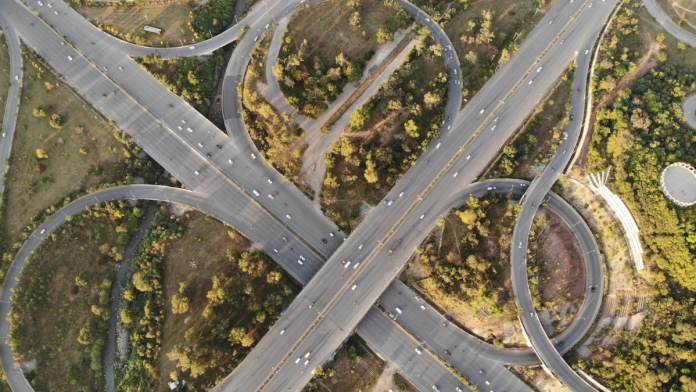
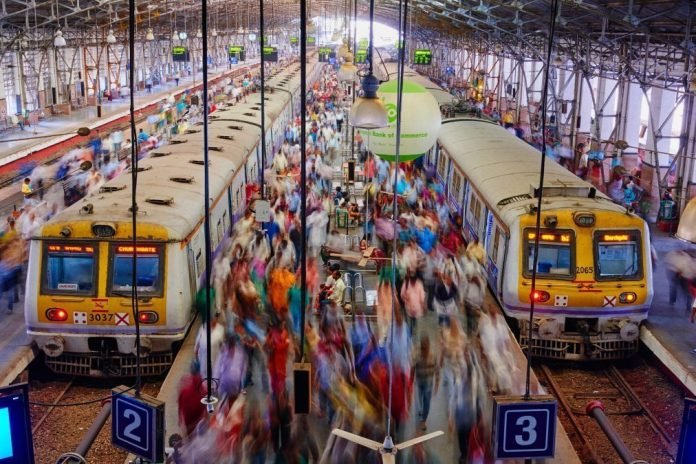
New Delhi: Prime Minister Narendra Modi has flagged-off the Delhi-Faridabad Metro Line that would allow hassle free travel for around two lakh daily commuters between the national capital and the industrial hub in Haryana.
The extension of the Delhi Metro connects Badarpur to Escorts Mujesar in Faridabad.
The total cost of the project from Badarpur to Escorts Mujesar is nearly Rs. 2,500 crore. Out of this, Rs. 1,557 crore was borne by the Haryana Government, the Centre contributed Rs. 537 crore, while the Delhi Metro provided Rs. 400 crore.
All these are elevated and located on either side of the Delhi-Mathura Road (NH-2).
“The nine-station metro corridor which was 95 per cent indigenously built will provide people a safe, affordable, quick, comfortable, reliable, environment-friendly and sustainable transport facility,” a Haryana government spokesperson said.
Haryana Chief Minister ML Khattar, addressing a press conference on Saturday, had thanked the Prime Minister for “gifting” the Metro service which would take the city to “another level of progress” with better connectivity with other NCR towns.
He had also said that the Prime Minister would be announcing the go-ahead for connecting Gurgaon with Faridabad by Metro.
Amber Group and Titagarh Rail Systems Forge A Strategic Alliance for Train Components and Subsystems Business
(Representational image)
TITAGARH (Metro Rail News): Titagarh Wagons Limited (TWL) informed all stakeholders that, in a significant milestone transaction, the Italian government, through its investment arm- Invitalia, had purchased a strategic position in Titagarh Firema Spa (TFA) which is a subsidiary of Titagarh Wagons Limited.
The Italian government will then hold a 30.30 percent ownership stake in Titagarh Firema in exchange for a 10 million euro investment.
Their investment was then followed by one from the UAE-based private equity fund Hawk Eye DMCC. It spent 4.5 million euros and acquired 13.64% of the company’s equity share capital.
The company’s current founders and owners (Titagarh Bridges & International Pvt Ltd.) have also contributed 5.4 million euros as part of the investment agreement and recapitalization plan signed by TFA with the Government agency and the Private Equity fund.
The newly issued equity had a face value of 1 euro per share, giving the business enterprise value of 118 million euros and an equity valuation of 33 million euros.
The recapitalization process will increase TFA values and create overall value in this strategic transaction. The Company along with its subsidiary Titagarh Bridges & International Private Limited (TBIPL), still owns shares of 16.40 million euros or 49.70 percent of TFA.
Titagarh Wagons was trading at Rs162.85 up by 4.06% from its previous BSE closing price of Rs156.50.
PUNE (Metro Rail News): Tata Sons, the holding company of the Tata group, is investing Rs 975 crore in Pune IT City Metro Rail, a special purpose vehicle that obtained the contract to build, operate, and maintain the project between Shivaji Nagar and Hinjewadi in the city.
74% of the SPV is owned by Tatas, and the other 25% is owned by Siemens Project Ventures. According to a financial source, the 23-km of Rs 7,420-crore project is being financed with a debt-to-equity ratio of 1.8 times, the full debt has been secured, and Tata Sons is supporting the planned equity participation. The Maharashtra and Union governments each have a 50% share in the development of the Pune metro rail.
Tata Sons, which had standalone debt of Rs 30,000 crore as of March this year, is planning to raise funds via issuing non-convertible debentures. Tata Sons are also looking at listing its satellite TV broadcasting arm, Tata Play, to raise around Rs 3,200 crore.
According to bankers, Tata Sons is concentrating on enhancing the profitability of its digital, electronics, and aviation businesses. Some entities, such as the Pune metro SPV, may need investment from Tata Sons as growth capital because TRIL is concentrating on retiring its debt. Tata Sons are likely to seek out extra debt financing for these projects in addition to spending its own cash, which is anticipated to come in the form of dividend income in the current fiscal year,
Tata Sons, as of March had a standalone debt of Rs 30,000 crore and intends to raise money by issuing non-convertible debentures. Tata Sons are also considering offering Tata Play, its satellite TV broadcasting division in order to raise about Rs 3,200 crore.
“Tata Sons also owns stakes in profit-making insurance companies and may look at raising funds by selling part of their stakes,” the banker said.
TRIL is planning to sell its recently commissioned roads and ropeway projects to raise funds and retire its own debt.
Zaragoza (Metro Rail News):Teltronic, a Spanish company specialised in the design and manufacture of critical communications solutions has been selected by Alstom to supply and integrate the on-board equipment, radio terminals and control centre solution that will provide Mission Critical Services MCX (MCPTT & MCData) for the Delhi to Meerut Regional Rapid Transit System (RRTS), a high-speed commuter rail currently under construction that will link these two important Indian cities via an 82 kilometres rail corridor. This project demonstrates the validity of Teltronic’s communication solutions over MCX (critical broadband communications applications and the infrastructure that supports them) defined by the 3GPP standard; a technology that will allow the line operator a smooth transition to FRMCS (Future Rail Mobile Communication System) in the future. In this way, Teltronic will provide its Control Centre solution, CeCoCo, with a total of ten operator stations. In addition to being the onboard communications management platform based on 3GPP MCX and connected to a third-party MCX server, it incorporates a Geographic Information System (GIS) that allows real-time visualisation of the location of terminals and trains, and will be integrated with the Train Management System and will also allow communications with the public address and intercom systems. As a part of the solution, Teltronic will also equip the trains with its on-board solution, consisting of an RTP-800 on-board unit in each cabin, an RCC-3000 touchscreen control console and audio accessories that will be equally integrated with the public address and intercom systems on the train, and with the TCMS (Train Control & Management System). The Teltronic onboard units will be connected to the Alstom NetBox mobile router managing the train-to-ground connectivity for all services. Finally, Teltronic will also supply more than 600 LTE terminals, both desktops and rugged portable terminals that will be used by the line’s operations and maintenance staff. “This project is a clear demonstration that our solutions for railway environments comply with the 3GPP standard for MCX services. Teltronic reaffirms its commitment to standards as a reference framework and after a clear target for R&D to evolve our solutions to the technologies of the future, we are proud that Alstom has selected us and that we can demonstrate that Teltronic will continue to play a key role in private communications”, explained Felipe Sanjuán, Transport Business Development director.
Mr. Sunil Mathur, MD & CEO, Siemens Limited at Siemens' Xcelerator launch on Siemens Innovation Day 2022
MUMBAI (Metro Rail News): Siemens announced the launch of ‘Siemens Xcelerator’ in India at its Annual Flagship event ‘Siemens India Innovation Day 2022’ in Mumbai on 14th September 2022. Siemens Xcelerator is an open and evolving digital business ecosystem that comprises a comprehensive, curated portfolio that includes digital and Internet of Things (IoT)-enabled offerings (software, hardware, and digital services) from Siemens, and certified third parties.
Siemens Xcelerator is aimed at accelerating digital transformation and value creation for customers of all sizes in the industry, buildings, grids, and mobility. The curated portfolio of software, IoT-enabled hardware, and digital services follow key design principles of interoperability, flexibility, openness, and as-a-service. Siemens Xcelerator also includes an evolving marketplace to facilitate interactions and transactions between customers, partners, and developers.
Peter Koerte, Chief Technology Officer and Strategy Officer, Siemens AG, said, “India will play a key role in the global roll-out of Siemens Xcelerator. With over 6,000 software engineers at our development centers in the country, India will be at the forefront and a key hub to further accelerate the digital transformation efforts of our customers worldwide. This is both an ambition and a reality. With the launch of Siemens Xcelerator, I am confident that as partners, Siemens can scale up the innovation and digital transformation journey for customers in India.”
Sunil Mathur, Managing Director and Chief Executive Officer, Siemens Limited, said, “With Siemens Xcelerator, we have taken everything that a customer needs onto one platform, allowing them to accelerate their digital transformation easier, faster, and at scale. SMEs in India will be the greatest beneficiaries of this platform as it can help them to scale up, upgrade and adopt new designs and components much faster to stay competitive. Siemens Xcelerator will help to create a powerful ecosystem of partners who can jointly accelerate digital transformation tailored to specific business goals. Our aim is to help companies to increase their performance, flexibility, and sustainability.”
At Siemens India’s Annual Flagship event ‘Siemens India Innovation Day 2022’, the company showcased a wide range of the latest technologies, innovative solutions, and successful references to help organizations in India accelerate their digital transformation.
AGRA (Metro Rail News):Uttar Pradesh Metro Rail Corporation has shared the aerial view of World class Agra Metro Depot on its Twitter handle. Agra inching closer toward the goal of attaining a world-class metro rail system. World-class Agra Metro Depot is being constructed for the first corridor of Agra Metro.
The depot will be used for stabling and maintaining the metro trains inside the depot area after day-long operations. Various structures are being made inside Agra Metro Rail Depot using the PEB Technique (Pre Engineered Building ) Technique which is a modern technique for building various civil structures and uses comparatively lesser time, and effort and is more efficient.
The progress of depot construction is going on at a rapid pace and structures like integrated workshops, auto–coach washing plants and stabling yards are being constructed in the depot for various functions.
A shed above these structures is being built and very soon the work of covering these PEB Structures will be complete. Similarly, test track work inside the depot premises is also complete and a pit wheel lathe machine has also been installed in the depot which will be used to check any malfunctions in the wheel, its alignment, etc.
The first corridor of the Agra Metro Rail Project, which runs from Taj East Gate till Sikandara is 14 km long comprising 13 stations. The work on the second corridor will also be begun very soon.
GHAZIABAD (Metro Rail News): The Regional Rapid Transit System (RRTS) project’s first train in the nation would likely start its trial run in November. The first RRTS train will be tested on the 17-kilometer priority section in Ghaziabad, and it will be the first RRTS stretch to be operational in March 2023, officials of the project executing agency, National Capital Region Transport Corporation (NCRTC), stated.
The first two trains have been delivered to the NCRTC by the Savli manufacturing facility in Gujarat, and a third train would be delivered to the Duhai depot in Ghaziabad shortly official added. A control center at the Duhai depot will oversee all train operations for the priority section.
“The work for the viaduct for the 17-km priority section is about 99% complete. Once it is over, the work for laying tracks and installation of overhead equipment will be taken up in the month of October. Thereafter, the trial run will start in November. The trial run will involve the speed test of the trains and will also include a host of other tests for the safety and operational readiness of RRTS trains. The speed test will see the trains touch the 180 kilometers per hour (kmph) mark,” said Puneet Vats, NCRTC chief public relations officer.
The six-coach RRTS trains will run at a design speed of 180kmph. According to official sources, the RRTS trains’ real operating speed will be close to 160 kmph, and their average running speed would be near 100 kmph.
In March 2025, the RRTS project’s entire 82-km phase will connect Delhi, Ghaziabad, and Meerut and would be put into service. According to sources, the NCRTC has proposed 30 trains with six coaches each in addition to 10 trains with three coaches for Meerut’s local transit module.
Official sources added that different departments of the RRTS project will conduct their tests during the trial run. Thereafter, an integrated test of all the systems will take place before the final safety clearance is given for going ahead with passenger operations.
“With the trial run phase nearing, the work for five RRTS stations on the priority stretch is also being expedited and is over 60% complete. These five stations will become fully operational when the priority section starts. Once the trial runs end, the fares will also be rolled out,” Vats added.
The total cost of the 25-station project, located in Delhi and Uttar Pradesh, is estimated at Rs. 30,274 crores.
Vaishnaw also went to Gandhinagar and looked over the station’s amenities. He was accompanied by senior railroad officials from Western Railway and National High-Speed Rail Corporation Limited (NHSRCL), including General Manager (In-Charge) of Western Railway Prakash Butani and the Divisional Railway Manager of Ahmedabad Division Tarun Jain.
Hon'ble MR @AshwiniVaishnaw today inspected the under-construction multi-modal Sabarmati transport hub.
This multi-modal transport hub in Sabarmati will integrate Indian Railways, bullet train, metro rail & BRT in one place. pic.twitter.com/UhX4zYK3JE
According to Chief Public Relations Officer of Western Railway Sumit Thakur, Vaishnaw arrived at the Gujarat capital in the morning and inspected the various aspects of passenger-related amenities at the station.
He then rode in the inspection car to conduct a track inspection from Gandhinagar station to Sabarmati station. Vaishnaw also visited the One Station One Product stand at the Sabarmati station. He then arrived at the Sabarmati High-Speed Rail station construction site and review the progress. The railway minister also viewed the miniature model of the upcoming future Sabarmati HSR station. Officials from NHSRCL informed him of the numerous advances and progress made on the project. He interacted with the workers and encouraged their spirits by appreciating their efforts in the nation-building.
Vaishnaw went to the top of the Jhulta Minar in Ahmedabad and conducted a detailed inspection by going to the top of the structure.
Vaishnaw spoke with media representatives and gave them updates on the Vande Bharat Express and Bullet Train trains, Thakur stated. The rail minister revealed details regarding the Bullet Train project, saying that more than 80 kilometres of piers have been constructed. The installation of decks, viaducts, tracks, and overhead equipment is progressing.
The PRR is planned as a 74 km stretch with a 100-meter-wide road. On completion, it will connect Tumakuru Road and Hosur Road via Hessaraghatta Road, Doddaballapur Road, Ballari Road, Hennur-Bagalur Road, Old Madras Road, Hoskote-Anekal Road, and Sarjapur Road. Along with NICE Road, which links Tumakuru Road and Hosur Road via the city’s northwestern, western and southwestern areas, Bengaluru will have a 116-km-long bypass on its periphery.
The proposed alignment of PRR will be located at an approximate radial distance of 17 km – 25 km from the city center and is envisaged to be a bypass to the city for the long-distance personalized vehicles (cars and cabs) and commercial vehicles (trucks and LCVs). The total land requirement for the project, which was initially estimated to be 733 hectares (1811.28 acres), was later revised to 1036.51 hectares (2561.27 acres) due to the change in length of PRR from 65.5 km to 74 km. The increase in length was due to realignment and inclusion of cloverleaf structures to integrate at Tumkur Road and Hosur Road with NICE road.
The project’s total cost is Rs 14,934 crores, out of which Rs 9,318 crore is required for land acquisition and rehabilitation purposes, while the construction cost is estimated to be around Rs 5,600 crores. The state government has already provided administrative approval for the project. When originally conceptualized 15 years ago with the aim of decongesting Bengaluru and easing traffic, the project was estimated to be Rs 3,000 crore. But due to design, rapid urbanization, and land acquisition challenges, the project could never take off despite repeated attempts.
The project is very significant to Bangalore city because it is expected to address serious traffic challenges. According to local authorities and the state government, Bengaluru needs PRR given the massive geographical expansion of the city to the current spread of 2196 sq km and explosive growth of vehicular ownership (2019 estimate – over 80 lakhs). The ring road is also expected to provide massive economic benefits. Bengaluru has been attempting to complete several large ring road projects to improve its city-region connectivity and alleviate traffic congestion. A Satellite Town Ring Road (STRR) is currently under construction.
Environmental Issues
The project has received initial environmental clearance, which was required as it involves the diversion of 7.91 hectares (19.54 acres) of forest land in the Jarakabandekaval reserve forest. Since the boundary of Bannerghatta National Park and Puttenahalli bird conservation reserve is located at a distance of 7.21 Km and 1.49 Km, respectively, additional approvals were required. The proposed PRR alignment is close to Peenya Industrial Area and Jigani-Bommasandra Industrial Area, which are notified as severely polluted and critically polluted areas by CPCB.
As per the environmental impact assessment (EIA) done for the project, 36,824 trees will have to be uprooted for the project. At Thippagondanahalli reservoir, 20 km of the proposed road will be built and 13,355 trees will come in the way of the project. More than 630 trees have been identified in the Jarakabande Kaval reserve forest area.
Environmental groups also say that there are six lakes along the proposed road alignment, and construction will result in a significant loss of habitat for small mammals like squirrels and bats and birds like the Black kite, Brahminy kite, Common buzzard, and the Indian peafowl. They argue that about 555 hectares (1,371 acres) of farmland will also be lost to the PRR.
BDA has proposed to mitigate the impact of the PRR on the environment by planting ten trees for every tree removed (a total of 3,38,380 trees to be plated). BDA has also undertaken to erect barriers on both sides of the road construction site to mitigate dust and air pollution. It has promised that no materials will be dropped from a height greater than 3 feet to minimize dust and that water will be sprinkled on the construction site at least three times a day.
It is also to note that, approximately 33,000 trees will be felled for PRR development, which has sparked concerns from environmentalists. This project will also affect forest land in Jarakabandekaval and six water bodies. The authorities have laid out a plan for planting trees in lieu of those that would be axed. However, the final Environmental Impact Assessment (EIA) report is still awaited as some details of the project have now been revised. To construct the PRR in Bangalore, land in around 67 villages will have to be acquired, spread across 8 districts. These are:
Yeshwanthpur
Hesaraghatta
Yelahanka
KR Puram
Bidhrahalli
Varthur
Sarjapur
Attibele
Land Acquisition Challenges
A major legal hurdle for the project was cleared in Nov 2021 after the Supreme Court directed the Karnataka government and the Bangalore Development Authority to acquire the land for the formation of PRR and proceed to implement the project. The SC permitted the project to go ahead in response to an affidavit filed by the Additional Chief Secretary, Government of Karnataka, Urban Development Department, Bengaluru.
Of the total land notified, government land consists of about 114.20 hectares, Kharab land consists of 43.43 hectares, and the remaining private land is 555.57 hectares. A section of land owners oppose BDA’s proposal to compensate them under the BDA Act and have demanded compensation under the Right to Fair Compensation and Transparency in Land Acquisition Act 2013. According to an estimate by BDA that was done in 2021, the land acquisition cost would shoot up by more than Rs 14,000 crores if the compensation package is fixed as per the 2013 Act. Even when the Congress-led United Progressive Alliance government passed the bill in 2013, the critics pointed out that it would increase the cost of infrastructure dramatically. While the National Democratic Alliance government attempted to dilute the law by ordinances etc, it abandoned the idea after opposition from allies and a lack of majority in the Rajya Sabha. BDA and the state government may need to come up with some innovative funding ideas to resolve the problem.
Timeline & Major Phases
The project was mooted in 2005-06 by the then government.
Between 2006 and 2010, the land acquisition process hit a roadblock with a number of landowners approaching Courts.
In 2011, the High Court canceled the project due to delays. The government then revised the length of the road to 65 km and sought the Court’s permit for land acquisition.
The project got environmental clearance in 2014, and by 2015, the Urban Development Department gave its assent to the project.
Now, with the Supreme Court giving its nod for land acquisition, the project has been brought back to life. Also, the original length of the road has been revised from 65 km to 73.5 km to enable the linking of the road with the BMICP Expressway, or the NICE Road as it is locally called. Japanese agency, Japan International Cooperation Agency (JICA), was roped in to finance this project. Initially, the project’s cost was pegged at Rs 3,000 crore, which has jumped to Rs 21,000 crore now, with land acquisition forming the bulk of this amount.
Summary
The Peripheral Ring Road (PRR) is the third Ring Road of Bangalore developed by the Bangalore Development Authority (BDA). The 73 km circular road will lead from Hosur Road and connect to Tumakaru Road and NICE Road to form a complete circle around the boundaries of Bangalore.
After being on the drawing board for several years, the Peripheral Ring Road Project (PRR) has finally received a nod from the Karnataka government. The mega project would encircle the peripheral areas of Bangalore, the city best known for its IT/ITeS hubs and new-age businesses. Once through, the development will create new connectivity points and fillip the realty landscape in Bangalore by and large.
Special Features
As per the plans, the Peripheral Ring Road will be a 73 km circular road, with eight lanes (100 meters wide) and four service lanes. It will cover areas of North and East Bangalore and Anekal. The stretch will start from NICE Road Junction at Tumkur Road, pass through Bellary Road, Old Madras Road and end at National Highway- 44 on Hosur Road. Further, it will also be integrated with the semi-circular NICE Road near BIEC and near Konappana Agrahara.
About 2,400 acres of land are expected to be acquired for the road. The project will be executed via a public-private partnership on the Design-Build Finance Operate and Transfer model. The road developer will get a concession to collect tolls for 50 years to meet the funding targets of the project and recover its costs and profits. Once completed, the road will have 17 toll plazas and two clover field junctions at Old Madras Road and Airport Road. A total of nine entry and exit points have been identified with five flyovers, four underpasses, and five Railway Overbridges (ROB).
As per the project plan, someplace in the median will be left vacant for metro projects in the future. It will also have provisions for a helipad and electronic charging stations for EVs.
The Need for the Third Ring Road
At present, Bangalore has two Ring Roads. The Inner Ring Road links Indiranagar to Koramangala, while the Outer Ring Road (ORR), which is 60 km long, links all the highways that converge into Bangalore, including five National and five State Highways. These include Mysore Road, Bannerghatta Road, Tumkur Road, Magadi Road, and Kanakpura Road, among others.
It is estimated that more than 10,000 heavy vehicles use the Outer Ring Road, which is also facing pressure from the growing real estate around it. The new Kempegowda International Airport also pushes the vehicular traffic here. Keeping in mind the traffic burden on existing roads and the increasing number of new vehicles in Bangalore (the district is witnessing a 10 percent annual vehicle growth), the Peripheral Ring Road received renewed interest from policymakers.
Latest Update
In April this year, the Bangalore Development Authority (BDA), the nodal authority tasked with the responsibility for providing civil amenities for the metropolis, floated a global tender inviting construction infrastructure firms to submit bids to develop a greenfield 8-lane, 74 km PRR through a public-private partnership (PPP) on design, build, finance, operate and transfer model (PPP-DBFOT).
It may be noted that the tenders were previously invited in March but have to be scrapped at the last moment due to technical glitches. This is the second time the tenders have been floated without any changes in the terms and conditions. Earlier, the farmer’s agitation delayed the construction as disputes relating to land acquisition reached the Courts. However, the authorities have now received a go-ahead from the Supreme Court. Global tenders were invited by BDA last year. An Israeli firm, Symba Maz, has expressed interest to invest in this project, the cost for which has now escalated to Rs 21,250 crore.
As per the tender terms, the winning concessionaire will get a 50-year lease period for collection of the toll to recover the cost and then hand over the project to the State Government. The winning concessionaire would also be required to pay upfront part of the land-acquisition cost. The BDA also notified the last date for submission of the bids as May 18 and the bid opening date was May 20. However, as per few reports in June again, BDA decided to scrap the tender process and announced that it would issue a fresh one. The decision to scrap the tender was attributed to queries from potential investors who participated in the tender process, seeking clarification on the land acquisition cost.
The government has created a Special Purpose Vehicle (SPV) called the Bengaluru PRR Development Corporation Ltd for implementing this project. Formal tenders are expected to be invited soon to finalise a developer for this road. With the Cabinet approval in place, the project seems to be moving up from the drawing board to the implementation stage. Once constructed, this road project would significantly ease the high-traffic areas and have a strong effect on the real estate market in Bangalore.
The Guwahati Metro is a rapid transit proposed for the city of Guwahati, Assam. The system plan consists of 4 corridors covering a distance of 61.42 km in phase one of the Guwahati Metro. On 11 January 2013, former Chief Minister of Assam Tarun Gogoi held discussions with officials of the Guwahati Development Department and Guwahati Metropolitan Development Authority, in which after detailed deliberations it was agreed that there was a need to urgently take up the study of introducing a metro rail and bus rapid transit system in the city to arrest the chaotic traffic condition on the streets.
The survey of the proposed project included preliminary exercises such as a study of the number of commuters in different areas of the city at different times of the day and a calculation of the estimated cost of the project. The survey conducted a track-type feasibility study at different places. Three types were considered: underground track, overground track, an elevated track. The Khanapara – Jalukbari route was proposed to have overground and elevated tracks because this route is not congested. The other two routes were to have a combination of underground and elevated tracks. The contract to make a feasibility report and prepare a detailed project report was awarded to M/S Rites in June 2014. However, it was suggested that elevated tracks will be most viable in Guwahati because they are cheaper and can boost tourism potential.
Project Details
Operational : 0 Km
Under Construction : 0 Km
Proposed: 61.4 Km
Phase 1 Routes
Line 1: Dharapur – Narangi
Length : 22.6 km
Type: Elevated
Number of Stations: 22
Line 2: MG Road – Khanapara
Length: 10 km
Type: Underground
Number of Stations: 10
Line 3: Jalukbari – Khanapara
Length: 19.4 km
Type: Elevated
Number of Stations: 14
Line 4: ISBT – Paltan Bazar
Length: 9.4 km
Type: Elevated
Number of Stations: 8
Additional potential lines being explored:
Dharapur – Guwahati Airport
North Guwahati – AIIMS
Summary
Guwahati Metro is a 61.40 km urban Mass Rapid Transit System (MRTS) with 4 lines and 54 stations proposed to be built in Guwahati, Assam. Guwahati Metro Phase 1 project’s Feasibility Report and Detailed Project Report (DPR) was prepared by RITES in January 2016. On February 26, 2016, this DPR and the formation of Guwahati Metro Rail Corporation Limited (GMRCL), to execute the project, were approved by Assam’s state government.
In January 2017, the new government’s state cabinet reviewed the project and suggested modifying the DPR with additional lines connecting Dharapur with Guwahati Airport and North Guwahati with AIIMS in Phase 1 itself. As of March 2020, RITES has been tasked with preparing a Comprehensive Mobility Plan (CMP) & Alternative Analysis (AA) Report for Guwahati. After the approval of these reports, Guwahati Metro’s DPR will be modified and finalized accordingly.
Latest Update
Guwahati Metropolitan Development Department (GMDA) revealed that a new Metro Rail Policy was introduced by the Centre in 2017, which asked for a rigorous assessment of new metro proposals. States were required to adopt innovative mechanisms to mobilize resources for financing metro projects. The options for availing Central assistance include Public Private Partnership (PPP) with Central assistance under the Viability Gap Funding Scheme of the Ministry of Finance; grant by the Centre, under which 10% of the project cost would be given as a lump sum central assistance; and 50:50 equity sharing model between the Central and State governments. Under all these options, private participation, however, was mandatory.
The Feasibility Report for Guwahati Mass Rapid Transport System (MRTS) was completed by the Rail India Technical and Economic Service Limited (RITES) in March 2015, for a total corridor length of 203 km in three phases and a complete DPR (Phase-I) for a total length of 62.95 km in January 2016. The State Cabinet, on February 2, 2016, approved the DPR (Phase-I) for MRTS and the State-owned Special Purpose Vehicle (SPV) namely Guwahati Metro Rail Corporation Limited, to carry forward the implementation of rail-based MRTS for Guwahati city.
DPR for Phase-I was prepared for a total length of 61.4 km. Phase-I would have 4 corridors:
Corridor-2: MG Road to Khanapara (Underground) = 10.0 kms
Corridor-3: Jalukbari to Khanapara (Elevated) = 19.4 kms
Corridor-4: ISBT to Paltan Bazar (Elevated) = 9.4 kms
The DPR was sent to the Union Ministry of Urban Development (MoUD) in May 2016. The MoUD advised the State government to resubmit the proposal along with an updated Comprehensive Mobility Plan (CMP). The State Cabinet in January 2017, suggested some changes and asked GMDA to recast the DPR (Phase-I) for Rail-based MRTS. The Government also instructed the GMDA to prepare the DPR for additional metro corridors from Dharapur to Guwahati Airport and Jalukbari to North Guwahati.
Meanwhile, the Government of India adopted the Metro Rail Policy, 2017, and advised the states to submit MRTS proposals accordingly. As per the new policy, the project DPR required Alternative Analysis (AA). In the case of Guwahati, a CMP was also required. On approval of the Government of Assam, RITES was handed over the preparation work of the CMP and AA Report for Guwahati on a nomination basis, which is for the CMP at Rs 1.25 crores (excluding taxes) and AA reports at Rs 35.00 lakhs (excluding taxes). The timeline for CMP was 4 months and the AA report was 2 months.
During the review meeting of the presentation of the inception report of the CMP, held on December 2018 under the Chairmanship of the Principal Secretary of Guwahati Development Department (GDD), RITES was enquired by the Principal Secretary of GDD about the inclusion of a traffic impact study from Assam State Capital Region Development Authority (ASCRDA) region in the present scope of CMP and was asked to submit proposal and cost implications for the study. The ASCRDA area is approximately 6,100 sq km, covering five districts namely Kamrup Metropolitan, Kamrup, Nalbari, Darrang, and Morigaon. RITES said that since the traffic study for the CMP is for the Guwahati Metro Region, the inclusion of the traffic impact study from the ASCRDA area can be done at a very reasonable rate and time.
RITES submitted the final CMP and AA report in 2018, but since then the State government has not yet decided on any further course of action on the project. It needs to be mentioned that metro projects are highly capital intensive and therefore need to be justified on several grounds. The viability of the metro has to be ascertained from all aspects. Social benefits, financial viability, growth of the city, commuting issues, and various other factors needed for easy commuting of the metro system must be taken into consideration. It has been 5 years now and the GDD Department has not done enough to start the project, which makes the metro rail in Guwahati a distant dream. However, it must be noted that if the population of Guwahati has reached 20 lakhs, it is the right time to plan for a metro system for the city. At least 5 to 6 years are required for getting the metro operational in a hilly and picturesque area like Guwahati. Nevertheless, it is beyond doubt that the ‘Gateway to North-East India’ deserves to have a metro system.
Good public transport systems are an essential part of safe, clean, and affordable transport for development. From a social perspective, public transport is often the only means of transport for the poor. Without it, they would be able to look at work opportunities only within walking distance of their homes, so public transport improves their livelihood opportunities. It also gives them greater access to education, health care, and recreation. For senior citizens, people with disabilities, and children, public transport is also their main means of mobility.
From an urban mobility perspective, public transport is far more efficient than personal motor vehicles in terms of the road space it uses up and the energy it consumes. For example, a bus carrying 40 passengers uses only 2.5 times more road space than a car carrying only 1 or 2 people. And the same bus consumes only about 3 times as much fuel as a car. Public transport is thus important for improving sustainable mobility in urban areas, and it is well considered the right approach to encourage low-carbon growth in cities.
Key elements of a sustainable public transport system
A good public transport system must be easy and convenient to use. It also must be fast, safe, clean, and affordable. Seoul, Singapore, and Hong Kong are known for their excellent transport systems. Smaller cities like Lyon in France and Curitiba in Brazil also have very good systems. More recently, León in Mexico, Pereira in Colombia, Lagos in Nigeria, and Ahmedabad, Delhi & Bangalore in India have developed good systems. Many more are in the development stages.
A key feature is that they integrate multiple technologies, such as metro rail, light rail, Bus Rapid Transit, and basic bus services. A common ticket or fare card serves all the systems, making it easy for passengers to transfer from one mode to the other. Passenger information systems enable users to know when the next service is due and to understand the routes easily, and a high frequency of service reduces the hassle of a long wait for the next bus or train.
Main barriers to sustainable public transport in developing countries
An important barrier is the historical industry structure. Many countries in Africa (Ghana, Nigeria, South Africa), Latin America (Colombia, Peru) and Asia (Philippines, Indonesia) have bus systems that are owned and operated by a large number of small operators. Meanwhile, other countries in Asia (India, China), North America (USA, Canada), and Europe (France) have a single publicly owned entity that provides all transport services. Experience shows that neither of these is the best for ensuring a good public transport system.
Having a large number of small operators allows for low-cost services, but the quality is poor due to severe competition. Other disadvantages include dangerous driving practices, pollution, and a tendency to have too much service on profitable routes and virtually no service on non-profitable routes. Meanwhile, single publicly owned entities may offer a higher quality of service but costs tend to be high and the quantity of service is often inadequate.
There is increasing recognition that the best industry structure falls somewhere between the two. Having a single public entity that plans the network and determines the quality of service, with a small number of private operators providing services under structured contracts, allows a balancing of public good needs with the operational efficiency of the private sector. However, the historical industry structures make it difficult to undertake reforms.
Another barrier is the financial sustainability of mass transit systems, especially metro rail. These cost a lot to build as well as to operate, and so the operating costs are not recovered through fares. It is essential to look at additional revenue sources, beyond fares, to sustain such systems.
The social image of public transport is another barrier. In developing country cities, as income levels go up, people like to demonstrate their enhanced income status by shifting from public modes to personal motor vehicles. The public transport system is seen as the only option for people who cannot afford their own vehicle. As a result, people tend to look down on someone who is using public transport. Getting the image of public transport right is a challenge.
Transportation Affordability: An Understanding
Affordability refers to people’s ability to purchase basic goods and services. It can be defined as the situation in which household incomes can purchase Basic Goods (housing, food, medical care, and transport), or simply that lower-income people need not worry too much about purchasing essential goods and services. Since affordability refers to a household’s ability to save money, it is particularly evident in the expenditure patterns of lower-income households, and their response to financial limitations such as reduced income or new cost burdens; for example, public transit services tend to provide affordability because they provide a fallback option to lower-income commuters when their vehicles are unavailable.
Transportation affordability means that people can purchase access to basic goods and activities (medical care, basic shopping, education, work, and socializing), which typically means that households spend less than 20% of their budgets on transport and less than 45% on transport and housing combined. This is a critical equity objective since it affects the cost burdens and opportunities available to disadvantaged people. Transportation affordability can be evaluated from several perspectives. It is affected by the number of vehicles that a household must own, the costs of owning and driving each vehicle, indirect costs such as residential parking, and the quality and costs of alternative modes such as transit ridesharing, cycling, walking, car-sharing, and taxi services.
Lower-income households tend to be particularly impacted by the costs of alternative modes since they rely on them more than households with higher incomes. Individual and community factors influence transportation affordability. People who must commute to work or school have greater transportation requirements than people who do not work or work at home. People with physical disabilities or other special needs tend to require more expensive transportation services. Many planning decisions affect transportation affordability. Modern transport planning responds well to the demands of wealthy travelers but not to the needs of the poor. Current planning supports automobile, air, and freight transport but does much less to improve affordable modes such as walking, cycling, and public transit travel, or to ensure that affordable housing is available in accessible locations. This is unfair and exacerbates economic problems since many workers find it difficult to access education and employment, and because motorized modes require costly infrastructure, impose external costs, and are resource-intensive, leading to increasing dependence on imported oil.
Affordability should be evaluated with regard to total rather than unit costs. For example, low per-gallon fuel prices provide less affordability in an automobile-dependent community where high vehicle ownership and mileage is necessary for access than high fuel prices with a more diverse transportation system and a more accessible land use pattern. In general, automobile dependency tends to increase per capita transportation costs and reduce overall transportation affordability, while smart growth can increase transportation affordability by creating more accessible land use (which reduces the amount of travel needed for basic access) and improving affordable transportation options such as public transit, ridesharing, cycling and walking. Smart Growth and TDM (Transport Demand Management) programs can help increase the prestige of affordable modes such as walking, cycling, and transit, making it more socially acceptable for residents to use them. As a result, a greater portion of household wealth is devoted to mobility in automobile-dependent communities than in communities with more balanced transportation systems.
Integration of Rural & Urban Transport System
In rural areas, the challenge is in providing connectivity to urban markets for rural produce. Public transport is not needed to meet travel needs within each village. Such connectivity to urban centers, or between one village and another, need not be run at a very high frequency – a few services a day are usually enough. The challenge, however, is to be able to do it at an affordable price. In urban areas, the challenge is that there are competing modes, like personal vehicles, which are unsustainable. In getting people to choose public transport over personal vehicles there are stringent quality parameters that need to be met. These relate to convenience and reliability, which are not as stringent for rural-urban connectivity or even for connecting one rural area to another.
Transportation Costs
Although it is possible to purchase an automobile for just a few hundred dollars, such vehicles tend to be unreliable, with high maintenance and repair costs. As a result, most lower-income motorists constantly face the risk of unaffordable vehicle repair and replacement costs. Vehicle insurance also tends to be a significant financial strain on low-income motorists. Many lower-income motorists are in higher-risk insurance categories due to age, experience, and territory rating factors, and so must pay hundreds of dollars for basic coverage. As a result, they face the choice of devoting an excessive portion of their income to vehicle insurance, driving uninsured (which is illegal in many jurisdictions), or foregoing automobile ownership.
On the other hand, low- or moderate-income household can easily and affordably satisfy their basic access needs by using a combination of walking, cycling, ridesharing, transit services, and occasional vehicle rentals. TDM strategies that improve these options, and help create multi-modal communities, can significantly increase transportation affordability.
The portion of household income devoted to transportation tends to be particularly high for lower-income households that own an automobile and low for households that do not own an automobile. These factors are generally overlooked because most statistics aggregate the two groups together, essentially hiding the excessive cost burden of vehicle ownership on poor households.
Affordability & Ways to decrease the social divide
First and foremost, if budgets for transportation are small, it is important for cities to choose a system that meets their needs. There is no point in a city choosing a high-cost system if a smaller, less expensive system could do the job. Expensive systems can be a big drain on the public budget, not only for construction costs but also for the annual operating costs.
With regard to financing, the capital costs can be supported with loans, provided there is some contribution from the promoters – typically governments. The challenge is in the operations phase when not only do the operating costs have to be met but the debt service has to be covered. Further, it is usually difficult to balance cost recovery with affordability. Public transport is often the only mode of transport available to the poor, so fares have to be low, but low fares mean that costs are not recovered.
Fortunately, several innovative methods of financing have emerged, of which the commercial exploitation of land resources owned by public transport agencies seems the most promising.
Conclusion
The world is becoming increasingly urbanized. Since 2007, more than half the world’s population has been living in cities, and that share is projected to rise to 60 percent by 2030. Cities and metropolitan areas are powerhouses of economic growth—contributing about 60 percent of global GDP. However, they also account for about 70 percent of global carbon emissions and over 60 percent of resource use. Rapid urbanization is resulting in a growing number of slum dwellers, inadequate and overburdened infrastructure and services (such as waste collection and water and sanitation systems, roads, and transport), worsening air pollution, and unplanned urban sprawl. To respond to those challenges, 150 countries have developed national urban plans, with almost half of them in the implementation phase. Ensuring that those plans are well executed will help cities grow in a more sustainable and inclusive manner. The proportion of the urban population living in slums worldwide declined by 20 percent between 2000 and 2014 (from 28 percent to 23 percent). That positive trend recently reversed course, and the proportion grew to 23.5 percent in 2018. The absolute number of people living in slums or informal settlements grew to over 1 billion, with 80 percent attributed to three regions: Eastern and South-Eastern Asia (370 million), sub-Saharan Africa (238 million), and Central and Southern Asia (227 million). An estimated 3 billion people will require adequate and affordable housing by 2030 exerting additional pressure on the existing transport systems.
Air Pollution becoming an unavoidable health hazard
Nine out of ten urban residents in 2016 were breathing polluted air—that is, air that did not meet the WHO air quality guidelines for annual mean levels of fine particulate matter (PM2.5) of 10 micrograms or less per cubic meter. More than half of those people were exposed to air pollution levels at least 2.5 times above the guideline value. Air quality worsened between 2010 and 2016 for more than 50 per cent of the world’s population. Central and Southern Asia and sub-Saharan Africa are the two regions that saw the largest increases in particulate matter concentrations.
In low- and middle-income countries, the air quality of 97 percent of cities with more than 100,000 inhabitants did not meet air quality guidelines in 2016, compared to 49 percent in high-income countries. Ambient air pollution from traffic, industry, power generation, waste burning, and residential fuel combustion, combined with household air pollution, poses a major threat to both human health and efforts to curb climate change. More than 90 percent of air-pollution-related deaths occur in low- and middle-income countries, mainly in Asia and Africa.
Need for a sustainable & affordable transport system
People everywhere depend on transport and mobility systems to not only move from point A to point B, but to access economic opportunities, healthcare, food, services, and so much more. For this reason, transport systems can either make or break the liveability and affordability of cities. Governments can learn a great deal from Chile, where in 2019, a small public transport fare increase sparked nationwide protests that eventually lead to the election of a new government. While the hike in cost was simply the spark that incited a movement against wider austerity, the reverse can also be true: increased funding and support to public transport systems can be catalysts for enhanced equality and greater investments in all public services.
In so many cities, many people are forced to travel for hours to go to work (often at low-paying jobs), because living in or close to city centers is untenable and expensive. Women are especially affected by this, only further exacerbating gender inequality and poverty. While doing more on housing is an important step, efforts can also be made to increase connectivity in metropolitan areas. Transit deserts are a growing problem globally, including in developed countries like the United States, where working-class people embark on multi-modal, complex journeys of nearly two hours each way to earn, in many cases, a barely living wage.
Cities must work together with regional and national governments to expand public transport services and ensure affordability. Train and bus services, where available, should reach more communities, not only affluent ones. Where there is little to no public transport infrastructure, cities must engage informal transport providers to guarantee that services are safe and adequate and that costs are low. Very often, governments give little attention to this mode, even though in regions like Sub-Saharan Africa, up to 80 percent of the population relies exclusively on informal transport services for their mobility needs. In South Africa for example, while overall investments in transport are already low, national budgets do not give proper attention to the needs of the poor. While 66.4 percent of riders use informal minibus taxis, the state only allocates 1 percent of subsidies and support.
In addition, where possible, cities should also support active mobility infrastructure. Walking and cycling, while a fun and healthy choice for people of means in city centers are often a dangerous reality for poor people throughout the world. Car-driven urban planning has resulted in road systems that give little attention to the needs of pedestrians and cyclists. For this reason, cities must ensure that when people walk or cycle, they are able to do so safely and comfortably. Sidewalks should not only exist but be well maintained and protected from motor vehicles. Trees and other forms of urban greenery should be planted for shade and to make trips even more pleasant, possibly even encouraging motorists to ditch their cars for a bike.
Public transport is an essential service for urban residents and a catalyst for economic growth and social inclusion. Moreover, with ever-increasing numbers of people moving to urban areas, the use of public transport is helping to mitigate air pollution and climate change. According to 2018 data from 227 cities, in 78 countries, 53 percent of urban residents had convenient access to public transport (defined as residing within 500 meters walking distance of a bus stop or a low-capacity transport system or within 1,000 meters of a railway and/ or ferry terminal). In most regions, the number of people using public transport rose by nearly 20 percent between 2001 and 2014. Sub-Saharan Africa lagged behind, with only 18 percent of its residents having convenient access to public transport. In some regions with low access, informal transport modes are widely available and, in many cases, provide reliable transport. Stronger efforts are needed to ensure that sustainable transport is available to all, particularly to vulnerable populations such as women, children, seniors, and persons with disabilities.