Home Blog Page 23

DMRC’s East Vinod Nagar Metro Station Honoured at National Energy Conservation Awards 2025

0
DMRC’s East Vinod Nagar Station Honoured at National Energy Conservation Awards 2025

NEW DELHI (Metro Rail News): Delhi Metro Rail Corporation (DMRC) achieved a milestone as the East Vinod Nagar Metro Station on Delhi Metro’s Pink Line has been honoured with the ‘Best Performing Unit award in the Metro Stations sector’ under the National Energy Conservation Awards (NECA) 2025. 

The prestigious award was presented by President Smt. Droupadi Murmu at Vigyan Bhawan during National Energy Conservation Day and was received by Dr. Vikas Kumar, Managing Director of Delhi Metro Rail Corporation (DMRC).

The Bureau of Energy Efficiency (BEE), under the Ministry of Power, Government of India, selected the station following a comprehensive evaluation of applications from metro rail systems across the country.

As per the DMRC Press Release, East Vinod Nagar Metro Station has achieved this recognition through significant and consistent reduction in overall electrical energy consumption kWh & Energy Performance Index (EPI) (kWh/m2year) over the last three financial years, by regular monitoring of energy usage of various equipment and by implementing targeted Energy Conservation Measures, including retrofitting of 405 existing conventional type tube light fixtures of 2 X 28 W with 2 X 14 W LED tube lights. 

The station features a dedicated 150 kWp rooftop solar plant, supplying 49% of its total energy needs and substantially cutting reliance on grid electricity.

Furthermore, The East Vinod Nagar Metro Station also holds Platinum rating under the Indian Green Building Council (IGBC) certification from the Confederation of Indian Industry (CII), underscoring its dedication to sustainability and environmental responsibility.


Explore how AI-integrated systems are improving comfort, connectivity, and accessibility for passengers across metro and rail networks at the 6th edition of InnoMetro, India’s leading expo for the Metro & Railway industry which is going to held on 21-22 May 2026 at Bharat Mandapam, New Delhi

Register now: https://innometro.com/visitor-registration/

Advertisement1
InnoMetro_2026

Predictive Analytics in Railways: Driving Operational Excellence

0
Predictive Analytic in Railways

Introduction

Railway systems across the world are moving towards a new era of mobility. In this new era they are becoming data-driven to improve reliability, safety, and efficiency in rail operations. The expansion of rail networks, development of modern and faster rolling stock, and the growing demand for punctual services, managing vast and complex railway assets are together acting as a critical challenge for rail operators. In this context, predictive analytics is gaining attention as a resolution tool for these challenges that enables railway organistaions to transition from reactive maintenance and decision-making processes to proactive and data-informed management of railway assets. 

Predictive analytics involves the use of statistical algorithms, machine learning models, and data mining techniques to analyse historical and real-time data for identifying patterns and predicting future outcomes of railway assets. In railways, this approach helps anticipate component failures, optimise maintenance schedules, forecast demand, and improve asset utilisation. Data from multiple sources such as sensors installed on tracks, locomotives, and signaling systems, along with weather and operational data, are collected and processed to generate actionable insights.

The global railway sector has increasingly adopted predictive maintenance and analytics solutions to improve asset reliability and prevent unplanned downtime. There are many countries in the world including Germanym, Japan, and the United Kingdom that have implemented predictive systems for the monitoring of various railway assets such as tracks, wheels and other minor and major rail components.

In India, the Indian Railways has begun deploying AI-based predictive tools and condition monitoring systems under its broader digital transformation initiatives. A prime example is the Madhepura Electric Locomotive Factory, a joint venture between Alstom (74%) and Indian Railways (26%), which is responsible for manufacturing 800 Prima T8 WAG-12B locomotives for freight operations. To ensure the optimal performance of these high-power locomotives, two ultramodern maintenance depots have been established at Saharanpur and Nagpur, both designed to utilise predictive maintenance technologies for real-time diagnostics and reliability improvement.

As railway networks continue to modernise, predictive analytics represents a fundamental shift in how decisions are made moving towards a model where maintenance, scheduling, and operations are guided by data-driven predictions rather than routine inspections or reactive responses which are cost intensive and time taking. 

This article explores the concept of predictive analytics in railways, its applications in maintenance and operations, the underlying data infrastructure, global and Indian case studies, and how these technologies are driving operational excellence across the railway ecosystem.

Understanding Predictive Analytics in Railways

Exploring the Different Types of

Predictive analytics in the railway sector is a data-driven approach that uses statistical models, artificial intelligence (AI), and machine learning (ML) algorithms to predict potential system failures, optimise maintenance schedules, and improve overall network efficiency. It forms a part of the broader domain of data analytics and asset intelligence, which further helps rail operators to make informed decisions based on data patterns rather than routine inspection cycles or human judgment alone.

In a railway environment, data is continuously generated from multiple assets and operational systems. This includes information from track circuits, axle counters, onboard sensors, signaling equipment, traction motors, brake systems, and even weather monitoring instruments. These data points are collected through Internet of Things (IoT) devices and transmitted to centralised platforms for processing and analysis. 

By integrating ML models, the system identifies abnormal patterns or early indicators of deterioration in assets such as wheels, bearings, traction motors, and overhead equipment.

A key element of predictive analytics is its ability to integrate data from diverse subsystems rolling stock, track infrastructure, signaling, and power supply into a unified analytical framework. This integration enables cross-functional insights, such as correlating vibration data from wheelsets with track geometry variations or linking power consumption anomalies with traction motor performance. Such correlations provide actionable intelligence that supports timely maintenance interventions, thereby minimizing the likelihood of unexpected failures and service disruptions.

Globally, rail operators are adopting predictive analytics platforms that combine real-time monitoring with digital twins virtual replicas of physical assets that simulate behavior under different operational conditions. These digital twins help in testing scenarios, predicting wear rates, and planning asset replacements more accurately. In India, similar approaches are being introduced within locomotive and track monitoring systems, helping engineers move from schedule-based maintenance to condition-based strategies.

digital twin rail railway overhead lines rsz

For example: Deutsche Bahn (DB), which manages a network of approximately 33,000 kilometres of track and 5,700 stations throughout Germany, is among the leaders in this transformation. Its subsidiary, DB Digital Services (DSD), aims to improve network efficiency without expanding physical infrastructure. In partnership with NVIDIA, DSD is developing the first country-scale digital twin capable of simulating automatic train operations across the entire German network. This model provides a photorealistic and physically accurate virtual environment, allowing DB to optimise scheduling, test new systems, and predict infrastructure behaviour under real-world conditions before implementation.

Applications of Predictive Analytics in Railway Operations

G1w3L0mbAAE8QjA

Predictive analytics has become an essential component of modern railway operationsad as it is capable of addressing a wide range of use cases from asset maintenance to passenger management. WIth the help of large volumes of operational data, railway and metro operators can anticipate system behavior which can further be utilised for minimising unplanned disruptions, and optimise resource allocation. The following are key domains where predictive analytics can make improvements in efficiency and reliability.

Predictive Maintenance

One of the direct applications of predictive analytics in railways & metros is predictive maintenance, which allows operators to monitor the condition of assets in real time and identify potential failures before they occur. Traditional maintenance methods rely on fixed schedules or manual inspections, which often lead to either premature part replacement or delayed interventions. Predictive maintenance, on the other hand, uses real-time data collected from sensors attached to locomotives, bogies, wheels, and tracks to estimate the remaining useful life (RUL) of each component.

Machine learning models analyse parameters such as temperature, vibration, acoustic emissions, and electrical current to detect early signs of wear or malfunction. For instance, abnormal vibration patterns can indicate developing wheel flats, while temperature spikes may suggest bearing or brake system issues. In India, the adoption of AI-driven condition monitoring for high-capacity freight locomotives, such as the WAG-12B series produced by Alstom, demonstrates how predictive insights can enhance locomotive availability and reduce unscheduled downtime.

db ice cologne

Globally, predictive maintenance systems implemented by operators such as Deutsche Bahn (Germany) and Network Rail (UK) have led to measurable improvements in asset reliability, optimising maintenance costs and extending component life cycles.

Network Efficiency and Scheduling

Railway networks are complex systems where operational performance depends on the synchronisation of multiple variables train movements, track capacity, crew availability, and passenger demand. Predictive analytics supports timetable optimisation and network management by processing historical traffic data and real-time operational inputs to forecast congestion, delays, and capacity bottlenecks.

This approach allows control centers to allocate slots more efficiently, optimise headways, and minimise disruptions during peak hours. In freight operations, predictive analytics enhances asset rotation by estimating wagon turnaround times and optimising train formation based on route demand which can contribute directly to higher throughput.

Safety Management

Foto WTMS Althen

Safety is the foundation of railway operations, and predictive analytics contributes to accident prevention by identifying risks before they lead to incidents. Data from track geometry measurement systems, wayside detection units, and overhead equipment sensors are analysed to predict structural weaknesses, potential derailments, or signal failures.

AI models detect anomalies such as rail surface cracks, misalignments, or excessive track wear, which empowers maintenance teams to act before conditions deteriorate to unsafe levels. Some advanced systems integrate predictive analytics with Automatic Train Protection (ATP) and Kavach-like technologies to further increase operational safety and reduce human dependency in fault detection.

Passenger Experience, Demand Forecasting, and Crowd Management

Predictive analytics also plays a crucial role in improving the passenger experience by enabling operators to anticipate demand, adjust capacity, and manage service quality. Using data from ticketing systems, sensors, and mobile applications, predictive models estimate passenger flow trends for specific routes, seasons, or events. This information allows operators to optimise rolling stock allocation, and resource deployment.

A growing area of application is crowd management and passenger safety. Data acquired from sensors, surveillance systems, and automated passenger counters integrated at stations can be analysed to assess crowd density in real time. These insights help railway authorities manage passenger volume, prevent overcrowding, and respond quickly to potential safety risks. In the context of Indian Railways, and metro systems, crowd management at stations and platforms is a persistent challenge, especially during festive seasons when passenger volumes surge beyond normal capacity.

In the past, overcrowding has resulted in serious accidents and casualties. A tragic example occurred on February 15, 2025, when a stampede at New Delhi Railway Station led to the death of at least 18 people and left 15 others injured. Such incidents highlight the urgent need for continuous crowd monitoring and early-warning systems. Predictive analytics, combined with video analytics and AI-based alert mechanisms, can play a vital role in forecasting crowd buildup which enable timely interventions such as regulating entry points, deploying additional staff, or adjusting train schedules to disperse congestion.

In urban metro systems, passenger density forecasts help manage crowd flow and improve station-level service management. For Indian Railways, integrating predictive demand forecasting and crowd analytics with the National Rail Plan can support long-term planning for safer and more efficient passenger operations.

Data Infrastructure and Technology Framework

Titelbild GRITLab Towards Smart Railway Infrastructure Assets

The effectiveness of predictive analytics in railways depends heavily on the quality, availability, and integration of data collected from diverse operational assets. A strong data infrastructure forms the foundation of this ecosystem, and facilitates the acquisition, transmission, storage, and analysis of large volumes of information generated by rolling stock, track systems, signaling equipment, and passenger interfaces.

Internet of Things (IoT)

Internet of Things (IoT) network remains at the core of predictive analytics it connects the multiple sensors and devices embedded on the rolling stock, track. These sensors continuously record parameters such as vibration, temperature, current, pressure, and acceleration from locomotives, bogies, and tracks. The data is transmitted through edge computing or onboard communication modules to centralised control centers or cloud-based data platforms.

Big Data, ML & AI

Once acquired, the data is stored in Big Data architectures such as data lakes or distributed storage systems that can handle structured and unstructured data from multiple sources. Advanced analytics platforms, often supported by cloud service providers like AWS, Microsoft Azure, or Google Cloud, are used to run machine learning (ML) and artificial intelligence (AI) algorithms on this data. These platforms enable scalability and real-time analytics, and support both immediate operational decisions and long-term trend analysis.

Cybersecurity Framework

Cybersecurity standards webnews 1

A secure and resilient data infrastructure is equally critical for the safe and efficient rail operation. As the reliance of railway systems increases on digital systems, cybersecurity frameworks must be embedded within the predictive analytics architecture. 

The IEC 62443 series is widely used across industries and provides a clear framework for protecting industrial automation and control systems, including those in railway networks, devices, and operations centers. However, IEC 62443 has limitations when applied to large, distributed, and interconnected railway environments, where multiple systems operate together.

To address these challenges, the CENELEC Technical Specification TS 50701 was developed specifically for the railway sector. It provides guidance on how to apply cybersecurity principles to railway operations, covering rolling stock, signaling, communication, and control systems. TS 50701 bridges the gaps left by IEC 62443 and aligns cybersecurity requirements with the operational characteristics of railways.

Predictive Analytics Applications in Global Rail Operations

Deutsche Bahn, Germany

69529598 605

Deutsche Bahn (DB), Germany’s national railway operator, has implemented predictive analytics to improve infrastructure maintenance and network performance. With an investment of €66 million, DB has developed advanced data-driven systems to detect faults early and plan maintenance more efficiently. According to a 2019 DB report, the use of predictive maintenance helped prevent approximately 3,600 infrastructure defects.

Screenshot 2025 10 29 170607

A key element of this initiative is the DIANA platform (Diagnosis and Analysis), developed jointly by DB Engineering & Consulting and Infraview. DIANA integrates data from multiple digital sources, including sensors, control systems, and maintenance records, to create a comprehensive overview of asset conditions across the rail network. This centralised system allows engineers to monitor real-time performance, identify patterns of degradation, and predict potential failures before they affect train operations.

By analysing large datasets using machine learning and statistical models, DIANA supports condition-based maintenance and optimises maintenance schedules. 

Network Rail, United Kingdom

The United Kingdom’s Network Rail has implemented predictive analytics for track and infrastructure maintenance through its Intelligent Infrastructure (II) Programme, a digital transformation initiative under Control Period 6 (2019–2024). The programme aimed to transition railway asset management from a reactive to a predictive maintenance model, using data from over 20,000 miles of rail network. It integrates cloud computing (via Microsoft Azure), Ellipse (Network Rail’s asset management system), and advanced analytical tools to convert raw data into actionable insights.

Through the II framework, maintenance teams can monitor assets in real time, assess their condition, and predict potential failures well in advance. The flagship tool, Insight, combines data from measurement trains, aerial surveys, and remote sensors to present a unified view of the railway network. This helps plan interventions proactively, improving safety, reliability, and operational efficiency.

The initiative also involves developing digital record systems, mobile applications, and a national relay database to enhance data accuracy and accessibility. 

Japan Railways (JR Group), Japan

mainvisual 02

Japan Railways (JR Group) has integrated predictive analytics, which uses Artificial Intelligence and the Industrial Internet of Things (IIoT), into its maintenance and operations systems to support one of the world’s most punctual and safe rail networks. 

JR uses “Doctor Yellow” high-speed inspection trains, equipped with advanced cameras and sensors, to measure track geometry, rail alignment, and overhead lines. JR Central has equipped its Tokaido-Shinkansen trains with AI systems that use in-line cameras, laser scanners, and near-infrared lighting to inspect overhead wires and poles while in operation. 

The Roadblocks in Implementing Predictive Analytics in Indian Railways

Railway Signaling System 1024x683 1

Predictive analytics offers multiple benefits when applied at scale in railway operations. It has the potential to support the management of large and complex networks such as Indian Railways, where the movement of millions of passengers and vast freight volumes must be managed efficiently. The approach not only delivers substantial cost savings through optimised maintenance and reduced equipment failures but also minimises train disruptions and service delays. However, its large-scale implementation brings several operational, technical, and organisational challenges. These challenges become more complex in a system like Indian Railways, where legacy assets, extensive infrastructure, and regional variations create additional layers of difficulty.

1. Data Quality and Integration

Predictive analytics depends heavily on the accuracy and consistency of data. In railway systems, data originates from different sources such as rolling stock sensors, track monitoring units, signaling systems, and maintenance logs. These systems often operate independently and use different data formats, which makes their integration difficult. 

2. High Implementation Costs

Developing and maintaining a predictive analytics ecosystem involves high initial costs. The installation of sensors, establishment of data centers, cloud computing services, and skilled manpower require capital expenditure. While the long-term benefits often outweigh these costs, budget constraints can delay adoption. 

3. Legacy Infrastructure and System Compatibility

A major challenge in applying predictive analytics to indian railways is the coexistence of modern digital assets with decades-old mechanical and electrical systems. Many assets, such as locomotives and signaling equipment, were not designed for continuous data transmission.These assets require Retrofitting  with IoT sensors and communication modules which can be technically complex and expensive. 

4. Skill Gaps 

Predictive analytics also requires a workforce that is skilled in handling the intricacies of these system. However, in Indian Railways the workforce is trained to manage the traditional systems. For the efficient implementation of Predictive analytics, it is imperative to upskilling maintenance and operations teams to interpret analytical outputs and take informed decisions is a gradual process.  The development of  in-house analytical capacity and promoting data literacy will play major role in overcoming these barriers.

Conclusion

Railway systems across the world are heading to a technological transformation where the data driven systems will empower them to utilise the full capacity of infrastructure. Predictive analytics is gradually changing the way railways operate and maintain their assets. It uses real-time data, historical patterns, and advanced algorithms which empowers the rail operators to anticipate equipment failures, optimis maintenance schedules, and enhance overall system reliability. India’s railway system which is currently the 4th largest railway in the world, can see it as practical solution to improve asset utilisation, reduce operational costs, and increase passenger safety without adding infrastructure overhead. 

However, its success will completely depend on resolution of the challenges mentioned in earlier in this article. Railway authorities and government need to create an ecosystem where this technology can evolve and help Indian railways to become one of the efficient, safe railways in the world. 

In essence, predictive analytics is not merely a technological upgrade it is a strategic shift towards, a more responsive, data-centric, and resilient railway system that can meet the growing demands of modern mobility in India.


Explore how AI-integrated systems are improving comfort, connectivity, and accessibility for passengers across metro and rail networks at the 6th edition of InnoMetro, India’s leading expo for the Metro & Railway industry which is going to held on 21-22 May 2026 at Bharat Mandapam, New Delhi

Register now: https://innometro.com/visitor-registration/

Advertisement1
InnoMetro_2026

ADB Approves $240 Million Loan for Chennai Metro Phase 2 

1

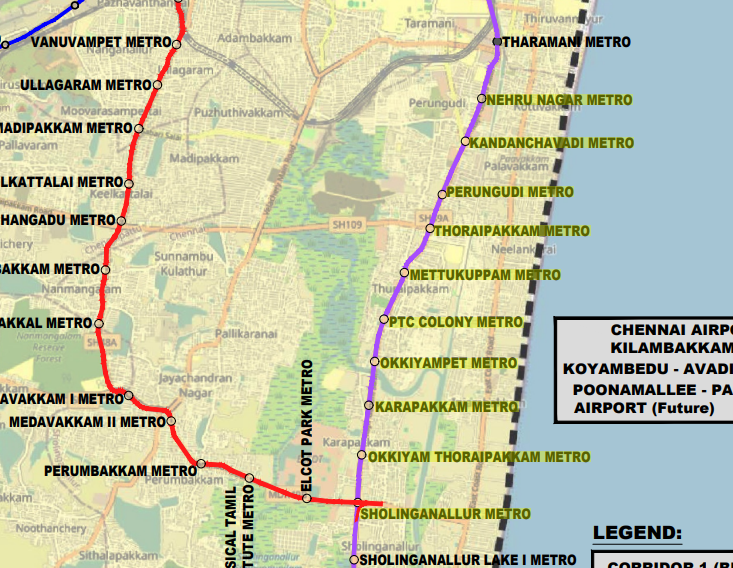
CHENNAI (Metro Rail News): Chennai Metro Rail Project progressed as the Asian Development Bank (ADB) has approved a loan of USD 240 million for Phase 2 of Chennai Metro. 

This funding represents the second tranche of the Chennai Metro Rail Investment Project. It forms part of the Asian Development Bank’s (ADB) USD 780 million multitranche financing facility which was approved in 2022. It follows an initial USD 350 million loan under the first tranche.

Phase 2 of the Chennai Metro spans 118.9 km and consists of three new metro corridors.

Line Route Elevated Length Underground Length Total Length 
Line 3 ( Purple Line) Madhavaram – SIPCOT 219.1 km 26.7 km 45.8 km 
Line 4 (Orange Line) Light House – Poonamallee Bus Depot16 km 10.1 km 26.1 km 
Line 5 (Red Line) Madhavaram – Sholinganallur41.2 km 5.8 km 47 km 

The second tranche will fund key segments of Chennai Metro Phase 2 lines 3, 4, and 5, spanning approximately 20 km of elevated and underground corridors.

As per the ADB Press Release, the funding will support civil and system works on the elevated Sholinganallur–SIPCOT-2 section of line 3, the underground Lighthouse–Kodambakkam stretch of line 4, and major system components for line 5, including power supply, traction and telecommunications.

ADB Country Director for India Mio Oka mentioned “ This project will deliver safer, faster, and more reliable daily travel in Chennai while advancing the city’s low-carbon development goals,”.


Join the 6th edition of InnoMetro to explore how the progressions in AI are improving the railway systems, including ticketing, rolling stock, and signalling. Witness the innovation from 200+ exhibitors at India’s leading show for metro & railways which is going to held on 21-22 May 2026 at Bharat Mandapam, New Delhi

Register now: https://innometro.com/visitor-registration/

Advertisement1
InnoMetro_2026

Digital Twin in Railways: A Practical Solution to Managing Complex Rail Systems

0
Digital twins in Railways

The railway sector is getting reliant on digital mechanisms and data driven technologies for the betterment of railway safety and operations. The digital twin is one of the technologies that can enable efficient rail management. In simple terms, a digital twin is a dynamic digital model that mirrors the condition and behaviour of real-world railway assets such as locomotives, tracks, bridges, stations, and signalling systems. It continuously receives data from sensors and connected devices, which allows operators to visualise performance in real time and simulate operational scenarios.

In the context of railways, digital twins are being deployed to improve asset lifecycle management, predictive maintenance, and infrastructure planning. By integrating inputs from IoT devices and advanced analytics platforms, these models help engineers monitor structural health, detect anomalies, and plan maintenance before failures occur. 

Globally, rail operators such as Deutsche Bahn, SNCF, and Network Rail have incorporated digital twin platforms into their operations to optimise infrastructure management and network reliability. In India, similar adoption is underway as part of Indian Railways’ digital modernisation initiatives. DMRC and NCRTC have also started using Building Information Modelling (BIM) and digital twin frameworks for construction, maintenance, and operational analysis.

As the scale and complexity of rail networks continue to grow, the use of digital twins offers a unified, comprehensive view of interconnected assets, which empowers rail operators with faster decision-making and better coordination across departments. This technology is gradually becoming a core component of smart railway ecosystems.

This paper studies the application of digital twin technology in the context of metro systems and other rail-based networks. The focus of this study is to examine how digital twins are being implemented across different operational layers from asset design and construction to maintenance and real-time operations. It will also explore the underlying technologies that enable these systems, including IoT-based sensing, cloud computing, and data analytics, along with their integration into existing railway infrastructure. Furthermore, the paper highlights global and Indian case studies that demonstrate the practical benefits of digital twins in improving efficiency, safety, and asset reliability, while also identifying key challenges in large-scale deployment and system interoperability.

Core Technology and Architecture for Digital Twins

The implementation of a digital twin in railways relies on the integration of hardware, software, and data analytics systems that together create a virtual representation of physical assets. Data acquisition is the creation of the foundation of this system.

seo hero data ingestion hfnzuo

The architecture of a digital twin in railway systems is built upon the integration of multiple digital technologies, including Building Information Modelling (BIM), the Internet of Things (IoT), Geographic Information Systems (GIS), and data analytics platforms. Together, these technologies create a unified framework that connects the physical and digital environments of railway infrastructure and operations.

1. Building Information Modelling (BIM):
BIM provides the foundational layer by offering a detailed 3D representation of railway assets such as stations, tunnels, bridges, and rolling stock. It captures the geometric, spatial, and functional attributes of each asset, which enables visualisation and documentation throughout the project lifecycle. When extended to higher dimensions (4D to 7D), BIM incorporates elements such as construction sequencing, cost estimation, asset performance, and sustainability indicators.

2. Internet of Things (IoT):
The IoT layer enables real-time data acquisition from sensors installed across assets. The continuous flow of data from field devices to central systems provides a live operational picture of railway infrastructure. IoT connectivity, often supported by wireless communication protocols like LTE, 5G, or LoRaWAN.

3. Geographic Information System (GIS):
GIS integrates spatial data into the digital twin environment, which empowers operators to visualise assets within their geographical context. It supports corridor-level mapping of tracks, stations, and depots while accounting for terrain, land use, and environmental constraints. The combination of BIM and GIS provides both micro- and macro-level visibility.

4. Data Analytics and Cloud Integration:
The analytics layer processes and interprets the data collected through IoT systems. Using artificial intelligence (AI) and machine learning (ML) algorithms, the system identifies patterns, predicts failures, and optimises operational decisions. Cloud computing platforms host these analytics tool

In the context of railway projects, digital twins are also used during the construction phase. The engineering teams utilise BIM-based models that evolve into operational digital twins once the assets are commissioned. 

For example, the National Capital Region Transport Corporation has adopted an advanced approach by utilising most of the 7 dimensions of Building Information Modelling (BIM) for the Delhi – Meerut Regional Rapid Transit System (RRTS) project. Through the integration of BIM with a Geographic Information System (GIS) platform, NCRTC has successfully developed a digital twin of the RRTS corridor.

Applications of Digital Twin Technology in Railway Systems

Digital twin technology in the railway sector functions as a virtual representation of physical assets. It enables continuous synchronisation between real-time operational data and the digital environment.

In metro and mainline rail systems, digital twins are being applied across several operational domains:

  1. Asset Management and Maintenance
    Digital twins enable predictive and condition-based maintenance by continuously analysing asset health parameters such as vibration, temperature, and wear rates. This helps in predicting component failures and scheduling maintenance activities proactively.
  2. Infrastructure Monitoring
    The railway structural components, like bridges, tunnels, and elevated viaducts, can be digitally replicated to monitor stress, fatigue, and deformation. The embedded sensors on these structures support early detection of anomalies.
  3. Operations Optimisation
    The integration of operational data, including train movements, energy consumption, and passenger flows, allows operators to simulate different scenarios and optimise timetables, headways, and energy use. In dense networks such as urban metro systems, this contributes to improved punctuality and efficient energy utilisation.
  4. Design and Construction Management
    During the planning and construction phase, digital twins facilitate clash detection, sequencing of construction activities, and monitoring of progress against schedule baselines.
  5. Passenger Flow and Station Management
    The operators can monitor passenger movement at stations by combining sensor-based data collected from Automatic Fare Collection (AFC) systems with digital station models. This integration helps implement crowd control measures effectively and supports the adjustment of platform management strategies to ensure smooth passenger flow and operational efficiency. 

Global and Indian Case Studies of Digital Twin Implementation in Railways

The adoption of digital twin technology in the railway sector has gained momentum across the world. There are many prominent rail operators in the world that are utilising this technology enhance the reliability, efficiency, and safety of rail operations

1. Crossrail Project, United Kingdom

With a £14.8 billion (about US $21 billion) budget, Crossrail is currently the biggest engineering project in Europe, and it is also one of the most prominent global examples of digital twin application.

11A 002 General Large Projects CW Crossrail station 1
Canary Wharf Group

The project utilised advanced BIM-based digital twin models to coordinate design, construction, and maintenance activities across a complex underground network. The Crossrail model actually consists of more than 250,000 little models joined together in a database and linked to another database containing all the data and documentation about all of the railway’s assets, from 1-watt LED lightbulbs to the giant fans that extract smoke in the event of a fire as well as detailed descriptions of all the work that’s going on

Londons 15bn Crossrail service to miss scheduled opening by months © Association for Project Management

It integrated real-time data from thousands of assets into a unified model for improving coordination between contractors and enabled efficient asset handover to Transport for London (TfL). The digital twin also continues to support predictive maintenance of tunnel ventilation, track systems, and electrical infrastructure. 

SNCF, France

RER NG Adnane Wikipedia CC BY SA 4.0

SNCF, the national railway operator of France, has collaborated with Akila, a digital twin and AI platform provider, to implement a real-time simulation and analytics system at the Monte-Carlo train station in Monaco.  This setup enables real-time monitoring, operational optimisation, and simulation of passenger flow, environmental conditions, and energy performance, supporting data-driven management of station assets and passenger experience.

Digital Twin Implementation in NCRTC’s Delhi–Meerut RRTS Corridor

RRTS
RRTS (Representational image)

The National Capital Region Transport Corporation (NCRTC) initiated a Proof of Concept (POC) to establish a comprehensive Level 4 Digital Twin ecosystem for the Sahibabad-Anand Vihar section of the Delhi–Meerut Regional Rapid Transit System (RRTS). This initiative integrates Building Information Modelling (BIM), Internet of Things (IoT), Operational Technology (OT), Artificial Intelligence (AI), and data analytics into a unified digital environment designed to enhance operational efficiency, asset reliability, and passenger safety.

Assets Covered under the RRTS Digital Twin Framework

  • Track Infrastructure
  • Overhead Electrification (OHE)
  • Rolling Stock
  • Station Facilities
  • Civil Structures
  • Signaling and Telecommunications

The pilot focuses on two critical nodes, Sahibabad Elevated Station and Anand Vihar Underground Station, along with the connecting viaduct and tunnel section. The objective is to develop a real-time, data-driven digital twin capable of supporting predictive maintenance, optimising station operations, and improving commuter experience through AI-based decision-making.

The project’s target is to achieve Level 4 maturity on the digital twin scale, where predictive and prescriptive analytics guide maintenance and operations, and Level 5 readiness, which allows eventual self-learning and autonomous decision-making. The solution is being developed at NCRTC’s Aparimit Lab at Duhai Depot, with final deployment planned on MeitY-approved cloud infrastructure.

Challenges and Implementation Barriers

While digital twin technology offers advantages in improving operational efficiency, predictive maintenance, and asset reliability, its large-scale implementation in railway systems presents technical and other challenges. These challenges stem from the complexity of integrating multiple subsystems and managing diverse data sources.

1. Data Integration and Standardization
Railway infrastructure involves heterogeneous systems, rolling stock, signaling, OHE, and civil works, where each asset generates data in different formats. The consolidation of this information into a unified digital environment requires extensive data mapping, standardisation, and interoperability. Inconsistent data models can hinder the accuracy of simulations and predictive insights.

2. Legacy Systems 

 Many operational systems in Indian Railways and metro networks were not originally designed for real-time data exchange. Integrating legacy systems with modern IoT and BIM platforms demands complex interface development and cybersecurity validation.

3. High Initial Cost and Resource Requirements
The development of a fully functional digital twin ecosystem involves investment in sensors, edge devices, cloud storage, analytics platforms, and high-performance computing infrastructure. 

4. Skill Gaps and Organizational Readiness
Digital twin implementation requires expertise in data engineering, AI/ML, BIM modeling, and cloud computing. These skills are still developing within the traditional railway workforce. To bridge this skill gap, it is imperative to initiate upskilling and capacity-building programs.

5. Cybersecurity and Data Governance
As digital twins rely on extensive data exchange between field sensors, control systems, and cloud platforms, in this case, ensuring cybersecurity becomes critical. Data breaches, unauthorised access, or system disruptions could impact both safety and service reliability.

Conclusion

Digital twin technology is becoming an important tool for improving railway operations and maintenance. It allows operators to create a digital version of physical assets such as tracks, trains, and stations, helping them monitor conditions in real time and make decisions that are completely data based. This approach supports predictive maintenance, reduces failures, and improves overall service reliability.

Global rail operators like Deutsche Bahn, SNCF, and Network Rail have shown how digital twins can improve infrastructure management and network efficiency. In India, agencies such as DMRC and NCRTC are also adopting this technology. The Delhi–Meerut RRTS corridor is a practical example where a digital twin integrates BIM, GIS, IoT, and analytics to support daily operations, maintenance, and passenger management.

However, some challenges remain. Integrating data from different systems, ensuring interoperability, and maintaining cybersecurity are major issues. There is also a need for skilled personnel and standardised procedures to manage and use digital twin platforms effectively.

The proper planning, investment, and training in digital twin technology can play a key role in making Indian railways more efficient, reliable, and sustainable.


Join the 6th edition of InnoMetro to explore how the progressions in AI are improving the railway systems, including ticketing, rolling stock, and signalling. Witness the innovation from 200+ exhibitors at India’s leading show for metro & railways which is going to held on 21-22 May 2026 at Bharat Mandapam, New Delhi

Register now: https://innometro.com/visitor-registration/

Advertisement1
InnoMetro_2026

The Mumbai Ahmedabad High Speed Rail: Engineering India’s Future Transport

0
Bullet Train/Representational image

Introduction

Indian Railways, one of the world’s largest and most diverse rail networks, has continually evolved over more than a century to meet the nation’s growing mobility and economic demands. From the early days of steam-powered locomotives that connected distant towns and facilitated trade, to the introduction of diesel engines and later electrified networks, the system has consistently adapted to emerging technologies and increasing passenger expectations. 

In recent decades, India has witnessed a growing emphasis on semi-high-speed rail services, exemplified by the Vande Bharat Express, which set new standards for speed, comfort, and modern passenger amenities. These developments reflect India’s ambitions to transform its rail sector into a world-class transportation system which is capable of meeting rising passenger expectations and the demands of a rapidly urbanizing population. 

Building upon this legacy of innovation, India is now entering a transformative phase in urban and regional mobility with the launch of its first high-speed rail corridor, the Mumbai–Ahmedabad High-Speed Rail (MAHSR) project. The Mumbai–Ahmedabad High-Speed Rail project is designed to drastically reduce travel time between two of India’s most important economic hubs while enhancing regional connectivity and establishing a benchmark for modern and sustainable rail infrastructure. 

Bullet train 1

Historical Background of Bullet Train Project

  • The Ministry of Railways (MOR), Government of India, prepared the Indian Railways Vision 2020 in December 2009, outlining plans for the modernization and expansion of passenger transport infrastructure. As part of this vision, pre-feasibility studies were initiated sequentially on seven potential routes identified for the construction of High-Speed Rail (HSR) corridors.
  • Among these, an expert committee on railway modernization recommended the Mumbai–Ahmedabad corridor (approximately 500 km) as the first HSR section to be constructed in India.
  • In FY 2009, a pre-feasibility study for the Mumbai–Ahmedabad line was undertaken by RITES (India), Systra (France), and other partners. 
  • Building upon these studies, the Governments of India and Japan issued a joint statement on May 29, 2013, agreeing to conduct a joint feasibility study on the project. Subsequently, on October 7, 2013, the Japan International Cooperation Agency (JICA) and the Ministry of Railways signed a Memorandum of Understanding (MoU) to carry out the joint feasibility study.
  • The project reached a historic milestone on September 14, 2017, when Prime Minister Narendra Modi of India and Prime Minister Shinzo Abe of Japan jointly laid the foundation stone for the country’s first high-speed rail project between Mumbai and Ahmedabad.
  • To implement the project, a Memorandum of Cooperation was signed between the Governments of India and Japan on December 15, 2017. 

India’s First Bullet Train: The Mumbai–Ahmedabad High-Speed Rail Project

Overview 

The Mumbai–Ahmedabad High-Speed Rail (MAHSR) corridor, India’s first bullet train project, is a 508.17 km long under-construction high-speed rail line designed to link Mumbai in Maharashtra with Ahmedabad in Gujarat through 12 stations. 

Stations: Mumbai (Bandra Kurla Complex), Thane, Virar, Boisar, Vapi, Bilimora, Surat, Bharuch, Vadodara, Anand/Nadiad, Ahmedabad, and Sabarmati

image 10 1

The National High-Speed Rail Corporation Limited (NHSRCL), incorporated on 12 February 2016 under the Companies Act, 2013, is the implementing agency responsible for financing, constructing, maintaining, and managing the corridor.

Established as a Special Purpose Vehicle (SPV), NHSRCL functions as a joint venture with equity participation from the Central Government, through the Ministry of Railways, and the state governments of Gujarat and Maharashtra. 

Key Specification of MAHSR Corridor 

Speed and Track Maximum Speed: 350 kmph
Operational Speed: 320 kmph
Average Speed: 250 kmph
Standard Gauge – 1435mm
Traction2 x 25 KV AC overhead catenary (OHE)
SignallingCommunication-based Train Control (CBTC)
SafetyUrgent Earthquake Detection and Alarm System (UrEDAS) for automatic breaking in case of an earthquake
Power supply12 Traction substations, 2 Depot substations and 16 Distribution sub stations

Funding and Financial Structure of Bullet Train Project 

The Mumbai Ahmedabad High Speed Rail Corridor project has an estimated cost of INR 1,08,000 crore (USD 17 billion) excluding taxes. 

The project is being implemented with financial support through an Official Development Assistance (ODA) loan from the Japan International Cooperation Agency (JICA).

Approximately 81% of the total project cost will be financed by the Government of Japan through JICA, while the remaining cost will be borne by the Government of India. 

Funding Received So far from JICA 

TrancheDateLoan Amount (Japanese Yen)Approximate Amount (INR Crore)
Tranche 1September 201889.54 billion JPY₹5,500 crore
Tranche 2November 2018              — ₹9,600 crore
Tranche 3July 2022100,000 million JPY₹6,000 crore
Tranche 4March 2023300 billion JPY₹18,750 crore
Tranche 5December 2023400 billion JPY₹22,627 crore 
JRE TEC E5 omiya 1

Major Contracts Awarded for Bullet Train Project

Contract Contractor 
Package C1: 1.028 km Underground Station at BKC, MumbaiMEIL – HCC JV
Package C2: 20.377 km underground tunnel between BKC Station to Shilphata, Thane (3 Mega TBMs to be used)Afcons Infrastructure
Package C3: 135.450 km elevated line between Shilphata, Thane and Zaroli Village (MH/GJ Border)Larsen & Toubro
Package C4: 237.1 km elevated line between Zaroli Village (MH/GJ Border) and VadodaraLarsen & Toubro
Package C5: 8.198 km elevated viaduct and station within VadodaraLarsen & Toubro
Package C6: 87.569 km elevated viaduct between Vadodara and AhmedabadLarsen & Toubro
Package C7: 18.133 km elevated viaduct and station within AhmedabadIRCON – DRA JV
Package C8: 2.126 km viaduct, building works at Sabarmati DepotSCC – VRS JV
Package P1(B): Construction of 4 PSC Bridges & 7 Steel Truss Bridges between Zaroli and Vadodara.MG Contractors Pvt. Ltd. (MGCPL)
Package P1(C): Construction of 1 PSC Bridge & 4 Steel Truss Bridges between Vadodara and Ahmedabad.MG Contractors Pvt. Ltd. (MGCPL)
Package T1: Design, Supply & Construction of Track & Track related works between HSR station at BKC/ Mumbai and Zaroli Village on MH/GJ border (156.855 km)Larsen & Toubro (L&T)
Package T2: Design, Supply & Construction of Track and Track related works between Zaroli Village and Vadodara (237.10 km)IRCON International
Package T3: Design, Supply & Construction of Track and Track related works between Vadodara and Sabarmati Depot and workshops (114.60 km)Larsen & Toubro (L&T)
Package S-1: Design, Manufacture, Supply, Installation, Over all Integration, Testing Commissioning, and Comprehensive Maintenance, of Signalling & Train Control System, Telecommunication System, and Operation Control Center SystemDRA Infracon – Siemens JV
Series N700A F20 1

Rolling Stock for the Bullet Train Project 

  • The initial procurement plan for India’s Mumbai–Ahmedabad High-Speed Rail (MAHSR) project involved the E5 Shinkansen trainsets. However, due to subsequent project delays and technological advancements in Japan, India has now been offered the next-generation E10 Shinkansen series.
  •  The Japanese government has agreed to introduce the E10 Shinkansen trains for the Mumbai–Ahmedabad High-Speed Rail project. The E10 series will be launched concurrently in both Japan and India. 
  • Designed by East Japan Railway Company (JR East), the E10 draws inspiration from Japan’s iconic sakura, or cherry blossom, symbolizing elegance and innovation. 
  • In addition to safety innovations, the E10 series introduces several passenger-centric upgrades. These include expanded luggage compartments, dedicated window-side spaces for wheelchair users, and a reconfigurable seating layout that can be adapted for additional passenger capacity or increased cargo space.

Assessing the Progress of Mumbai-Ahmedabad High Speed Rail Corridor 

1. India’s first Undersea Tunnel 

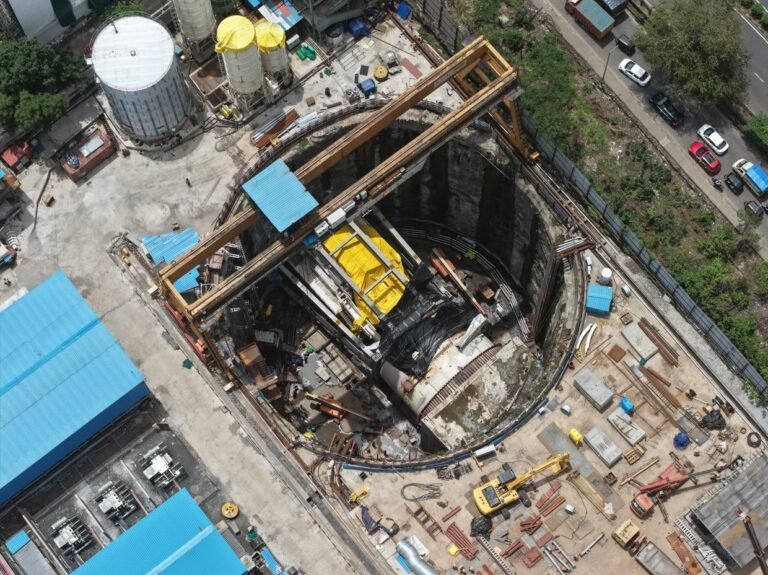
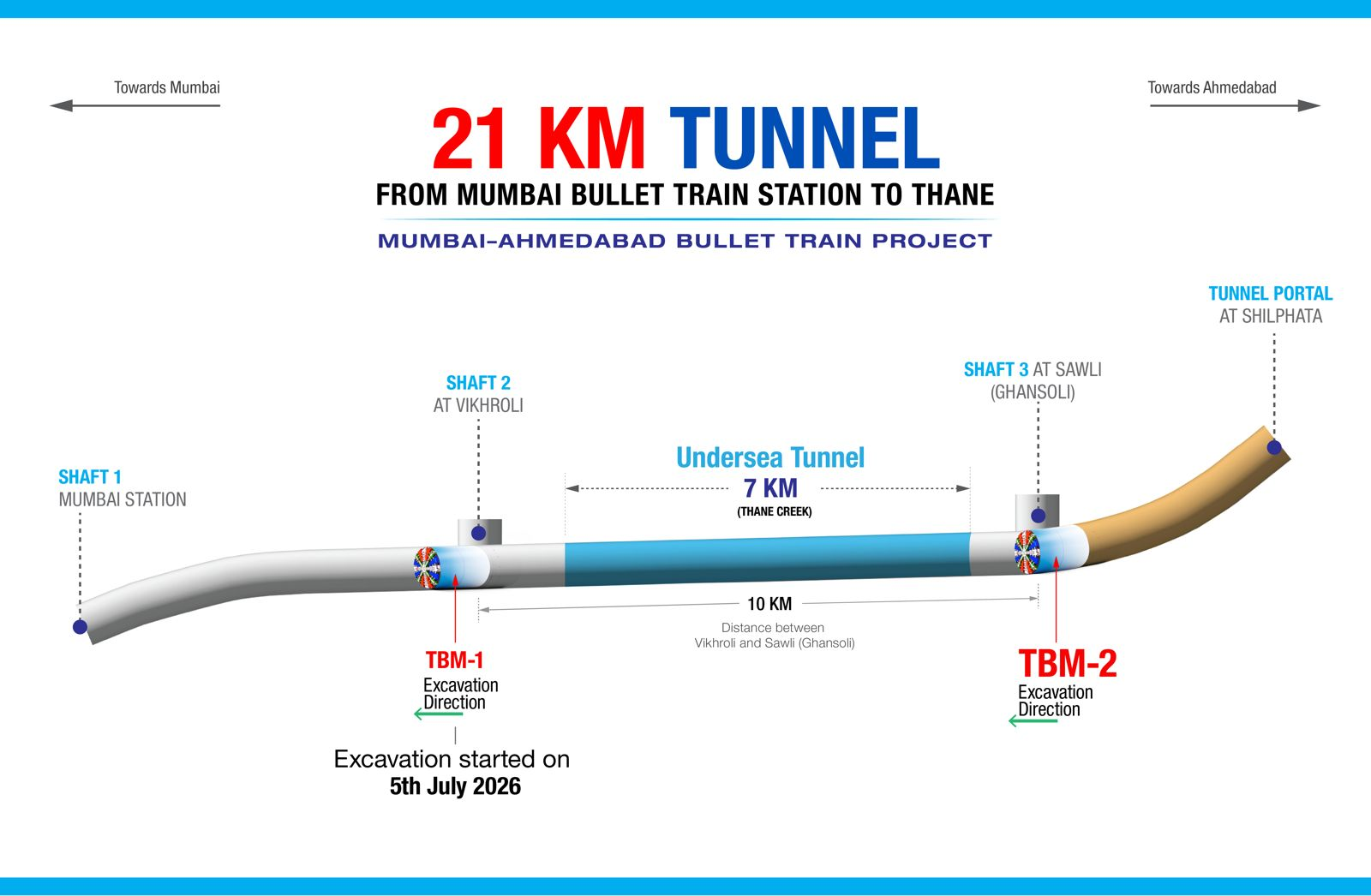
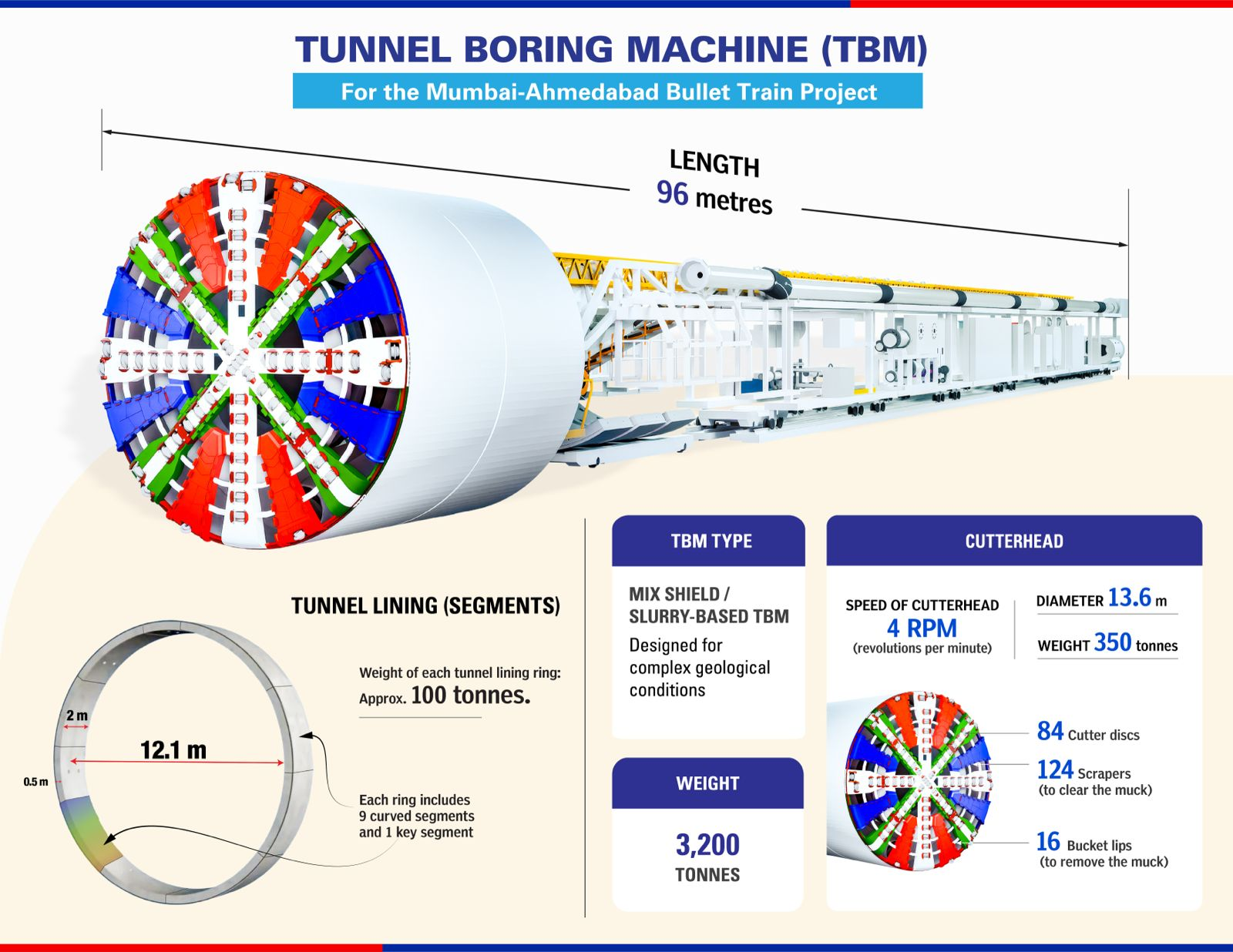
The Mumbai–Ahmedabad High-Speed Rail (MAHSR) corridor features a 21 km long tunnel, out of which 7 km will run under the Thane Creek, making it India’s first undersea rail tunnel. The tunnel will be built using a combination of tunneling methods: 5 km through the New Austrian Tunnelling Method (NATM) and the remaining 16 km with Tunnel Boring Machines (TBMs) for faster mechanized excavation.

Completion of the 5 km NATM Section (Ghansoli–Shilphata)

The project achieved a major milestone on 20 September 2025 with the completion of the 5 km NATM-driven tunnel section between Ghansoli and Shilphata in Maharashtra. The excavation was executed simultaneously from both ends, with teams progressing from the Ghansoli side and the Shilphata side to ensure timely completion.

Historic Milestone Major Tunnel breakthrough achieved in Mumbai Ahmedabad Bullet Train Project 2 0 1

In July 2025, the first NATM tunnel breakthrough was achieved at the Sawli Shaft in Ghansoli, where a 2.7 km section was completed between BKC (Bandra-Kurla Complex) and Ghansoli. This was followed by steady progress to link the excavation fronts between Ghansoli and Shilphata.

Historic Milestone Major Tunnel breakthrough achieved in Mumbai Ahmedabad Bullet Train Project 0 1

To accelerate progress, an Additional Driven Intermediate Tunnel (ADIT) was constructed. This allowed access to the underground alignment and enabled simultaneous tunneling operations towards both Ghansoli and Shilphata, thereby cutting down construction time and enhancing safety during excavation.

2. Mountain Tunnel for the Project 

The MAHSR corridor features a total of 8 mountain tunnels. Seven of these tunnels are situated in the Palghar district of Maharashtra, while the remaining one is in the Valsad district of Gujarat.The tunnels will be  constructed using the New Austrian Tunneling Method (NATM).

Breakthrough of First Mountain Tunnel on MAHSR Corridor

F7rZcJabIAAWbHE 1

In 2023, the National High-Speed Rail Corporation Limited (NHSRCL) achieved a major milestone in the Mumbai-Ahmedabad High-Speed Rail (MAHSR) Corridor project with the breakthrough of the first mountain tunnel.The tunnel is located approximately 1 kilometer from Zaroli Village, Umbergaon Taluka, in the Valsad district of Gujarat. The tunnel was completed in a remarkable span of just 10 months.

3. Steel Bridges For the Project 

A total of 28 steel bridges are planned along the Mumbai–Ahmedabad Bullet Train corridor, with 11 located in Maharashtra and 17 in Gujarat.

Completion of 9th steel bridge 

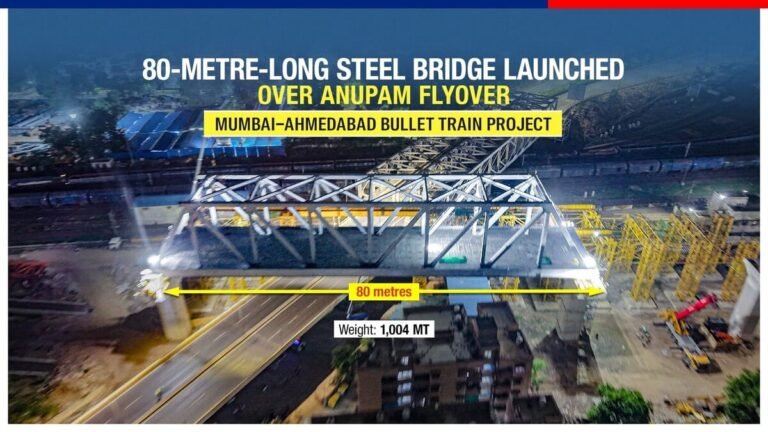
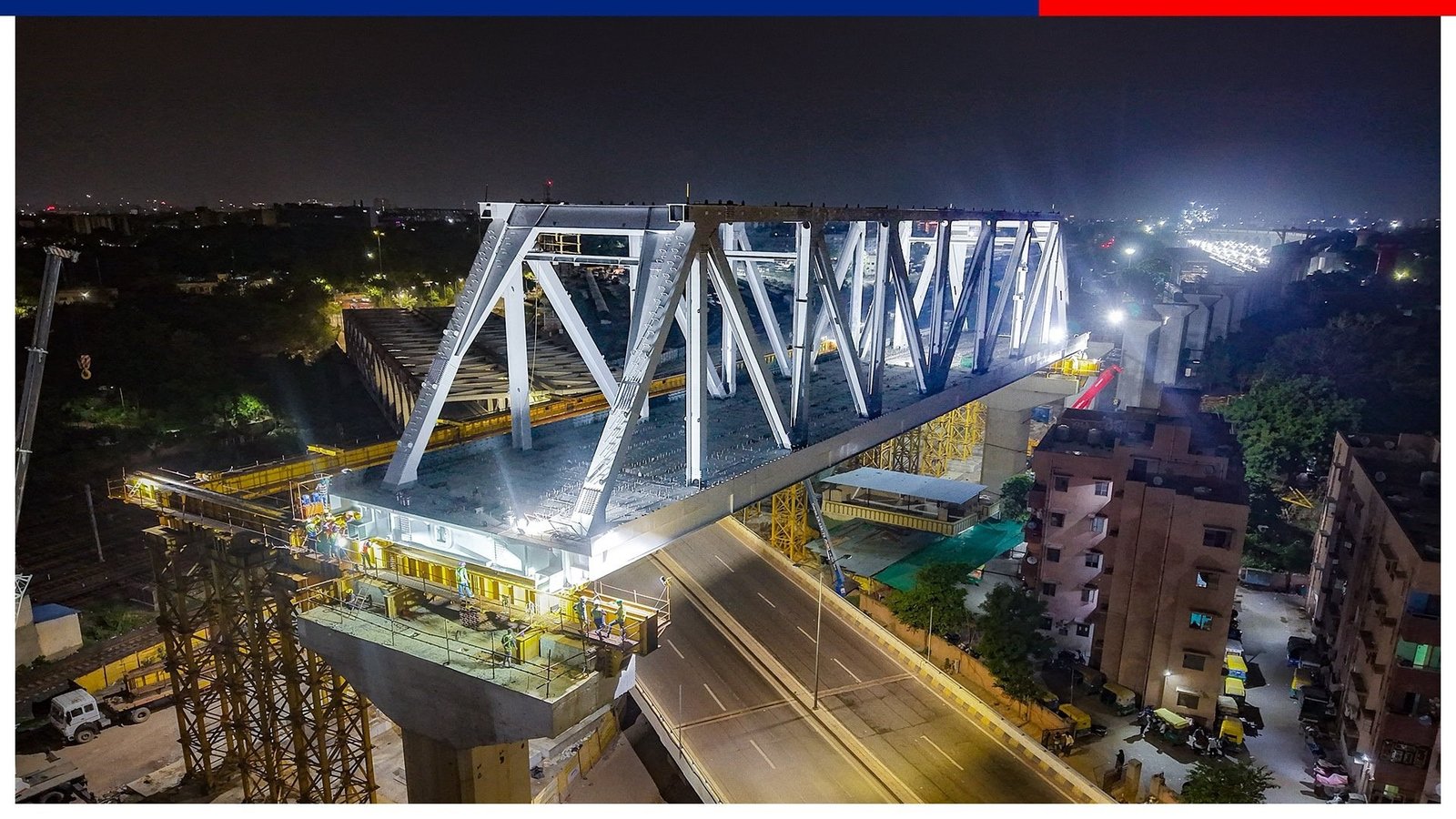
In September 2025, the second 100-meter span of a 2 x 100-meter long steel bridge was successfully launched over National Highway 48 (connecting Delhi, Mumbai, and Chennai) near Nadiad in Gujarat. The first 100-meter span of this bridge had been completed earlier in April 2025. With this achievement, the ninth steel bridge was completed in Gujarat, out of the 17 planned for the state.

Completion of River Bridge on Vishwamitri River for Mumbai Ahmedabad Bullet Train Project 3 1 1

Launching of 10th Steel Bridge 

In October 2025, the Mumbai–Ahmedabad Bullet Train project achieved another milestone with the successful launching of its 10th steel bridge in Ahmedabad, Gujarat. The 60-meter-long bridge, weighing 485 metric tons, was installed over a Western Railway facility (laundry) situated adjacent to existing railway tracks. Measuring 12 meters in height and 11.4 meters in width, the structure was fabricated at a dedicated workshop in Wardha, Nagpur (Maharashtra), and transported to Ahmedabad using specially designed trailers.

10th Steel Bridge Launched for Mumbai Ahmedabad Bullet Train Project 3 1 1

Details of the Steel Bridges Completed so far in Gujarat

Sr. NoLocationLength of the steel bridge (in meters)Weight of the steel bridge (in MT)
1Across National Highway 53, Surat70 673
2Over Vadodara-Ahmedabad main line of Indian Railways, near Nadiad1001486
3Over Delhi-Mumbai National Expressway, near Vadodara230 ( 130+100)4397
4Near Silvassa in Dadra & Nagar Haveli1001646
5Over Western Railways, Vadodara60645
6Over two DFCC Tracks and two Western Railways tracks, Surat100, 60 2040
7Over two DFCC tracks, near Vadodara70 674
8Over DFCC tracks near Bharuch1001400
9Over NH-48, near Nadiad2 X 100 2884
10.Over Railway Facility (Laundry) in Ahmedabad, Gujarat60485 

4. River Bridges For the Project 

The Mumbai Ahmedabad Bullet Train corridor features 25 river bridges, out of which 21 are in Gujarat and 4 in Maharashtra. On 6 August 2025, The bridge on Vishwamitri River, Vadodara district, Gujarat was completed for the Mumbai-Ahmedabad Bullet Train project. This is the seventeenth river bridge completed out of the planned 21 river bridges in Gujarat for the project.

Railway Minister and Japan’s Transport Minister Reviewed the Progress of Bullet Train Project

In October 2025, Union Railway Minister Shri Ashwini Vaishnaw and Japan’s Minister of Land, Infrastructure, Transport and Tourism H.E. Hiromasa Nakano visited sites of the Mumbai–Ahmedabad Bullet Train project in Surat and Mumbai. 

G2UvM0bW8AABHEa 1 1
  • Visit to Track Slab Laying Site at Surat: The ministers visited the Surat High-Speed Rail track construction base, where they reviewed ongoing works related to the J-slab ballastless track system being installed on the viaduct. During the visit, Railway Minister Shri Ashwini Vaishnaw also witnessed the first track turnout installation near Surat HSR station.
  • Visit to BKC HSR Station at Mumbai: Following the site review in Surat, both delegations travelled to Mumbai aboard the Vande Bharat Express. The ministers reviewed the ongoing works at the Bandra Kurla Complex (BKC) High-Speed Rail Station.

Overall Status of Bullet Train Project as of 10th October 2025

Category Progress Status 
Viaduct Completed325 km out of 508 km
Pier Work Completed400 km
Noise BarriersOver 4 lakh installed along a 216 km stretch
Track Bed Construction217 track km of Reinforced Concrete (RC) track bed completed
Overhead Equipment (OHE)More than 2300 masts installed, covering approximately. 57 route km of mainline viaduct
Station Works – GujaratSuperstructure work at all stations is in the advanced stage
Station Works – MaharashtraWork started on all three elevated stations; base slab casting at Mumbai underground station is in progress

Impacts of Mumbai Ahmedabad High Speed Rail Corridor

Economic growth and job creation

The project is expected to integrate the economies of major commercial centres along the corridor. Research on HSR projects in other countries has shown a direct correlation between increased market access and a rise in GDP. The construction of the corridor is providing employment opportunities, while its operations will also offer long-term job prospects in areas such as train operations, maintenance, station management, passenger services, and logistics support. The high-speed rail network is anticipated to attract new investments in real estate, manufacturing, and service sectors along the alignment.

The project has also created extensive opportunities for small and medium enterprises (SMEs) through subcontracting and supply chain participation. Companies engaged in civil construction, machinery supply, precision engineering, and material logistics have benefited from consistent project-related demand. 

Social and Connectivity Impact

By linking two major metropolitan regions and several Tier-II cities such as Thane, Surat, Bharuch, Vadodara, Anand, and Sabarmati, the MAHSR will improve regional mobility and promote urban development along the corridor. This will strengthen social and economic ties between urban and semi-urban regions and enhance access to employment, education, and healthcare facilities. The development of the high-speed rail stations is designed to encourage transit-oriented development (TOD). The creation of commercial, residential, and recreational zones around station precincts will lead to planned urban expansion rather than unstructured sprawl.

Skill Development

The establishment of the High-Speed Rail Training Institute (HSRTI) in Vadodara has enabled training for engineers, technicians, and operational staff in high-speed rail technology. This has created a technically skilled manpower and introduced advanced engineering practices in India’s railway ecosystem.

Long-Term Strategic Impact

The MAHSR is a strategic initiative toward modernising India’s railway network. It establishes the technical, operational, and institutional framework for future high-speed rail corridors planned under the National Rail Plan. The project also strengthens India-Japan bilateral cooperation in transport technology and infrastructure development. 

Environmental Impact

The social benefits of the corridor also extend to environmental quality. As a fully electric, low-emission mode of transport, high-speed rail will contribute to cleaner air, lower greenhouse gas emissions, and a reduction in noise pollution compared to conventional diesel-based modes. Once operational, it is expected to shift a portion of passenger traffic from air and road to rail.

Conclusion

The Mumbai–Ahmedabad High-Speed Rail (MAHSR) project is a landmark in India’s railway infrastructure. The project represents India’s first attempt to establish a high-speed rail network, integrating advanced Japanese technology with domestic engineering and execution capabilities. The project has made steady progress in civil works, bridge construction, and station development, but it has also faced delays due to land acquisition issues, environmental clearances, and coordination between multiple agencies. 

The long-term success of the MAHSR corridor will depend on several factors. Achieving projected ridership levels and maintaining affordable yet financially sustainable fares will also influence the project’s economic viability. In addition, continuous skill development, safety assurance, and adherence to quality standards will be essential for reliable operations. If these factors are addressed effectively, the MAHSR corridor can serve as a model for future high-speed rail projects in India.


Join the 6th edition of InnoMetro to explore how the progressions in AI are improving the railway systems, including ticketing, rolling stock, and signalling. Witness the innovation from 200+ exhibitors at India’s leading show for metro & railways which is going to held on 21-22 May 2026 at Bharat Mandapam, New Delhi

Register now: https://innometro.com/visitor-registration/

Advertisement1
InnoMetro_2026

Mumbai Metro: Landmark Corporation Becomes L1 for Architectural Finishing Works Contract of Line 2B

0
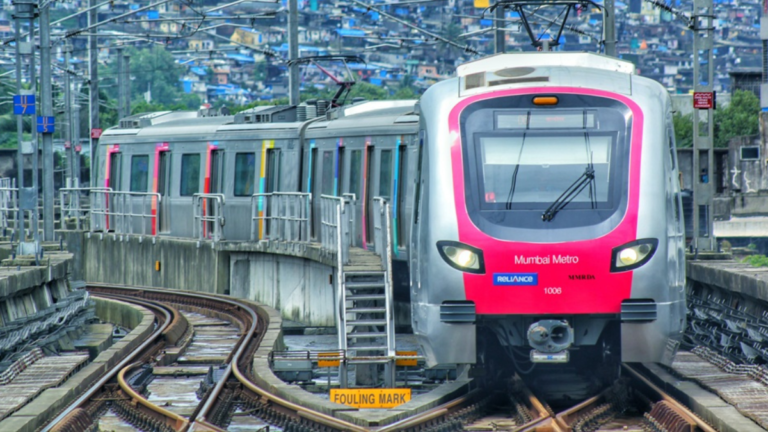
Mumbai Metro
Representational Image

MUMBAI (Metro Rail News): Mumbai Metropolitan Region Development Authority (MMRDA) has announced Landmark Corporation Pvt Ltd as the lowest bidder for the architectural finishing contract for 7 stations of Mumbai Metro Line 2B which spans 23.643 km from DN Nagar to Mandale through 20 stations. 

MMRDA invited bids for this contract and technical bids were opened on 14 August 2025 revealing that 8 firms have submitted bids for this contract and on the same day technical evaluation of the bids occurred. However during the technical evaluation round 4 firms’ bids got rejected. Subsequently, financial bids were opened and on 12 December financial evaluation of the bids took place during which 3 firms’ bids got rejected, announcing Landmark Corporation as the lowest bidder for the contract. 

Financial Bid Values 

Firm Bid Values 
Landmark Corporation Pvt Ltd₹ 151.2 Cr
Gawar Construction Limited₹ 187.9 Cr
Godrej and Boyce Mfg Co. Ltd₹ 175.4 Cr
M/S J. Kumar Infraprojects Ltd₹ 185.4 Cr 

Contracts Scope of Work: Architectural finishing works including interior fitouts design and construction of external facade water supply sanitary installation, drainage for 7 elevated stations from ESIC Nagar to Bandra of Metro Line 2B Corridor.  


Join the 6th edition of InnoMetro to explore how the progressions in AI are improving the railway systems, including ticketing, rolling stock, and signalling. Witness the innovation from 200+ exhibitors at India’s leading show for metro & railways which is going to held on 21-22 May 2026 at Bharat Mandapam, New Delhi

Register now: https://innometro.com/visitor-registration/

Advertisement1
InnoMetro_2026

Light Rail Transit: A Cost-Effective Mobility Solution for Growing Urban Centers

0

Introduction: The Need for Cost-Effective Urban Mobility in India

India’s rapid urbanisation has placed immense pressure on its urban transport systems. By 2035, over 480 million people are projected to live in cities, which highlights the demand for reliable and affordable public transport. The Metro rail systems have become the backbone of mobility, covering over 1000km of operational network in major metropolitan regions, including Delhi, Kolkata, Chennai, Bangalore, among others. However, the high capital cost and long gestation periods of metro systems make them less feasible for medium-sized cities with moderate population densities and travel demand.

Light Rail Transit (LRT) systems, often referred to as Metro Lite in the Indian context, can be a cost-effective and scalable alternative. An LRT system typically operates on segregated or partially segregated tracks with an average capacity of 20,000 and 30,000 passengers per hour per direction (pphpd) (PHPDT). The infrastructure cost of an LRT system ranges between ₹180 crore and ₹250 crore per kilometre, which is substantially lower than conventional metro systems that can cost ₹350–800 crore per kilometre, which primarily depends on whether they are elevated or underground.

For cities that require mass transit solutions but cannot justify the financial and operational commitments of a full-fledged metro, LRT offers an intermediate mode that can balance capacity, cost, and efficiency. In addition to this, LRT systems have shorter construction timelines and lower energy consumption. LRT systems can be integrated into existing road corridors with minimal disruption. This makes them particularly suitable for Tier-2 and Tier-3 cities such as Nashik, Dehradun, and Warangal, which are currently exploring or preparing detailed project reports (DPRs) for such systems.

As India’s urban transport policy prioritises affordable and sustainable modes, LRT projects are gaining attention from both public authorities and private sector stakeholders. For investors, contractors, and technology providers, the growing interest in LRT represents a business opportunity provided that planning, funding, and execution frameworks are aligned to ensure long-term operational viability and financial sustainability.

The purpose of this paper is to present a comparative assessment of LRT systems in relation to other urban transport modes, particularly in terms of operating cost, passenger capacity, and operational speed. It also aims to evaluate the feasibility of implementing LRT in Indian cities, taking into account factors such as energy efficiency, carrying capacity, and urban adaptability. Globally, several cities have adopted LRT systems due to their relatively low noise levels, high ride comfort, and flexibility in alignment design. The ability of LRT to negotiate sharp curves and integrate with urban road networks makes it well-suited to the spatial and economic characteristics of medium-sized Indian cities.

Understanding Light Rail Transit (LRT) 

image 18

Light Rail Transit (LRT) is a modern form of electrically powered urban rail transport that is engineered to operate with medium passenger capacity and moderate construction cost. It generally functions on a dedicated or semi-exclusive right-of-way, which enables higher speeds and reliability compared to road-based systems. LRT vehicles typically use standard-gauge steel tracks, which allow interoperability and easier maintenance through existing rail supply chains.

  • Traction: From a technical standpoint, an LRT system operates with electric traction power, usually drawn through overhead catenary systems at 750V DC or 1,500V DC. 
  • Speed: The operational speed of LRT systems generally ranges between 25–35 km/h, with maximum speeds of 60–80 km/h, depending on corridor design and signal priority. 
  • Capacity: The passenger carrying capacity lies in the range of 10,000 to 30,000 passengers per hour per direction (PHPDT), which positions LRT between Bus Rapid Transit Systems (BRTS) and heavy metro rail systems. 
  • Alignment: In LRT, trains generally consist of 2 to 4 articulated cars, and the platform lengths span from 60 to 90 metres.

Why is LRT a Viable Alternative in Tier 2 and 3 Cities?

Rapid Urban Population Growth

India’s urban population is expected to increase by 416 million by 2050, which will shift the country from a primarily rural to an urban demographic. This growth creates the need for cost-effective urban mobility solutions, particularly in Tier 2 and Tier 3 cities, which are increasingly emerging as economic hubs. Tier 2 cities have populations between 1 and 5 million (e.g., Visakhapatnam, Kochi, Raipur), while Tier 3 cities, including Nagpur, Indore, Patna, and Bhopal, range from 0.1 to 1 million residents.

Economic Significance of Tier 2 and 3 Cities

These cities play a critical role in India’s economic growth. They host a substantial fraction of registered MSMEs, accounting for 51% of the total, which contributes to employment creation and regional development. Economic activity in these cities drives improvements in infrastructure, healthcare, and technical education..

Investment Opportunities for LRT

Tier 2 and 3 cities present favorable conditions for Light Rail Transit (LRT) projects. LRT systems provide medium-capacity urban transit, improve connectivity for businesses and residents, and enable transit-oriented development (TOD), including commercial, residential, and mixed-use projects along corridors. The implementation of supportive government policies, expanding economic activity, and urban expansion offer a promising environment for cost-effective and sustainable urban transport investments.

LRT over Heavy Metro Systems

LRT differs from conventional Metro systems in several key aspects relevant to the Indian context. While metro rail systems are typically designed for high-demand corridors exceeding 30,000 PHPDT, they require fully segregated alignments, complex civil structures (tunnels, viaducts), and higher capital investments. 

In contrast, LRT systems can be implemented at lower costs, and can operate both on elevated sections and at-grade alignments within existing road medians. This makes them financially viable for medium-density cities and corridors that do not justify metro-scale infrastructure.

LRT vs BRT

If we compare LRT with Bus Rapid Transit (BRT), which is based on rubber-tyred vehicles operating on dedicated lanes, LRT offers higher passenger capacity, smoother acceleration, longer service life, and lower energy consumption per passenger-kilometre. Additionally, LRT vehicles produce less noise, emit no local pollutants, and have lower maintenance costs over their operational lifecycle.

Advantages of LRT over Other Modes of Transport

The cost structure and operational efficiency of Light Rail Transit (LRT) systems make them particularly attractive for medium-sized Indian cities seeking to expand urban mobility infrastructure without incurring the high capital expenditure associated with conventional metro systems. LRT offers a balanced trade-off between capacity, speed, and investment, which enables Tier-2 and Tier 3 cities to implement high-quality public transport solutions at a sustainable financial scale.

Cost Efficiency

From a capital cost perspective, the development of an elevated or at-grade Light Rail Transit (LRT) system generally ranges between ₹180 crore and ₹250 crore per kilometre, depending on factors such as alignment, land acquisition costs, system configuration, and civil structure requirements. In comparison, elevated metro systems in India typically cost between ₹350 crore and ₹550 crore per kilometre, as seen in the case of the Namma Metro Yellow Line in Bengaluru, which averages around ₹400 crore per kilometre. The cost escalation in metro projects primarily stems from heavier civil structures, larger stations, higher design speeds, and more complex traction and signalling systems.

On the other hand, Bus Rapid Transit Systems (BRTS) are more economical at ₹40 crore to ₹70 crore per kilometre, but their capacity, comfort, and service life are comparatively lower.

Lower Operating Cost

The operating cost of an LRT system is generally lower than that of a metro due to lesser energy consumption, smaller train configurations, and simplified maintenance regimes. The absence of complex tunnel systems, advanced HVAC installations, and heavy-duty traction equipment contributes to further cost savings.

In terms of lifecycle benefits, LRT systems offer longer vehicle lifespans, typically around 30 years, and infrastructure longevity exceeding 40 years with periodic maintenance. The modular nature of LRT infrastructure allows cities to expand line capacity incrementally by adding more cars, extending platforms, or increasing service frequency as ridership grows.  This scalability enables a phased approach to investment, aligning with budgetary and ridership projections.

Energy Efficiency 

Energy efficiency is another major advantage of LRT. Electric traction results in lower specific energy consumption, approximately 0.08–0.10 kWh per passenger-kilometre, compared to 0.15–0.20 kWh per passenger-kilometre for metro systems. The use of regenerative braking technology further enhances efficiency by returning up to 25–30% of energy to the grid. This makes LRT systems a more environmentally sustainable option for developing cities.

Risk Factors Impacting the Planning, Implementation, and Operational Sustainability of LRT Projects in India

While Light Rail Transit (LRT) offers a cost-effective and scalable solution for urban mobility, its successful implementation in Indian cities depends on addressing several technical, financial, and institutional challenges. Understanding these risks is imperative for investors, contractors, and policymakers to ensure long-term project viability.

1. Right-of-Way (ROW) Constraints


Urban corridors in Indian cities are often densely built, with narrow streets and mixed land use, where securing a dedicated or partially segregated ROW for LRT can be challenging. It requires strategic land acquisition, relocation of utilities, and coordination with municipal authorities.

2. Funding and Financial Viability
Although LRT systems are less expensive than metro projects, the upfront capital requirement is still substantial for medium-sized cities with limited fiscal resources.

3. Ridership and Revenue Risk

image 16

The financial and operational feasibility of LRT depends on achieving projected ridership levels. Overestimation of demand can lead to underutilised assets and revenue shortfalls, while underestimation may result in overcrowding and service inefficiency.

4. Regulatory and Institutional Coordination

LRT projects often involve multiple agencies, including urban local bodies, state transport authorities, traffic police, and utility providers. Fragmented decision-making or slow approvals can lead to project delays. Since LRT has yet to be implemented in India, it requires clear governance structures, defined roles, and a central project authority to streamline execution

Global Applications and Operational Examples of Light Rail Transit

Citadis Light Rail (North America)

image

Technical details

SpecificationDetails
TypeArticulated with LRV or Multi-articulated (Streetcar)
Type of bogies2 types (Ixege or Corege)
The highest passenger capacity310
Track gauge1,435 mm or 1581 mm (Pennsylvania gauge)
Low floor ratio100%
Vehicle width2.65 m

Citadis Light Rail Vehicles (LRVs) provide an efficient solution for reducing urban congestion by transporting passengers reliably across metropolitan areas of North America. Citadis light rail vehicles (LRVs) first became operational in North America on September 14, 2019. 

They are suitable for operation on existing networks, as replacements for aging rolling stock, or as part of newly constructed lines or extensions. In city centers, they can operate as streetcars in mixed traffic, reaching a maximum speed of 70 km/h. On dedicated light rail tracks, they can connect suburban areas to the city at speeds up to 105 km/h.

The modular design of Citadis LRVs allows flexibility in train configuration, which enables vehicles to be coupled to form longer trains as passenger demand increases. In such configurations, the system can carry over 20,000 passengers per hour per direction (PHPDT). 

Charleroi Light Rail (Belgium)

Technical details

SpecificationDetails
ManufacturerLa Brugeoise et Nivelles (BN); electrical components and motors by ACEC
DimensionsLength: 22.88 m (75 ft) • Width: 2.5 m (8 ft 2 in)
Passenger CapacityTotal: 192 passengers (44 seated, 148 standing)
Power OutputTwo electric engines with a combined output of 456 kW (612 hp)
Maximum Speed65 km/h (40 mph)
image 19

The Charleroi Light Rail, known locally as the Métro Léger de Charleroi (MLC), is a hybrid light rail and tram network in Belgium, comprising a central loop and branches to the suburbs. The system is operated by the public transport company TEC Charleroi and consists of a 33 km network with four lines. The system primarily uses a fleet of older, bi-directional, articulated trams built between 1980 and 1982. Since 2022, operator TEC has been investing in the renewal of this fleet.

Upcoming Modern Light Rail Systems

Astana Light Metro Train

Technical details

SpecificationDetails
ManufacturerCRRC
CapacityEach four-car trainset can carry over 600 passengers
Maximum speed80 km/h (50 mph)
Track gauge1435mm
image 17

The Astana Light Metro is a driverless, elevated light rail system under construction in Astana, Kazakhstan. The project has faced delays since it was first conceived, but has recently been revived and is now scheduled to open in the first quarter of 2026. The initial line will be a 22.4-kilometer (13.9-mile) north-south route with 18 stations. It will link Nursultan Nazarbayev International Airport with the Astana Nurly Zhol railway station.

Conclusion

Light Rail Transit (LRT) offers a practical and cost-effective approach to strengthen urban mobility in India’s rapidly expanding cities. LRT stands between Bus Rapid Transit (BRT) and heavy metro systems in terms of cost, capacity, and infrastructure requirements. LRT offers a balanced solution for Tier-2 and Tier-3 cities that require efficient transit but cannot sustain the financial or operational burden of full-scale metro systems.

Globally, successful LRT models in North America, Belgium, and Central Asia show that the technology can be adapted to a variety of urban layouts, from mixed-traffic street alignments to elevated segregated corridors. However, the introduction of LRT in India will require careful planning and institutional coordination. The absence of prior LRT experience in India highlights the need for pilot projects and strong feasibility assessments.

As cities continue to grow, Light Rail Transit can play a pivotal role in bridging the gap between low-capacity road-based systems and high-cost metro infrastructure. If implemented with well-structured governance and long-term financing models, LRT systems can become a core component of India’s next phase of urban transport.

Advertisement1
InnoMetro_2026

Dev- N.ROSE (JV) Bags Architectural Finishing Works Contract of Mumbai Metro Line 2B

0
Mumbai Metro

MUMBAI ( Metro Rail News): Dev – N.ROSE (JV) has received a Letter of Acceptance (LoA) from Mumbai Metropolitan Region Development Authority (MMRDA) for the architectural finishing contract of Mumbai Metro Line 2B which spans 23.643 km from DN Nagar to Mandale through 20 stations. 

CA279LOA@4x1

MMRDA invited bids for this contract with a 450 days deadline. Technical bids were opened on 19 Jun 2025 revealing that 5 firms have submitted bids for the contract. Technical evaluation of the submitted bids occurred on 5 Aug 2025. However during the technical evaluation round one firm’s bids got rejected. 

On 5 Aug financial bids were opened for the technically qualified bids. On 12 Dec 2025, financial evaluation of the bids in which 3 firms bid were rejected announcing Dev Engineers as the lowest bidder for the contract and on the same day the firm received LoA for the contract. 

Financial Bid Values 

Firm Bid Value 
Dev – N.ROSE (JV)₹ 201.4 Cr
Gawar Construction Limited₹ 246 Cr 
Godrej and Boyce Mfg Co. Ltd₹ 203.8 Cr 
M/S. Kumar Infra Projects Ltd₹ 250.4 Cr 

Contracts’s Scope of Work: Architectural Finishing Works Including Interior Fit outs, Design & Construction of External Facade, Water Supply, Sanitary Installation, Drainage for 07 Elevated Stations Viz. 3 Iconic elevated stations ITO, ILFS & MTNL and 4 elevated stations viz. S. G. Barve Marg, Kurla East, EEH & Chembur station of Metro Line 2B Corridor [D.N. Nagar to Mandale] of Mumbai Metro Rail Project Of MMRDA. 


Witness the innovations & AI- powered solutions in railway & metro systems from over 200 exhibitors at the 6th edition of InnoMetro. Join India’s dedicated show for the rail transit sector which is going to held on 21-22 May 2026 at Bharat Mandapam, New Delhi

Register now:https://innometro.com/visitor-registration/

Advertisement1
InnoMetro_2026

Delhi Metro Phase 4: DMRC Initiates Construction Work on Golden Line Extension

0
Delhi Metro Phase 4: DMRC Initiates Construction Work on Golden Line Extension

NEW DELHI (Metro Rail News): Delhi Metro Rail Corporation (DMRC) has started construction work on Lajpat Nagar-Saket G Block Corridor of Delhi Metro Phase 4’s Golden Line (Line-11). The Lajpat Nagar–Saket G-Block Corridor will span 8.385 km and will feature 8 stations. 

Stations: Lajpat Nagar, Andrews Ganj, GK-1, Chirag Delhi, Pushpa Bhawan, Saket District Centre, Pushp Vihar, Saket G Block

image 14

The First Test Pile and Ground Breaking Ceremony took place at Pushpa Bhawan near Saket, marking a historic step in expanding Delhi’s metro network. The occasion was graced by Dr. Vikas Kumar, MD/ DMRC and other senior officials from DMRC, along with officials from Rail Vikas Nigam Limited (RVNL), the contractor for this section. 

image 15

The Golden Line corridor serves as a crucial link in South Delhi, boosting connectivity and enabling seamless integration with existing metro lines. The Lajpat Nagar-Saket G Block corridor will connect directly with the Magenta Line at Chirag Delhi, and with the Violet and Pink Lines at Lajpat Nagar.

As per the DMRC, the other two corridors of phase-IV extension – Inderlok to Indraprastha and Rithala to Narela are also progressing with the tendering work and other preconstruction related activities.


Witness the innovations & AI- powered solutions in railway & metro systems from over 200 exhibitors at the 6th edition of InnoMetro. Join India’s dedicated show for the rail transit sector which is going to held on 21-22 May 2026 at Bharat Mandapam, New Delhi

Register now: https://innometro.com/visitor-registration/

Advertisement1
InnoMetro_2026

Patna Metro: TBM Breakthrough Achieved at PMCH Metro Station

0
Patna Metro: TBM Breakthrough Achieved at PMCH Metro Station

PATNA (Metro Rail News): Patna Metro Rail Project progressed with the successful TBM breakthrough at Patna Medical College and Hospital (PMCH) station of Patna Metro Line 2, which spans 14.05 km between Patna Junction Railway Station and New ISBT. 

The TBM was originally launched from Moin-ul-Haq Stadium, and is advancing along the alignment from Rajendra Nagar Metro Station to Patna Junction. It passes through key locations including Moin-ul-Haq Stadium, Patna University, PMCH, Gandhi Maidan, and Akashvani.

image 13

This development was recorded under the underground Package PC-03 which spans 8 km connecting Rajendra Nagar-Patna Junction Railway Station of Line 2. 

Larsen & Toubro bagged the Package PC-03 from Delhi Metro Rail Corporation (DMRC) in December 2021 at an estimated cost of Rs. 1989 crore with a 42-month deadline.

Package PC-03’s Brief Scope: Design and Construction of Twin Tunnel by Shield TBM, Tunnel by Cut & Cover, Underground Ramp at Rajendra Nagar and Six Underground metro stations viz. Rajendra Nagar, Moin Ul Haq Stadium, University, PMCH, Gandhi Maidan & Akashvani with Entry/Exits & Connecting subway including Architectural Finishing, Water Supply, Sanitary Installation & Drainage works on New ISBT to Patna Station of corridor-2 of Phase-I of Patna MRTS.


Witness the innovations & AI- powered solutions in railway & metro systems from over 200 exhibitors at the 6th edition of InnoMetro. Join India’s dedicated show for the rail transit sector which is going to held on 21-22 May 2026 at Bharat Mandapam, New Delhi

Register now:https://innometro.com/visitor-registration/

Advertisement1
InnoMetro_2026