Home Blog Page 210

CMRS Approves the Operation of RAPIDX Service on the Priority Section of Delhi-Meerut RRTS Corridor

0
Rapidx train/Representational image only

DELHI (Metro Rail News): Commissioner for Metro Rail Safety (CMRS), Government of India, has approved the operation of RAPIDX service on the Priority Section of Delhi-Meerut RRTS corridor. Earlier last week, the Ministry of Railways had sanctioned RRTS Rolling Stock, which has a design speed of 180 kmph, an operational speed of 160 kmph, which is the full potential of the Rolling Stock.

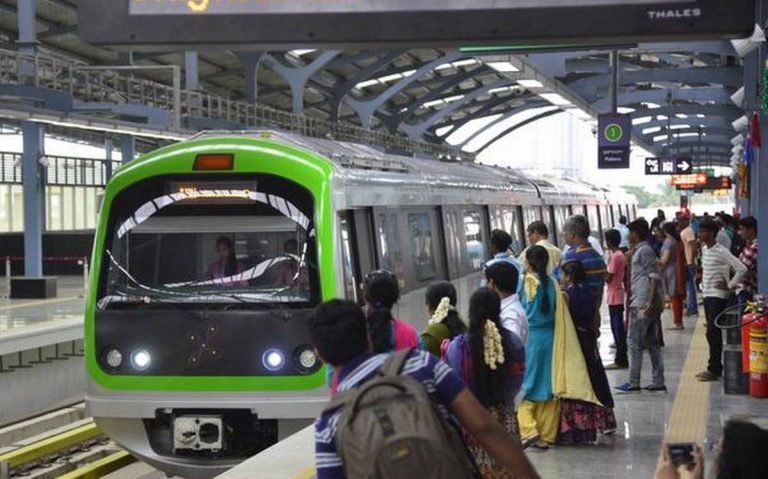
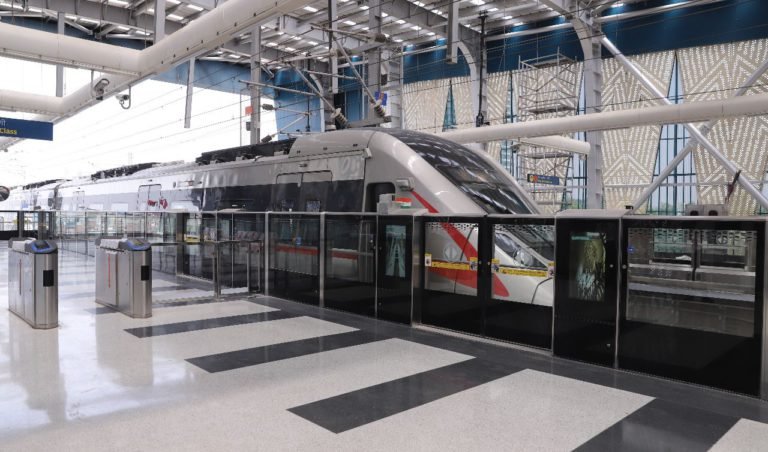
Rapidx station
Rapidx station

With these approvals, the Priority Section of RRTS has become the first railway system in the country which is being opened for operations in its entire length at a maximum operational speed of 160 kmph.

RAPIDX CORRIDOR 1
Inside view of Rapidx station


Over the course of the last one year, more than one Independent Safety Assessors have rigorously examined the processes deployed by NCRTC for implementing this state-of-the-art, world-class, new-age transit infrastructure project. Thus, the system has been thoroughly scrutinized and only after the clearances, it has received approvals from the Ministry of Railways and CMRS.
RAPIDX CORRIDOR 2

NCRTC is ready to start the commercial operations of RAPIDX services within four years of the start of the construction work in June 2019. Even the serious impact of COVID-19 couldn’t affect the resolve of team NCRTC in achieving this target. Team NCRTC has also made rapid progress on the balance of the project and is determined to commission the full corridor along with Metro services in Meerut within the scheduled timeline of June 2025.

During this journey of project implementation, team NCRTC worked with innumerable stakeholders and received invaluable support from the Ministry of Housing and Urban Affairs, Ministry of Railways, Ministry of Finance, Department of Telecom, State Govt. of UP, Haryana, Rajasthan and GNCTD, Asian Development Bank, Asian Infrastructure Investment Bank, New Development Bank and officials of Ghaziabad and Meerut districts.

The general consultants, construction partners, and consultants who worked with team NCRTC have also played a critical role in the successful implementation of the project. With this important milestone, NCRTC is ready formally to enter Operations & Maintenance phase.

NCRTC’s O&M team of NCRTC NETRA, DB and Alstom will be working hard to provide fast, safe, and comfortable regional commute for the people who take a ride on RAPIDX trains.

Advertisement1
InnoMetro_2026

Obstacles in Newly Proposed Ghaziabad Metro Route, GDA Seeks Solutions with DMRC

2
Metro
Representational image only

GHAZIABAD (Metro Rail News): The Ghaziabad Development Authority (GDA) has encountered obstacles that may restrict the progress of the recently proposed Metro route connecting Sector 62 in Noida to Vaishali in Ghaziabad.

According to officials, multiple patches of private land along the proposed corridor present legal and financial hurdles for the authority.

To address these concerns, GDA officials are scheduled to meet with representatives from the Delhi Metro Rail Corporation (DMRC).

The discussion will focus on the newly proposed route and revisit two previously rejected routes: Mohan Nagar to Vaishali and Sector 62, Noida to Sahibabad.

The DMRC submitted a project report to the GDA in January 2020, estimating a budget of ₹1,517 crores for the Sector 62 to Sahibabad route and ₹1,808.22 crore for the Vaishali to Mohan Nagar route.

During the meeting with DMRC officials, the two earlier routes, including the Sector 62 to Sahibabad route, will be given renewed consideration. The Sector 62 to Sahibabad route, in particular, holds promise as an interchange hub for passengers with the Regional Rapid Transit System (RRTS) project station, making it a more viable alternative to the Mohan Nagar to Vaishali route, which could reduce RRTS ridership.

The GDA is currently grappling with significant financial constraints, having faced a setback when the state government denied 50% of funding for the Ghaziabad Metro projects in May. Moreover, the authority is burdened with the repayment of two substantial loans obtained for constructing the 10.3km Hindon elevated road and increased compensation to farmers in the Madhuban Bapudham housing scheme.

The GDA has explored various options to connect the previously proposed Metro extensions for nearly two years due to a lack of funds. Ropeway link connections and alternative transit systems like Metrolite and Metro Neo were considered. Still, residents voiced their preference for Metro connectivity over other modes of transportation, leading the GDA to conclude that Metro connectivity along the two previous routes would be the optimal solution.

Advertisement1
InnoMetro_2026

L&T Emerges as the Lowest Bidder for Kolkata Metro’s Purple Line’s UG1 Contract

0
Kolkata Metro
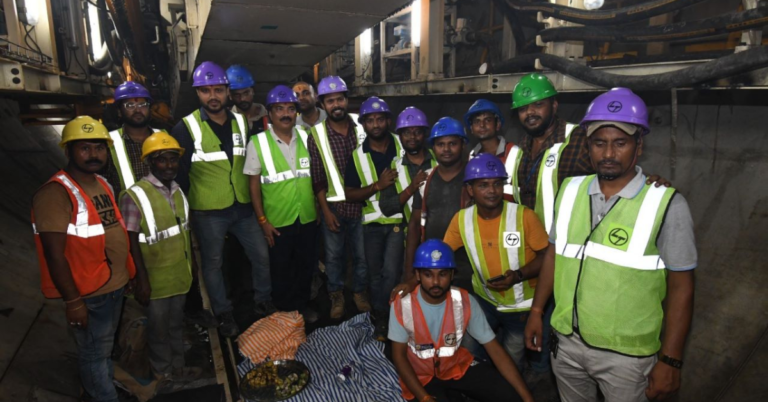
Kolkata Metro/ Representational image

KOLKATA (Metro Rail News): Larsen & Toubro has emerged as the lowest bidder for the civil construction contract of the underground section of Kolkata Metro Purple Line. This section, called UG1, spans 5.05 km from Mominpur to Esplanade. It is the final part of the 15.215 km Line-3, which connects Joka to Esplanade/BBD Bagh. The underground section includes four stations: Kidderpore, Victoria, Park Street, and Esplanade. If awarded the contract, Larsen & Toubro will use two new tunnel boring machines, with one machine on standby.

Rail Vikas Nigam Ltd. (RVNL) had invited bids for this contract in July 2022, with an estimated cost of Rs. 2571.28 crore. The deadline for the bids was not specified. In February, the technical bids were opened, and three bidders were revealed: Larsen & Toubro, ITD Cementation, and Afcons Infrastructure.

Here are the financial bid values submitted by the firms:

Larsen & Toubro: Rs. 2447 crore
ITD Cementation: Rs. 2473 crore
Afcons Infrastructure: Rs. 2486 crore

In comparison to RVNL’s estimate, L&T’s offer of Rs. 2447 crore was 4.82% less. As a result, it is expected that L&T will be given the contract in the coming months, subject to Ministry of Railways clearance.

The project involves designing and building the ramp and underground metro railway works between Mominpur and Esplanade. It spans a distance of 5.05 km. The construction includes the creation of four underground stations: Khidderpore, Victoria, Park Street, and Esplanade. The tunnels will be constructed using tunnel boring machines and the cut & cover method. Additionally, the project encompasses architectural finishing works, track works, and other related activities. This initiative is part of the Joka-Esplanade metro corridor in the state of West Bengal, India.

Advertisement1
InnoMetro_2026

Indian Railways to Start Production at its Largest Solar Plant in Bhilai

0
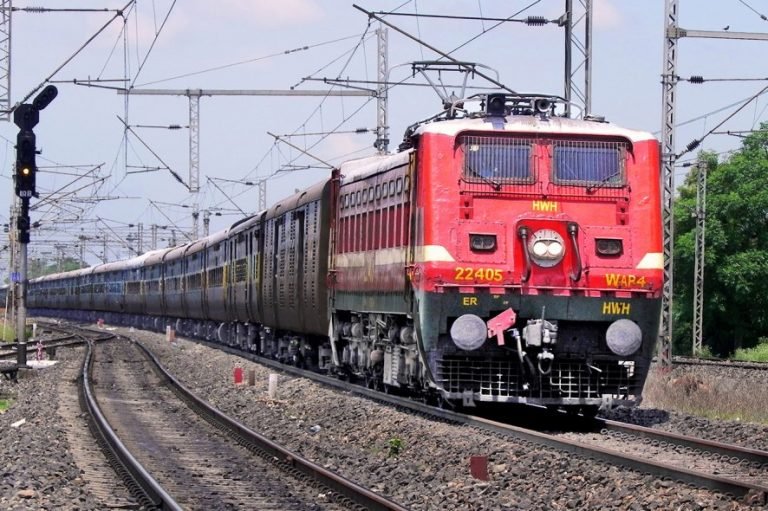
Representational image only

RAIPUR (Metro Rail News): Indian Railways is ready to start production at its largest solar plant in Bhilai, Chhattisgarh. After its 1.7 MW unit, which was commissioned in February of last year at Bina under West Central Railway in neighbouring Madhya Pradesh, the 50 MW solar photovoltaic plant is the Railways’ second facility of its kind.

The Railways installed a solar plant near Charoda, close to a national highway in Bhilai, under the Raipur Division of the South East Central Railway (SECR) zone as part of its aim to utilise the large and uninhabited regions to promote renewable energy. This initiative aims to make the Railways more environmentally friendly and reduce its carbon footprint. The Railways plans to set up more solar plants in different regions.

The solar plant in Bhilai is the largest among all the solar plants owned by the Indian Railways. It covers an area of 200 acres and has 154,500 solar photovoltaic panels. The plant underwent two trials in the month of May and June. The Railway Board will decide how the renewable energy will be used, whether to power the trains or for commercial purposes.

The electricity generated by the solar plant will be supplied to the Power Grid Corporation. The Railways can utilise the same amount of energy from the regional grid wherever it is needed across the country. The project was assigned to Sherisha Rooftop Solar SPV, a Chennai-based company, which will operate the plant for over two decades after its completion. The project is anticipated to be launched by Prime Minister Narendra Modi, according to railway authorities.

Advertisement1
InnoMetro_2026

Ballabhgarh-Palwal Metro Receives Green Signal from Haryana Government

0
Haryana CM Manohar Lal Khattar

HARYANA (Metro Rail News): On 25 June 2023, the Haryana chief minister Manohar Lal Khattar made an announcement that the government has approved the Ballabgarh-Palwal metro to ensure better connectivity and for improving the development of the area while addressing the Gauravshali Bharat Rally at Village Gajpuri of Plawal.

According to the chief minister, the national and state governments are making tremendous progress to ensure inclusive growth. He thanked the Union government for encouraging the development of significant projects in Haryana, such as the Metro and the National Highways.

He stated that our government has developed unprecedentedly in Palwal and Faridabad regions. A better connection has been made possible by constructing many important state roads. The construction of Jewar Airport will speed up other development projects and industries in the region.

Mr. Krishan Pal Gujjar, Union Minister of State for Power and Heavy Industries, along with Transport Minister Mool Chand Sharma and Cooperative Minister Banwari Lal, also addressed the gathering.

The event was also attended by Nayan Pal Rawat, MLA from Prithla, Jagdish Nair, MLA from Hodal, Parveen Dagar, MLA from Hathin, Narender Gupta from Old Faridabad, Seema Trikha from Badkhal, and Rajesh Nagar from Tigaon.

Advertisement1
InnoMetro_2026

Union Ministry Approves Tricity Metro Project to Alleviate Traffic Chaos

3
Chandigarh Metro
Representational Image only

CHANDIGARH (Metro Rail News): A month after receiving the comprehensive mobility plan (CMP), the Union Ministry of Housing and Urban Affairs has approved the Tricity metro project. The project, designed to address the burgeoning traffic chaos in the Tricity region of Chandigarh, Mohali, and Panchkula, is expected to boost the area’s transportation infrastructure.

A senior UT official confirmed the approval: “We have received a nod from the ministry, indicating their support for the project. The ministry had instructed Rail India Technical and Economic Services (RITES) to prepare a detailed project report (DPR) in phases, which will be submitted for further funding considerations.”

The proposed Tricity metro network, prepared by RITES, spans approximately 39 kilometres and strategically covers Chandigarh, Mohali, and Panchkula.

The mass rapid transit system (MRTS), which is expected to cost roughly 10,570 crores, will comprise metro lines and bus terminals, depots, and upgrades at important junctions, among other features.

The comprehensive mobility plan (CMP) put up by RITES for Tricity had previously received in-principle approval from Chandigarh, Haryana, and Punjab in April of this year. In its final network, the metro network would connect Chandigarh, Mohali, Panchkula, Zirakpur, New Chandigarh, and Pinjore in two phases.

The initial phase, scheduled for development between 2027 and 2037, will witness the construction of metro lines connecting Sarangpur to Panchkula ISBT, Rock Garden to Zirakpur ISBT via Mohali Industrial Area and the airport, as well as Grain Market Chowk (Sector 39) to Transport Nagar (Sector 26).

Further, the second phase, scheduled to begin in 2037, would extend the metro lines to include routes from Panchkula ISBT to Panchkula Extension, Paraul (New Chandigarh) to Sarangpur, Zirakpur ISBT to Pinjore ISBT, and Airport Chowk to Manakpur Kallar.

The comprehensive mobility plan, assigned to RITES Limited in December 2021, aims to ease the challenges and provide a sustainable solution.

It is worth noting that RITES had previously recommended the Metro project in its 2009 report. However, eight years later, the Union Home Ministry rejected the proposal in 2017, citing the city’s size and the project’s financial feasibility. Despite the setback, the current approval by the Union Ministry signals a renewed commitment to enhance connectivity and address the pressing transportation needs of the Tricity region.

Advertisement1
InnoMetro_2026

Railway Ministry Approves Allocation of ₹153.84 Cr for India-Bangladesh Rail Project

0
Indian Railways/Representational Image
Representational Image only

AGARTALA (Metro Rail News): The Railway Ministry has recently approved an allocation of Rs 153.84 crores to complete the Agartala-Akhaura railway line project, connecting India’s Tripura with Bangladesh. The estimated cost of the project is Rs 862.58 crores, and it is expected to be operational by the end of this year or early next year.

According to Sabyasachi De, Chief Public Relations Officer of the Northeast Frontier Railway (NFR), the project is funded by the Ministry of DONER (Development of North Eastern Region). Approximately Rs 708.74 crores of the anticipated cost have already been provided and utilized.

Moreover, the improved connectivity will facilitate faster import and export of commodities, empowering local producers to reach international markets more efficiently.

In line with Prime Minister Narendra Modi’s vision of the ‘Act East Policy’ and ‘Neighborhood First Policy,’ Indian Railways has been actively executing various railway line projects to connect neighbouring countries. The Agartala-Akhaura international connectivity rail line project is an important initiative strengthening relations between India and Bangladesh.
The railway line, which stretches 15.064 kilometres (5.05 kilometres in India and 10.014 kilometres in Bangladesh), connects Akhaura, Bangladesh, to Nischintapur, an international immigration station outskirts of Agartala.

The station will serve as a dual gauge facility for passenger and goods interchange between nations. The project includes the construction of one major bridge and three minor bridges, ensuring smooth and efficient operations.

Once the Agartala-Akhaura railway project is completed, the travel time between Agartala and Kolkata via Dhaka is expected to reduce drastically from approximately 31 hours to just 10 hours.

NFR officials in Agartala expressed their satisfaction with the project’s progress, noting that over 90 per cent of the work on the Indian side has already been completed.

Advertisement1
InnoMetro_2026

REC to Extend ₹3,045 Crores Assistance for Bangalore Metro Phase II Development

0
Bengaluru Metro/Representational image only

NEW DELHI (Metro Rail News): Bangalore Metro Rail Corporation Limited (BMRCL) will receive financial assistance of ₹3,045 crores from REC Limited, a Maharatna Central Public Sector Enterprise under the Ministry of Power. This assistance will support the development of Metro Lines in Phase II of the Bangalore Metro project. The decision to provide financial assistance was approved by the REC board during a meeting held in Bengaluru on June 24, 2023.

The Namma Metro Phase-II project entails the expansion of the two Phase-I existing corridors, the East-West Corridor and the North-South Corridor; as well as two new lines, one from R.V. Road to Bommasandra and the other from Kalena Agrahara to Nagawara. Some of the city’s busiest and densest neighbourhoods will be crossed by these lines.

The completion of Phase II, covering a distance of 72.09 km, will significantly improve connectivity and reduce traffic congestion in Bengaluru. The total length of Namma Metro, after Phase-II, will be 114.39 km, with 101 stations.

REC Limited is a non-banking financial company that specializes in financing and developing projects in the power sector across India. The financial assistance provided to BMRCL is part of REC’s efforts to support infrastructure development. With over fifty years of experience, REC offers funding for various power sector projects, including generation, transmission, distribution, and renewable energy.

Advertisement1
InnoMetro_2026

RVNL-TMH JV for Vande Bharat Trains Remains Intact, Bank Guarantee to be Deposited

0
Vande Bharat Express
Vande Bharat Train/Representational image only

NEW DELHI (Metro Rail News): On June 20, 2023, Rail Vikas Nigam Limited (RVNL), which has a joint venture with Russian rolling stock giant TMH for the production of 120 Vande Bharat trains at Latur, said that the JV is still in place and that the necessary bank guarantee will be deposited following that.

This is the first sleeper coach for the Vande Bharat Project that will be used on Rajdhani routes.

In response to reports that the Railways may be forced to re-issue the tender after discharging the earlier one due to the dispute between TMH and RVNL over the issue of majority stakes, RVNL has clarified in its latest filing to the Bombay Stock Exchange (BSE) that it is “factually incorrect.”

The Railways also insisted that TMH and RVNL must resolve their shareholding conflict by September, adding that there is still time to deposit the bank guarantee. The Railways must receive a bank guarantee of Rs 200 crore.

A senior Railway Ministry official involved in the Vande Bharat tendering process stated, “As of now, there is no such move to re-issue the tender again.”

As the joint venture submitted the lowest offer for producing 120 Vande Bharat trains with sleeper accommodations, TMH-RVNL bagged the project for close to Rs 40,000 crore.

The Russian ambassador met with Railway Minister Ashwini Vaishnaw to diffuse the situation. Additionally, the Russian Embassy’s Trade Commissioner sent a letter clarifying the terms and conditions of the joint venture project to the relevant authorities.
The report regarding the recently disclosed joint venture between RVNL and TMH is false. No party has terminated the MoU between both sides (RVNL and TMH). Hence it is still in effect, according to RVNL’s notification to the BSE.

The details of the MoU are currently the subject of additional discussion. Any modifications to the terms of the agreement must be communicated to the exchange by the company.

Advertisement1
InnoMetro_2026

Indian Railways likely to Procure 60,000 Wagons to Boost Freight Traffic Share

0
Representational image only

NEW DELHI (Metro Rail News): To enhance the share of freight traffic carried by Indian Railways (IR), the Ministry of Railways is likely to acquire additional 60,000 wagons, estimated to cost around Rs 25,000 crore. The tenders for procuring these wagons, including 10,000 aluminium ones, will be floated between July and September.

According to a senior Railway Ministry official, “the ministry is finalizing a tender for the procurement of additional 50,000 wagons and is also considering a separate tender for the acquisition of 10,000 aluminium waggons.” These new tenders are part of a long-term aim to boost rail’s current share of freight traffic from 27% to 45% by 2030.

The official further disclosed that approximately 20,000 rakes from the second round of tenders will be procured by 2025, while the rest wagons will be delivered between 2026 and 2028.

An official stated, “Indian Railways intends to introduce a premium cargo service using aluminium rakes, which will not only be quicker than traditional rakes but will also adhere to manufacturers’ environmental, social, and governance (ESG) norms.”

The lightweight nature of aluminium will result in lower energy consumption, while customers opting for aluminium goods trains will receive ESG certificates from Indian Railways due to the wagons’ ability to save 14,500 tonnes of CO2 emissions and consume less energy, all while being corrosion-resistant.

The latest proposed tenders are part of the government’s larger drive to deploy over 1 lakh waggons over the next few years to increase freight loading to 2,000 million tonnes (MT) by 2024-25.

Vivek Lohia, the managing director of Jupiter Wagons, revealed that his company anticipates the release of tenders for 50,000 to 80,000 new wagons by Indian Railways in 2023-24. Lohia intends to bid for these tenders and has set his sights on securing orders for at least 20,000 wagons from the railways in the upcoming fiscal year.
With a current stock of approximately 320,000 wagons, Indian Railways intends to use the new acquisitions to supplement its existing capacity. These efforts form part of a larger plan to cater to 45 per cent of India’s freight traffic by 2030.

According to Indian Railways, aluminum rakes have a resale value of 80 percent and a lifespan that is 10 years longer than conventional ones. However, the manufacturing cost is 35 percent higher due to the all-aluminum superstructure.

In a statement, Hindalco mentioned that as the railways prepare to deploy over 1 lakh wagons in the upcoming years, there is a potential for an annual reduction of more than 25 lakh tonnes of CO2. This reduction can be achieved by shifting approximately 15 to 20 percent of the wagons to aluminum.

Advertisement1
InnoMetro_2026