New Delhi: Prime Minister Narendra Modi has flagged-off the Delhi-Faridabad Metro Line that would allow hassle free travel for around two lakh daily commuters between the national capital and the industrial hub in Haryana.
The extension of the Delhi Metro connects Badarpur to Escorts Mujesar in Faridabad.
The total cost of the project from Badarpur to Escorts Mujesar is nearly Rs. 2,500 crore. Out of this, Rs. 1,557 crore was borne by the Haryana Government, the Centre contributed Rs. 537 crore, while the Delhi Metro provided Rs. 400 crore.
All these are elevated and located on either side of the Delhi-Mathura Road (NH-2).
“The nine-station metro corridor which was 95 per cent indigenously built will provide people a safe, affordable, quick, comfortable, reliable, environment-friendly and sustainable transport facility,” a Haryana government spokesperson said.
Haryana Chief Minister ML Khattar, addressing a press conference on Saturday, had thanked the Prime Minister for “gifting” the Metro service which would take the city to “another level of progress” with better connectivity with other NCR towns.
He had also said that the Prime Minister would be announcing the go-ahead for connecting Gurgaon with Faridabad by Metro.
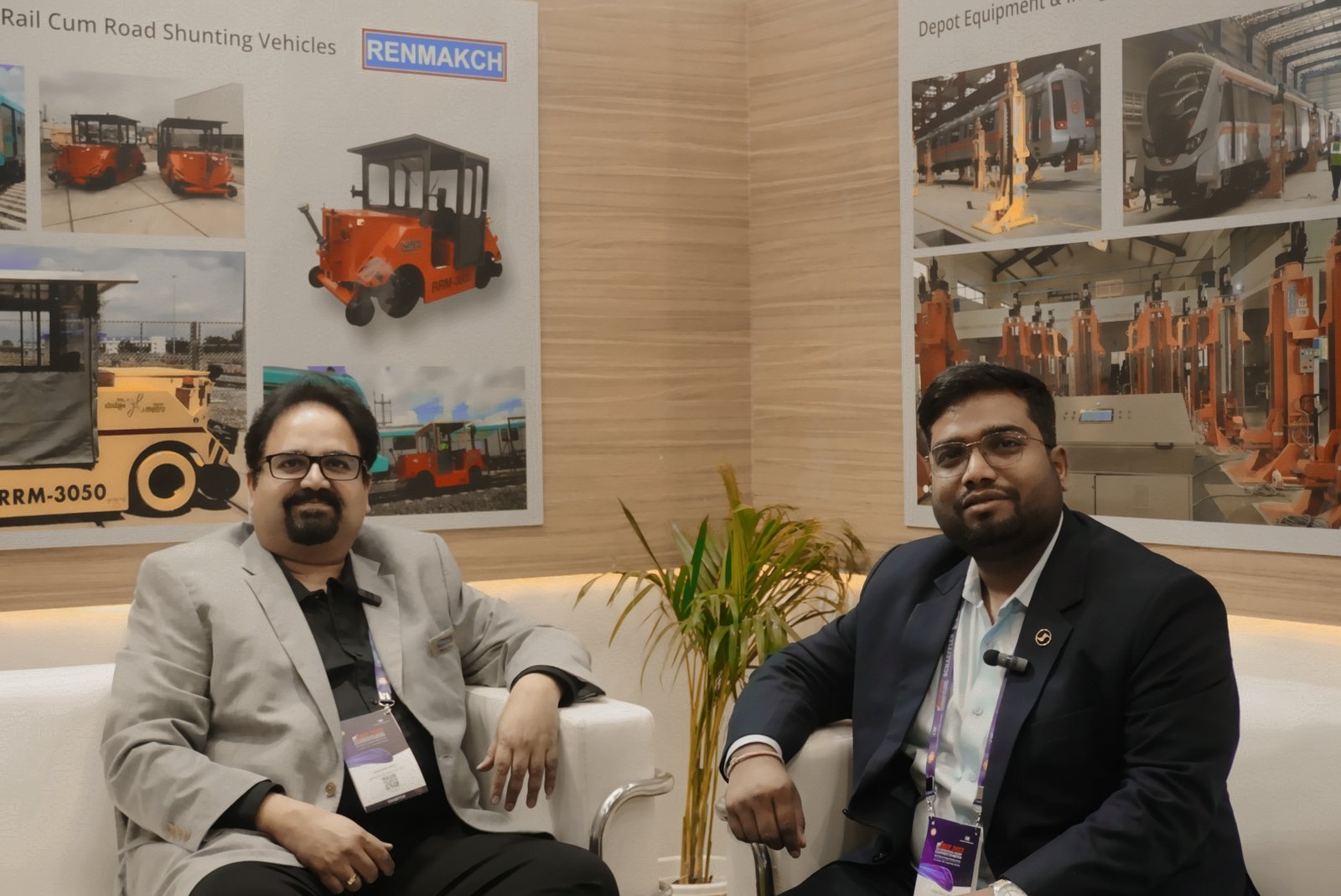
Metro Rail News team Interviewed Mr. Neelesh Dixit during IREE 2023, that entails the profile of the company Renmakch, which he holds the reins of. This interview explores the latest innovations and technologies ushered by Renmkach in the Indian mobility sector, with particular emphasis on Railways. This interview also unravels the company’s commitment towards revolutionising after-sale & maintenance services in India and Worldwide.
Mr Neelesh Dixit, the MD of Renmakch India, is a visionary in rail equipment manufacturing. With 25+ years in the industry, he shares insights into Renmakch’s ‘Make in India’ success and its pivotal role in global rail innovation.
Q1: What are the company’s efforts to hold its market share and continue being one of the key players in rail equipment manufacturing amongst several global conglomerates?
Renmakch has been a distinguished manufacturer of depot equipment since 2018, aligning its operations with the ‘Make in India’ policy introduced by the government. Since its inception, the company has comprehensively modernised its manufacturing facilities, significantly reducing import dependency. Presently, Renmakch proudly engages in the production and supply of a comprehensive range of depot equipment, encompassing mobile jacks, turntables, spit jacks, boogie testing machines, spring testing machines, damper testing machines, and tailored solutions to cater to diverse requirements.
Renmakch’s market presence is distinguished by its pioneering role in introducing ‘Make in India’ initiatives for such sophisticated equipment, effectively covering the entire spectrum of depot equipment. This proactive approach has benefited the Metro railways and extended its advantages to other Engineering, Procurement, and Construction (EPC) entities, such as Siemens and L&T, along with various EPC bidders and rolling stock manufacturers. In the wake of major projects like the Delhi Metro Rs 17 project and the Bangalore Metro project, Renmakch now extends its offerings to EPC bidders and train manufacturers, presenting them with the opportunity to acquire European-quality equipment manufactured in India at a considerably more competitive price point.
Q2: In an era of growing automation, digitalisation, and technical scale-up, what are Renmakch’s major R&D initiatives and capacity augmentation activities?
Yeah. So all these European equipment under transfer of technology, which are being manufactured at our factory in Mumbai, needed a lot of design interface because the European equipment was manufactured using European steel and some of the very high-end European products. We had to set up our own design and R&D department to integrate those designs in the steel available in India with SAIL, Jindal, or Tata. And as far as the other high-end items are concerned, we could source them in India. Some of them are still being imported for which we need the manufacturers. So our design and R&D department plays a major role in interfacing under this technology transfer with the foreign partner, the end user customer, and within our organisation with the manufacturing and procurement team. So, after this make-in-India tie-up, we have purchased all the high-end simulation software. We conduct all the simulations in-house and are not dependent on external sources. So, this has been a good contribution from our side after the Make in India initiative.
Q3: What are the various comprehensive solutions and depot equipment the company provides for India’s railways, metros, and high-speed rail projects?
Renmakch is proud to announce that we will celebrate our 29th anniversary in January of this year. Since our establishment in 1996, we have been dedicated service providers specialising in reconditioning, automating, and repairing sophisticated railway machines. Over time, we have formed partnerships with European companies, and in 2007, we became sales and service partners with the Metro after Delhi Metro’s launch. With the implementation of the make-in-India policy, we have become manufacturers, and today, Renmakch offers comprehensive solutions to railways, metros, and high-speed rail. Our comprehensive approach includes design, support, manufacturing, supply, installation, commissioning, warranty support, long-term AMC contracts for five, ten, and fifteen years as required, and the entire range of maintenance equipment, testing equipment, and condition monitoring equipment. This allows us to provide our customers with a complete range of depot equipment, making Renmakch a one-stop shop for all their needs.
Q4: Kindly share details of your major overseas initiatives and essential orders on the book for the Indian market. What are the major projects being undertaken?
We are pleased to announce that the Make in India initiative has been a tremendous success for Renmakch, as we have received a full year’s worth of manufacturing orders and have executed many of them. Over the last 18 months, we have manufactured an impressive 160 mobile lifting jacks, many of which have already been commissioned, some of which are currently undergoing factory acceptance testing and will be delivered and commissioned by the end of this year. These efforts have brought us closer to our European partners and Japanese shareholder Yashima, and we have extended our support to their projects in India and the Southeast Asian region. Furthermore, we have offered to extend this support through our European principles to other parts of the world, which has opened up new export avenues for Renmakch. As a result, we are proud to hold the distinction of being one of the first Indian companies to enter into a manufacturing joint venture with European associates under the Make in India scheme.
Q5: Renmakch holds the repute of being one of the first companies in India to have entered into manufacturing joint ventures with European associates under the Make in India scheme. How have you benefited, and what have been your significant accomplishments?
We proudly announce that we have successfully manufactured products that meet the same European quality standards. Our customers have expressed their satisfaction with the quality of our manufacturing, painting, electrical systems, panels, assembly, performance, and noise levels. Our products are so comparable to those manufactured in Europe that the only noticeable difference is the steel profiles. This is an excellent achievement for us. We have also reduced customer costs and improved delivery schedules by manufacturing in India. Despite the challenges posed by the COVID pandemic and semiconductor shortages, we have delivered our products on time.
In addition to our manufacturing capabilities, we are proud to be a service provider for over 25 years. Our proximity to our customers allows us to provide them with unparalleled service for many years. Our customers are confident Renmakch will take care of their equipment and provide continuous support.
We are proud to be known as one of the trusted routers for the Indian rail industry, with a strong reputation for resolving equipment-related issues. This is a core competency of our company, and we are committed to maintaining our high-quality standards and competitive pricing for the benefit of our customers.
Q.6 What is your present approach to support the maintenance of various critical railway machines?
Our extensive experience of over 25 years as a service provider provides us with a significant advantage in delivering high-quality service for all equipment manufactured in India. Furthermore, we are extending these services to all other equipment supplied directly by our foreign principals. Renmakch has been entrusted with providing after-sale services, and we have been highly successful. Admittedly, there may be occasional issues due to the non-availability of spares or limited technology transfer, but we strive to overcome such challenges in consultation with our foreign principals.
For instance, we recently encountered an issue manufacturing mobile lifting jacks with the original Siemens design. Unfortunately, Siemens quoted us a delivery schedule of 75 weeks, which the customer was unwilling to wait for. However, we overcame this setback by completely switching over from Siemens and designing a new system from Phoenix Contact, among others. The outcome was highly successful, and our foreign principals were pleased with our ability to manufacture and deliver on time without compromising quality or performance.
We are continuously upgrading our services, and while problems may arise occasionally, we make every effort to overcome them, considering the level of technology transferred to us and intellectual property considerations. Our foreign principals have been supportive throughout, and we are confident we can move forward. As Make in India progresses, we are becoming increasingly independent, ensuring that the systems manufactured can be easily maintained within India, and customers need not suffer high downtimes. It is worth noting that maintenance always plays a crucial role in ensuring the smooth operation of rail transport systems, whether Indian railways, urban transport, metro, or the newly operated RRTS.
Q.7 So, you mentioned that the end users were also doing some maintenance work in the tenders. So, does it affect the overall life of the products you’re offering?
It is imperative to properly maintain any equipment manufactured and supplied, regardless of origin, whether in India or Europe. Preventive maintenance is crucial, as is corrective breakdown maintenance. When preventive maintenance is carried out effectively, the machine will provide consistent performance throughout its lifespan. Periodic maintenance can even increase the machine’s lifespan. However, convincing customers of maintenance benefits can be challenging, as many prefer to avoid incurring high maintenance costs. It is important to note that maintenance enhances the machine’s life, ensures consistent performance, maintains accuracy, improves productivity, and preserves the machine’s condition. Ultimately, maintenance becomes an asset for the customer. In light of this, we encourage customers to opt for our comprehensive maintenance contract, which we provide for the machines we manufacture, supply, install, commission, and maintain. For the machines we manufacture in India, we are confident that we can extend the EMC by five, ten, or even fifteen years without burdening the customer with unnecessary costs. Being the manufacturers, we have faith in our products and quality services, and the customer can rely on us to resolve any issues. In the rare case that parts are not readily available, customers may experience slight delays, but we endeavour to maintain maximum stock to provide immediate replacements. In cases where machines are over a decade old, we recommend reconditioning rather than only offering an AMC. It is important to educate customers on the importance of proper maintenance. Still, in the end, they benefit from the machine’s optimal performance, which leads to satisfied customers and a happy workforce.
Q.8 So, this is the era of digitisation automation. So, how is Renmakch leveraging the technology to get productive maintenance done? So, any comment on this?
I understand these are customised solutions, not standard products like lathe or milling machines. Each piece of equipment is designed based on the train configuration, making it unique to each customer. Consequently, automation during the manufacturing stage is minimal. However, we use high-end quality materials, whether steel, electronic components, or hydraulic or pneumatic components. We rely on the reliability offered by OEMs for these kinds of equipment, such as Siemens, Beckhoff, Rexroth, or any other company that manufactures pneumatic pesto. This level of quality and attention to detail is commendable and speaks to the professionalism of your company.
Q.9 What are Renmakch’s plans? As you have said, you have benefited from the Make in India policy, right? So what about the Make-in-India, Make for the World?
Our foreign principles have agreed so that we can also export out of India. But presently, more opportunities are there. In India today, the opportunities are minimal if you see the outside world. So there are few export opportunities for our type of equipment. And in India, there are so many projects that focusing on India itself is a big challenge. And these project timelines are so high. Eight months, ten months, twelve months, 18 months. So, keeping track of those projects in India and meeting the manufacturing requirements. We are open for exports and waiting for the right opportunities. We are ready for exports, quality-wise, delivery-wise, performance-wise. Also, our engineers are trained to go to any other country and provide those services. But, yes, it’s only opportunity-based business. So whenever there is an opportunity, I would say we are open to that.
Discover the endless possibilities of our city’s Metro at InnoMetro, our flagship Expo and Conference. Be an active participant in shaping its future towards a more sustainable tomorrow. Stay informed and join us to take a step towards a brighter future.
Managing Editor presenting the October Issue of our Magazine to MD, Renmakch
BHUBANESWAR, Odisha, India (Metro Rail News)– In a major development for the transportation infrastructure of Odisha, the state cabinet chaired by Chief Minister Naveen Patnaik has approved the proposal to construct the Bhubaneswar Metro Rail Project (BMRC) Phase I. This ambitious project will span a distance of 26 kilometers and feature 20 stations, connecting Biju Patnaik International Airport to Trisulia Square near Cuttack.
The Delhi Metro Rail Corporation (DMRC) has been entrusted with the execution of this Rs 5,929.38 crore project, acting as a turn-key consultant for a fee of Rs 326.56 crore. The elevated viaducts will carry the metro rail tracks and stations, promising a seamless and modern transportation experience for the residents of Bhubaneswar and Cuttack.
The project’s completion is targeted within four years, aiming to address the growing traffic congestion and air pollution concerns in the twin cities. Furthermore, the Bhubaneswar Metro is anticipated to play a pivotal role in bolstering economic development in the region.
#Odisha Cabinet led by CM @Naveen_Odisha approved the construction of Bhubaneswar #MetroRail Project Phase-I. The metro rail project to be carried out under #5T initiative will facilitate comfortable, safer & convenient transportation for the people. #OdishaOnTheMove
Key Highlights of the Bhubaneswar Metro Rail Project (BMRC) Phase I:
Length: 26 kilometers
Number of Stations: 20
Estimated Cost: Rs 5,929.38 crore
Project Execution: Delhi Metro Rail Corporation (DMRC)
Completion Target: 4 years
Expected Benefits: Enhanced public transportation, reduced traffic congestion, improved air quality, and stimulated economic growth.
Recent Developments and Additional Information:
Siba Prasad Samantaray has been appointed as the Chief Executive Officer (CEO) of Bhubaneswar Metro Rail Corporation (BMRC).
Prasanna Kumar Sarangi, Special Secretary of Housing and Urban Department, has been named the General Manager (Administration) of BMRC.
Geotechnical investigations are underway on the proposed Bhubaneswar Metro Rail Project stretch between Nandankanan in Bhubaneswar and Trishulia in Cuttack.
Chief Minister Naveen Patnaik had initially approved the metro train service proposal on Utkal Dibasa (April 1) 2023.
The first phase will cover areas including the airport, railway station, Vani Vihar, Jaydev Vihar, Patia, Nandankanan, and Trishulia.
Future expansion plans include extending the metro train service to Puri, connecting the pilgrim town with Cuttack and Bhubaneswar.
The Bhubaneswar Metro Rail Project (BMRC) Phase I marks a significant step towards transforming the transportation landscape of Odisha and fostering sustainable urban development. With its focus on modern infrastructure, environmental considerations, and economic upliftment, the project holds immense promise for the future of the state.
JAIPUR (Metro Rail News): Ayesa India has won the contract to be the Detailed Design Consultant (DDC) for Jaipur Metro’s Phase 1C and 1D projects. These two phases will extend Jaipur’s Pink Line in either direction, to Transport Nagar in the east and Ajmer Road Chauraha in the west.
DMRC invited bids for this DDC contract in July 2023, with a budget of Rs. 4.39 crore. Ayesa placed the lowest bid of Rs. 3.19 crore, which was well below the estimate.
Ayesa’s role as DDC will include producing and proposing alternate designs for all civil, architectural, building services, electrical, and mechanical works.
The construction contract for the underground section of Phase 1C (Badi Chaupar – Transport Nagar Ramp) was awarded to Afcons Infra in early September 2023. The tendering process for the elevated sections of Phase 1C and 1D was cancelled in mid-September 2023, and a retender notice is still pending.
The expected timeline for the completion of Phase 1C and 1D is not yet known.
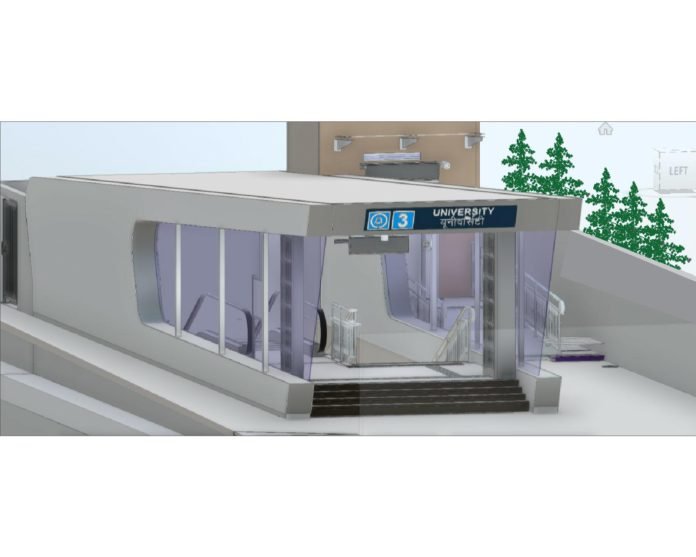
University Metro Station, Patna metro (representational image)
PATNA (Metro Rail News): Patna University underground metro station of Patna Metro Rail Project will ease the life of students flocking to the hub of studies of the city; starting from the university area in Ashok Rajpath till NIT Patna from different Parts of the city for studies. Be it engineering students of NIT Patna, Patna University, Science College various private coaching institutes and a few prestigious schools.
This two-level underground metro station will be a time saviour for students, and faculties trying to reach the Ashok Rajpath area. The proposed metro station will be approx. 160 m long and 16m below the ground level providing minutes away connectivity from PMCH and Moin Ul Haq metro station.
Besides this, the underground metro station will be a boon for people residing adjacent to Ashok Rajpath, Patna City, Gular Bagh, NIT More, Khajanchi Road, Govind Mitra Road etc. as it would ease off the traffic jams and make commuting easier from one place to another.
The station has been planned in a manner to ease the life of metro riders with three entry exits facility.
The station will have three Entry / Exit gates
Entry / Exit gate -1 is proposed to be in front of Patna Science College, Patna University.
Entry / Exit gate -2 will be near NIT Patna more.
Entry/Exit-3 will be inside the Campus of Rajkiya Shamshul Hoda madrasa premises.
Two-level Underground Metro station
Two-level station with concourse at -1 level. The concourse will have passengers-centric facilities like ticket counters, public convenience such as toilets, security checks etc. and the platform will be at -2 level. All these levels will be connected to each other and also with ground level.
Facilities for Passengers
The station has been planned with six escalators, and five staircases for public usage, out of which one escalator and one staircase will be provided at Entry / Exit 2 & 3. For Entry /Exit -1, the staircase will be provided for the movement of passengers. Four Escalators and two staircases will be provided for the movement of passengers from the concourse to the platform level. Three lifts from Ground level to Concourse level at each entry/exit will be provided for ease and comfort of the differently abled, old age & other needy passengers.
Arrangements for emergency situations
In case of any emergency situation the station is proposed to have three fire escapes out of which one connects the platform and concourse directly to exit the station premises however by using the other two fire escapes (staircase) the passengers will be evacuated from the platform to the concourse and from there any of three Entry/Exits can be taken to exit station premises. One firemen’s staircase (separately) is also there for Firefighters to enter station premises during Emergency situations.
Discover the endless possibilities of our city’s Metro at InnoMetro, our flagship Expo and Conference. Be an active participant in shaping its future towards a more sustainable tomorrow. Stay informed and join us to take a step towards a brighter future.
MUMBAI (Metro Rail News): J Kumar Infraprojects, working on the Mumbai Metro Line 3 Project has been issued a Stop-work notice by the authorities owing to the increasing pollution level in the dream city.
Non-Compliance
The notice has been issued to the concerned firm for not complying with the regulations stated and instructed by the authorities in the backdrop of increasing pollution in the city. The company failed to comply with air pollution mitigation measures at Bandra Kurla Complex (BKC).
The Project
J Kumar Infraprojects has been assigned with the contract of the Colabab-Bandra-Seepz line, for which the mid-section terminal station will come up near the ITO junction at BKC. A survey conducted by the Maharastra Pollution Control Board (MPCB), 5 days ago, across Mumbai city found 14 sites flouting the pollution control norms.
No mitigation Measures Adopted
Upon a visit, the officials noticed that the site, where J Kumar Infraprojects works, was neither barricaded nor covered with tarpaulin, green clothes or even jute sheets. Additionally, the workers on the site were not equipped with masks.
Intimation Notice
The company was already served an intimation notice listing out all mitigation measures to control pollution mad dust suspension in the air. Upon finding the concerned firm in negligence of its basic responsibilities under such a dire situation, the stop-work notice was issued.
Notice Period
The notice will be in effect till all the compliances are not fully met by the company on its construction site. Few extensions in the deadline can be allowed as long as the installation of Big machines is concerned but compliance of normal, compulsory and simple measures are to be enforced as soon as possible.
Other companies
The Maharashtra Pollution Control Board has issued similar notices to other companies too. Other companies include major infra companies like L&T, ITD, NCC, Avighnaa, and Ahluwalia among others.
Mumbai Metro Line 3
The Mumbai Metro Line 3, also referred to as the Aqua Line is expected to run between Navy Nagar in the far south to Aarey depot in the North centre. It will be fostering metro accessibility & connectivity in Financial hubs like Colaba, BKC and Aarey.
It is a 33.5 Km-long line, also referred to as Aqua Line 3 or Colaba-Bandra-SEEPZ line, which is also the first underground Metro Line of Mumbai.
Discover the endless possibilities of our city’s Metro at InnoMetro, our flagship Expo and Conference. Be an active participant in shaping its future towards a more sustainable tomorrow. Stay informed and join us to take a step towards a brighter future.
Although trains could achieve 200 km/h by the early twentieth century, operational speeds rarely exceeded 130 km/h. The high-speed rail (HSR) era began in Japan with the Tokaido line, which connected Tokyo and Osaka and became operational in time for the 1964 Tokyo Olympics. Japan provided favourable conditions for establishing an HSR system, including a high population density and closely connected large cities. It was as simple as overlapping the HSR network across this spatial configuration. HSR is viewed as a cost-effective alternative to traffic and airport congestion. Evidence suggests that rail travel time is cut in half when a high-speed service is provided between two city pairs.
Since the 1980s, there has been a significant increase in traffic, accelerating the development of high-speed rail lines worldwide. The first European high-speed railway, 260 km/hr between Paris and Lyon, opened in 1981. Germany and Italy came next (1988), followed by Spain (1992), Belgium (1997), the United Kingdom (2003), and the Netherlands (2009). China, on the other hand, has seen the most remarkable developments. Since the first high-speed rail line between Beijing and Tianjin was inaugurated in 2008, several high-speed rail corridors have been rapidly developed, reaching 19,000 km in 2016 and 37,900 km in 2020, making it the world’s longest. Several countries, including the United States, also plan high-speed rail networks. However, these projects typically take decades due to funding challenges, the modest relevance of current passenger rail services, and the dominance of air and automobile transport. Dedicated high-speed postal trains are used daily in Europe (for example, in France and Sweden). Nonetheless, due to the significant fall in postal use, such ventures have unclear development prospects.
High-speed rail currently functions under two discrete technologies:
Improvement of conventional rail: The first kind operates on existing conventional rail systems, and its high speed is due primarily to significant advances in locomotive performance and train design. They may not be regarded as pure high-speed trains in and of themselves. This technology is used in England (London – Edinburgh), Sweden (Stockholm – Gothenburg), Italy (Rome – Florence and Rome – Milan), and the United States (Boston – Washington). In most situations, trains can reach peak speeds of around 200 km/h, and in Italy, they can reach up to 250 km/h. The main disadvantage of using and implementing this transportation system is that it must share existing lines with ordinary passenger and freight services, limiting the number of slots available to HSR.
Exclusive high-speed networks: The second category of high-speed trains, on the other hand, operates on its own exclusive and independent lines. Trains in Japan can reach speeds of 240 km/h, but continuing attempts to increase peak speeds to 300 km/h aim to keep rail passenger travel competitive with air. The TGV Sud-Est (Trains a Grande Vitesse) in France can achieve speeds of 270 km/h, whereas the TGV Atlantique can reach 300 km/h. One of the primary benefits of such a system is that, while passenger trains have their tracks, rail freight transport becomes more efficient because it inherits virtually exclusive use of the standard and conventional rail system.
The first high-speed rail networks were created to support national systems, particularly along major corridors. In Europe, this evolution has reached the point where several national high-speed systems are being integrated. This includes, for example, Eurostar (Paris-Lille-London) and Thalys (Paris-Brussels-Antwerp-Rotterdam-Amsterdam). As a result, when designing high-speed rail networks, the limitations that follow should be considered:
Commercial potential: High-speed rail is ideally suited to a network of large urban regions nearby, where it can provide a travel time benefit, a significant aspect of its competitiveness. Short-haul air services are thriving, indicating an established market of passengers who value quick services.
Distance between stations: A distance of 50 km is frequently regarded as a minimum, allowing trains to accelerate and attain cruising speed, making the benefits of high-speed rail applicable. Too many stations undercut the rationale of high-speed lines, which is to serve large urban agglomerations quickly and continuously.
Right-of-way separation from other rail systems: This is especially true in and around metropolitan regions, where high-speed trains must traverse the regular rail network to connect to essential rail terminals.
Availability of land for terminals and high-speed lines: This issue can be addressed using existing central rail stations. The construction of new HSR stations has frequently necessitated the utilisation of suburban greenfield areas. China has overcome this issue by building substantial pieces of its HSR system atop bridges. While a kilometre of rail requires around 28 hectares of land per km, bridges reduce this footprint to approximately 11 hectares. In addition, the bridge components may be mass-produced and assembled quickly, lowering construction costs and time.
Benefits and Challenges
HSR offers numerous economic, social, and environmental benefits to its corridors. The most notable are:
Capacity and Reliability: HSR corridors can transport many passengers safely and dependably. Depending on its construction, a high-speed rail corridor can handle up to 400,000 passengers daily. They can help to alleviate traffic congestion on roads and airports, especially for short to medium-distance excursions. They are also less affected by poor weather conditions (e.g., storms) than road and air transport, allowing them to continue to provide services in situations that would cripple road and especially air operations.
Energy and Environment: HSR systems use less energy per passenger-kilometer than road or air transportation. With electric power and denser land use forms associated with rail-oriented developments, they are thought to provide more sustainable mobility.
High-speed rail networks can significantly impact other transportation, including freight transport. One of the most visible effects is on air transport services connecting cities along the high-speed rail track, particularly the most distant ones. High-speed rail can compete well with short- to medium-distance air transport services since it can service downtown regions and has substantially shorter terminal times owing to fewer security requirements. High-speed rail usually has a service window of between 150 and 800 km because air transport is more efficient than 1,000 km. For city pairs closer than 500 kilometres apart, implementing high-speed rail services will likely eliminate commercial air services, as they will no longer be competitive in terms of time and cost. Flights over 1,500 km in length are frequently unaffected. Because the world’s most active air routes are short hauls of less than 1,000 kilometres, this can significantly impact air transportation. However, low-cost air services can compete with HSR in specific niches.
Another rising trend is HSR-air transport complementarity, which entails collaboration between a national air and train carrier. Lufthansa and Deutsche Bahn, as well as Air France and SNCF, provide single fares and tickets for specific routes where a high-speed rail portion is available instead of a flight. Thus, there is a balance between competition and complementarity for HSR and air transportation services, especially when the air transportation system is congested. In this case, complementarity could assist in freeing up airport gate spaces for more revenue-generating (longer-distance) flights or relieve congestion. Additionally, introducing HSR usually boosts demand for travel between city pairs, which can help air transportation.
Rail stations with high-speed rail services are also progressively becoming transportation centres, putting pressure on urban transportation networks, notably public transportation. Two dynamics have emerged in high-speed rail stations:
Reconversion and utilisation of central railway stations. Because of their central location, such facilities benefit from excellent accessibility levels and can thus provide a considerable client base for HSR services. This is especially true for the European system, which uses existing tracks to connect important railway stations (e.g., Paris, Frankfurt, Munich), avoiding costly development projects such as new stations or tunnel construction.
The construction of new facilities in the suburbs. The HSR station, in this context, represents an opportunity to establish a new node of activity (growth pole) within a metropolitan area.
There are various potential consequences for goods transportation, most of which are indirect. The most obvious reason is that because high-speed rail has its right of way, separating passenger and freight stretches improves the efficiency and reliability of both networks. The fundamental reason is that people and freight have different operational characteristics, precisely service speed and regularity. The extra slot can hold three more goods rail cars for every passenger car eliminated from standard rail lines. Establishing high-speed networks may also spur more investments in rail freight infrastructure, particularly in metropolitan regions, as well as improved signalling systems and cost-sharing efforts and initiatives.
Although there have been dialogues and exchanges regarding the potential of using and employing high-speed rail for carrying goods, only limited implementations have occurred. Europe plans to build a high-speed rail cargo network connecting key air cargo hubs such as Paris, Liege, Amsterdam, London, and Frankfurt. The purpose is to give an alternative to short-haul air cargo routes and the option of moving cargo between hubs and improving long-distance air freight connectivity. In China, express package delivery services have been deployed and cover most of the network using existing high-speed rail equipment. It is beneficial for transporting cold chain products such as drugs, medicines and food. However, such services remain challenging due to limited cargo capacity and the need to load and unload items quickly during a station stop.
However, in the medium run, high-speed rail does not have the far-reaching effects on passenger mobility that its supporters claim. Although high-speed rail is regarded as a success in Europe, its installation requires large subsidies, and profitability remains elusive. For Spain, the world’s second-longest system in terms of length, the process has been primarily political, intending to connect provincial capitals with the national capital (Madrid). Low fares are the most crucial determinant in mode selection in underdeveloped and developing countries, meaning that HSR is beyond the reach of most people. The location of stations remains a significant challenge, as suburban locations are favourable and advantageous regarding land availability. Suburban areas, on the other hand, are not well connected to the local transport system and are far from core areas, which are often the location and centres for most passenger flow. The effects of new HSR stations as focal points for urban expansion and development are still unknown.
New Technologies
In addition to current technologies, a completely new technological paradigm has existed since the late 1970s, initially in Japan and Germany. Maglev (Magnetic Levitation) is a revolutionary technology that uses magnetic forces to raise trains, guide and direct them laterally, and propel them, relying on highly efficient electromagnetic systems. In 2003, Shanghai inaugurated the world’s first commercial maglev rail system. However, there have been several barriers to the mainstream commercialisation of Maglev systems, such as integration challenges with established rail corridors and perceptions of exorbitant and high construction costs. The hyperloop concept, which comprises a maglev vehicle (e.g., a pod) cycling in a vacuum tube, was introduced in 2012 as a further technology development. Lower air friction allows for substantially higher operational speeds in the 1,000 km/hr range. Although such systems have not yet been built, several short-distance corridors might be developed by 2025-30.
High-Speed Rail Network in India
Indian Railways has no operational high-speed rail lines, even though eight corridors have been approved, with the corridor between Mumbai and Ahmedabad currently under development. The Gatimaan Express and Rani Kamalapati (Habibganj)-Hazrat Nizamuddin Vande Bharat Express have a top operational speed of 160 km/h on the Tughlakabad-Agra Cantonment section of the route as of 2023. The first high-speed railway corridor (508 km) between Mumbai and Ahmedabad is now under advancement, with a planned maximum operational speed of 320 km/h. The corridor will be built utilising Shinkansen technology and employ standard gauges rather than the more common broad gauges on the rest of the rail network. It is estimated to take roughly three hours to carry passengers between the two cities, with ticket prices competitive with air travel. This project was initially scheduled to be completed by December 2023, but due to land acquisition difficulties in Maharashtra and the COVID-19 epidemic, it is now estimated to be finished by October 2028. However, a section of this line between Surat City and Bilimora will open in 2026.
Policy Advocacy & Long-Term Prospects for High-Speed Rail
Economic Viability: Analysts believe that certain countries may have over-extended their HSR networks, claiming and asserting that revenues and profit margins have declined and that low-cost flights and car-sharing services may be luring some customers away from train options. However, the facts appear to contradict these recommendations and words of caution. HSR lines have proven profitable in China, and HSR gives a lower cost and shorter travel time option to air travel for many of the shorter routes in Asia and Europe. Advocates claim and argue that increasing the number of cities with HSR hubs will geometrically multiply the utility of HSR to travellers, resulting in long-term economic and lifestyle benefits for all inhabitants.
Competition with other technologies: Magnetic levitation (maglev) and hyperloop technologies offer ever-faster rail speeds. Maglev is already a proven technology: China has been operating a maglev train between Shanghai and Pudong International Airport since 2004, with speeds of up to 430 km/h. The line travels 30 kilometres in seven minutes. China is one of just three countries (together with Japan and South Korea) with a maglev train in operation.
Hyperloop systems, which involve propelling trains through sealed tubes with as little air as possible to eliminate air resistance, are still in developmental stages. Both maglev and hyperloop systems necessitate constructing and developing entirely new rail lines, putting continued investment in more traditional HSR technology into doubt. However, supporters argue that, unlike these other rail transport systems, HSR is an established technology and a far lower risk investment for governments and urban planners. Both maglev and hyperloop are extremely expensive and may offer health and safety problems that regular HSR does not.
Transportation Benefits: Many would argue that the ability of a mass transit or transportation system to carry people and products, rather than economic development, should be a significant issue. This is how highway and airport construction projects are assessed. Every country that develops HSR does so for the high capacity, long-term transportation it provides, with economic development and improved safety as beneficial and acceptable side effects.
Energy Savings: Reducing the number of cars on roads and highways results in significant energy savings and lower oil demand. High-speed rail is more than four times as energy efficient as driving a car and over nine times more efficient than flying, according to International Union of Railways (UIC) research.
Environmental Considerations: High-speed rail has a lower carbon footprint than other means of transportation. If HSR services can attract people to abandon their automobiles by providing convenience and speed at a low cost, societal energy consumption and carbon emissions will be considerably reduced. The California High-Speed Rail Authority (CHSRA), for example, estimates that by 2040, California’s HSR system will reduce vehicle miles travelled in the state by 10 million miles per day; over 58 years, the system will reduce auto traffic on the state’s highways by over 400 billion miles of travel. CHSRA also projects that commencing in 2030, the state will experience a reduction of 93 to 171 flights per day, resulting in enhanced air quality and health and the economic benefits of a more energy-efficient transportation system.
Many countries currently have laws and policies prompting corporations and consumers to cut their emissions, and an agreement on these trends is expected to develop and emerge over time. High-speed rail can provide the triple bottom line (economic, social, and environmental sustainability) advocated for by numerous policymakers over the years.
The Global High–Speed Rail Network
Sr. No.
Country
In Operation (Km)
Under Construction (Km)
Max. speed (Km/Hr)
1
China
42,000
~28,000
350
2
Spain
4,327.1
1,378.0
310
3
France
2,735
560.1
320
1,242.767
220
4
Germany
1,630.6
3,261.98
300
1,885.4
250
5
Japan
2,727
591.1
320
6
Italy
921
965.24
300
1,096.7
250
7
United Kingdom
113
220
300
1,814.7
201
8
South Korea
660.9
1,630.7
305
622.5
260
9
Turkey
1015
614
300
102
843
200
10
Finland
1,120
201
220
11
Sweden
860
418.5
205
12
Uzbekistan
741
465
250
13
United States
735
1,789.3
240
14
Greece
700
695
200
15
Russia
650
0
250
16
Saudi Arabia
449
1,691
300
17
Taiwan
332.1
0
300
18
Austria
254
231.37
250
19
Portugal
227
626
220
20
Poland
224
411.457
200
21
Belgium
209
293
300
22
Morocco
186
1,287
320
23
Switzerland
178
431.4
250
24
Norway
139.5
459.55
210
25
Netherlands
90
166.8
300
26
Serbia
75
108.1
200
27
Denmark
56
716.8
200
28
Hong Kong
26
–
200
Map Showing High-Speed Rail Network in Japan
High-speed networks under construction
Sr. No.
Country
Under Construction (Km)
Total (km) (Including Approved)
Max. Speed (Km/Hr)
1
Estonia Latvia Lithuania
870
1,050.8
249
2
Iraq
650
650
250
3
India
508.18
508.18
320
4
Thailand
473
2,566
250
5
Czech Republic
463.72
660
200
6
Romania
457
1,568
250
7
Canada
300
1,096
350
8
Ireland
266
876
225
9
Hungary
240
240
200
10
Bangladesh
230
230
200
11
Chile
172.5
172.5
200
12
Indonesia
142.3
142.3
350
13
Slovenia
133
133
200
14
Australia
75
1,000+
250
15
Slovakia
57.8
57.8
200
16
Algeria
56
56
220
17
Vietnam
0
2,251
350
18
Egypt
0
2,000
250
19
Kuwait Bahrain Qatar UAE Oman
0
1,544
220
20
Iran
0
1,336
300
21
Kazakhstan
0
1,011
350
22
Ukraine
0
900
250
23
Malaysia
0
800
320
24
South Africa
0
721
350
25
Mexico
0
420
300
26
Croatia
0
269
250
27
Israel
0
244
250
28
Tunisia
0
180
300
29
New Zealand
0
110
250
30
Luxembourg
0
12
250
Freight High-Speed Railway Services
Country
Service Status
Introduced
Maximum Speed (Km/Hr)
Average Speed (Km/Hr)
Germany
Withdrawn by 1997
1980
200
France
Withdrawn by 2015
1984
270
Italy
In service
2015
300
180
China
In service on busy routes
2020
350
180
Map Showing High-Speed Rail Network in Europe
Missile carriers
Country
Service status
Introduced
Maximum speed (Km/Hr)
Network length
China
In development
2025+
350
40,000+ km
Summary
Because of the epidemic, there has been a shift in customer mobility preferences, reviving demand for low-carbon transportation alternatives such as long-distance rail travel. With more passengers opting for environmentally friendly travel, HSR (High-Speed Rail) is frequently referred to as the transportation medium of the future for a variety of reasons. High-speed trains also play an essential part in regional integration and the creation of socio-economically balanced communities on a global scale. The current evolutionary trend of the global HSR network shows a significant rise in network length in Asian countries. High-speed rail development and implementation are being investigated in every region of the world. End-to-end transport is required, and intermodal service complementarity is one of the variables influencing HSR’s operational and financial performance. High-speed rail combines many different elements that make up a ‘whole, integrated system’: an infrastructure for new lines designed for speeds of 250 km/h and above, upgraded existing lines for speeds of up to 200 or even 220 km/h, including interconnecting lines between high-speed sections; its rolling stock, designed explicitly for train sets; telecommunications, signalling, operating conditions and equipment, and so on. Over the next 20 years, technology is likely to have a significant impact on infrastructure development.
Because many high-speed trains are also compatible with the traditional network, the phrase ‘high-speed traffic’ is also frequently used to describe the movement of such trains on regular lines but at slower speeds than those permitted on high-speed infrastructure. Every year, about three billion passengers travel by high-speed train. High-speed rail is expanding worldwide, with about 56,000 kilometres of track presently in operation. This figure is expected to be more than doubled in 30 years. Given the increased demand for low-carbon transportation alternatives such as long-distance rail travel, railroad organisations and companies are launching, developing, or resurrecting night train services to establish new connections and expand the current night train network. This includes creating attractive and engaging services to fulfil the expanding demands of passengers, such as competitive travel times, comfort, good connectivity (thereby supporting regional development between smaller towns and rural areas), and being more environmentally friendly.
The high-speed railway network is expanding rapidly and in a dynamic way. Even the pandemic did not prevent the expansion of high-speed rail networks, whose total length increased from 44,000 km in 2020 to around 59,000 km in 2022, an increase of more than one-third of nearly thirty-five per cent. The number of countries adopting high-speed railways continues to increase as additional countries launch projects. The length of the worldwide high-speed railway network has reached nearly 59,000 km, with the Asia Pacific region leading with a system of more than 44,400 km of lines, followed by Europe with a system of nearly 12,000 km, and the Middle East ranking third with a network of 1,500 km. North America and Africa follow with 735 km and 186 km, respectively.
The economic environment, the availability of funding sources, the geopolitical scenario, the will of decision-makers, and a knowledge of the benefits of rail over other means of transportation all influence the development of high-speed rail. These benefits include safety, low emissions, improved quality, and safe travel. High-speed investment is not an indulgence but rather an investment in changing the mobility and social behaviour systems. The worldwide high-speed rail network has been expanding in recent years, with countries increasingly opting for this mode of transportation. The high-speed rail network now under construction represents a 33% global system expansion.
Since 2018, high-speed rail has advanced significantly. Since then, three countries have operated high-speed lines: Denmark, Saudi Arabia, and Morocco. Over the last four years, the global HSR network has grown by twenty per cent, with 10,000 km of new lines added. The HSR network in Asia is extensive, and it is still growing. There are some well-served countries in Europe, and others are working to enhance their high-speed rail networks. Turkey is expanding and connecting its rail network in the Middle East, while Iran is revolutionising its rail network by constructing new high-speed lines.
North America is now building the first high-speed line, with ambitions to expand the network. Africa is also aiming to develop this network, particularly Egypt, which has large projects in the developmental stages. Over 6,500 high-speed trains operate on these networks, with China accounting for more than half (54.75%). According to UIC’s High-Speed Rail Atlas 2022, more than 19,700 km of new high-speed lines are under construction in the five global regions, with 14,367 km in Asia Pacific, over 3,000 km in Europe, 2,000 km in the Middle East, and 274 km in North America. The plans emphasise a 33% increase in the global high-speed rail network over the current network.
Asia Pacific plans 25,200 miles in the medium and long term, Europe more than 9,000 km, the Middle East over 5,000 km, and Africa 6,400 km. Long-term plans for the American continent include a total network of 7,400 km, 6,800 km in North America and 638 km in Latin America. Morocco decided to build a high-speed railway network in 2006, and the first line opened in 2018. There are plans to build new lines to provide better services and connections and shift traffic to railways, the most essential mode of transportation capable of reducing emissions across the entire transportation system. Morocco’s line connects Tangier and Casablanca with trains that travel at 320 km/h. The 186-kilometer high-speed railway connects two economic hubs, cutting travel time between Tangier and Kenitra to 50 minutes, down from more than three hours before the route went into service. Morocco also intends to construct an additional 640 km of high-speed lines, which will be opened in stages until 2029. The country will construct a 55-kilometer high-speed link between Kenitra and Rabat, which is due to open in 2027. The 240-kilometer route between Casablanca and Marrakech is expected to open in 2028, followed by the Rabat-Casablanca (105-kilometer) high-speed line in 2029. There is also a plan to create a 240 km route between Marrakech and Agadir on the Atlantic Ocean’s coast, allowing trains to travel at 250 km/h.
Japan’s E5 Series Shinkansen
Maglev trains, commonly known as magnetic levitation trains, are another type of fast rail technology. Maglev trains lift several inches above the track or guideway using electromagnetic force. By removing a significant source of friction—the wheels on the rails—these trains may go at higher speeds than traditional trains, have longer-lasting parts, and are exceedingly quiet and smooth to ride. One difficulty in developing maglev trains is that they necessitate new infrastructure that cannot be integrated and associated with the existing and operational railroads.
Apart from construction expenses, another aspect to be considered in building maglev rail systems is using rare-earth elements (scandium, yttrium, and 15 lanthanides), which can be significantly expensive to recover and refine. To raise and guide train carriages along a guideway, rare-earth magnets provide a greater magnetic field than ferrite (iron compounds) or alnico (alloys of iron, aluminium, nickel, cobalt and copper) magnets. In 2021, China announced that their maglev train might reach 600 kilometres (373 miles) per hour on a short route between an airport in Shanghai and a station in the city centre. That would make it the world’s fastest land vehicle. Japan and South Korea also have short maglev train routes and railway tracks.
In the context of today’s transport system, environmental concerns, and the transformations that cities and urban localities around the world are undergoing, it is imperative to state that high-speed rail is perhaps the wisest path to take to avoid a narrow vision of rail’s potential and to reinforce the high-speed system’s place as one of the most appropriate solutions for establishing an eco-mobility more concerned with the challenges and issues of travel around the globe.
Bhubaneswar Metro (The image is for representation only.)
Overview
Visakhapatnam, often known as the City of Destiny and the Jewel of the East Coast, is the capital of Andhra Pradesh, the Sunrise State. The city serves as both the state’s financial and executive capitals. Visakhapatnam’s current metro area population is 2,331,000, a 2.33% growth from 2022. The metro area population of the city in 2022 was 2,278,000, a 2.34% growth from 2021 and the population in 2021 was 2,226,000, a 2.34% growth from 2020. The city is well accessible by road, train, air, and sea from all parts of the country. It is a booming and buzzing activity centre owing to well-established educational, health, industrial, and merchandise Hubs and popular tourist and pilgrimage destinations. Additionally, thousands flock and visit the city daily, making the town’s floating population hundreds and thousands.
Therefore, a world-class mass rapid transit system, or Metro Rail, appears to be an essential means of public transport to tackle the problems of Visakhapatnam’s rapidly changing traffic scenario. Therefore, the ‘Vizag Metro’ has evolved as an ‘Ultimate Solution’ to provide commuters with a fast, secure, dependable, efficient, comfortable, pollution-free, economical, convenient, and environmentally friendly mode of transportation. A modern light metro system would transform the city’s mass transportation scenario.
The Metro Rail System in Visakhapatnam has been planned for deployment and setting up of a modern transport system in the most environmentally, socially, and economically sustainable way possible. The project is scheduled to start with a passenger capacity of 5-6 lakhs per day by 2024 and eventually increase the carrying capacity to more than 20 lakhs a day by 2054. The socioeconomic study and research suggest a 19.10% EIRR, which directly or indirectly improved and enhanced living standards for the people.
Visakhapatnam Metro Rail Project
Visakhapatnam Metro is a planned and proposed rapid transit system for Visakhapatnam in Andhra Pradesh. The system is designed to relieve traffic congestion while offering a modern and efficient public transport system in the city, which is Andhra Pradesh’s largest town and the primary economic centre following the state’s partition. With the start of the metro, Visakhapatnam is expected to be the only city in India to have both a metro and a tram system. It is envisaged to be the world’s most extensively developed PPP-based metro system when completed. Initially suggested for a 42.55 km metro rail alignment in the city. The government plans to expand the Metro Rail system to encompass more routes in the city and the VMRDA (Visakhapatnam Metropolitan Regional Development Authority) area. As a result, a detailed project report for 79.9 km of Light Metro Rail system and 60.2 km of modern catenary-free tram system is being prepared.
The proposed Light Metro Rail corridors are
Kommadi to Steel Plant Jn. on NH-16 (34.23 km)
Gurudwara to Old Post Office (5.26 km)
Thatichetlapalem to Chinavalteru (RK Beach) (6.91 km)
Law College Jn. to Marikivalasa (8.21 km)
Kommadi to Bhogapuram Airport (25.3 km) and
Modern tramways are
Old Post Office to Rusikonda Beach (15.40 km)
NAD Jn. to Pendurthi (10.2 km)
Steel Plant Jn. to Anakapalli (18.2 km)
Rusikonda Beach to Bheemili Beach (16.4 km)
Features of the Metro System
Iconic Stations: The stations would have cutting-edge designs with appealing exteriors and interiors. They have been planned to have adequate access to surrounding communities. The stations would be designed per conventional codes and NFPA 130 fire safety standards. For passenger movement, all stations would be outfitted with escalators and lifts. CCTV cameras, an X-ray machine for luggage scanning, human scanners, a fire safety system, station signage, a public display system, and an announcement system would ensure passenger safety. All amenities will be provided at these stations to make it more commuter-friendly.
Green Metro Concept: The environmentally friendly metro rail services of ‘Visakhapatnam Metro’ are being built and developed to make it the most eco-friendly, ensuring carbon footprint levels close to ‘Zero’. Greenery is planned throughout the track and routes to make it look better and more appealing to the travellers. Harvest natural lighting during the day by putting Solar PV panels on station rooftops, depot boundary walls, service building rooftops, parking shelters and viaducts, among other places, to achieve self-sustainability for electric general services. In the event of excess solar energy from the ‘Metro Grid,’ it could be shared with other organisations. The stations have been planned to be built and constructed to meet the Indian Green Building Council’s Platinum certification requirements. Several energy conservation measures have been implemented, including the use of regenerative braking in trains to generate traction energy, resulting in lower emissions of Green House Gases (GHG), the use of Variable Voltage Variable Frequency (VVVF) drives for escalators and lifts, LED lights in station premises, the use of energy-efficient equipment for the environment control system, and others.
Advanced Digital Technology: The most recent digital services would be used to provide services to Metro Commuters. ATV machines, LED glow signage boards, One start-to-end intelligent travel card for hassle-free and seamless travel, and a metro app for any metro information are just some highlights. In addition, the infusion of technology updates shall have no endings and will be continuous.
Metro Stations as Commercial Hubs: Eight stations have been identified for development in the Station premises, namely Kommadi, Madhurawada, Railway station, Dwaraka Bus station, Gajuwaka, Saraswati Circle, R.K Beach (Chinnawaltair), Steel plant Jn. Station, so that commuters and the city public of all ages can visit and do one-stop shopping. Among the futuristic plans are the entertainment zones, multiplexes, mini auditoriums and nursery centres to be set up and established in the periphery.
A Favoured Tourist Destination: The government planned and envisioned a much-needed boost to the tourism sector in and around Visakhapatnam, the second largest tourism revenue earner in the state, trailing only Tirumala-Tirupati. Many beach resorts, amusement parks, historical tourist sites, one of Asia’s largest zoological parks and other attractions can be found along the 32-kilometre-long beach line stretching from Vizag’s ancient post office to Bheemili. The entire stretch has important recreation points like Dolphins Nose, Ramakrishna Beach, MatsyaDarshini Aquarium, INS Submarine Museum, Aircraft Museum, Visakha Museum, Tarakarama VUDA Park, Lumbini Park, Kailasagiri -Ropeway & Toy Train, Thinneti beach park, Thotlakonda Buddhist Shrine, GITAM University, Indira Gandhi Zoological park, Rushikonda beach, IT Hills, Erradibbalu, Bheemili beach – Speed boat riding and scuba diving. Each of them is like a diamond pendant that requires a seemingly lesser connection to be entangled. The new catenary-free tram system is designed to connect all of the above locations and would resemble a magnificent necklace in the city’s heart.
Last-mile connectivity: Integrating various forms of transport at Metro stations is vital for the success of Metro services with projected ridership. It is, therefore, meticulously and systematically built and constructed to have feeder services available at all times. Get-Set-Ride e-cycles are available at key locations. E-rickshaws and Metro Cab/Auto Rickshaw services with a fixed fee for commuters are planned to refrain from the loss of time and money gained through Metro travel. Parking zones for feeder services have been planned to be appropriately supplied at all major stations.
Latest Update
Visakhapatnam, Andhra Pradesh’s largest city and the state’s executive capital, seeks a metro rail system to meet the people’s expanding transit needs. The preliminary designs and detailed project report (DPR) for Vizag Metro have been developed by the project’s consultant, the Urban Mass Transit Company (UMTC). The project is a joint venture of the Government of India, the Government of A.P., and IL&FS Engineering and Construction Limited. The State government has received the final DPR for constructing the Vizag Metro Rail. Once the State Cabinet approves, the proposal will be forwarded to the Ministry of Housing and Urban Affairs (MoHUA) for clearance. The Government of India will bear twenty per cent of the project cost as Viability Gap Funding (VGF), the State government will bear twenty per cent, and the private investor will bear the remaining cost for the Vizag Metro project, which will be undertaken in the PPP mode. The proposed metro corridors are outlined as follows: a 64.09 km stretch from Kurmannapalem Junction to Bhogapuram through Gajuwaka and Anandapuram. The corridor would initially reach up to Kommadi Junction (34 km), and following the construction of the Bhogapuram International Airport, the metro corridor will be extended to the airport to give seamless access to city air passengers.
The second 6.5-kilometer corridor will run from Thatichetlapalem Junction (the current National Highway) to Park Hotel Junction, passing through Railway New Colony, Railway Station, Old Jail Road, Vivekananda statue junction, RTC Complex, Sampath Vinayaka temple road, and AU Out Gate. The third 5.5-kilometre corridor has been planned to run through Gurudwara junction (Santhipuram) to the Old Head Post Office (OHPO) junction, passing via Diamond Park, LIC, Dabagardens, the City Police Commissioner’s Office, and the Poorna market backside road. The city opted for a Light Metro system with elevated lines and corridors to cut money and minimise expenditures. There are no land acquisition issues in any of the corridors, except at the OHPO junction in the third corridor, where discussions with officials of the State Bank of India (SBI) and a shipping company located in the area about their properties have already taken place with a positive response. According to preliminary assessments, the maximum frequency between two trains in each corridor will be eight minutes. There have been planned to be two coaches initially, and their number may be increased based on demand.
KANPUR (Metro Rail News): The Regional Pollution Control Board has recommended penalising the Uttar Pradesh Metro Rail Corporation (UPMRC) with a fine of Rs 52.50 Lakhs amid a steep rise of AQI in the city crossing the 300 mark for consecutive days.
Warning Served Earlier
This comes after the MRC failed to curb pollution on its construction sites, even after being served a warning notice in August 2023, cautioning it to control pollution on its construction sites. This comes as the construction sites heavily release dust into the air, causing worsening AQI.
August Inspection
Earlier, an inspection of the construction sites was held by the divisional commissioner of RPCB. The MRC officers were asked to control the release of dust into the air. Additionally, teams consisting of an ACM-level officer, a regional pollution Officer & a deputy environment officer were constituted to pay regular visits to these sites and monitor them.
The notice is being served when the MRC cannot take action to control pollution contributed by their sites, even after being served with multiple notice warnings.
Metro Corridor
Pollution was noticed in the IIT Kalyanpur to the Barra Corridor project. The harms have been imposed concerning two locations in particular, namely Gurudev Palace & GT Road.
Fine
A total fine of Rs 52.50 Lakhs has been imposed on the Kanpur metro, divided into 26 lakhs for the underground part of the project and 26.50 Lakhs for the elevated part.
Confirmation
UPMRC, through its PRO, has confirmed the receipt of the Notice concerning the penalties imposed on the MRC. The MRC plans to defend itself in the meeting with the PCB today.
Discover the endless possibilities of our city’s Metro at InnoMetro, our flagship Expo and Conference. Be an active participant in shaping its future towards a more sustainable tomorrow. Stay informed and join us to take a step towards a brighter future.
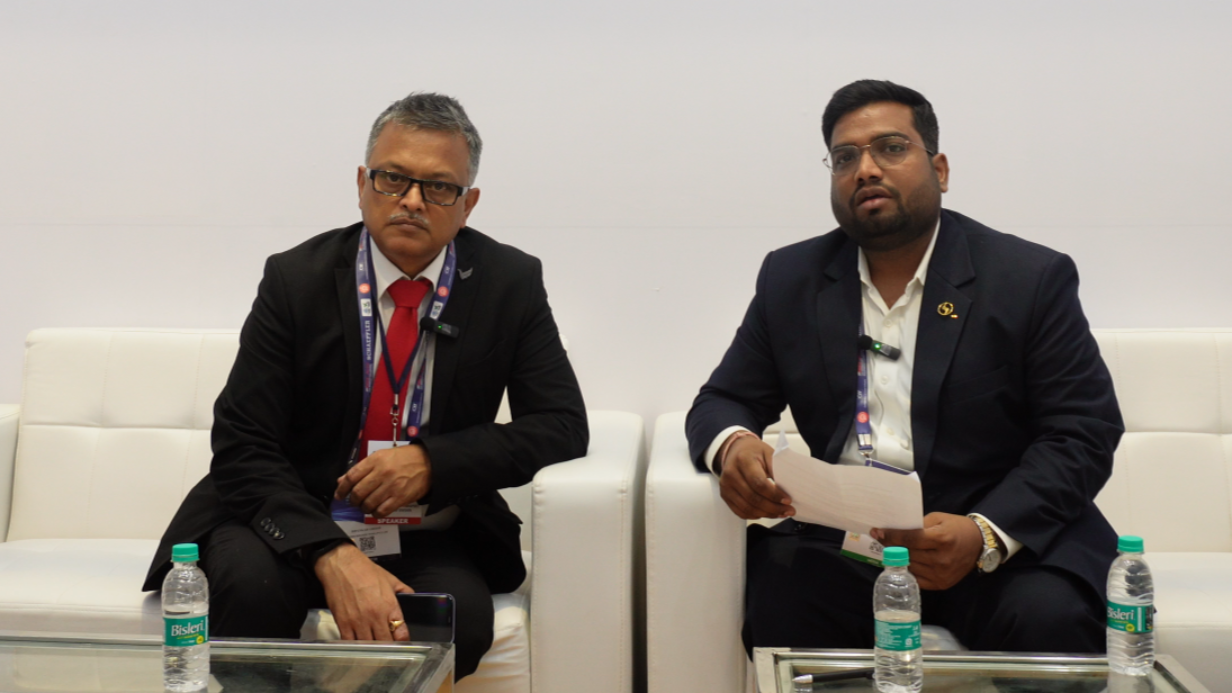
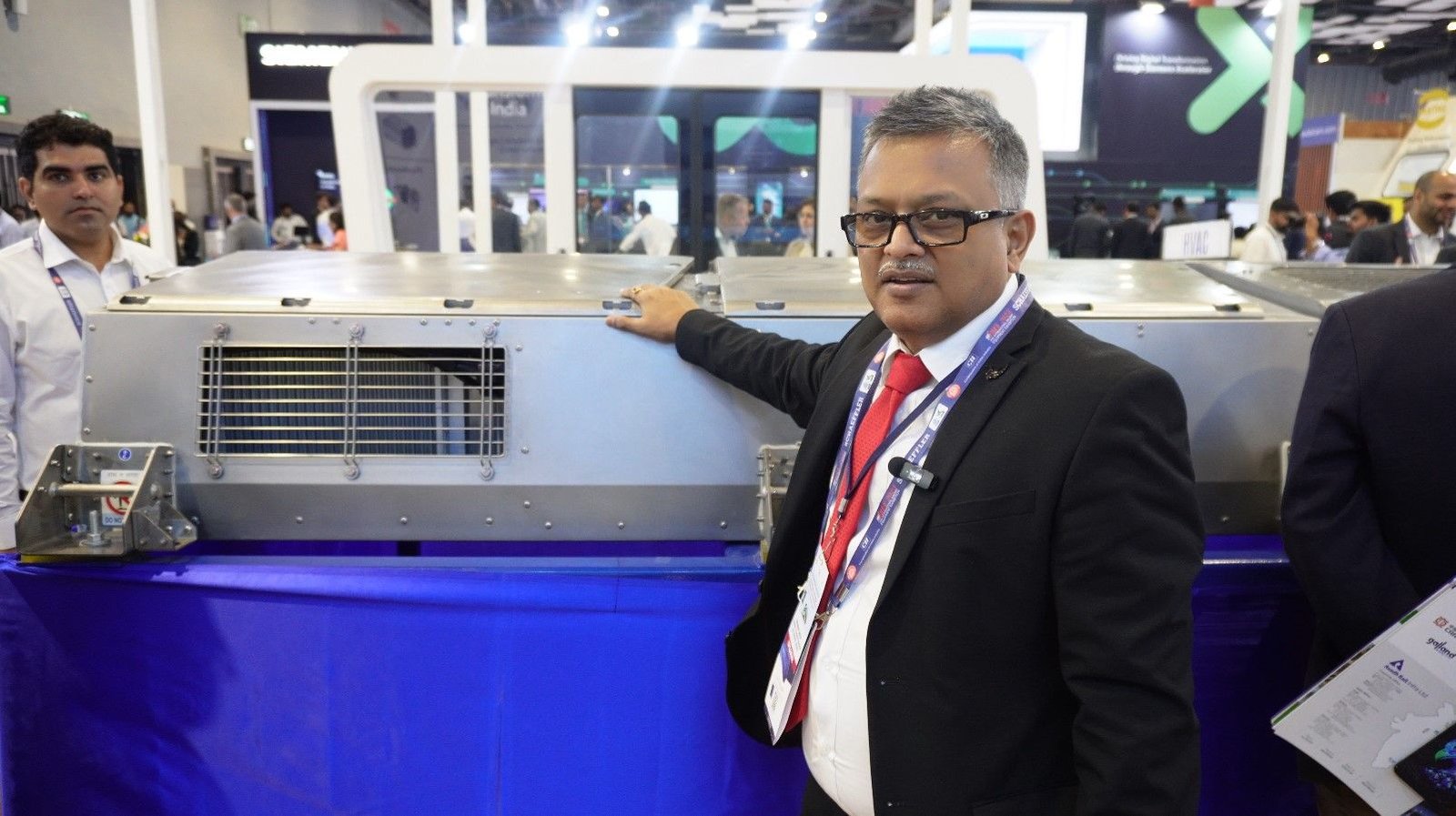
Metro Rail News team Conducted an email interview with Mr Dipankar Ghosh on the outskirts of IREE 2023 that entails the profile of the company Knorr Bremse, which he holds the reins of. This interview aims to explore the latest innovations and technologies ushered by Knorr Bremse in the Indian mobility sector, with special emphasis on Railways. Thai interview also unravels the commitment of the company towards sustainability and an environmentally friendly approach to business.
Mr Dipankar Ghosh, MD of Knorr Bremse India and Chairman of the Railway Equipment Division of CII possesses 30+ years of diverse experience encompassing manufacturing, engineering management, and business development. As an ex-IRSEE officer and former CEO of Escorts Railways Division, he led major global initiatives, facilitating technology transfers and adopting frugal innovation strategies. Holding a postgraduate engineering degree from BITS Pilani and a management qualification from the Indian School of Business, he is also an Advanced Global Leadership alumnus of the London School of Economics. Mr. Ghosh is passionate about new technologies and a dedicated proponent of value engineering.
Here are the edited excerpts:
Q1: How is the concept of smart transportation becoming a reality with Knorr Braking Systems? What key developments are being made in braking systems for autonomous vehicles and driving?
The smart mobility field is distinct from other transportation sectors. It encompasses a concept known as mobility as a service (MaaS), which offers end-to-end mobility solutions that connect the first and last mile through various mobility aggregators, consolidators, and transportation modes, such as electric vehicles, regular automobiles, and public transportation systems like metros and railways. Our presence in the rail vehicle segment, including metros, RRTS, and urban transit systems, and in the commercial vehicle division, where we manufacture brake systems, enables us to provide innovative braking solutions to our customers in the mobility industry. We strive to stay ahead of the curve, developing new solutions to meet the unique needs of our clients, depending on their location and the nature of their mobility requirements. However, it is worth noting that mobility is a much broader concept that encompasses a variety of transportation modes, and our braking systems, doors, and HVAC systems play a crucial role in the commercial vehicle and rail vehicle segments, including RRTS and other related modes of transportation.
Q2: Knorr Bremse is renowned for manufacturing cutting-edge braking systems for rail and commercial vehicles. How are you expanding your capacity in India, given your competence and expertise? Can you highlight recent developments?
We are excited to share that we remain highly optimistic about the future of India. As an Indian and avid supporter of the country, we believe that there are great things in store. In terms of our brake systems, we are proud to introduce the latest brake technologies, be it for both Madhapura and normal locomotives or the Vande Bharat. An impressive 32 out of 34 Vande Bharat trains use our KB brake systems. We have also made significant advances in door systems. While the commercial segment may differ slightly, we remain committed to providing top-of-the-line railway solutions.
Q3: What are the major challenges faced in promoting the shift to sustainable transportation, considering the evolving requirements of next-generation mobility?
Ensuring sustainable development is a crucial aspect for us at our multinational company. We are constantly striving to achieve carbon neutrality through our procurement, manufacturing, and overall processes. Our focus on ESG and UNDP SDG goals drives us to implement sustainable processes all over the world. While there is still some way to go in India, we are putting in place systems to achieve these goals, not just in customer processes, but also in our internal and vendor processes. We are determined to meet these sustainable goals as a responsible corporate citizen of the world.
Q4: In your perspective, what defines climate-friendly mobility? How does Knorr Bremse contribute to the development of key drivers for such efforts on a global scale?
The concept of climate-friendly transportation is a complex one and can be achieved in various ways. For instance, in the case of HVAC or heating, ventilation, and air conditioning systems, we are incorporating advanced technologies such as different types of filters and environment-friendly refrigerants. Additionally, we are working with car builders and operators to design high-specific energy control HVACs that can achieve a coefficient of performance (COP) of 2.5 and above, which is higher than the usual 2.0 in India. This will result in a significant reduction in specific energy consumption, thereby helping us meet all the energy goals of the car builder and operator.
Q5: Could you elaborate on Knorr Bremse’s aftermarket activities for the rail industry and how you support high-speed and semi-high-speed rail projects in India?
It is important to note that India has had a unique transition in the rail industry. Until now, India was more focused on spares and the AMC (Annual Maintenance Contract) market, where Indian Railways had a lot of people to buy spares and do the work themselves. However, as technology becomes more complex and safety-critical, Indian Railways is now opting for either an AMC where they buy the spares and the company does the AMC for them, or the new tenders which are coming out, such as Vande Bharat, Metros, and locomotives, where they are building in 15-35 years of maintenance into the cost. This means that whoever wins the tender has to take care of the product for the next 15-35 years and accordingly quote for that particular product. KB is a strong player in the rail services market, providing training, spares, and services for electronics and systems that will go in for obsolescence. The future of the rail services market in India is bright, and the government tends to change their buying products from vendors like KB, where they also buy the lifecycle cost calculation, including the maintenance cost for the next 35 years.
Q6: What are your thoughts on Metro Rail News, and what message would you like to convey to our readers?
I believe that Metro Rail News magazine and news portal is playing a significant role in filling up the gap in the overall value chain of information related to the smart mobility industry. The magazine provides authentic and deep insights into the latest happenings, projects, and developments in the industry, which is not available through other sources. The collation of information from different sources and presenting it in a magazine format is a phenomenal service that Metro Rail News is providing to its readers.
I would like to convey my heartfelt appreciation for the efforts put in by Metro Rail News in providing authentic and comprehensive information related to the smart mobility industry. I believe that the magazine is a valuable source of information for anyone who is interested in the latest developments in the industry. Keep up the good work, and I wish the magazine and news portal continued success in the future.
Discover the endless possibilities of our city’s Metro at InnoMetro, our flagship Expo and Conference. Be an active participant in shaping its future towards a more sustainable tomorrow. Stay informed and join us to take a step towards a brighter future.
NEW DELHI (Metro Rail News): DMRC teams are working relentlessly to ensure that thePink & magenta Lines of the Delhi metro go unmanned shortly.
Unmanned Train Operations (UTO)
In an interview with the PTI, the DMRC chief said,” Right now, a train attendant is sitting, but we are in advanced stages… because to remove that, we need the approval of the CMRS. Our teams are working on that and will be doing it shortly”.
The upcoming Phase IV of the Delhi Metro will be Unmanned Train Operations (UTO)-enabled, initially with the train attendants.
The highest degree of Safety
Human errors, including driver fatigue, distractions, and misjudgments, are common causes of accidents in traditional manned metro systems. With Unmanned Train Operations (UTO), the need for human operators is eliminated, thereby reducing the risk of accidents resulting from these factors. UTO systems, relying on automation, ensure that trains operate consistently, adhering to predefined routes, schedules, and safety protocols.
Improved Efficiency
Automated systems can ensure a consistent and smoother ride experience by maintaining uniform speeds and acceleration, leading to enhanced passenger comfort and reduced wear and tear on both the tracks and the train equipment. Additionally, these systems can increase train frequencies, enabling more trains to operate on the existing tracks. This enhanced capacity effectively accommodates the growing passenger demand during peak hours without additional infrastructure investments.
Other Technological Strides
DMRC is also a forerunner regarding “Aatmanirbharta”, and it already has the Indigenous Automatic Train Supervision System (i-ATS). It is gradually striding towards deploying a complete Communication-Based Signalling System (CBTC) in the 2nd level.
DMRC will operationalise the entire system by 2025, per the DMRC chief. India will be the sixth nation in the world to have it, and it is also the sixth to have an ATS system.
Going back to Pre-COVID Figures
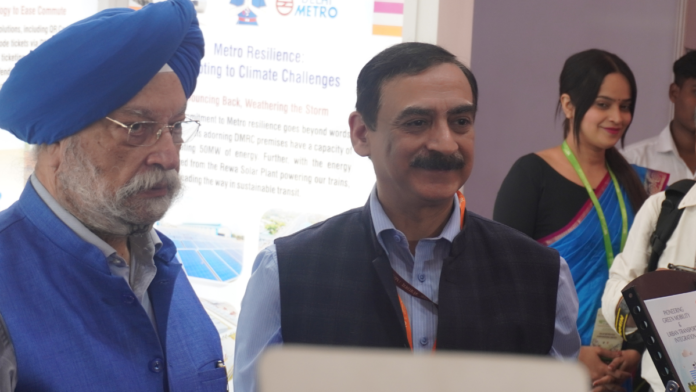
Symptoms of recovery can be seen in the ridership of the Delhi metro as life and people return to their office and work after COVID restrictions were relaxed. Pre-COVID ridership was 60 lakhs, while the Delhi metro registered the highest count of Ridership on September 4th – 71.03 lakhs.
Bonus of Empowerment
Delhi metro, over the last two decades, has not only connected people but also empowered them to travel to any and every corner of Delhi, facilitating the easiest commutation at the lowest price with the best in class services.
It has ushered a critical metropolitan culture into the reins of the city, ensuring that the population residing in the city strides towards growth & development.
Connectivity with RRTS
The DMRC chief said that DMRC is trying to ensure seamless connectivity with the RRTS to facilitate easy passenger interchange wherever an RRTS station is being developed. It will ensure an integrated multi-modal transit system in the NCR region with easy and seamless interchange.
It will also ensure that passengers are given every possible chance to opt for Pubic Transport without considering the hassles of interchange.
Discover the endless possibilities of our city’s Metro at InnoMetro, our flagship Expo and Conference. Be an active participant in shaping its future towards a more sustainable tomorrow. Stay informed and join us to take a step towards a brighter future.