New Delhi: Prime Minister Narendra Modi has flagged-off the Delhi-Faridabad Metro Line that would allow hassle free travel for around two lakh daily commuters between the national capital and the industrial hub in Haryana.
The extension of the Delhi Metro connects Badarpur to Escorts Mujesar in Faridabad.
The total cost of the project from Badarpur to Escorts Mujesar is nearly Rs. 2,500 crore. Out of this, Rs. 1,557 crore was borne by the Haryana Government, the Centre contributed Rs. 537 crore, while the Delhi Metro provided Rs. 400 crore.
All these are elevated and located on either side of the Delhi-Mathura Road (NH-2).
“The nine-station metro corridor which was 95 per cent indigenously built will provide people a safe, affordable, quick, comfortable, reliable, environment-friendly and sustainable transport facility,” a Haryana government spokesperson said.
Haryana Chief Minister ML Khattar, addressing a press conference on Saturday, had thanked the Prime Minister for “gifting” the Metro service which would take the city to “another level of progress” with better connectivity with other NCR towns.
He had also said that the Prime Minister would be announcing the go-ahead for connecting Gurgaon with Faridabad by Metro.
KANPUR (Metro Rail News): Kanpur Metro hosted a special journey on Saturday to boost voter awareness ahead of the forthcoming Lok Sabha elections. The event, conducted in collaboration with a local private school, saw educators take the lead in motivating citizens to exercise their electoral rights.
Starting from the Gurudev Chauraha metro station, a group of enthusiastic teachers boarded the metro, turning the ride into a dynamic classroom. Their audience, primarily first-time voters and daily commuters received valuable lessons on the importance of each vote. “Our vote is our true voice in democracy,” echoed through the carriages, a powerful reminder delivered by the teachers.
.
As the metro rolled towards Motijheel station, the teachers used the journey to educate and inspire. They wrote motivational messages and slogans like ‘Vote is our duty, Vote is our responsibility,’ and ‘Vote for India’ on a message board specially installed at the station for this campaign. These messages served as a visual prompt for the commuters, emphasising the weight of their choices and the impact they can have on the nation’s future.
.
In addition to voter education, the educators took a moment to engage with another aspect of culture and learning at the Bookflix book fair organized at Motijheel station. The fair provided a refreshing break and a chance to indulge in literary exploration, further enhancing the day’s educational theme.
.
The initiative was widely appreciated by participants and commuters alike, who commended Kanpur Metro for its dual focus on providing a reliable public transportation service and fostering a sense of civic duty among its riders.
Discover the endless possibilities of our city’s Metro at InnoMetro, our flagship Expo and Conference. Be an active participant in shaping its future towards a more sustainable tomorrow. Stay informed and join us to take a step towards a brighter future.
In the urban transit and smart city revolution unfolding in India, the integration of intermodal (multimodal) transport systems emerges as a fundamental component driving sustainability, economic prosperity, and enhanced quality of life This seamless blend of various modes of transportation, emerging as a intermodal system that offers a multifaceted solution to benefit not only the commuters but also aligning itself with the governmental objectives and environmental conservation efforts.
Intermodal transport systems stand out as a cornerstone of urban transit evolution, providing commuters with a blend of efficiency, affordability, and accessibility. This integration streamlines traveling experience, thus reducing the travel-time and enhancing connectivity within the cities. Furthermore, the harmonization of diverse transport modes help in the alleviation of traffic congestion, eventually fostering smoother traffic flow and curbing environmental degradation.
From a governmental standpoint, the embrace of intermodal transport systems resonates with the vision of smart city development and sustainable urban planning. By investing in these interconnected networks, governments can bolster transportation efficiency, slash carbon footprints, and catalyze economic growth through improved logistics and connectivity. This strategic investment not only bolsters the economy but also nurtures a greener, more sustainable transportation ecosystem.
Multimodal Transport
A multi-modal transport system is a sophisticated network that seamlessly connects various modes of public transportation, creating transit hubs where commuters can easily switch between different transportation modes. These transit hubs serve as junctions that enhance transportation efficiency, save time, and improve the speed of movement by facilitating smooth exchange between railways, metros, buses, autos, airplanes, and other modes of transportation. This integrated system not only offers convenience and accessibility to the commuters but also plays a crucial role in ushering the initiatives of urban development and smart cities mission. The key features of a multi-modal transport system include the provision of diverse public transport modes at centralized location, enabling commuters to transit among different modes of transportation effortlessly. By consolidating railways, metros, buses, autos, and airplanes at one place, this system simplifies the commuting experience, making it more efficient and commuter-friendly. Transit hubs within such multi-modal systems are generally equipped with essential passenger services like ticketing facilities, waiting areas, and canteens, enhancing the overall commuting experience and ensuring effective crowd management during transit.
Role in Urban Development and Smart Cities
In the context of urban development and smart cities, the adoption of multi-modal transport system offers a myriad of benefits. By promoting the integration of various transportation modes, these systems reduce the reliance on private vehicles, consequently alleviating traffic congestion and mitigating air and noise pollution. Particularly in the wake of the COVID-19 pandemic, the importance of resilient and efficient public transport systems has been underscored, emphasizing the need for reliable mass transit options that prioritize safety and cleanliness.
Driven by the global trend towards safer, cleaner, and more organized transportation, multi-modal transit solutions are gaining widespread adoption. These systems not only enhance the efficiency of public transport but also contribute to the sustainable urban development by fostering transport-oriented urban planning. As transportation serves as the lifeblood of a city, facilitating effective mobility and connectivity, the integration of roadways, railways, waterways, and airways becomes essential for seamless city functioning and growth.
As cities expand and urban sprawl increases, the demand for a cohesive network of transportation systems becomes imperative to maintain optimal city functionality. Multi-modal transport systems emerge as a vital component in addressing the challenges posed by urban growth, offering a comprehensive solution to enhance mobility for both individuals and goods. Such interconnectedness of of different transportation modalities through well-designed nodes, multi-modal transport systems play a pivotal role in ensuring efficient and sustainable urban mobility, catering to the evolving needs of modern cities and their inhabitants.
Accessibility and Mobility – Meeting the Needs
Accessibility and mobility are at the core of multi-modal transport systems, offering commuters seamless connectivity and ease of movement between distinct origins and destinations.
Accessibility refers to the ease with which people can reach a desired activities and services within a defined geographic area. It encompasses the ability to access a specific location from multiple points or to reach multiple destinations from any given point.
Multi-modal planning recognizes that mobility involves more than just the movement of vehicles; it involves the ability of individuals to traverse between different modes of transportation to reach their desired destination efficiently. In a multi-modal transport system, commuters have the flexibility to combine different transportation modes according to their needs. For instance, a person may utilize public transportation such as buses or trains for longer distances and then walk or cycle for shorter distances to reach their its destination. Similarly, a bike share user may cycle from one docking station to another and then walk to their ultimate destination.
By offering a diverse range of transportation options and integrating them seamlessly, multi-modal transport systems enhance accessibility for commuters of all backgrounds and abilities. These systems cater to the varied needs of individuals, providing convenient and efficient solutions for urban mobility challenges. Additionally, understanding the interconnectedness of different modes of transportation is crucial for planning and implementing a safe and effective multi-modal transport network.
Here are some key points to understand about accessibility and mobility within multi-modal transport systems:
Reducing Vehicle Miles Traveled (VMT)
Destination accessibility is a key factor in reducing the need for extensive vehicle travel.
Poor accessibility often leads to high VMT, especially in sprawling urban areas where destinations are spread out.
Impact of Sprawl
Sprawl refers to the unplanned expansion of residential and commercial development, resulting in dispersed communities and increased reliance on automobiles.
Poor accessibility contributes to the sprawl cycle, where auto travel dominates, and activity centers fail to synchronize, leading to inefficient urban development.
Challenges of Narrow Mobility and Accessibility Focus
A narrow focus on mobility and accessibility can exacerbate sprawl by prioritizing auto travel over other modes of transportation.
This approach fails to concentrate activity centers, resulting in scattered development patterns that are difficult to serve with efficient transit options.
Syncing Activity Uses and Urban Growth
Instead of perpetuating sprawl, multi-modal transport systems aim to sync activity uses into centers, promoting compact urban growth.
This approach minimizes the need for extensive travel and encourages the development of walkable, transit-oriented communities.
Investment Strategies
Rather than continually expanding infrastructure into outlying areas, investment in multi-modal transport systems focuses on reinforcing existing activity centers and promoting compact urban development.
This proactive approach helps agencies avoid playing catch-up and fosters sustainable urban growth.
Accessibility and mobility are essential components of multi-modal transport systems, which aim to reduce reliance on automobiles, minimize VMT, and promote compact, transit-oriented development. By prioritizing efficient transportation options and syncing activity uses into centers, these systems contribute to more sustainable and vibrant urban environments.
Case Studies – India’s Multimodal Transport Projects
The 2011 census of India speaks volumes about the necessity for an effective multi-modal transport system, with 53% of the working population relying on foot travel, 17% using public transport, and 13% opting for private vehicles. Taking this data into account the Government of India has prioritized the development of multi-modal transit systemsthat can decongest the roads of traffic and enhance the public transport infrastructure.
India’s endeavor to revamp its transportation infrastructure has witnessed the emergence of several multimodal transport projects tailored to meet the specific needs of its diverse cities and citizens. Let’s delve into some key projects that are either operational or in progress, each addressing the unique challenges faced by the respective cities.
Balewadi Multi-Modal Transit Hub, Pune
The Balewadi Multi-Modal Transit Hub project in Pune exemplifies India’s aspiration to modernize its transportation infrastructure. . Spearheaded by the Pune Smart City Development Corporation Limited (PSCDCL), this project aims to construct a multi-modal transit hub spread over 10.84 acres in Balewadi, with an estimated cost of Rs 1,251 crore. Through a public-private partnership (PPP) mode, the project seeks to seamlessly integrate various modes of transport, addressing the diverse commuting needs of Pune’s residents.
The comprehensive plan for the facility includes a bus terminus for MSRTC, a PMPML depot, and provisions for private bus parking. Moreover, it will facilitate Metro-related services along the Hinjewadi-Shivajinagar route, offering seamless connectivity across different modes of transport. Initially managed by PSCDCL, the project has now been handed over to the Pune Municipal Corporation, emphasizing collaborative efforts towards its execution.
The integration of transit-oriented development (ToD) principles into the project’s design will enhance its commercial viability and generate revenue for the civic body. Located strategically along the Katraj-Dehu Road bypass, the hub will improve access to Mumbai and Satara-Kolhapur, benefiting commuters and facilitating smoother transit between cities.
Pune’s population heavily relies on foot travel for commuting, making an efficient multi-modal transport system crucial. The proposed hub is perfectly poised to address this need by offering diverse commuting options, ensuring seamless connectivity and accessibility for Pune’s residents. By consolidating different modes of transport such as buses, trains, and potentially metro services, the hub will provide commuters with convenient and efficient travel options tailored to the city’s diverse population.
Furthermore, with direct access to the IT hub, the project will serve as a vital transportation artery for Pune’s western area, supporting the burgeoning residential and commercial developments in the region. By offering diverse commuting options and ensuring seamless connectivity, the Balewadi Multi-Modal Transit Hub represents a significant step towards enhancing Pune’s transportation infrastructure, catering to the evolving needs of its residents and ensuring a more efficient and sustainable transport network for the city’s future.
Bengaluru Airport – Multi Transit Hub
Bengaluru International Airport, also known as Kempegowda International Airport (KIA), is on the brink of becoming India’s pioneer airport with a Multi-Modal Transport Hub (MMTH), aiming to provide seamless travel integration for passengers. This groundbreaking facility is nearing completion, according to statements from Bangalore International Airport Ltd (BIAL).
The MMTH hub is designed to cater to the current and future needs of passengers and staff by consolidating various modes of transport under one roof. It will encompass private car parking, taxi services, and inter/intra-city buses operated by Bangalore Metropolitan Transport Corporation (BMTC) and Karnataka State Road Transport Corporation (KSRTC). Furthermore, the hub will be intricately connected to the Airport Terminals Metro station.
Once operational, the MMTH facility will amalgamate bus and Metro stations, private car/taxi/cab parking, a baggage sorting area, and a retail section. Unlike most airports in India, where such facilities are dispersed, Bengaluru airport’s MMTH will centralize transport modes for enhanced convenience.
With the airport serving approximately 1.05 lakh passengers daily, the MMTH will significantly enhance connectivity, with 72 percent of passengers currently relying on cars and taxis, and the remaining 28 percent utilizing buses. This integration will streamline commutation for all passengers, facilitating a seamless transition between various modes of transportation.
The MMTH hub’s advanced construction stages indicate significant progress, with the temporary parking and drop-off area already operational. Once fully operational, Bengaluru airport will join the league of renowned airports like Zurich and Heathrow, offering hassle-free travel integration. This initiative aligns with the concept of multi-modal integration, ensuring efficient connectivity between various transportation modes, further enhancing Bengaluru’s status as a dynamic and progressive city.
Greater Noida – Multi Transit Hub
An exemplary initiative identified within the Dadri-Noida-Ghaziabad Investment Region (DNGIR) of the Delhi Mumbai Industrial Corridor (DMIC) is the “Multi Modal Transport Hub (MMTH) at Boraki in Greater Noida,” situated in the Uttar Pradesh (UP) sub-region. This transformative project aims to establish a cutting-edge railway station at Boraki, designed to serve as a pivotal transport hub. The envisioned hub will feature a state-of-the-art railway terminus complemented by an Interstate Bus Terminus (ISBT) and a Mass Rapid Transit System (MRTS) station, alongside commercial activities, capitalizing on its strategic location where various transport modes would converge.
The integrated railway hub is slated to set new benchmarks in passenger facilities, incorporating commercial and institutional amenities such as office complexes, shopping centers, and hotels. The project envisages the development of a modern and user-friendly regional railway terminal that seamlessly integrates with an MRTS, ISBT, and a Business Centre, catering to the needs of both commuters and businesses alike.
Spanning over 412.7 acres, the MMTH at Boraki and its surrounding station area development in Greater Noida aim to enhance transport connectivity for the DNGIR and the upcoming UP-Sub Region, serving as a catchment zone for the proposed transit facility. This project is envisioned to revolutionize passenger movement with provisions for rail, road, and MRTS accessibility, seamlessly integrating Inter State Bus Terminal (ISBT), Local Bus Terminal (LBT), metro, commercial, retail, hotel space, and green open spaces. With an estimated employment generation of about 1 lakh persons by 2040, these projects are poised to unlock significant growth opportunities in the surrounding areas, ultimately contributing to the decongestion of Delhi and fostering sustainable development.
Thane Multimodal Transit Hub
The Thane multi-modal transport hub project is a joint initiative between the Indian Railway Station Development Corporation (IRSDC) and the Thane Municipal Corporation. It aims to ease traffic congestion at Thane railway station during peak hours. The project encompasses a Station Area Traffic Improvement Scheme (SATIS) in Thane East, modeled after the successful multi-modal transit hub in Thane West. Key features include a 2.24-kilometer-long elevated road with dedicated pedestrian lanes and a basement for parking. Plans also include constructing an office building for future Indian Railways expansion. A 9000-square-meter deck area for Public Transport Management (PTM) in Thane East will host amenities such as a bus stop, food court, and public utilities.
This deck area will directly connect to the existing railway foot overbridge. The elevated bridge, spanning 2.24 kilometers, will feature multiple lanes to enhance traffic flow. Additionally, a proposed basement parking facility will accommodate two and four-wheeler vehicles. Overall, the Thane multi-modal transport hub project aims to enhance transportation infrastructure, improve commuter experience, and meet the evolving needs of Mumbai’s growing urban landscape.
The integration of different transportation modes with Thane Railway Station is set to revolutionize commuting in the area.
This initiative aims to alleviate traffic congestion, particularly around the Eastern side of Thane Railway Station.
By providing a dedicated elevated road, the project will enhance the efficiency and security of public transport.
Special attention will be given to pedestrian safety and convenience, ensuring smooth traffic flow for both pedestrians and vehicles.
With proposed parking facilities and improved infrastructure, the project will significantly enhance traffic management in the vicinity.
This holistic approach not only benefits commuters but also contributes to fuel savings and reduces pollution, making the surrounding area more environmentally sustainable.
Hyderabad Multimodal Transport System
The Hyderabad Metro Rail stands as a landmark project, revolutionizing public transportation in Hyderabad. Covering a sprawling 66 km across three meticulously planned corridors, it offers a paradigm shift in the commuter experience. Seamlessly integrating with existing transportation networks, the metro facilitates multi-modal connectivity, empowering commuters to navigate the city with ease.
Strategically positioned stations such as Miyapur, MGBS, and Secunderabad East serve as vital hubs, providing convenient access to intercity, inter-state, and intra-state bus services. Furthermore, integration with key Indian Railways junctions like Secunderabad and Nampally ensures comprehensive connectivity to major railway stations.
Notably, the Hyderabad Metro Rail extends its reach to MMTS services, bridging gaps between different modes of transport at stations like Bharatnagar and Lakdi-ka-pul. This cohesive integration enables commuters to seamlessly switch between different transport systems, fostering efficient and hassle-free travel experience.
By delivering a world-class transit system, the project significantly mitigates traffic congestion, offering relief to the commuters. The introduction of multi-modal connectivity not only enhances the city’s public transport system but also propels its future development. Hyderabad’s journey towards sustainable urban mobility is propelled by the transformative impact of the Hyderabad Metro Rail, marking a pivotal moment in the city’s transportation landscape.
Sustainability of Multimodal Transport
The implementation of a multi-modal transport system, particularly intermodal transport, holds tremendous potential for fostering environmental sustainability by reducing emissions and enhancing energy efficiency. Intermodal transport seamlessly integrates various modes such as road, rail, sea, and air, playing a vital role in minimizing the environmental footprint of transportation activities.
Environmental Benefits of Intermodal Transport
Intermodal transport stands out for its ability to reduce greenhouse gas emissions, increase energy efficiency, and lower air pollution levels. By prioritizing greener modes of transport like rail and sea wherever possible, intermodal transport significantly decreases carbon emissions. For example, transporting one ton of freight through rail can reduce CO2 emissions by a substantial 83%, showcasing the environmental advantage of intermodal transport. Additionally, resource optimization in intermodal transport leads to improved fuel efficiency and reduced congestion on road networks, further contributing to environmental sustainability.
Comparison with Single-Mode Transport
In contrast to single-mode transport, intermodal transport offers a more sustainable alternative by leveraging the strengths of different transportation modes. Single-mode transport systems often lack the flexibility and efficiency that intermodal transport provides. By combining various modes based on factors like distance, cost, and time sensitivity, intermodal transport optimizes the transportation process, leading to enhanced efficiency and reduced environmental impact. This comparison underscores the importance of transitioning towards intermodal transport to achieve greater sustainability in the transportation sector.
Initiatives Promoting Sustainable Intermodal Transport
Numerous initiatives and practices are being implemented to promote sustainable intermodal transport. These include investments in infrastructure development, technology integration, and standardized processes to enhance the efficiency and environmental friendliness of intermodal transport systems. Businesses are increasingly embracing intermodal transport to reduce their carbon footprint, increase operational efficiency, and contribute to a greener future. By utilizing intermodal transport, companies can achieve cost savings, enhance shipment safety, and align their operations with environmental goals.
Speculating on the Environmental Impact
Lower Carbon Emissions: Multi-modal travel has the potential to significantly reduce carbon emissions by encouraging the use of more sustainable modes of transportation. According to the International Transport Forum, multi-modal transport systems could reduce CO2 emissions by up to 30% compared to single-mode systems.
Reduced Energy Consumption: By promoting the use of energy-efficient modes of transportation such as cycling and public transit, multi-modal travel can help reduce overall energy consumption. A study by the National Renewable Energy Laboratory suggests that combining public transport with walking or biking could reduce energy consumption by up to 20%.
Reduction in Congestion: Multi-modal travel can alleviate traffic congestion by encouraging the use of public transport and micro mobility options, thus reducing greenhouse gas emissions and improving air quality. According to the American Public Transportation Association, every person who switches from driving alone to public transport can reduce their carbon emissions by 4,800 lbs per year.
Increased Transport Accessibility: By providing a variety of transportation options, multi-modal systems can improve access to transportation for individuals who may not have access to private vehicles, thus promoting inclusivity and equity in transportation access.
Multi-modal transport systems offer significant environmental benefits, including reduced carbon emissions, lower energy consumption, improved air quality, and increased access to transportation for all individuals. By promoting the use of sustainable transportation modes and reducing reliance on single-mode systems, multi-modal transport systems play a crucial role in mitigating the environmental impact of transportation activities and fostering a greener future.
Why Shift to an Intermodal Transport System?
Multimodal transportation, characterized by the integration of various transportation modes, offers numerous benefits for individuals and communities alike. This section explores the rationale behind the shift towards multimodal transportation, highlighting its significance in promoting accessibility, sustainability, and efficiency in transportation systems.
Mindset and Affordability
One of the key strategies in promoting multimodal transportation involves changing the mindset of transportation system users. By articulating and implementing a steady program of interventions, cities can demonstrate the benefits of a more balanced policy package to multiple constituencies. This approach aims to highlight the advantages of multimodal transportation, such as improved accessibility, reduced congestion, and enhanced environmental sustainability.
To ensure equitable access to multimodal transportation, targeted subsidies can be directed towards specific user groups facing potential mobility constraints. Low-income communities, burdened by vehicle expenses, often find it challenging to access reliable transportation options. By offering subsidies tailored to their needs, cities can alleviate financial burdens and promote greater mobility among the vulnerable population.
Enhancing Accessibility and Inclusivity
Modal diversity plays a crucial role in ensuring access to transportation for diverse segments of the population. From children and senior citizens to individuals with disabilities or limited financial resources, multimodal systems aim to cater a wide range of transportation needs. By providing alternatives to traditional car-centric travel, multimodal transportation ensures inclusivity and accessibility for all the members of society.
Factors Influencing Mode Choice
Mode choice is influenced by various factors, including convenience, cost, travel time, and available commuter benefits. Multimodal transportation expands mode choice by offering a diverse range of options, including public transit, walking, biking, and emerging technologies like ride-sharing services. Understanding the factors behind mode choice is essential for designing an effective multimodal transportation system that meets the needs of users.
Holistic Planning Approach
Effective multimodal transportation planning requires a comprehensive and holistic approach. Planners, designers, engineers, and policymakers must collaborate to create transportation systems that prioritize safety, affordability, and environmental sustainability. By integrating strategies to promote awareness, improve safety, and enhance convenience, multimodal transportation becomes a more attractive option for users.
Community Engagement and Participation
Community participation is vital in generating innovative solutions and building support for multimodal transportation initiatives. By engaging stakeholders in the planning process, decision-makers can ensure that transportation projects reflect the needs and priorities of local communities. Encouraging advocacy for incremental improvements and targeting subsidies towards underserved communities further strengthens the inclusivity of multimodal transportation.
Investment and Partnership Strategies
Investment in transportation infrastructure is essential for supporting multimodal transportation. Diverse revenue sources and public-private partnerships play a crucial role in funding and developing transit-supportive land uses. By leveraging partnerships and innovative financing mechanisms, cities can accelerate the implementation of multimodal transportation projects and maximize their impact on mobility and accessibility.
Addressing Diverse Transportation Needs
Multimodal transportation caters to a diverse range of transportation needs, including:
Children and Teenagers: Who do not possess a driver’s license and rely on alternative modes of transportation.
Seniors: Those who may not drive or should not drive because of safety concerns.
Adults with Disabilities: Who require accessible transportation options to meet their mobility needs.
Low-Income Households: Struggling with vehicle expenses and in need of affordable transportation alternatives.
Law-Abiding Drinkers and Impaired Individuals: Who require safe and reliable transportation options.
Community Visitors: Who lack access to personal vehicles or driver’s licenses.
Individuals Seeking Active Transportation: Who choose to walk or bike for enjoyment and health benefits.
Drivers Seeking Convenience: Who wish to avoid the burdens of chauffeuring and parking.
Residents Seeking Sustainability: Who desire reduced congestion, accidents, and pollution emissions.
Boosting Local Businesses
Multimodal street projects play a pivotal role in supporting local businesses by enhancing safety and encouraging diverse modes of transportation. These projects have been shown to yield positive economic outcomes, including increased retail sales and enhanced property values. By creating attractive, safe spaces for transit riders, pedestrians, and cyclists, cities can stimulate economic activity and foster vibrant commercial districts.
Research indicates that people who walk or cycle to an area tend to spend more at local retail businesses compared to those who arrive by car. This highlights the economic significance of prioritizing multimodal transportation infrastructure. By providing accessible and appealing streets for pedestrians and cyclists, cities can capitalize on higher retail spending, contributing to the growth and vitality of local businesses.
Maximizing Economic Benefits
Investing in multimodal streets not only improves transportation options but also generates economic benefits for communities. By prioritizing safety and accessibility for all road users, cities can create environments that attract both residents and visitors, driving increased foot traffic and economic activity. Ultimately, embracing multimodal transportation strategies is not only beneficial for mobility but also essential for fostering thriving, economically vibrant neighborhoods.
Conclusion
The emergence of multimodal transport hubs across India marks a pivotal shift in addressing diverse transportation needs. Projects like the Balewadi Multi-Modal Transit Hub in Pune, Bengaluru International Airport’s MMTH, and proposed hubs in Greater Noida and Thane offer comprehensive solutions for seamless integration of various transport modes, benefiting commuters, the economy, and the environment.
These hubs alleviate congestion, enhance accessibility, and improve overall commuting experiences, positively impacting productivity, reducing pollution, and enhancing quality of life. It is imperative for the government to prioritize and support such initiatives to address urbanization challenges and promote sustainable development.
Multimodal hubs offer relief for congested urban areas by providing alternative transportation modes and encouraging modal diversity. As India moves towards a future marked by urbanization, the integration of multimodal transport infrastructure is crucial for inclusive growth, sustainable development, and improved well-being.
In essence, the adoption of intermodal transport systems in India signifies a significant stride towards sustainable urban transit, economic advancement, and environmental stewardship. Through the embrace of this innovative approach, India stands poised to cultivate a more integrated, efficient, and eco-conscious transportation framework that not only benefits commuters and the government but also paves the way for a brighter, more sustainable future for the nation. By fostering collaboration between various modes of transport, India can effectively address the growing challenges of urban mobility while simultaneously advancing its economic and environmental objectives.
BANGALORE (Metro Rail News): The Yellow Line of Namma Metro, connecting RV Road to Bommasandra, is gearing up for a pivotal moment. By the end of October, the Commissioner of Metro Rail Safety (CMRS) is scheduled to inspect this crucial segment of Bengaluru’s expanding metro network.
The Bangalore Metro Rail Corporation (BMRCL) is eagerly awaiting the delivery of six new trains from Titagarh Rail Systems Ltd., expected by December. This addition is crucial to boost the capacity and efficiency of the city’s metro services. Incorporating these trains is seen as a strategic move to accommodate the increasing commuter demand in India’s tech hub.
Technological Advancements
Earlier this year, in February, the Yellow Line witnessed the introduction of a driverless train system developed by China’s CRRC. This development marked a significant technological leap, catering to the bustling route to Electronic City.
Titagarh’s collaboration with CRRC involves the delivery of 14 train sets, totalling 84 coaches equipped with advanced Communication-Based Train Control technology. These trains are scheduled to arrive starting in August, with the initial batch already on track following the adaptation from last year’s prototypes.
Trial Runs and Testingon the Yellow Line
BMRCL is conducting extensive trials on the Yellow Line using a train provided by CRRC. These trials encompass 36 different test types, including assessments of signalling systems and track integrity.
At least three trains are required for thorough testing. The arrival of additional trains by the expected September-October timeline is crucial for completing these tests and ensuring all systems are fully operational and safe for public use.
Operational Outlook
After the CMRS inspection and subsequent approval from the Railway Board, the Yellow Line is slated to begin regular service operations by December. Initially, six trains will be deployed, facilitating a new train every 15 minutes. This will greatly enhance connectivity and commuting convenience, particularly for those travelling to and from the technological and industrial hubs along this route.
Metro route from RV Road to Bommasandra.
The improvements are not confined to the Yellow Line alone. The existing train shortage affecting the Purple and Green lines is also being addressed. CRRC is set to deliver a prototype train equipped with DTG (Distance to Go) technology this August, followed by 20 more DTG trains by November 2025.
Discover the endless possibilities of our city’s Metro at InnoMetro, our flagship Expo and Conference. Be an active participant in shaping its future towards a more sustainable tomorrow. Stay informed and join us to take a step towards a brighter future.
PUNE (Metro Rail News): Myrtle Project and Consultancy Pvt. Ltd. commenced the geotechnical investigation for the Pune Metro Purple Line’s extension from Swargate to Katraj. This 5.46 km extension, entirely underground, forms an essential part of the Pune Metro Phase 1 Extension project, also known as Phase 1A. Awaiting approval from the Central Government’s Public Investment Board (PIB), this extension will include three new stations at Market Yard (Gultekdi), Saibaba Nagar, and Katraj.
Geotechnical Investigation Details
The Maharashtra Metro Rail Corporation Ltd. (Maha Metro) awarded Myrtle a ₹1.69 crore contract for this geotechnical work (Package P1Misc-34) in March 2024. The data obtained from Myrtle’s soil investigations will be integral in preparing the civil construction tender documents, aiding infrastructure companies in making informed financial bids, and selecting appropriate construction methods and technologies.
Drilling for geotechnical work.
Active drilling rigs have been spotted, notably in front of Lotus Court at Panchmi Hotel Chowk on Satara Road, marking the start of on-site investigations. The area around Market Yard (Gultekdi) Station is a focal point of these activities.
Additional Contracts and Services
In March, PINI India received a ₹6.84 crore contract to provide Detailed Design Consultancy (DDC) services for the extension. Their scope encompasses architectural design, tunnel ventilation (TVS), subway environmental simulation (SES), environmental control systems (ECS), building management systems (BMS), and electrical & mechanical (E&M) services, along with proof checking.
Drilling for geotechnical work.
The local community is keenly anticipating the Pune Metro Purple Line extension from Swargate to Katraj, eager for improved metro connectivity and its benefits to daily commutes. The outcome of the Public Investment Board’s decision remains crucial for the continuation and success of this ambitious project.
Discover the endless possibilities of our city’s Metro at InnoMetro, our flagship Expo and Conference. Be an active participant in shaping its future towards a more sustainable tomorrow. Stay informed and join us to take a step towards a brighter future.
Indian Railways is the biggest railway network in the world. Indian Railways cater millions of commuters and long-distance passengers daily. A reliable & safe electrical system in signaling & inside coaches ensures safe and efficient operation of trains and passengers’ safety. The shoulders of Indian Railways are entrusted with the safety & security of thousands of passengers who travel with it daily. A minor malfunction in the signaling system or in electrical facilities inside the coaches like lights, fans, mobile charging points, chilling systems, because of earth leakage/fault can cause a catastrophe which is unimaginable, leading to loss of life of thousands.
Indian railway has recently launched its premium/ high-speed rail operations on selective routes and Bullet Train is also in the pipeline -to be introduced in near future. All these initiatives necessitate a thorough upgradation of existing Indian railway infrastructure. For such reasons new technologies and the latest version of measuring, monitoring and control systems will be required. Automated On-line continuous monitoring of various distribution circuits in the signaling system and coaches is required which will strategically increase the throughput and safety of trains. Such arrangements would ensure that the faulty circuits are detected, located and corrected within an hour without the need of shutting down the electrical power distribution system.
Ungrounded power supplies have the advantage of avoidance of shock & fire and ensure continuity of power to loads in the event of first ground fault. To get the above benefits IEC 60364-4-41 recommends providing an on-line insulation monitoring device to monitor & indicate the first ground fault. Further the first ground fault should be eliminated within the shortest practicable time. Therefore, to identify the faulty feeder as fast as possible and to support the maintenance staff, an online fault location system should be implemented in a large complex distribution system. Further the measurement and monitoring technology shall be reliable and accurate built with state of the art technology in the presence of AC, DC and AC/DC loads and various electrical noises. Therefore the measuring and monitoring system shall be in conformance to prevalent International standards for operation in the industrial environment. Online insulation monitoring shall conform to IEC 61557-8 and online fault location up to feeder level shall conform to IEC 61557-9. Further the system shall be qualified as per IEC 61326 for EMI/EMC.
Grounded distribution systems are also utilized in various non-critical and auxiliary electrical power distribution systems in railways. Grounded AC, DC & AC/DC distribution systems are used. Rather than waiting for short circuit and catastrophic failures a leakage current monitoring system to monitor the leakage currents due to failure of insulation for advance leakage information shall be provided. Again for using the monitoring system in industrial environment the solution shall be in conformance to IEC 62020
Reference Standards:
1. EN 50122-1 : Railway applications – Fixed installations –Electrical safety, earthing and the return circuit
3. IEC 61373 : Railway applications – Rolling stock equipment
4. EN 45545 : Railway applications – Fire protection on railway vehicles
5. EN 50155 : Railway applications – Electronic equipment used on rolling stock
6. EN 50121 : Railway applications – Electromagnetic compatibility
7. IEC 60364-1 : Low voltage electrical installations – Part 1: Fundamental principles, assessment of general characteristics, definitions
8. IEC 60364-4-41: Electrical installations of buildings Part 4-41: Protection for safety-Protection against electric shock
9. IEC 61557-8 : Electrical safety in low voltage distribution systems up to 1 000 V a.c. and 1 500 V d.c. – Equipment for testing, measuring or monitoring of protective measures – Part 8: Insulation monitoring devices for IT systems
10. IEC 61557-9 : Electrical safety in low voltage distribution systems up to 1 000 V a.c. and 1 500 V d.c. – Equipment for testing, measuring or monitoring of protective measures – Part 9: Equipment for insulation fault location in IT systems
11. IEC 62020-1 : Electrical accessories – Residual current monitors (RCMs) – Part 1: RCMs for household and similar uses
Solution for signaling system:
Similar to British and European Railways, Indian Railway signaling systems utilize various types of ungrounded low voltage power supplies like 110 V AC/DC, 60 V AC/DC and 24 V AC/DC for the various signal & switching circuits. The circuits include Track Point Switches, Track Motors, Signal Control Relays and Signaling Lamps. The design generally conforms to national and international standards. Most of the cables associated with the above-mentioned circuits are outdoor and run along railway tracks either buried or over ground. They are exposed to the harsh weather and unfavorable environment. These affect
their insulation resistance and are subject to deterioration in the harsh environment over a period. This leads to mal-operation and unreliable operation of signal systems, putting the life of thousands of commuters at stake. US, British and European in-house railway standards recommend continuous monitoring of the insulation resistance of these circuits to ensure reliable and safe movement of trains. Further to detect the individual faulty feeder an online fault location system shall be provided.
Each galvanically isolated separate supply source will consist of an online insulation monitor connected near to the source main bus. Individual feeders will be installed with special highly sensitive sensors over the complete feeder wires along with multichannel earth fault detectors to which the sensors shall be connected for identifying automatically the faulty feeder without shutting down the distribution system. After identifying the faulty feeder, with the help of a portable handheld fault locator exact location of earth fault can be identified. Portable devices also trace the signal injected by the insulation monitoring device.
A typical sketch of the solution is shown below.
Solution for Railway Coaches:
An ungrounded power supply is also used inside coaches’ electrical systems to have some benefits like:
a) Prevents fire due to insulation leakage.
b) Prevents fatal electrical shock to the passengers.
c) Availability of loads
The main incomer power supply to individual coaches is either 800 V 3 phases 3 wire ungrounded or 800 V 3 phase 4 wire grounded system depending on the design requirement of RDSO. Which is later being stepped down to 415V 3 phase, 230 & 110V single phase as per the load requirement inside the coaches. Each and every relay should have MODBUS RTU communication system to directly communicate with HMI system
Each galvanically isolated separate supply source will consist of an online insulation monitor connected near to the source main bus. It will measure the insulation resistance of the complete connected distribution system up to individual loads and provides alarm whenever the earth fault insulation resistance is below set limits. The maintenance staff can plan for fault identification and repair.
Portable handheld fault evaluator suitable up to 800V AC system can be used to localize faults during running condition of the train or at loco shed.
A typical sketch of the solution is shown below.
Electrical safety in Railway Tunnels:
Train routes in mountainous landscapes lead across a sequence of tunnels and bridges. To ensure passenger safety and efficient incident response, our route operations plan must prioritize preparedness for tunnel emergencies. Along the route, fire brigades and Technical Relief Services must be equipped for assistance in case of a catastrophe. Additionally, To support the rescue concept, hydrants and emergency power supply points must be installed in the tunnels. Rescue teams thus can have quicker access to water and electrical energy in sufficient quantities. According to the guideline 95401, in Germany the power supply has to be designed as an ungrounded system.
Securing a functioning power supply for rescue teams even in case of catastrophe: This allows rescue teams to rely on a functioning power supply in the event of a catastrophe, continuous insulation monitoring is required. Critical installation conditions are reported to the supervising system in a timely manner.
Fast localisation of insulation faults: Even in the case of extensive routes, insulation faults can be allocated to the individual tunnel sections when using insulation fault location systems such as signaling systems. A further advantage is that they find insulation faults during ongoing operations, without cable disconnection.
Case study
1. Bender offered Solution in Signaling System:
BENDER, the world leader in this technology provides universal and customized solutions in on-line monitoring insulation resistance and fault location in ungrounded AC & DC electrical systems. Suitable for signaling systems.
BENDER with its large amount of experience and R&D efforts over more than 70 years provides ingenious solution for on-line insulation monitoring and fault location up to individual feeder level in AC/DC systems in the presence of various industrial electrical noises without spurious operation and indications (EMI/EMC qualified). Bender Insulation Monitoring Device conforms to IEC 61557-8, Fault location system conforms to IEC 61557-9 and EMC qualifies as per IEC 61326. The implementation schematic in Indian Railway Signaling is below:
As shown in the figure above, the insulation monitoring scheme for ungrounded systems consists of Insulation Monitor ISO 685 connected to the main ungrounded distribution source bus. The insulation monitor may derive its power from the same system and it can accept a wide range of power input from both AC & DC from 0 to 600 Volts. The insulation monitor injects a special Bender patented bi-directional signal into the system with respect to earth and will on-line monitor the insulation of the complete ungrounded distribution system of all feeders including loads supplied from same source with respect to earth and indicate the value in the range of 1 Kohm – 10 Mohm. It will generate an alarm in case the insulation of the complete distribution system falls below the set value. Typical set value for the alarm can range between 50 to 100 ohms/ Volt of the system voltage and it can have another unique feature that allows it to generate two different alarms indicating gradual degradation of insulation resistance.
We can define the 1st alarm as a pre-alarm and the 2nd one as a critical alarm. For safe running of the system one can set the pre-alarm value at 200 ohm/Volt and critical alarm value at 100 ohm /volt which is in line with IEC (e.g. for system voltage 110 V, the pre-alarm setting is 40 Kohm and critical alarm is 20Kohm). The Operation & Maintenance staff will get to know of the insulation fault in advance owing to the indication of the pre-alarm and further plan the maintenance activity as per their convenience and resource availability.
The main power supply is distributed into various feeders as per the requirement of the station signaling system. To locate the actual faulty feeders, each of the load feeders will be installed with specialized highly sensitive Bender patented core balance Current Transformers (CT), with sensitivity of 5 mA. All CT’s will be connected to required nos. of 12 channel evaluators EDS440. The EDS440 may draw its power from the main distribution system. In case of insulation fault (lower than both the alarm settings) in any feeder , the ISO 685 will first produce a visual alarm followed by injecting a test current (adjustable by user) in the distribution system with peak value limited to 25 mA.
The peak value of 25 mA is much below the dropout current of 40 mA of relays used in railway signal circuits thus, won’t interfere with the functioning of the system. This test current will pass through the faulty feeder via earth and the corresponding faulty feeder CT will detect and indicate on-line the fault in the corresponding channel of EDS440. ISO 685 & EDS-440 are also interconnected with 2-wire RS 485 interface hence ISO 685 will also indicate the channel number of the faulty feeder. Further with the help of Bender make portable fault evaluator EDS 3090 identification of the exact faulty component also possible. A Bender make gateway may also be used to indicate the faulty feeder in the control room on a PC.
In this way the complete system will be monitored online 24X7, Which is very much required for the railway signaling system.
Bender Model BOQ for signaling system application:
Sr. No.
Item description
Model
Remarks
1
Online insulation Monitoring Device
Iso685-S-P+FP200/ iso685-D-P
1 no. per source
2
12 channel Earth Fault Evaluator
EDS440-L-4
Depends on number of feeders
3
Core Balance Current Transformer
WS20X30
Depends on number of feeders
4
Portable Fault locator
EDS3096-PG
1 no. per RRI
Bender India
A Typical Panel of Bender Solution in Railway Signal Station CTs Installed in Outgoing Signal Cables
2. Bender Solution in Coaches:
BENDER with its large amount of experience and R&D efforts over more than 70 years provides ingenious solution for on-line insulation monitoring and fault location up to individual feeder level in AC/DC systems in presence of various industrial electrical noises without spurious operation and indications (EMI/EMC qualified). Bender Insulation Monitoring Device conforms to IEC 61557-8, and EMC qualifies as per IEC 61326. The implementation schematic in Indian Railway Coaches is below.
Bender manufactured Insulation Monitor relay suitable to monitor the insulation of 800 V 3 phase , 415V 3-phase, 230 Volt, 110 Volt single phase AC power circuits & 24V DC emergency light circuits in coaches and thereby generating alarm whenever the insulation value with respect to earth decreased below the set value without tripping the circuit. thereby ensuring passenger safety and protection of assets.
Bender also manufactures residual current relay with CBCT to monitor the earth leakage current of 800VAC 3-phase 4-wire earthed/grounded supply to coaches and thereby generating alarm whenever the leakage current exceeds the set value ensuring safety of passengers and railway coach assets. This is in accordance with IEC 62020-1.
Bender Model BOQ for Coach application
Sr. No.
Item description
Model
Remarks
1
Online Insulation Monitoring Device for 800 V AC
isoHV425+AGH420
1 no. per source
2
Online Insulation Monitoring Device for 415V AC, 230AC, 110V, 24VDC
Iso415R-2
1 No. Per source
3
Residual Current Monitoring Device for 750V AC 3 Phase
RCM410R-2 & CTAC70
For 750V3 Phase 4 wire system
Bender India
Bender Insulation Monitoring in Coaches
Bender Residual Current Monitoring in Power Cars
In Locomotives with frequency-converters the iso685 is common to have an optimal protection for people and best reliability.
Author:
Mahesh C. Yadav Director/Indotech Global System Ex. IRSSE,Chartered Engineers(I), MIE(I) , MIRSTE, MIRT, MIUT, MIET (UK), MIMA (Rtd.) Dy Chief Signal & Telecommunication Engineer (RE/IR)
Situated on the east bank of the Hooghly River, sprawling across 206.08 square kilometers, Kolkata rules as the crown jewel of West Bengal. This bustling metropolis, exceeding 15 million residents, pulsates with a vibrant informal sector employing over 40% of its workforce. A melting pot of diverse backgrounds and occupations, Kolkata, according to the 2011 census, embraces a population of 4,486,679.
Occupying a pivotal position, Kolkata acts as a magnet, attracting a multitude from the northeast and surrounding regions. In the grand canvas of Indian geography, it occupies a place of prominence, being one of the most developed urban centers amongst the seven sister states, Sikkim, and Bihar. Kolkata carries the torch of art and literature, upholding Bengal’s legacy as the land of enlightenment.
The scenario of urban mobility paints a picture of burgeoning growth. Vehicle registration has witnessed a staggering 44% increase over the past seven years. Delving into Kolkata’s historical accounts, we find it was the sole city graced with a tram service, operated by the Calcutta Tramways Company. As of 2023, six tram routes diligently serve the city. A robust bus system, a harmonious blend of government and private ownership, keeps Kolkata on the move. Five long-distance railway stations, alongside the metro system – the first of its kind in India – further bolster connectivity.
In conclusion, Kolkata’s urban mobility landscape presents a fascinating account woven with threads of growth and facilitation. Buses, trams, personal vehicles, commuter rails, and the metro – all these elements work in concert to channel the city’s aspirations towards a thriving future. This intricate network strives to create a perpetually evolving urban haven, a livable space for its residents and those drawn to its magnetic charm.
Now, we delve deeper, embarking on a voyage to explore the intricacies of the metro system’s various constituents and extensions. From lines to locations, sustainability to attractiveness, we shall gain a comprehensive understanding of this vital rail-based rapid transit system that keeps the heart of Kolkata beating.
Let’s delve deeper into it.
Kolkata Metro
Weaving its way through the vibrant city of Kolkata, the Kolkata Metro is a speedy transit system that keeps the city moving. Unveiled in 1984, it holds the distinction of being the first metro to zip around India, and remains one of the busiest with over 700,000 daily riders! Owned and operated by a tag team of Metro Railway, Kolkata and Kolkata Metro Rail Corporation, it’s the only metro system in the country to run under the control of Indian Railways.
The Kolkata Metro story began in 1972, with work starting on Line 1. It wasn’t all completed at once though. In October 1984, the first little piece, a 3.4 kilometer stretch between Esplanade and Netaji Bhavan stations, opened its doors. Over the next ten years, they kept building, adding more sections until Line 1 reached a cool 16.45 kilometers long by 1995.
Early Dreams
The seeds for the Kolkata Metro were sown much earlier than its groundbreaking. Intriguingly, the concept can be traced back to 1919 when a committee, set up by W. E. Crum during the Imperial Legislative Council session at Shimla, proposed a metro line for Calcutta (now Kolkata). This visionary plan aimed to connect Bagmari in the east to Benaras Road, Salkia, in Howrah on the west, with a daring passage – a tunnel beneath the Hooghly River! However, the estimated cost of ₹36.4 crore in 1919 proved to be a significant hurdle.
Just two years later, in 1921, renowned engineer Harley Dalrymple-Hay, known for his work on London’s underground railways, proposed a similar east-west metro connection for Kolkata, christened the “East-West Tube Railway.” Unfortunately, this proposal too couldn’t garner the necessary funding and remained unrealized in 1923.
These early proposals, though unfulfilled, showcase the foresight and planning that went into envisioning Kolkata’s future public transport needs. They paved the way for the collaborative efforts that eventually brought the metro to life decades later.
Early Collaboration and Planning
The inception of the Kolkata Metro can be traced back to the visionary efforts of then Chief Minister of West Bengal, Bidhan Chandra Roy, who reconceived the idea of an underground railway for Kolkata as early as 1949. However, concrete progress eluded the project until the early 1970s.
In 1969, recognizing the pressing need for an efficient mass transit system in Kolkata, the Metropolitan Transport Project (MTP) was established. This marked a significant step towards addressing the city’s burgeoning traffic woes. Collaborating with foreign expertise, the MTP sought solutions to Kolkata’s transportation challenges.
A team of French experts conducted an initial survey, but tangible outcomes were elusive. It wasn’t until the MTP engaged Soviet specialists from Lenmetroproekt and East German engineers that substantive progress was made. In 1971, a comprehensive master plan was devised, outlining the construction of five rapid-transit (metro) lines spanning a total length of 97.5 km (60.6 mi).
From this plan, three priority lines emerged:
1. Dum Dum – Tollygunge (Line 1, presently operating from Dakshineswar to New Garia) 2. Bidhannagar – Ramrajatala (Line 2, presently truncated until Howrah Maidan) 3. Dakshineswar – Thakurpukur (Divided into Line 1; Noapara to Dakshineswar and Line 3; Joka to Esplanade)
Given the pressing demand and the crucial north–south corridor’s significance, the Dum Dum to Tollygunge stretch, covering 16.45 km (10.22 mi), was accorded the highest priority. On 1st June 1972, construction work for this pivotal segment was officially sanctioned, heralding the beginning of Kolkata’s journey towards establishing its iconic metro system.
Old line:
Blue Line (Line-1): Dakshineswar to New Garia (Kavi Subhash)
Length: 32.25 km
Type: At-Grade, Elevated & Underground
Depot: Noapara and New Garia
Number of Stations: 26
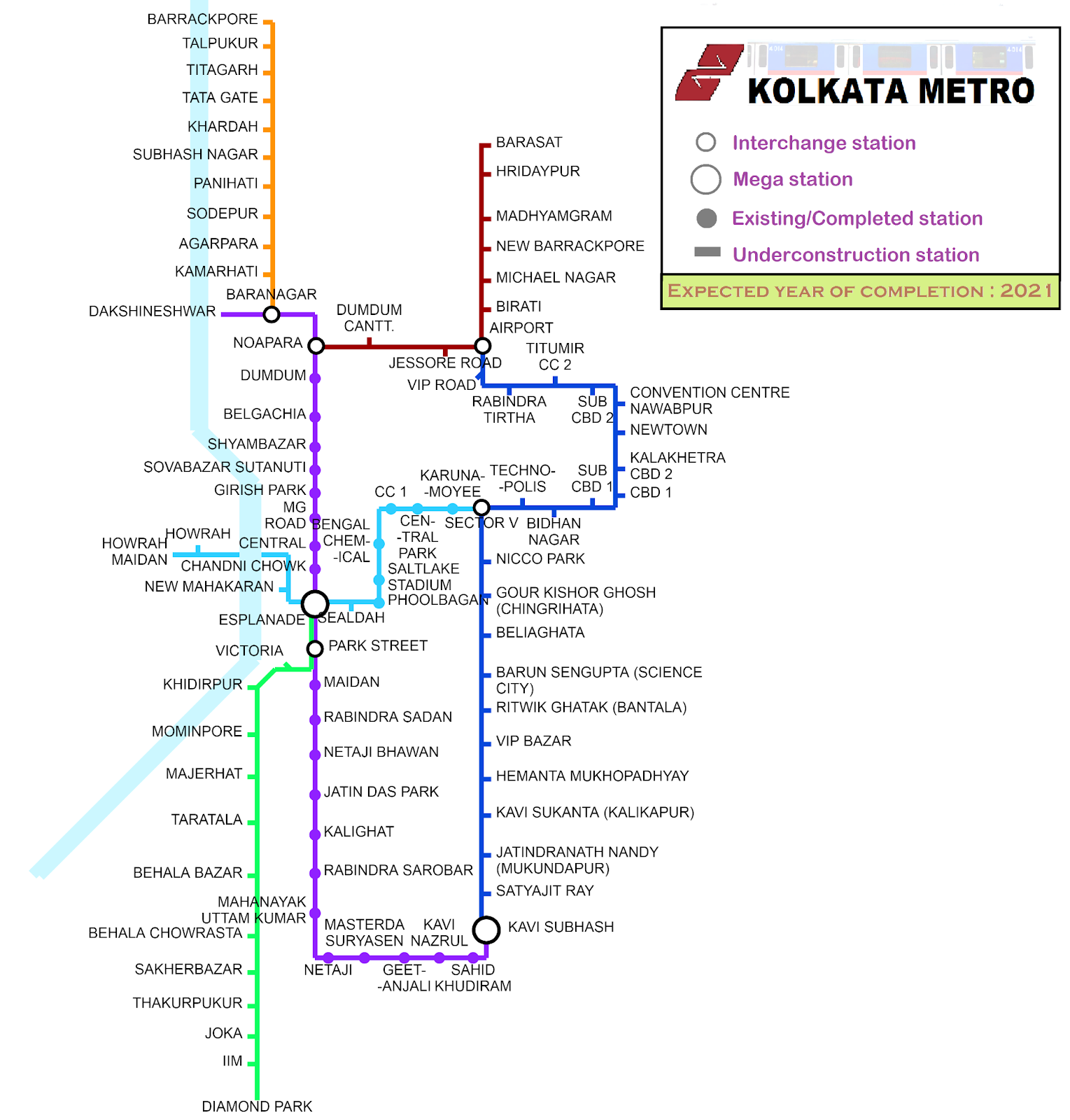
Station Names: Dakshineswar, Baranagar, Noapara, Dum Dum, Belgachhia, Shyambazar, Shobabazar, Shobhabazar Sutanuti, Girish Park, MG Road, Central, Chandni Chowk, Esplanade, Park Street, Maidan, Rabindra Sadan, Netaji Bhavan, Jatin Das Park, Kalighat, Rabindra Sarobar, Mahanayak Uttam Kumar, Netaji, Masteda Surya Sen, Gitanjali, Kavi Nazrul, Shahid Khudiram, Kavi Subhash (New Garia)
The Kolkata Metro, India’s pioneer underground railway, commenced its operations in October 1984, marking a significant milestone in the country’s transportation history. By February 1995, the entire initially planned stretch was completed and operational, providing much-needed relief to Kolkata’s commuters.
Subsequent Extensions:
01. Southward Extension a. Mahanayak Uttam Kumar to Kavi Nazrul in 2009 b. Kavi Nazrul to Kavi Subhash in 2010
02. Northward Extension a. Dum Dum to Noapara in March 2013 b. Noapara to Dakshineswar in February 2021
Kolkata Metro
New Millenium, New Lines
Operational Lines The Kolkata Metro currently operates several lines, serving as a vital lifeline for commuters across the city. These lines form the backbone of Kolkata’s public transportation network, providing efficient and reliable travel options for residents and visitors alike.
Green Line (Line-2): Sector V to Sealdah and Howrah Maidan to Esplanade
Length: 13 km
Type: Elevated (5.3 km) & Underground (7.7 km)
Depot: Central Park in Bidhannagar (Salt Lake)
Number of Stations: 12
Station Names: Howrah Maidan, Howrah, Mahakaran, Esplanade, Sealdah, Phoolbagan, Salt Lake Stadium, Bengal Chemical, City Centre, Central Park, Karunamoyee, Salt Lake Sector V
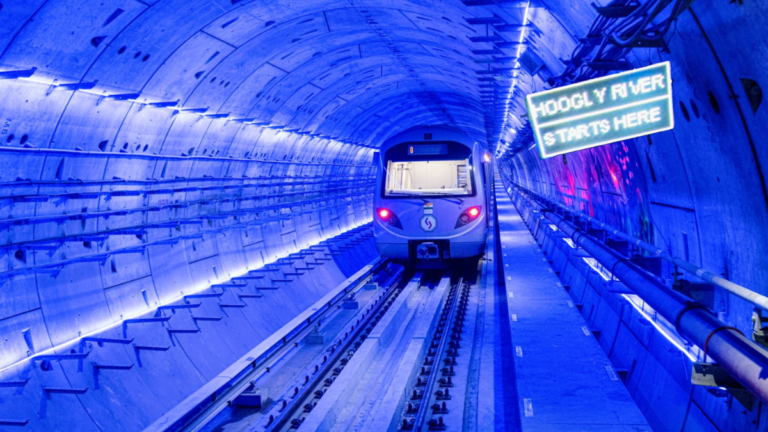
The Kolkata Metro boasts a unique distinction in India as it traverses under the Hooghly River between Mahakaran and Howrah Station, making it the largest and the sole underwater metro in the country. This engineering feat adds to the metro’s allure, showcasing its innovation and adaptability.
More recently, on 6th March 2024, Prime Minister Narendra Modi inaugurated the Esplanade – Howrah Maidan section, further enhancing the metro’s connectivity. With this inauguration, only a 2.9 km stretch remains between the two functional stations, signaling the imminent completion of this vital link in Kolkata’s metro network.
Under-construction Part
A. Green Line (Line-2) – Esplanade – Sealdah (tunnels only)
Length: 2 km
Type: Underground
Number of Stations: 0
Station Names: N/A
On-Hold & Proposed
B. Green Line (Line-2) – Howrah Maidan to Satrangachi Bus Terminal
Length: 10 km
Type: Elevated
Status: Proposed
C. Green Line (Line-2) – Sector V to Teghoria
Length: 5.7 km
Type: Elevated
Number of Stations: 5
Station Names: Kestopur, Dum Dum Park, Baguiati, Raghunathpur and Teghoria (Line-6 interchange)
Status: Proposed
Purple Line (Line-3): Joka to Majerhat
Length: 7.75 km
Type: Elevated
Depot: Joka
Number of Stations: 7
Station Names: Joka, Thakurpukur, Sakherbazar, Behala Chowrasta, Behala Bazar, Taratala, and Majerhat
The metro line is divided into three phases:
1. Joka to Majerhat (Phase 1) 2. Majerhat to Esplanade (Phase 2) 3. Joka to Diamond Park (Phase 3) As of the latest update, Prime Minister Narendra Modi remotely inaugurated the Taratala – Majerhat section on 6th March 2024,, marking the completion of the 7.75 km Phase 1 stretch. This significant milestone signifies progress in enhancing Kolkata’s metro network for improved connectivity and convenience.
Under-construction Part
A. Purple Line (Line-3) – Majerhat to Esplanade
Length: 7.55 km
Type: Elevated (2.5 km) & Underground (5.05 km)
Number of Stations: 5
Station Names: Mominpur, Kidderpore, Victoria Memorial, Park Street and Esplanade
Orange Line (Line-6): Kavi Subhash (New Garia) to Hemanta Mukherjee (Ruby Hospital)
Length: 5.68 km
Type: Elevated
Depot: New Garia
Number of Stations: 5
Station Names: Kavi Subhash, Satyajit Ray, Jyotirindra Nath Nandy, Kavi Sukanta, and Hemanta Mukherjee
As of the latest update, the Prime Minister of India inaugurated the Kavi Subhash-Hemanta Mukhopadhyay section on 6th March 2024 marking the completion of the 5.4 km Phase 1 stretch.
Under-construction
A. Orange Line (Line-6) – Hemanta Mukherjee (Ruby Hospital) to NSCBI Airport (Biman Bandar)
Length: 24.19 km
Type: At-grade, elevated & underground
Depot: New Town, New Garia
Number of Stations: 19
Station Names: VIP Bazar, Ritwik Ghatak, Barun Sengupta, Beliaghata, Gour Kishore Ghosh, NICCO Park, Saltlake Sector V, Technopolis, Nazrul Tirtha (formerly Bidhan Nagar), Swapno Bhor (formerly Sub CBD-1), Biswa Bangla Convention Centre (formerly CBD-1), Kala Kshetra, Mother’s Wax Museum (formerly New Town), Eco Park (formerly Convention Center), Siksha Tirtha (formerly Sub CBD-2), City Centre II (formerly Titumir), Chinar Park (formerly Rabindra Tirtha), VIP Road/Teghoria (Haldiram), Biman Bandar (Airport)
Kolkata Metro
Future of Kolkata Metro
Yellow Line (Line-4) – Noapara to NSCBI Airport
Length: 6.87 km
Type: At-grade, elevated & underground
Number of Stations: 4
Station Names: Noapara, Dum Dum Cantt., Jessore Road, Biman Bandar
Yellow Line (Line-4) – NSCBI Airport (Biman Bandar) to Barasat
Length: 11.26 km
Type: Underground and Elevated
Number of Stations: 6
Station Names: Birati, Michael Nagar, New Barrackpore, Madhyamgram, Hridaypur and Barasat
A 3.6 km underground section with 3 stations from NSCBI to New Barrackpore has been fast-tracked. Geotechnical & Design bids were invited in mid-January 2020.
This line is on-hold. Its route was proposed to follow Barrackpore Trunk Road, but may follow Kalyani Expressway instead. When operational, it might function as an extension/spur of Line 1.
Ridership
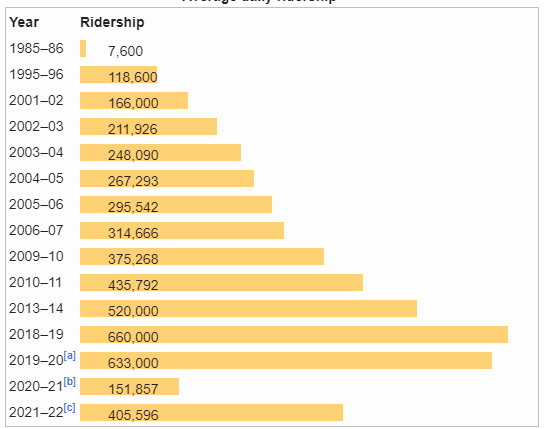
The Kolkata Metro stands as the second busiest metro network in India, with each train accommodating 2,465 passengers, surpassing Delhi’s figures. Serving approximately 700,000 commuters daily, its ridership has steadily increased since its inception in 1984. Notably, the completion of the Dum Dum to Mahanayak Uttam Kumar corridor in 1995 marked a significant surge in ridership. Offering affordable fares and swift, convenient travel options, the metro system has garnered immense popularity. During the 2019 Durga Puja festivities, a record-breaking 922,000 passengers utilized the metro. Furthermore, the Green Line witnesses a daily influx of around 40,000 commuters, with the Sealdah extension enhancing accessibility since its inauguration on July 14, 2022. The Purple Line sees around 2,000 people daily, being operational from January 2, 2023.
Ridership data.
Challenges faced by Kolkata Metro
1. Ownership and Decision-making: Unlike the autonomous structure of Delhi Metro, Kolkata Metro is owned and operated by Indian Railways. This centralized control often leads to delays and limitations in decision-making, as every aspect, from funding to route realignment, relies solely on Indian Railways.
2. Construction Challenges: In densely populated areas, the absence of free spaces for elevated tracks necessitates the construction of underground systems. However, the construction of underground metro tunnels, as seen in the Bowbazar area, has resulted in structural damages to nearby homes, leading to evacuation and significant project delays.
3. Technical Limitations: Kolkata Metro’s construction in the 1970s introduced technical limitations, such as tunnel dimensions and reliance on Indian Railways infrastructure. The use of Indian meter gauge shells mounted on broad gauge bogies for rolling stock necessitates custom-built rakes, resulting in additional costs and limited options for manufacturers. Additionally, the use of Indian Railways signaling instead of European signaling has contributed to operational snags, delays, and safety concerns.
Kolkata Metro Shaping Urban Mobility
A Historic Start: The Kolkata Metro holds the distinction of being India’s first underground railway system, operational since 1984.
Continuous Expansion: The metro network has grown steadily, with new lines and extensions constantly under construction or inaugurated, like the recent additions to the Green and Orange Lines in March 2024.
Undeterred by Challenges: Overcoming hurdles like complex ownership structures, dense urban construction zones, and technical limitations, the Kolkata Metro has persevered in serving the city.
Ridership on the Rise: The metro enjoys immense popularity, boasting over 700,000 daily riders and witnessing record ridership during festivals.
Shaping the Future: Upcoming extensions promise to enhance connectivity, reduce traffic congestion, and integrate with other transport systems, offering a sustainable and efficient commuting experience for Kolkata’s residents.
Benefits to Stakeholders
Government:
Faster Expansion and Infrastructure Development: Private sector involvement can inject much-needed capital, accelerating the expansion of the Kolkata Metro network. This facilitates efficient public transport, reduces traffic congestion, and promotes economic activity within the city. The government can leverage private expertise in areas like tunnel boring and construction management, potentially leading to cost-effective project execution.
Reduced Financial Burden: PPP models can ease the financial burden on the government, allowing them to focus resources on other critical infrastructure projects and social welfare initiatives.
Improved Operational Efficiency: Private firms often bring innovative operational practices and expertise in maintenance, potentially leading to a more efficient and reliable metro system. This translates to reduced operational costs for the government and a more attractive public transport option for commuters.
Job Creation and Economic Growth: Metro expansion creates job opportunities in construction, operation, and maintenance. By prioritizing local hiring within PPP agreements, the government can boost the local economy and create sustainable employment opportunities for Kolkata’s workforce.
Private Sector:
Profitable Investment Opportunities: PPPs offer private companies a chance to participate in a high-growth infrastructure project with a guaranteed return on investment over a specified period.
Technological Innovation: Private firms can introduce advanced technologies and construction methods, showcasing their capabilities and potentially gaining a competitive edge in the infrastructure development sector.
Long-Term Partnerships: Successful PPPs can pave the way for long-term partnerships between the government and private entities, fostering collaboration on future infrastructure projects in Kolkata and beyond.
Brand Reputation and Recognition: Participation in a high-profile project like the Kolkata Metro expansion can enhance a private company’s reputation for quality, expertise, and social responsibility, attracting future business opportunities.
However, it’s crucial to establish a framework that ensures a fair distribution of benefits and mitigates potential risks for both parties. Open communication, transparent bidding processes, and clearly defined contracts are essential for a successful PPP venture.
Kolkata Metro: The Way Ahead
PPP Models: Exploring various PPP models like Build-Operate-Transfer (BOT) or revenue sharing could attract private investment while ensuring timely project completion and a return on investment for the private partner. Public authorities would retain control over fares and safety standards.
Focus on Efficiency: Private sector participation can introduce innovative construction techniques and project management methods, potentially leading to faster completion times and cost optimization. This could expedite the construction of priority stretches and connect underserved areas.
Safeguarding Public Interest: A robust regulatory framework established before finalizing PPP agreements would be crucial. This framework would clearly define:
Fare structures to ensure affordability and prevent excessive profiteering.
Safety standards to be maintained by the private partner throughout the project lifecycle.
Service level agreements (SLAs) outlining service quality benchmarks and penalties for non-compliance.
Transparency clauses mandating regular audits and public disclosure of project finances.
Independent Oversight: Establishing an independent oversight body with public representation would ensure fair implementation of PPP agreements. This body would monitor project progress, adherence to safety regulations, and the quality of services provided.
By carefully considering these detailed aspects, Kolkata can leverage the benefits of private participation while safeguarding public interests and ensuring the metro system remains a sustainable and accessible public transport solution for its citizens.
Kolkata Metro
Conclusion
The Kolkata Metro’s story is one of unwavering resolve and continuous adaptation. From its humble beginnings as India’s first underground railway to its present stature as a vital lifeline for millions of commuters, the metro has consistently strived to meet the growing demands of Kolkata’s populace. Despite facing challenges like complex ownership structures, intricate construction in dense areas, and technical limitations, Kolkata Metro has emerged as a testament to the city’s indomitable spirit.
As Kolkata marches forward, the Kolkata Metro’s upcoming extensions promise to play a transformative role. By bridging geographical gaps, reducing traffic congestion, and integrating seamlessly with other modes of transportation, the metro network is poised to shape a more sustainable and efficient urban mobility landscape. The careful consideration of public-private partnerships, with a focus on transparency, accountability, and equitable distribution of benefits, can unlock the full potential of this collaboration. By embracing innovation, fostering community engagement, and prioritizing safety, the Kolkata Metro can ensure a brighter future for Kolkata’s commuters and a more vibrant, connected city for all.
KAPURTHALA (Metro Rail News): In a significant appointment within Indian Railways, Arun Kumar Jain, Indian Engineering Services officer of the 1986 batch, officially took charge as the General Manager of the Rail Coach Factory (RCF) in Kapurthala, Punjab, on 1st May 2024. This marks a new chapter for the facility, which plays a crucial role in the manufacturing and maintenance of railway coaches in India.
Shri Jain, an esteemed mechanical engineer, graduated from the National Institute of Technology in Kurukshetra, Haryana. His academic background and extensive experience in the railway sector prepare him well for the challenges and responsibilities of his new role.
The Rail Coach Factory, Kapurthala, has been instrumental in innovating coach manufacturing in India, contributing significantly to the modernization of Indian Railways. Under Shri Jain’s leadership, the factory is expected to enhance its production capabilities and incorporate more advanced technologies in manufacturing processes.
Congratulations to Mr. Arun Kumar Jain on his new leadership role, where his expertise is expected to bring about transformative changes to the Rail Coach Factory and contribute to the broader goals of Indian Railways.
Discover the endless possibilities of our city’s Metro at InnoMetro, our flagship Expo and Conference. Be an active participant in shaping its future towards a more sustainable tomorrow. Stay informed and join us to take a step towards a brighter future.
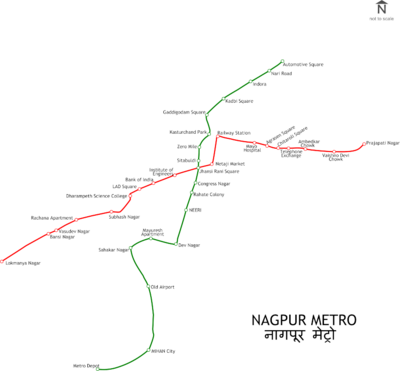
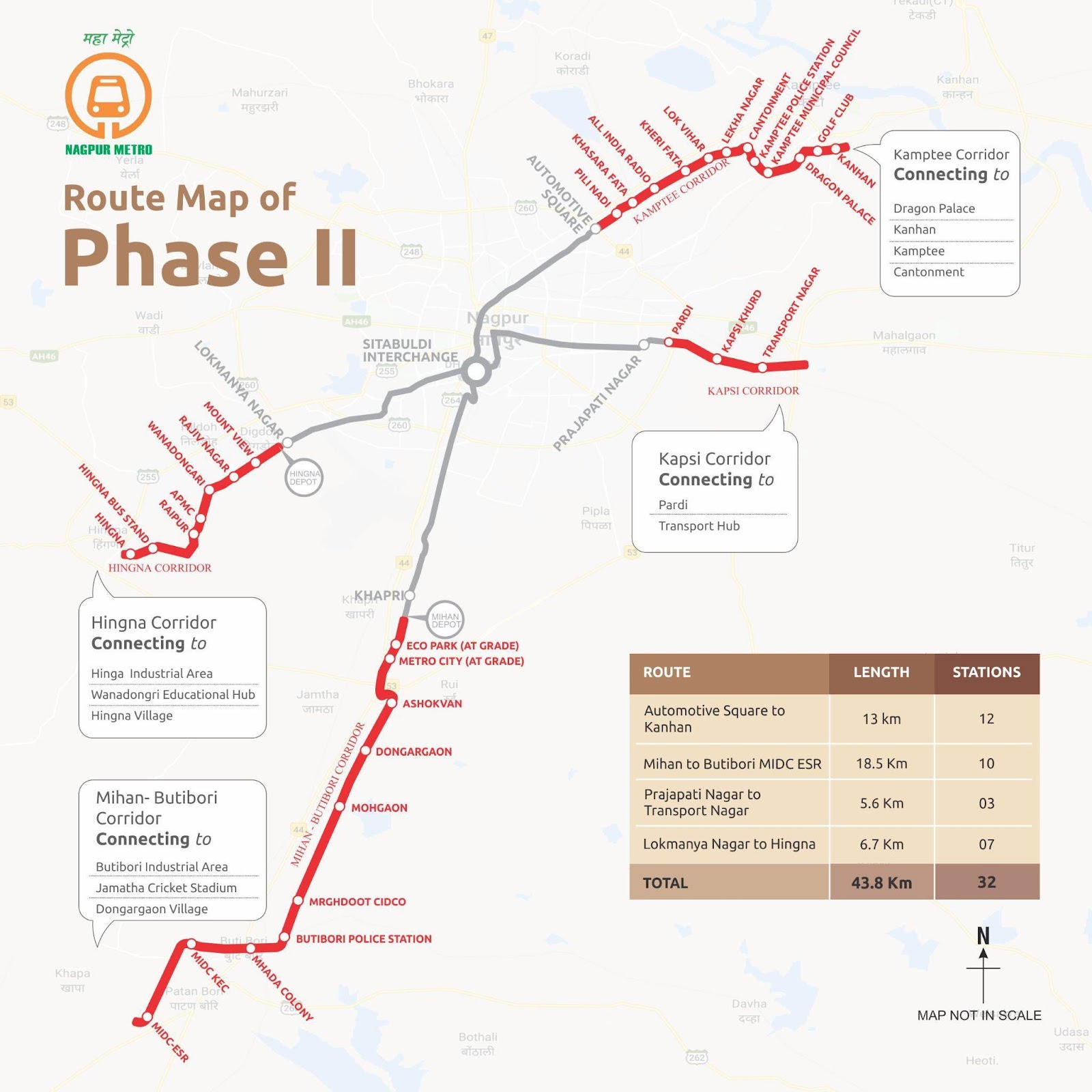
NAGPUR (Metro Rail News): D.P. Jain & Co. Infrastructure Pvt. Ltd. commenced casting the first concrete segment for Nagpur Metro’s Phase 2 project on Thursday. The commencement of construction for the 6.92 km Package C-01 (Automotive Square-Lekha Nagar) under Reach 2A signifies the further extension of the Metro’s network.
Awarded a Rs. 394.89 crore civil contract, this project builds on the existing 19.658 km Orange Line from Phase 1, pushing the northern extension through 13 km of elevated track. Rail Vikas Nigam Ltd. (RVNL) secured the original contract in September 2023 and then subcontracted the construction to DP Jain.
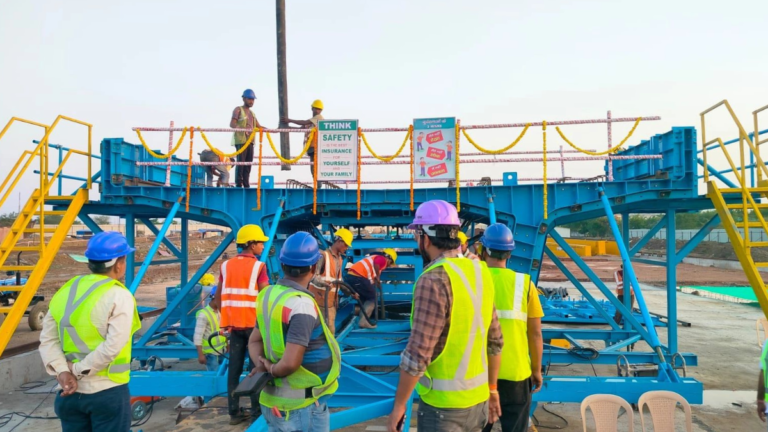
The casting of segments, a critical component in viaduct construction, is being carried out at DP Jain’s yard in Khairy village on Kamptee Road (NH-247). The company plans to produce 2250 such segments for this project. The first segment cast, designated S5, will be positioned between piers 2P (116-117) and features a length of 3 meters, a top width of 8.5 meters, a bottom width of 3.5 meters, and weighs approximately 37 MT.
Unique Construction Feature
DP Jain incorporates a unique feature in this project by integrating a parapet wall with the segments, a practice not commonly seen in other Indian metros. This approach is expected to reduce construction and transportation time and the costs associated with purchasing separate casting moulds.
This extension, known as Reach 2A, will stretch from Automotive Square to Kanhan River, including 12 elevated stations and connecting to Lekha Nagar Station.
Discover the endless possibilities of our city’s Metro at InnoMetro, our flagship Expo and Conference. Be an active participant in shaping its future towards a more sustainable tomorrow. Stay informed and join us to take a step towards a brighter future.
KOCHI (Metro Rail News): Kochi Metro Rail Ltd (KMRL) is stepping ahead with digital ticketing by announcing its partnership with Google Wallet. This initiative makes Kochi Metro the first metro service in India to integrate with Google Wallet, marking a milestone in the digitisation of urban transportation.
During a press conference in Kochi, Loknath Behera, the Managing Director of KMRL, expressed his enthusiasm about the partnership. “We are proud to announce a significant milestone in the digitisation of urban transportation with the integration of Google Wallet into our ticketing system. This collaboration represents a leap forward in enhancing the travel experience for our metro users, providing them with a streamlined and convenient way to access tickets and navigate our transit network,” said Behera.
He highlighted the convenience and enhanced travel experience this integration promises metro users, allowing them to easily access tickets and navigate the transit network.
The integration process is powered by Prudent Technologies, a firm known for its innovative digital technology solutions. Geejo George (Founder Director), Sanjay Chacko (Director) at Prudent Technologies, and Ashish Mithal (Representative), Google were present at the event. Behera mentioned the possibility of extending this digital solution to Water Metro services, emphasising the successful adoption of digital initiatives in Kerala.
“We always think about attracting more passengers with the help of technology. We are thinking about how to extend the service to Water Metro as well. The similarity of the situation is such that the wallet can be used in Water Metro as well,” added Behera.
How to Use Google Wallet for Kochi Metro
For metro users eager to take advantage of this new feature, the process is straightforward:
1. Open the Google Wallet application. 2. Select KMRL for Kochi Metro. 3. Choose your start and destination stations. 4. Explore various payment options available. 5. Complete the payment to receive your digital ticket instantly.
This collaboration between KMRL and Google Wallet enhances the convenience of accessing metro services and sets a benchmark for other metro services nationwide.
Discover the endless possibilities of our city’s Metro at InnoMetro, our flagship Expo and Conference. Be an active participant in shaping its future towards a more sustainable tomorrow. Stay informed and join us to take a step towards a brighter future.
Imagine your travel time getting cut-off by 50% with a bonus of traveling seamlessly and punctually. Yes, you read it right. That’s the USP of the metros in India today that they not only cut-off your travel time but also make traveling seamless and punctual with its rapid lines providing public an unwavering and unparalleled service. Nagpur Metro is nowhere behind in this rapidly running urban transit landscape which is in-turn the driver of growth and development. In this very sequence of development, one major aspect at global as well as national level is sustainable development.
As per the annual reports of Maharashtra Pollution Control Board (MPCB), Nagpur has witnessed a tremendous improvement in its air quality index especially in the PM10 content in its air. Not only the functioning & operations of the Nagpur Metro are unique and future-friendly but even the pre-operational catharsis ranging from planning, monitoring and constructing all were done in a unique and future-oriented model. It holds the title of completing the entire project in record time of 27 months or 2 years & 3 months.
Nagpur, a city consistently lauded for its green spaces, top-ranked public transport, and excellent healthcare, offers an alluring blend of livability and progress. This vibrancy extends to its revered Deekshabhoomi pilgrimage site, home to the world’s largest Buddhist stupa. Now, the Nagpur Metro adds another layer to the city’s allure, revolutionizing urban mobility with headquarter of companies like Haldiram, Vico, Dinshaws & also the prominent technology companies like TCS, Tech Mahindra Infosys, LTI Mindtree, Accenture and many more.
India’s marriage with urban mobility still remains a tightrope walk as we navigate our journey to be in the Top 5 economies of the world. Urban Mobility is an all-encompassing term taking in its loop things from Economic Development to Connectivity & Cultural Integration to Tourism Hotspot. With cities expanding their boundaries beyond, there is a strong need to promote rail based transportation systems into their sprawling geography that promise a punctual, seamless & dedicated public service to sustain the pace that new urban centers demand.
Let’s delve in the journey of a not so normal yet punctual & record-holder metro system of India.
Inception
The story begins with its conceptualisation in the year 2012, when the government of India decided to equip cities having population more than 20 Lakh with metro rail system. This made Nagpur too eligible for a metro railway system. The then Union minister for urban development, Kamal Nath, proposed a metro rail in Nagpur and also instructed the authorities to carry the project further with DPR preparation which was further entrusted to Delhi Metro Rail Corporation (DMRC) in the February 2012 itself with a budget allocation of ₹2.4 crore (equivalent to ₹4.5 crore) from the central ministry.
Further a Special Purpose Vehicle (SPV) named Nagpur Metro Rail Corporation (NMRC) today known as Maharashtra Metro Rail Corporation Limited (MAHA-METRO) came to life with the Government of India & Government of Maharashtra having 50:50 equity. It is the body entrusted with timely completion and successful execution of the project.
DPR & Approval
As the DPR went to DMRC, two routes namely, Automotive square, Kamptee to MIHAN Metro depot and Prajapati Nagar, East Wardhaman Nagar to Lokmanya Nagar, Hingna with 17 stations & 19 stations at an estimated cost of ₹8,680 crore (US$1.1 billion). The length of the metro went initially from 30 Km to 42 Km in July 2012.
Further, to comply with the norms of financial metrics as suggested by the then central government, precisely to keep the IRR above 8%, a realignment of the metro routes in the DPR was proposed. The original alignment of Corridor-I proposed was passing through Khamla Road, Airport Area after Sahakar Nagar before ending at MIHAN.
To avoid extra costs & extra time into property acquisition for the original alignment, the alignment was re-calibrated to reach the Wardha Road only without going on Khamla Road. In the realignment it was decided that the North-South Corridor of the Nagpur Metro will pass through Wardha Road after Congress Nagar Metro Station. To cut down more on costs the underground alignment was also dealt away with and it was decided that after crossing existing intersection point of Wardha Road & Airport Road, the alignment will be shifted to the MIHAN area and alignment in this portion would be at grade running parallel to Wardha Road up to ROB and parallel to railway line thereafter up-to proposed Car Depot.
After long revisions and realignments, the project DPR was finally submitted in November 2013. It was further approved by the central cabinet in August 2014.
While the state government has already approved, the phase 2 of the project at an estimated cost of Rs 6,708 crore.but the DPR for the same lies with the central government with pending approval. The foundation stone for the project has already been laid by the Prime Minister on December 11, 2022.
Construction & Planning.
This way the construction of Nagpur Metro’s Phase 1, a 38.215 kilometer project featuring both elevated and at-grade sections, began in 2015 with the Nagpur Metro authorities employing best-in-class planning & monitoring mechanism in order to achieve the benchmark of best quality work done among all the metro projects in India.
The Nagpur Metro Rail project, with its over 20 major contractors, 30 subsystems, and vast scale, presented a significant management challenge. Timely completion and quality assurance (including 7 tests) were paramount concerns. To address these complexities, Nagpur Metro Rail Corporation Limited (NMRCL) adopted a digital project management approach from the outset. This decision aimed to improve project information flow, minimize cost and schedule overruns, and ensure successful project delivery.
Weekly and quarterly data analysis enabled NMRCL to leverage model-based delay analysis. This provided management with a comprehensive, real-time picture of the project, facilitating efficient decision-making.
Benefits of Model-Based Delay Analysis:
Integrated Project View: Linked the 3D model, schedule, and cost for a holistic project understanding.
Proactive Flaw Detection: Enabled timely rectification of construction sequencing flaws by simulating the schedule with the 3D-model.
Real-Time Progress Monitoring: Facilitated model-based monitoring of construction progress during execution.
System Specifications
Top Speed: 90 kmph
Average Speed: 33 kmph
Track Gauge: Standard Gauge–1435 mm
Electrification: 25 kV, 50 Hz AC OHE
Signaling: Communication-based Train Control (CBTC)
Lines of Nagpur Metro
Phase: 01
The Nagpur Metro Rail Project spans 38.215 kilometers and comprises two corridors, featuring 36 stations and 2 depots strategically located for optimal passenger service as:
Line 1 – Orange Line: Automotive Square – Khapri
Length: 19.658 km
Type: Elevated
Depot: MIHAN Depot
Number of Stations: 22
Station Names: Automotive Square, Nari Road, Indora Square, Kadvi Square, GaddiGodam Square, Kasturchand Park, Zero Mile, Sitabuldi (interchange), Congress Nagar, Rahate Colony, Ajni Square, Chhatrapati Square, Jaiprakash Nagar, Ujjwal Nagar, Airport, Airport South, New Airport and Khapri.
Line 2 – Aqua Line: Lokmanya Nagar – Prajapati Nagar
Nagpur Metro’s Phase 2 expands upon the existing network, reaching new areas in all directions. Key extensions include reaching Kanhan in the north, Butibori MIDC in the south, Transport Nagar (Kapsi) in the east, and Hingna in the west. The project encompasses a mix of elevated and at-grade sections: 1.2 kilometers at-grade with 2 stations, and 42.6 kilometers elevated with 30 stations. Additionally, a future fifth corridor branching out from Line-2 at Vasudev Nagar towards Wadi is under consideration.
Line-1 (Orange Line) Reach 1A: Khapri to Butibori MIDC ESR
Length: 18.7 km
Number of Stations: 10
Station Names: Eco Park, Metro City, Ashokvan, Dongargaon, Mohgaon, Meghdoot CIDCO, Butibori Police Station, Mhada Colony, MIDC KEC and MIDC-ESR
Line-1 (Orange Line) – Reach 2A: Automotive Square to Kanhan
Length: 13 km
Number of Stations: 12
Station Names: Pili Nadi, Khasara Fata, All India Radio, Kheri Fata, Lok Vihar, Lekha Nagar, Cantonment, Kamptee Police Station, Kamptee Municipal Council, Dragon Palace, Golf Club and Kanhan
Line-2 (Aqua Line) – Reach 3A: Lokmanya Nagar to Hingna
Length: 6.6 km
Number of Stations: 7
Catchment Area: Mount View, Rajiv Nagar, Wanadongri, APMC, Raipur, Hingna Bus Station and Hinga
Line-2 (Aqua Line) – Reach 4A: Prajapati Square to Transport Nagar
Status: This extension has not been approved. It may be taken up in Nagpur Metro’s Phase 3.
Latest Update While 4 of the total 13 Packages including civil & electrical have been awarded, 7 remain under bidding at various stages and 2 tenders have been cancelled. The companies awarded with contracts include LKT, Enia, RVNL & Colossus Infra..
Connectivity Through Lines
Connectivity is the key element that defines the cities today. More connectivity translates into more business, more exchange, more integration and most importantly more convenience into the thick and thin of transportation across the city.
Pre-Metro Scenario – A crowded Canvas
Nagpur’s transportation landscape, prior to the metro’s arrival, presented a complex picture with three distinct categories:
Public Transport: This included:
Mini City Buses (seating 20)
Large State Transport Buses (seating 50)
Chartered Buses used by schools and offices
Buses from neighboring states
This system, while offering various options, often faced limitations.
Intermediate Public Transport (IPT): Dominated by auto-rickshaws, IPT served as a crucial mode of transport despite being a bit more expensive.
Private Vehicles: This category encompassed bicycles, two-wheelers, and cars of all sizes.
A Chaotic Network: The presence of such a diverse range of vehicles vying for limited space on the roads created a congested environment. Traffic intersections were particularly notorious for gridlock. With minimal space between vehicles, average speeds remained a slow 15-20 kilometers per hour. This scenario translated into longer travel times, frustration for commuters, and astrain on the city’s infrastructure.
Some Failed Initiatives: Nagpur’s Pre-Metro Mobility Struggles
Prior to the metro’s arrival, Nagpur authorities grappled with the challenge of improving urban mobility. One such attempt involved subsidizing public bus fares to entice ridership. However, this strategy failed to attract higher and middle-income groups who prioritized speed over cost. Public buses simply couldn’t compete with the convenience of private vehicles.
Another initiative, the Bus Rapid Transit (BRT) system, aimed to create dedicated lanes for public buses, theoretically expediting travel times. However, the implementation lacked the finesse needed to seamlessly integrate the BRT system with the existing public transport network. This resulted in a disjointed user experience, failing to achieve the desired synergy between commuters and the public transport system. Consequently, the objective of achieving an optimal distribution of transportation modes (mode share) remained an elusive dream.
Post- Metro Scenario
Nagpur Metro’s Phase 2 is more than just an extension; it’s a bridge connecting people, places, and opportunities. This exciting expansion will reach a population of over 1 million residing in key areas surrounding Nagpur.
Satellite Cities: Phase 2 stretches its reach to satellite cities like:
Kapsi: A major transport hub, Kapsi will benefit from a direct connection to Nagpur, improving movement of goods and people.
Hingna: This rapidly developing town will see a surge in accessibility, attracting residents and businesses alike.
Industrial Powerhouses: The expansion connects to:
Butibori: The district’s largest industrial estate, Butibori, will witness a significant improvement in worker commutes. Thousands employed in the 750+ units can look forward to a faster and more reliable travel option.
Hingna: Home to its own industries, Hingna will benefit from a dual advantage – a connected workforce and enhanced business opportunities.
Mining Marvels: The Kanhan route passes through Kamptee, a significant town with residents who frequently travel to Nagpur for work and education. The metro will significantly reduce travel times, making commutes a breeze.
With a total length of 82 km upon completion, Nagpur Metro Phase 2 paints a brighter picture of connectivity, promising a faster, more efficient, and more accessible future for the city and its residents.
Ridership Figures of Nagpur Metro
Nagpur Metro has witnessed a positive trend in ridership. In February, daily ridership surpassed 93,000 passengers, a significant increase. However, this number remains below the level needed for the project to break even.
Prior to the pandemic, ridership even crossed the 1 lakh mark, but it dipped after fare hikes implemented for revenue rationalization.Despite the ridership growth, Nagpur Metro’s first phase still incurs losses. Even after considering non-fare revenue streams, the average monthly loss stands at ₹3.5 crore.
Nagpur Metro: A Marvel of Sustainability
Nagpur Metro isn’t just revolutionizing urban mobility; it’s also spearheading a movement towards a greener future for the city. Here’s how:
Reduced Emissions: Data from Hingna Road, served by Lokmanya Nagar and Bansi Nagar stations, showcases a significant decrease in air pollutant levels since the metro’s inception. Nitrogen Oxide (NOx) emissions have dropped steadily, from 41 in 2019 to 23.43 in 2021. Similarly, Sulphur Dioxide (SO2) levels have dipped from 14 in 2019 to 8.38 in 2021.
Combating Congestion: By offering a fast, reliable alternative to private vehicles, the metro reduces traffic congestion, a major contributor to air pollution. While vehicle registration in Nagpur has increased by 20% in 2022, the metro helps manage this growth by encouraging a shift towards public transport.
Improved Last-Mile Connectivity: Recognizing the importance of seamless last-mile connectivity, authorities have initiated shared auto services at Kasturchand Park and a shuttle bus service linking the airport with the Airport Metro Station. These efforts ensure a smooth transition between metro travel and reaching final destinations.
Challenges Faced by Nagpur Metro
Based on the information provided, here are some of the key challenges faced by the Nagpur Metro:
Financial Sustainability: While ridership is increasing, it hasn’t yet reached the break-even point. This means the metro incurs monthly losses despite non-fare revenue streams.
Last-Mile Connectivity: While initial efforts have been made with shared autos and shuttle services, a more comprehensive feeder network is needed to effectively connect metro stations with surrounding areas. This will encourage more people to use the metro for their entire journey, not just part of it.
Fare Optimization: The balance between attracting ridership and generating revenue through fares needs to be addressed. Fare hikes implemented for revenue rationalization may have deterred some potential riders, particularly those who are cost-conscious.
Competition from Private Vehicles: The convenience of private vehicles remains a challenge, especially for short trips.
Public Awareness: Encouraging a modal shift towards public transport requires ongoing public awareness campaigns highlighting the benefits of the metro, such as reduced travel times and environmental advantages.
Overall, Nagpur Metro faces the challenge of balancing ridership, revenue generation, and service optimization to achieve long-term financial sustainability and become the preferred mode of public transport for Nagpur residents.
Conclusion
Nagpur Metro stands as a testament to India’s growing commitment to sustainable urban mobility solutions. By offering a rapid, reliable, and eco-friendly alternative to private vehicles, the metro is not only transforming the city’s transportation landscape but also paving the way for a cleaner and healthier future. While challenges such as achieving financial sustainability and ensuring seamless last-mile connectivity remain, Nagpur Metro’s unwavering focus on innovation and passenger experience positions it for continued success. As ridership grows and the network expands, Nagpur Metro is poised to become the backbone of a vibrant, connected, and sustainable Nagpur.


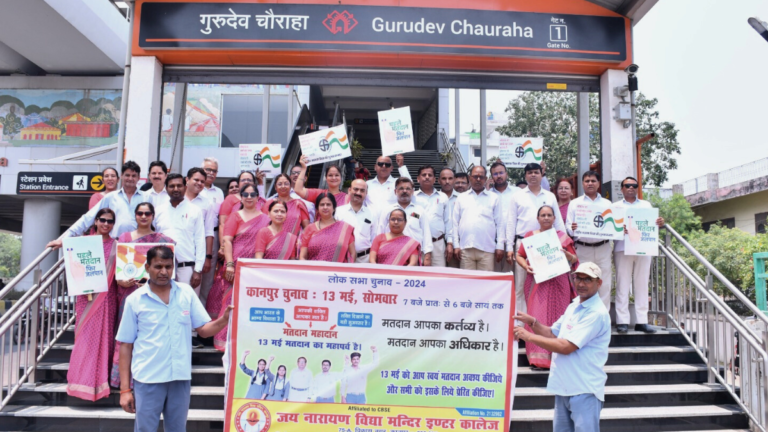


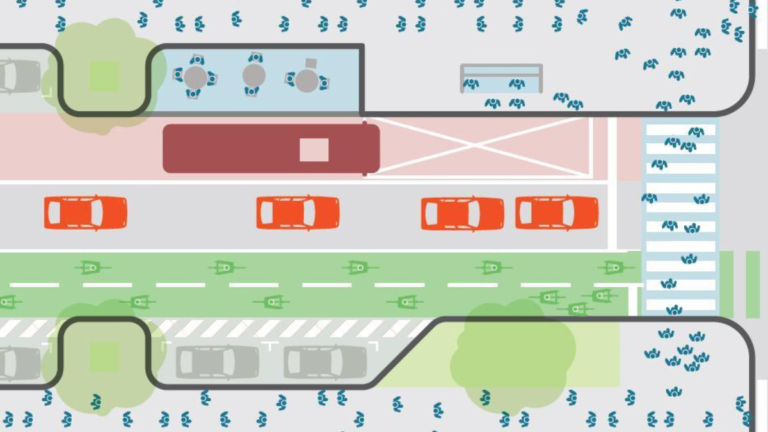
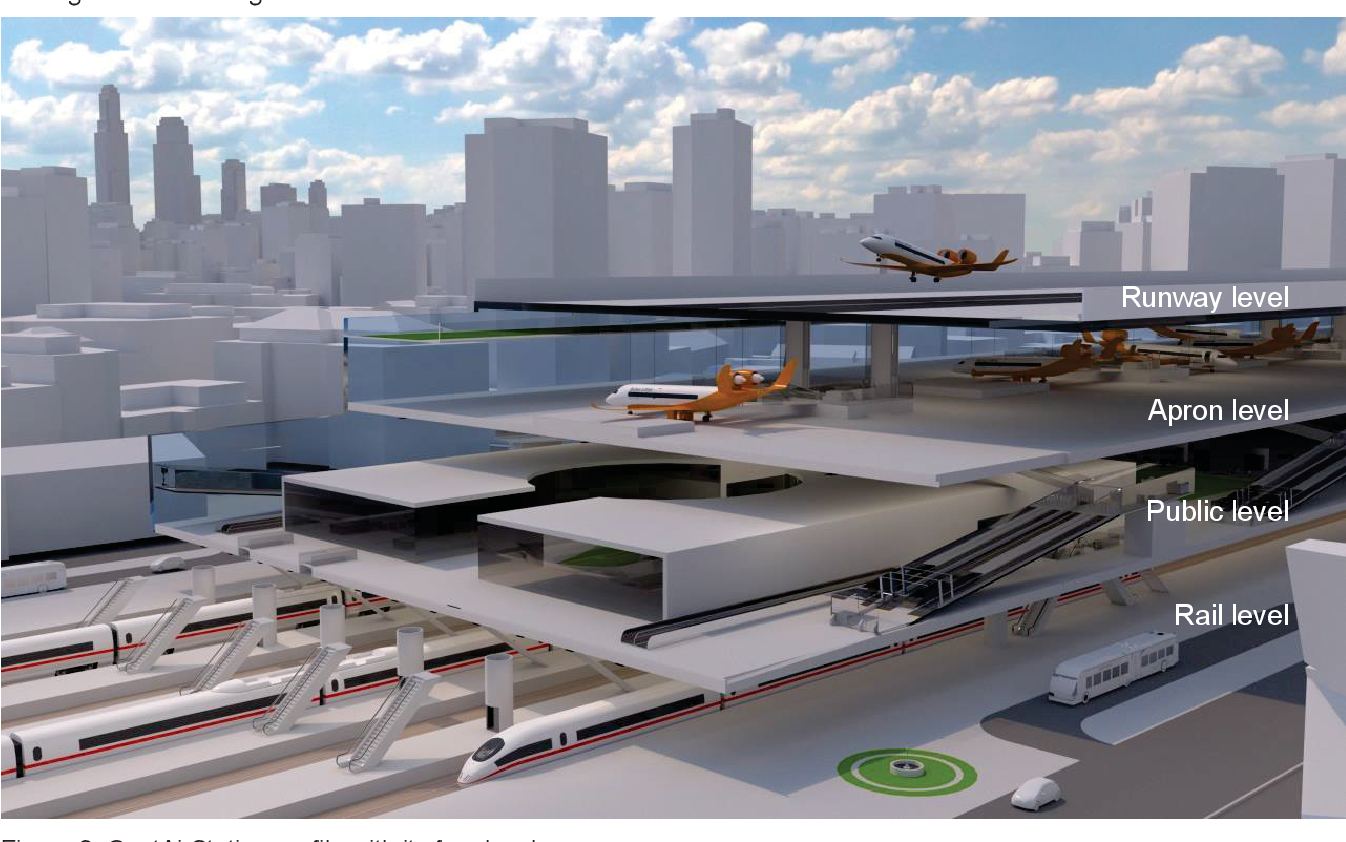
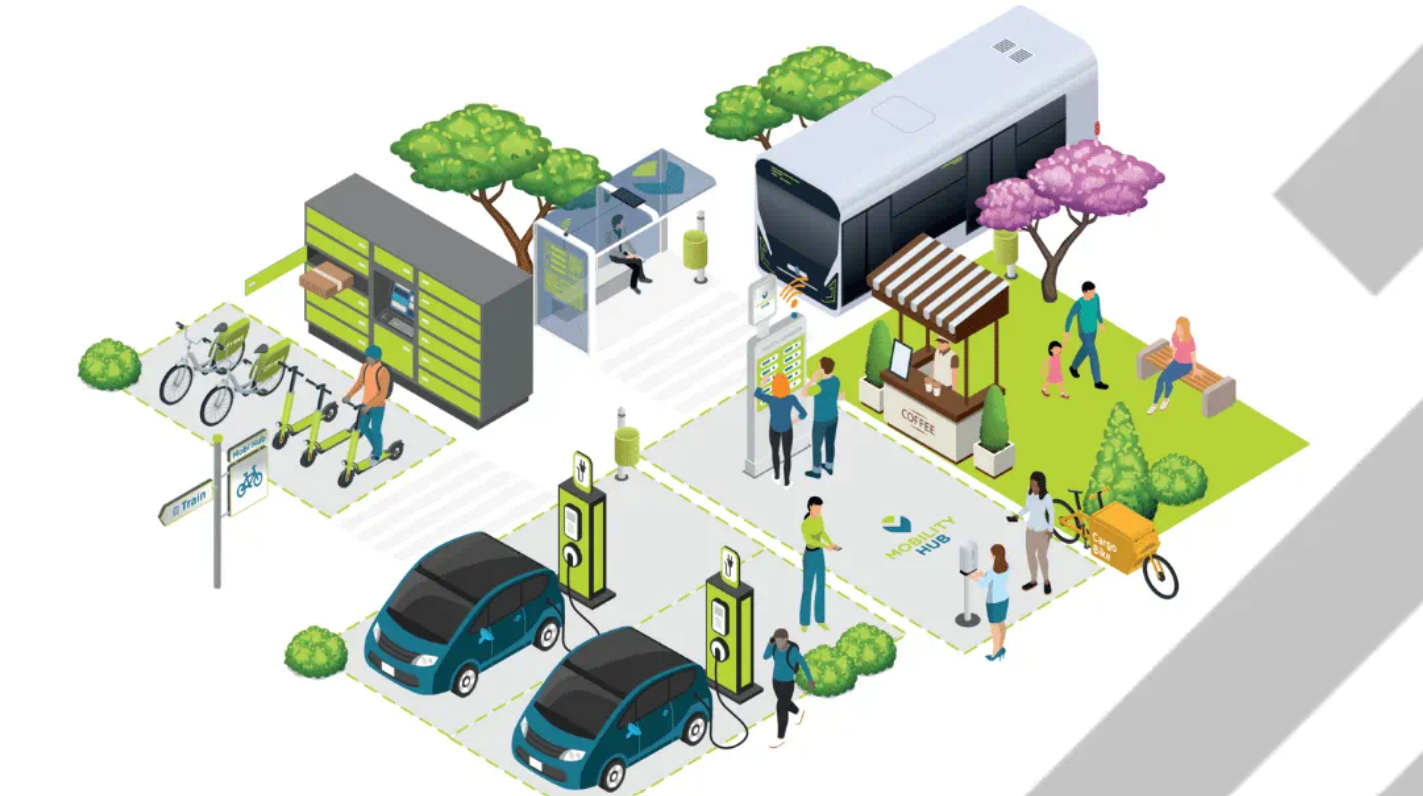

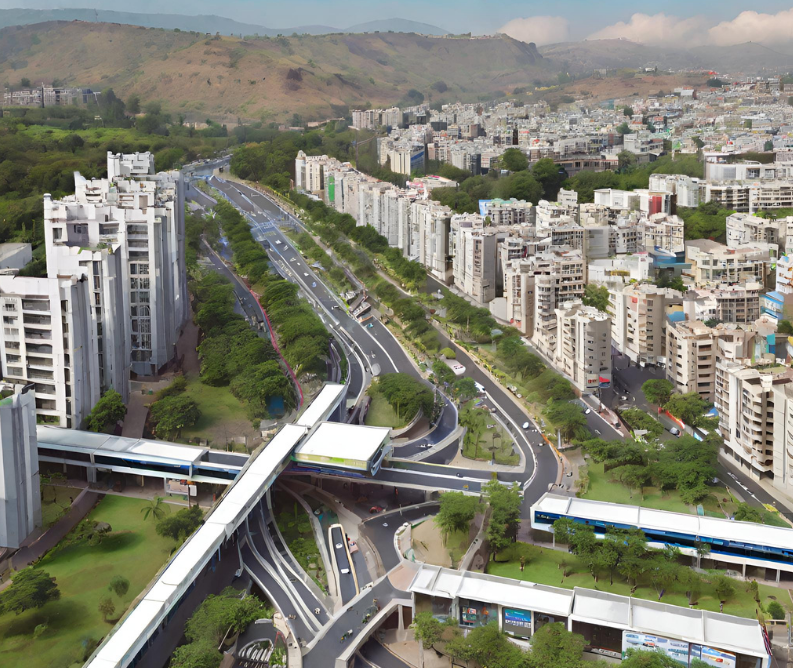
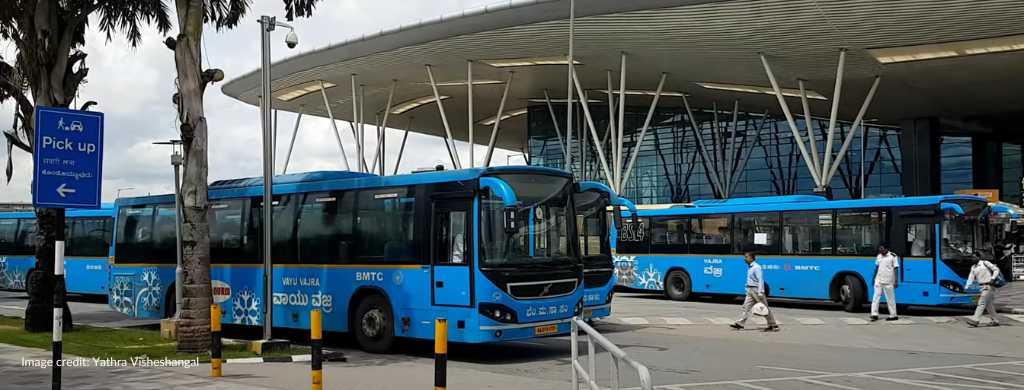
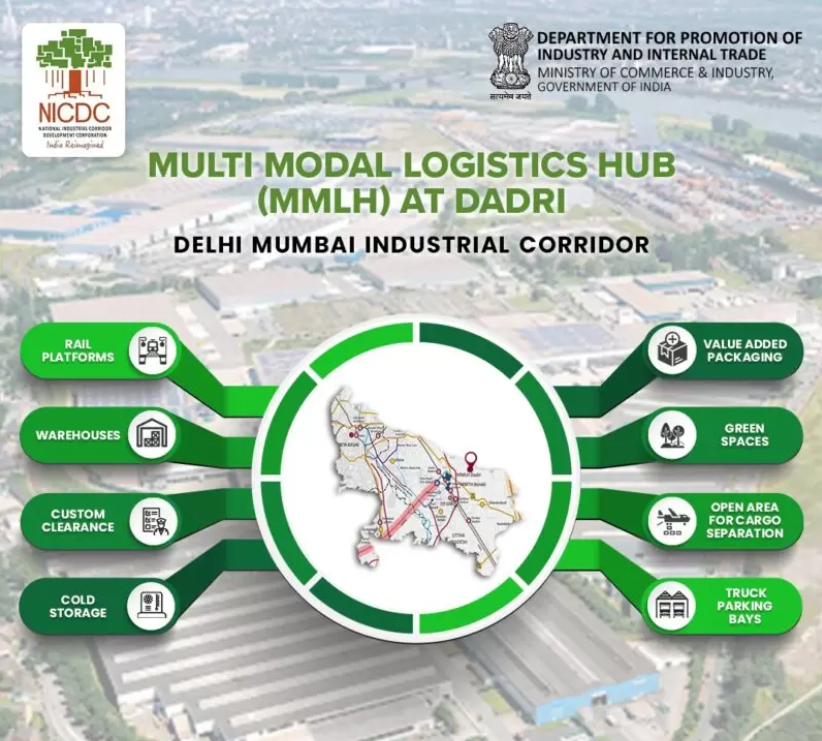
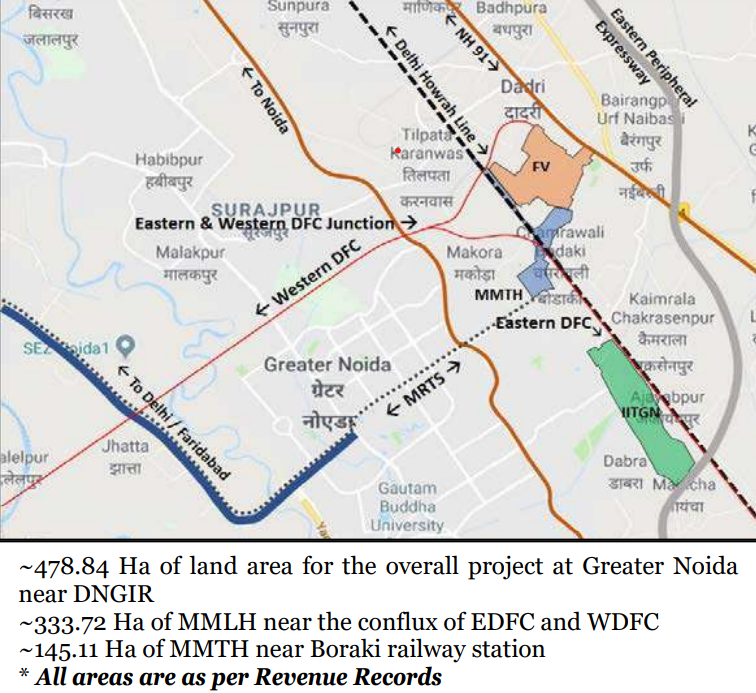
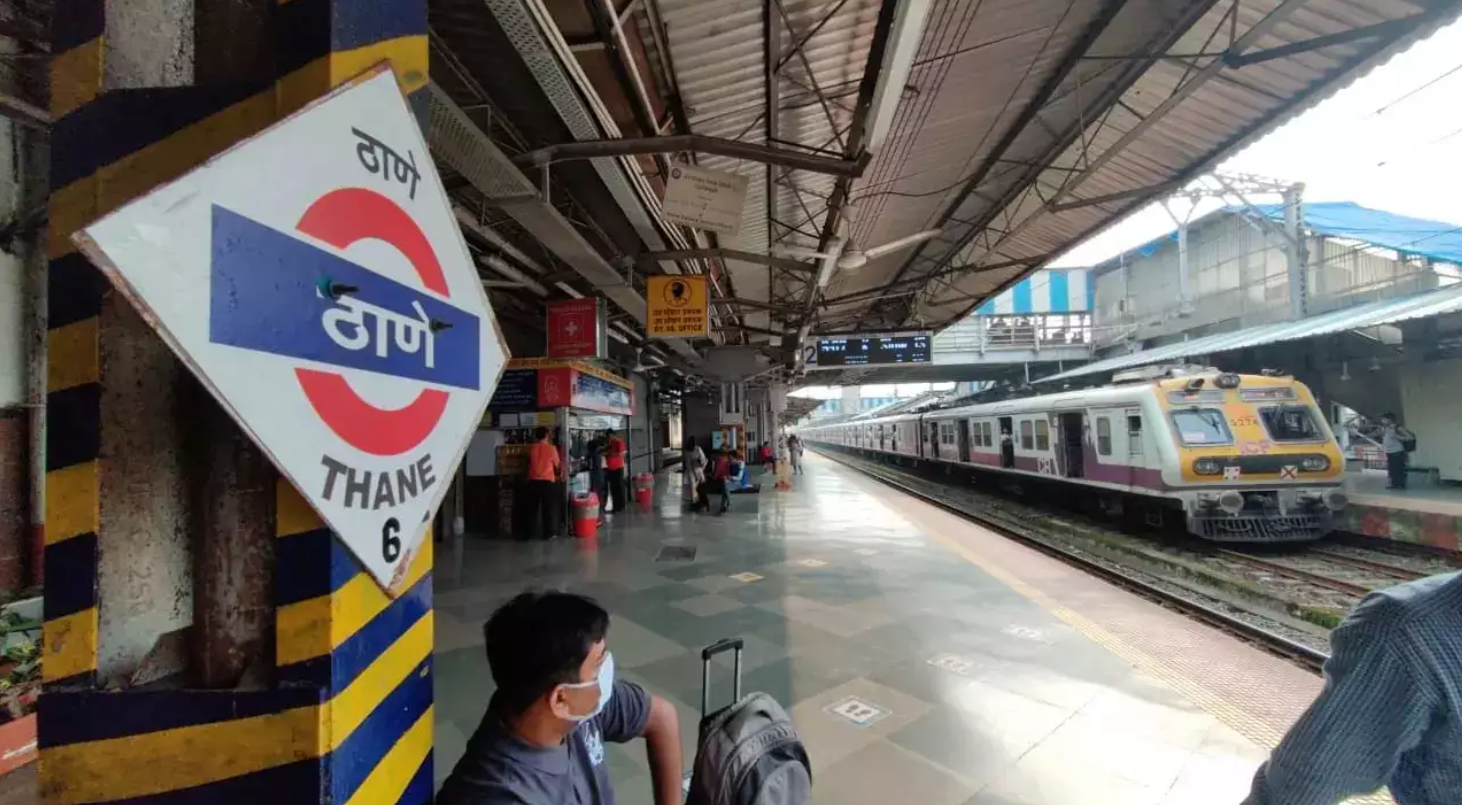
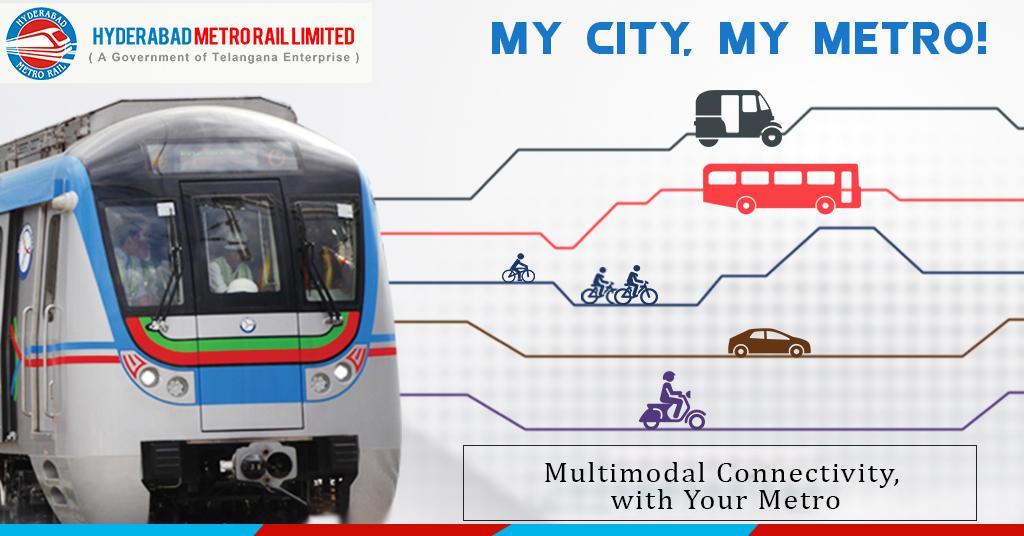

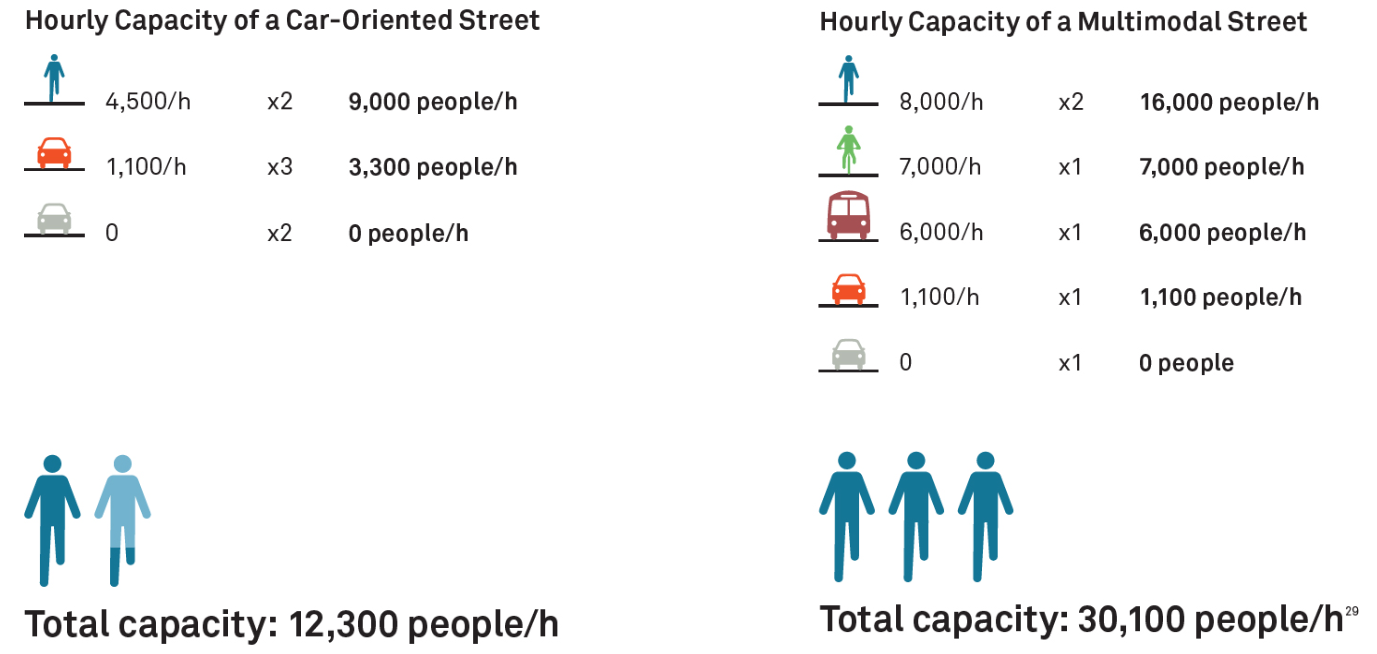
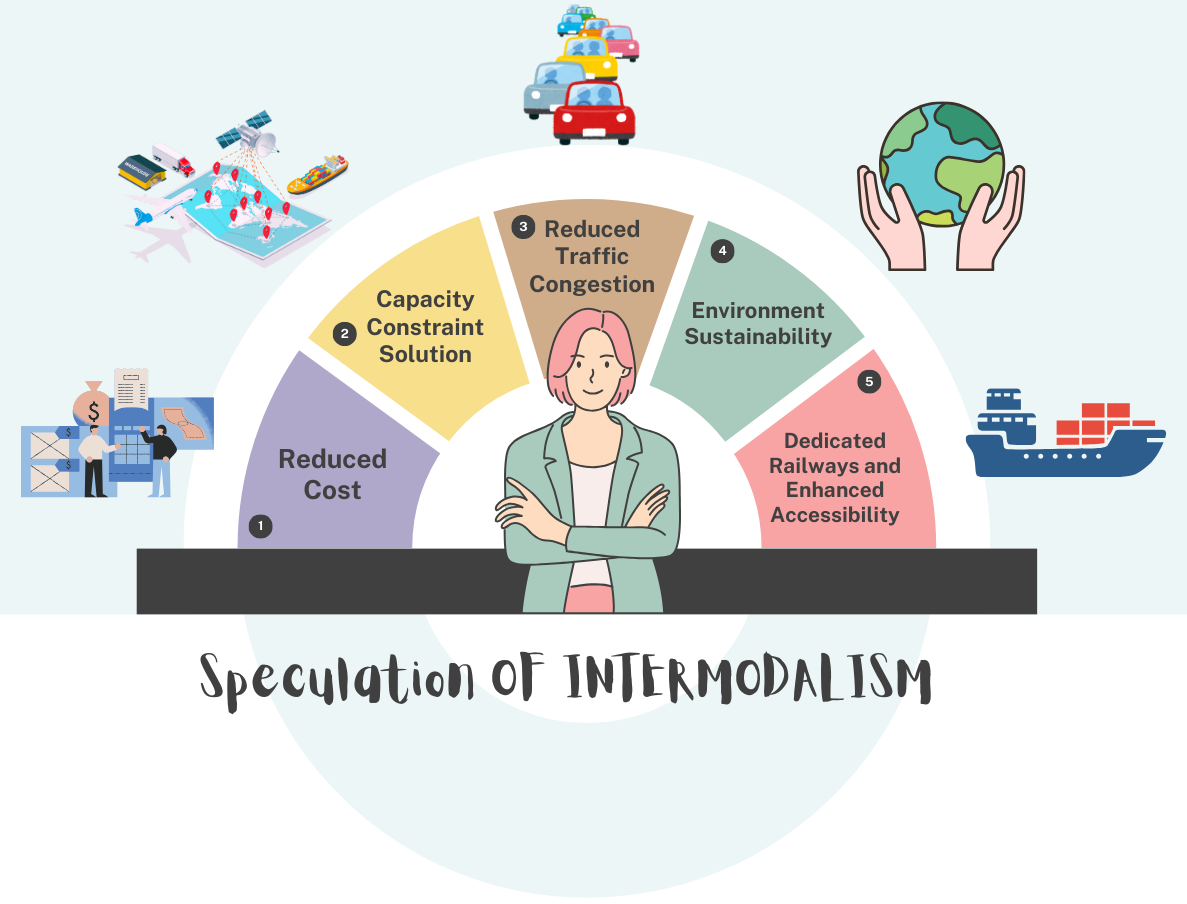
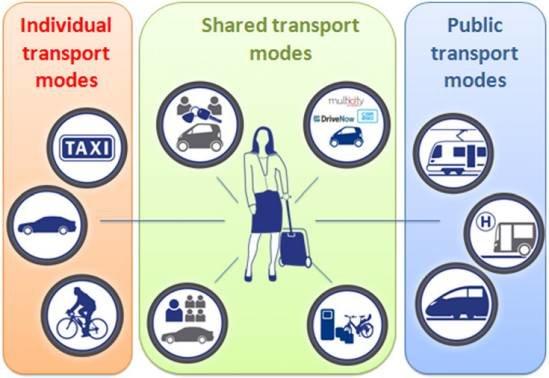
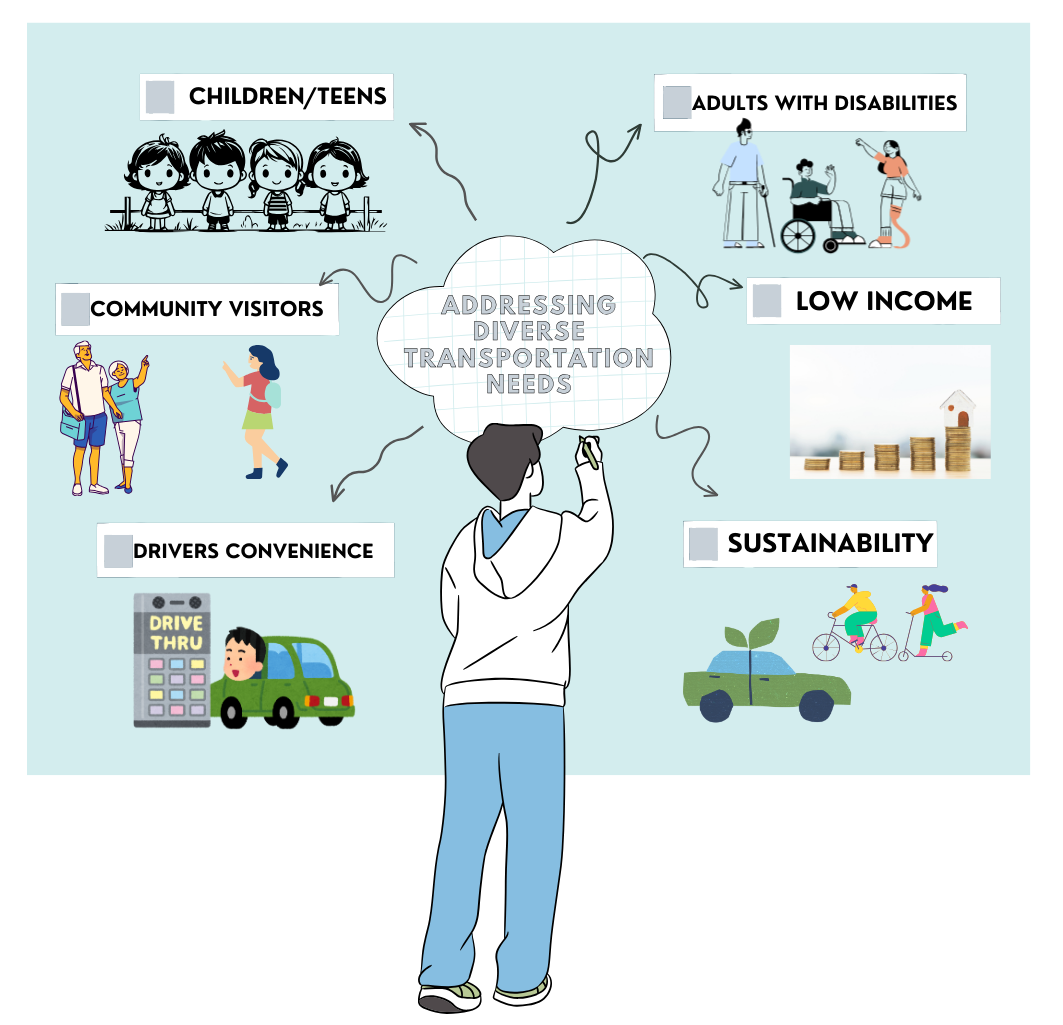

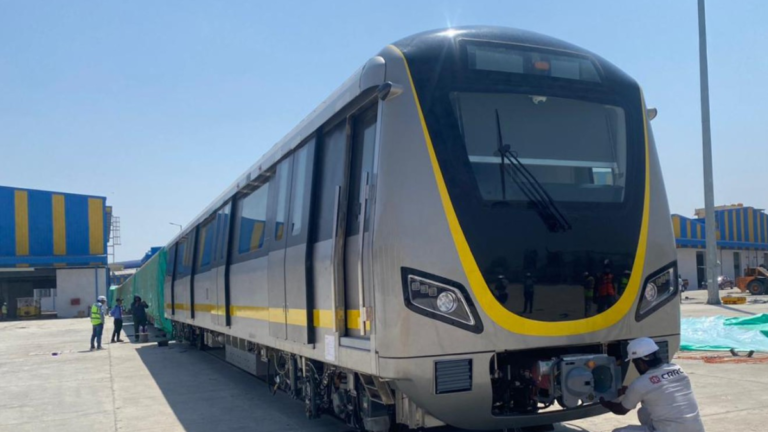

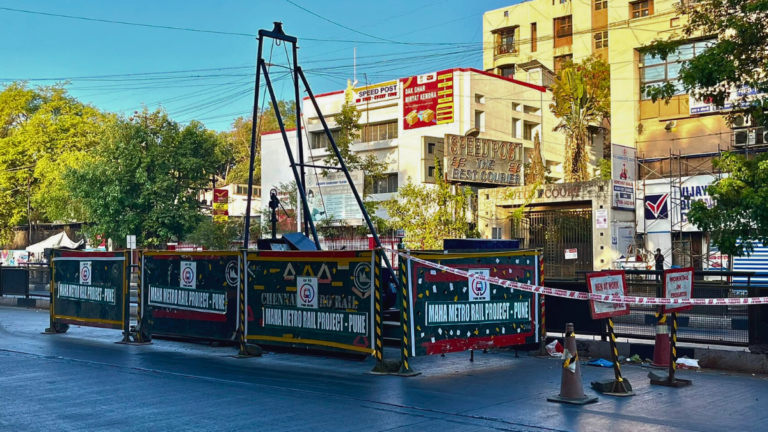




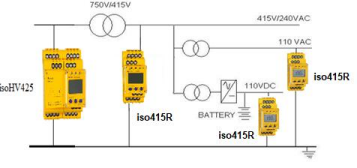 Bender Insulation Monitoring in Coaches
 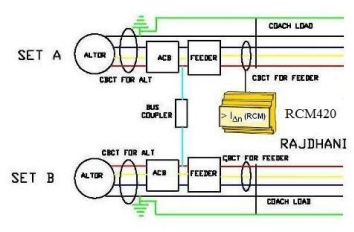 Bender Residual Current Monitoring in Power Cars