


Introduction
India’s urban and regional mobility has evolved dramatically over the past few decades, driven by urbanization, population growth, and economic expansion. The journey began with suburban rail networks such as the Mumbai Suburban Railway (1853) and tram systems in cities like Kolkata and Chennai. To enhance intra-city connectivity, the first modern rapid transit system was introduced in the country. Starting with the Kolkata Metro (1984) and later the Delhi Metro (2002), these systems have been instrumental in promoting intra-city connectivity, enabling efficient, safe, and rapid travel within urban areas.
To further promote city-to-city mobility, India introduced the Regional Rapid Transit System (RRTS), designed as semi-high-speed corridors, with the first line connecting Delhi and Meerut. As urban regions expanded into integrated economic clusters, the need for faster long-distance travel solutions became increasingly prominent. The under-construction Mumbai-Ahmedabad High-Speed Rail corridor marked the nation’s entry into the bullet train era, catering to long-distance, high-speed intercity travel.
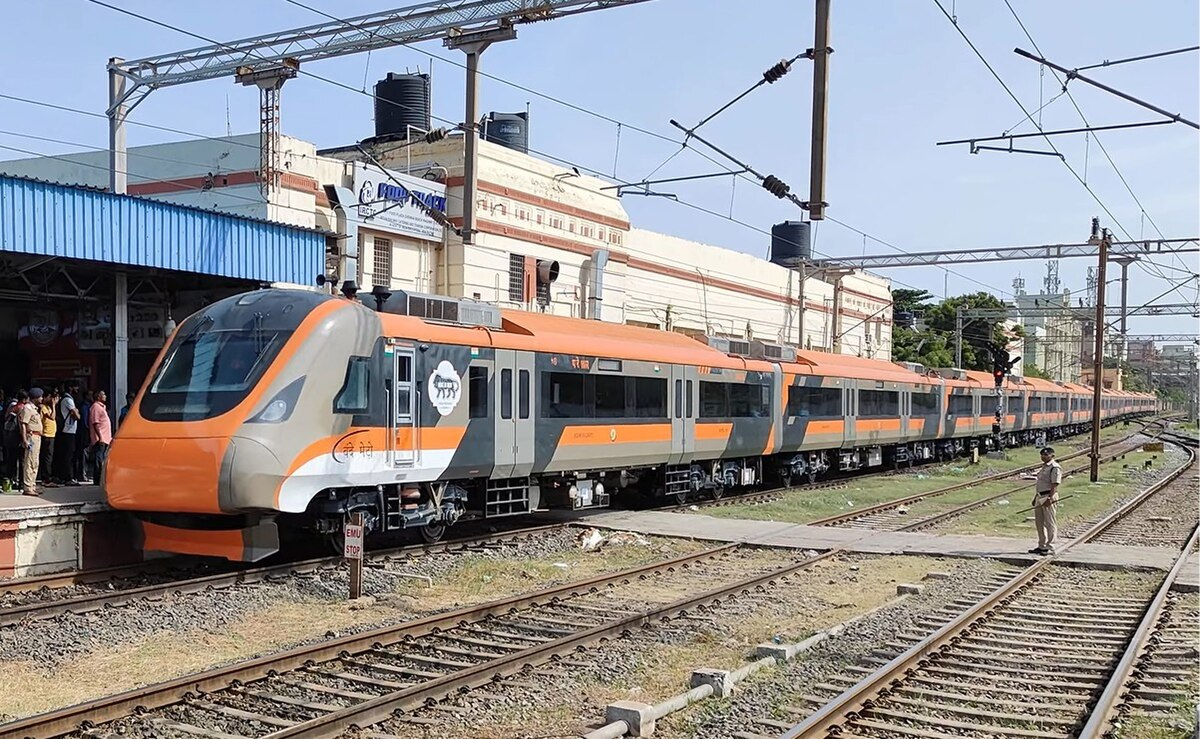
Building on this progressive trajectory, the Indian Railways recognised the growing need for a modern, efficient system to serve medium-distance intercity travel, particularly in the 100-250 km range. In response to this demand, the Namo Bharat Rapid Rail project was introduced to provide faster, comfortable, and reliable travel while supporting domestic manufacturing and infrastructure development. The system effectively bridges the gap between conventional RRTS services and long-distance bullet trains, offering a seamless mobility solution for emerging regional corridors.
Indian Railways’ Vision for Namo Bharat Rapid Rail Project
The Indian Railways’ vision for the Namo Bharat Rapid Rail initiative is to establish a modern, and comfortable short-distance rail system that is inspired from the success of the Vande Bharat Express.
Indian Railways aims to use Vande Metro to supplement or eventually replace the aging EMU/MEMU fleets, which currently serve millions on dense suburban and intercity corridors but lack modern amenities, energy efficiency, and advanced safety systems.
For Example, the Mumbai Suburban Railway, one of the busiest commuter rail systems in the world is central to this transformation strategy. By deploying next-generation systemsNamo Bharat Rapid Rail in such critical corridors, Indian Railways aims to enhance capacity, reduce congestion, improve travel times, and elevate overall commuter experience, thereby aligning suburban and regional mobility with global standards.
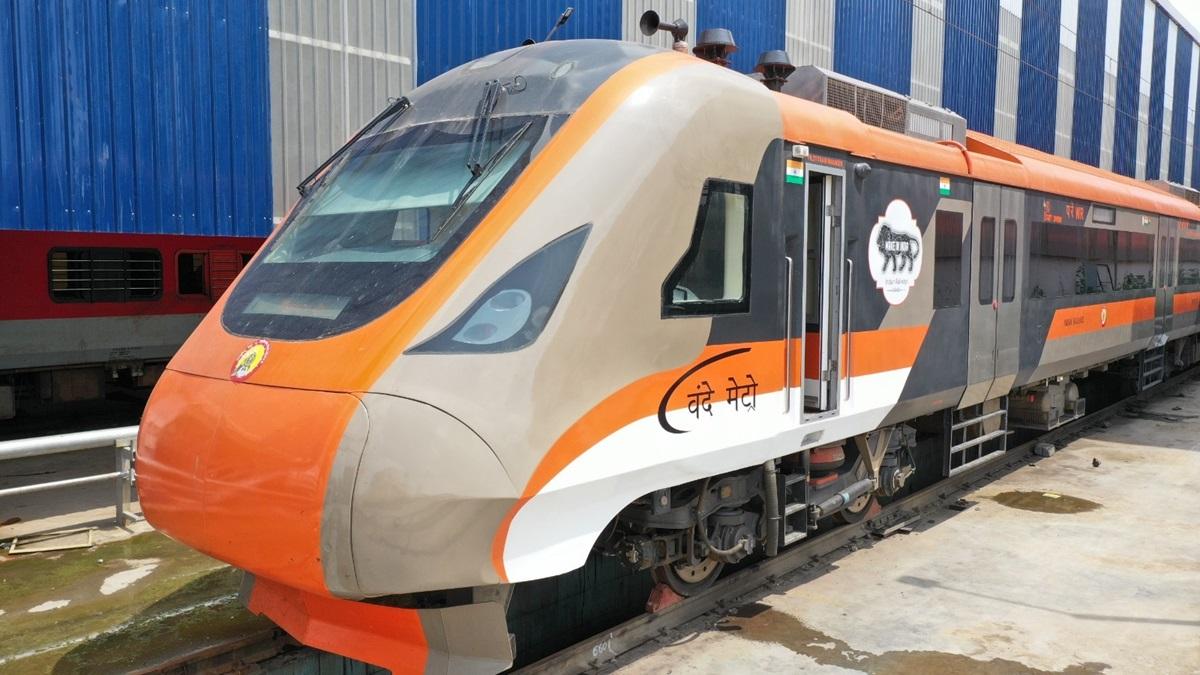
Namo Bharat Rapid Rail : Modernising Intercity Travel
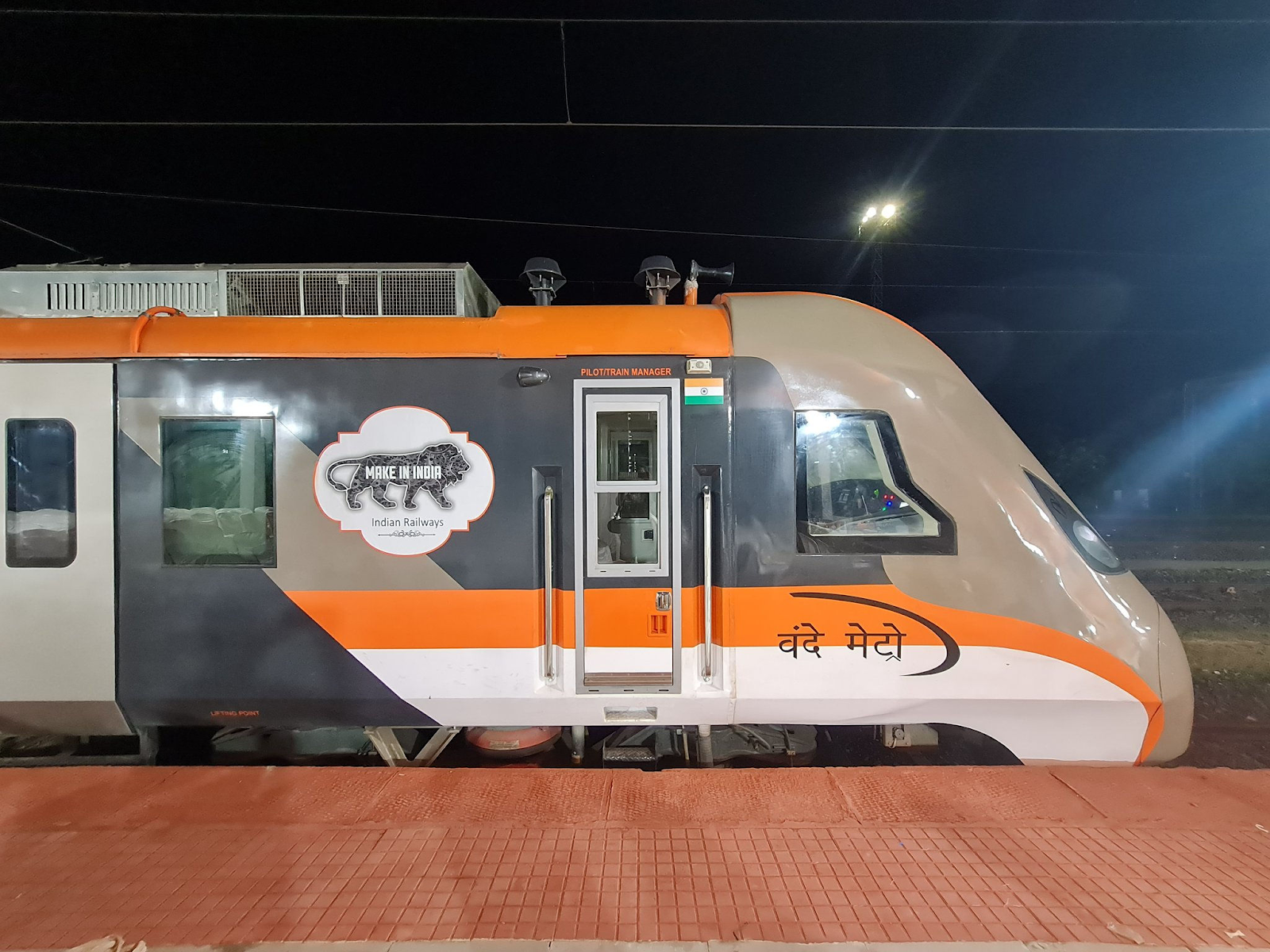
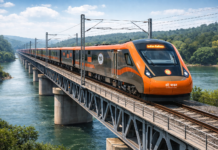
The Namo Bharat Rapid Rail (earlier known as Vande Metro) marks a transformative step in India’s rail transport landscape, combining modern amenities with innovative design to deliver a superior passenger experience. Unlike conventional metro systems that operate primarily within city limits, the Namo Bharat Rapid Rail is engineered for inter-city travel, seamlessly connecting urban hubs with neighboring regions. This initiative is part of the Government of India’s ‘Make in India’ campaign, aiming to boost local manufacturing and infrastructure development.
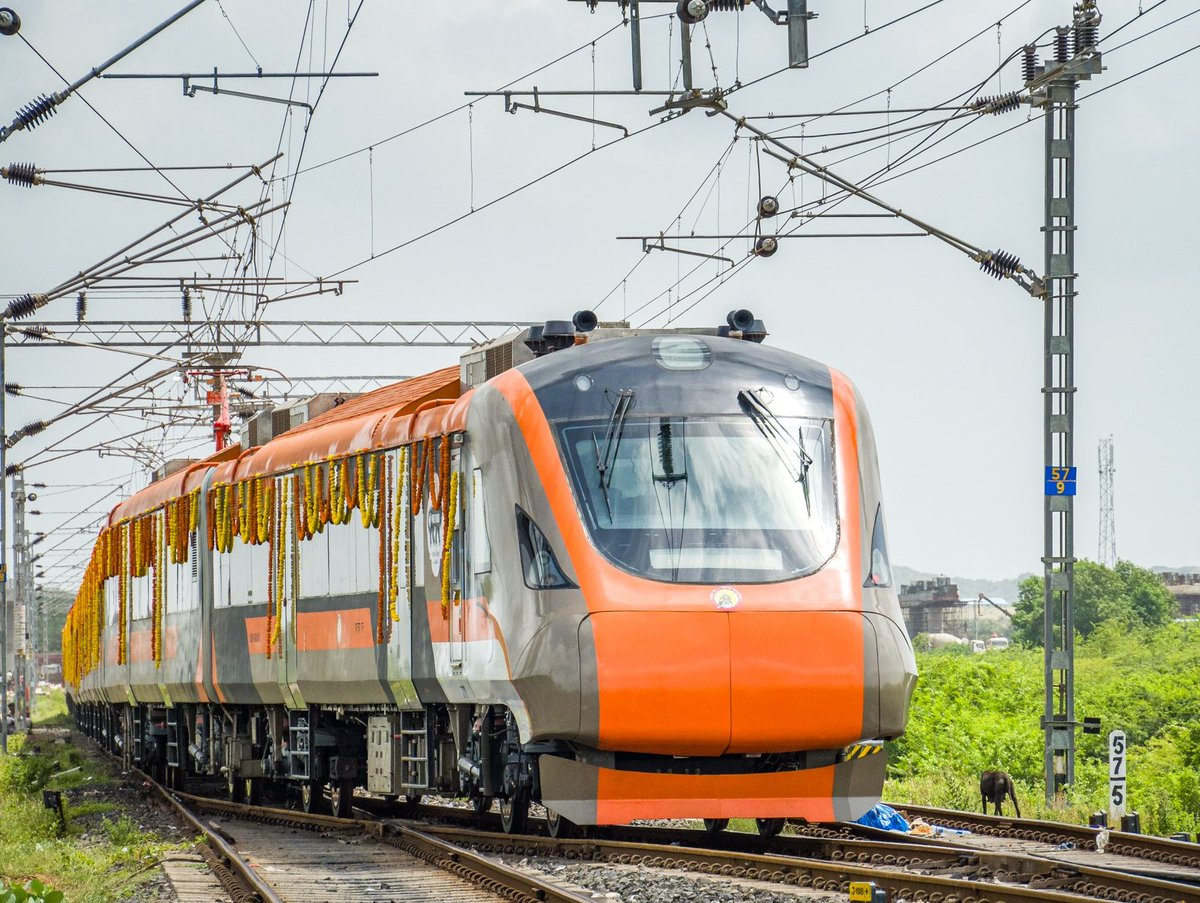
Tracking the Progress of Namo Bharat Rapid Rail Project
February 2023: Railway Minister Ashwini Vaishnaw announced the launch of the Namo Bharat Rapid Rail project, marking the beginning of India’s next-generation medium-distance rail initiative.
2024: Two prototypes of the Namo Bharat Rapid Rail were under manufacturing, one at Rail Coach Factory (RCF), Kapurthala, and another at Integral Coach Factory (ICF), Chennai..
May 2024: The Rail Coach Factory unveiled the first look of the Namo Bharat Rapid Rail prototype train.
August 2024: The ICF, Chennai, conducted a speed trial of the Namo Bharat Rapid Rail rake between Villivakkam and Walajah Road. The trial was overseen by Janak Kumar Garg, Chief Commissioner of Railway Safety (CCRS), along with senior officials from ICF, RDSO, and Southern Railway.
September 2024: Prime Minister Narendra Modi flagged off India’s first Namo Bharat Rapid Rail service between Bhuj and Ahmedabad.
October 2024: The Namo Bharat Rapid Rail successfully completed a trial run, achieving a top speed of 145 km/h, according to the Kota division of the West Central Railway. The testing involved two round trips: one from Kota to Mahidpur Road in the ‘up’ direction and another from Mahidpur Road to Shamgarh on the ‘down’ line. The trial was conducted under the supervision of a team from the Research Designs and Standards Organisation (RDSO) in Lucknow, in collaboration with the operations department of the Kota division.
November 2024: The Namo Bharat Rapid Rail underwent trial between Ahmedabad and Mumbai, reaching a maximum speed of 130 km/h. The trial was overseen by the RDSO.
Key Features of Namo Bharat Rapid Rail
1. High Speed and Efficient Performance: The Namo Bharat Rapid Rail achieves a maximum operational speed of 130 km/h, supported by advanced systems for rapid acceleration and deceleration. This enables substantially shorter travel times and enhances overall efficiency for passengers.
2. Passenger Amenities: The train features ergonomically designed seating, fully air-conditioned coaches, Automatic doors, mobile charging points and modular interiors, offering enhanced passenger comfort and a superior travel experience over conventional metro and suburban trains.
3. Safety Measures: The Namo Bharat Rapid Rail is equipped with KAVACH, collision avoidance technology, comprehensive fire detection and aerosol-based fire suppression systems, CCTV surveillance and emergency lighting ensuring enhanced passenger safety and security.
4. Self-Propelled Train: The Namo Bharat Rapid Rail consists of a self-propelled trainset that eliminates the need for a separate locomotive.
5. Accessibility and Inclusivity: The Namo Bharat Rapid Rail has been designed to ensure accessibility for all passengers. It features Divyangjan-friendly toilets and flexible sealed gangways.
First 16-Coach Namo Bharat Rapid Rail Service on Jayanagar-Patna Route
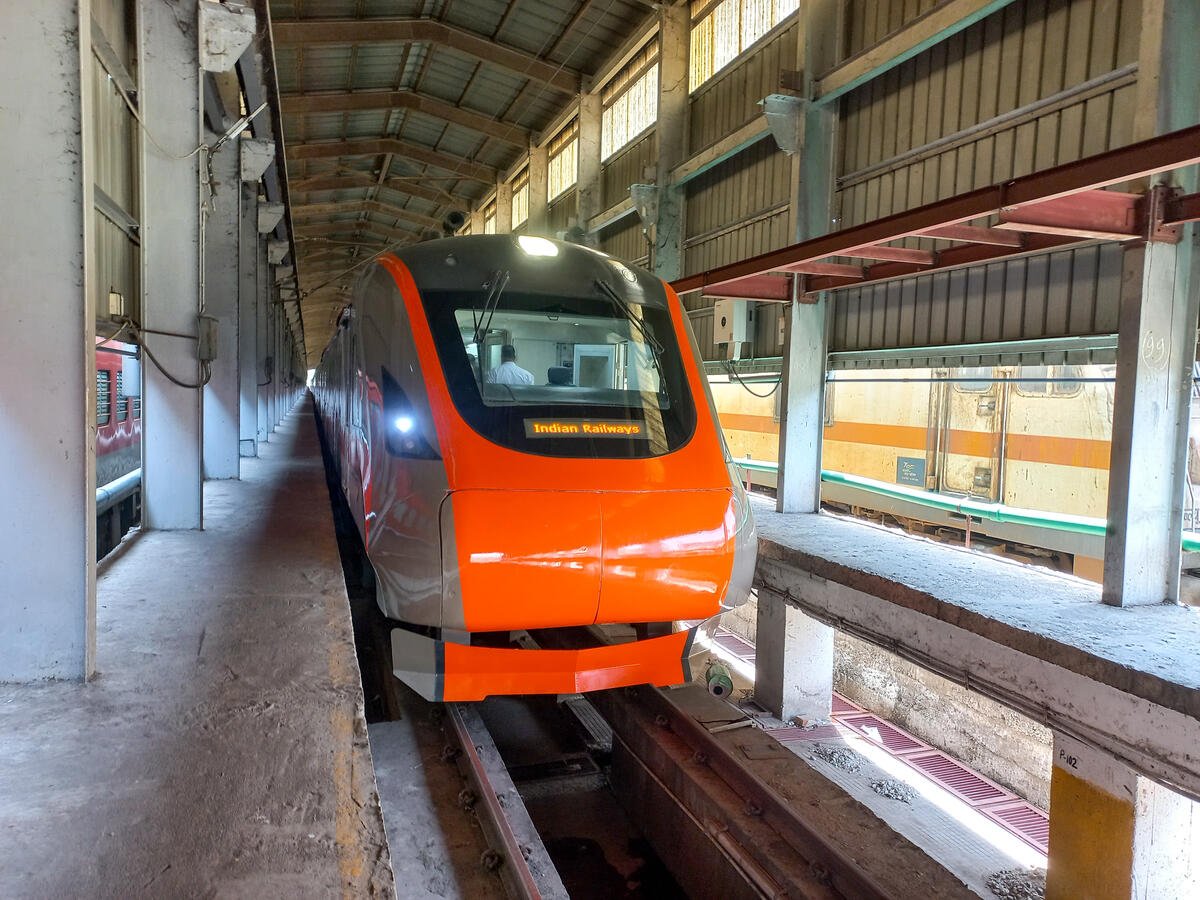
The first 16-coach Namo Bharat Rapid Rail, began operations in April 2025 on the Jayanagar-Patna route. Railway officials said the longer train was introduced to handle the increasing number of daily passengers. With 16 coaches, the service can accommodate nearly 1,000 additional passengers compared to the earlier setup.
The train covers several major stations, including Madhubani, Sakri, Darbhanga, Samastipur, Barauni and Mokama, improving regional connectivity along this stretch.
As shared by the Railway Ministry, the train includes several commuter-focused features such as fully air-conditioned coaches, Type-C and Type-A charging sockets, improved seating design, modular interiors and vacuum-based toilets.
For safety, the train is fitted with the Kavach system, CCTV surveillance, fire-detection equipment and an emergency talk-back unit. It also has engines on both ends, which helps in faster turnarounds at terminal stations.
Rs 21,000 Crore Order of 238 Namo Bharat Rapid Rail
In September 2025, The Mumbai Railway Vikas Corporation Ltd (MRVC) launched a global tender worth Rs 21,000 crore for the procurement and 35-year maintenance of 2,856 fully air-conditioned Namo Bharat Rapid Rail coaches for the Mumbai Suburban Rail Network.
The train will operate in 12, 15, and 18 coaches as per the contract. As per the contract, a prototype must be delivered within two years, with the entire fleet to be supplied over 7.5 years.The contract aims to ease overcrowding, enhance passenger comfort, and improve safety across Mumbai’s suburban network.
MRVC officials have described this as one of the most expensive tenders for rolling stock in the history of Indian Railways
Indian Railways to Manufacture 50 New Namo Bharat Rapid Rail
To strengthen medium-distance travel, Railway Minister Ashwini Vaishaw announced that Indian Railways will manufacture 50 new Namo Bharat Rapid Rail . Each train will consist of 16 coaches, aiming to provide efficient, comfortable travel for passengers over shorter distances. This expansion complements India’s broader plan to modernize rail infrastructure and enhance connectivity across regions.
Namo Bharat Rapid Rail Between Secunderabad and Muzaffarpur
The Indian Railways is planning to introduce new Namo Bharat Rapid Rail services connecting Secunderabad with Bihar, Assam, and Kerala. In the first phase under South Central Railway, the train will operate between Secunderabad and Muzaffarpur, stopping at Patna and Gaya.
Impacts of Namo-Bharat Rapid Rail Deployment
Faster and Reliable Intercity Travel
The introduction of Namo Bharat Rapid Rail represents a major leap in India’s regional and intercity mobility, particularly for medium-distance corridors ranging between 100-250 km. By deploying self-propelled trainsets with distributed traction, the system dramatically reduces travel times compared to conventional EMU/MEMU services.
Passenger Capacity and Efficient Flow
The increased capacity of 12-16 coach formations addresses the chronic overcrowding faced by suburban and regional rail networks. Advanced gangways and automatic doors improve passenger flow, which reduces boarding and alighting times while distributing passengers evenly across coaches. This also enhances commuter comfort and allows trains to maintain higher frequency during peak hours.
Energy Efficiency and Sustainability
The lightweight train bodies and modern three-phase IGBT propulsion reduce power consumption per passenger-kilometre. This contributes to more sustainable operations and lower operational costs, while aligning with national goals for energy-efficient transport..
Safety and Operational Reliability
Safety has long been a priority for Indian Railways. In the Namo Bharat Rapid Rail, integration of the Kavach automatic train protection system, comprehensive CCTV monitoring, fire detection and suppression, and crashworthy carbody design reduces risks of accidents and improves overall reliability. For passengers, these systems provide better security.
Comfort, Inclusivity, and Passenger Experience
The train features modern interiors and an inclusive design that further elevates the service impact. Ergonomically designed seats, air-conditioning, Type-A and Type-C charging ports, vacuum-based toilets, low-floor accessibility, and Divyangjan-friendly facilities ensure comfort and accessibility for all. These features improve commuter satisfaction and encourage greater use of public transport.
Economic and Regional Development
The broader socio-economic impact of Namo Bharat Rapid Rail is substantial. The system is designed to operate on existing railway infrastructure, which eliminates the need for extensive new track or structural development. This compatibility reduces implementation costs and accelerates deployment across regional corridors. In addition, the train’s local manufacturing and maintenance initiatives support domestic industrial growth, aligning with the Make in India mission. By combining operational efficiency with technology-driven design, Namo Bharat Rapid Rail serves as a crucial component for regional development and sustainable urban mobility.
Future Expansion Plans
The Railway Ministry has planned to expand the Namo Bharat Rapid Rail network to connect 124 cities across India. The first set of routes identified for operation includes Chennai-Tirupati, Bhubaneswar-Balasore, Agra-Mathura, Delhi-Rewari, and Lucknow-Kanpur, focusing on high-demand medium-distance corridors. Authorities are also considering extending services within Tamil Nadu, which could link Chennai to Arakkonam. These routes are intended to provide faster, more reliable intercity travel, reduce congestion on existing train services, and improve connectivity between regional urban centers.
Conclusion
The rapid growth of cities is becoming an important driver of India’s economy. To support this growth, it is essential to have reliable and efficient connections between urban and regional centres. The Namo Bharat Rapid Rail (formerly Vande Metro) is designed to meet this need. It provides a modern medium-distance rail service that is faster and more reliable than conventional MEMU and EMU trains.
The advanced traction and high-speed capability enables Namo Bharat Rapid Rail to reduce travel time and increase passenger capacity The train is equipped with the Kavach automatic train protection system, CCTV, fire detection, and emergency communication systems to ensure secure journeys. The train’s ability to run on existing railway infrastructure reduces the need for new construction, saving both time and resources. Overall, Namo Bharat Rapid Rail is a practical and modern solution for intercity travel. At the same time, local manufacturing will support domestic industries and contribute to the Make in India initiative. This makes it an important step in upgrading India’s railway network and its large-scale deployment not only upgrades India’s medium-distance rail network but also strengthens regional connectivity and supports sustainable economic growth.
Join the 6th edition of InnoMetro to explore how the progressions in AI are improving the railway systems, including ticketing, rolling stock, and signalling. Witness the innovation from 200+ exhibitors at India’s leading show for metro & railways which is going to held on 21-22 May 2026 at Bharat Mandapam, New Delhi
Register now: https://innometro.com/visitor-registration/

INDIAN RAILWAYS MUST BE RENAMED ” BHAARAT RAIL ” IN LINE WITH BHAARAT MINDSET , BHAARAT NATION .
” VANDE MATARAM EXPRESS ” MUST BE THE ONLY NAME FOR ALL INTERCITY SUBURBAN RAPID RAIL INCLUDING MUMBAI , DELHI , KOLKATA OR CHENNAI …… TO BROADCAST the SPIRIT OF MOTHER INDIA …. BHAARAT SARVA PRATHAM .