
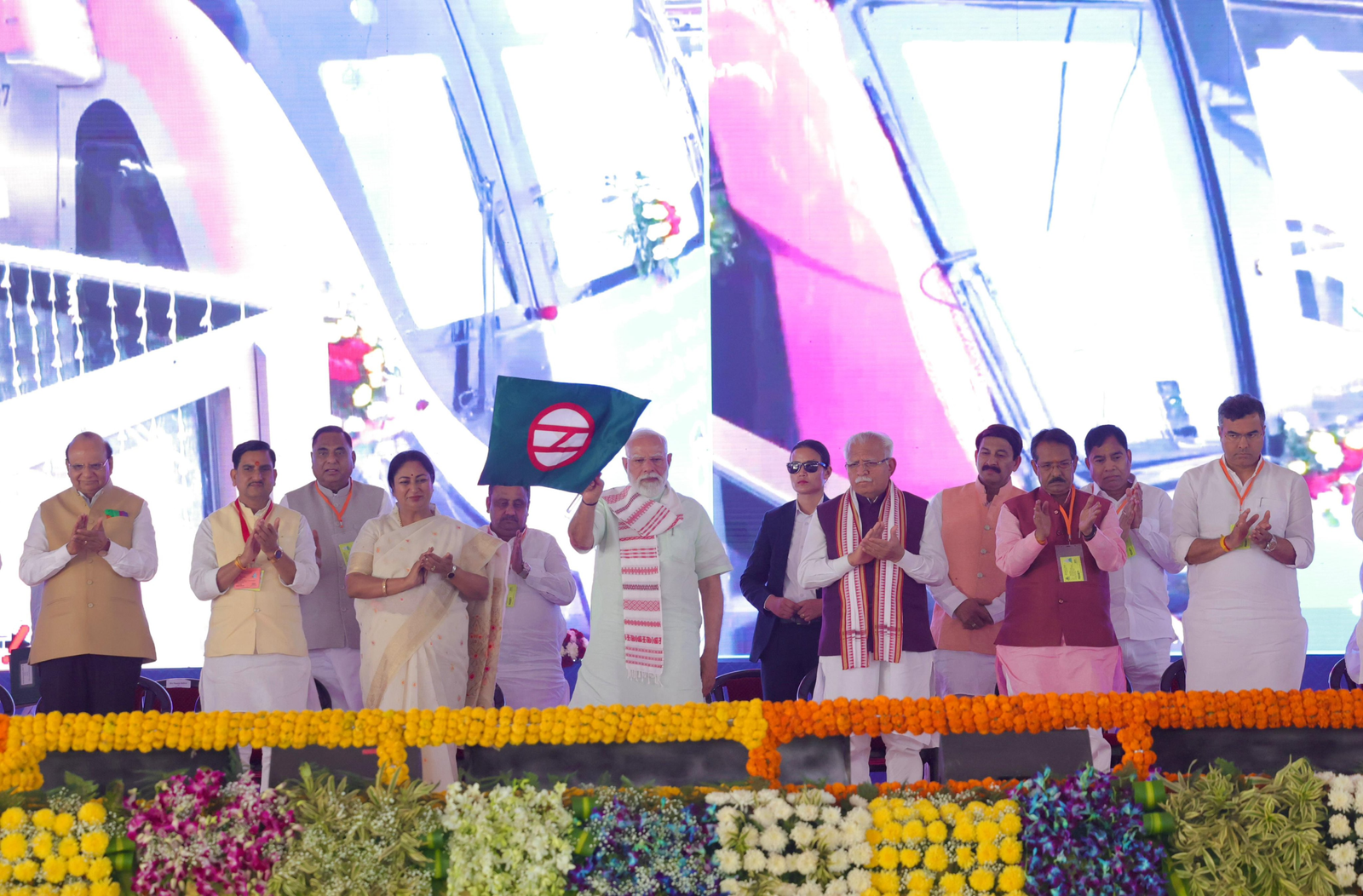
DELHI (Metro Rail News): Prime Minister Narendra Modi inaugurated 2 new sections of the Delhi Metro on Sunday, March 8, 2026, under Phase 4. The inauguration of the Majlis Park-Maujpur Babarpur section of the Pink Line and the Deepali Chowk-Majlis Park stretch of the Magenta Line represents a historic milestone in Delhi’s public transportation infrastructure.

The Prime Minister also laid foundation stones for development projects worth approximately ₹33,500 crore, including three new metro routes under Phase-V(A).
Inaugurated Corridors Overview
| Inauguration Date | March 8, 2026 |
| Pink Line Extension | Majlis Park-Maujpur Babarpur (12.3 km, 8 stations) |
| Magenta Line Extension | Deepali Chowk-Majlis Park (9.9 km, 7 stations) |
| Total Pink Line Length | 71.56 km (India’s first complete ring metro) |
| Total Magenta Line Length | Approximately 49 km |
Pink Line: India’s First Ring Metro
The Majlis Park-Maujpur Babarpur corridor spans 12.3 kilometres and includes eight elevated stations, completing the Pink Line’s circular configuration. With this addition, the Pink Line extends to approximately 71.56 kilometres, establishing India’s first fully operational ‘ring metro’ that encircles large parts of Delhi without requiring passengers to change lines for circular travel.
Magenta Line Extension
The Deepali Chowk-Majlis Park corridor extends the Magenta Line by 9.9 kilometres, increasing its total length to approximately 49 kilometres. This elevated extension of the Botanical Garden-Krishna Park Extension Magenta Line integrates several residential and commercial areas in northwest Delhi into the metro network.
Phase-V(A) Foundation Stones
PM Modi laid foundation stones for three new corridors under Delhi Metro Phase-V(A), covering approximately 16.1 kilometres of route length:
- Central Vista Corridor: RK Ashram Marg to Indraprastha (9.9 km underground)
- Aerocity to Indira Gandhi Airport Terminal-1 (2.26 km underground, Golden Line extension)
- Tughlakabad to Kalindi Kunj (3.9 km elevated, Golden Line extension)
These corridors will provide direct connectivity to Delhi’s administrative hub (Central Vista), improve airport access, and enhance connections between Noida, south Delhi, and the airport. The Central Vista corridor will serve government offices and cultural institutions in the redeveloped zone, while the airport extensions facilitate seamless multimodal transportation.
Connectivity Impact
The new metro corridors benefit residents across multiple Delhi neighbourhoods, ending the long-standing transportation isolation of northeast Delhi areas. The comprehensive connectivity improvements address decades of inadequate public transportation access in rapidly growing residential zones.
Discover how AI is bringing the next phase of sustainable urban rail mobility for Viksit Bharat at InnoMetro 2026, India’s prime exhibition and conference for metro & railways, which is going to be held on 21-22 May 2026 at Bharat Mandapam, New Delhi.
Register Now: https://zma.page/ek9