
Introduction

Kanpur, originally known as Kanhapur, is the largest city in the Indian state of Uttar Pradesh. Founded by the Rajput ruler Hindu Singh Chandel, Kanpur became a commercial and military center during the British Raj. The city boasts several historical landmarks, including the 17th-century Jajmau Ghat, Kanpur Museum, Bhitargaon Temple, European Cemetery, and Nanarao Park.
According to the 2011 census, Kanpur ranks as the 12th most populous city and 11th most populous urban agglomeration in India. Popular attractions in the city include J.K. Temple, Z Square Mall, Blue World Amusement Park, Atal Ghat, Green Park Stadium, and Ganga Barrage.
Why There Is a Need for a Metro System in Kanpur?
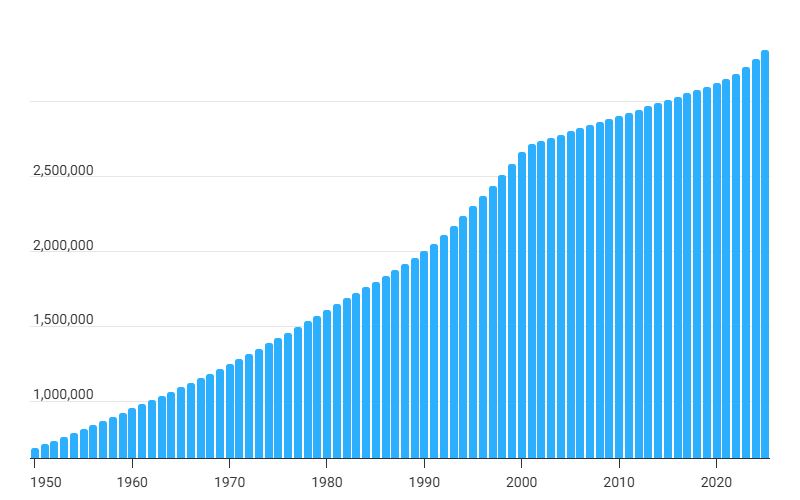
Kanpur’s population has steadily increased from 1950 to 2025, surpassing three million in recent years. This rapid urbanization, combined with a substantial rise in the number of private vehicles, particularly two-wheelers, has put immense pressure on the city’s existing transport system. As a result, major traffic congestion and increased pollution level in the city became major challenges. To address these challenges, the development of the metro system was considered as the best solution for the city.
Kanpur Metro: A Step Towards Sustainable Urban Transportation
Overview
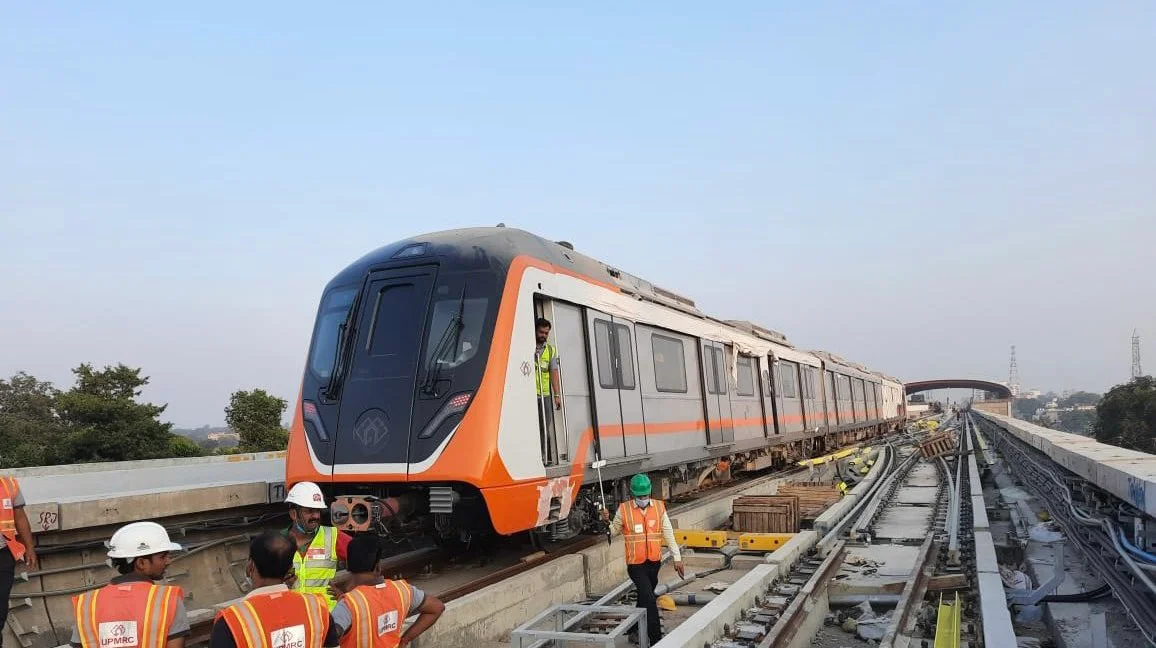
Kanpur Metro is an urban Mass Rapid Transit System (MRTS) in the city of Kanpur. The project is being implemented in Uttar Pradesh by Uttar Pradesh Metro Rail Corporation (UPMRC). The Kanpur Metro Project comprises two corridors covering a length of 32.4 km.
The Detailed Project Report (DPR) for the Kanpur Metro, covering 32.385 km of routes, was prepared by RITES. The project received approval from the State Cabinet in March 2016 and later from the Central Government’s Cabinet in February 2019. The foundation stone of the project was laid by Prime Minister Narendra Modi on March 8, 2019, marking the official commencement of the Kanpur Metro development.
Commencement of Operations on Line 1 (Orange Line)
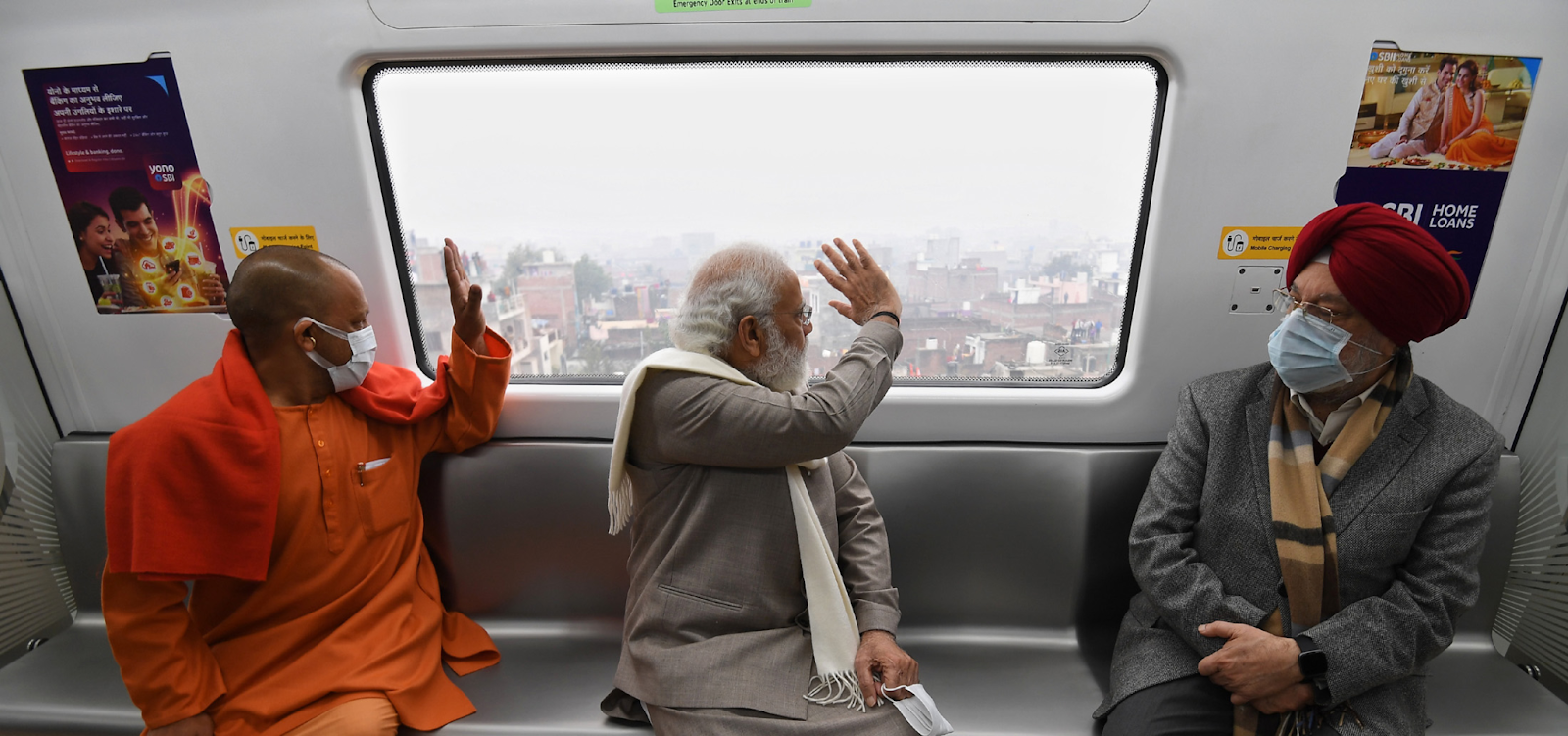
Phase 1 of the Kanpur Metro project covers a total length of 32 km and comprises two metro corridors that are currently under various stages of construction. A major milestone for the project was achieved on 28 December 2021, when the Hon’ble Prime Minister, Shri Narendra Modi, inaugurated the 9 km priority section of the corridor connecting IIT Kanpur with Moti Jheel. This initial operational stretch includes 9 stations, all of which have been awarded the prestigious Platinum rating by the Indian Green Building Council, which reflects the project’s strong emphasis on sustainability, energy efficiency, and environmentally responsible infrastructure development.
In addition to this, an additional 5km section of Line 1 was inaugurated on 30 May 2025. Currently, the 15km operational route spans from IIT Kanpur to Kanpur Central Station.
| Kanpur Metro Phase 1 | |||
| Corridor | Route | Length | Total no of Stations |
| Line 1 | IIT Kanpur – Naubasta | 23.8 km | 21 Stations |
| Line 2 | Agriculture University – Barra-8 | 8.60 km | 8 Stations |
Key Specification of Kanpur Metro
| Authorized Authority | Uttar Pradesh Metro Rail Corporation (UPMRC) |
| Speed and Track | Top Speed: 80 kmph |
| Average Speed: 34 kmph | |
| Track Gauge: Standard Gauge – 1435 mm | |
| Electrification | 750 V DC Third Rail |
| Signalling | Communication-based Train Control (CBTC) |
Kanpur Metro Funding Mechanism
The total estimated cost of Phase 1 of the Kanpur Metro project is ₹11,076.48 crore. The financing of Kanpur Metro Rail Project will be partly from Govt. of India and Govt. of Uttar Pradesh on equal equity basis and partly as a soft loan from Bilateral/Multilateral international funding agencies/agencies.
Funding from the Government
- The Government of Uttar Pradesh allocated Rs. 175 crore for the project during the 2019-20 financial year.
Loan from European Investment Bank (EIB)
The European Investment Bank (EIB) approved a €650 million loan on July 15, 2020, to finance the construction of Kanpur’s first city metro line.
Kanpur Metro Contractors List
| Contract | Contractor |
| GC: Kanpur Metro’s General Consultant | TYPSA-Italferr JV |
| DDC Line-1: Kanpur Metro Line-1’s Detailed Design Consultant | SYSTRA – SYSTRA MVA Consulting (India) Pvt. Ltd. JV |
| DDC Line-2: Kanpur Metro Line-2’s Detailed Design Consultant | SYSTRA – SYSTRA MVA Consulting (India) Pvt. Ltd. JV |
| KNPCC-02(R1): Construction of IIT – Moti Jheel (8.728 km elevated viaduct, 9 stations) | Afcons Infrastructure Ltd. |
| KNPCC-04: Architectural finishing at 9 stations between IIT Kanpur – Moti Jheel | Sam (India) Builtwell Pvt. Ltd. |
| KNPCC-05: Construction of 3.9 km tunnels and 4 stations at Chunniganj, Naveen Market, Bada Chauraha and Nayaganj | Gulermak – Sam India JV |
| KNPCC-06: Construction of 4.6 km tunnels and 3 stations at Kanpur Central, Jhakarkatti and Transport Nagar | Afcons – SAM India JV |
| KNPCC-07: Construction of 5.4 km elevated viaduct and 5 stations at Baradevi, Kidwai Nagar, Vasant Vihar, Baudh Nagar & Naubasta | Kalpataru Projects International Ltd (KPIL) (formerly JMC Projects) |
| KNPCC-11: Construction of 3.2 km tunnels and 3 stations at Rawatpur, Kakadeo and Double Pullia | KPIL – Gulermak JV |
| KNPCC-12: Construction of 4.3 km viaduct 5 stations at Agriculture College, Vijay Nagar Chauraha, Shastri Chowk, Barra-7 Station and Barra-8 | Ceigall India Ltd. (CIL) |
| KNPCC-14: Construction of Agriculture Depot of Line-2 | KSM Bashir Mohammad & Sons |
| KNPAGRS-01: Supply of 201 standard gauge cars (rolling stock) including Train Control & Signalling System for Agra & Kanpur metro projects | Alstom Transport (won by Bombardier Transportation) |
| KNPE-1&2: 750 Volts DC Third Rail Rail Traction System, 33kV Cable Network, ASS, TSS & SCADA System | Sterling Wilson – GSC JV |
Kanpur Metro Route Details
Line-1: IIT Kanpur – Naubasta
- Length: 23.785 km
- Type: Elevated (15.164 km) & Underground (8.621 km)
- Depot: Polytechnic College
- Number of Stations: 21
- Station Names: IIT Kanpur, Kalyanpur Railway Station, SPM Hospital, CSJM Kanpur University, Gurudev Chauraha, Geeta Nagar, Rawatpur Railway Station, Lala Lajpat Rai Hospital, Moti Jheel, Chunniganj, Naveen Market, Bada Chauraha, Nayaganj, Kanpur Central, Jhakarkatti, Transport Nagar, Baradevi, Kidwai Nagar, Vasant Vihar, Baudh Nagar and Naubasta
- Status: 15 km between IIT Kanpur and Kanpur Central is operational
Latest Update on Line 1
Extension of Commercial Service upto Kanpur Central Station
The Prime Minister of India, Shri Narendra Modi, inaugurated the extension of the Kanpur Metro’s Orange Line on 30 May 2025 at an official ceremony held at the newly constructed Chunniganj station. This extension forms part of Metro Corridor I (Orange Line) and adds five underground stations to the network, extending the corridor from Chunniganj to Kanpur Central.
TBM Breakthrough
In October 2025, the Kanpur Metro Project achieved a major milestone with the completion of tunneling on Line 1. This achievement was marked by the breakthrough of the TBM Vidyarthi at Kanpur Central Station under Package KNPCC-06. TBM S-639B, nicknamed Vidyarthi, commenced its journey from Transport Nagar Station and successfully completed its third and final breakthrough at Kanpur Central Station.
Line-2: Agriculture University – Barra-8
- Length: 8.38 km
- Type: Underground and Elevated
- Depot: Agriculture Depot
- Number of Stations: 8
- Station Names: Agriculture College Station, Rawatpur Railway Station, Kakadeo, Double Pullia, Vijay Nagar Chauraha, Shastri Chowk Station, Barra-7, and Barra-8
Latest Update on Line 2
1. TBM Breakthrough
In September 2025, Kalpataru Projects International Ltd. (KPIL) – Gulermak JV’s TBM Parvati achieved a breakthrough at Kakadeo station of Line 2. For its first assignment, TBM Parvati constructed a 750 m tunnel for the upline from Rawtapur to Kakedeo. Prior to this, the TBM Gomati had also completed the construction of the ‘down-line‘ tunnel up to Kakadeo. This development was recorded under the Package KNPCC-11 of Kanpur Metro.
UPMRC Unveils 1,575 km Metro Expansion Vision for Uttar Pradesh
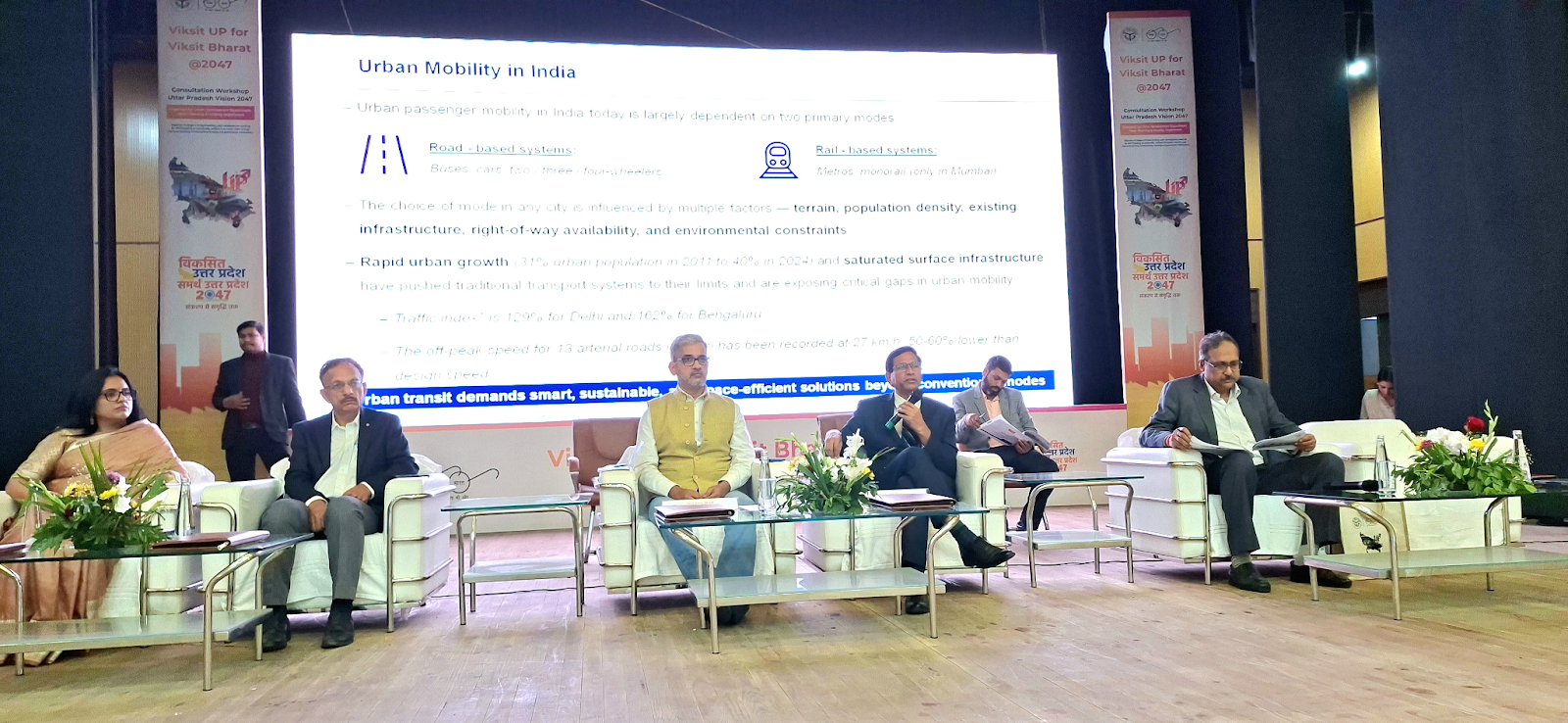
Uttar Pradesh Metro Rail Corporation (UPMRC) shared its long-term plan for urban public transport at the “Viksit Uttar Pradesh for Viksit Bharat @2047” seminar held in Lucknow. Managing Director Shri Sushil Kumar explained UPMRC’s proposal to develop a metro network of about 1,575 km across the state. The plan focuses on providing reliable and efficient mass transit, improving connectivity between cities, reducing traffic congestion, and supporting cleaner air. It is intended to meet the growing transport needs of Uttar Pradesh’s expanding urban population while aligning with the broader development goals set for 2047.
UPMRC Plans 200 km Expansion of Kanpur Metro Network
Uttar Pradesh Metro Rail Corporation (UPMRC) Managing Director Shri Sushil Kumar has shared plans to expand the Kanpur Metro network to around 200 km. The proposed expansion aims to improve citywide connectivity, support growing travel demand, and strengthen public transport options across Kanpur as part of the state’s long-term urban mobility strategy.
Contribution of Kanpur Metro to Urban Mobility and Accessibility
- Boost to Real-State
The development of metro connectivity has had a clear impact on property markets around stations. Property prices in these areas have increased by around 8-15%, reflecting higher demand due to improved accessibility and reduced travel time. Localities such as Kalyanpur and Panki have seen steady growth in interest from homebuyers as well as commercial developers.
- Local Business Growth
Metro stations on Line 1 have contributed to higher footfall in surrounding areas and supported the growth of local businesses. Retail activity around key locations such as Bada Chauraha has strengthened, with shops, service outlets, and small commercial establishments benefiting from regular commuter movement.
- Ridership Trends
In the initial phase of operations, Kanpur Metro recorded ridership levels that were lower than projected, which raised concerns regarding its long-term financial sustainability. However, following the extension of commercial operations up to Kanpur Central station, daily ridership has improved and is currently in the range of 25,000-30,000 passengers
- Effect of CBD Proximity on Traffic Patterns and Metro Utilisation
The close spatial distribution of major activity centres and commercial markets in Kanpur has a direct impact on travel behaviour and metro ridership. Since most key destinations within the core city are located at short distances from each other, trip lengths are generally small. For such short trips, commuters tend to prefer intermediate public transport (IPT) modes such as shared auto-rickshaws and private two-wheelers, which offer door-to-door connectivity at lower cost and time compared to the metro system.
Corridors such as Meston Road, Halsary Road, P-Road, and Latouche Road, along with the inner central business district (CBD) roads, including Nayaganj Road, Sutarkhana Road, Cooperganj Road, and Birhana Road, function both as major market areas and shortest link routes. This results in high traffic volumes, mixed traffic conditions, and frequent congestion.
Conclusion
The Kanpur Metro project, which is currently partially operational, has been planned to address both existing and future urban mobility requirements of Kanpur City by providing a reliable, high-capacity public transport system. While the initial phase of operations has improved connectivity along select corridors, the long-term sustainability of the project will largely depend on achieving stable and adequate ridership levels, along with effective utilisation of non-fare revenue sources.
Ridership growth will be influenced by factors such as network coverage, last-mile connectivity, integration with other transport modes, and the commissioning of the remaining sections of the metro corridors. In parallel, the financial performance of the system will depend significantly on the successful commercialisation of metro assets. Uttar Pradesh Metro Rail Corporation (UPMRC) has been actively pursuing non-fare revenue through avenues such as advertising rights, retail and commercial space rentals at stations, and planned development of available land parcels.
The full benefits of the Kanpur Metro project are expected to be realised only after both corridors become fully operational and are integrated into a coherent network. The completion of the planned network will enhance accessibility, improve passenger convenience, and strengthen the metro’s role as a key component of Kanpur’s urban transport system, thereby supporting its long-term operational and financial viability.