
Introduction
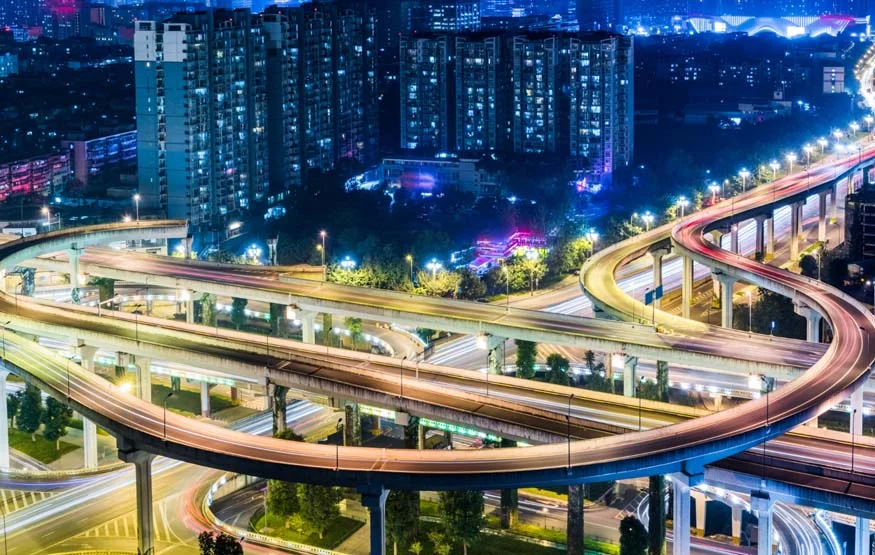
Today, urban areas play a major role in the economic growth of the nation. They have become hubs for employment, education, manufacturing, and healthcare, which has led to a continuous migration of people and businesses toward cities. This migration, however, has placed immense pressure on urban centres and slowed their pace of growth. The influx of people has strained infrastructure, particularly transport systems, which form the backbone of city life and are struggling to keep up with rising demand.
India’s urban population is expected to cross 600 million by 2036 (World Bank), which accounts 40% of total population. This situation necessitates a strong infrastructure to match the pace with this growth. In addition to this, the infrastructure will play a critical role in propelling India towards its vision of becoming a developed nation by 2047 which also signifies 100 years of India’s independence.
Since nearly 70% of the urban infrastructure needed by 2047 is yet to be built. This study will particularly focus on the evolving transport infrastructure in urban areas. A major share of India’s sector-wise growth relies on urban transport. The more efficient urban transport systems become, the better utilisation of resources will take place.
The rail transit, among other modes of transport, holds a crucial value in urban areas due to its efficiency, affordability, and capability to serve millions of passengers of each economic section. The journey of rail transit in Indian cities began with the Mumbai Suburban Railway in 1853, which today carries more than 8 million than passengers every day, making it one of the busiest commuter rail systems in the world. Trams in Kolkata and other cities also played a role in early urban mobility. The Kolkata Metro, inaugurated in 1984, introduced the first modern rapid transit system in the country. A new phase began in 2002 with the Delhi Metro, which set new benchmarks in efficiency and planning for metro systems to become a central part of urban mobility strategies.
At present, India has over 1000km of operational metro rail across more than 20 cities, while several projects are under construction. Advanced rail systems such as the Regional Rapid Transit System (RRTS), Vande Metro, and the Mumbai–Ahmedabad High-Speed Rail corridor are expanding the scope of rail-based mobility into new dimensions of speed, technology, and regional connectivity.
This paper will navigate through the evolving landscape of rail transit in urban centres and assess its impact on the growth of cities.
The Beginning of Urban Rail Mobility in India
Suburban Rail Network
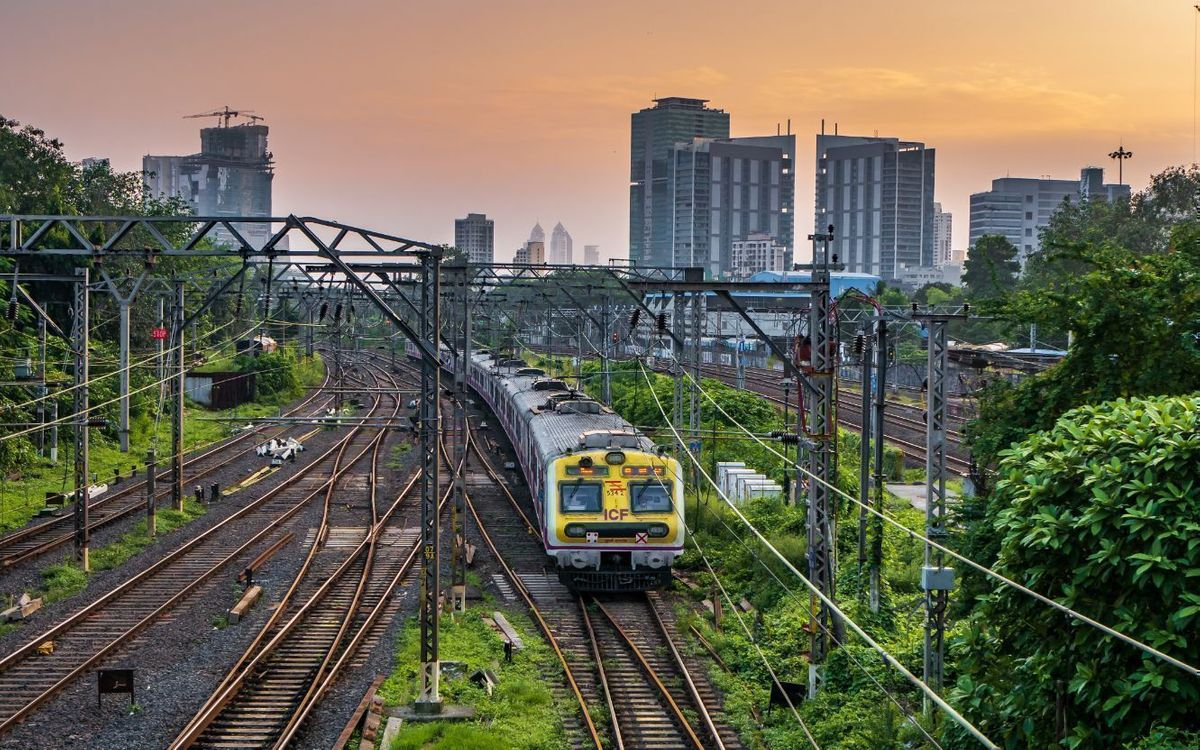
Mumbai, India’s economic capital, was the first city in the country to have a dedicated railway line. The service began on 16 April 1853, with the first train running between Boribunder (now Chhatrapati Shivaji Maharaj Terminus) and Thane. Over the last 172 years, this suburban rail network has expanded into a vast system of 465 km, carrying nearly 8 million passengers daily. Its scale and indispensability have earned it the title of the lifeline of Mumbai.
The success of Mumbai’s suburban railways highlighted the potential of such systems in addressing the mobility needs of rapidly growing urban centres. Suburban railways are designed to connect satellite towns and peripheral areas with central business districts.
Inspired by Mumbai’s model, other cities also adopted suburban rail networks. Cities like Kolkata, Lucknow, Hyderabad, Delhi, Pune, and Bengaluru gradually developed their own systems, each contributing to urban expansion and offering commuters a cost-effective alternative compared to other modes of transport.
India’s Suburban Rail Network at a Glance
| City | Length in Km |
| Kolkata | 1501 |
| Chennai | 1,211 |
| Mumbai | 465 |
| Hyderabad | 123 |
| Pernem-Karwar Suburban Railway | 117 |
| Lucknow-Kanpur | 72 |
| Barabanki-Lucknow | 65 |
| Pune | 63 |
| Delhi | 35 |
| Bengaluru | 149 (Under Construction) |
The suburban rail network has long played a vital role in helping Indian cities address the mobility challenges brought about by rapid urbanisation and population growth. While several suburban systems have reached saturation, networks in cities such as Chennai, Mumbai, and Lucknow, are still expanding.
However, ageing infrastructure and outdated rolling stock, have limited their ability to meet the rising expectations of commuters, who increasingly demand modes of transport that are not only faster but also safer and more comfortable.
Despite these challenges, the significance of suburban rail cannot be overlooked. To maintain their relevance and effectiveness, there is a need to revitalise these systems by upgrading infrastructure, modernising rolling stock, and integrating them with other transport networks. Such improvements would ensure that suburban rail continues to act as a strong backbone for urban mobility in India.
Trams in Colonial and Post-Independence India
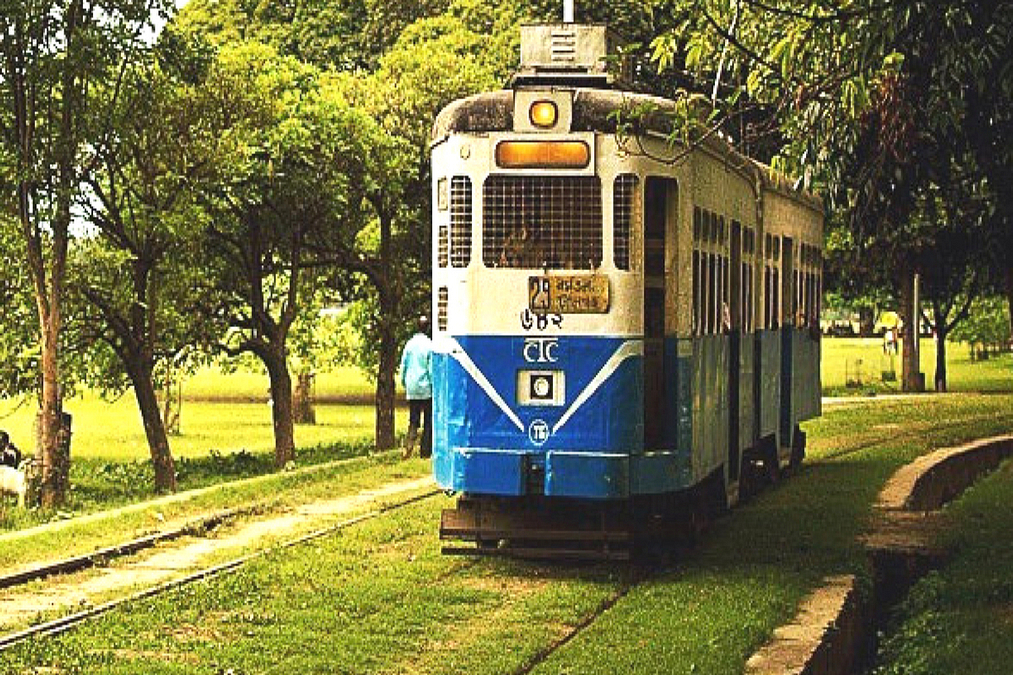
During the colonial era, India developed an extensive network of tramways in several cities, including Madras (now Chennai), Kolkata, Delhi, Kanpur, Bhavnagar, and Mumbai. These tram systems supported early urban mobility and contributed to the growth of commercial and residential areas.
The first electric tram began operating in Chennai in 1895, which was a milestone in modern public transport in India. Soon after, Kolkata also introduced its own electric tram system. At the time, the adoption of electric trams was regarded as a marker of progress and modernisation, which reflected a city’s aspiration to match global urban standards.
However, after India’s independence, urban transport priorities shifted. Many city planners considered trams outdated and began focusing on alternative modes of transport, such as buses and road expansion. The rapid growth of private vehicles further complicated matters, as trams and automobiles shared the same road space, which led to congestion.
Tram services were unable to compete with the demands of a rapidly motorising society, and in most cities were gradually phased out. The last holdout was Kolkata, where trams continued to operate for over a century. Finally, in late 2024, Kolkata discontinued its last commercial tram service, which was the end of an era for India’s tramways.
The Emergence of Metro Systems in India
The rapid expansion of cities in India prompted large-scale migration from rural to urban areas, as people sought better economic and social opportunities. This swift urbanisation exerted immense pressure on road transport infrastructure. Although road networks expanded considerably, they soon became inadequate in handling the growing volume of vehicles, resulting in severe traffic congestion.
Public transport systems, primarily buses and suburban rail lines, also struggled to cope with the surging demand. The challenge was especially acute in metropolitan cities such as Kolkata and Delhi, which serve as key drivers of the nation’s economy.
Kolkata was the first Indian city to introduce a metro system to address this crisis. The decision stemmed from the city’s unique constraints: a dense, historic urban core with narrow roads that left little scope for road network expansion. To provide a sustainable alternative, the Kolkata Metro project was initiated, and on October 24, 1984, the city experienced the inauguration of India’s first metro line.
Nearly two decades after the inauguration of the Kolkata Metro, India witnessed another milestone in urban transport with the commissioning of the Delhi Metro in December 2002. Delhi Metro was designed with modern technology, international standards of safety, and efficiency, and it quickly transformed the way people commuted in the national capital region.
Its success in minimising road congestion, providing reliable services, and meeting the mobility needs of a rapidly growing metropolis demonstrated the potential of metro rail as a sustainable urban transport solution. The Delhi Metro soon became a benchmark for other Indian cities, and it led to the development of metro systems across the country.
The last decade has been the most progressive period for metro systems in India. The data mentioned below outlines the growth in metro rail infrastructure, daily ridership, and budgetary allocations, which highlights how metro rail has evolved into a key pillar of urban mobility in the country.
Metro Rail Network Growth in India between FY 2014 – 2025
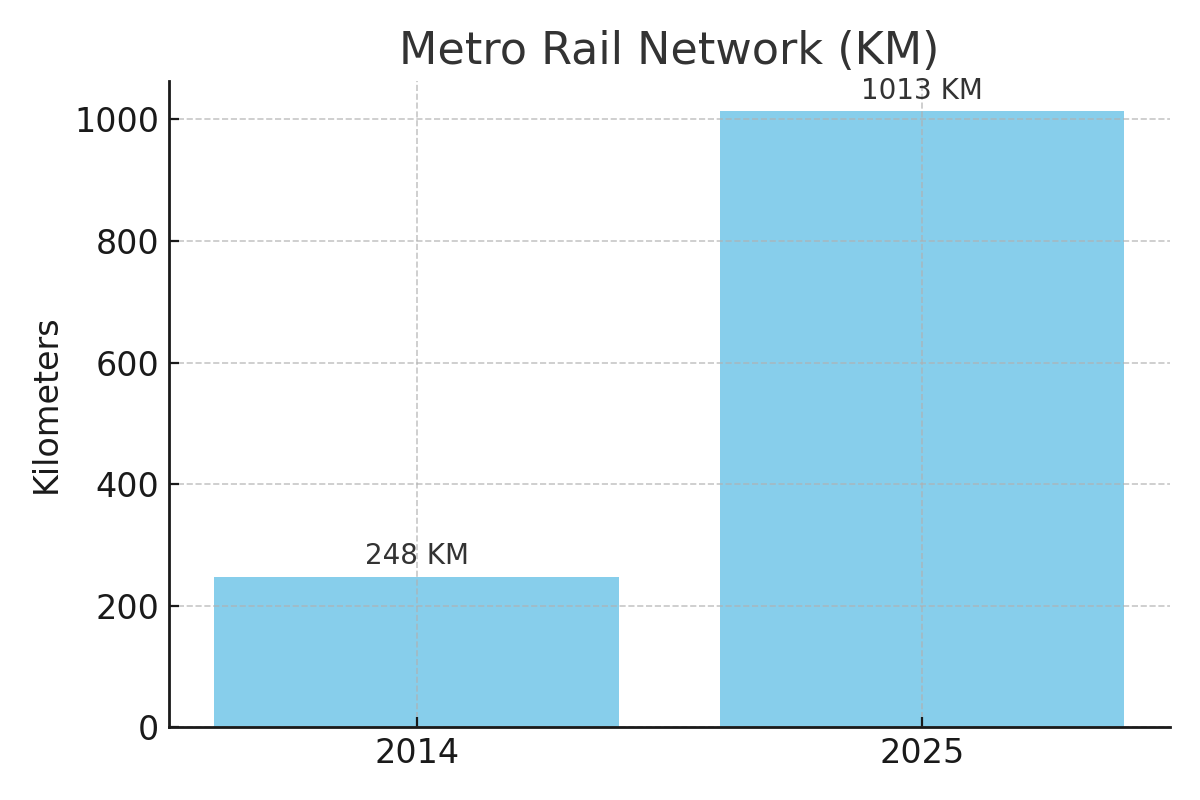
India’s operational metro network has grown from 248 km in 5 cities in 2014 to 1,013 km in 23 cities by May 2025. This means 763 km of new lines have been added in 11 years. The average pace of expansion has also changed: while metro projects moved at around 0.68 km per month before 2014, they are now being commissioned at close to 6 km per month.
The Increase in the Annual Budget for Metro Development 2014-2025
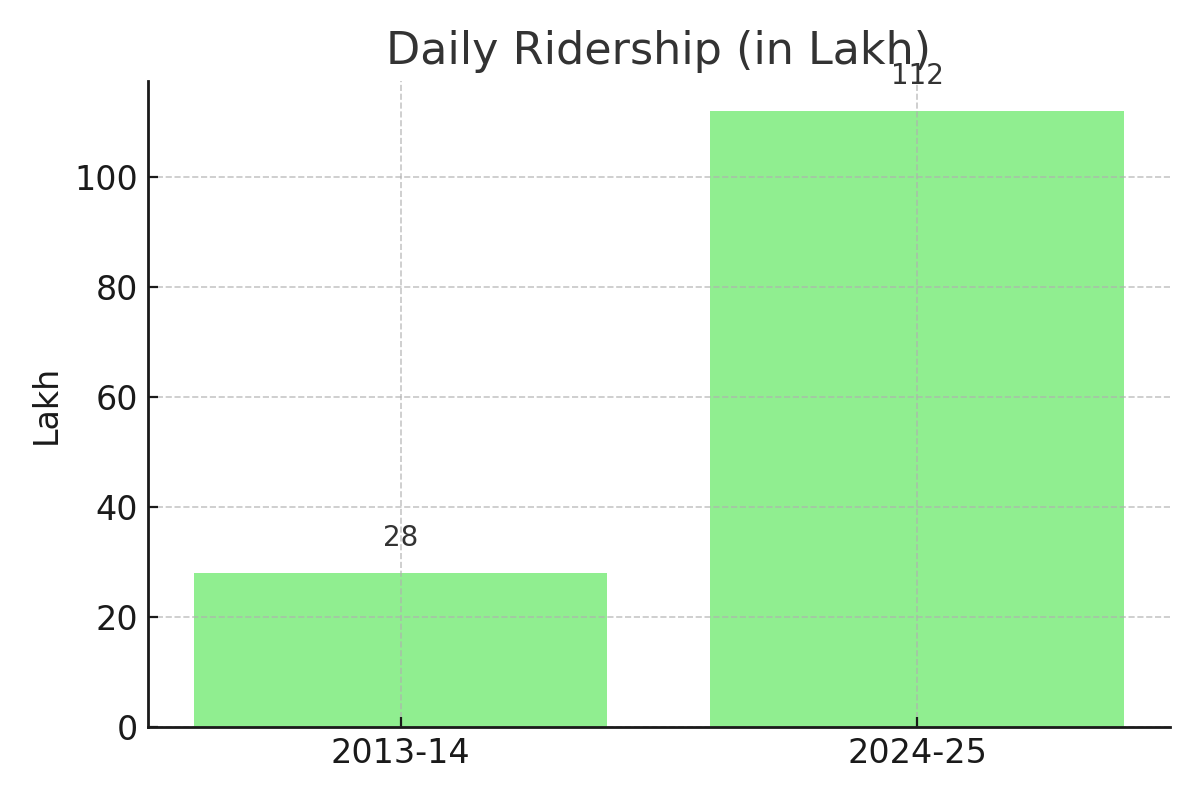
Average daily ridership has increased from about 28 lakh in 2013–14 to more than 1.12 crore by 2025, reflecting the growing role of metro systems in daily urban travel.
The Increase in Ridership of Metro Systems 2014-2025
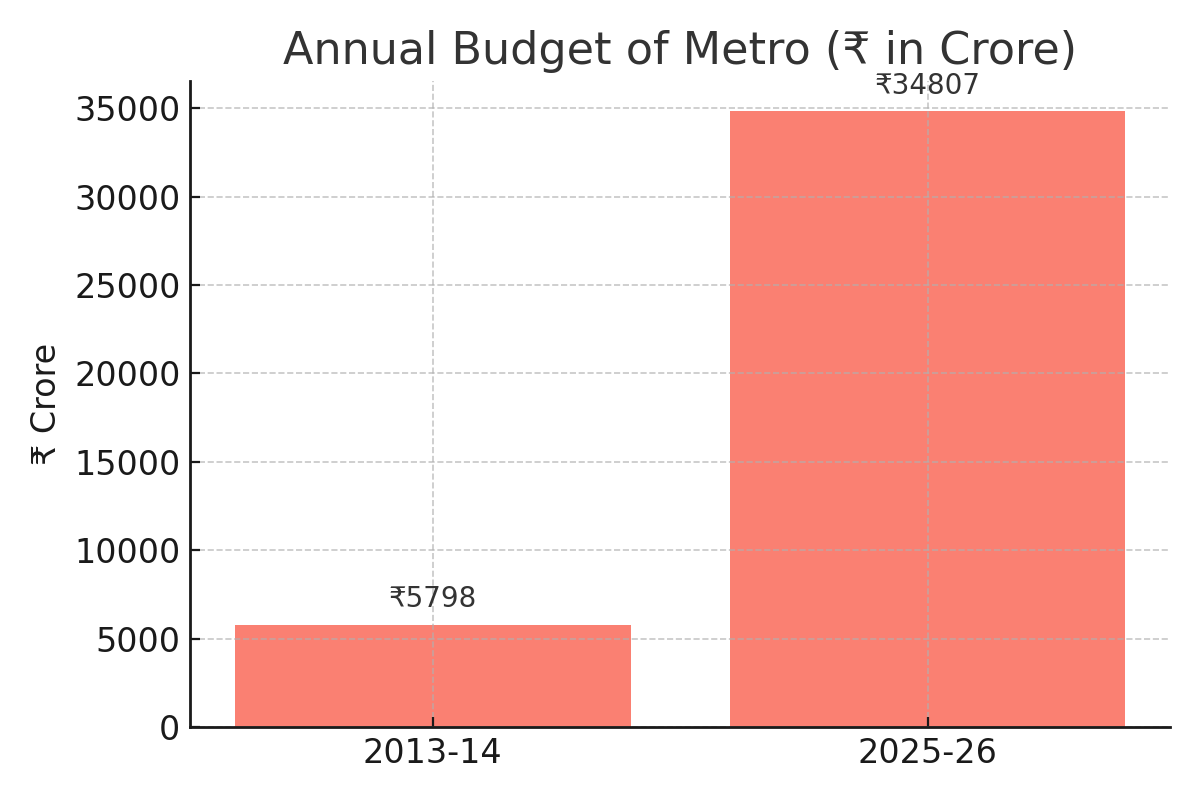
The annual metro budget for 2025–26 has been allocated at ₹34,807 crore, more than six times higher than ₹5,798 crore in 2013–14.
Initiatives for the Advancements of Metro Systems in India
Make in India Drive for Metro Rail Systems
As part of the government’s Make-in-India initiative, metro rail projects are being developed with a strong focus on domestic manufacturing. Policy provisions mandate that at least 75% of metro coaches and 25% of critical equipment and sub-systems be procured from within the country. This push not only strengthens self-reliance in urban mobility but also supports indigenous industries and job creation.
Over the past decade, India has invested nearly ₹2.5 lakh crore (US$ 28.86 billion) in metro network expansion. Public Sector Undertaking BEML Ltd., under the Ministry of Defence, has played a leading role in this effort, supplying over 2,000 metro coaches to major systems including Delhi, Jaipur, Kolkata, Bengaluru, and Mumbai.
Metro Rail Policy, 2017
The Metro Rail Policy 2017 introduced a structured framework for planning and implementing metro projects in India. It mandates cities to prepare Comprehensive Mobility Plans (CMPs) and establish Unified Metropolitan Transport Authorities (UMTAs) to ensure that metro development is aligned with sustainability, economic viability, and integrated urban mobility objectives.
To qualify for central financial assistance, metro projects must demonstrate a minimum Economic Internal Rate of Return (EIRR) of 14%. The policy also makes private sector participation mandatory, primarily through Public-Private Partnership (PPP) models, to improve efficiency, innovation, and long-term financial sustainability.
As India moves toward becoming the world’s third-largest economy with a projected GDP of $7.3 trillion by 2030, the role of reliable public transport will become increasingly important. Metro rail systems, in particular, are expected to provide a sustainable and efficient means of urban mobility. With continued policy support and systematic execution, India is on course to expand its metro network further, making it an integral part of the country’s urban transport framework.
Regional Rapid Transit System-New Heights of Speed & Safety in Urban Rail Transit
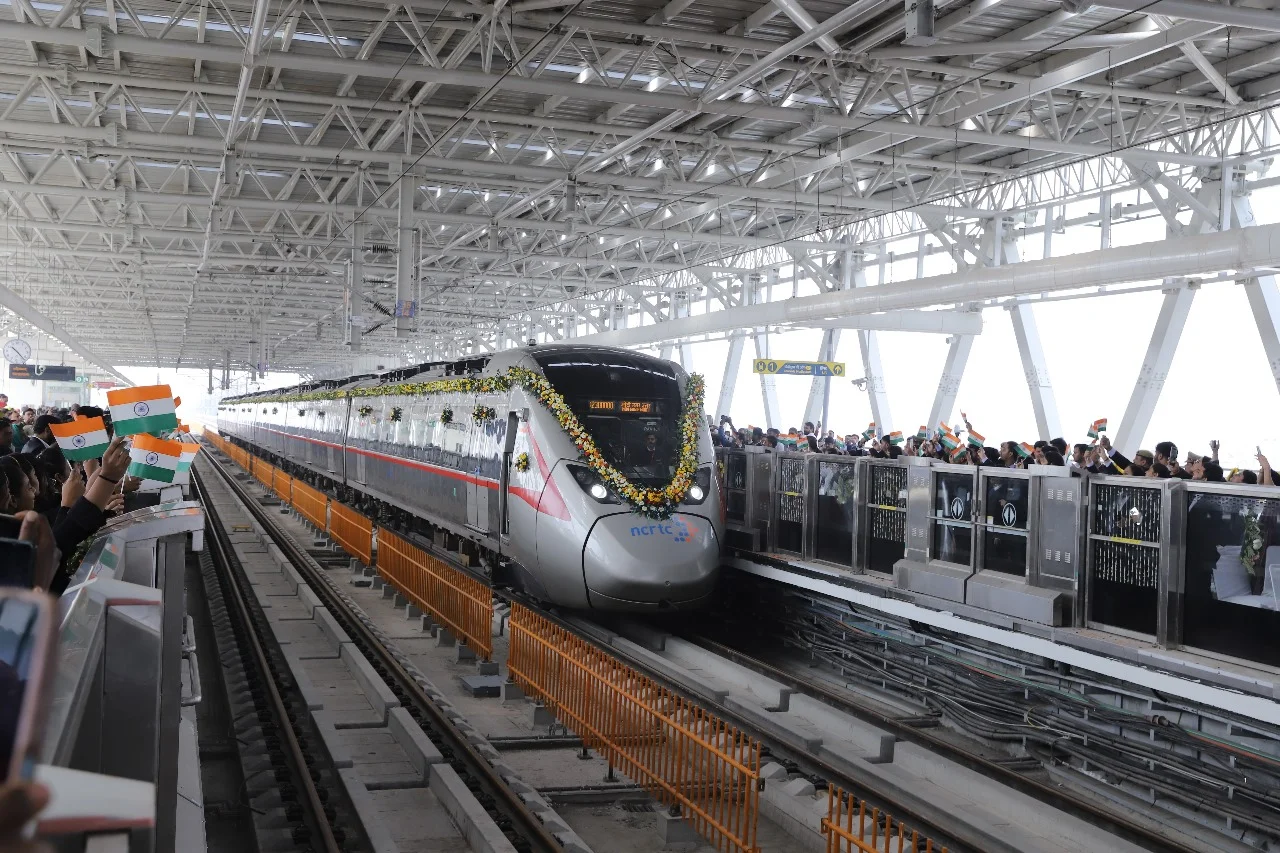
The nation’s first Regional Rapid Transit System (RRTS) is being developed between Delhi and Meerut via Ghaziabad. Unlike metro systems, which primarily serve short-distance urban travel, the RRTS is designed to provide high-speed, long-distance connectivity between regional nodes in the National Capital Region (NCR). The trains are designed for a maximum speed of 180 km/h and an operational speed of 160 km/h. Once fully operational, the Delhi–Meerut RRTS is expected to reduce approximately 2.5 lakh tons of CO₂ equivalent emissions annually.
Current Status:
As of September 2025, the Delhi–Ghaziabad–Meerut RRTS corridor is partially operational, with the 55-kilometer section from New Ashok Nagar (Delhi) to Meerut South open to the public.
Future Outlook of RRTS System:
Alongside the Delhi–Meerut corridor, other RRTS corridors are planned to strengthen regional connectivity in NCR:
- Delhi–Alwar Corridor (164 km)
- Delhi–Panipat Corridor (103 km)
- Delhi-Jewar Corridor (72.44 km)
The RRTS systems are planned to address the mobility requirements of urban and regional centres by providing reliable, high-speed intercity connectivity. These systems will minimise travel times between major nodes, improve passenger capacity, and ease pressure on existing road and rail networks.
High-Speed Rail Operations: The Future of Urban Mobility
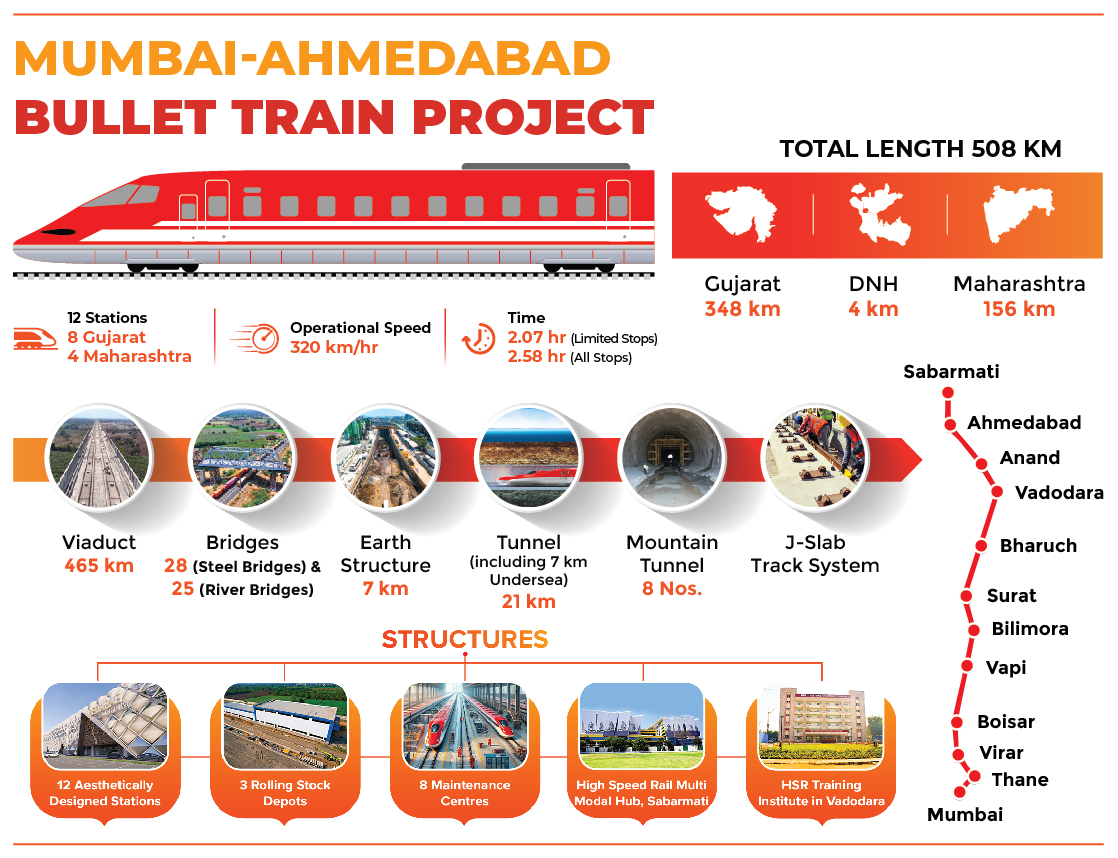
India is entering a new phase of urban and regional mobility with the launch of the country’s first Bullet Train Project the Mumbai–Ahmedabad High-Speed Rail (MAHSR) corridor. The MAHSR corridor will span 508 km and connect Mumbai in Maharashtra with Ahmedabad in Gujarat. The corridor is designed for an operating speed of 320 km/h, and it will reduce travel time while strengthening economic linkages between key cities such as Mumbai, Vapi, Surat, Anand, Vadodara, and Ahmedabad. The project, being developed at an estimated cost of ₹1,08,000 crore (USD 17 billion). Its initial section is going to be operational by August 2026.
Challenges and Barriers in the Path of Urban Transportation Development
Financial and Funding Constraints: The development of metro systems, suburban rail networks, RRTS corridors, and high-speed rail projects demands high capital investment. Although India is currently the fourth-largest, but ensuring consistent and adequate funding for such large-scale infrastructure projects continues to be a major challenge for implementing agencies and urban authorities.
Land Acquisition and Regulatory Hurdles: Urban transit projects in India frequently encounter difficulties in acquiring land and securing necessary regulatory clearances. These challenges often result in delays, escalate project costs, and complicate the timely implementation of essential infrastructure.
Sustainable Development and Infrastructure Balancing: One of the major challenges in urban transit development is to ensure sustainability while building efficient and inclusive systems. This requires addressing the mobility needs of growing urban populations without compromising environmental objectives.
Conclusion
India’s urban transportation landscape is undergoing a transformative shift, and it is imperative to accommodate rapid urbanisation, growing populations, and increasing commuter demands. From the historical roots of tramways and suburban rail to the metro systems, RRTS corridors, and high-speed rail projects, the country is heading towards a more connected and sustainable future.
Key developments, such as the Delhi Metro, Mumbai-Ahmedabad Bullet Train, and Delhi-Meerut RRTS, exemplify India’s commitment to modernising urban mobility. These projects not only alleviate traffic congestion and reduce carbon emissions but also promote economic growth by improving accessibility and promoting regional development. Technological advancements, sustainable practices, and innovative funding models are shaping these endeavors to ensure efficiency and eco-friendliness in operations.
However, achieving this ambitious vision requires continued investments, policy support, and public-private collaboration. By prioritising intelligent, sustainable, and inclusive transportation solutions, India can achieve equitable urban growth while addressing the challenges of climate change and urban sprawl. As the nation progresses, these advancements in urban transit highlight India’s resilience and its resolve to usher in a new era of mobility.