

Introduction
India is entering a new phase of urban mobility, where modern transport systems will play a key role in supporting economic growth and improving connectivity between emerging regional hubs. The Regional Rapid Transit System (RRTS) is central to this shift, as it offers higher speed, better safety and improved operational efficiency compared to existing modes. Following the implementation of the Delhi-Meerut RRTS, the Delhi-Panipat-Karnal RRTS Corridor is proposed as the next major link in the network. It is planned as a high-speed, commuter-focused rail line that will enhance regional mobility within the National Capital Region (NCR). The corridor aims to provide a fast, reliable and high-capacity connection between Delhi, Sonipat, Gannaur, Samalkha, Panipat and further up to Karnal, supported by rolling stock designed for frequent operations and higher acceleration.

This corridor holds importance because the Delhi-Panipat-Karnal stretch is one of the busiest inter-city routes in North India, as it features expanding residential areas, industrial zones, logistics hubs and educational institutions. Road traffic on NH-44 has reached saturation, which is causing longer travel times, recurring congestion, and higher vehicle emissions. A rapid regional rail system is required to shift a substantial share of daily commuters from road to rail.
The 136km Delhi-Panipat-Karnal RRTS Corridor is planned to integrate with existing and upcoming transport systems in Delhi and Haryana. It will improve overall network connectivity. It is part of the National Capital Region Planning Board’s Transport Mobility Plan 2021and supports balanced regional development by offering a dependable public transport option. The project has picked up pace after receiving approval from PIB. This article will focus on the project’s significance, current progress, technical aspects, and the key developments shaping its future implementation.
Project Background and Rationale
The Delhi-Panipat-Karnal RRTS Corridor has been identified as a priority link under the NCR Regional Plan to address rising travel demand along the Delhi-Sonipat-Panipat-Karnal belt. This corridor is one of the three priority corridors of India’s RRTS projects. This stretch has recorded sustained population growth, rapid urbanisation, and an expansion of industrial and logistics activities. As a result, daily travel volumes between these cities and Delhi have increased over the past decade.

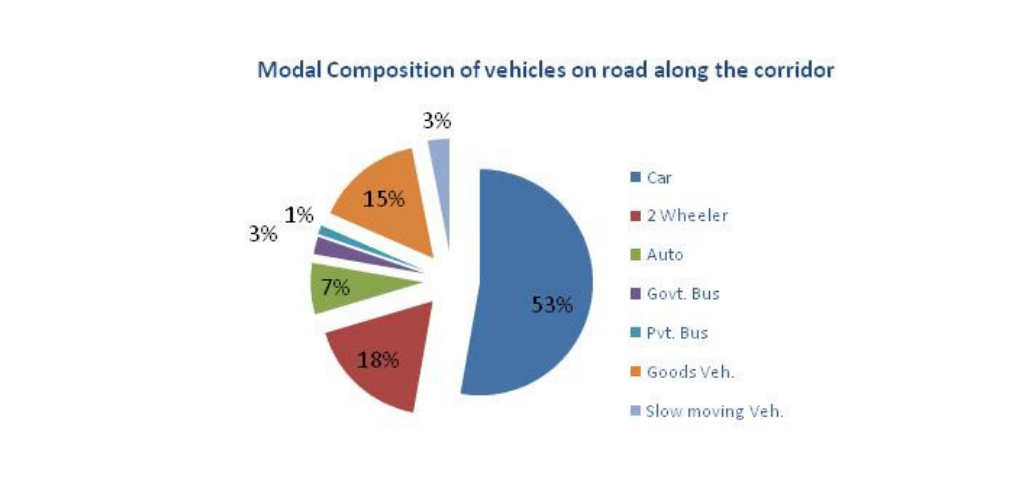
Modal Composition of Vehicles on the Road Along the Corridor
At present, most inter-city movement depends on road transport, particularly the Delhi-Ambala section of NH-44, which experiences high congestion during peak hours. The existing rail services, including MEMU and long-distance trains, do not offer the frequency or travel times needed to serve daily commuters. These limitations have highlighted the requirement for a high-speed, high-frequency regional rail system capable of handling large passenger flows while ensuring predictable journey times.
In this context, the RRTS has been planned as a dedicated solution to improve regional mobility, reduce pressure on road infrastructure, and support the economic growth of emerging urban centres in Haryana. With RRTS in operation, the travel time between Sarai-Kale Khan in Delhi and Karnal in Haryana will be 90 minutes.
Overview of Delhi-Panipat-Karnal Route Alignment
The Delhi-Panipat-Karnal RRTS Corridor is planned along a northbound alignment starting from Sarai Kale Khan in Delhi and extending through major urban and industrial centres in Haryana before reaching Karnal. The proposed alignment follows the general direction of NH-44 to ensure direct connectivity to high-demand locations and to integrate efficiently with existing transportation infrastructure.
| Status | Proposed | Operational: 0 km | |
| Under Construction: 0 km | |||
| Proposed: 136km | |||
| Stations | Delhi Segment: Sarai Kale Khan, Indraprastha, Kashmere Gate, Bharoda Majra, Bhalaswa Chowk, Alipur Delhi-Haryana Border / Kundli Region: Narela, KundliSonipat Region: KMP (Future Station), Bahalgarh, Murthal, Barhi (Future Station), GannaurPanipat Region: Samalkha, Panipat ISBT Sewah, Panipat, Panipat Sector-18 (Future Station), Ganjbar – Badauli – KohandKarnal Region: Gharaunda, Karnal By-pass (Future Station), Karnal Sector-7, Karnal New ISBT | ||
| Estimated Cost | Rs 33,000 crore | ||

The corridor will serve key nodes including Kashmere Gate, Burari, Alipur, Kundli, Sonipat, Gannaur, Samalkha, Panipat, and further up to Karnal. These locations have been identified based on projected ridership, current travel patterns, land use distribution, and proximity to residential, commercial, and industrial zones. The alignment is expected to use a combination of elevated and at-grade sections, depending on terrain conditions, right-of-way availability, and urban density.
Technical Features and System Design
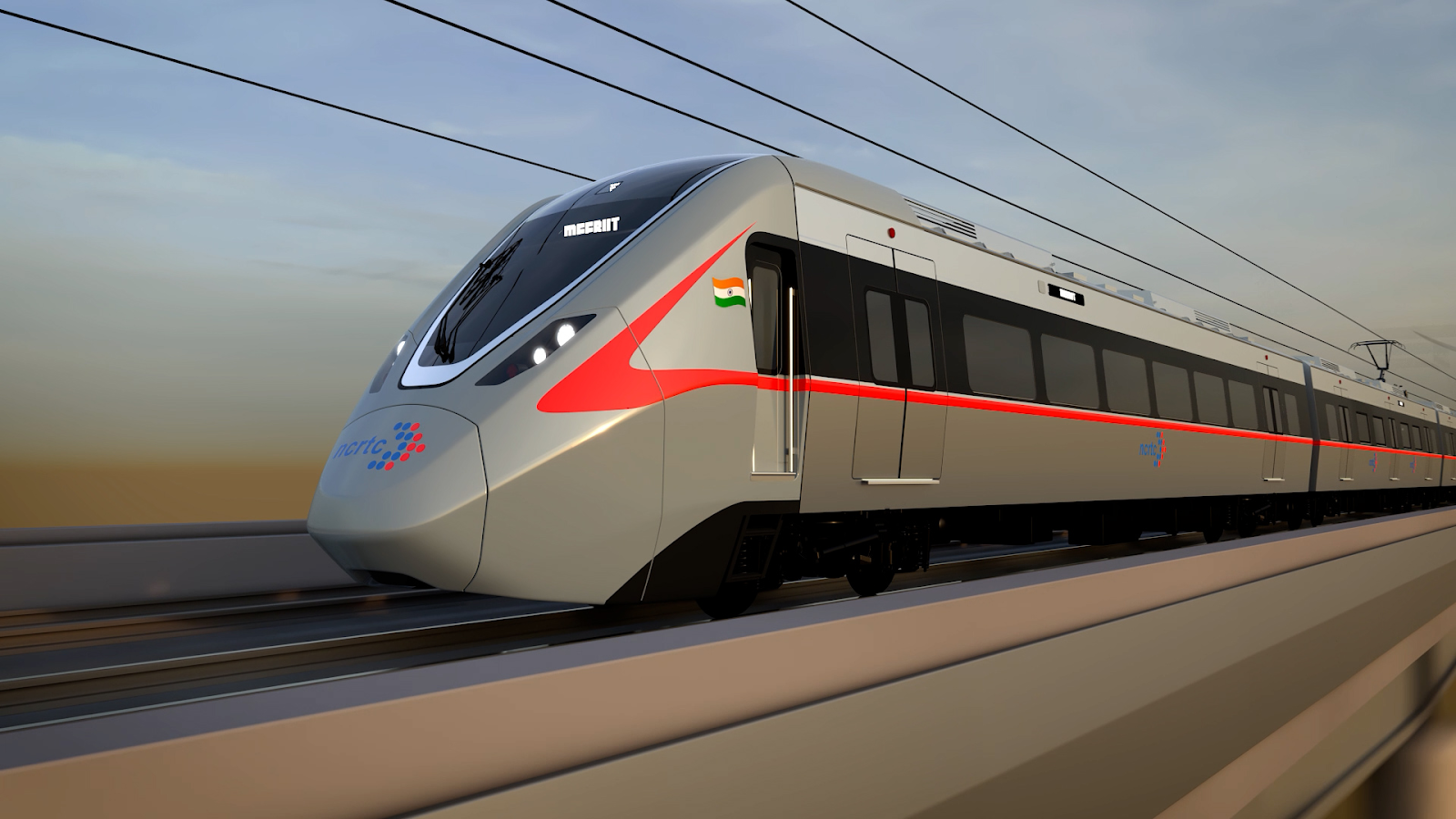
The Delhi-Panipat-Karnal RRTS Corridor is planned with design and operational standards similar to Delhi-Meerut RRTS corridors in the NCR, to ensure uniformity across the network. The system will be developed for a design speed of 180 km/h and an operational speed of 160 km/h.
Infrastructure will include a mix of elevated and at-grade sections, depending on the location and right-of-way availability. Power for the corridor will be supplied through an overhead electrification system (25 kV AC), ensuring energy-efficient operations.
Key System Specifications
| Speed | Design Speed: 180 km/h |
| Operational Speed: 160 km/h | |
| Average Speed: 100 km/h | |
| Track Gauge | Standard Gauge – 1435 mm |
| Rolling Stock | Aerodynamic, 3.2 m wide x 22 m long, stainless steel/aluminium body |
| Signalling | European Train Control System (ETCS) Level 2 of ERTMS |
| Traction | 1 x 25 KV AC overhead catenary (OHE) |
| Seating Arrangement | Transverse |
| Classes | Economy and Business (1 coach per train) |
Progress on Delhi-Panipat RRTS
2017- The National Highways Authority of India (NHAI) granted in-principle approval for the Delhi-Panipat RRTS corridor in July 2017.
January 2020 (Extension to Karnal)- The Delhi-Panipat RRTS Corridor was originally planned as a 103 km system terminating at Panipat North station. During a review meeting held on January 6, 2020, the then Chief Minister Manohar Lal Khattar directed officials to extend the corridor further north up to Karnal. The proposed extension covers an additional 25-33 km and includes new stations at Gharaunda, Madhuban (Karnal South), and Karnal (Karnal New ISBT). With this revision, the total corridor length increases to approximately 136 km.
March 2020 – On March 13, 2020, the NCR Transport Corporation Board approved the Detailed Project Report (DPR) for the 103 km Delhi-Panipat Regional Rapid Transit System (RRTS) corridor.
December 2020 (Haryana Govt. Approval)– On December 23, 2020, the Haryana government officially approved the Detailed Project Report (DPR) for the Delhi-Panipat Regional Rapid Transit System (RRTS) corridor, a 103 km high-speed rail project with 17 stations.
2023 (₹50 Crore Released): In 2023, the Government of the National Capital Territory of Delhi (GNCTD) released ₹50 crore as part of its share for the Delhi-Panipat RRTS Corridor. The project was originally estimated to cost ₹29,389 crore, which included GNCTD’s contribution of ₹2,443 crore. With the decision to extend the corridor up to Karnal, the total estimated cost has now increased to around ₹33,000 crore.
July 2025 (Site Review): In July 2025, officials from the NCRTC held a meeting with Karnal Deputy Commissioner Uttam Singh to review possible land parcels for the planned extension of the Sarai Kale Khan-Panipat RRTS line up to Karnal. During the interaction, they looked at several locations where the 4 proposed stations and the maintenance depot could be developed. SDM Anubhav Mehta said that NCRTC has already submitted the revised project proposal that includes the Karnal extension.
A few sites have now been identified for the next stage of evaluation. According to DC Uttam Singh, the discussions focused mainly on the land needed for the stations and the depot. He said that the administration is prepared to make the required land available for the project.
October 2025 (Prelimaniary Work) In October 2025, the NCRTC issued tenders to shift overhead lines and cables along the 22-km-long Narela-Murthal section. This work must be completed before construction of the viaduct and stations can begin after funding approval. The utility diversion involves relocating or modifying overhead power lines, low-tension cables, and transformers that fall within the proposed corridor alignment.
November 2025 (PIB Clearance): The approval from Public Investment Board (PIB), an inter-ministerial panel at the Centre, has set the project in motion. The Public Investment Board (PIB), an inter-ministerial panel of the central government, cleared the 136 km Delhi-Panipat-Karnal RRTS corridor at an estimated cost of ₹33,000 crore. With this approval, the proposal will now move to the Union Cabinet for the final nod. The project had earlier been delayed due to funding disagreements between the Centre and the previous Delhi government.
For the smooth execution, Delhi and Haryana governments have to work together on adopting value capture financing (VCF). This model helps fund public projects by using the increase in land value that results from new infrastructure.
The Benefits of Delhi-Panipat-Karnal RRTS
Streamlined Connectivity
The Delhi-Karnal RRTS will play an important role in meeting travel demand between Delhi and Haryana. It will provide a direct and faster link, and reduce long travel times on this busy route. Once operational, the journey from Delhi to Karnal will take around 90 minutes. Passengers will also be able to travel from Kashmere Gate to Murthal in about 30 minutes, Indraprastha to Sonipat in roughly 35 minutes, and Kashmere Gate to Panipat in nearly an hour.
Boost to Economy
The alignment of the Delhi-Karnal RRTS largely follows NH-44, one of the busiest and most important road corridors in the region. By providing a faster and more reliable travel option, the project is expected to improve overall connectivity. This improved accessibility is likely to encourage businesses and industries to establish themselves along the corridor. Additionally, areas around the proposed stations are expected to see gradual development, which can boost local commerce, generate employment, and strengthen the regional economy.
Shift to Public Transport
Once completed, the project is expected to encourage a shift from private vehicles to public transport. The RRTS system is designed for a maximum speed of 160 km/h, which will reduce travel time between Delhi and Karnal to about 90 minutes. With faster connectivity, the corridor is projected to increase the share of public transport usage from the current 37% to around 63%, marking a substantial improvement in regional mobility.
Multi-Modal Integration
The Sarai Kale Khan Namo Bharat station is expected to be one of the most important stations on the corridor. It will act as the meeting point for all three RRTS corridors planned in the first phase, making it a major interchange location. Along with this, the station will connect directly to the Delhi Metro and several bus services operating in the area. This combined connectivity will make transfers easier for commuters, increase accessibility, and is likely to result in higher ridership across the network.
Conclusion
The Delhi-Panipat-Karnal RRTS is an important step toward improving mobility between key urban and industrial centres in North India. The corridor will provide faster travel, reliable schedules, and high service frequency, which is expected to ease pressure on NH-44 and existing transport systems. The corridor is likely to reduce dependence on private vehicles and support a shift toward public transport, which can help lower congestion and emissions.
Its alignment along a growing economic belt also means the system can support new business activity, improve access to jobs, and strengthen regional development. However, land acquisition and financial support will play major roles in the implementation of the project. It would require a strategic framework to ensure long-term financial sustainability. In addition to this, it would be imperative to turn the RRTS stations into commercial hubs to further improve revenue generation, attract private investment, and enhance commuter convenience through retail spaces, services, and last-mile connectivity facilities.
Such planning would help the system operate beyond fare collection and create a steady income stream to offset operational costs. If executed effectively, this approach can support economic activity around stations while providing efficient mobility for the wider region.
Once executed, the RRTS will not only shorten travel time to 90 minutes between Delhi and Karnal but will also provide a more organised and connected transport ecosystem for commuters, industries, and future urban expansion.
Join the 6th edition of InnoMetro to explore how the progressions in AI are improving the railway systems, including ticketing, rolling stock, and signalling. Witness the innovation from 200+ exhibitors at India’s leading show for metro & railways which is going to held on 21-22 May 2026 at Bharat Mandapam, New Delhi
Register now: https://innometro.com/visitor-registration/