




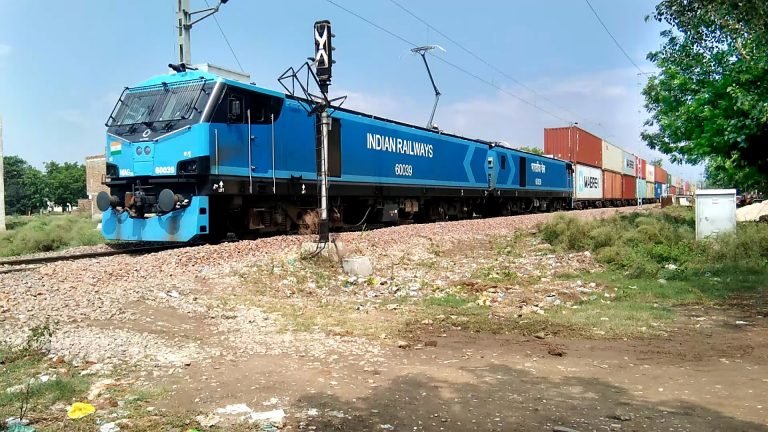
DFCCIL has achieved a historic milestone in rail freight by conducting successful trials on the JNPT-New Saphale (Vaitarna), which is the last 102 km section of the Western Dedicated Freight Corridor, on 31st March 2026. This trial run on the last section signals the completion of the entire WDFC.
The trial itself was operationally straightforward: two container trains ran simultaneously in opposite directions at 11:50 hrs, one electric-hauled from JNPT toward New Saphale, one diesel-powered in the reverse direction.
Also Read: Milestone for Railways: ICF to roll out India’s first Vande Bharat Freight train for RDSO trials
Why this section matters disproportionately
Get the Daily Metro & Rail Brief
Join 125,000+ metro and rail professionals. Project updates, new tenders and contract awards from across India, in your inbox every day.
The JNPT-Vaitarna stretch is not just the last piece of the WDFC puzzle; it is arguably the most strategically critical. JNPT handles roughly 55% of India’s containerised cargo. A direct, dedicated rail link to the freight corridor network means port dwell times can drop, and container movement can be decoupled from the chronically congested Mumbai road network.
According to DFCCIL, full commissioning of this section will reduce freight train transit times by nearly four hours a figure that may sound modest but has compounding effects on asset utilisation, rolling turnaround, and ultimately, the cost per tonne-kilometre that makes rail competitive against road.
India’s Railways has long struggled to hold its share in freight movement against an aggressive road transport sector. The modal share of rail in freight was once over 80% in the 1950s, but has declined steadily, hovering now under 30%. The DFC project was conceived precisely to reverse this trajectory by offering speed, reliability, and capacity that the legacy network burdened by passenger traffic simply cannot provide.
With both the Eastern and Western corridors now approaching full operationalisation, the network effect begins to kick in and that is where the real economic argument lies.
The trial run is a technical green light, not a commercial one. The commissioning timeline, the tariff structure for port-linked freight, and the pace of private terminal development along the corridor will determine how quickly the WDFC translates from an engineering achievement into a logistics market disruptor.
Discover how AI is bringing the next phase of sustainable urban rail mobility for Viksit Bharat at InnoMetro 2026, India’s prime exhibition and conference for metro & railways, which is going to be held on 21-22 May 2026 at Bharat Mandapam, New Delhi.
Register Now: https://zma.page/ek9