


Page 53 - Demo
P. 53
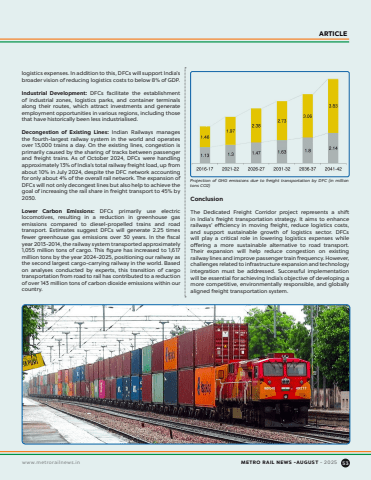
www.metrorailnews.in METRO RAIL NEWS -AUGUST - 2025 53logistics expenses. In addition to this, DFCs will support India%u2019s broader vision of reducing logistics costs to below 8% of GDP.Industrial Development: DFCs facilitate the establishment of industrial zones, logistics parks, and container terminals along their routes, which attract investments and generate employment opportunities in various regions, including those that have historically been less industrialised.Decongestion of Existing Lines: Indian Railways manages the fourth-largest railway system in the world and operates over 13,000 trains a day. On the existing lines, congestion is primarily caused by the sharing of tracks between passenger and freight trains. As of October 2024, DFCs were handling approximately 13% of India%u2019s total railway freight load, up from about 10% in July 2024, despite the DFC network accounting for only about 4% of the overall rail network. The expansion of DFCs will not only decongest lines but also help to achieve the goal of increasing the rail share in freight transport to 45% by 2030.Lower Carbon Emissions: DFCs primarily use electric locomotives, resulting in a reduction in greenhouse gas emissions compared to diesel-propelled trains and road transport. Estimates suggest DFCs will generate 2.25 times fewer greenhouse gas emissions over 30 years. In the fiscal year 2013-2014, the railway system transported approximately 1,055 million tons of cargo. This figure has increased to 1,617 million tons by the year 2024-2025, positioning our railway as the second largest cargo-carrying railway in the world. Based on analyses conducted by experts, this transition of cargo transportation from road to rail has contributed to a reduction of over 143 million tons of carbon dioxide emissions within our country.Projection of GHG emissions due to freight transportation by DFC (in million tons CO2) ConclusionThe Dedicated Freight Corridor project represents a shift in India%u2019s freight transportation strategy. It aims to enhance railways%u2019 efficiency in moving freight, reduce logistics costs, and support sustainable growth of logistics sector. DFCs will play a critical role in lowering logistics expenses while offering a more sustainable alternative to road transport. Their expansion will help reduce congestion on existing railway lines and improve passenger train frequency. However, challenges related to infrastructure expansion and technology integration must be addressed. Successful implementation will be essential for achieving India%u2019s objective of developing a more competitive, environmentally responsible, and globally aligned freight transportation system.ARTICLE


