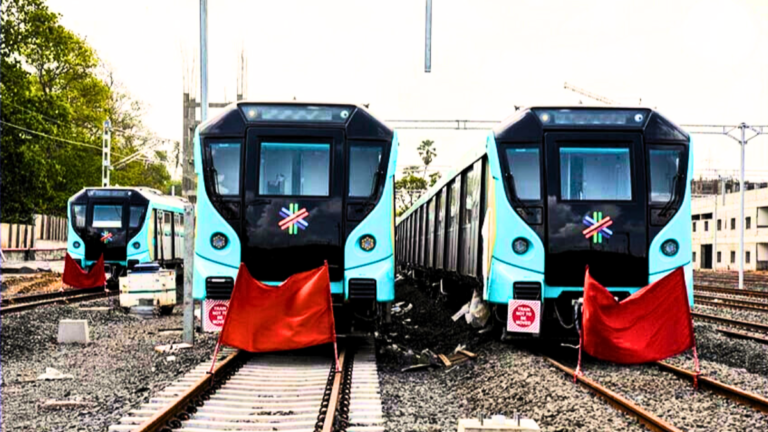
KSM Secures UPMRC Metro Bhawan’s Construction Contract 

On July 1, KSM Bashir Mohammad and Sons emerged as L1 (Lowest Bidder) for Package LKCC-15 to carry out the construction work of the Metro Bhawan headquarters of Uttar Pradesh Metro Rail Corporation (UPMRC) in Lucknow.

Currently, UPMRC’s headquarters is located in a three-story building in Ambedkar Park. As UPMRC manages the metro networks in Lucknow, Kanpur, and Agra, the need for a larger space has become essential to ensure efficient operations. To meet this requirement, a new building will be constructed near the Sachivalaya Station of the Lucknow Metro.

Additionally, the new UPMRC headquarters will feature an Operational Control Centre (OCC) for Lucknow Metro to manage train operations for Corridor 1. This corridor spans 22.8 km, linking Lucknow CCS Airport with Munshi Pulia through 23 stations.

Brief Scope of Work: 

The work under this package involves the design and construction of the Metro Bhawan cum OCC Building near Sachivalaya metro station in Lucknow. It includes structural work, architectural finishing, plumbing, drainage, external development, road works, electrical and mechanical works, HVAC systems, fire detection, and fire fighting systems.

Following are the bidders for the package LKCC-15:

Firm Bid Value
KSM Bashir Mohammad and Sons101.79 crore
Lisha Engineers104.19 crore
Quality Buildcon124.27 crore

Bidding Process:

In March 2024, UPMRC called for bids for package LKCC-15 with an estimated cost of Rs. 120.80 crore and a 600-day deadline. In May, UPMRC opened the technical bids, revealing 3 bidders for this package.

KSM placed a bid of Rs. 101.79 crore, substantially lower than UPMRC’s estimate of Rs. 120.80 crore. So, it’s likely that UPMRC will award the contract to KSM soon.
Tricity Metro Project: MoHUA Approves Underground Route for Chandigarh Section

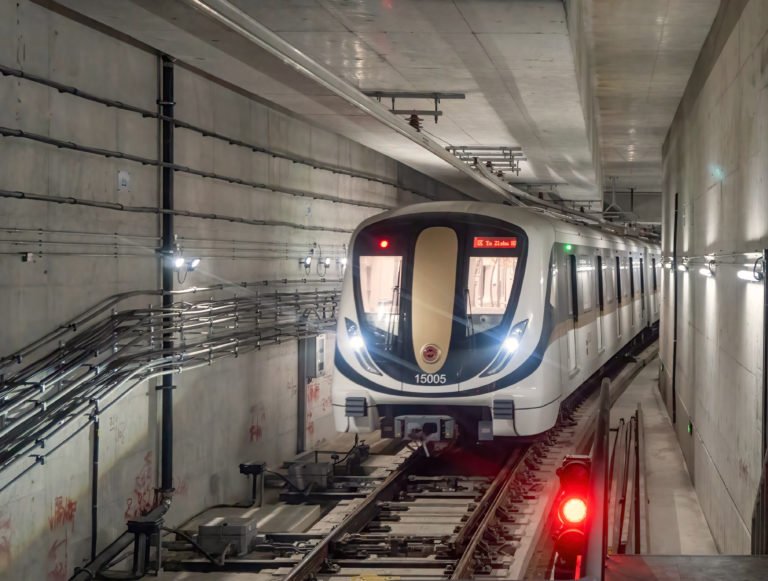
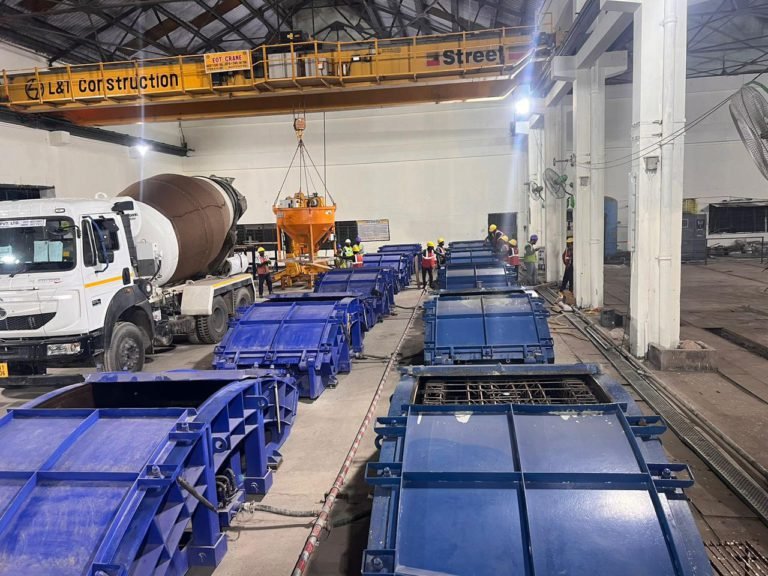
The Tricity Metro project linking Chandigarh, Mohali, and Panchkula received a major boost from the centre. The Union Ministry of Housing and Urban Affairs (MoHUA) gave approval for running all metro lines underground in Chandigarh from sectors 1 to 30. This decision aims to preserve the city’s heritage and architectural integrity.

This decision stemmed from the recommendations of the Chandigarh Heritage Conservation Committee’s sub-panel, which emphasised the preservation of the city’s heritage.

As per the report prepared by RITES for the 154-km Metro network across the Tricity, the corridor was originally planned to feature elevated tracks and stations.

The newly sanctioned proposal for Chandigarh’s metro network incorporates roughly 8 kilometres of elevated tracks from a planned 20 kilometres. The decision was made with careful consideration to preserve the city’s aesthetic landscape.

Phase 1 of the Tricity Metro Project will feature 3 corridors that will run through Chandigarh, Mohali, and Panchkula. The corridor passing through Chandigarh’s heritage sectors (1 to 30) is planned to be constructed underground. By situating this segment underground, the project aims to minimise visual disruption and maintain the city’s iconic urban landscape. The work of Phase 1 is likely to commence by 2027.

On the other hand, the other two corridors in Phase 1 of the Tricity Metro Project will feature elevated sections, with some segments also running underground. 

Looking ahead to Phase 2, which focuses on Mohali and Panchkula, the plan primarily includes elevated sections. 

Funding of Tricity Metro Project

The Tricity Metro Project will finance approximately 20% of its funding from each of the states involved, Haryana and Punjab, with an additional 20% contributed by the central government. The remaining 60% of the estimated Rs 10,570 crore project cost will be secured through loans from a lending agency.

Kolkata Metro: L&T Begins Construction of D-Wall for Launching Shaft on Mominpur-Esplanade Section

Kolkata (Metro Rail News): Construction work on the Purple Line beyond Majerhat station has got a major boost in recent times. The Purple Line of Kolkata Metro, which stretches from Joka to Esplanade, is now operational from Joka to Majerhat. Efforts have been made to extend it further as per the plan and reach the heart of the city to connect it with the Blue Line as well as the Green Line. In order to achieve this, construction work of Mominpur (Excl.) to the Esplanade stretch of this Corridor has been going o­n in that direction. A Work Order for the construction of this stretch has already been issued to M/s. Larsen & Toubro in last July.

GRfMazha4AANOEz 1
Image Credit: Kolkata Metro

Mominpur-Esplanade Section

After Mominpur, this stretch will go underground, and four stations, namely, Khidderpore, Victoria, Park Street and Esplanade, will be underground stations. All these stations will be modern, state-of-the-art stations replete with all passenger amenities. Executing agency Rail Vikas Nigam Limited (RVNL) is bringing two Tunnel Boring Machines (TBM) to burrow the tunnels for this stretch from Germany. These TBMs are expected to arrive in Kolkata in January 2025 and, after assembling, will begin their tunnelling work from March 2025.

GRfMawCb0AEQ4on

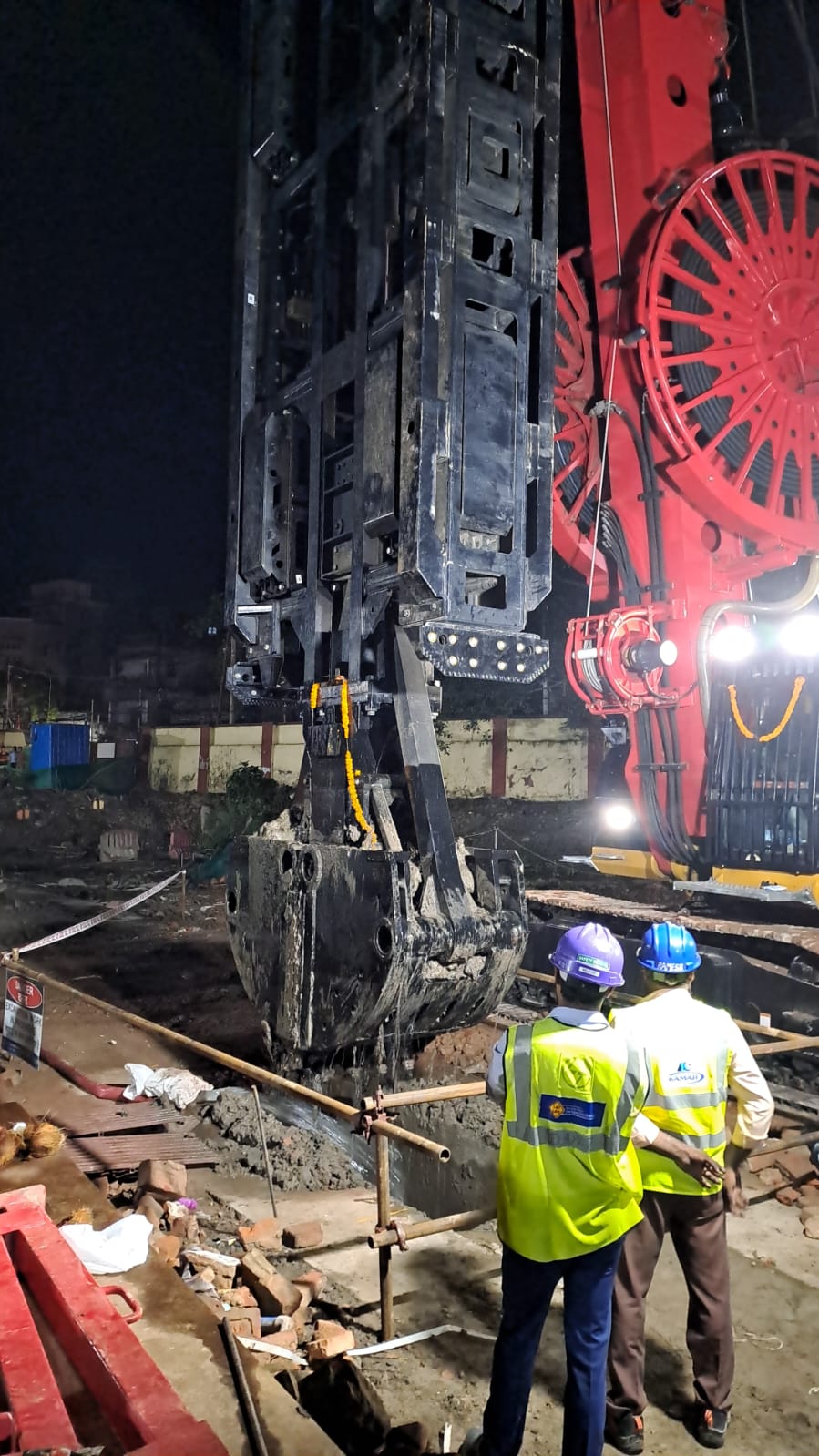
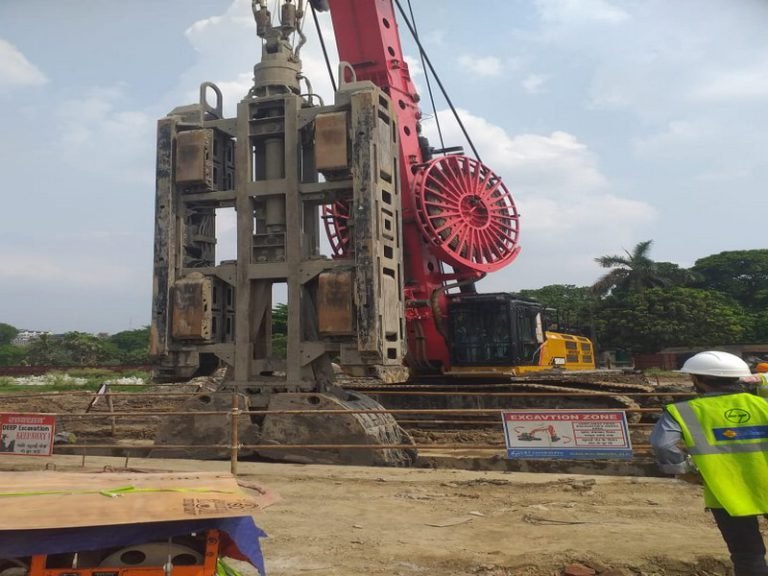
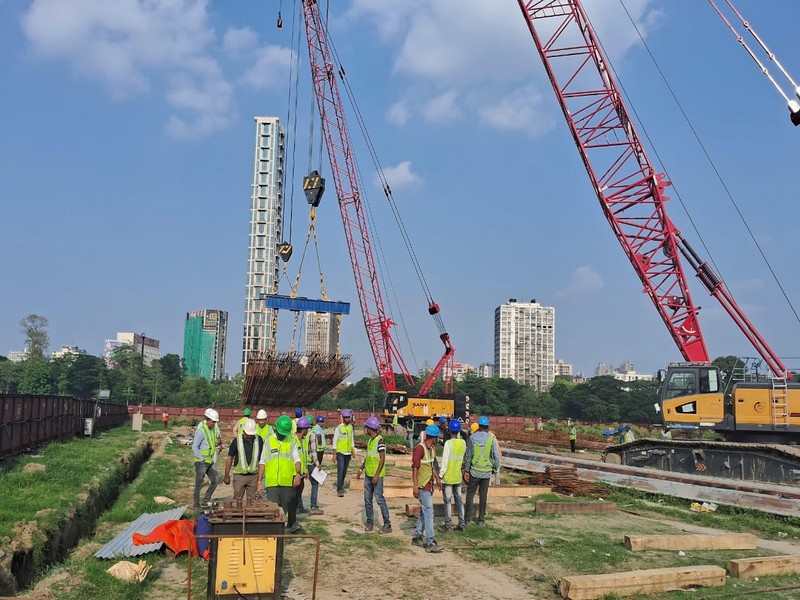
Prior to that, the preparatory work to construct the launching shaft has been going o­n. The construction of the D-Wall of this launching shaft started on 27.06.2024 at St. Thomas School premises at Khidderpore. The length of this D-Wall will be 65 metres and this construction is expected to be over within two months. This is a major boost for this project after overcoming a lot of administrative and legal problems.

GRfMazcaYAAF 7b
Image Credit: Kolkata Metro

Apart from that, the casting work of the tunnel segments has also been started at the casting yard at Sarkarpool in Maheshtala. The width of each segment which will be used in the tunnels is 1.40 metres. Six such segments will be required to form an o­ne complete ring with an inner diameter of 5.80 metres and a width of 1.40 metres. All these pre-cast segments will be brought to the site before the tunnelling work begins. The TBM machines, immediately after boring the tunnels, will fix the lining with these pre-cast segments under the ground to give it a final shape.

Kanpur Metro: Ceigall Initiates Pilling on Line 2 Under Package KNPCC-12

Kanpur (Metro Rail News): On July 1, Ceigall India successfully completed drilling and concreting the first pile on Kanpur Metro’s 8.38 km Line 2. The work commenced within Package KNPCC-12.

Package KNPCC-12 spans a total distance of 4.3 km, comprising two distinct elevated sections. These sections are situated on either side of the underground Package KNPCC-11.

GRfax VaYAExrpN
Image Credit: UPMRC

According to UPMRC,  Ceigall India will drill about 750 piles to facilitate the construction of the viaduct and stations’ substructure.

The southern segment of KNPCC-12’s viaduct, stretching over 3.745 km, will connect Double Pullia Ramp to Barra-8. This crucial stretch will feature four strategically located elevated stations: Vijay Nagar Chauraha, Shastri Chowk, Barra-7 Station, and Barra-8. 

On the northern end of the line, beyond Rawatpur Interchange Station, a compact 557.8m viaduct is planned to be constructed. This section will feature a single elevated station situated at Agriculture University, adjacent to Line-2’s Agriculture University Depot.

Scope of work 

The Package KNPCC-12 entails a comprehensive range of tasks, including the  Design and Construction of an elevated viaduct and 5  elevated stations 

The Station names are:

  1. Agriculture University Station
  2. Vijay Nagar Chauraha Station
  3. Shastri Chowk Station
  4. Barra-7 Station 
  5. Barra-8 Station 

Additionally, it encompasses architectural finishing, E&M work and special spans from the end of the ramp after Double Pullia Station to Barra-8 Station, i.e., from chainage 3783.000m to 7528.566m and end of ramp in Depot to Agriculture University Station i.e. from Chainage (-)297.460m to (-)855.339 on Corridor-2 of Kanpur MRTS Project at Kanpur, Uttar Pradesh, India.

Kanpur Metro’s Package KNPCC-12

In November 2023, UPMRC floated the tender for Package KNPCC-12 at Rs. 484 crores, with a 30-month deadline. Serving as the Detailed Design Consultants, Ms. SYSTRA MVA Consulting (India) designed this package. Subsequently, in March 2024, UPMRC issued a Letter of Acceptance to Ceigall for KNPCC-12 at Rs. 427.11 crore.

Delhi Metro’s Golden Line & Violet Line to have an Interchange at Tughlakabad Station

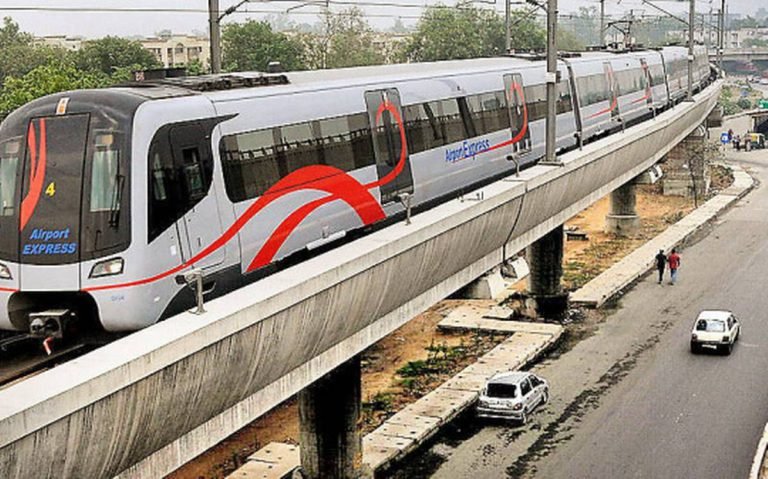
New Delhi (Metro Rail News): On July 1, the Delhi Metro Rail Corporation (DMRC) announced that as part of Phase 4, the Tughlakabad Metro Station will be developed as an interchange station between the Golden Line (Tughlakabad-Aerocity) and the Violet Line (Kashmere Gate-Raja Nahar Singh). This development will facilitate a smooth transition for commuters travelling on both lines, enhancing connectivity and easing travel for passengers.

Tughlakabad Station’s features

As per DMRC, the existing Tughlakabad Metro Station is being elevated. Additionally, plans are underway to construct a new underground station. These two stations will be connected by a 45-metre-long subway to ensure seamless integration and transitions for commuters between the elevated and underground sections.

The design of the new station incorporates a four-level structure, including an underground floor that will serve as a parking zone with a capacity to accommodate 250 vehicles. Commuters from both the Golden and Violet Lines will have direct access to this floor via lifts, stairs, and escalators, enhancing convenience and accessibility at the station.

Tughlakabad Metro Station will be the first interchange facility in the Delhi Metro network to feature underground parking.

Currently, to access the domestic and international airport terminals, commuters on the Violet Line have to go to the Central Secretariat station and then transfer to the Airport Express Line.

The opening of the new line will save time for passengers from Faridabad in Haryana. They can disembark at the interchange station and proceed directly to the airport.

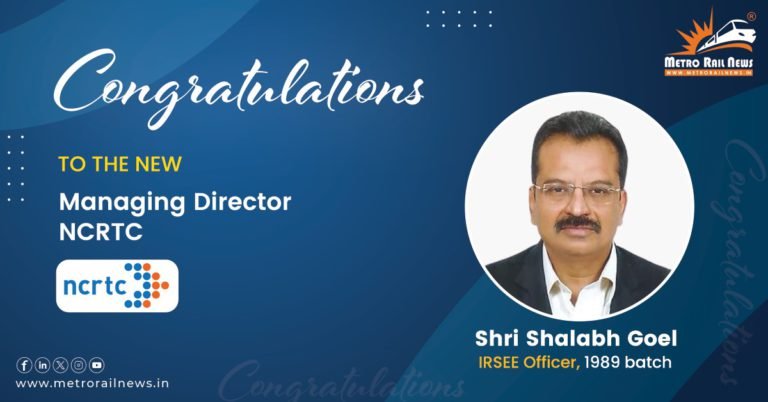
Shri Shalabh Goel Appointed as the Managing Director of NCRTC

New Delhi (Metro Rail News): On 2nd July 2024, Shri Shalabh Goel (IRSEE) assumed the role of Managing Director (MD) of the National Capital Region Transport Corporation (NCRTC). He brings with him a wealth of experience and a distinguished career in Indian Railways, having served in various key positions.

Shri Shalabh Goel’s Educational Background

Shri Goel is a 1989 batch officer of the Indian Railway Service of Electrical Engineers (IRSEE). A graduate in Electrical Engineering from IIT Roorkee, he completed post-graduation in Energy Studies from IIT Delhi.

Experience & Previous Roles

Shri Goel has joined NCRTC at a very crucial juncture, when the organization is poised to operationalize the entire 82-km long Delhi-Ghaziabad-Meerut RRTS corridor, a very complex and challenging project, within the scheduled timelines.

In his illustrious career spanning over three decades, Shri Goel has held several challenging assignments such as Executive Director, Ministry of Railways; Divisional Railway Manager (DRM), Mumbai Division of Central Railway; Chief Electrical Locomotive Engineer, Central Railway; and SDGM/CVO (Western Railway). During his tenure as DRM, he played a pivotal role in managing train operations amidst the peak of the COVID-19 pandemic, ensuring the continuity of essential services and the safety of passengers and staff.


Just before joining NCRTC, Shri Goel served as Senior Deputy General Manager cum CVO of Western Railway. He has a rich background in railway operations, electrification, electrical locomotive maintenance, energy management and general administration. His extensive experience includes postings over Central Railway, Northern Railway, Western Railway, Ministry of Railways, & Delhi Metro Rail Corporation (DMRC). Shri Goel’s exemplary service has been recognized with numerous accolades, including the prestigious Minister of Railways and General Manager awards.

About NCRTC

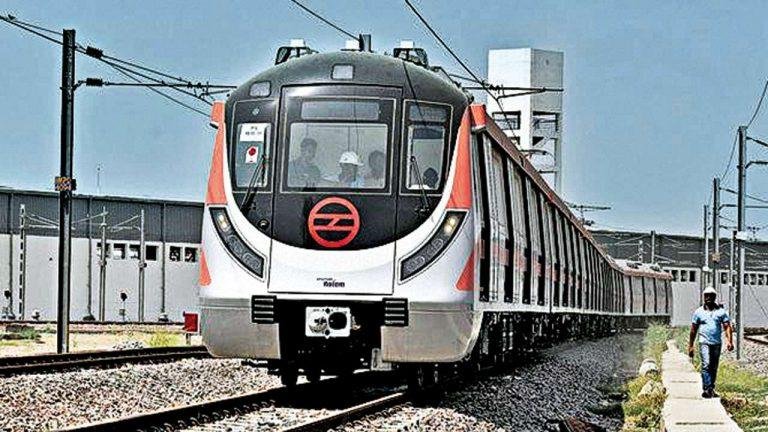
NCRTC is a joint venture company of Govt of India and the States of NCT of Delhi, Haryana, Rajasthan, and Uttar Pradesh, under the administrative control of the Ministry of Housing and Urban Affairs, GOI. NCRTC is implementing the country’s first 82 km long Delhi-Ghaziabad-Meerut RRTS corridor in the National Capital Region, ensuring balanced and sustainable urban development through better connectivity and access.

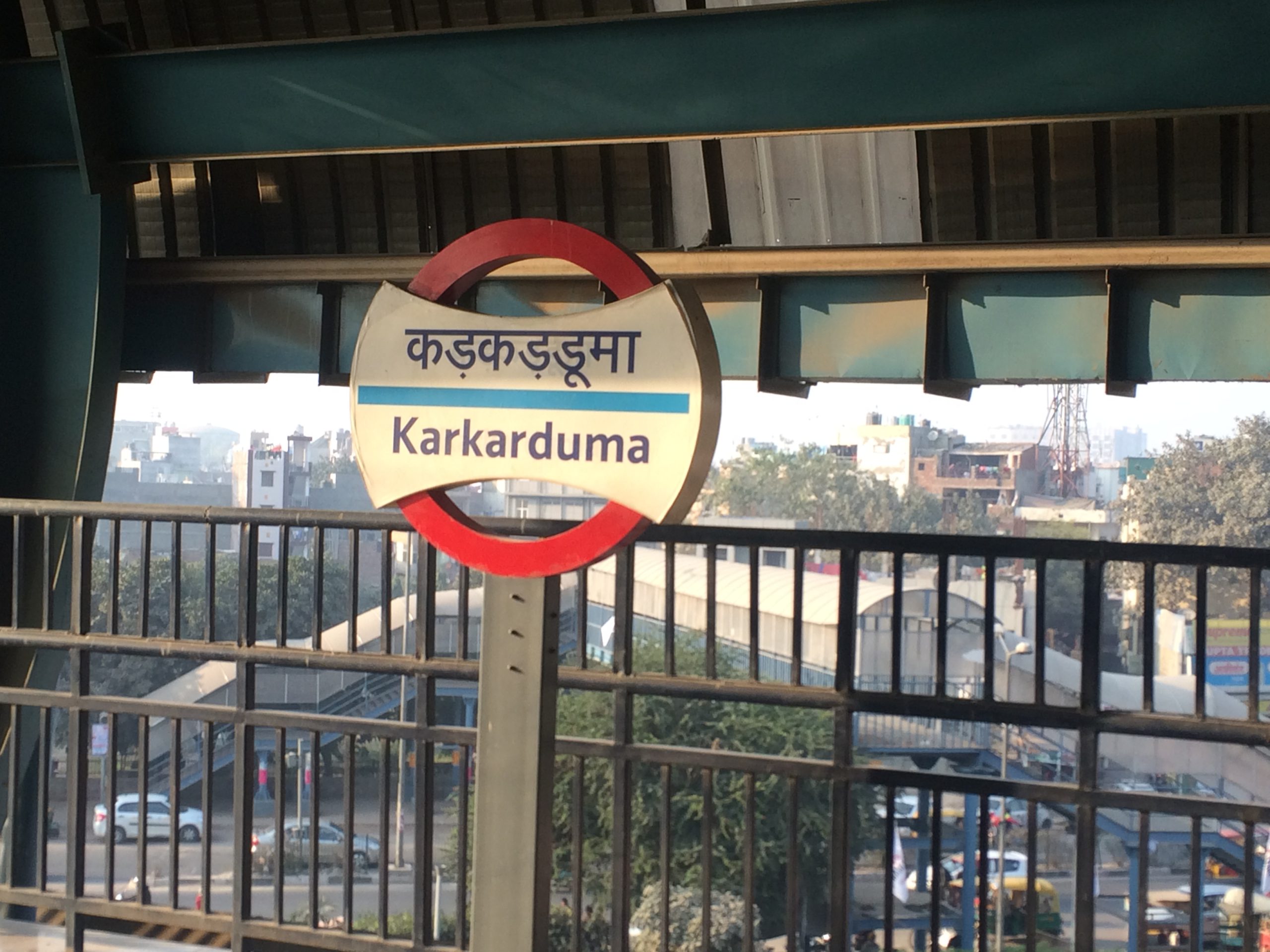
Delhi Metro: MIA Construction Bags Construction Contract Of Smart Parking at Karkadooma Metro Station

On June 26, the Delhi Metro Rail Corporation (DMRC) issued a Letter of Acceptance to MIA Construction Pvt Ltd. for the civil construction of an underground multi-storey smart parking facility at Karkardooma Metro Station under Package CC-146. The estimated cost of the project is Rs. 31.27 crore.

Scope of work

The scope of work includes the design, construction, and commissioning of an underground multi-storey smart parking facility at Karkardooma Metro Station. This project is a crucial part of the Multi-Modal Integration (MMI) Plan, which aims to enhance connectivity and convenience for commuters.

Bidding Process 

In December 2023, the Delhi Metro Rail Corporation (DMRC) initiated the bidding process for Package CC-146, which involved the civil construction of an underground multi-storey smart parking facility at Karkardooma Metro Station. The project was estimated to cost INR 41.47 crore and had a completion deadline of 24 months. 

MIA Construction Pvt Ltd. secured the contract by placing a bid of INR 31.27 crore. Following this, DMRC issued a Letter of Acceptance (LOA) to MIA Construction on June 26, 2024. According to the terms outlined in the tender, MIA Construction will be responsible for executing the work within a 24-month period, starting from July 25, 2024.

Delhi Metro’s Karkadooma Metro Station

Karkarduma metro station

Karkardooma Metro Station, which became operational on January 6, 2010, serves as a key interchange between the Pink Line (Majlis Park—Shiv Vihar) and the Blue Line (Vaishali—Yamuna Bank). This strategic connection facilitates a smooth transition for commuters travelling on both lines.

The Delhi Metro Rail Corporation (DMRC) initially constructed Karkardooma Station for the Blue Line as part of the Phase 2 project. Later, under Phase 3, the station was connected to the Pink Line, further integrating the metro system and improving accessibility for passengers.

Delhi Metro Phase 4: All Three Priority Corridors likely to be Operational by 2026

New Delhi (Metro Rail News): The Delhi Metro Rail Corporation (DMRC) is progressing rapidly with its Phase 4 expansion work with the target of opening all three priority corridors comprising 65 kilometres of new lines by 2026. Though work on the fourth phase of expansion started in December 2019, immediately after the finalization of tenders, progress of work was significantly impacted from 2020 to 2022 for almost three years due to the Covid pandemic and delays in getting tree-cutting permissions.

GRTQ3fxakAAb1t2
Image Credit: DMRC

DMRC has been working continuously on the Phase 4 project practically since the last one and a half – two years only, which gives the organisation just about four years’ time to complete the entire work by the year 2026. 

Progress in Delhi Metro’s Phase IV

At present, over 50 percent progress has already been achieved on all three corridors. On the Majlis Park – Maujpur section, about 80 percent of civil work has already been completed. Tunneling works are in progress on various stretches on the Aerocity – Tughlakabad (Golden Line) and the Janakpuri West – RK Ashram Marg (Magenta Line) corridors.

GRTQ3fcW4AAPMDH
Image Credit: DMRC

Despite the adverse situation of COVID-19 and the delay in various permissions, the Phase 4 section from Janakpuri West to Krishna Park Extension is now almost complete and is likely to be opened by August 2024. The Majlis Park – Maujpur corridor is also likely to be opened during the next year. The rest of the sections of the priority corridors are expected to be opened in a phased manner by 2026.  However, certain permissions for tree cutting and the acquisition of land pockets at isolated locations are still awaiting approval.

GRTQ3fUWcAAlZhY
Image Credit: DMRC

The project is being monitored at various levels on a day-to-day basis. Site visits are also taken up at the highest level to expedite the work. Tree-cutting permissions are being pursued at appropriate levels.

The Addition of 2 New Corridors

Two more corridors under Phase 4, Inderlok – Indraprastha and Saket G Block – Lajpat Nagar have also received approval recently. DMRC at present is processing for statutory clearances including land acquisition from the concerned authorities. Forest clearances and tree-cutting permissions are also being taken up at the appropriate levels. Further processes regarding the planning and tendering for civil works are in progress.

Chennai Metro: HCC-KEC JV Concludes Casting Work For Corridor 4

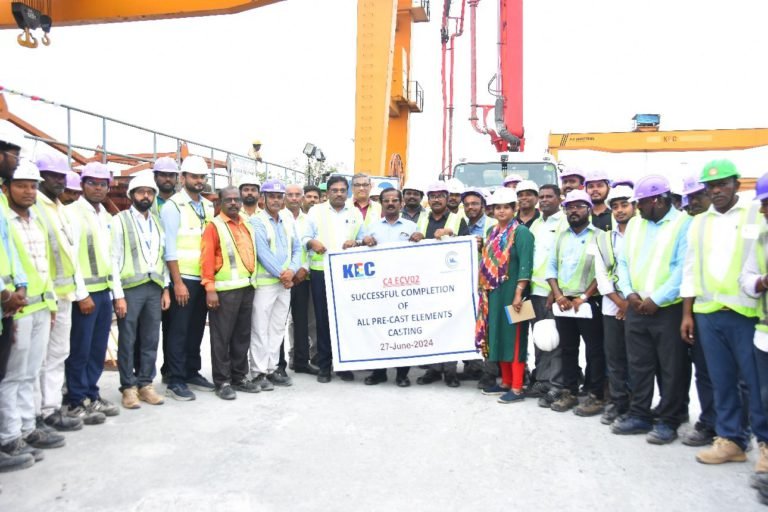
Chennai (Metro Rail News): On 27 June, the Chennai Metro Phase 2 project reached another milestone as the joint venture between Hindustan Construction Company (HCC) and KEC International concluded the casting of all precast elements within Package C4-ECV02 of Line 4.

Package C4-ECV02 covers a total distance of 7.945 km through 9 stations. It connects Poonamallee Bypass and  Porur. Additionally, this was the first civil package to be issued by CMRL for the 116.1km long Phase 2 project. 

According to CMRL’s press release, HCC-KEC JV cast a total of 2,885 precast elements of 18 types, including prestressed (pre-tensioned and post-tensioned) components like U-girders, pier arms, portal beams, and pier caps, at their casting facility located in Kolappancheri.

Package C4-ECV02

Cost: In May 2021, HCC – KEC Joint Venture secured Package C4-ECV02 from Chennai Metro Rail Ltd. (CMRL) at Rs. 1007.95 crore.

Deadline:  This package has a completion deadline of a 36-month (3 years). 

Scope of work: This package includes the construction of a 7.945 km viaduct for the main line, primarily consisting of U-girders, as well as a viaduct extending to the Poonamallee Depot.

Line 4 of Chennai Metro Phase 2

Chennai Metro Phase 2 stretches about 116.1 km, featuring 3 new Lines ( Purple Line, Orange Line and Red Line). Line 4 (Orange Line) runs 26.09 km, connecting  Light House with Poonamallee Bus Depot through 28 stations(18 elevated & 10 underground). 

In February 2024, Alstom initiated the production of the rolling stock that will be deployed on Line 4. The delivery of the first trainset is expected by August 2024. 

Nagpur Metro: 5 Firms Submit Proposal for Phase2’s OHE Contract

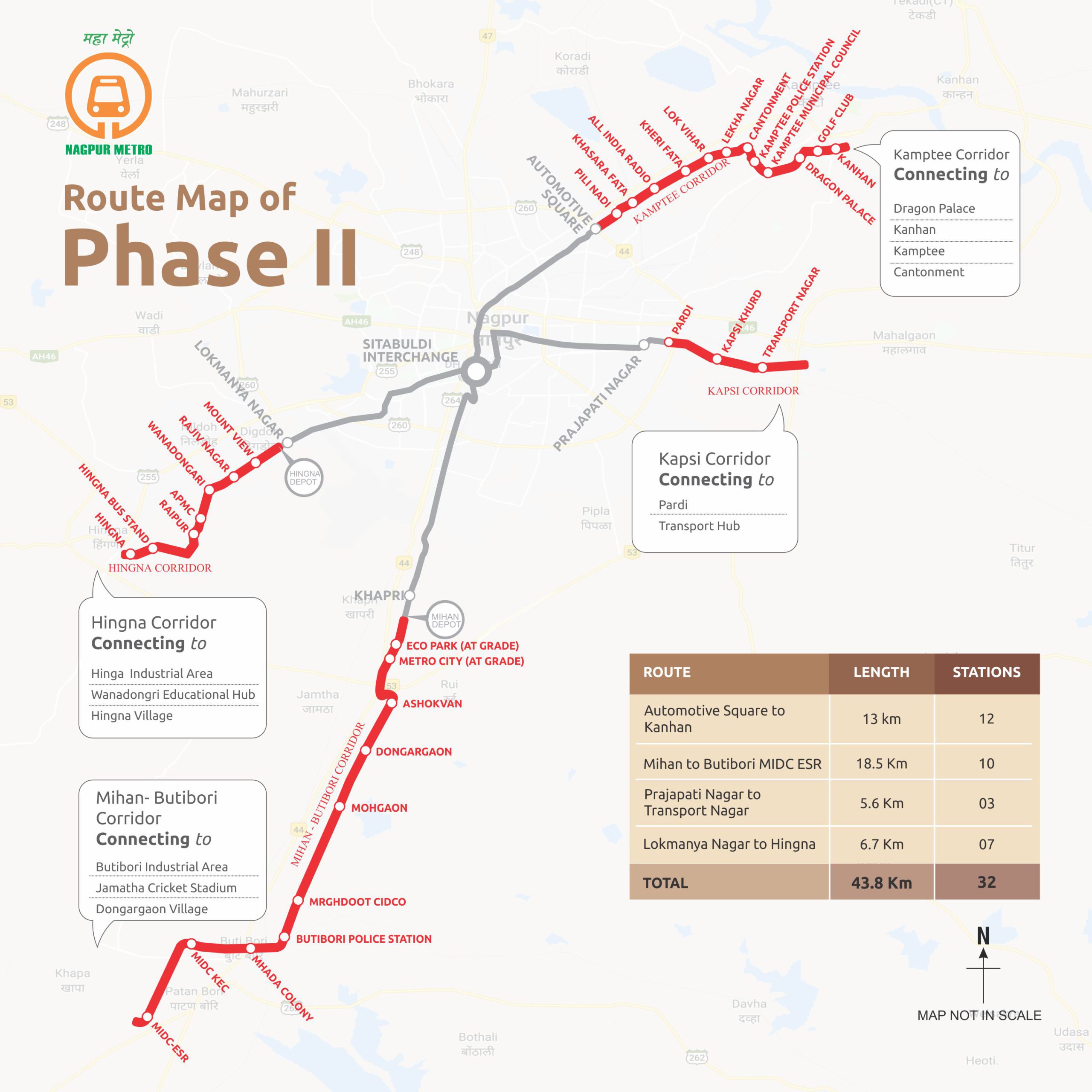
Nagpur (Metro Rail News): On June 26, Maharashtra Metro Rail Corporation Ltd. (Maha-Metro) opened the technical bids for package TR-02. Five firms have submitted proposals to undertake the overhead equipment (OHE) electrification work for the 43.8 km Phase 2 of Nagpur Metro.

The Asian Development Bank (ADB) and the European Investment Bank (EIB) will fund Package TR-02 through a proposed loan.

Nagpur Metro

Scope of work:

Package TR-02 involves a comprehensive scope of work, including the design, supply, installation, testing, and commissioning of a 25kV flexible overhead equipment (OHE) system and sectioning posts for Phase 2 of the Nagpur Metro Rail Project. This infrastructure is crucial for ensuring efficient and reliable electrical distribution along the metro network’s at-grade and elevated sections.

Bidding Process

In December 2023, Maha Metro issued a call for bids for Package TR-02. The tender was released with an undisclosed budget and a completion deadline of 180 weeks (3.45 years).

The firms that have submitted proposals for Package TR-02 include:

  1. Siemens Ltd. – Rail Vikas Nigam Ltd. (RVNL) JV
  2. Kalpataru Projects International Ltd. (KPIL)
  3. Texmaco Rail and Engineering Ltd.
  4.  KEC International Ltd.
  5. Konkan Railway Corporation Ltd

The bids will now undergo a comprehensive technical evaluation process, which probably will take a few months to complete. Following this evaluation, Maha Metro will reveal the financial bids of the technically qualified bidders to identify the L1 (Lowest Bidder) for package TR-02.

Nagpur Metro Phase 2 Project

In January 2019, the Maharashtra government approved the Detailed Project Report (DPR) of the 43.8 km long Nagpur Metro Phase 2 project at Rs.  5,976 crore. However, in  2023, the state cabinet revised the estimated project cost to Rs. 6,708 crore.

Phase II will cover a total distance of 43.8 km through extensions of the existing two corridors. It will incorporate a total of 35 stations. Upon completion, Phase 2 will expand the Nagpur Metro Network to 82 km.

Bangalore Metro: TBM Tunga Halts Operations on Pink Line Due to Sinkhole Formation

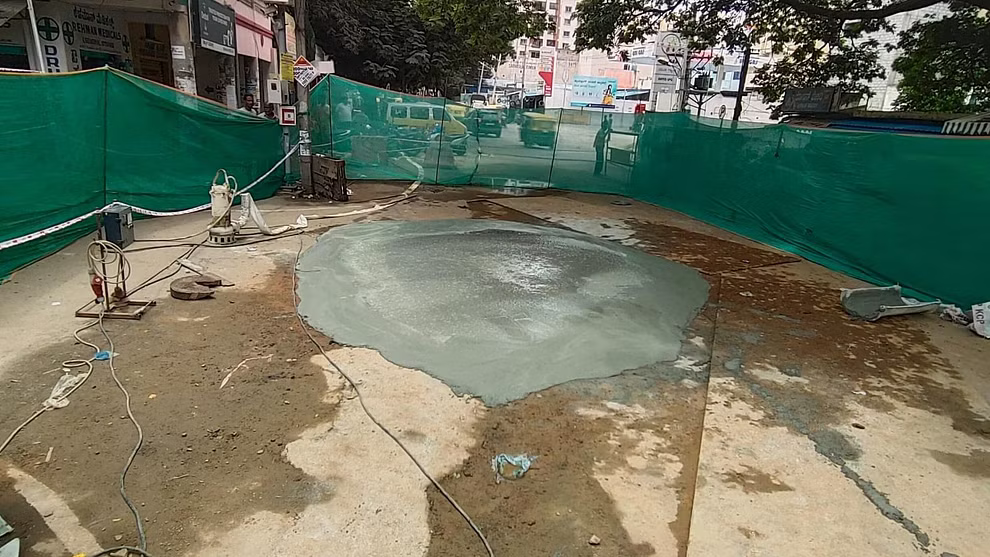
Bangalore (Metro Rail News): On 27 June, Bangalore Metro’s Pink Line encountered a major setback when authorities halted the operations of Tunnel Boring Machine (TBM) Tunga due to the appearance of a sinkhole on the road in KG Halli, located in northeastern Bengaluru.

As per a senior BMRCL official, the sinkhole measures roughly between 2.5 to 3 meters in width and 3 meters in depth and is likely to have appeared due to either an air pocket or loose soil conditions.

SInkhole formed on pink line
The sinkhole formed on the road

Since 2023, there have been 3 sinkholes identified along the Pink Line: one on Brigade Road and another in Pottery Town.

According to an official  “The repair is underway and will be followed by grouting. Backfilling the sinkhole again will need four more days. The TBM will not operate during this time. We will then proceed slowly,” reported Deccan Herald.

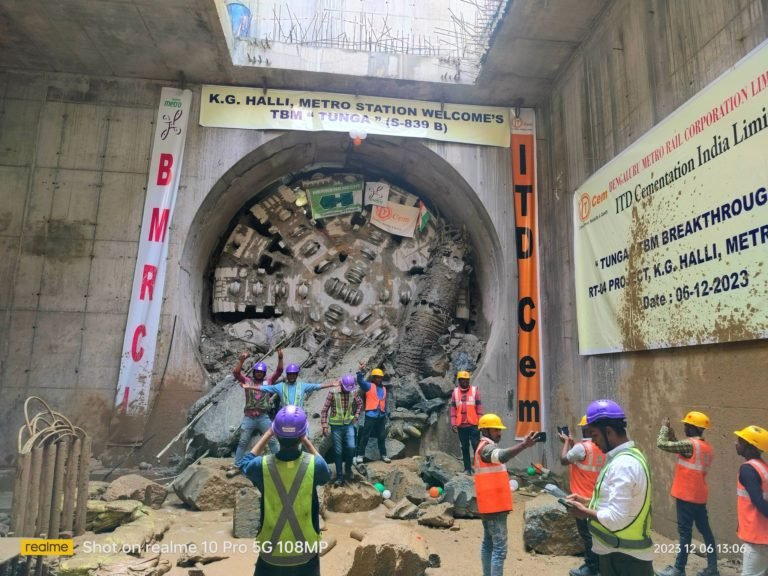
ITD Cementation Ltd deployed the TBM (S-839), nicknamed TBM Tunga at KG Halli for its 935-metre-long tunnel drive towards Nagavara In the first week of February.

This is TBM Tunga’s final assignment for the 21.26-km long Pink Line, which will connect Kalena Agrahara to Nagavara through MG Road and Tannery Road. The Pink Line features a 13.76 km underground section and a 7.5 km elevated section.

 TBM Tunga’s Journey on the Pink Line:

1. First Drive

   – Route: Venkateshpura to Tannery Road

   – Distance: 834.4 meters

   – Duration: July 23, 2021 – August 24, 2022

2. Second Drive

   – Route: Venkateshpura to KG Halli

   – Distance: 1,184.4 meters

   – Duration: October 31, 2022 – December 6, 2023

3. Third Drive

   – Route: KG Halli to Nagavara

   – Distance: 935 meters

   – Start Date: February 1, 2024 (ongoing)

TBM Tunga is likely to achieve its final breakthrough at Nagavara Station of Pink Line on 30 October.  

Kolkata Metro: D-Wall’s Construction Work at Victoria Metro Station is Advancing Swiftly

Kolkata (Metro Rail News): The Construction work of Victoria Metro station of the Purple Line of Kolkata Metro has been going o­n smoothly. Joka -Majerhat stretch of this Purple Line has already been operational and efforts are now o­n to extend it further in order to reach the heart of the city. Construction work of Mominpur (Excl.) to the Esplanade stretch of this Corridor has been going o­n in that direction. A work order for the construction of this stretch has already been issued to M/s. Larsen & Toubro in last July.

1719315660529 25 1
Image Credit: Kolkata Metro

Out of the four stations o­n this stretch (Khidderpore, Victoria, Park Street and Esplanade) construction work of the underground Victoria station has been taken up by the executing agency Rail Vikas Nigam Limited (RVNL).  This station will be 325 meters long and its platform level will be at a depth of 14.7 meters from the surface.

1719315637452 25 3
Image Credit: Kolkata Metro

Barricading work of the area required for the construction of this underground station and other preparatory works are now complete. At first, diaphragm walls (D-walls) are being constructed and then the station slabs will be constructed following the Cut and Cover Top-Down Method.  Already construction of 115 metres of diaphragm walls has been completed.  At Victoria Station, a total of 709 metres of diaphragm walls will be constructed.

1719315645636 25 2
Image Credit: Kolkata Metro

Some encroaching trees at the station site were infringing the construction work of this station.  It was decided to transplant those trees following all stipulated norms to a nearby area. Hon’ble Calcutta High Court has already dismissed a plea challenging the transplantation of these trees o­n 20.06.2024.  In order to construct this station, already 22 trees have been transplanted to Kamardanga Railway land.  This has cleared the infringements towards the construction of this station.  

1719315627096 25 4

During the construction of the station, special care has also been taken to assess the vibration level generated and also for the nearby Victoria Memorial Hall.

For the tunnelling work of the stretch from the Khidderpore to  Park Street stretch of this Corridor, two Tunnel Boring Machines (TBM) will be deployed from the Khidderpore launching shaft. At present, construction of this launching shaft inside the St. Thomas School premises at Khidderpore is in progress.

Mumbai Metro: 3 Firms Submit Proposals to Construct Dongri Depot on Red Line

Mumba (Metro Rail News): On June 25, 2024, the Mumbai Metropolitan Region Development Authority (MMRDA) opened technical bids for Package CA-207. This package involves the construction of the Dongri Depot on the Red Line of the Mumbai Metro. Three firms have submitted proposals to carry out the work for this package.

The Dongri Depot and Workshop, under Package CA-207, is planned to be built on 41.36 hectares of land in northwest Mumbai. This facility will be designed to accommodate and maintain BEML trains serving the entire Red Line, which includes Line-9, Line-7, and Line-7A. These lines connect Dongri, Mira Bhayandar, Dahisar East, Gundavali, and CSIA Terminal 2.

Additionally, the Dongri Depot will feature an Operations Control Centre (OCC), a 690-meter-long test track with platforms, a stabling shed (SBL), a workshop shed (WSL), an inspection shed (IBL), a receiving substation (RSS), and two auxiliary substations (ASS).

Bidding Process

In February 2024, MMRDA called for bids for the package CA-207, estimating the project at Rs. 626.69 crore. The project has a completion timeline of 52 months.

Firms 

Three firms who have submitted the proposal to construct Package CA-207 are the following:

  • KPC Projects Ltd.
  • Ritwik Projects Pvt. Ltd
  • NCC Ltd.

Scope of work

The work under Package CA-207 includes the development of the depot land and the construction of essential infrastructure for the Depot at Dongri, part of Metro Line-9 of the Mumbai Metro Rail Project by MMRDA. This includes:

  • Stabling Yard
  • Operations Control Centre
  • Depot Control Centre
  • Administrative Building
  • Maintenance and Inspection Buildings
  • Auxiliary Substation
  • Roads
  • Underground Utility Ducts
  • Drainage System
  • Rainwater Harvesting Facilities

Additionally, the project involves architectural finishing, plumbing, and pre-engineered building (PEB) works.

The bids submitted by the three firms will now undergo a comprehensive technical evaluation process which can take a few months to complete. Once this evaluation is done, MMRDA will proceed to open the financial bids of the technically qualified bidders to identify the L1 (Lowest bidder) for Package CA-207.

A  4.9 km extension of Line 9 will provide access to the Dongri Depot. This extension originating from Subhash Chandra Bose Ground Station will run along Uttan Road.

Mumbai Metro 3: RDSO Conducts Trials of Rolling Stock on Aqua Line

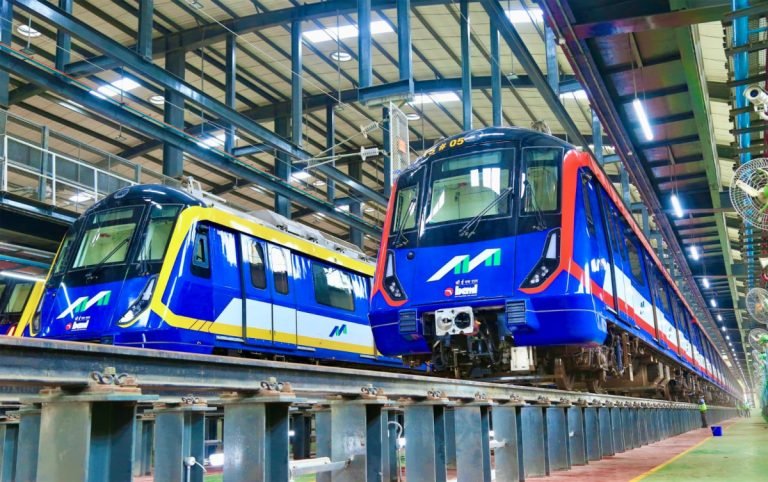
Mumbai (Metro Rail News): The work is advancing swiftly on the Aqua Line (Line 3) of the Mumbai Metro. In a recent development, the Research Design and Standards Organisation (RDSO) has wrapped up the testing phase for the rolling stock designed for the Mumbai Metro’s Line 3, which runs underground between Aarey and Seepz via BKC. Currently, trials are underway in Phase 1, which extends from Aarey to Bandra-Kurla Complex (BKC).

On 24 June 2024, an update on the official X account of the Mumbai Metro 3 project announced the completion of oscillation trials for the Metro rakes. The Research Design and Standards Organisation (RDSO) will now submit the trial report to the Railway Board and the Commissioner of Metro Rail Safety. 

Meanwhile, other electrical system tests and integrated testing of the rolling stock with signalling are ongoing. Once these tests are completed, the Commissioner of Metro Rail Safety (CMRS) will be called for the final inspection before commencing the public operations in Phase 1.

Commencing on June 8, the trials were executed at a maximum speed of 95 km/h using both empty and loaded rakes. These oscillation trials are essential as they assess how well the train performs dynamically and maintains stability at different speeds.

A thorough assessment of the dynamic stability of rolling stock, especially at high speeds and on curves, is crucial to minimise the risk of derailments. Additionally, testing includes a detailed analysis of how the rolling stock interacts with the track, specifically evaluating the forces applied on the rails. Through these tests, RDSO ensures compliance with safety standards to prevent accidents and ensure passenger safety.

Mumbai Metro Line 3

Mumbai Metro’s Aqua Line (Line-3), spans 33.5 kilometres and serves as a crucial north-south corridor, designed to streamline connectivity throughout Mumbai. It will link six commercial suburbs, 30 office areas, 12 educational institutions, 11 major hospitals, and 10 transport hubs, including both of Mumbai’s airports. Once operational, this corridor is expected to alleviate congestion on roads. The operations for Phase I of the Mumbai Metro Line 3 are anticipated to commence by the end of 2024.