New Delhi: Prime Minister Narendra Modi has flagged-off the Delhi-Faridabad Metro Line that would allow hassle free travel for around two lakh daily commuters between the national capital and the industrial hub in Haryana.The extension of the Delhi Metro connects Badarpur to Escorts Mujesar in Faridabad.The total cost of the project from Badarpur to Escorts Mujesar is nearly Rs. 2,500 crore. Out of this, Rs. 1,557 crore was borne by the Haryana Government, the Centre contributed Rs. 537 crore, while the Delhi Metro provided Rs. 400 crore.The nine stations in this section include, Sarai, NHPC Chowk, Mewala Maharajpur, Sector 28, Badkal Mor, Old Faridabad, Neelam Chowk Ajronda, Bata Chowk and Escorts Mujesar. buy kamagra polo online https://lasernailtherapy.com/wp-content/themes/twentytwentytwo/inc/patterns/en/kamagra-polo.html no prescription
All these are elevated and located on either side of the Delhi-Mathura Road (NH-2).“The nine-station metro corridor which was 95 per cent indigenously built will provide people a safe, affordable, quick, comfortable, reliable, environment-friendly and sustainable transport facility,” a Haryana government spokesperson said.Haryana Chief Minister ML Khattar, addressing a press conference on Saturday, had thanked the Prime Minister for “gifting” the Metro service which would take the city to “another level of progress” with better connectivity with other NCR towns.He had also said that the Prime Minister would be announcing the go-ahead for connecting Gurgaon with Faridabad by Metro.
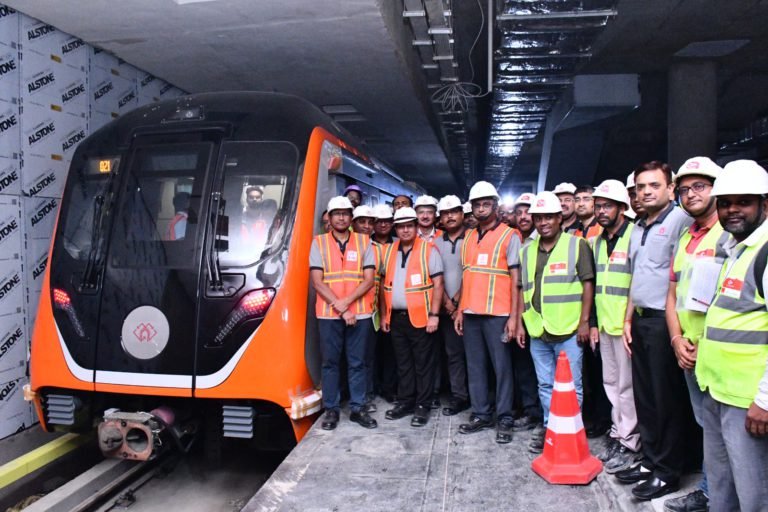
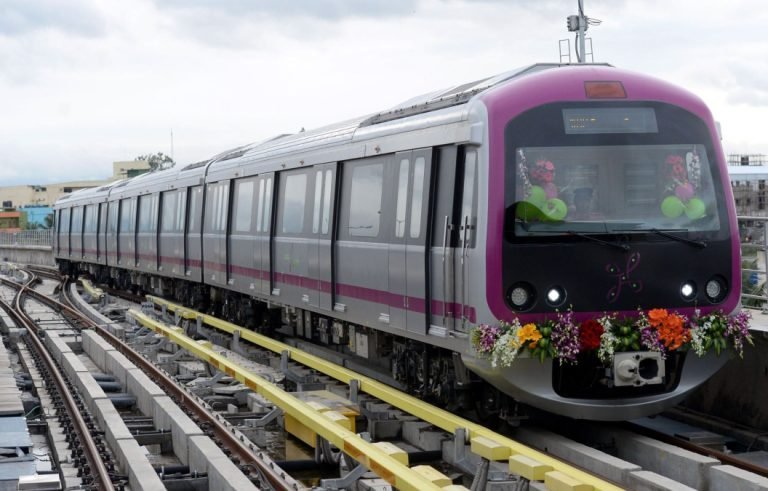
Kanpur (Metro Rail News): On 12 July, the Kanpur Metro project reached another milestone when UPMRC began the trial run of the Kanpur Metro on the Up-Line of the underground section (MacRobertganj Ramp – Nayaganj) of Line 1.
Kanpur Metro during trial run (Image credit: UPMRC)
To facilitate the trial runs, UPMRC deployed a metro train (manufactured by Alstom) from Motijheel Station towards Nayaganj Metro Station.
UPMRC conducted this initial trial run at a slow speed to examine the interaction between infrastructure and trains and find any potential faults in tracks. The trials also aimed at SOD clearance. The SOD (Schedule of Dimensions) incorporates a set of guidelines and specifications that define the physical dimensions and clearances required for the safe and efficient operation of a metro rail system.
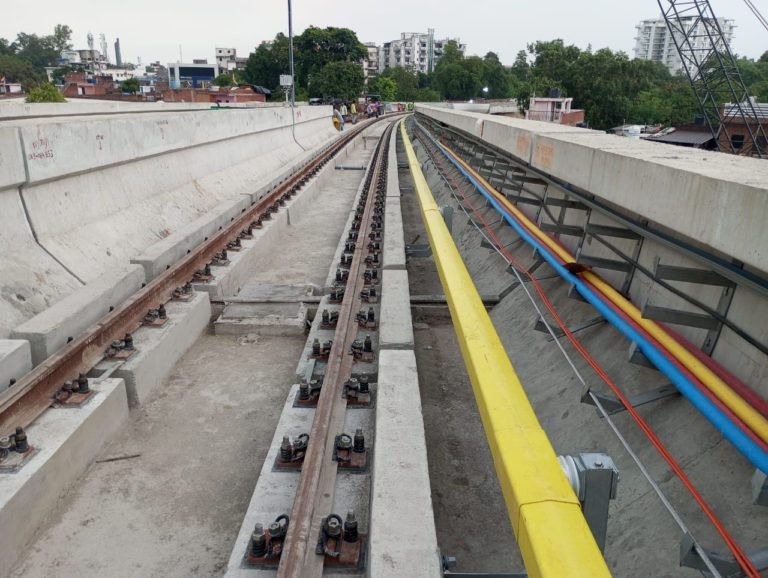
On 10 July, UPMRC completed the installation of the Third Rail System (750 v DC) on the Upline of this section. Following this, the line was energised on 11 July.
Image Credit: Ragupathi Geetha
The Gulermak – Sam India Builtwell JV carried out the work of this section under package KNPCC-05 at Rs. 1042.26 crore.
In March 2024, TBM Tatya, nicknamed S92, achieved the final tunnel breakthrough for package KNPCC -05, which covers a distance of 3.62 km and features 4 strategically planned underground stations.
UPMRC’s Next Move
In the next weeks, UPMRC will test other subsystems, like the signalling system and braking system, at various speeds to ensure safety. However, UPMRC has not disclosed the deadline for starting commercial operations on this underground section.
Kanpur Metro Phase 1
Spanning 32.385 km, Kanpur Metro Phase 1 received approval from the central government in February 2019. Phase 1 of Kanpur Metro features 2 corridors and 30 stations.
The priority corridor of the Kanpur Metro covers a distance of 8.7 km from IIT Kanpur to Moti Jheel. This section became operational on 28 December 2021. The remaining portion of Phase 1 is expected to be operational by the end of 2024.
Navi Mumbai, as evident by its name itself, is a newly planned & developed city situated in the vicinity of Mumbai across Thane & Raigad, being an indispensable part of the Mumbai Metropolitan region. The growth & planning of the city is connected with the inception of various other allied bodies, specifically CIDCO.
Navi Mumbai was envisioned as a solution to Mumbai’s burgeoning housing crisis. Its primary goal was to provide affordable housing options, alleviating pressure and preventing the spread of slums in Mumbai. This makes Navi Mumbai the go-to place for the migrants, who form the largest demography in the Navi Mumbai region. The population of Navi Mumbai in 2011 was 1,120,547, according to the census conducted by Census India. The breakdown by gender showed 610,060 males and 510,487 females.
Navi Mumbai prioritized education during its urban planning. They designed each township with a focus on resident access to education. Specifically, the plan aimed to provide one primary school for every 5,000 residents, one high school for every 12,500 residents, and one college for every 50,000 residents. As per an estimate on commutation, Roughly one in four residents, or an estimated 22.5%, are school-going children. Most students stay local for their education, attending schools and colleges within their own township. When it comes to commuting, the majority (76%) opt for walking, while public transport (12%), bicycles (10%), and school buses (2%) make up the remaining methods.
Navi Mumbai is rapidly emerging as an educational hub. This is fueled by the establishment of numerous primary schools and colleges that attract not only local students but also those from Mumbai and beyond, all seeking a high-quality education. So far, as the paradigm of urban mobility in Navi Mumbai is concerned, it offers a well-connected public transport network. NMMT buses cover the city and connect to Mumbai, Thane, and other areas. Local trains and auto rickshaws provide additional options. Interestingly, a new rapid metro system is also under development, with multiple lines planned.
Inception
To understand the backdrop behind the inception of the Navi Mumbai Metro, the following points need to be understood well:
1. Soaring Demand, Strained Infrastructure:
Navi Mumbai’s future is bright, with a brand new international airport on the horizon. However, this exciting development brings a challenge: its current public transport system is at risk of being overwhelmed by the resulting surge in population and economic activity, particularly in Kalyan-Dombivli and Taloja.
2. Vision for a Thriving Hub:
To address this challenge and unlock Navi Mumbai’s full potential, the MMRDA proposed extending the existing Metro Line-5 from Thane to Taloja. This extension isn’t simply about adding a new train line; it’s a strategic move aligned with the vision for the Kalyan Taluka Growth Centre.
3. The Kalyan Taluka Growth Centre: A Model for Development:
Envisioned as a vibrant economic hub akin to Mumbai’s Bandra-Kurla Complex (BKC), the Kalyan Taluka Growth Centre is one of four identified in the MMR’s Draft Regional Plan. This project aims to create significant job opportunities, promote infrastructural growth, and seamlessly connect the area to Thane, Kalyan, and Dombivli.
4. NAINA: Building a Sustainable Future:
The Government of Maharashtra’s establishment of NAINA, a dedicated planning authority, further underscores their commitment to Navi Mumbai’s well-organized and sustainable development. NAINA’s reach extends beyond the immediate vicinity of the airport, encompassing 270 villages across six districts. This comprehensive approach ensures that growth is managed responsibly, with the Navi Mumbai Metro as a key driver of connectivity and progress.
By anticipating future needs and taking proactive measures, the Navi Mumbai Metro extension and the creation of NAINA position Navi Mumbai for a future of manageable growth, economic prosperity, and a well-connected community.
Approval & DPR
While the current corridor may traverse primarily agricultural and undeveloped land, this is a strategic choice for Transit-Oriented Development (TOD). The metro isn’t just about serving existing populations; it’s a catalyst for future growth.
This forward-looking approach prioritises long-term benefits:
Alleviating Mumbai’s Congestion: By creating a well-connected alternative, the metro incentivises population dispersal, ultimately reducing strain on Mumbai’s existing infrastructure.
Stimulating Development: The metro’s accessibility will catalyse development along the corridor, fostering the creation of new residential and commercial districts. This will attract residents seeking a less congested environment while maintaining convenient access to the city center.
The metro is not merely a response to immediate needs, but rather a proactive investment that will shape a more balanced and sustainable urban landscape for Navi Mumbai’s future.
DPR & Commercialisation:
Greenlighted in April 2010, the Navi Mumbai Metro gained public support through hearings that same year. By September, CIDCO was appointed to lead construction. May 2011 saw the foundation stone laid, and construction began in October. March 2012 brought the metro’s master plan, hinting at a future Mumbai Metro connection. A crucial construction contract was awarded in mid-2012. May 2021 witnessed a successful first trial run. Finally, on 17 November 2023, Navi Mumbai celebrated the long-awaited opening of Line 1, connecting CBD Belapur to Pendhar.
Lines of Navi Mumbai Metro
Line-1: CBD Belapur – Pendhar (Operational)
Length: 11.10 km
Type: Elevated
Number of Stations: 11
Station Names: Belapur Terminal, RBI Colony (erst. Sector 7), Belpada (erst. CIDCO Science Park), Utsav Chowk, Kendriya Vihar (erst. Sector 11), Khargar Village (erst. Sector 14), Central Park, Pethpada, Amandoot (erst. Sector 34), Panchanand and Pendhar
Future Lines
Following are the lines planned for the future as the extension of the Line-1
Line-2: Taloja MIDC – Khandeshwar
Estimated Cost: Rs. 2820.20 cr
Length: 7.12 km
Stations: 6
Type: Elevated
Line-3: Taloja MIDC – Pendhar
Estimated Cost: Rs. 1850.14 cr
Length: 3.87 km
Stations: 3
Type: Elevated
Line-4: Khandeshwar – Navi Mumbai International Airport (NMIA)
Estimated Cost: Rs. 1270.17 cr
Length: 4.17 km
Type: Elevated & Underground
Latest Update
As of June 2024, the Detailed Project Report (DPR) for Navi Mumbai Metro Lines 2 and 3 is still under development. While an initial DPR was completed in 2011, a fresh assessment is needed to reflect the current state of the areas the lines will traverse.
This new DPR will address factors like:
Alignment of Bridges: Ensuring the planned bridges are still feasible and optimal considering current infrastructure and development.
Encroachments: Accounting for any existing structures or developments that might impact the planned route.
Coastal Regulation Zone (CRZ) Compliance: Verifying adherence to regulations protecting environmentally sensitive coastal areas.
The finalisation of the DPR is crucial for securing funding and initiating construction. We can expect further updates on the timeline once the DPR is complete.
Ridership of Line 1
The Navi Mumbai Metro has seen a promising ridership since its inauguration in November 2023. In just the first 2.5 months of operation, nearly 1 million passengers (9,34,728) took a ride on the metro, generating over ₹2.55 crore in revenue.
Here’s a breakdown of the ridership and revenue by month:
Month
Ridership
Revenue
November
222,996
57,52,069
December
376,810
1,05,78,259
January
334,922
91,71,849
Total
934,728
2,55,02,177
The ridership witnessed a steady increase from November to December, with a slight dip in January. However, officials anticipate a rise in ridership figures once the final January data is incorporated.
This strong initial ridership indicates Navi Mumbai Metro’s potential to significantly contribute to the city’s public transport network. As the network expands and integrates with other transportation options, ridership is expected to climb further.
Metro’s Impact on Real Estate
The Navi Mumbai Metro, built on the principles of Transit Oriented Development (TOD), is already demonstrating positive impacts, particularly in the realm of real estate. A report by Hindustan Times highlights a rise in property interest and prices along the metro corridor. Chirag Shah, president-elect of Builders Association of Navi Mumbai (BANM) – Raigad, attributes this to improved connectivity:
Bridging Distances: The metro has brought previously far-flung areas closer, encouraging reluctant homeowners to finally occupy their properties in areas like Taloja.
Surge in Buyer Interest: Increased demand for properties in the metro-accessible regions was evident at a recent BANM property expo. Furthermore, inquiries are pouring in for upcoming showcases, showcasing the optimism surrounding the real estate market.
These early trends suggest that the Navi Mumbai Metro will be a significant driver of real estate growth. As the metro network expands and integrates with other transportation options, the accessibility and desirability of these areas will likely continue to rise. This, in turn, can lead to further property value appreciation and increased development activity along the corridor.
The Navi Mumbai Metro is not just a transportation solution; it’s a catalyst for creating a vibrant and well-connected Navi Mumbai, with a thriving real estate market at its core.
Beyond Commuting: The Broader Economic Impact of the Navi Mumbai Metro
The Navi Mumbai Metro isn’t just transforming transportation; it’s poised to be a catalyst for the city’s economic growth. Here’s a look at some potential benefits beyond the immediate convenience it offers passengers.
1. A Boom for Business:
Increased Commercial Activity: The metro’s accessibility is expected to draw businesses, particularly retail and service establishments, to areas along the corridor. This can create vibrant commercial hubs, attracting customers and boosting local economies.
Improved Job Market Access: Enhanced connectivity will make it easier for residents to access job opportunities across Navi Mumbai. This two-way flow – residents reaching workplaces and businesses finding skilled employees – can fuel economic dynamism.
Example: The Delhi Metro’s impact on Gurgaon provides a real-world example. Previously a cluster of villages, Gurgaon’s proximity to a metro station led to a surge in commercial development, office spaces, and a thriving job market.
2. New Development Opportunities:
Emerging Business Hubs: The metro can act as a magnet for new business districts, especially around stations in previously undeveloped areas. This can lead to the creation of office spaces, IT parks, or even industrial zones.
Investment Potential: The metro’s positive impact on real estate and commercial activity will likely attract investors. This can lead to increased investment in infrastructure, businesses, and real estate projects in Navi Mumbai.
Trend: Cities worldwide are leveraging metro systems to create Transit Oriented Development (TOD) zones. These zones combine residential areas with commercial spaces and job opportunities, all within easy walking distance of metro stations. Navi Mumbai’s metro has the potential to follow this successful model.
3. A More Vibrant City:
Enhanced Connectivity for Tourists: The metro can make Navi Mumbai a more attractive destination for tourists by providing seamless access to various attractions, shopping areas, and entertainment options. This can benefit hotels, restaurants, and other tourism-related businesses.
Improved Quality of Life: Reduced traffic congestion due to the metro can lead to a more pleasant living environment. This, combined with easier access to jobs and amenities, can enhance the overall quality of life for Navi Mumbai residents.
The Navi Mumbai Metro’s economic impact is still unfolding, but early signs and global trends point towards a positive transformation. As the metro network expands and integrates with other transportation systems, its influence on Navi Mumbai’s economic landscape is likely to become even more significant.
A Looking Back on The Delay
The Navi Mumbai Metro Line 1, envisioned as a solution to traffic woes and a catalyst for growth, faced significant delays throughout its development. While operational now, understanding the reasons behind these delays can offer valuable insights for future infrastructure projects.
Here’s a breakdown of the delays that plagued Line 1:
Initial Planning (2007-2011): While the project was conceptualized in the late 2000s, finalizing the route alignment and securing approvals took several years. This initial delay can be attributed to factors like:
Complexities of land acquisition in a developing city.
Balancing environmental considerations with infrastructure needs.
Negotiations with stakeholders, including residents and businesses.
Construction Phase (2011-2023): Groundbreaking happened in 2011, but construction itself witnessed numerous setbacks, including:
Contractor Issues: Potential inefficiency or financial troubles & eventually contract terminations with the chosen contractor caused delays.
Funding Constraints: Unforeseen budgetary limitations also slowed down the pace of construction as the input cost increased.
Post-Construction (2023-present): Even after physical construction was complete, there was a wait for inauguration:
Safety and Regulatory Approvals: Obtaining final safety clearances and complying with regulatory procedures added heavily to the timeline.
Integration with Existing Systems: Ensuring seamless integration with other transportation networks like buses or local trains have required additional time and can take more time as the authorities aim for Multi Modal Development.
The cumulative effect of these delays resulted in a project with an initial target completion date of 2014 opening over nine years later in November 2023. This delay had ripple effects:
Cost Escalation: Construction material prices and labor costs fluctuated, leading to increased project expenditure over time.
Public Frustration: Residents who were looking forward to the metro’s benefits had to wait considerably longer than anticipated.
Loss of Potential Benefits: The economic and social advantages the metro could have brought were delayed, impacting Navi Mumbai’s growth trajectory.
The Navi Mumbai Metro holds immense potential to transform the city’s landscape. By addressing the shortcomings highlighted by Line 1’s delays, future projects can deliver on this promise and contribute to Navi Mumbai’s growth as a well-connected and thriving metropolis.
Challenges Ahead
While Transit Oriented Development (TOD) offers long-term benefits for Navi Mumbai Metro, there are some initial challenges to consider:
Land Acquisition and Development:
Uncertain Demand: Since the metro traverses undeveloped areas, gauging initial demand for residential or commercial development near stations can be difficult. This might deter investors, slowing down the pace of TOD implementation.
Land Acquisition Issues: Negotiating land acquisition, especially from private owners in developing areas, can be time-consuming and complex, delaying the construction of supporting infrastructure.
Affordability Concerns:
Rising Property Prices: The metro-driven rise in property values near stations might push affordable housing options further out, potentially creating a situation where residents who rely on public transport cannot afford to live close to stations.
Example: In Gurgaon, India, the metro led to a surge in commercial development near stations. However, rising land prices pushed affordable housing further away, creating a situation where some workers couldn’t afford to live near their workplaces.
Initial Ridership and Revenue:
Lower Initial Ridership: With limited development around stations initially, ridership and revenue generation might be lower than anticipated. This could strain the project’s financial viability in the short term.
This means the need for seamless first- and last-mile connectivity with feeder buses, rickshaws, and pedestrian walkways near stations in Navi Mumbai. Lack of such integration can discourage people from using the metro if reaching the station itself is inconvenient.
Integration with Existing Infrastructure:
Feeder System Development: Creating a robust network of feeder buses, rickshaws, and pedestrian walkways is crucial for seamless last-mile connectivity. This requires coordination with local authorities and might take time to establish effectively.
Long-Term Planning and Sustainability:
Phasing Development: Carefully phasing TOD implementation is necessary to ensure a balance between infrastructure development and attracting residents and businesses. Otherwise a planned dream can turn out to be a strategic nightmare.
Mixed-use Development: Encouraging mixed-use development projects near stations can create a more vibrant and sustainable environment, attracting a wider range of residents and businesses. However, proper planning and regulations are needed to ensure a balanced mix.
These challenges can be addressed through:
Government Incentives: Providing incentives for developers to invest in affordable housing and mixed-use projects near stations can encourage TOD implementation.
Public-Private Partnerships: Collaboration between the government and private sector can accelerate development and ensure a sustainable revenue model for the metro.
Community Engagement: Involving residents and businesses in the planning process can foster a sense of ownership and encourage support for TOD initiatives.
By acknowledging these challenges and implementing proactive solutions, Navi Mumbai Metro can leverage TOD principles to create a truly sustainable and well-connected city for the future.
Conclusion
The Navi Mumbai Metro is poised to be a transformative force for the city, shaping its future as a well-connected, thriving metropolis. While initial ridership figures are promising and the project holds immense potential, there are hurdles to overcome. By proactively addressing operational challenges, navigating extension complexities, and considering the wider impact of the metro, Navi Mumbai can ensure its success. Learning from the delays of Line 1, with improved planning, transparent communication, and efficient project management, the Navi Mumbai Metro can deliver on its promise and propel Navi Mumbai towards a bright future.
Lucknow, the City of Nawabs, enchants with its rich tapestry of history and contemporary charm. Nestled on the banks of the Gomti River, Lucknow boasts magnificent Mughal-era architecture that whispers tales of a bygone era. This vibrant city, the eleventh most populous in India, is a captivating blend of delectable cuisine dating back centuries and a thriving modern metropolis.
Beyond its historical significance, Lucknow serves as the capital of Uttar Pradesh, a state actively promoting tourism through the Uttar Pradesh Heritage Arc. This strategic location also houses a bench of the Allahabad High Court, solidifying its administrative importance.
But Lucknow is much more than just a historical and administrative center. Beneath its elegant facade lies a dynamic city pulsating with life. Traditional industries like Chikan embroidery and aeronautics share space with a flourishing research and development sector. The city’s educational institutions attract students from across India, making it a hub of intellectual growth.
In recent years, Lucknow has witnessed a surge in the service sector, with retail trade and healthcare experiencing significant growth. This economic dynamism, coupled with a rich cultural heritage, creates a unique and inviting atmosphere for residents and visitors alike. Whether you’re a history buff, a foodie, or a business professional, Lucknow has something to offer everyone. And with the arrival of the Lucknow Metro, navigating this captivating city is about to become even easier. So, get ready to embark on a journey through time and experience the magic of Lucknow!
Current Scenario
Lucknow boasts a well-established transportation network, offering a mix of roads, buses, an airport, a fledgling metro system, and railways. National Highways 27 and 30 intersect at the bustling Hazratganj crossing, providing connectivity to major cities like Kanpur, Allahabad, Shahjahanpur, and beyond. The available modes of public transport in the city are taxis, city buses, cycle rickshaws, and auto rickshaws.
The Lucknow City Transport Services Limited (LCTSL) manages the city bus service, with a fleet of 260 buses traversing Lucknow’s roads. For longer journeys, Lucknow boasts an extensive railway network with fourteen stations spread across the city limits. The main Charbagh station serves as the hub for long-distance travel, while other stations offer suburban connectivity.
However, the picture isn’t entirely rosy. Lucknow’s recently launched metro system is currently facing ridership challenges. This raises concerns about its potential revenue generation and long-term sustainability. It’s clear that Lucknow’s urban mobility sector is at a crossroads, with established systems co-existing with a new, evolving metro. The future holds promise for a more integrated and efficient network, but challenges need to be addressed to ensure a smooth and sustainable urban transport landscape.
Challenges & Inception of Lucknow Metro
Lucknow’s a city on the rise. Bustling streets, a booming economy, and a vibrant cultural scene – it’s no wonder the population exploded. But with great growth comes growing pains, and Lucknow’s Transportation system started to feel the squeeze. Let’s dive into the data and see what challenges gave birth to the Lucknow Metro.
Soaring Population: Between 2001 and today, Lucknow’s population surged from an estimated 2.2 million to over 3 million, with projections reaching 4 million by 2021. The existing transportation system simply couldn’t keep pace.
Dominance of Private Vehicles: Over 90% of registered vehicles in Lucknow are private vehicles (cars and two-wheelers), putting an immense strain on road capacity.
Inadequate Public Bus System: At present, the public bus transportation in the city operates with a fleet of 260 buses. The city bus system offered a meagre 6 buses per lakh population, far below the national benchmark of 70-80 buses per lakh for Indian urban areas.
Impact on Economic Growth: Lucknow’s role as a major administrative, commercial, and educational hub attracts professionals seeking opportunities. A sluggish transport system hinders their ability to navigate the city efficiently, impacting productivity and economic activity.
Expansion: In 1991, Lucknow Municipal Corporation significantly expanded its jurisdiction, nearly doubling its size from 14,594 hectares to 33,750 hectares. This, coupled with the city’s natural appeal as a center for administration, commerce, and education, fueled a population boom.
The major traffic-generating areas in Lucknow are Railway Station, Charbagh Bus Stand, Vidhan Sabha, Secretariat and the commercial areas in the central part of the city. Also, with the absence of a proper public transport system, many personalized modes have emerged in the city. Lucknow’s impressive growth demanded a modern and efficient public transportation system. The Lucknow Metro serves as a strategic solution, designed to address traffic congestion, unlock economic potential, and connect Lucknow’s growing population with its key business and educational centers.
Let’s board a ride into the beginning of all this!
Proposal of Rapid Transit System: The 1988 Lucknow Transport Plan
Back in 1988, a forward-thinking study by the School of Planning and Architecture in New Delhi laid the groundwork for Lucknow’s future transportation. This comprehensive Lucknow Transport System Plan-2001 analyzed existing traffic patterns and travel habits. It then utilized a land use-transport model to assess various strategies and plans for the city’s growth.
The study’s key recommendation? A medium-capacity Light Rail Transit System (LRT) to address the city’s growing mass transportation needs. This visionary plan proposed two specific corridors: a North-South Corridor (9.6 km) and an East-West Corridor (13.6 km), totaling 23.2 km. Additionally, the study acknowledged the potential for further network expansion to cater to other high-demand areas, paving the way for future feasibility studies.
Interestingly, the plan also identified the limitations of existing intercity railway lines in meeting the city’s internal travel needs over the next decade to fifteen years. This foresight proved crucial in shaping Lucknow’s future transportation landscape. The seeds sown in 1988 eventually blossomed into the Lucknow Metro we know today.
Approval & DPR
The bustling streets of Lucknow, steeped in history and teeming with life, have a brand new way to get around: the Lucknow Metro. This state-of-the-art rapid transit system, operated by the Uttar Pradesh Metro Rail Corporation (UPMRC), promises a smoother, swifter way to navigate the city’s vibrant core. While all this holds immense importance let’s deep dive into the paper trails & development of the same as:
The Lucknow Metro’s journey began in 2008 with a vision to transform the city’s transportation landscape. The Government of Uttar Pradesh, under Chief Minister Mayawati, proposed the project, and the Delhi Metro Rail Corporation (DMRC) submitted a concept paper outlining its feasibility.
Following an agreement between DMRC and the Lucknow Development Authority (LDA) in February 2009, the project gained momentum. Years of planning and approvals ensued. In June 2013, the state cabinet, led by Chief Minister Akhilesh Yadav, gave the green light for the metro network and the creation of a dedicated Lucknow Metro Rail Corporation (LMRC) to oversee its development and operation.
August 2013 marked a crucial milestone with the Government of Uttar Pradesh approving the Detailed Project Report (DPR) prepared by DMRC. This comprehensive document laid the groundwork for the metro’s construction.
By October 2013, LMRC was formally established as a special-purpose vehicle to spearhead the project. With the construction set to begin in December, the stage was set for Lucknow’s rapid transit dream to become a reality.
Lines of Lucknow Metro
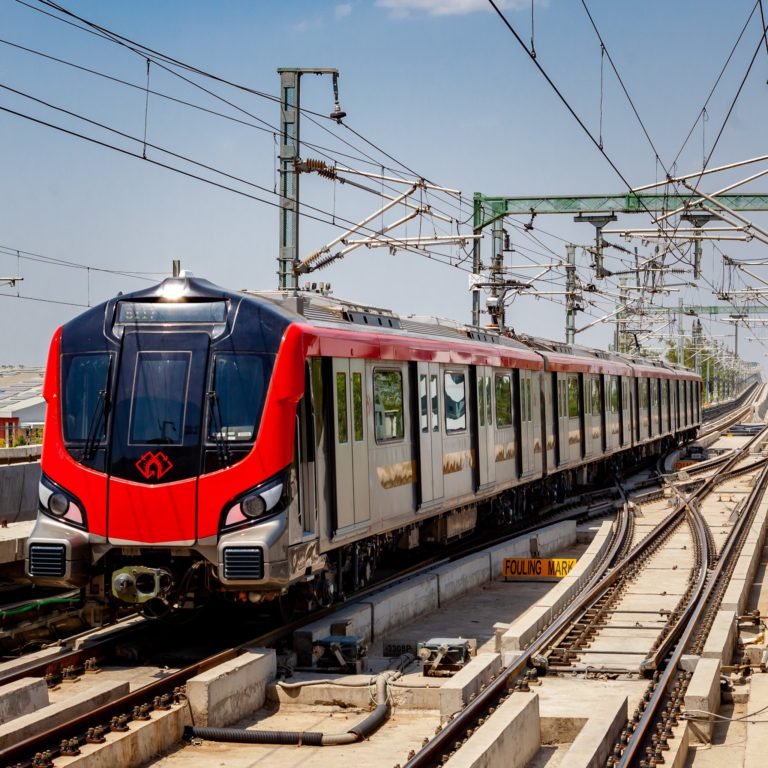
At a GlanceOperational: 22.878 km | Under Construction: 0km | Approved: 0 km | Proposed: 85 kmDaily Ridership: 67,000/day (August 2023)Rolling Stock: 80 coaches (20 trains of 4 cars) supplied by Alstom
Lucknow Metro Phase 1A Route (Operational)
Line-1: CCS Airport – Munshi Pulia
Length: 22.878 km
Type: Elevated (19.438 km with 19 stations) and Underground (4 km with 4 stations)
Elevated: 4.548 km with 5 stations (GB Marg – Thakurganj)
Underground: 6.55 km with 7 stations (Balaganj – Vasant Kunj)
Number of Stations: 12
Station Names: Gautam Buddha Marg, Aminabad, Pandeyganj, City Railway Station, Medical College Chauraha, Nawazganj, Thakurganj, Balaganj, Sarfrazganj, Musabagh, Vasant Kunj
Latest Update The Uttar Pradesh Government has given the thumbs up to the second phase of Lucknow’s metro project. Spanning 11.165 km from Charbagh to Vasant Kunj, construction on this new corridor is set to begin by June 30, 2027, offering commuters a faster and more convenient way to travel.
Lucknow Metro Ridership: A City on the Move
Lucknow Metro has become a game-changer for the city’s transportation landscape. Since its inception in 2017, the ridership has steadily climbed, reflecting the growing popularity and convenience it offers to commuters. Let’s delve deeper into the current trends, factors contributing to the rise, and what the future holds for Lucknow Metro.
Riding the Wave: A Look at Recent Ridership Trends
Record-Breaking Start to 2024: Lucknow Metro broke its previous ridership records in the first quarter of 2024. On January 1st, it witnessed a phenomenal surge, with a staggering 1.30 lakh passengers using the metro in a single day. This surpassed the previous record of 93,237 passengers set in December 2023 (Source: Hindustan Times).
Steady Growth: While the daily ridership fluctuates based on weekdays, weekends, and holidays, the average daily ridership for 2024 is estimated to be around 87,000 passengers, a significant increase compared to previous years (Source: Times of India). This growth trajectory indicates a growing trust in the metro system as a reliable and efficient mode of transportation.
Fueling the Rise: Factors Contributing to Increased Ridership
Several factors are propelling Lucknow Metro towards becoming the city’s preferred mode of transport:
Increased Awareness: As Lucknow Metro becomes more ingrained in the city’s daily life, public awareness about its benefits like speed, affordability, and comfort has significantly increased. This awareness is attracting new riders, particularly those who previously relied on congested and unreliable road traffic.
Fueling the Change: Rising fuel prices are making car travel a less attractive option, pushing residents towards more economical alternatives. Lucknow Metro offers a cost-effective and time-saving solution, especially for longer commutes within the city.
Connecting the Dots: The current 22.8 km North-South corridor, connecting Chaudhary Charan Singh International Airport to Munshi Pulia, provides a crucial link for a large segment of the population. The upcoming East-West Corridor (Vasant Kunj to Charbagh) promises to further expand the network, reaching new areas and attracting a wider ridership base.
East-West Corridor – Charbagh to Vasant Kunj
The upcoming East-West Corridor (Charbagh to Vasant Kunj) of the Lucknow Metro is a significant development that promises to revolutionise public transportation in the city. Here’s a breakdown of how this expansion is poised to significantly increase ridership for Lucknow Metro:
Unlocking New Ridership Base:
Targeting Densely Populated Areas: The East-West corridor traverses through densely populated areas of Lucknow, including the historic Old City. This region has traditionally relied on autos, rickshaws, and other less efficient modes of transport. The metro’s arrival will offer a faster, more convenient, and reliable alternative, attracting a vast new ridership base.
Catering to Commuters and Businesses: The corridor connects crucial areas like the Lucknow Junction railway station (Charbagh) to commercial hubs and residential neighborhoods in the west. This improved connectivity will cater to daily commuters, students, and working professionals, significantly boosting ridership during peak hours.
Enhancing Network Connectivity:
Bridging the Gap: Currently, the Lucknow Metro primarily serves the north-south axis. The East-West corridor will bridge this gap, creating a more interconnected network. This will encourage multi-modal journeys, allowing passengers to seamlessly transfer between north-south and east-west lines, opening up new travel options for a wider range of destinations.
First and Last Mile Connectivity: The expansion necessitates the development of a robust feeder system with buses and other public transport options connecting metro stations to far-flung neighborhoods. This will eliminate first and last-mile connectivity issues, making the metro a more attractive option for a larger segment of the population.
The East-West Corridor is not just an infrastructure project; it’s a potential game-changer for Lucknow’s urban landscape. By unlocking new ridership potential, promoting economic activity, and fostering TOD, the expansion promises to transform the city’s mobility ecosystem.
By closely monitoring ridership patterns after the launch, authorities can further optimize services, adjust infrastructure based on demand, and ensure the Lucknow Metro remains a sustainable and efficient public transportation solution for the city’s growing population.
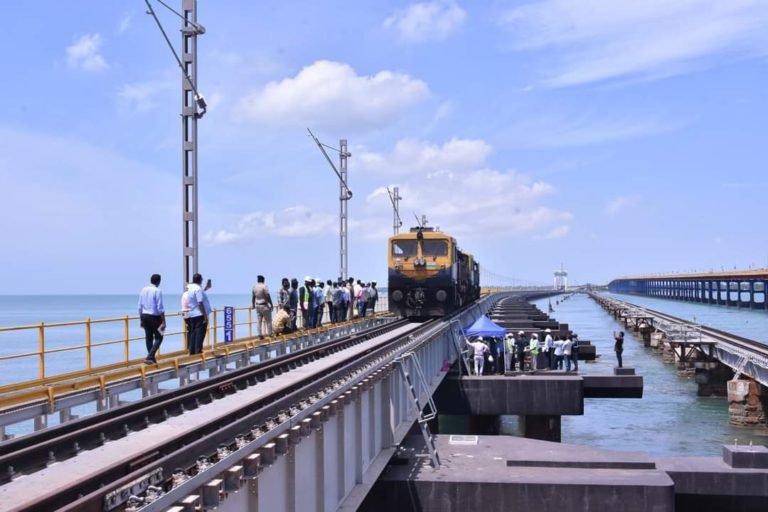
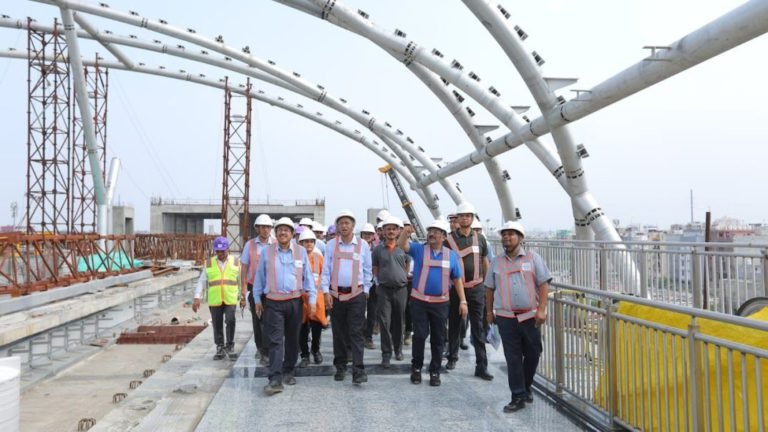
Ramanathapuram (Metro Rail News): During a two-day visit to Southern Railway, Anil Kumar Khandelwal, Member (Infrastructure) of the Railway Board, conducted an inspection of the ongoing construction work at the Pamban bridge. This inspection aimed to review the progress and ensure the projects are on track to meet their scheduled deadlines.
Image Source: Southern Railway
Additionally, officials conducted a light engine trial run to assess the structural integrity of the bridge.
After reviewing the works at the new Pamban Bridge, railway officials stated that the infrastructure works are likely to be concluded in two months. Following the completion of these works, the trial run will commence.
Image Source: Southern Railway
After inspection, Shri Khandelwal stated, “The Pamban Bridge stands as an identity of the place. The old Pamban Rail Bridge was constructed over a century ago, and over the years, the seawater has caused erosion and weakened the bridge. Over 90% of the work has been completed.”
Image Source: Southern Railway
Shri Khandelwal also mentioned that discussions are underway for track works on the Rameswaram-Dhanushkodi line. He stated that the work of laying tracks will commence once the state government allots the necessary land.
Kolkata (Metro Rail News): The construction work of Victoria Metro Station is progressing swiftly. Recently, The L&T team successfully completed the construction of the first 170 metres of the planned 709-metre diaphragm wall (D-Wall) at Victoria Station. The remaining work is expected to conclude in four months. Following the completion of the D-Wall, the excavation and construction of station slabs will begin. Preparatory work, including barricading the construction area, has already been completed.
For the tunnelling work on the stretch from Khidderpore to Park Street, two Tunnel Boring Machines (TBM) will be deployed from the Khidderpore launching shaft. The construction of this launching shaft, located inside the St. Thomas School premises at Khidderpore, is currently underway.
Victoria Metro Station
The Victoria Metro station is located on the Kolkata Metro’s 18.47 km long Purple Line. The station will be 325-metre-long in length and the platform level will be situated at a depth of 14.7 metres below the surface. This station is going to be one of the major stations of Purple Line which will be the gateway to the Maidan area of Kolkata.
Delhi (Metro Rail News): On 9 July, the Lucknow Metro project gained momentum when the Network Planning Group (NGP), under PM Gati Shakti, approved the Detailed Project Report (DPR) of the 11.165 km long East-West Corridor. This new Line will connect Charbagh and Vasant Kunj via 12 stations.
Lucknow Metro Map (Source: Wikimedia)
The approval came from the Network Planning Group (NPG) following a meeting held in Delhi on 9 July. UPMRC had already approved the DPR of the project in March 2024.
Rajeev Singh Thakur, Additional Secretary, Department for Promotion of Industry and Internal Trade (DPIIT), chaired the meeting. In the meeting, various types of utilities such as water pipelines, transmission lines, sewer lines, and railway lines were discussed, along with buildings or monuments related to the Archaeology Department, bus stands, and multi-modal connectivity using the PM Gati Shakti (PMG) National Master Plan Portal. It was concluded that there are no obstacles to the construction of the East-West Corridor Metro.
The Cost & Deadline of the Project
The East-West corridor received approval at an estimated cost of ₹5,081 crore. The project is slated to be completed in 5 years.
Route & Stations of Lucknow Metro’s Blue Line
The East-West corridor (Blue Line) will cover a total distance of 11.165 km (4.286 km elevated and 6.879 km underground). This Line will feature 7 underground stations and 5 elevated stations.
Interchange Between Blue Line & Red Line
The Blue Line will meet the existing Red Line (North-South Corridor) at Charbagh Metro Station, which will serve as an interchange facility between the east-west and north-south corridors, ensuring a smooth transition for commuters on both lines.
The East-West Corridor will have the following stations:
Charbagh (Underground)
Gautam Buddha Road (Underground)
Aminabad (Underground)
Pandeyganj (Underground)
City Railway Station (Underground)
Medical Chauraha (Underground)
Chowk (Underground)
Thakurganj (Elevated)
Balaganj (Elevated)
Sarfarazganj (Elevated)
Moosabagh (Elevated)
Vasankunj (Elevated)
At present, the 22.87 km. long Red Line (CCS International Airport -Munshi Pulia) which became operational in March 2019, serves 80,000 passengers per day (PPD). Once operational, the Blue Line is expected to serve an additional 200,000 persons per Day. This new corridor will navigate through Lucknow’s densely populated central business districts (CBDs), which include Aminabad, Alambagh, Faizabad and the Charbagh area.
Kanpur (Metro Rail News): On July 10, the Uttar Pradesh Metro Rail Corporation (UPMRC) announced the completion of the third rail system installation on the Up-line of the Chunniganj—Nayaganj section. This section is part of Kanpur Metro’s Corridor 1, which spans a total distance of 23.785 km and connects IIT Kanpur to Naubasta through 22 stations. This advancement indicates the readiness of approximately 14 km of the metro route, stretching from IIT Kanpur to Nayaganj on the Up-line.
In the next 2-3 days, metro authorities plan to energise this third rail system, transforming the traction line into a live operational segment. Additionally, the track construction and third rail installation work on the Downline of this section is progressing rapidly.
Shri Sushil Kumar, Managing Director of UPMRC, appreciated the progress of the Kanpur Metro project. He said, “The track construction work in the underground section is progressing rapidly. Concurrently, today we achieved a major milestone with the completion of the third rail installation on the ‘Up-line’ up to Nayahganj. The Kanpur Metro team’s commendable speed in construction is noteworthy. Once track construction on both lines is complete, the route from IIT to Nayaganj will be fully prepared for a trial run. We are confident that this momentum will continue, ensuring the timely completion of all civil construction works on the balanced section of Corridor 1.
Third Rail System
This is an advanced system deployed to supply traction power to metro trains, replacing the traditional Overhead Equipment (OHE) systems. Unlike the Delhi Metro, newly established metro systems are adopting this technology to power their trains.
In the Third Rail System, an additional rail is placed parallel to the tracks, reducing the risk of power interruptions from external factors. This system requires less maintenance compared to OHE systems.
Kanpur Metro Phase 1
In March 2016, the state government approved the Detailed Project Report (DPR) of the 32.385 km long Phase 1 project. Phase 1 of the Kanpur Metro project features 2 corridors and 30 stations.
Corridor 1: IIT Kanpur – Naubasta (23.785 km)
Corridor 2: Rawatpur Railway Station – Jaurali (8.38 km)
The Kanpur Metro project’s 8.7 km long priority corridor connects IIT Kanpur and Moti Jheel. This section became operational on 28 December 2021. Meanwhile, the entire Phase 1 is expected to be completed by the end of 2024.
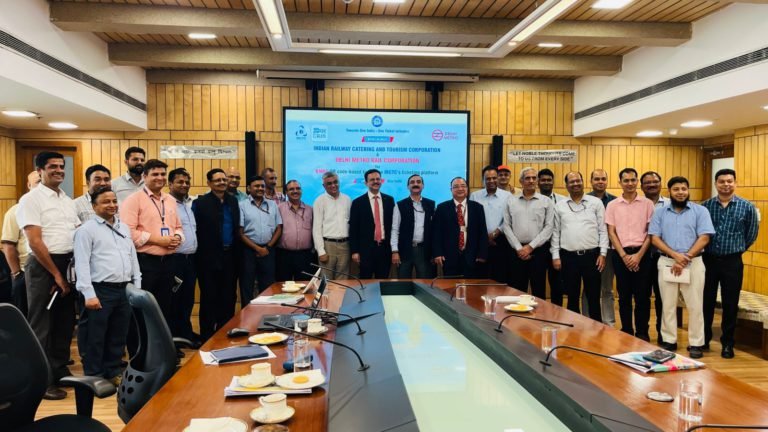
New Delhi (Metro Rail News): The Indian Railway Catering and Tourism Corporation Limited (IRCTC), Delhi Metro Rail Corporation (DMRC) and Centre For Railway Information Systems (CRIS) have joined hands, in the First of its kind Initiative, to revolutionize the seamless travel experience of the Main Line Railway and Metro Passengers in Delhi NCR area, thereby promoting ‘One India – One Ticket’ initiative of the Government of India.
Image Credit: DMRC
The “Beta Version” of the Delhi Metro Rail QR Code –based ticket was launched on 10 July, thereby enabling main-line Railway passengers to book DMRC QR Code Tickets on the IRCTC Website and the Android version of the Mobile App. On this occasion Sh. Sanjay Kumar Jain, CMD, IRCTC and Dr Vikas Kumar, MD, DMRC said “On the success of the Beta Version, the regular version of IRCTC-DMRC QR Code Ticket will be launched soon after.”
Delhi Metro’s Tickets with Extended Validity
Currently, single-journey tickets for Delhi Metro can only be booked on the day of travel with same-day validity. With this facility, the DMRC-IRCTC QR code-based tickets will be synchronized with Indian Railways’ Advance Reservation Period (ARP) allowing passengers to book even Metro tickets up to 120 days in advance. Further, the Metro tickets will be valid for a single journey for a period of four days starting from the day before the DMRC journey date, the travel date itself, and two days after the journey date.
This joint initiative will enhance the travel experience of Railway passengers by allowing them to book Delhi Metro Tickets at the rail ticket confirmation page clubbing it either with the source or destination station falling in the Delhi/NCR region. The passengers can also book Delhi metro tickets at a later stage via the booking history page. Flexible Cancellations have also been ensured.
Once the DMRC ticket is purchased by the railway passenger, one DMRC QR code per passenger will be printed/available in the Electronic Reservation Slip of IRCTC.
The novel step will save valuable time of the rail passengers at DMRC stations by avoiding long queues while purchasing DMRC tickets.
This Landmark Initiative of IRCTC, DMRC and CRIS aims to provide comprehensive seamless travel solutions enhancing customer convenience by ease of ticket booking and promoting digitalization, environment friendly and efficient transportation systems.
Bangalore (Metro Rail News): Siemens Limited, as part of a consortium along with Rail Vikas Nigam Limited (RVNL), has secured a Rs. 766 Crore electrification contract from Bangalore Metro Rail Corporation Limited (BMRCL) for Bengaluru Metro Phase 2, spanning over 58 kilometres connecting Bengaluru Airport terminal to Central Silk Board via KR Puram.
Cost
The total order value is approximately Rs. 766 crore. Siemens Limited’s share as part of the consortium is approximately Rs. 558 crore.
Scope of Contract:
Under this contract, Siemens Limited will design, engineer, install and commission rail electrification technologies as well as a digital solution comprising Supervisory Control and Data Acquisition (SCADA) systems. The project covers 30 stations spanning over 58 kilometres connecting Bengaluru Airport terminal to the Central Silk Board via KR Puram and two depots.
Siemens’ Increasing Footprints
With this order, Siemens is present in 11 out of 20 cities that have a Metro in India. Gunjan Vakharia, Head of Mobility Business, Siemens Limited, said, “As part of our continued efforts towards nation-building through sustainable rail transportation, we are proud to be associated with BMRCL on the electrification of Bengaluru Metro Phase 2 project.
The implementation of Phase 2 will significantly contribute to sustainable urban development in Bengaluru, catering to the requirements of commuters and Metro Rail authorities. We express our gratitude to BMRCL for entrusting Siemens in their journey of creating a safer, greener and smarter transport for Bengaluru.”
Delhi (Metro Rail News): NCRTC Managing Director Mr Shalabh Goyal conducted an inspection of the RRTS corridor from Meerut South Station to Sarai Kale Khan Station in Delhi. He was accompanied by the NCRTC Director and other officials during this visit.
The inspection began at Meerut South Station, where construction has been completed, and Namo Bharat trains will soon commence operations. Mr Goyal closely examined the station’s operational preparations and reviewed the parking facilities.
Image Credit: NCRTC
Meerut Metro will also start from this station, enhancing convenience for residents traveling from Meerut South to Modipuram. The station features three platforms: two for Namo Bharat trains and one for Meerut Metro. An 8 km section from Modi Nagar North Station to Meerut South will soon be open to the public, allowing residents to reach Ghaziabad from Meerut South in minutes. Currently, trial runs for Namo Bharat trains are ongoing between Modi Nagar North and Meerut South stations.
Image Credit: NCRTC
Following this, Mr Goyal inspected the corridor from Modi Nagar North to Sahibabad, the operational section of the RRTS, and travelled on a Namo Bharat train. During this intensive inspection, he interacted with the station controllers, train operators, and other operational staff to understand their daily challenges. He experienced passenger-centric facilities such as push buttons, PSD, stretcher space, and the train’s high speed. He praised the cleanliness of the stations and urged officials to continuously improve cleanliness standards.
Operational Route
Currently, Namo Bharat trains operate across eight stations in the 34 km section from Sahibabad to Modi Nagar North. With the upcoming commencement of services from Modi Nagar North to Meerut South, the operational section will extend to 42 km including 9 RRTS stations.
Image Credit: NCRTC
Mr Goyal also inspected the ongoing construction works at New Ashok Nagar and Sarai Kale Khan elevated stations in the Delhi section. He assessed the challenges faced by officials in the rapid construction work and motivated them, emphasizing strict adherence to safety and security norms.
Delhi Section of RRTS corridor
The Delhi section of the RRTS corridor spans 14 km, with 9 km elevated and 5 km underground. The underground section includes the construction of Anand Vihar Station. The viaduct construction in the Delhi section is complete, and the three under-construction stations are nearing completion. Efforts to integrate these stations with other transport modes are also underway.
Mr. Goyal highlighted that the construction of the country’s first RRTS will spur development in Delhi-NCR and provide a high-speed public transport system for residents, with NCRTC personnel playing a crucial role in this development.
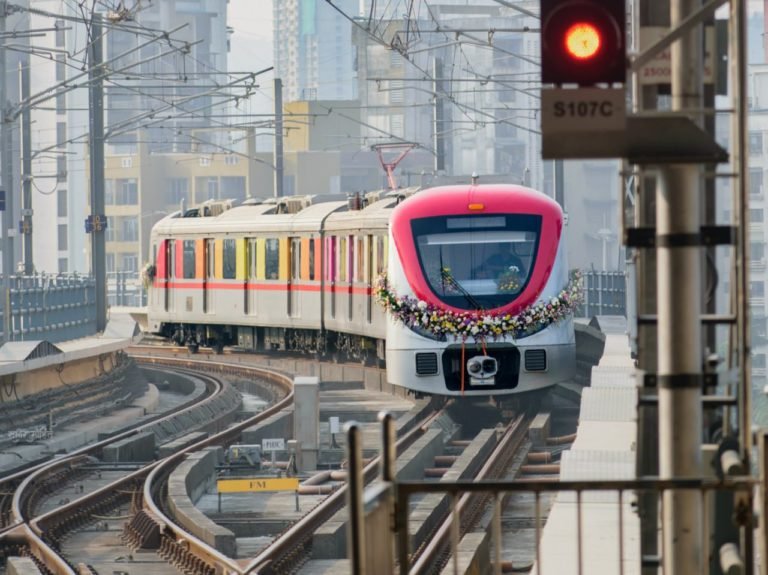
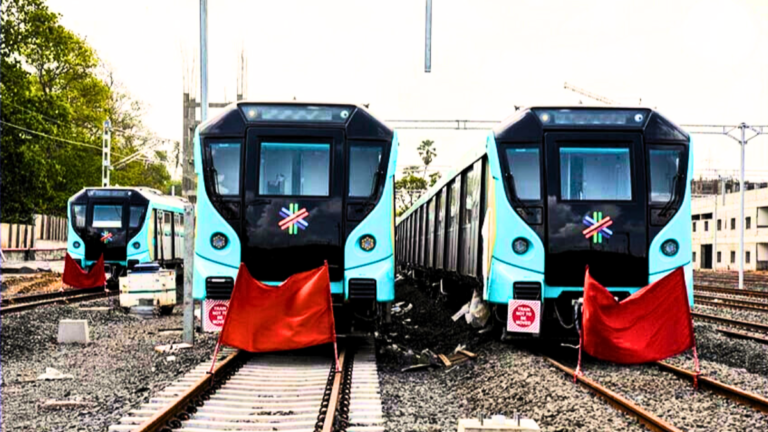
Mumbai (Metro Rail News): On July 4, 2024, the Mumbai Metro Rail Corporation (MMRC) extended the trial operations on Mumbai Metro’s Line 3, also known as the Aqua Line, to include the stretch from Dadar station to Siddhivinayak station.
For the trials, the MMRC deployed an 8-coach metro train manufactured by Alstom. The train ran at a low speed of 10 km/h up to Siddhivinayak station. The distance between Dadar station and Siddhivinayak station is 1.1 km, while the distance to BKC station is 5.4 km.
Objective of Trial Run
The main aim behind the trial run was to check for Schedule of Dimensions (SoD) clearances. It is done to ensure that the train interacts with the civil structure and there are no physical barriers along the route.
Construction Details
Continental Engineering Corp – ITD Cementation – Tata Projects consortium constructed the twin tunnels for this section under the package UGC-04 which runs 6.08 km connecting Dharavi to Worli.
In October 2020, TBM S-1074 (Krishna 2) (Krishna 1) completed tunnelling for the 1106 m up-line tunnel, and its trials are yet to be started. In December 2020, Herrenknecht TBM-1073 completed its tunneling for 1126 m down line, running from Siddhivinayak to Dadar.
Delayed Construction of Mumbai’s Line 3
Mumbai’s Line 3 is lagging behind schedule, given that other Indian metro projects typically take about two years to complete system installation, station architectural finishing, and testing after the final tunnel breakthrough.
In contrast, the Uttar Pradesh Rail Metro Corporation (UPRMC) in Agra took only 2 months to start its commercial operations. Line 1’s priority Corridors’ final breakthrough was recorded on December 29, 2023, and the travel to passengers on the line opened on March 6, 2024.
Recent Updates About Mumbai Metro Line 3
In March 2024, Integrated train testing on Phase 1, running from Aarey Colony to Bandra Kurla Complex, with 10 stations, started. Also, the Research Designs and Standards Organization (RDSO) has just completed the Line 3 rolling stock testing.
All the stations of Phase 1 are left for architectural finishing work. Mock drills at all stations of Phase 1 are scheduled for the upcoming weeks so that MMRC can get the fire department’s NOC to start its operations.
Pune (Metro Rail News): On 6 July, Maha Metro successfully cast the first pile cap for the 4.5 km long Pimpri Chinchwad Municipal Corporation (PCMC) – Nigdi Extension of the 16.589 km Purple Line of Pune Metro.
This achievement was recorded at PMP Anna Bhau Sathe Bus Terminal near Bhakti Shakti Chowk. This achievement comes in under four months after the Maharashtra Metro Rail Corporation (MahaMetro) awarded a Rs. 339.23 crore contract for Pune Metro Phase 1 Extension Package C-01 to Rail Vikas Nigam Ltd. (RVNL).
This extension will include 151 spans and 1181 segments. These will be cast at Talegaon’s yard location.
Key Figures About Pune Metro:
Operational: 29.77 km (PCMC to Civil Court, Vanaz to Ramwadi)
Under Construction: 31 km (Civil Court to Swargate, PCMC to Nigdi, Hinjewadi to Civil Court)
Approved: 0 km
Proposed: 106.5 km (Swargate to Katraj, Phase 2)
Production Details of PCMC
Pune Metro Project
Delhi Metro Rail Corporation prepared the DPR for Pune Metro’s Phase 1 project, which spans 31.254 km and features 2 corridors with 29 stations.
Additionally, a new corridor is being constructed by Pune Metropolitan Region Development Authority (PMRDA). This new Line will connect the Hinjewadi and Civil Court.
The detailed project report (DPR) for the Pune Metro Phase 2 project has not been prepared yet. However, it is expected to include new corridors and extensions of existing metro lines to areas such as Katraj, Chandni Chowk, Kharadi, Hadapsar, Loni Kalbhor, Khadakwasla, and Warje.
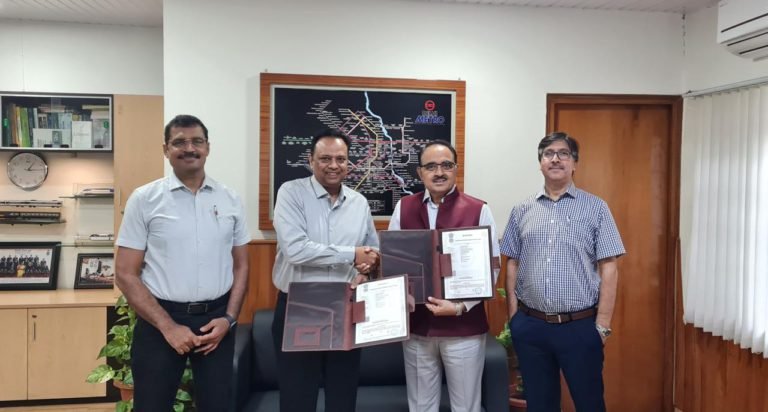
New Delhi (Metro Rail News): The Delhi Metro Rail Corporation (DMRC) and Rail Vikas Nigam Limited (RVNL) signed a Memorandum of Understanding (MoU) to collaborate and jointly work as a Project Service Provider for Design, Construction and Consultancy Projects in India and Abroad.
The MoU was officially signed by Dr P.K.Garg, Director (Business Development) DMRC and Mr Rajesh Prasad, Director Operations, RVNL, in the presence of other senior officials.
The Objective of the MoU between DMRC & RVNL
This partnership aims to synergise the joint efforts of DMRC and RVNL in the upcoming projects in India and abroad as Project Service Providers for Metro/ Railways/ High-Speed Rail/ Highways/ Mega-Bridges/ Tunnels/ Institutional Buildings/ Workshops or Deports/ S&T works/ Railway Electrification.
The MoU covers a wide range of infrastructure projects. The two organisations will work together to develop new projects by sharing their expertise and capabilities as they have a strong track record of delivering complex infrastructure projects. This collaboration between DMRC and RVNL will help to develop new projects in India and abroad.
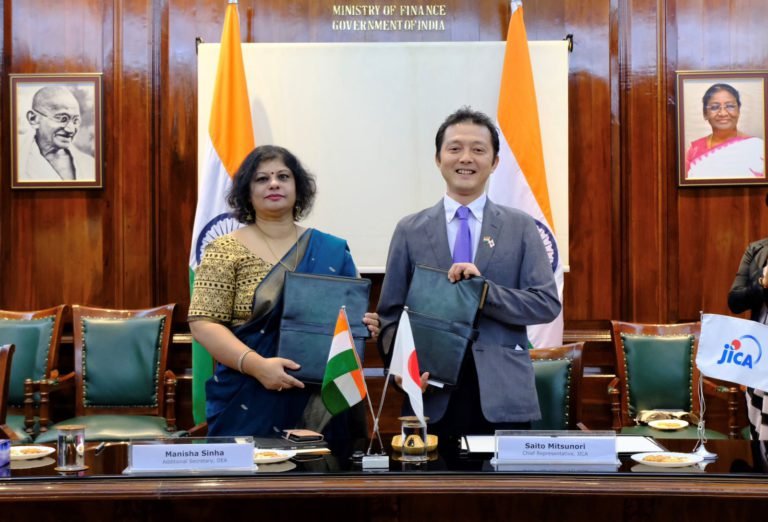
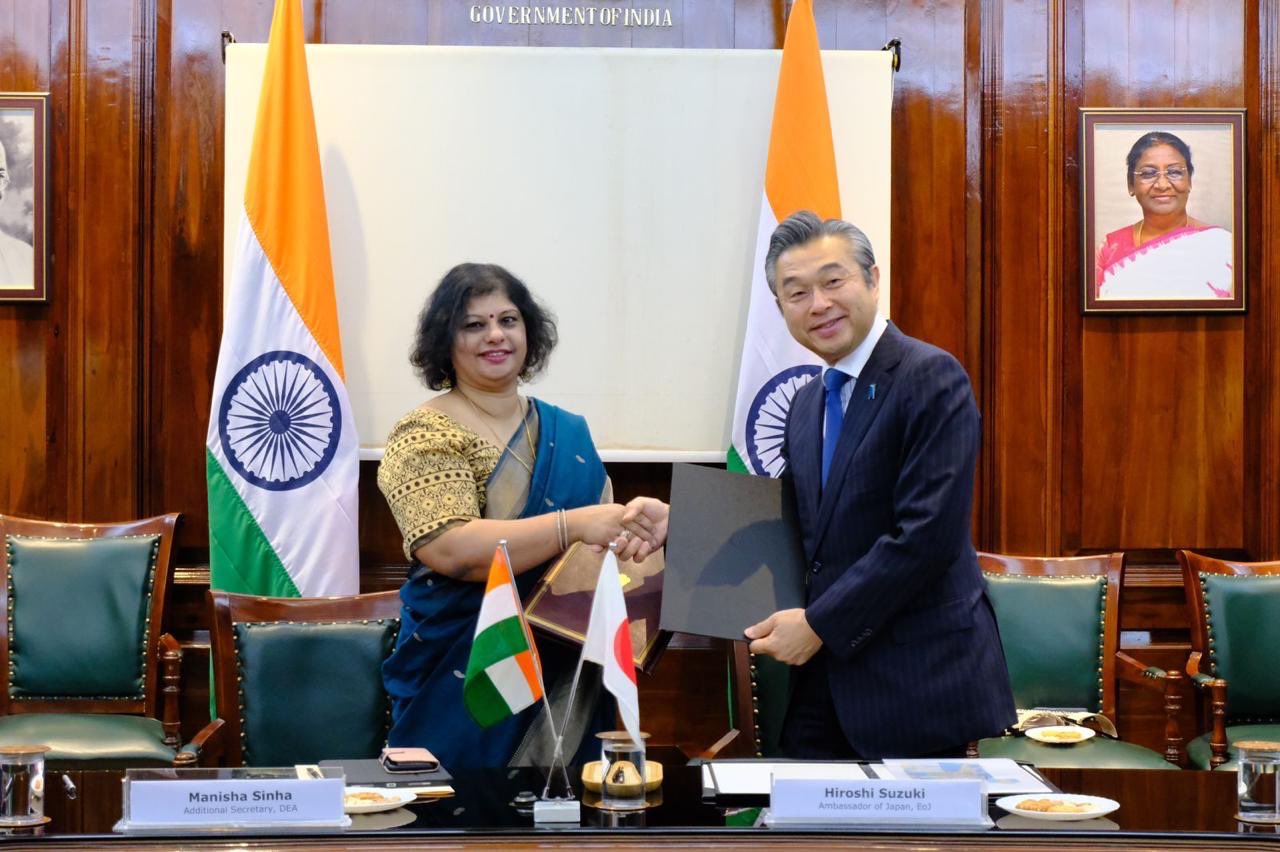
On 5 July, Mumbai’s first fully underground metro Line (Aqua Line) received a substantial boost as the Japanese International Cooperation Agency (JICA) Signed a Rs. 4,657 crore loan agreement with the Government of India for the Mumbai Metro Line 3 project. This agreement represents the fifth and final instalment of the official development assistance (ODA) loan for the Mumbai Metro Line 3.
Manisha Sinha, Additional Secretary of the Department of Economic Affairs in the Ministry of Finance, and Hiroshi Suzuki, Ambassador of Japan to India, signed the loan agreement.
Mumbai Metro Line 3 Project Cost
On February 29, 2024, the Government of India approved the Line 3 project with a revised cost of Rs 37,276 crore. As per Mumbai Metro Rail Corporation (MMRC), the implementing agency for the Mumbai Metro Line 3 project, the first loan instalment was received on September 7, 2013, from JICA. The fifth instalment of Rs. 4,657 crore signifies the completion of the funding for the project.
Mumbai Metro Line 3
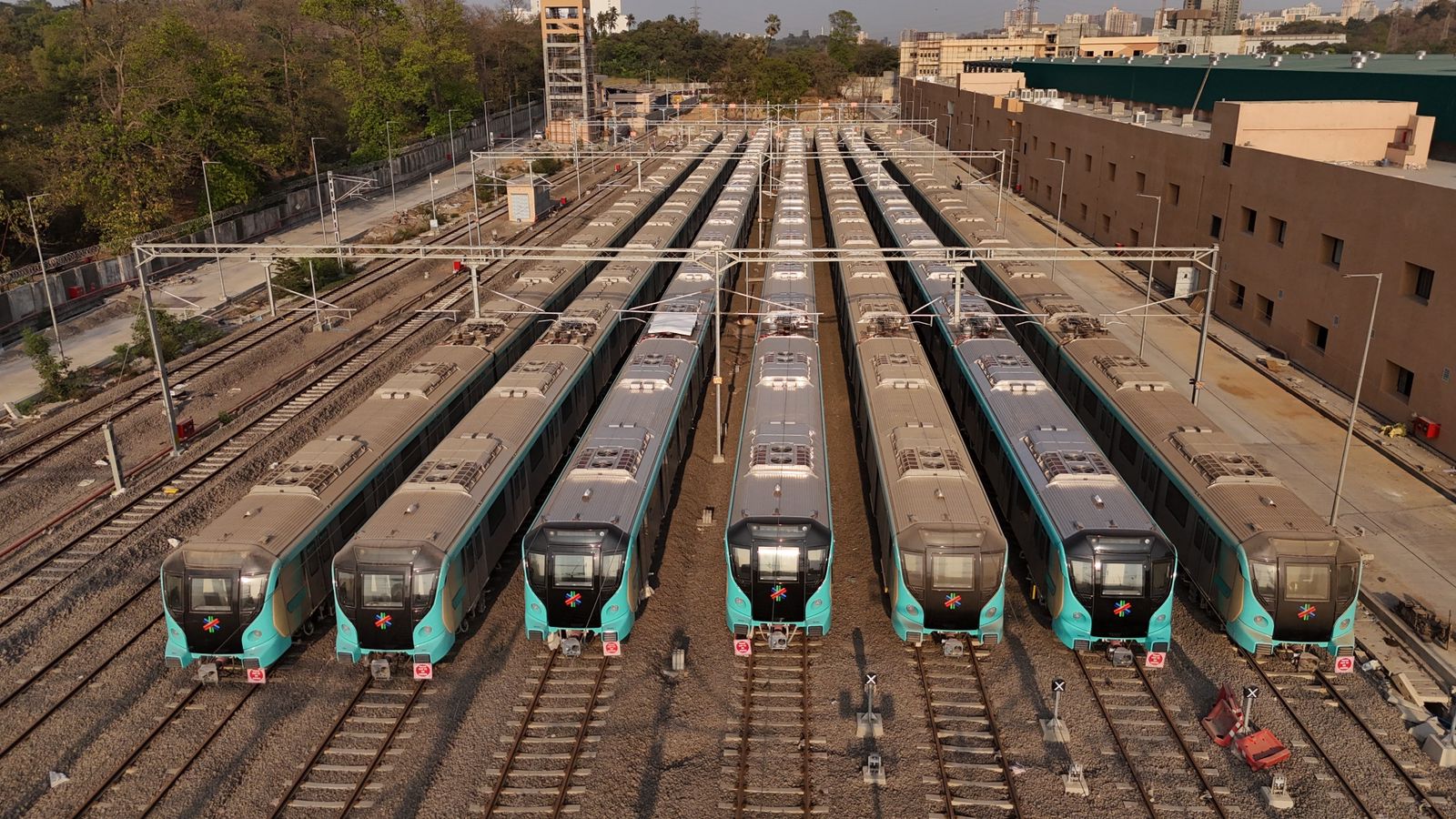
Mumbai Metro’s Line 3, or Aqua Line, covers a total distance of 33.5 km, connecting Aarey Colony with Cuffe Parade via BKC. This line features 27 stations, 26 of which are underground and 1 at-grade station. Aqua Line will become operational in Phases. The operations in Phase 1 which spans from Aarey to BKC are expected to commence this year.
Once fully operational, the Aqua Line will provide substantial time savings for commuters. The journey from Domestic Airport station to Cuffe Parade station, which currently takes over 2 hours due to traffic, will be reduced to just 45 minutes by metro.