Maha Metro’s Revised DPR for Bhakti Shakti-Chakan Line Sets Project Cost at ₹12,937 Crore

PUNE (Metro Rail News): The Maharashtra Metro Rail Corporation Limited (Maha-Metro) has formally submitted a revised Detailed Project Report (DPR) for the vital Bhakti Shakti-Chakan metro corridor to the Pimpri-Chinchwad Municipal Corporation (PCMC). The submission, made on February 26, 2026, signals a turning point in the region’s long-term urban mobility planning.

The revised plan supersedes an earlier DPR that had estimated the project at ₹10,383.89 crore across a 42.262-km alignment with 31 stations. The updated blueprint adds nearly 5 km to the corridor’s footprint, introduces three additional stations, and fundamentally reimagines key segments of the route to deliver superior area coverage, improved industrial access, and a future-ready infrastructure framework.

EXPANDED SCOPE AND ROUTE MODIFICATIONS

The fully elevated corridor will now stretch 47.215 kilometres, threading together the residential heartlands of Wakad, Pimple Saudagar, and Ravet with the densely populated industrial zones of Bhosari, Moshi, and the Chakan MIDC belt. The alignment has been deliberately reconfigured to incorporate previously excluded high-density localities, most notably Bhosari MIDC, Landewadi, and Bhosari Gaon areas that were consistently identified by commuters and elected representatives as underserved by the original plan.

AT A GLANCE

Revised Project Cost₹12,937.23 Crore
Total Corridor Length47.215 km
Number of Stations34 (Elevated)
NHAI Integrated Stretch17 km (Bhosari–Chakan)
DPR Submitted to PCMCFebruary 26, 2026
Projected Ridership (2062)7.80 Lakh/Day

The DPR also incorporates provisions for future corridor extensions beyond the terminal stations, enabling eventual connectivity to Talawade MIDC and Kharabwadi from the Bhakti Shakti end, and an onward link towards Shewalewadi via Bhujbal Chowk, effectively future-proofing the network’s growth trajectory.

PROJECTED DAILY RIDERSHIP

YearProjected Daily Ridership
20323.22 Lakh passengers/day
20425.09 Lakh passengers/day
20526.69 Lakh passengers/day
20627.80 Lakh passengers/day

FUNDING STRUCTURE

The ₹12,937.23 crore investment will be mobilised through a multi-tiered funding architecture that distributes financial responsibility across Central, State, and external stakeholders.

Funding SourceShare (%)Amount (₹ Cr)
External bilateral / multilateral loans60%₹6,695.81 Cr
Government of India (equity)15.43%₹1,721.71 Cr
Government of Maharashtra (equity)15.43%₹1,721.71 Cr
Other contributions (PCMC / local)~9%₹798 Cr

STRATEGIC AND ECONOMIC SIGNIFICANCE

When operational, the Bhakti Shakti–Chakan corridor is expected to serve as the primary mass transit line for one of India’s most industrially active urban agglomerations. The Pimpri-Chinchwad-Chakan industrial belt, home to major automotive, engineering, and pharmaceutical enterprises, generates enormous daily commuter traffic that currently strains the region’s road network beyond capacity.

By offering a fast, high-frequency alternative to road travel, the metro line is projected to substantially decongest key arterial routes, reduce vehicular emissions, and cut average commute times across the corridor. 

The revised DPR now awaits formal deliberation and approval by PCMC, after which it will progress through Central and State government sanction processes before construction can be tendered.

Also Read: Design Consultancy Tender Issued for Ahmedabad Metro Phase 3 Routes

Also Read: Delhi Metro orders 90 metro cars for Inderlok-Indraprastha corridor

Also Read: Maha Metro announced single bidder for Thane Metro’s ₹223cr station contract


Discover how AI is bringing the next phase of sustainable urban rail mobility for Viksit Bharat at InnoMetro 2026, India’s prime exhibition and conference for metro & railways, which is going to be held on 21-22 May 2026 at Bharat Mandapam, New Delhi.

Register Now: https://zma.page/ek
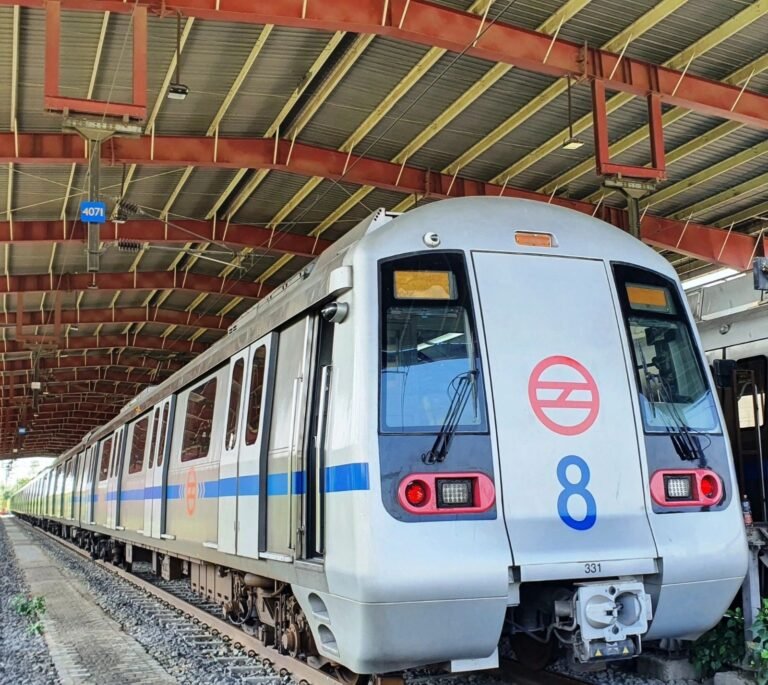
DMRC initiates mid-life refurbishment of Blue Line Trains to enhance safety and passenger experience

DELHI(Metro Rail News): The Delhi Metro Rail Corporation (DMRC) has undertaken a comprehensive mid-life refurbishment (retrofit) initiative for its Blue Line trains to enhance passenger safety, comfort, and overall travel experience. Under this initiative, the oldest Rolling Stock (RS-1) trains are being upgraded with modern technology and improved facilities to ensure they remain reliable and meet current standards.

1775975602649

As part of its mid-life refurbishment programme, DMRC is refurbishing 70 trains of the Red and Blue lines in a phased manner. In the first phase, 12 trains have already been upgraded. In the second phase, 18 trains have been refurbished, and work on another 9 trains will begin soon, followed by work on the remaining 9 trains. In the third phase, 22 Blue Line trains will be refurbished by November 2027. These trains, inducted between 2002 and 2007, have completed nearly 19 to 24 years of service and are being upgraded with modern systems and features to align with the latest rolling Stock standards.

Dr. Vikas Kumar, Managing Director of DMRC, inspected the first refurbished train of the third phase before it was inducted into passenger service. With this, a total of 31 trains have been refurbished so far, showing DMRC’s continued focus on modernisation.

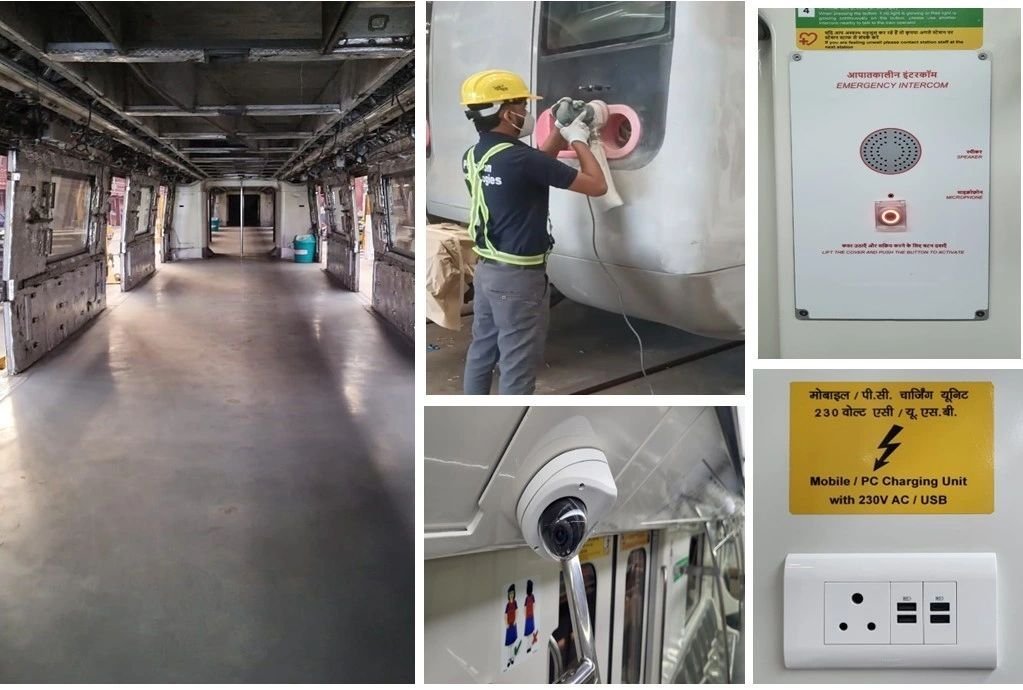
The refurbishment work includes major improvements to both the train interiors and systems. The interior areas, including passenger sections and driver cabins, have been repainted to restore aesthetics and fix wear and tear from many years of use. Electrical panels have also been upgraded to enhance performance and reliability.

State-of-the-art IP-based Passenger Announcement and Passenger Information Systems (PA-PIS), CCTV systems, and LCD-based Dynamic Route Map (DRM), along with display screens, have been installed. These systems provide real-time information about routes, current time, and expected arrival at stations. They also enable communication between passengers and train operators during emergencies.

Passenger safety is a key focus of this programme. A new Fire Detection System, equipped with smoke and heat detectors, has been installed in all coaches. Old relays and Miniature Circuit Breakers (MCBs) have also been replaced with advanced units to improve safety and ensure smooth operations.

To meet passenger needs, mobile and laptop charging points have been introduced in all coaches. New jumper cables and connectors have also been installed to support upgraded systems like PA-PIS and Fire Detection Systems as well as to accommodate future upgrades.

With this initiative, DMRC is upgrading its older trains to match the standards of its newer trains and is committed to providing safe, reliable, and passenger-friendly metro services.

Also Read: Delhi-Rishikesh Travel May Drop to 3 Hours with Proposed Namo Bharat RRTS Extension


Discover how AI is bringing the next phase of sustainable urban rail mobility for Viksit Bharat at InnoMetro 2026, India’s prime exhibition and conference for metro & railways, which is going to be held on 21-22 May 2026 at Bharat Mandapam, New Delhi.

Register Now: https://zma.page/ek
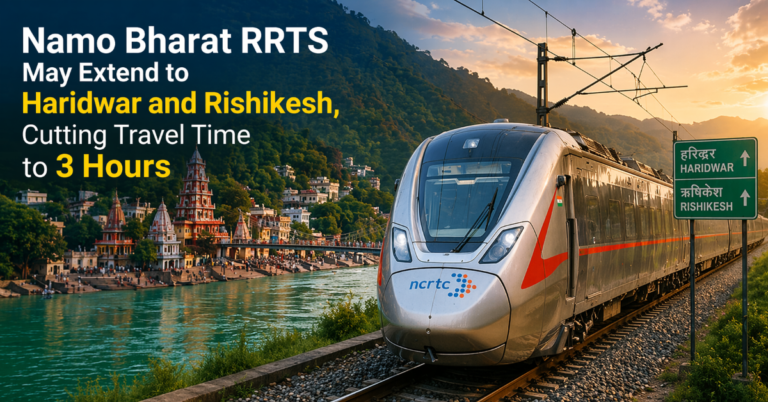
Delhi-Rishikesh Travel May Drop to 3 Hours with Proposed Namo Bharat RRTS Extension

DELHI (Metro Rail News): The journey from Delhi to Rishikesh, currently a taking 5-6 hours highway ordeal, could soon take just three hours, as the central government actively explores extending the Namo Bharat Regional Rapid Transit System well beyond its current northern terminus.  The project picked up pace following high-level talks between Uttarakhand Chief Minister Pushkar Singh Dhami and Union Minister Manohar Lal Khattar. 

The proposed route would extend from the current terminal at Modipuram in Meerut along the NH-58 alignment, with key stations under consideration at Daurala, Sakauti, Khatauli, and Purkazi near the UP-Uttarakhand border, before reaching Roorkee and terminating at Jwalapur in Haridwar and Rishikesh.

As reported by the Tribune, the state has already sought approximately ₹750 crore for essential infrastructure upgrades, including automatic power systems and underground cabling to support high-speed transit through the eco-sensitive Kumbh region. If approved, the project would require massive capital similar to the Delhi-Meerut RRTS line, which was completed at a cost of Rs 30,000.

The expected economic boost

Industry experts anticipate a surge of up to 200% in demand for holiday homes, rental villas, and homestays in the foothills as the NCR becomes more integrated with Uttarakhand. 

Currently in the planning and proposal phase, the project is designed to bridge the gap between rapid urban transit and long-distance tourism, a pairing that, if executed, would make the Namo Bharat network one of the most strategically important rail infrastructure investments in North India this decade.

Also Read: Design Consultancy Tender Issued for Ahmedabad Metro Phase 3 Routes

Also Read: Delhi Metro orders 90 metro cars for Inderlok-Indraprastha corridor

Also Read: Maha Metro announced single bidder for Thane Metro’s ₹223cr station contract


Discover how AI is bringing the next phase of sustainable urban rail mobility for Viksit Bharat at InnoMetro 2026, India’s prime exhibition and conference for metro & railways, which is going to be held on 21-22 May 2026 at Bharat Mandapam, New Delhi.

Register Now: https://zma.page/ek
Ahmedabad Metro Expansion: GMRC Floats General Engineering Consultant Tender for Phases 2A, 2B and 3A

AHMEDABAD (Metro Rail News): Gujarat Metro Rail Corporation (GMRC) has floated a tender for the selection of a General Engineering Consultant (GEC) for Ahmedabad Metro Phase 2A, Phase 2B and Phase 3A. This signals the city’s next wave of metro growth is moving from planning into active execution.

The tender, issued on April 1, 2026, bundles three strategically distinct phases under a single consultancy mandate. Phase 2A covers airport connectivity, arguably the highest-visibility corridor given Ahmedabad’s growing status as a commercial and aviation hub.

Phase 2B extends the network to GIFT City, India’s operational international financial services centre in Gandhinagar, which has seen accelerating corporate and banking sector activity. The third element, Phase 3A, covers the extension from Thaltej Gam to Godhavi, the same corridor for which GMRC separately floated a detailed design consultancy tender earlier this month.

Tender Information:

Tender Notification No. GMRC/GEC/AHMEDABAD/PH-2A, 2B & 3A/2026
Bid Submission Deadline22-05-2026.

Note: The tender information will be updated once the tender document is released. 

Scope of work: Selection of General Engineering Consultants for Airport connectivity (Phase 2A), Gift City extension (Phase 2B), & Extension from Thaltej Gam to Godhavi of Ahmedabad Metro Rail Project 

The decision to club all three phases under one GEC suggests GMRC intends to run these expansions in parallel rather than sequentially, compressing the overall project timeline and placing considerable coordination responsibility on whoever wins the mandate.

Also Read: Design Consultancy Tender Issued for Ahmedabad Metro Phase 3 Routes

Also Read: Ahmedabad Metro Phase 2B Moves Ahead with ₹290 Crore Civil Package

Discover how AI is bringing the next phase of sustainable urban rail mobility for Viksit Bharat at InnoMetro 2026, India’s prime exhibition and conference for metro & railways, which is going to be held on 21-22 May 2026 at Bharat Mandapam, New Delhi.

Register Now: https://zma.page/ek
Design Consultancy Tender Issued for Ahmedabad Metro Phase 3 Routes

AHMEDABAD (Metro Rail News): Gujarat Metro Rail Corporation has invited bids for detailed design consultancy services for two corridors under Phase 3 of the Ahmedabad Metro project. The scope of work includes the preparation of detailed designs for stations and viaduct structures along both routes, covering the Thaltej Gam to Canal Road Metro Station corridor and the Godhavi to Canal Road Metro Station corridor. 

The tender covers two distinct routes. The first runs from Thaltej Gam to Canal Road Metro Station, comprising 3.313 km of elevated viaduct and three elevated stations. The second is a more ambitious Metro-cum-RRTS hybrid route stretching from Godhavi to Canal Road Metro Station 7.505 km of elevated viaduct serving six stations. Together, the two corridors add up to roughly 10.8 km of new elevated infrastructure and 9 stations.

Tender Information

Tender No.GMRC/DDC/ELEV-VDCT+STNS/PH-3A/2026 
Approximate cost of workINR 16.95 Crore
Completion period of Work48 Months 
Pre- bid Meeting 18-04-2026
Bid Submission Deadline18-05-2026

Scope of work: Detailed Design Consultancy Services for Metro Corridor from Thaltej Gam to Canal Road Metro Station, Elevated Viaduct (3.313km), Elevated Station (3 Stations) and Metro Cum RRTS Hybrid Corridor from Godhavi to Canal Road Metro Station, Elevated Viaduct (7.505 km), Elevated Station (6 Stations) Including Viaduct Portion within the Stations In Connection with Ahmedabad Metro Rail Project, Phase – 3” 

Hybrid Metro-RRTS corridor from Godhavi to Canal Road Metro Station

The hybrid Metro-RRTS corridor is the more strategic element of the two. Integrating metro and Rapid Rail Transit System infrastructure into a shared corridor points toward Ahmedabad positioning itself as a node on a broader regional rail network, connecting city commuters with intercity rapid rail services on a single spine.

Also Read: Union Cabinet Greenlights Jaipur Metro Phase-2 at ₹13,037.66 cr

Also Read: Ahmedabad Metro Phase 2B Moves Ahead with ₹290 Crore Civil Package


Discover how AI is bringing the next phase of sustainable urban rail mobility for Viksit Bharat at InnoMetro 2026, India’s prime exhibition and conference for metro & railways, which is going to be held on 21-22 May 2026 at Bharat Mandapam, New Delhi.

Register Now: https://zma.page/ek
Ahmedabad Metro Phase 2B Moves Ahead with ₹290 Crore Civil Package

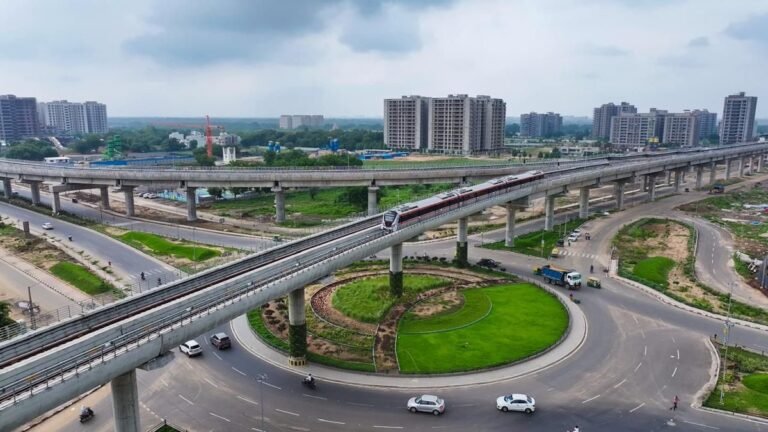
AHMEDABAD (Metro Rail News): Following the Union Cabinet approval for the Ahmedabad Metro Phase 2B, Gujarat Metro Rail Corporation (GMRC) Ltd. has floated a civil tender for carrying out the construction, E&M and finishing works of the project. Phase 2B will cover a 3.3-km elevated extension from GIFT City to Shahpur through 3 stations with an objective to facilitate connectivity between GIFT City and the main Gandhinagar-Ahmedabad line.

Tender Information

Tender Id 293961
Tender No. GMRC/CONS/VDCT+STNS/PH-2B/2026
Cost of work Rs 290.33 crore
Completion period of work 18 Months
Pre-Bid Meeting 16-04-2026
Bid Submission Date06-04-2026
Bid Submission Closing Date22-05-2026

Scope of work: Construction of 3.33 KM Elevated Viaducts and 3 Nos. Stations from GIFT City to Shahpur Circle, including Civil Structural Works, Architectural Finishing Works, Structural Steel Roofing, Signages, PHE Works and E&M Works of Ahmedabad Metro Rail Project Phase -2B.

About Ahmedabad Metro Phase 2B 

The 3.33km Ahmedabad Metro Phase 2B will be built as an extension of Ahmedabad Metro’s North-South corridor, linking GIFT City (Gujarat International Finance Tec-City) in Gandhinagar to Shahpur. The project gained momentum after the Union Cabinet’s approval in February. Initially, this extension is expected to serve over 23,000 daily passengers, with rising figures to 58,000 daily passengers by 2041 as GIFT City’s commercial ecosystem matures.

Also Read: Design Consultancy Tender Issued for Ahmedabad Metro Phase 3 Routes

Also Read: Delhi Metro orders 90 metro cars for Inderlok-Indraprastha corridor

Also Read: Maha Metro announced single bidder for Thane Metro’s ₹223cr station contract


Discover how AI is bringing the next phase of sustainable urban rail mobility for Viksit Bharat at InnoMetro 2026, India’s prime exhibition and conference for metro & railways, which is going to be held on 21-22 May 2026 at Bharat Mandapam, New Delhi.

Register Now: https://zma.page/ek
Aurotoshi Achieves Historic Milestone with the Successful Commissioning of Platform Screen Gates for Mumbai Metro Line 2B Phase 1

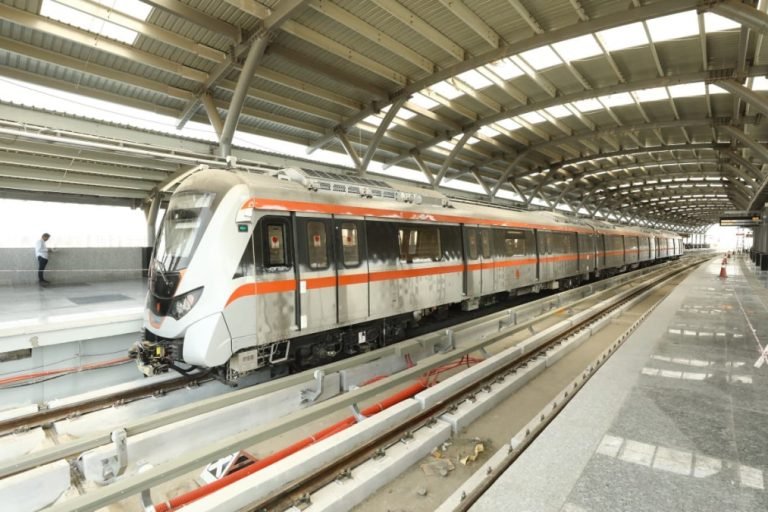
MUMBAI (Metro Rail News): Aurotoshi, an Aurionpro Group company, is proud to announce the successful completion and commissioning of Platform Screen Gates (PSG) in the Mumbai Metro Line 2B Phase 1 Stations. The phase 1 stations of Mumbai Metro Line 2B were inaugurated by the State’s dignitaries on April 7, 2026.

The Phase 1 corridor, spanning 5.4 km, was inaugurated by the Hon’ble Chief Minister of Maharashtra, Shri. Devendra Fadnavis, in the presence of Deputy Chief Ministers Shri. Eknath Shinde and Smt. Sunetra Pawar, along with senior officials from the Mumbai Metropolitan Region Development Authority (MMRDA).

A Technical Landmark in Urban Transit

As a strategic sub-contractor to Zhuzhou CRRC Times Electric Co., Ltd., Aurotoshi executed the end-to-end Installation, Testing, and Commissioning of Half-Height Platform Screen Gates (PSG) across three key stations: BSNL, Mankhurd, and Mandale.

This project marks Aurotoshi’s inaugural entry into the Platform Screen Door (PSD) and Gate market in Indian Metro Rail, showcasing the company’s technical prowess in safety-critical transit infrastructure. 

Engineering Excellence Amidst Challenges

The successful rollout was made possible by the relentless dedication of Team Aurotoshi, who navigated demanding site conditions and complex technical integration to deliver the project with world-class precision. These gates are designed to enhance commuter safety, manage platform airflow, and streamline passenger boarding, contributing to a world-class transit experience for Mumbaikars.“This is a moment of immense pride for the entire Aurotoshi team. Successfully commissioning our first PSG project in a high-stakes environment like the Mumbai Metro and alongside a leading global OEM like Zhouzhou CRRC Times Electric Co. Ltd. reinforces our commitment towards strengthening the Honorable Prime Minister’s Atmanirbhar Bharat mission. This is one of many steps towards designing and building sophisticated automation systems for the nation’s infrastructure under the Make in India scheme”, remarks Siddhant Sachdev – Executive Director, Aurotoshi.

Strengthening Global Partnerships

img15

Aurotoshi extends its deepest gratitude to Zhuzhou CRRC Times Electric Co., Ltd. for their unwavering trust and collaborative spirit throughout this journey. The partnership has been instrumental in setting a new benchmark for safety and efficiency in Mumbai’s rapidly expanding metro network.

As Mumbai continues its transformation into a global mega-city, Aurotoshi remains committed to supporting the MMRDA and its partners in building a smarter, safer, and more connected future. Aurotoshi’s parent group, Aurionpro Solutions Limited, has also bagged the order for Mumbai Metro Line 5 Platform Screen Door package from Titagarh Rail Systems Limited [TRSL]. Aurionpro, along with its subsidiary companies Aurotoshi and Aurionpro Transit, continues to consolidate its role as a key technology provider supporting India’s largest metro rail network. The company’s expanding footprint in Mumbai reflects its ability to deliver scalable, integrated transit solutions aligned with global safety and performance standards.

About Aurotoshi

Aurionpro Toshi Automatic Systems Pvt. Ltd. (Aurotoshi) is India’s leading OEM and ODM of Entrance Automation and Loading Bay Technology products. Established in 1992, the company joined hands with Aurionpro Solutions Limited in 2021 to become a premier end-to-end Indian provider for Smart Transit projects.Operating from a 50,000+ sq. ft. manufacturing facility in Ghaziabad, Aurotoshi serves three core verticals: Industrial Automation, Public Safety Automation, and Travel and Mobility. Driven by the “Make in India, Make for the World” movement, Aurotoshi is dedicated to engineering the future of how people and vehicles move.

MMRDA floats Rs 31.3 Cr tender for signage work 14 Mumbai Metro stations

MUMBAI (Metro Rail News): Mumbai Metropolitan Region Development Authority has invited bids for the design, manufacture, supply, installation, testing, and commissioning of signage, graphics, and station elements across 14 elevated metro stations covering Mumbai Metro Line 6 and Metro Line 7A of the Mumbai Metro Rail Project.

The work covers 13 stations on Metro Line 6: Swami Samarth Nagar, Adarsh Nagar, Jogeshwari (W), JVLR, Shyam Nagar, Mahakali Caves, Seepz Village, Saki Vihar Road, Rambaug, Powai Lake, IIT Powai, Kanjurmarg (W), and Vikhroli (EEH), along with one station, Airport Colony, on Metro Line 7A. The contract is valued at Rs 31.29 crore.

Tender Details at a Glance

DetailInformation
Tender ReferenceMMRDA/MPIU/ML6/CA-309
Name of WorkSignage, Graphics & Station Elements — 14 Elevated Metro Stations
Metro Lines CoveredMetro Line 6 (13 stations) and Metro Line 7A (1 station)
Estimated CostRs 31,29,67,650 (excluding GST)
Earnest Money DepositRs 18,46,510
Last Date for Bid SubmissionMay 4, 2026, 18:00 hours
Pre-Bid MeetingApril 16, 2026, 12:00 hours — Conference Hall, 4th Floor, New MMRDA Building, BKC
Contract Period15 months (including monsoon)
Contact022-65967906 / nilesh.mahale@mailmmrda.maharashtra.gov.in

Scope of work: Design, Manufacture, Supply, Installation, Testing and Commissioning of Signage, Graphics and station elements for 14 elevated stations viz. Swami Samarth Nagar, Adarsh Nagar, Jogeshwari(W), JVLR, Shyam Nagar, Mahakali Caves, Seepz Village, Saki Vihar Road, Rambaug, Powai Lake, IIT Powai, Kanjurmarg (W) and Vikhroli (EEH) (13 stations) of Metro Line 6 and Airport colony station (1 station) of Metro Line 7A of Mumbai Metro Rail Project of MMRDA

The signage and wayfinding package forms a critical component of station readiness, covering passenger information systems, directional graphics, and visual identity elements that must be in place before stations open for public use.

Mumbai Metro Line 6 (15.31 km, Swami Samarth Nagar to Vikhroli) is an under-construction elevated corridor providing east-west connectivity through Jogeshwari-Vikhroli Link Road. Metro Line 7A (Gundavali to CSMI Airport) is a 1.65-km extension of Line 7, expected to open by 2027, to connect the airport

Also Read: Delhi Metro orders 90 metro cars for Inderlok-Indraprastha corridor

Also Read: Maha Metro announced single bidder for Thane Metro’s ₹223cr station contract


Discover how AI is bringing the next phase of sustainable urban rail mobility for Viksit Bharat at InnoMetro 2026, India’s prime exhibition and conference for metro & railways, which is going to be held on 21-22 May 2026 at Bharat Mandapam, New Delhi.

Register Now: https://zma.page/ek
Chennai Metro floats 10-year maintenance tender for lifts and escalators across Phase I network

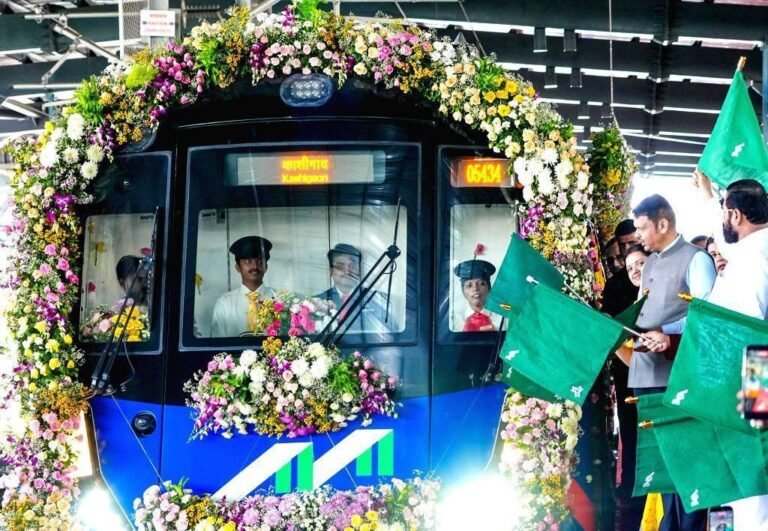
CHENNAI (Metro Rail News): Chennai Metro Rail Limited has invited bids for comprehensive annual maintenance of lifts and escalators installed across its Phase I and Phase I Extension metro stations, covering both underground and elevated facilities, including the Koyambedu Administrative and Operations Control Centre building.

Also Read: Delhi Metro orders 90 metro cars for Inderlok-Indraprastha corridor

The contract, to be awarded exclusively to the original equipment manufacturer or their authorised service provider, is specifically structured for Johnson Lifts Private Limited, which supplies the lifts, and SJEC, the escalator manufacturer. 

Tender Details at a Glance

DetailInformation
Tender ReferenceCMRL/E&M-O&M/02/CAMC-L&E/2026-27
Name of WorkComprehensive AMC for Lifts & Escalators Phase I & Phase I Extension
OEM for LiftsJohnson Lifts Private Limited
OEM for EscalatorsSJEC
Contract Duration3,653 days (10 years)
Bid Submission FeeRs. 32,000 (inclusive of GST, non-refundable)
EMD AmountRs. 80,00,000 (Eighty Lakhs)
Bid Validity180 days from submission
Pre-Bid MeetingApril 15, 2026 
Last Date for Bid SubmissionMay 11, 2026, 15:00 hours
Contactkarthikeyan.s@cmrl.in, rajashekar.reddy@cmrl.in

Scope of work: Comprehensive AMC for Lifts & Escalators installed in Phase I & Phase-1 Extension Metro stations (Both Underground & Elevated) including Koyambedu Admin/OCC Building from the OEM or authorized service provider of M/s Johnson lifts & M/s SJEC. The OEM (Original Equipment Manufacturer) for Lifts is M/s. Johnson Lifts Pvt. Ltd. and Escalators is M/s. SJEC 

Chennai Metro Phase 1

Phase 1 covers 45.05 km with two corridors, including the Blue Line and the Green Line. The corridors feature a mix of underground (55%) and elevated (45%) sections. The extension specifically expanded the Blue Line northwards into North Chennai, adding 9.05 km to the network. As of March 2026, the Chennai Metro Rail Limited (CMRL) average daily ridership reached approximately 4.64 lakh passengers. The system has seen a massive surge from 1.90 lakh/day in 2021-22 and crossed one crore monthly passengers for the third time in March 2026. 

Also Read: Union Cabinet Greenlights Jaipur Metro Phase-2 at ₹13,037.66 cr

Also Read: Maha Metro announced single bidder for Thane Metro’s ₹223cr station contract


Discover how AI is bringing the next phase of sustainable urban rail mobility for Viksit Bharat at InnoMetro 2026, India’s prime exhibition and conference for metro & railways, which is going to be held on 21-22 May 2026 at Bharat Mandapam, New Delhi.

Register Now: https://zma.page/ek
Delhi Metro orders 90 metro cars for Inderlok-Indraprastha corridor

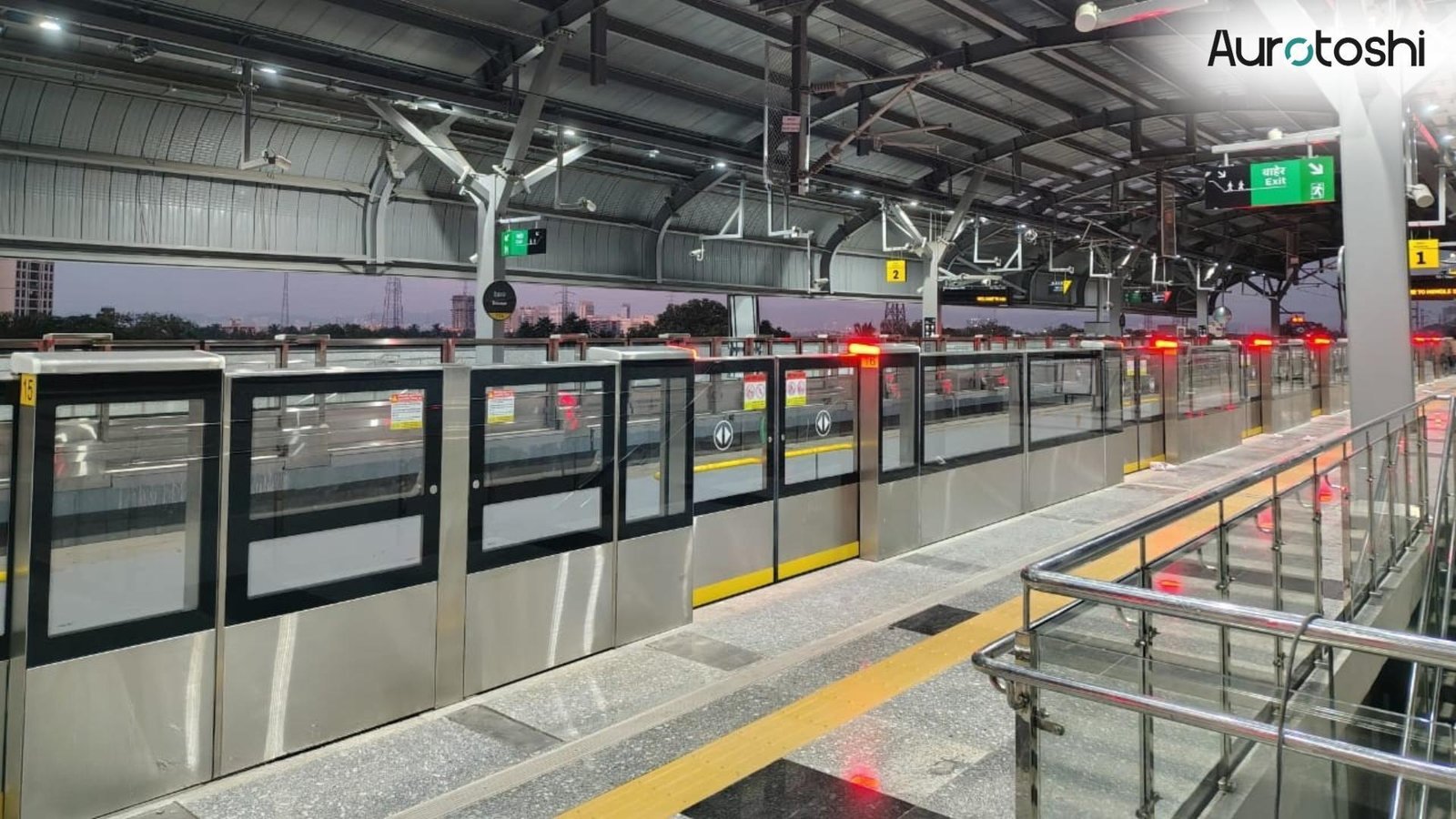
DELHI (Metro Rail News): Delhi Metro Rail Corporation has invited bids for the design, manufacture, supply, testing, and commissioning of 90 standard-gauge metro cars for the Inderlok-Indraprastha corridor, also known as the Magenta Line (Line-8) Extension, under its ongoing Phase IV expansion.

The project is part-funded through a loan agreement signed between the Japan International Cooperation Agency and the Government of India in March 2025, with maintenance costs to be borne separately by DMRC from its own funds.

The scope of work goes beyond rolling stock supply. The selected bidder will also be responsible for comprehensive maintenance of the 90 cars, along with depot machinery and plant, special tools, jigs and fixtures, testing and diagnostic equipment, and material handling equipment, for a period of 35 years. 

Tender Details

DetailInformation
Tender ReferenceBID RS21
Date of IssueApril 7, 2026
EmployerDelhi Metro Rail Corporation Limited
ProjectDMRC Phase IV
Funding AgencyJapan International Cooperation Agency (JICA)
Loan ReferenceID-P329
Number of Cars90 Standard Gauge Cars
CorridorInderlok–Indraprastha (Line-8 Extension)
Maintenance Period35 Years
Completion Period204 weeks from the commencement date
Cost of Bid Document₹23,600 (inclusive of GST, non-refundable)
Pre-Bid MeetingMay 5, 2026, 11:00 hours IST
Technical Bid OpeningJuly 1, 2026, 15:05 hours IST
Contact EmailTenderrs21@dmrc.org

Scope of work: Design, Manufacture, Supply, Testing, and Commissioning of 90 Nos. of Standard Gauge Cars for Inderlok-Indraprastha Corridor (Line-8 Extension) of Delhi Metro Rail Corporation Ltd. including Training of Employer’s Manpower and Comprehensive Maintenance of these 90 Nos. Standard Gauge Cars as well as Depot M&Ps, Special tools, Jigs and Fixtures, Testing and Diagnostic Equipment, Test benches, Material Handling Equipment etc. for a period of Thirty-Five Years.

Indraprastha-Inderlok corridor to be integrated into Magenta Line

The under-construction Indraprastha-Inderlok corridor of Delhi Metro’s Phase IV will stretch 11.9 kilometres and will now be implemented as an extension of the Magenta Line instead of the originally proposed Green Line.

The change follows the recent sanction of the Phase V(A) corridor from RK Ashram to Indraprastha, which necessitated a realignment of line designations across the network. With this revision, the Magenta Line will extend to a total length of 88.4 kilometres, running all the way from Botanical Garden to Inderlok. This extension will make it the longest corridor in the Delhi Metro Rail Corporation network.

Also Read: Union Cabinet Greenlights Jaipur Metro Phase-2 at ₹13,037.66 cr

Also Read: Maha Metro announced single bidder for Thane Metro’s ₹223cr station contract


Discover how AI is bringing the next phase of sustainable urban rail mobility for Viksit Bharat at InnoMetro 2026, India’s prime exhibition and conference for metro & railways, which is going to be held on 21-22 May 2026 at Bharat Mandapam, New Delhi.

Register Now: https://zma.page/ek
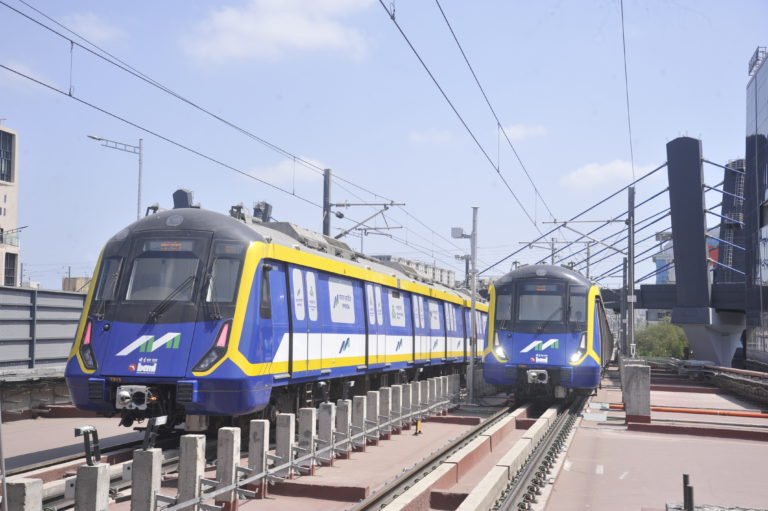
Jaipur Metro Phase-2 receives Union Cabinet clearance

JAIPUR (Metro Rail News): After multiple revisions and delays, the Jaipur Metro Phase 2 finally received approval from the Union Cabinet chaired by Prime Minister Shri Narendra Modi. Phase 2 will facilitate connectivity between the northern and southern parts of Jaipur. The corridor will cover a total length of about 41 km from Prahladpura to Todi Mod via 36 stations. 

The Union Cabinet approved the project at a cost of ₹13,037.66 crore. The Rajasthan Metro Rail Corporation Limited will be responsible for implementing the project. Funding will flow through a mix of equity contributions from both governments, subordinate debt, and multilateral financing in line with the Metro Rail Policy, 2017.

Connecting the City’s Key Nodes

Unlike Phase-1, which runs along the East-West axis from Mansarovar to Badi Chaupar and covers 11.64 km across 11 stations, the new corridor will cut across the city along its North-South spine. It will link major destinations including Sitapura Industrial Area, Jaipur International Airport, Tonk Road, SMS Hospital, VKIA, Ambabari, and Vidhyadhar Nagar. In addition to this, the new corridor will have an interchange with the existing Phase 1. 

Ridership Expected to Surge

Jaipur Metro’s current Phase-1 corridor draws around 60,000 passengers daily a modest but steady figure for a relatively short stretch. The addition of a 41-km corridor through some of the city’s busiest corridors is expected to drive a sharp jump in daily ridership, nudging more commuters away from private vehicles and towards public transport.

The project carries an Economic Internal Rate of Return exceeding the 14% threshold, it signals strong long-term socio-economic value beyond just commuter convenience.

Clearances and Timelines

Phase-2 has cleared multiple layers of institutional scrutiny, Inter-Ministerial Consultation, Network Planning Group review, and Public Investment Board evaluation before receiving Cabinet approval. It also aligns with the Rajasthan TOD Policy-2025 and broader national objectives around sustainable urban transport.

Construction is targeted for completion by September 2031. Once operational, the corridor is expected to ease traffic pressure across Jaipur’s congested arteries, bring down vehicular emissions, and improve daily commutes for residents, workers, and tourists, positioning the Pink City more firmly as a modern, mobility-ready urban centre.

Also Read: Maha Metro announced single bidder for Thane Metro’s ₹223cr station contract


Discover how AI is bringing the next phase of sustainable urban rail mobility for Viksit Bharat at InnoMetro 2026, India’s prime exhibition and conference for metro & railways, which is going to be held on 21-22 May 2026 at Bharat Mandapam, New Delhi.

Register Now: https://zma.page/ek
Indian Railways Sanctions ₹1,364 Crore for Kavach Rollout, OFC Networks and Electronic Interlocking

DELHI(Metro Rail News): Indian Railways has approved infrastructure projects worth ₹1,364.45 crore to accelerate the deployment of Kavach 4.0 alongside expansion of optical fibre cable networks and upgrades to electronic interlocking systems across multiple railway zones.

Kavach equipment to be installed on 232 locomotives in the Southern Railway

Indian Railways has sanctioned the provision of on-board Kavach equipment for 232 locomotives in Southern Railway at a cost of ₹208.81 crore. The proposal forms part of the umbrella work titled “Provision of Kavach with communication backbone of Long-Term Evolution (LTE) on balance routes of Indian Railways (Umbrella Work 2024–25)” included in the Works Programme (Pink Book) 2024–25, with an overall cost of ₹27,693 crore under PH-33.

A sub-umbrella allocation of ₹2,950 crore has been earmarked for Southern Railway under this programme. The present work has been proposed within this sub-umbrella and covers the installation of Kavach Version 4.0 equipment on locomotives.

Communication backbone to be strengthened in Northern Railway with a 2×48 OFC network

Indian Railways has sanctioned three itemised works in Northern Railway at a total cost of ₹400.86 crore for the strengthening of communication backbone infrastructure. These works are part of the umbrella project titled “Strengthening, repair & replacement of communication backbone over Indian Railways (Umbrella Work 2024–25)” approved at a cost of ₹4,871 crore under PH-33.

A sub-umbrella provision of ₹871 crore has been allocated for Northern Railway. Under this, three works have been approved: provision of 2×48 fibre cables along 926.05 route km in Ambala Division at a cost of ₹115.74 crore; provision of 2×48 fibre cables along 1,204 route km along with Optical Fiber Communication (OFC) rooms at stations in Delhi Division at a cost of ₹165.49 crore; and provision of 2×48 fibre cables along 1,074 route km in Lucknow Division at a cost of ₹119.63 crore.

The works aim to enhance the capacity and reliability of communication systems across divisions, which are critical for modern signalling and Kavach deployment.

OFC provision for Kavach over North Central Railway to cover 2,196 route kilometres

Indian Railways has sanctioned the provision of 2×48 fibre OFC cables for Kavach over North Central Railway at a cost of ₹176.7699 crore. The work also falls under the umbrella project for strengthening, repair and replacement of communication backbone over Indian Railways.

A sub-umbrella allocation of ₹200 crore has been provided for North Central Railway. The present work has been proposed under this allocation and will cover 2,196 route kilometres, including 1,016 km in Prayagraj Division, 709 km in Jhansi Division and 471 km in Agra Division.

The project will support deployment of Kavach and improve communication infrastructure across high-density routes.

Electronic Interlocking works approved in South Central Railway

Indian Railways has sanctioned two itemised works in South Central Railway at a total cost of ₹578.02 crore for replacement of panel interlocking with electronic interlocking systems. The works fall under the umbrella project titled “Provision of Electronic Interlocking at balance stations on HDN/HUN routes where Kavach/ABS/CTC is sanctioned (Umbrella Work 2024–25)” approved at a cost of ₹15,164 crore under PH-33.

A sub-umbrella allocation of ₹1,857 crore has been earmarked for South Central Railway. Under this, two works have been approved: replacement of panel interlocking with electronic interlocking at 35 stations on HDN/HUN routes in Guntakal Division at a cost of ₹426.82 crore; and similar replacement at 14 stations on HDN/HUN routes in Nanded Division at a cost of ₹151.20 crore.

The works aim to enhance signalling reliability, reduce manual intervention and improve safety across high-density routes.

All the sanctioned projects are part of the broader effort to modernise Indian Railways with a focus on safety, reliability and capacity enhancement. The works will support the deployment of Kavach, strengthen the communication backbone and upgrade signalling systems across key routes. These interventions are expected to improve operational efficiency and ensure safer train operations across the network.

Also Read: Milestone for India’s rail manufacturing: RCF Kapurthala enters the Vande Bharat production race


Discover how AI is bringing the next phase of sustainable urban rail mobility for Viksit Bharat at InnoMetro 2026, India’s prime exhibition and conference for metro & railways, which is going to be held on 21-22 May 2026 at Bharat Mandapam, New Delhi.

Register Now: https://zma.page/ek
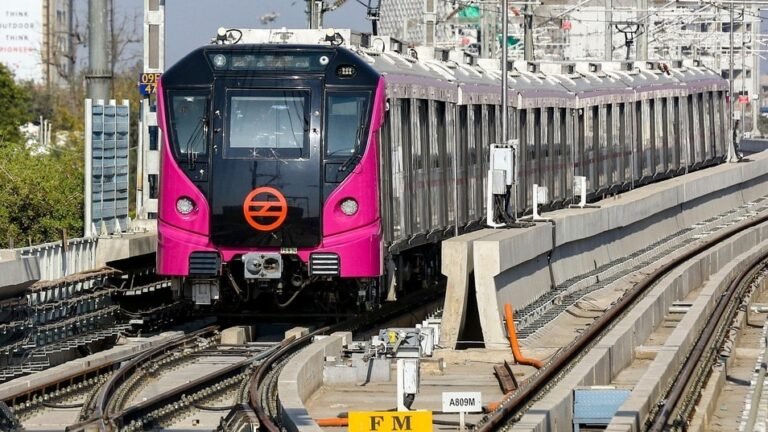
Maha Metro announced single bidder for Thane Metro’s ₹223cr station contract

THANE (Metro Rail News): The Thane Integral Ring Metro Project has moved a step closer to implementation after Maharashtra Metro Rail Corporation Limited named BBG Infrastructure Private Limited as the sole bidder for a key civil contract. The package covers the construction of six elevated stations along the corridor.

Tender Information:

Tender Id2026_MMRCL_1274321_1
Tender NoT1-023/C-02/2025
Cost of work ₹223.7cr
Work Completion Period30 months

Scope of work: Construction Of 06 (six) Numbers Of Elevated Metro Stations Of Thane Integral Ring Metro Project (1. Dr. Kashinath Ghanekar Natyagruha, 2. Manpada, 3. Dongripada, 4. Vijay Nagari, 5. Waghbil And 6. Waterfront).

The Thane Integral Ring Metro Rail Project is a 29-km circular rapid transit corridor along the western side of Thane. The project received approval in August 2024 and will include 22 stations. It aims to reduce congestion and improve connectivity across key areas by 2029. MahaMetro and the Thane Municipal Corporation will execute the project. The corridor will connect with Metro Line 4 and Line 5 and will strengthen the city’s overall transit network.

Also Read: Thane gets its first direct metro link to Mumbai with inauguration of Mumbai Metro Line 9


Discover how AI is bringing the next phase of sustainable urban rail mobility for Viksit Bharat at InnoMetro 2026, India’s prime exhibition and conference for metro & railways, which is going to be held on 21-22 May 2026 at Bharat Mandapam, New Delhi.

Register Now: https://zma.page/ek
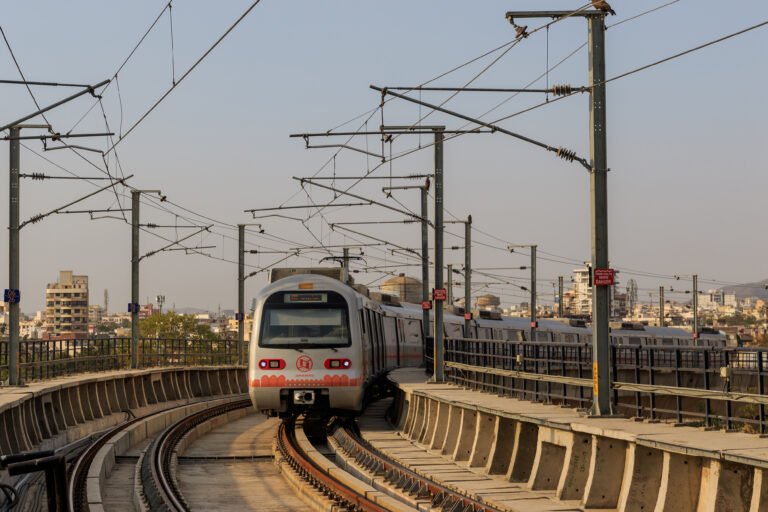
Thane gets its first direct metro link to Mumbai with inauguration of Mumbai Metro Line 9

After nearly a decade of delays, Mumbai’s Metro Line 9 finally opened to the public on 7 April, with Chief Minister Shri Devendra Fadnavis inaugurating Phase 1 of the Red Line (Line 9) extension at Dahisar East. Fadnavis flagged off the train from Dahisar East and travelled to Kashigaon for the inauguration. The commuters will be able to travel on the new extension from 8 April.

Phase 1 covers a 4.5 km elevated stretch from Dahisar East to Kashigaon, with four stations: Dahisar, Pandurangwadi, Miragaon, and Kashigaon. For commuters from Mira-Bhayandar (Thane), this is the first direct metro link into Mumbai, an alternative to the grinding daily slog on the Western Express Highway.

With this development, Mumbai now has five operational metro corridors, including Line 1 (Ghatkopar-Versova), Line 2A (Andheri West-Dahisar East), Line 7 (Dahisar East-Andheri East), and Line 3, the Aqua Line.

The project was first announced in 2016 but faced multiple delays due to land acquisition issues, contractor challenges, and public opposition over depot locations. The April 7 launch is a partial but crucial step forward after years of progress.

Also Read: Milestone for India’s rail manufacturing: RCF Kapurthala enters the Vande Bharat production race


Discover how AI is bringing the next phase of sustainable urban rail mobility for Viksit Bharat at InnoMetro 2026, India’s prime exhibition and conference for metro & railways, which is going to be held on 21-22 May 2026 at Bharat Mandapam, New Delhi.

Register Now: https://zma.page/ek