Intelligent Transportation Systems: Enhancing Efficiency and Sustainability in Urban Transit

1. Introduction

Growing Urbanisation in India

India is experiencing a steady rise in urbanisation. As of 2021, India’s urban population was approximately 477 million, accounting for about 34% of the total population of around 1.3 billion. By 2030, this figure is projected to rise to about 590 million, which would represent approximately 40.76% of the total population. This increase in urban population contributes to city congestion, leading to various transportation challenges.
ITS 05 1

The rate of infrastructure development has not matched the growing urban population, resulting in strain on transportation systems. This congestion results in increased travel times, higher emissions, and rising costs associated with traffic management and infrastructure upkeep.  

AD 4nXew4UbHTVeIrMBKgxvsljqoMaZbVB5bTgbZevEp13i6zUC6f4ZVtesL at8H6UlG70Je9yheNTTtck36 hlNVxYw ru nZvP7PkrGIt vbsDINVwjjNCWmTgr0nbWwGNGJnHBTgvicAsYNYzKaTk170 ZwT66PXV mX1TPG73ek3BN04yg uPs?key=D5R6pC4nzH0sJfI8tftXlsoQ

Transportation Management with Rapid Urbanisation in Cities

India’s transportation sector is critical to the national GDP and supports numerous industries and sectors. Currently making up 6.7% of GDP, it is projected to grow to approximately 12% by 2026. Increasing urban populations and rising per capita income are also resulting in longer commute times, leading to substantial productivity losses due to time spent in traffic. Additionally, increased fuel consumption is contributing to environmental degradation and higher carbon emissions.
ITS 03 1

To address the limitations of transportation infrastructure, the adoption of advanced technology has become essential. In September 2017, India’s NITI Aayog partnered with the International Road Federation in Geneva to advance Intelligent Transportation System (ITS) initiatives in the country. Key areas of focus include fleet management and monitoring, electronic enforcement of traffic regulations, traffic and parking management, and promoting innovation and education in ITS.

Intelligent Transportation Systems (ITS) for Indian Cities

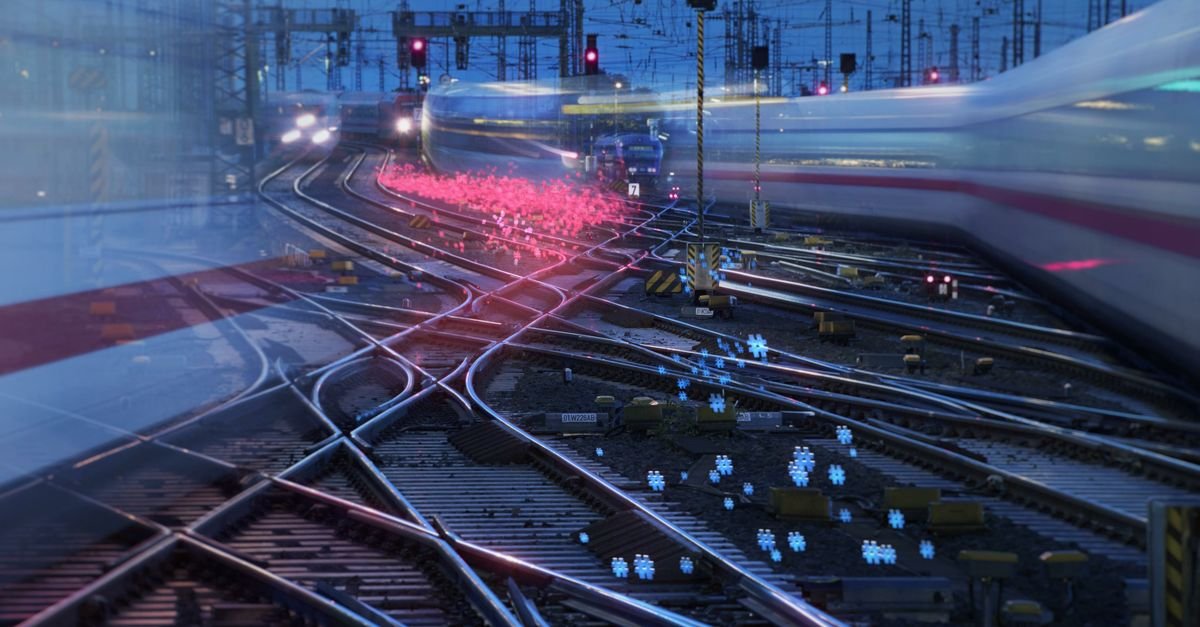
Intelligent Transportation Systems (ITS) refer to the integration of advanced technologies, including information and communication technologies, into transportation infrastructure and vehicles to enhance the efficiency, safety, and sustainability of transport networks. ITS encompasses a wide range of applications that improve traffic management.

ITS in Rail Transportation 

 Intelligent Transportation Systems (ITS) are increasingly being integrated into railway operations to enhance safety, efficiency, and sustainability.

Major components of ITS in Metro and Railways include:

Real-Time Data Collection and Analysis

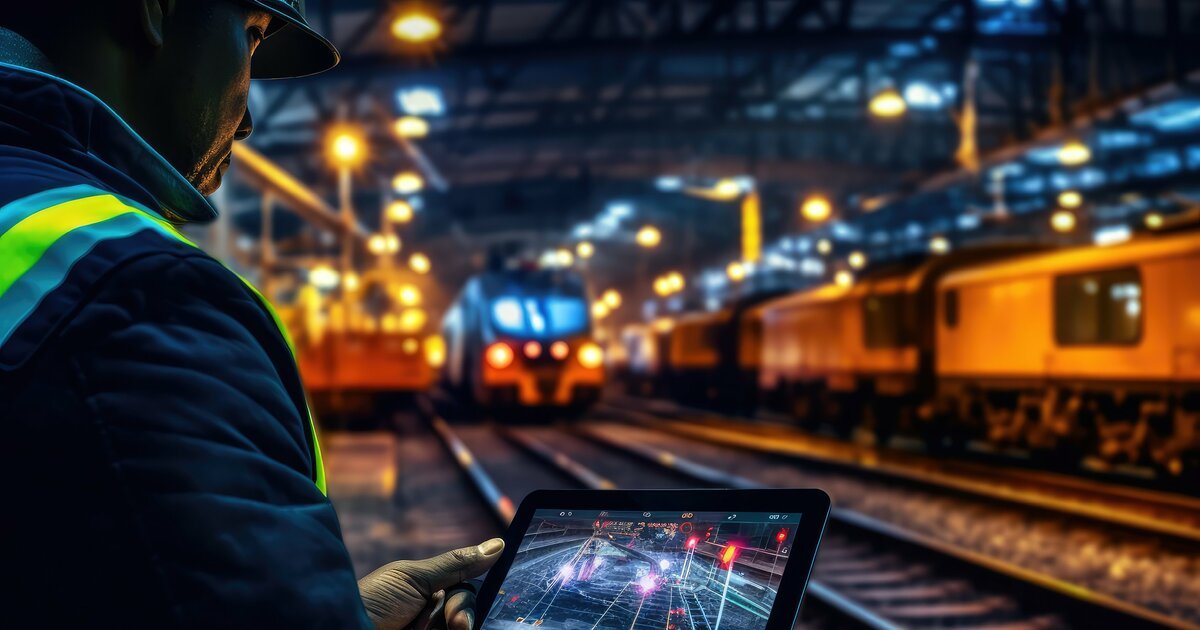
Intelligent Transportation Systems (ITS) use sensors and data analytics to monitor parameters such as train speed, track conditions, and passenger flow. This real-time data supports decision-making for operational management, allowing transit operators to adjust schedules, conduct timely maintenance, and respond to changing conditions to maintain safe and reliable services.

Vehicle-to-Infrastructure (V2I) Communication

Vehicle-to-infrastructure (V2I) and Vehicle-to-Vehicle (V2V) communications allow trains to exchange information with trackside equipment and other trains. This connectivity improves safety by delivering alerts about potential hazards or operational issues, supporting timely responses to maintain safe and efficient operations.

Automatic Train Control (ATC)

Intelligent Transportation Systems (ITS) incorporate automated train control systems that optimise train movements, minimise delays, and improve scheduling efficiency. For example, the European Train Control System (ETCS). ATC systems automatically regulate train speeds and braking to prevent collisions and ensure safe operations. 

Data Analytics

Intelligent Transportation Systems (ITS) generate extensive data that can be analysed to support informed decisions regarding policy, planning, and resource allocation. Real-time tracking of train locations in public transportation, for instance, allows for accurate arrival predictions, providing passengers with reliable estimates for the next metro or train.

Need for ITS in Indian Cities

Increasing Demand for Rail Services

With Indian Railways carrying over 8 billion passengers and 1.23 billion tonnes of freight annually, there is a pressing need to manage this vast volume efficiently.

Integration with Other Transport Modes

ITS supports the integration of rail services with other modes of transportation, such as buses and metros, creating a seamless travel experience for passengers.

Accident Prevention

Passenger safety remains a top priority in train operations. Intelligent Transportation System (ITS) technologies like the European Train Control System (ETCS) and Communications-Based Train Control (CBTC) enhance safety by reducing the risk of accidents linked to human error. 

Reduced Emissions

 By optimising train operations and reducing idle times, ITS contributes to lower fuel consumption and greenhouse gas emissions. 

Efficient Resource Utilisation

Intelligent Transportation Systems (ITS) enable maximum use of existing infrastructure, reducing the need for costly expansions. By enhancing traffic management and public transportation operations, ITS allows cities to better accommodate growing demand, often deferring or minimising the need for new investments. This approach supports more sustainable urban development by maximising current resources and improving overall transit efficiency.

Challenges in Deploying ITS

Financial Factors

Deploying Intelligent Transportation Systems (ITS) requires considerable financial investment in infrastructure, equipment, and maintenance. This can be a challenge where budgets may be limited.

Infrastructure constraints

Many railway systems operate on outdated technology that may not be compatible with new ITS. Integrating these systems can be complex and costly, requiring upgrades or replacements of existing infrastructure.

Cybersecurity Risks

As ITS relies heavily on data exchange and communication networks, it is vulnerable to cyberattacks. Ensuring cybersecurity measures are in place is essential to protect sensitive information and maintain system integrity.


Contactless Travel: Redefining Convenience in Rail Transportation Systems

Introduction

Indian Railways is enhancing passenger convenience by integrating advanced technologies into its infrastructure as part of its Intelligent Transportation System (ITS) initiative. Over the years, ticketing systems in Indian Railways have undergone a paradigm shift. Initially, Indian Railways relied on traditional ticket booking methods, primarily through over-the-counter services at stations. This system often led to long wait times, limited accessibility, and constrained booking options, which negatively impacted passenger convenience.
Contact Less travel

To address these challenges, Indian Railways transitioned to digital ticketing, beginning with the launch of IRCTC’s online ticketing system on August 3, 2002, which enabled passengers to book tickets from home. 

The integration of contactless payments is a step towards further improving passenger flow, especially in high-density urban stations, while supporting cashless, time-efficient transactions.

Contactless Payments

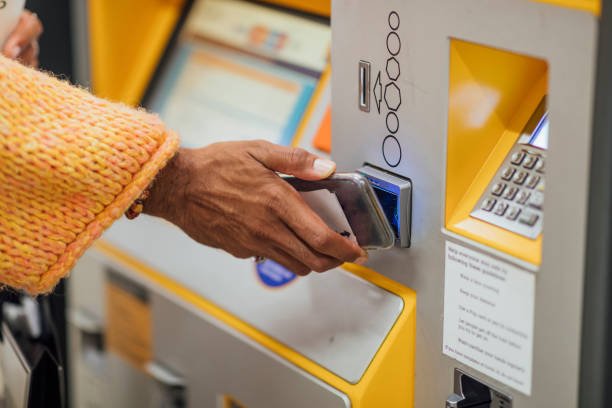
Contactless payment systems are digital transaction methods that allow users to make payments by tapping or waving a compatible card, smartphone, or wearable device near a contactless reader without requiring physical contact or the need for a PIN. These systems utilise technologies such as NFC (Near Field Communication), RFID (Radio Frequency Identification), or QR codes.

Beginning of Contactless Payments in Indian Railways & Metro Systems

The Indian Railway Catering and Tourism Corporation (IRCTC) launched the first online ticketing system for Indian Railways on August 3, 2002. This development shifted ticket booking from traditional counter methods to an online platform.

The COVID-19 pandemic expedited the implementation of contactless payment systems within Indian Railways and metro systems. The imperative necessitated this transition to minimise physical interactions and enhance passenger safety. 
Contact less 3

Key Initiatives Towards Implementing Contactless Payment Systems

Online Ticketing

The first online ticketing system for Indian Railways was launched on August 3, 2002, by the Indian Railway Catering and Tourism Corporation (IRCTC).

Smart Card

The Delhi Metro Rail Corporation (DMRC) introduced the first smart cards for rail transportation in India in 2005.

Mobile Ticketing

 In 2014, the Indian Railway Catering and Tourism Corporation (IRCTC) launched its first e-ticketing Android mobile app, named “IRCTC Connect.

Pilot Project

A pilot project for contactless ticket-checking was launched at Prayagraj Junction in October 2020.

Mobile-Based QR Code Ticketing System

On November 16, 2017, Mumbai Metro introduced India’s first mobile ticketing system for the Versova-Andheri-Ghatkopar corridor, enabling commuters to purchase tickets via smartphones using “Skiip Q” technology. 

National Common Mobility Card (NCMC)

The first National Common Mobility Card (NCMC) in India was launched on March 4, 2019, as an integral component of the “One Nation, One Card” initiative. The NCMC is designed for use across multiple modes of transportation, including metro services, buses, suburban railways, tolls, and parking fees. 

WhatsApp Ticketing System

DMRC launched the first WhatsApp-based ticketing system on the Airport Express Line earlier in 2023. This system was later expanded to all metro lines of Delhi Metro on October 5, 2023.

Benefits of Contactless Travel

Convenience and Speed

  1. Contactless systems enable passengers to simply tap their cards or mobile devices at entry and exit points, removing the need for ticket queues. This simplifies the boarding process and reduces wait times at stations.

Sustainability Focus

Contactless travel systems, by enhancing convenience and accessibility, encourage public transportation over personal vehicles, reducing carbon emissions. 

Cost Efficiency

    Implementing contactless systems helps rail operators cut costs related to cash handling and ticket production. It also reduces the need for physical ticket counters and staffing, resulting in operational savings.

    Unified Payment Solutions

    Contactless technology enables passengers to use a single payment method across multiple modes of transportation (e.g., trains, buses), streamlining the travel experience for those who rely on different forms of transit.

    Data Insights

      Contactless payment systems provide transit authorities with extensive data on passenger behaviour, including travel frequency, peak usage times, and route preferences. This information can be used to optimise service schedules, allocate resources efficiently, and make data-informed adjustments to route planning.

      Challenges of Contactless Travel

      Infrastructure Investment

      Deploying contactless systems requires substantial investment in both technology and physical infrastructure. This involves upgrading existing ticketing platforms, installing new readers and sensors at stations, and establishing strong cybersecurity protocols to protect sensitive passenger information.

      Safety & Security Concerns

      • Cybersecurity Threats: Contactless systems are vulnerable to cyber-attacks such as phishing, malware, and denial-of-service (DoS) attacks, which can disrupt services and compromise passenger data.
      • Data Privacy Concerns: These systems collect personal data, including transaction details and travel patterns. Inadequate data protection measures can expose this information to unauthorised access, posing privacy risks for passengers.

      Complex Stakeholder Engagement

      Implementing contactless ticketing systems involves collaboration across various stakeholders, including government agencies, technology providers, and transport operators. Effective implementation requires clear coordination and alignment among these groups, which can often be challenging and time-consuming.

      Future Trends in Contactless Travel

      Biometric Authentication

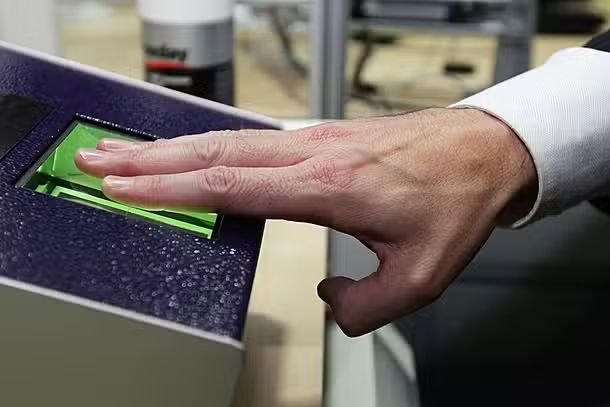
      The plans are in place to Incorporate biometric technologies such as facial recognition and fingerprint scanning to streamline the boarding process and enhance security. 

      Smart Contracts and Blockchain

        The introduction of smart contracts on blockchain could automate fare calculations based on factors like distance or travel time, creating a transparent, efficient system.

        Expansion of Open Loop Systems

          Open loop systems allow passengers to use bank cards or mobile wallets for fare payment, eliminating the need for dedicated travel cards. This simplifies access and enables seamless use across various transit networks.


          Cybersecurity in Urban Transportation: Protecting Infrastructure and Passenger Data

          Introduction

          The rail transportation industry has undergone a technological transition over the past few decades, evolving from isolated, manually operated systems to complex, interconnected digital networks. This evolution has been propelled by advancements in automation, digitised signalling, and the integration of Internet of Things (IoT) technologies. The integration of such advanced technologies in rail infrastructure enhanced the operational efficiency and enhanced passenger services.

          However, this paradigm shift has introduced a new and critical concern: cybersecurity. As rail systems become increasingly interconnected, they face heightened vulnerabilities to cyber threats that could disrupt operations, compromise safety, and endanger sensitive passenger information.

          This article aims to delineate the major benefits and vulnerabilities associated with this technological evolution.

          1709652539495 1

          Emerging Cybersecurity Threats to Railway & Metro Systems

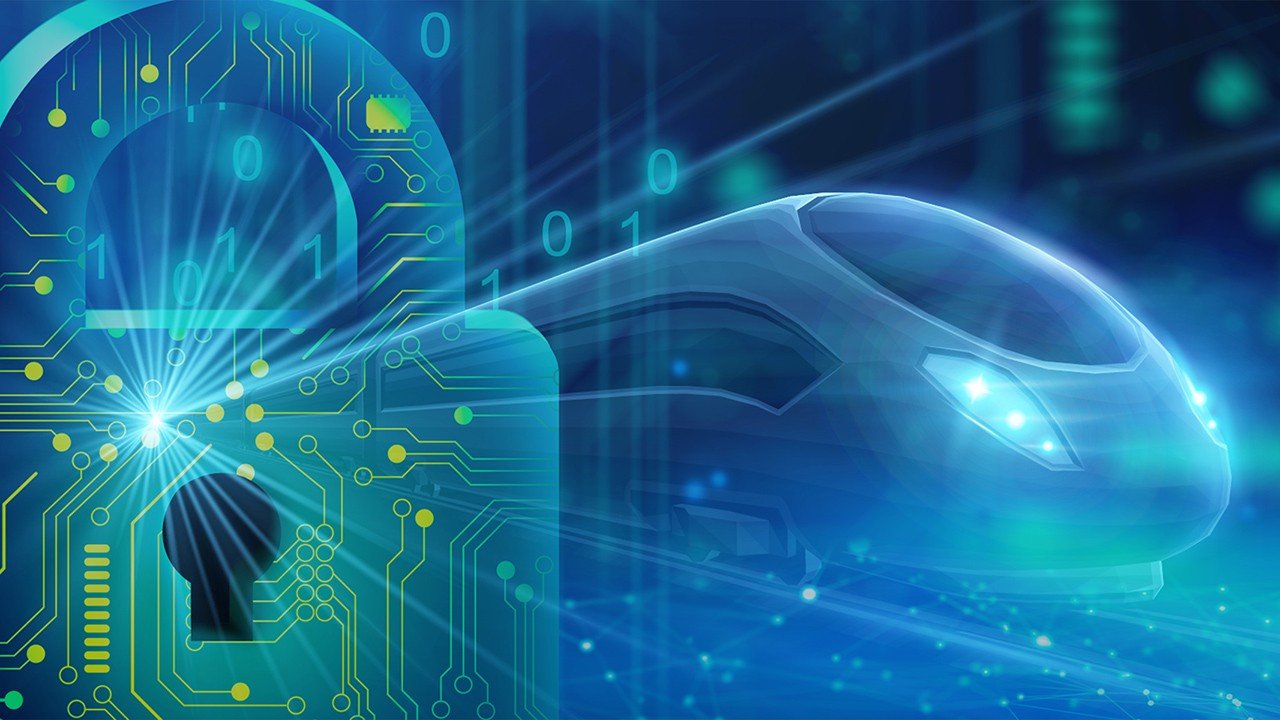
          Traditionally viewed as safe due to their isolated nature, railway systems have become vulnerable to cyber-attacks with the shift toward networked and digital technologies. Cybercriminals can target these advanced systems by manipulating digital commands within railway & metro systems, which can lead to severe consequences, including collisions and disruptions. Threats extend across the system, affecting ticket machines, passenger information displays, and on-board passenger Wi-Fi. 

          As railway systems shift from custom, isolated setups to standardized, open-platform equipment that uses common commercial components, they become more vulnerable to cyber-attacks.
          Cyber s 01 1

          Key Factors That Make Railway & Metro Systems Attractive Targets For Cybercriminals Include:

          1. Distributed Architecture: Railways & metro systems rely on a vast networked architecture, which makes it challenging to maintain consistent security protocols across all segments.
          2. Supply Chain and Technological Diversity: The involvement of multiple suppliers and various technology types introduces variability, complicating unified cybersecurity standards.
          3. Enhanced Connectivity: Increased digital integration heightens vulnerabilities, especially in critical systems like signalling and train control.

          Modern signalling technologies like the European Rail Train Management System (ERTMS), positive train control (PTC), and cloud-based analytics enhance operational efficiency but also expose railways to new vulnerabilities. These systems incorporate sensors in components such as signals and point machines, providing interlocking systems with extensive data but also increasing potential cyber entry points.

          The Internet of Things (IoT) and New Entry Points for Cyber-Attacks

          The proliferation of the Internet of Things (IoT) has introduced a vast number of connected devices to railway systems, ranging from essential operational tools to non-critical “smart” devices. While these devices can improve functionality, many are low-cost and lack comprehensive security features. A basic IoT device can become an entry point for hackers, particularly when the device network shares connectivity with critical train control systems.

          Compromised network separation between mission-critical systems and passenger or business networks can allow external attackers to access train control remotely. 

          In many cases, train-to-ground communication relies on wireless local area network (WLAN) technology, introducing vulnerabilities in critical systems like authentication, encryption, and transmission. 

          Types of Cyber Threats in Railways

          Manipulation of Train Control Systems

          Cyber attacks targeting control systems (e.g., signalling systems) can manipulate train operations by sending false commands or altering signals. This type of attack can lead to catastrophic accidents.

          Denial-of-Service (DoS) Attack

          Attackers may overwhelm railway networks with traffic, rendering services unavailable to legitimate users. Such attacks can disrupt ticketing systems and real-time passenger information services, leading to operational chaos.

          Phishing Attack

          Cybercriminals may use phishing emails to trick employees into revealing login credentials or downloading malicious software. These attacks can lead to unauthorised access to sensitive systems and data breaches.

           Supply Chain Vulnerabilities

          Compromises in third-party vendors supplying technology or services to railways can introduce vulnerabilities, undermining the security of critical infrastructure and leading to widespread disruptions.

            Cybersecurity Solutions for Railway Protection

            1. Real-Time Threat Monitoring and Continuous Detection: Effective cybersecurity requires real-time threat detection, monitoring for anomalies across the network, and offering immediate alerts.
            2. Physical and Electronic Network Isolation: Ensuring separation between passenger and control networks using air-gapped designs prevents unauthorised access to control systems.
            3. Unidirectional Security Gateways: While firewalls have traditionally served as a security barrier, the complexity of modern threats calls for stronger protection. Unidirectional gateways provide one-way data transfer.

            Recent Cyber Incidents

            • The 2017 “NotPetya” ransomware attack disrupted Ukraine’s rail system.
            • In 2022, a cyberattack on Denmark’s railway system affected operations and passenger services.

            Benefits of Implementing Cyber Security Measures

            Benefits of Implementing Cyber Security Measures

            Enhanced Safety and Reliability

            Implementing cybersecurity measures helps protect critical systems such as signalling and train control, preventing the risk of accidents caused by unauthorised access or system failure.

            Protection Against Financial Losses

            By safeguarding against cyber threats, rail operators can mitigate costly disruptions and data breaches that could lead to significant financial losses.

            Operational Efficiency

            Cybersecurity solutions enable real-time monitoring and data analytics, allowing for better asset management and predictive maintenance. 

            Challenges in Implementation

            Complexity of Rail Operations

            The intricate structure of railway systems, involving components like signalling, communications, and control systems, adds challenges to implementing comprehensive cybersecurity measures.

            Resource Constraints

            Budgetary limitations hinder the ability to invest in advanced cybersecurity solutions.

            Insufficient Awareness and Training

            Cybersecurity awareness among railway personnel, especially in operational roles, is often limited. This gap can expose systems to risks. 

            Conclusion

            Integrating Intelligent Transportation Systems (ITS) is crucial for improving the sustainability, safety, and efficiency of urban transportation in India. These systems employ advanced technologies to optimise operations and enhance the passenger experience. A critical aspect of this development is the emergence of contactless travel solutions, which enable seamless journeys through digital payments.

            As transportation systems become more interconnected, the importance of robust cybersecurity measures grows. Safeguarding sensitive data and ensuring the integrity of digital platforms are essential for maintaining public trust and operational reliability.

            By aligning advancements in ITS with contactless travel initiatives and prioritising cybersecurity, Indian cities can establish a comprehensive transportation ecosystem that improves the quality of life for residents and supports sustainable urban development.
            Secretary, MoHUA Inaugurates Solar Power Plant at Ghaziabad RRTS Station

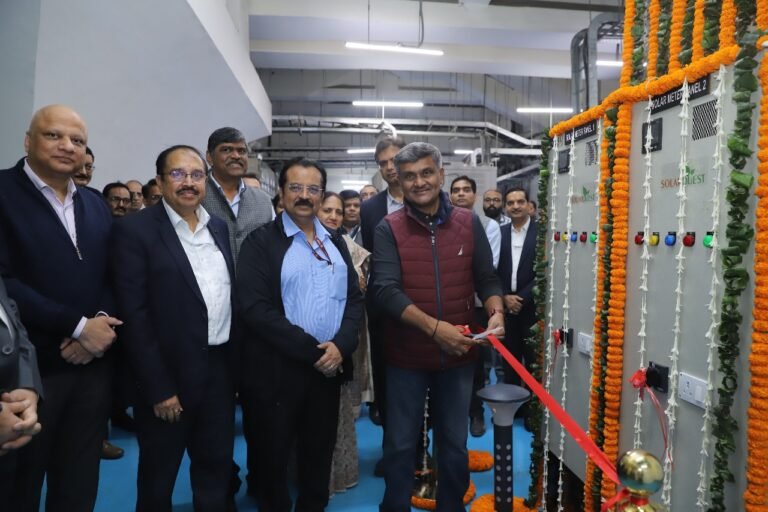
            (Metro Rail News): Another major development has been recorded in the Delhi Meerut RRTS corridor as Shri Srinivas Katikithala, Secretary, MoHUA inaugurated the largest rooftop solar plant installed by NCRTC, with a peak capacity of approximately 1 MWp (965 kilowatts KWp) at Ghaziabad RRTS Station on 1st December 2024.

            4
            1

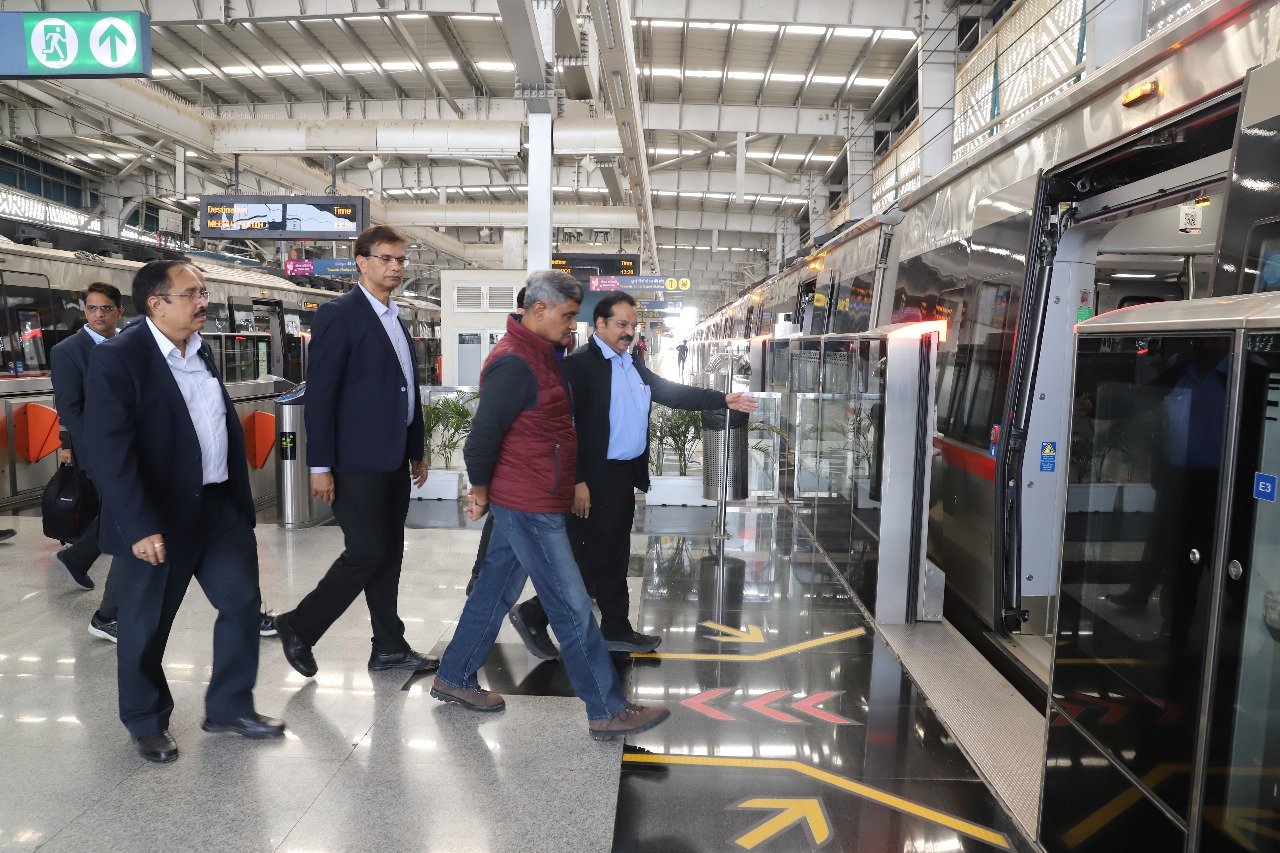
            Shri Srinivas Katikithala was welcomed at New Ashok Nagar RRTS station in Delhi by Shri Shalabh Goel, MD, NCRTC along with the director and other senior officials of NCRTC. 

            5

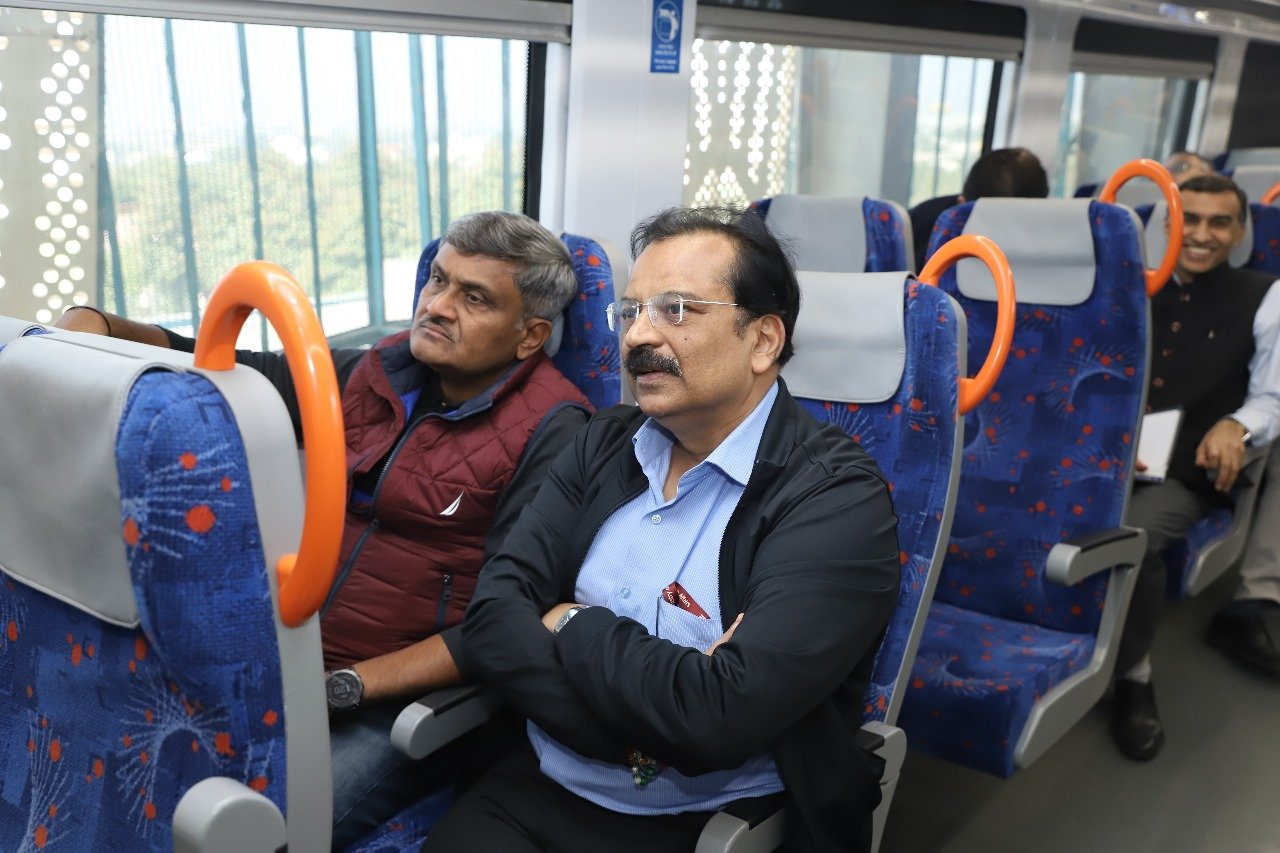
            As per the Release, The Secretary was also briefed about the cutting-edge technologies including ETCS-2 signalling and Building Information Modelling (BIM) used in the Delhi-Meerut RRTS Project. His visit also included a trip on the Namo Bharat Train in the operation section where he experienced commuter-centric features of the Namo Bharat trains.

            2

            NCRTC’s Aim

            The NCRTC has been aiming to reduce its carbon footprint by transforming its stations, depots, and substations into solar power generation hubs.

            With the current solar power generation capacity of 4-megawatt peak (MWp), NCRTC is achieving an estimated annual reduction of 4,100 tons of CO2 emissions.

            1 1

            RRTS: A Multimodal Transit System 

            The MD, NCRTC informed the Secretary, MoHUA that Foot-Over Bridges (FOBs), lifts, and escalators are being utilized to integrate different modes of transport, providing commuters with a seamless transition between different modes of transport without having to exit onto the roads. 

            The New Ashok Nagar and Anand Vihar RRTS stations located on the Delhi- Meerut corridor reflect the multi-modal integration effectively connecting with the Delhi Metro and other transport options in their vicinity.

            Currently, The Sahibabad to Meerut South section spanning 42 km consisting of 9 stations is operational for commuters. Currently, extensive trial runs are being carried out in Delhi section of Delhi-Meerut RRTS Corridor.  

            Agra Metro Advances with Placement Of First Pier Cap In ISBT-Sikandra Section of Line 1

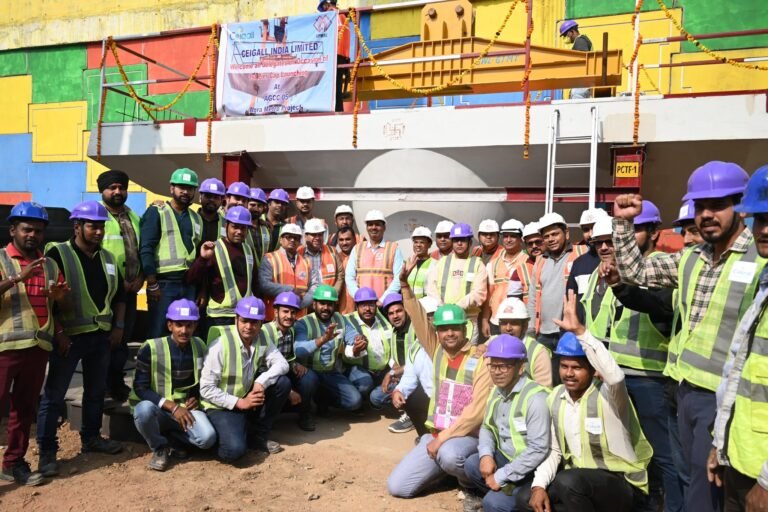
            Agra ( Metro Rail News): On 1st December, the Agra metro project reached another milestone as the placement work of the first pier cap was done in the ISBT-Sikandra section of Corridor 1, implemented by Ceigall India under package AGCC-05 with the guidance of UPMRC.

            pier cap
            agra metro

            About AGCC-05:

            On 15 March 2024, UPMRC awarded the package AGCC-05 to Ceigall India Ltd. (CIL) which falls on Agra Metro Line-1 (Taj East Gate – Sikandra). The estimated cost of the contract is Rs. 266.94 crore. 

            Scope of work of package AGCC-05:

            Under this contract, Ceigall India is responsible for design and construction work that consists of an elevated section which is 3.725 km long that will connect to the RBS Ramp in Khandari and Sikandra. Additionally, Ceigall will construct 3 elevated stations at ISBT, Guru Ka Taal & Sikandra. 

            About Sikandra-Taj East Gate Corridor:

            Sikandra-Taj East Gate corridor features a 14.25 km elevated route and it consists of 14 stations where the 5.2 km, Taj East Gate-Mankameshwar section is already operational and inaugurated on 6 March 2024.

            Following are the Station Names: 

            • Sikandra
            • Guru Ka Taal
            • ISBT, Shastri Nagar
            • RBS College
            • Raja Ki Mandi
            • St. John’s (Agra University)
            • Medical College
            • Mankameshwar (Jama Masjid)
            • Agra Fort
            • Taj Mahal (Purani Mandi)
            • Fatehabad Road
            • Basai
            •  Taj East Gate

            Bullet Train Project: Railway Minister Inspected Slab Track System In Surat

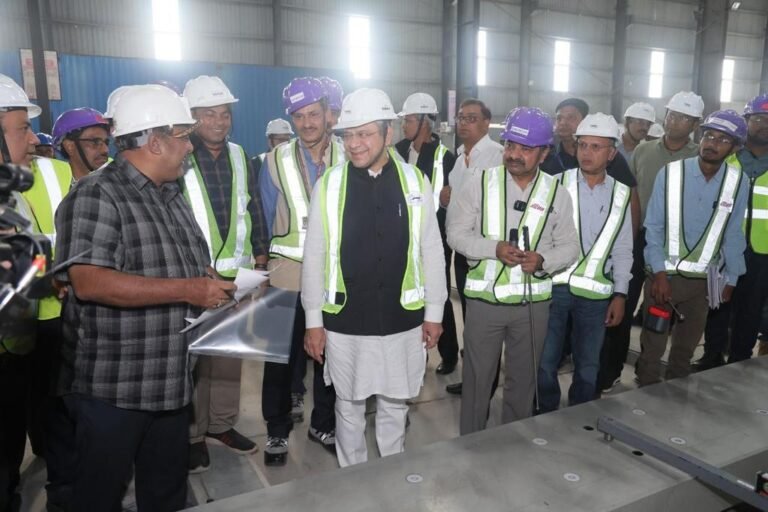
            (Metro Rail News): On 30th November, Railway Minister Ashwini Vaishnaw examined the Slab Track system of the Mumbai-Ahmedabad Bullet Train Project at Kim Village in Surat, Gujarat.

            The railway Minister also highlighted the significance of the slab track system in the Bullet Train Project and outlined the skilled work which is being done with ultra precision in manufactured facilities. 

            j slab 2 1

            About J Slab Track System:

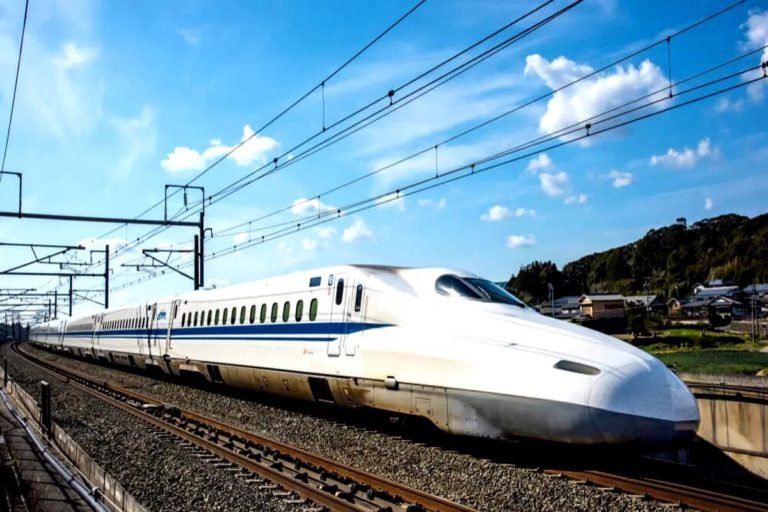
            A slab track system is a ballastless track in which railway track infrastructure uses a rigid concrete or asphalt construction. For the Mumbai -Ahmedabad High-Speed Rail Corridor, NHSRCL is implementing the J slab track system which has been taken from the Japanese High-Speed Railway known as the Shinkansen, due to its feature of reducing noise and vibration.

            The concrete slabs used in India’s first Bullet Train project are approximately 2,200 mm wide, 4,900 mm long, and 190 mm thick with a weight of 3.9 tons.

            j slab 1 1

            Development of Slab Track System in India:

            The slab manufacturing factory was established near Surat marking a major milestone in India’s development in the first high-speed rail infrastructure. It is located in Kim Village due to the efficient logistics and timely delivery of track slabs for the bullet train project.

            The track slab facility at Kim Village features the capacity to roll out 120 slabs per day and it can store up to 10,000 slabs.

            Railway Minister Ashwini Vaishnaw Clarifies Delays in Vande Bharat Sleeper Train Manufacturing

            (Metro Rail News): On 28 November, Railway Minister Ashwini Vaishnaw provided the statement regarding the delays in starting the manufacturing process for Vande Bharat Sleeper Trains during a media interaction. 

            He clarified that the delays are not related to design clearance issues, stating that the design was never a concern with the Russian firm involved in the manufacturing of these train sets.

            The Railway Minister made this statement as a section of the media quoting officials from the Russian company Transmashholding (TMH) reported that Indian Railways demanded the toilets and pantry cars in the new vande bharat sleeper trains leading to changes in the trains design. 

            The report from the Transmashholding (TMH) further stated that the company has addressed the Railway Minister’s concern regarding the changes in design of trains and has sent it to the ministry for approvals. However, the report further stated that the ministry hasn’t responded with its consent. 

            Ashiwini Vaishnaw stated that TMH is supposed to manufacture 1,920 sleeper coaches as per the contract. He dismissed the media reports stating that real issues regarding the delays was the TMH’s inability to manufacture 1,920 sleeper coaches due to the limited manufacturing capabilities as in Russia trains have less number of coaches as compared to India.

            He added, “I want to clarify that when the contract was signed, it clearly said that they have to manufacture train sets with coaches 16/20/24.”According to the minister, the firm was clearly told that India has a bigger population so on some routes 24 coaches were needed, while 16 coaches were required on other routes.

            Kolkata Metro’s GM Inspects Jai Hind Metro Station of Yellow Line

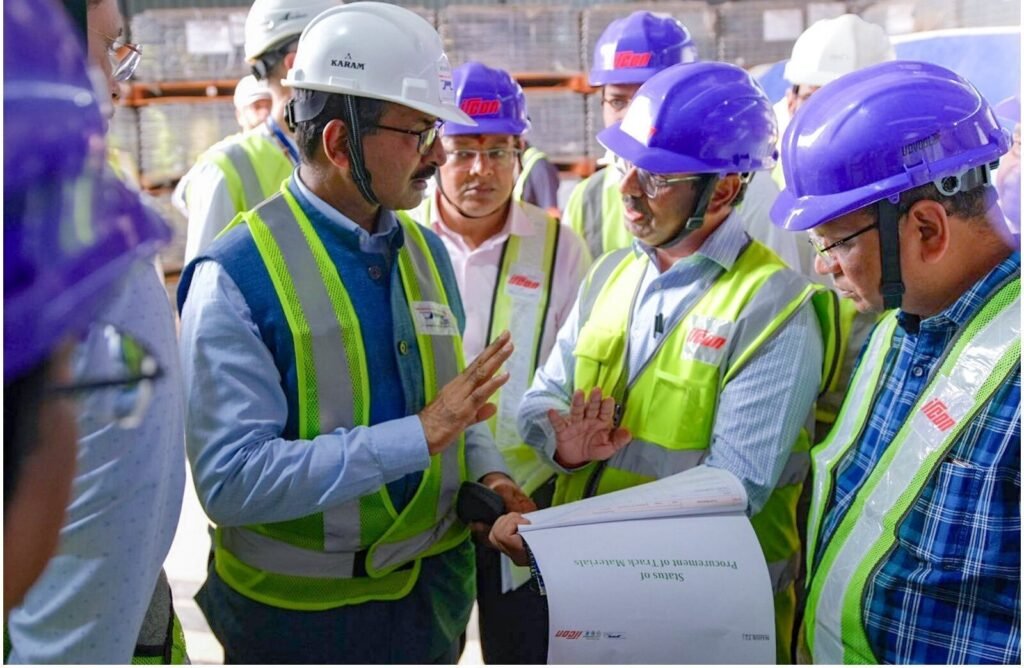
            Kolkata (Metro Rail News): Shri P. Uday Kumar Reddy, General Manager Of Metro Railway inspected the Jai Hind (Airport) Metro station of Yellow Line and tracked the progress of the ongoing works on 26 November. The General Manager was accompanied by PCEE, PCSTE  and other officers of the construction wing. 

            Senior officers of Metro Railway guided Shri P. Uday Kumar Reddy and notified him about the current status of civil, electrical as well as signal & telecommunications works of the stretch from Noapara to Jai Hind stations of Yellow Line. 

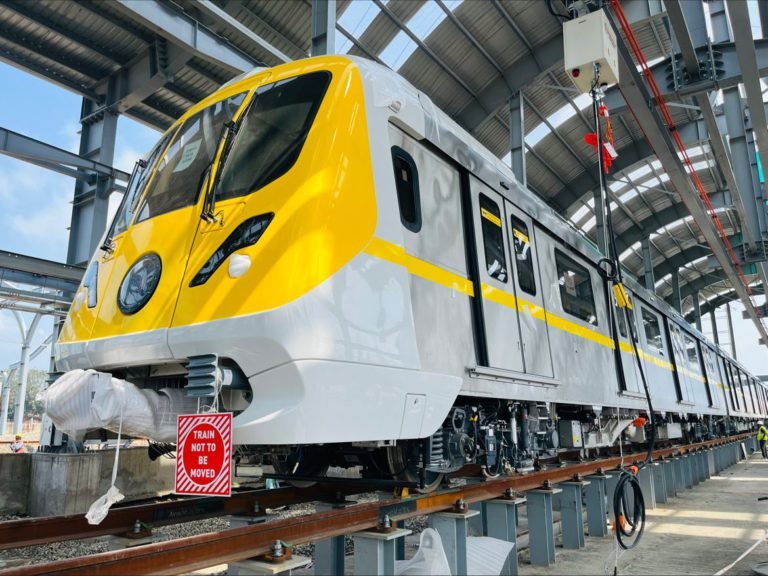
            green line metro 1

            Developments Till Date: 

            The Jai Hind (Airport) Metro station has progressed with the completion of stairs construction and Flooring work of Platform No. 2 and 3. 

            Future prospects:  

            As mentioned by Shri Devindar Kumar, Chief Engineer, Construction, Metro Railway, a total of 250 fire doors are likely to be built by December 2024 for Jai Hind (Airport) Metro station. Also the installation of travelletor will start next month.

            Additionally, the construction team has assured to start the trial run in the month of December 2024 . GM emphasized adherence to the target of the opening of the Noapara -Jai Hind Metro section by March 2025.

            BEML Received LOA for Rolling Stock Contract ARE02A of Chennai Metro Phase 2

            Chennai (Metro Rail News): The Chennai Metro Rail Corporation (CMRL) has issued a Letter of Acceptance ( LOA) to BEML for an approximate Rs. 3658 crore contract to supply 210 coaches for Line 3 (Madhavaram – Siruseri SIPCOT) and Line 5 (Madhavaram – Sholinganallur) of Phase 2 project on 28 November under package ARE02A. 

            BEML 1

            In May 2024, technical bids were opened to reveal that BEML and Titagarh Rail Systems had bid for the Package ARE02A. Furthermore, In September 2024 BEML was revealed as the lowest bidder for the contract. The contract will be funded by the Japan International Cooperation Agency ( JICA). 

            Package ARE02A

            The scope of work under this package includes the Design, Manufacture, Supply, Testing, Commissioning, Training of Personnel and Comprehensive Maintenance Contract of 70 driverless train sets each consisting of 3 standard gauge coaches. 

            Additional Information 

            Back in September, Alstom supplied their first train out of 36 train sets for the Chennai Metro Phase 2’s Line 4 from Light House to Poonamallee Bypass under package ARE03A. 

            BEML and ICF Collaborates For Manufacturing High- Speed Trains 

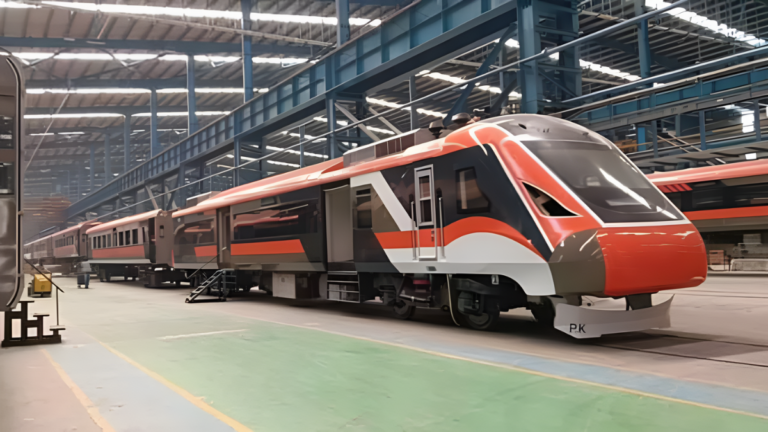
            (Metro Rail News): A major development has been waiting as Railway Minister Ashiwini Vaishnaw on 27 November declared that The Integral Coach Factory situated in Chennai has been collaborating with the BEML for designing and manufacturing high speed trains with the maximum speed of 280 Kmph. 

            Ashiwini Vaishnaw mentioned that after the success of Vande Bharat Trains under the “ Make In India” the Indian Railways planned to design and manufacture high speed train sets. However, the Minister also stated that designing and manufacturing of high speed trains sets is a complex and technology-intensive process.

            Vaishnaw also said “The train sets will have chair cars with best-in-class features, such as aerodynamic exteriors, sealed gangways, automatic doors, optimum climatic conditions inside compartments for passenger comfort, CCTV, mobile-charging facilities, optimum lighting, fire safety equipment etc.,” 

            The Railway Minister also said that these trainsets will be highly competitive as compared with other train sets as the cost per coach is approximated to be Rs 28 crores (excluding taxes).He added that competition of the project can be determined after the finalization of detailed design.  

            He also paid attention towards the technical aspects of these trains like design and manufacturing of the aerodynamic, airtight car body, design and manufacturing of electrics including propulsion for high-speed application, weight optimisation of the train sets and heating, ventilation and air-conditioning (HVAC) of the high speed trains.

            Nagpur Metro’s Indora Square Metro station to become operational soon

            Nagpur (Metro Rail News): Nagpur Metro Phase 1 is going to witness major advancement as Indora Square Metro station of Line 1 is expected to become operational soon as Janak Kumar Garg, The Commissioner of Metro Rail Safety (CMRS) has successfully conducted the critical safety inspection on Indora Square Metro Station on 26 November. 

            The inspection of the Indora square metro station primarily focused on safety compliance of the station. However, the report stated some major drawbacks that require urgent attention. 

            Nagpur Metro Phase 1

            Nagpur Metro is an Urban Mass Rapid Transit system (MRTS) managed by Maharashtra Metro Rail Corporation Ltd. (MahaMetro). 

            The Phase 1 of Nagpur Metro spans  38.215 km consisting of 2 corridors. On March 8, 2019 Prime Minister Narendra Modi inaugurated the first section of Phase 1 from Khapri to Sitabuldi. 

            Line 1 ( Orange Line) Automotive Square – Khapri19.658 kmTotal no. of stations: 22 
            Line 2 ( Aqua Line) Lokmanya Nagar – Prajapati Nagar19.407 kmTotal no. of stations: 20

            Afcons Constructs Ghana’s Longest Railway Line (Tema-Mpakadan)

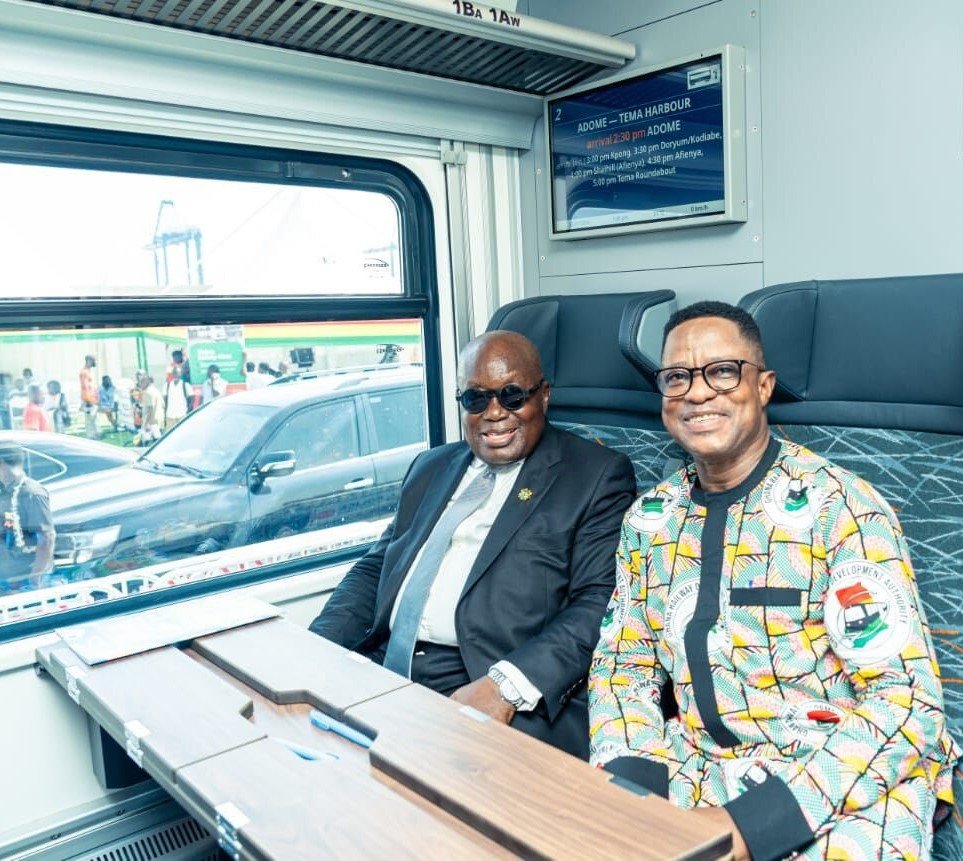
            Afcons had built the first ever Tema-Mpakadan standard gauge longest railway line over the Volta River in Ghana, a West African country. The President of the Republic of Ghana, Nana Addo Dankwa Akufo-Addo, commissioned this line last week. The project included a bridge over the Volta River, Ghana’s longest railway bridge, and two rail head facilities among others.

            ghana raiway 1
            ghana railway president 1 1

            About Tema-Mpakadan project:

            Tema-Mpakadan railway project is 100 Km long with 7 passenger stations. Additionally, the project features a 300 m bridge over the Volta River with two head facilities and 4 rail bridges. The project also consists of 11 road under bridges and 22 road over bridges.

            The project cost is US$447 million Approx. It was funded by Exim Bank Credit and executed by Afcons Infrastructure Limited.

            ghana railway2

            Comments from Authorities

            Mr S Paramasivan, Managing Director, Afcons said “We are proud to have executed the largest railway project in Ghana. This project will play a pivotal role in revamping and modernizing the country’s railway infrastructure. The construction of a bridge over Volta River is a classic example of extreme engineering,”

            On this occasion, President Akufo-Addo, said, “Today, we gather to celebrate the completion of the Tema-Mpakadan railway line. A vital component of Ghana’s first multimodal transport system, to drive the economic growth of our nation. This 100-kilometre railway line complements a visionary transport system that integrates rail, road, and inland water transport, connecting Tema-Port to Buipe Port via the Volta Lake”

            AD 4nXfIld lHPBUHkRgWiCOLx4V NZKltbyZLvMbZpNtVGUfEeE rtQN9h1hUyLoxfcTiPWX4XrmOZUXT6dMczUdjiCm 2aCLqnc8B4N

            The Impact of the Tema-Mpakadan Railway Project:

            The project is important for renovating and modernizing the country’s railway infrastructure with setting a classic example of extreme engineering. This multimodal transport system will also be responsible for the economic growth of the country Ghana. It was completed with the vision of efficiency, reduction in traffic congestion, long-distance freight and passenger movement and with accessible mobility which includes integrated rail, road, and inland water transport, connecting Tema-Port to Buipe Port through the Volta Lake.”

            Bullet Train Project: NHSRCL MD Examines Tunnel Section & TCB in Navsari

            Metro Rail News: Md of NHSRCL, Shri Vivek Kumar Gupta examined the track construction base (TCB) and under construction Bilimora Bullet Train Station in Navsari, also the ADIT and Shilphata tunnel section of the Mumbai-Ahmedabad High-speed Rail project. 

            MD of nhsrcl 1 2

            Purpose of MD’s  visit to Bilimora station of Bullet Train project: 

            His visit concentrated on evaluating progress and observing the quality and promptness of India’s first bullet train. He also discussed the challenges faced by the team and ensured the timely completion without compromising the quality.

            The ADIT and Shilphata tunnel sections are the critical components of the high-speed rail project and are the engineering marvels that need attentive execution. He also assured the safety, accuracy, and global standard of the tunnel section.

            GdCwj5UagAAXagj 1 1

            Promise of excellence:

            The MD also praised the team for their efforts and repeated NHSRCL’s promise of delivering a world-class project. 

            MPMRCL announced Bidders For Indore Metro’s Package IN-05R

            Indore ( Metro Rail News): Madhya Pradesh Rail Corporation Ltd. (MPMRCL) received bids from 6 construction firms (2 in a consortium) for the Indore Metro’s Yellow Line underground section under Package IN-05R.

            SCOPE OF PACKAGE IN-05R

            Package IN-05R includes the construction of twin tunnels connecting a ramp east of Indore railway station with a ramp west of Indore’s Devi Ahilya Bai Holkar Airport covering 8.626 Km long and 7 underground stations at Indore Railway Station, Rajwada, Chota Ganpati, Bada Ganpati, Ramchandra Nagar, BSF / Kalani Nagar, and Airport. 

            Package In-05R stands as the only underground package for the Indore Metro Phase 1 project which covers a total length of 33.53 km. The appointed contractor will be required to deploy 4 TBMs for constructing twin tunnels.

            The eastern side of Package IN-05R will be joined with Package IN-04 (under construction) Whereas the western side will be joined with Package IN-03 (under construction).

            MPMRCL originally floated tenders in February 2024 for package IN-05 and then cancelled and re-floated tenders for the same package, package IN-05R, at the cost of RS. 2550 crore with a 4-year deadline.

            Indore Metro Map
            Map Depicting route and stations in the Indore Metro

            Bidders of the package IN-05:

            • Afcons Infrastructure – Sam India Consortium
            • Gulermak Agir Sanayi Insaat Ve Taahhut A.S.
            • Hindustan Construction Co. – Tata Projects Ltd. (HCC – TPL JV)
            • ITD Cementation India Ltd.
            • J Kumar Infraprojects Ltd. (JKIL)
            • Larsen and Toubro Ltd. (L&T)

            Future aspects:

            The Bids have been sent for technical evolutions. Following this process, MPMRCL will reveal the financial bids of the technically qualified bidders.

            Trials of the First Hydrogen Train to Begin in December

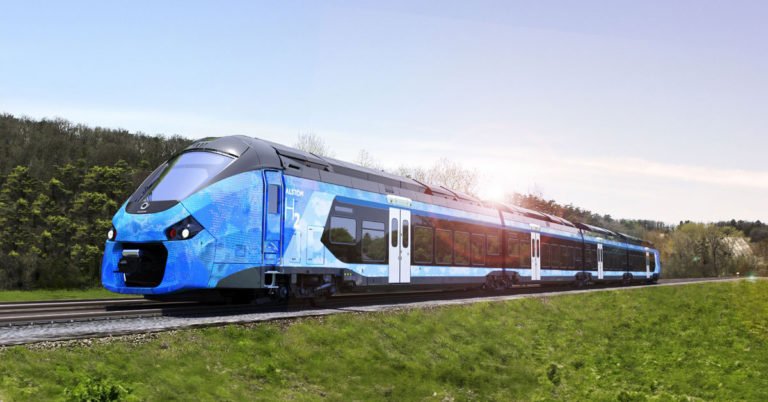
            (Metro Rail News): Another progress has been waiting as the Indian Railway is planning to conduct the trials for its first hydrogen-powered trains in December 2024 on the Jind- Sonipat route in Haryana, covering a distance of 90 kilometres.

            About Hydrogen-powered trains:

            The first hydrogen train was manufactured by the Integral Coach Factory, situated in Tamil Nadu. 

            The trains have been designed with an operational speed of 140 Km\hr.

            The fuel used in Hydrogen-powered trains is a combination of hydrogen and oxygen cells that produce electricity, only with the emission of water vapour. 

            Aim behind hydrogen trains

            The hydrogen trains align with Indian Railways’ vision of achieving net-zero emissions by the end of 2030.

            This will make India stand with other countries like Germany, Sweden, and China, which are already using hydrogen train technology.

            Other contract: 

            Indian Railways has awarded a project to develop ground infrastructure and retrofit hydrogen fuel cells in existing DEMU (Diesel Electric Multiple Unit) rakes. The pilot project is estimated at Rs. 111.83 crore.

            Future Prospects: 

            The railway network is likely to introduce 35 more hydrogen-powered trains by 2025 if the trials are successful. 

            General Manager Inspects Kolkata Metro’s Victoria Station At Purple Line

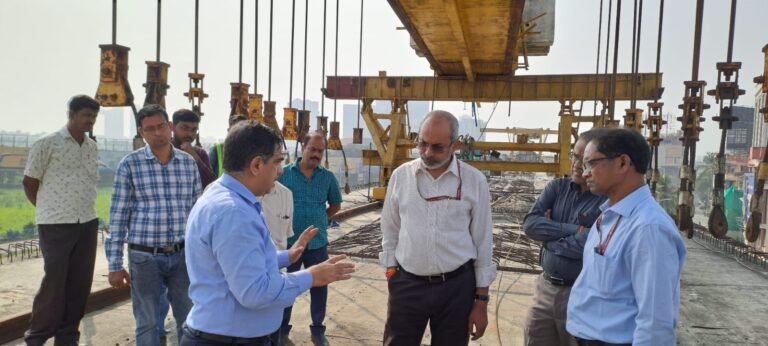
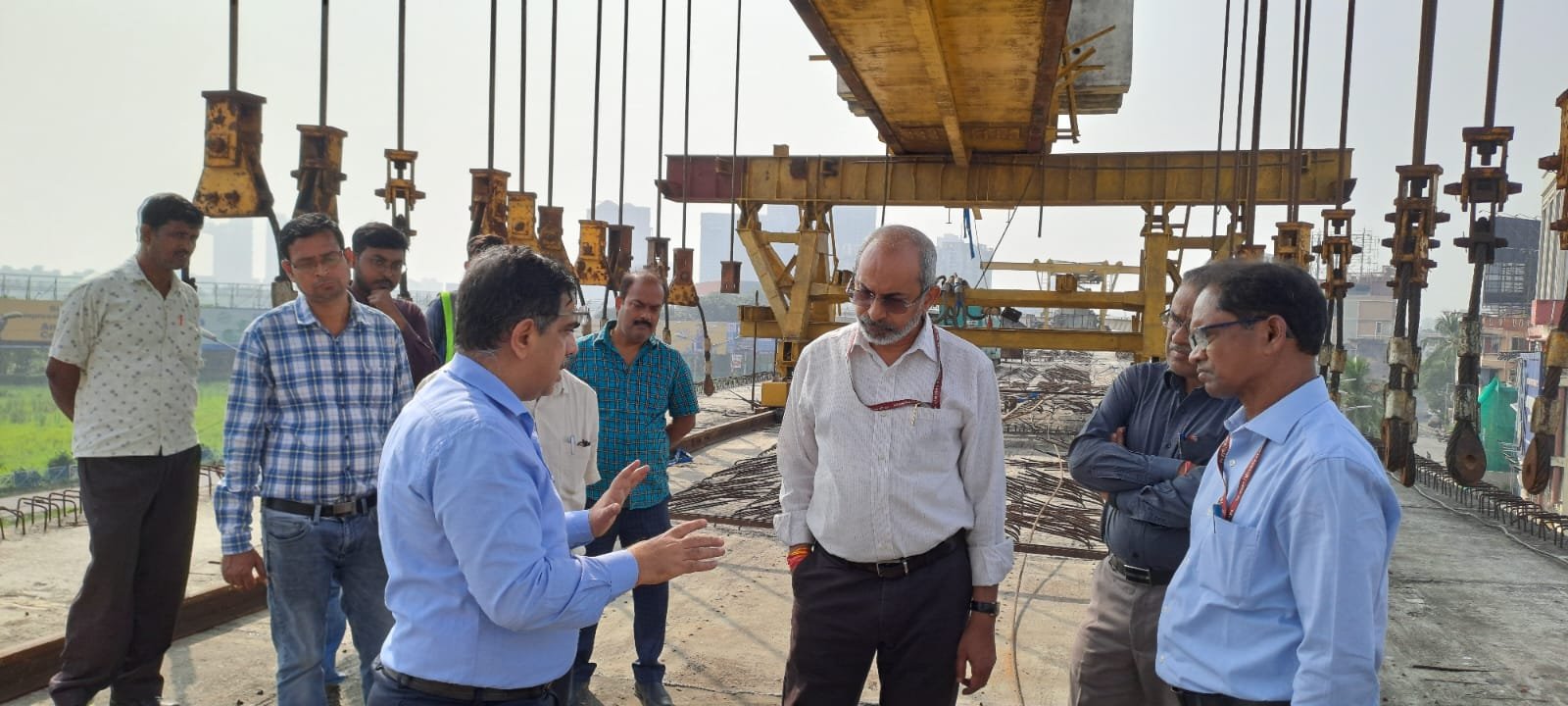
            Kolkata ( Metro Rail News): The Kolkata Metro has been progressing rapidly as on 19 November, Shri P Uday Kumar Reddy, General Manager of Metro Railway Kolkata, inspected the under-construction Victoria Memorial Station of Purple Line’s section spanning 7.55 km from Majerhat to Esplanade. 

            kolkata metro inspection

            The general manager was accompanied by senior officials of Metro Railway and Rail Vikas Nigam Limited (RVNL) throughout the inspection. 

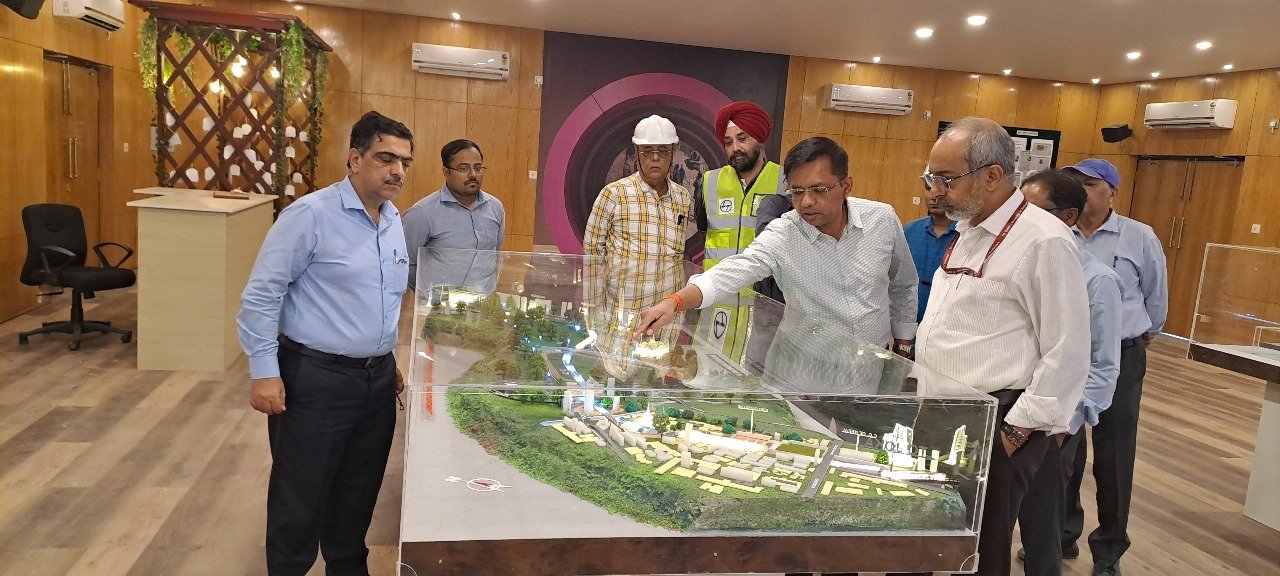
            Shri P Uday Kumar Reddy also inspected the model room at Victoria station site, progress of viaduct launching as well as station construction work of Beleghata to Salt Lake Sector V section of Orange Line and viaduct work near Bagjola Canal, New Town Depot. 

            kolkata metro station

            Kolkata Metro’s Purple Line 

            Operation route: Currently, The Kolkata Metro’s 7.75 km section from Joka to Majerhat is operational with 7 stations. 

            Stations:

            •  Joka, Thakurpukur, Sakherbazar, Behala Chowrasta, Behala Bazar, Taratala, and Majerhat

            Under-construction route: The under-construction route of Purple Line spans 7.55 km between Majerhat and Esplanade with 5 stations. 

             Stations :

            • Mominpur, Kidderpore, Victoria Memorial, Park Street and Esplanade.