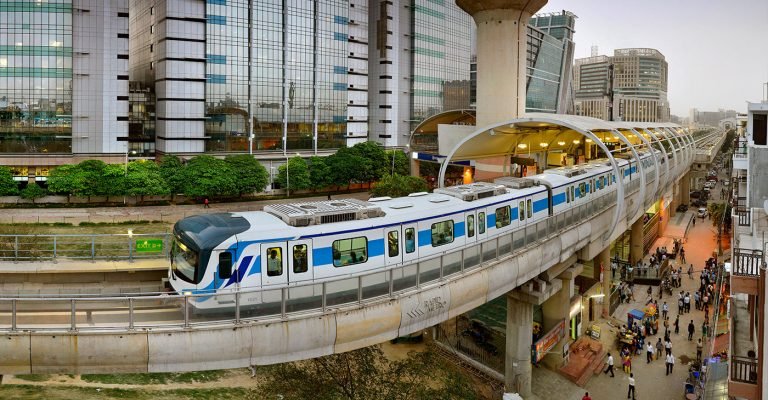
New Delhi: Prime Minister Narendra Modi has flagged-off the Delhi-Faridabad Metro Line that would allow hassle free travel for around two lakh daily commuters between the national capital and the industrial hub in Haryana.The extension of the Delhi Metro connects Badarpur to Escorts Mujesar in Faridabad.The total cost of the project from Badarpur to Escorts Mujesar is nearly Rs. 2,500 crore. Out of this, Rs. 1,557 crore was borne by the Haryana Government, the Centre contributed Rs. 537 crore, while the Delhi Metro provided Rs. 400 crore.The nine stations in this section include, Sarai, NHPC Chowk, Mewala Maharajpur, Sector 28, Badkal Mor, Old Faridabad, Neelam Chowk Ajronda, Bata Chowk and Escorts Mujesar. buy kamagra polo online https://lasernailtherapy.com/wp-content/themes/twentytwentytwo/inc/patterns/en/kamagra-polo.html no prescription
All these are elevated and located on either side of the Delhi-Mathura Road (NH-2).“The nine-station metro corridor which was 95 per cent indigenously built will provide people a safe, affordable, quick, comfortable, reliable, environment-friendly and sustainable transport facility,” a Haryana government spokesperson said.Haryana Chief Minister ML Khattar, addressing a press conference on Saturday, had thanked the Prime Minister for “gifting” the Metro service which would take the city to “another level of progress” with better connectivity with other NCR towns.He had also said that the Prime Minister would be announcing the go-ahead for connecting Gurgaon with Faridabad by Metro.
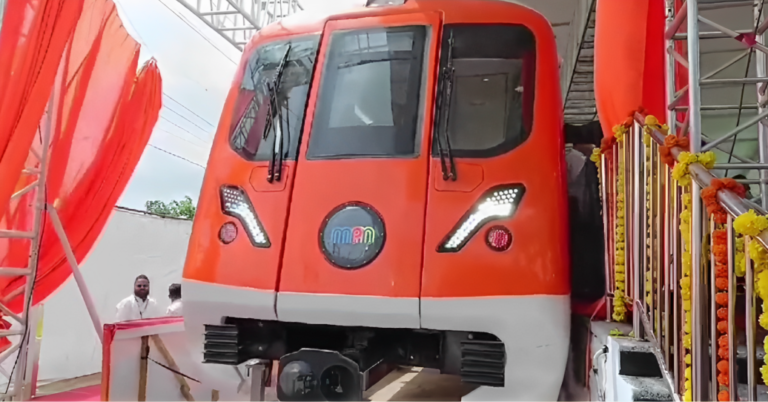
Bhubaneswar (Metro Rail News): A major development has been waiting for Bhubaneswar Metro as 3 firms have submitted bids for Phase 1’s rolling stock contract to supply 39 standard gauge coaches (13 train sets) under Package BRS1.
Bidding Process of Bhubaneswar Metro’s Rolling Stock Contract
In July 2024, Delhi Metro Rail Corporation ( DMRC) invited bids for the rolling stock contract with an estimated cost of Rs. 509.68 Crores with a 3-year deadline. Furthermore, the technical bids were opened on 6 December for the contract.
BRS1 Bidders
Alstom Transport India Ltd.
BEML Ltd.
Titagarh Rail Systems Ltd.
Scope of Work
The awarded contractor will be responsible for the Design, manufacture, supply, testing, commissioning and training of 13 trainsets ( 39 coaches) for the Bhubaneswar Metro Project.
The contract is expected to be funded by domestic market borrowing and/or bilateral funding agencies.
Contract Requirements:
Train Design
Preliminary Design Completion: Within 18 weeks (4 months) of the contract commencement date.
Final Design Completion: Within 46 weeks (10 months) of the contract commencement date.
Delivery of Trains
Prototype Train-Set Delivery: To be delivered within 102 weeks (2 years) to the Phulapokhari Depot.
Next 4 Trains: To be delivered within 137 weeks from the contract commencement date.
Subsequent 4 Trains: To be delivered within 145 weeks from the contract commencement date.
Final 4 Trains: To be delivered within 154 weeks from the contract commencement date.
Train Specifications
The 13 train sets will operate on the Bhubaneswar Metro Blue Line spanning 26 km from Biju Patnaik Airport to Trisulia Square through 20 elevated stations.
The 13 trainsets (39 coaches) will be operated in a 3-coach configuration DMC+TC+DMC.
DMC: Driver Motor Coach
TC: Trailer Coach
The new train sets for the Bhubaneswar metro will be designed with Grade of Automation-2 (GoA2) and will be able to accommodate 972 passengers.
Aligning with the Make In India Initiative
In this contract, DMRC has mandated adherence to the Atmanirbhar Bharat (Make in India) initiative.
Offshore Manufacturing Limit: A maximum of 9 coaches (3 trains) can be manufactured in an offshore factory outside India.
Local Manufacturing Requirement: The remaining coaches must be manufactured within India.
Contractor’s Compliance: Contractors must establish local manufacturing facilities, either independently or in collaboration with an Indian partner.
Further Details
The bids submitted by 3 firms have now been sent for technical evaluation. After the completion of the technical evaluation, the financial bids will be opened to reveal the lowest bidder for the contract.
Uttarakhand, known as “ Devbhoomi”, the second fastest growing state in India is a Northern Indian state known for its rich cultural heritage and scenic views. It is bordered by Himachal Pradesh to the northwest, Tibet to the north, Nepal to the west, and Uttar Pradesh to the south and southeast, with a small part touching Haryana in the west. Most of the northern part of the state is covered by high Himalayan peaks and glaciers. The most crucial part of Uttarakhand’s economy is agriculture.
While Dehradun serves as the state capital of Uttarakhand, Nainital is the judicial capital of Uttrakhand. However, due to a boost in tourism and rapid urbanisation in Uttarakhand specifically in the Dehradun city, the state started witnessing major issues like traffic congestion. To conquer these challenges an idea of a metro system in the state of Uttarakhand was proposed. The Uttarakhand Metro will provide a more efficient mode of transport to the locals and residents of Uttarakhand by enhancing the connectivity between the cities. The metro system will also foster the economic growth of the state by modernising the transportation infrastructure in the state.
Overview of Uttarakhand Metro
The Uttarakhand Metro is a Mass Rapid Transit System ( MRTS) consisting of two corridors proposed to connect Haridwar – Rishikesh – Dehradun in the state of Uttarakhand. Uttarakhand Metro Rail Corporation Limited (UKMRC), a special-purpose vehicle and venture of the Government of Uttarakhand is the authorised authority responsible for the execution of the Uttarakhand Metro Project.
Need for Metro System in Uttarakhand
Traffic congestion: The cities of Uttarakhand have been facing major traffic congestion during tourist seasons and peak hours. Cities like Dehradun, Haridwar and Rishikesh of Uttarakhand witnessed a significant increase in the registration of private vehicles. The situation becomes particularly critical during peak hours, with the growth of commercial activities on both sides of the road and the on-street parking of private vehicles by residents further exacerbating the problem. To address the severe traffic congestion on the road the state saw a need for a more reliable and efficient alternate mode of transportation.
Growing population: The state has been witnessing a major increase in population due to rapid urbanisation. As per the 2011 Census, Uttarakhand had a population of approximately 10.1 million, reflecting a decadal growth rate of 18.81% compared to the 2001 Census.
Haridwar District spans an area of 2,360 sq. km and is home to a population of 1,890,422 as per the Census 2011. In comparison, Dehradun District covers a larger area of 3,088 sq. km and has a population of 1,698,569 according to the same census data. The growing population has led to major challenges in the state, one of them being the lack of effective modes of transportation.
Timeline:
December 2016: A Memorandum Of Understanding (MoU) was signed between the Uttarakhand state government and Delhi Metro Rail Corporation (DMRC)for the preparation of a Detailed Project Report (DPR) for the Uttarakhand Metro.
June 2020: Uttarakhand’s Unified Metropolitan Transport Authority (UMTA) gave approval for a Comprehensive Mobility Plan. This plan encompassed the 73 km Dehradun – Rishikesh – Haridwar metro project.
The Unified Metropolitan Transport Authority (UMTA) approved the 73 km metro rail corridor planned for Uttarakhand.
Key specification
Authorised Authority
Uttarakhand Metro Rail Corporation
Speed and track
Top speed: 70 km/hr Average speed: 25 km/hr Track gauge: Standard gauge- 1,435 mm
Safety and electrification
750 V DC Third Rail Overhead Line
Train Configuration
3 Coaches
Estimated cost
₹40,150 crore
Routes
Operational: 0 km | Under Construction: 0km | Proposed: 73 Km
Phase 1
Line-1: Haridwar – Rishikesh
Length: 32 km
Type: Elevated & At-Grade
Number of Stations: 10
Phase 2
Line-2: Nepali Farm – Dehradun
Length: 41 km
Type: Elevated & At-Grade
Metro Neo Projects in Uttarakhand
The Uttarakhand Metro Rail Corporation (UKMRC) is spearheading the Metro Neo Project in Uttarakhand. It aims to establish a rapid transit system in Dehradun, Haridwar, and Rishikesh.
1. Dehradun Metro Neo Project
Approval and Planning:
In its 16th meeting which was held on 4 May 2021, the board approved DPR for two First Order Transit Corridors in Dehradun.
Proposed network: 22.424 km with 25 stations.
Implementation Model: SPV (60:40).
Uttarakhand Metro Rail Corporation (UKMRC) was directed to seek approvals from the Government of Uttarakhand (GoUK) and the Government of India (GoI).
Approval Process:
The State Government approved the DPR and forwarded it to the Ministry of Housing and Urban Affairs (MoHUA) on 12.01.2022.
On 31 August 2022, the Net Worth Planning Group (NPG) recommended the project for approval, currently under review by MoHUA.
2. Haridwar–Rishikesh Metro Neo Project
Approval and Planning:
In its 15th meeting on 13.04.2021, the board directed to prepare the DPR for the project.
Proposed network: 34.148 km with 20 stations.
DPR prepared by UKMRC.
Benefits of Uttarakhand Metro
Enhanced connectivity: A metro system in Uttarakhand will improve accessibility in the state by linking the major cities like Dehradun, Haridwar and Rishikesh. This will improve the connectivity in the state by allowing the residents and tourists to commute between the cities more conveniently.
Reduced Traffic Congestion: Dehradun being an urban city has been facing major challenges regarding the increased number of vehicles and traffic congestion on the road due to the attraction of more tourists. A metro system in the cities of Uttarakhand will alleviate severe traffic congestion in the cities by providing an efficient mode of transportation.
Increased Economic activities: With increased connectivity, the city will attract more businesses to set up in the cities leading to more job creation and a boost in local economies. This will increase the employment rate of the cities which will enhance the economic growth of the state.
Boost to Tourism: The Uttarakhand government has been aiming to promote more tourism in the state. The metro system can contribute to that as improved accessibility between the tourist destinations and reduced travel time between the cities will attract more tourists to the cities boosting the tourism and economic growth of the state.
Challenges in Uttarakhand Metro
Geographical factors: The mountainous terrain of Uttarakhand presents considerable engineering challenges for constructing elevated tracks and stations. The region’s topography necessitates meticulous planning and the application of advanced engineering solutions to ensure structural stability and safety throughout the construction process.
Ridership Concern: Out of all the existing metro systems in India, till date no single metro system has reached its expected ridership level. For instance, the Pune Metro underestimated the cost due to high expectations from the ridership level but they ultimately failed. Due to this the ridership level always remains a challenge before planning and execution of any metro system.
Bureaucratic Delays: The DPR Report of the project has been submitted to the Central Government by DMRC but the project has been facing delays and pending approvals from the government for a year and a half. Due to these bureaucratic hurdles, the project is witnessing slow progress which is hampering the execution of the metro system in Uttarakhand.
Funding Constraints: The successful execution of the metro system in Uttarakhand requires secure and adequate funding. However, due to pending approvals and delays the funding mechanism for the project has not been decided. A clear financial strategy is required to make the project sustainable.
Integration with other modes of transport: For efficient operations and maximum use of infrastructure, the integration of the metro system with existing modes of transport is critical. Without proper connectivity, the passengers may find difficulties in commuting impacting the overall performance of the metro system.
Conclusion
The Uttarakhand Metro project was incorporated into a Comprehensive Mobility Plan which was approved on June 11, 2020. The project aims to address critical transportation challenges and streamline connectivity specifically in Dehradun, Haridwar and Rishikesh. Once operational, the Uttarakhand Metro project will accommodate the growing population of these cities and decongest the roads by decreasing the number of private vehicles. Additionally, the project will provide a boost to the economic and tourism industry and attract a major portion of the population to opt for the metro system.However, the project faces challenges, including complex geographical terrain, ridership concerns, bureaucratic delays, and funding constraints.Ensuring the project’s success will require proactive planning, efficient execution, and collaboration between stakeholders to overcome these challenges and deliver a reliable, sustainable transportation system to the residents of Dehradun, Haridwar and Rishikesh.
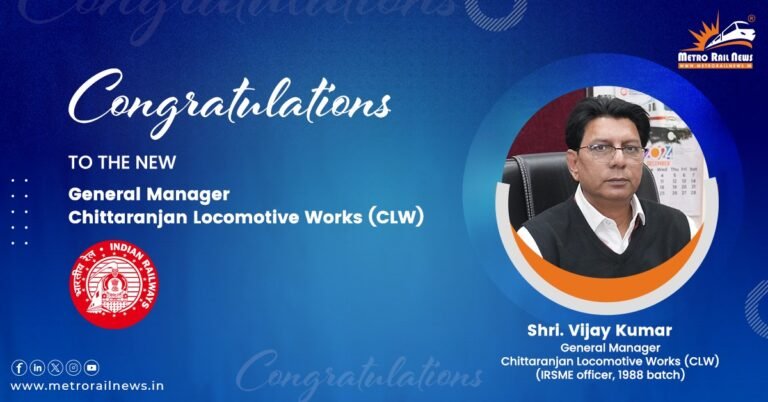
(Metro Rail News): On December 10, 2024. Shri Vijay Kumar, a senior officer of the Indian Railways Service of Mechanical Engineering (IRSME) from the 1988 batch, has officially been appointed as the General Manager of Chittaranjan Locomotive Works (CLW).
Career Highlights
Before his appointment as the General Manager of CLW, Shri Vijay Kumar was working as Principal Chief Mechanical Engineer (PCME) at North Western Railway/Jaipur.
In 30 years of his career, he handled various positions at Indian Railways and played crucial roles for Northern Railway, RDSO, Railway Board and Northern Western Railways.
He has immensely contributed during his tenure as Director/Rolling Stock/ /Delhi in National High-Speed Rail Corporation Limited (NHSRCL).
Academic Background
He pursued B.Tech in Mechanical Engineering from Punjab Engineering College /Chandigarh.
He has undergone training in the Advanced Management Programme from Singapore & Malaysia as well as Information Technology training at CRIS/New Delhi
Additionally, he attended a Workshop on Strategic Management Issues at the Indian School of Business/Hyderabad.
Navi Mumbai (Metro Rail News): A major milestone has been achieved as Navi Mumbai Metro has been awarded three major ISO Certifications ISO 9001, ISO 14001 and ISO 45001 in the very first years of operations. With this achievement, Navi Mumbai Metro Line became the first ever metro line in Maharashtra to have all three ISO certifications.
The CIDCO collaborated with Maharashtra Metro Rail Corporation Ltd (MMRC) to implement rigorous systems and protocols across all aspects of metro operations and maintenance.
Shantanu Goel, Joint Managing Director, CIDCO received the certificates awarded by the British Standards Institution (BSI) through Maha Metro Rail Corporation.
Representational image only
Significance of ISO Certifications
This reflects the CIDCO’s commitment towards maintaining the highest standards in Quality Management, Environmental Management, and Occupational Health & Safety.
These certifications show the constant efforts of CIDCO’s to achieve global standards and enhance the commuter’s journey and experience.
CIDCO’S Vision for Navi Mumbai Metro
Vijay Singhal, the Vice Chairman and Managing Director of CIDCO mentioned “The ISO certifications reinforce CIDCO’s commitment to providing world-class metro services while prioritizing quality, sustainability, and safety. Again, it has underscored CIDCO’s prominence in urban development and infrastructure sectors,”
About Navi Mumbai Metro Project
In November 2023, the commercial operations started on the 11.1 km long Line 1 of Navi Mumbai Metro. This Line connects CBD Belapur to Pendhar via 11 stations.
Bhopal (Metro Rail News): The Afcons Infrastructure grabbed a Rs.1006.74 crore Package BH-05 of Bhopal Metro Phase 1’s Blue Line spanning 19.915 Km from Bhadbhada Chauraha to Ratnagiri Tiraha through 14 elevated stations.
Bhopal Metro Map
Bhopal Metro Package BH-05
Madhya Pradesh Metro Rail Corporation Ltd (MPMRCL) invited bids for Package BH-05 in June 2023.
Technical bids were opened in October 2023 to disclose the 7 bidders for the contract.
Furthermore, In October 2024, financial bids were opened revealing Afcon as the lowest bidder for the contract.
Package BH-05 is an Engineering Procurement Construction (EPC) contract, which comes with a 3-year deadline.
Afcons’ Scope Of Work
The scope of work under this package includes the construction of the entire Blue Line Viaduct, 13 stations and a ramp leading to Subhash Nagar Depot.
Previously, Bhopal Metro’s Blue Line was known as the Red Line. Its Bogda Pul Station will have an interchange with Bhopal Metro’s Orange Line and this station will be constructed under Package BH-03 which was awarded to URC Construction
Stations Covered:
Bhadbhada Chauraha
Depot Chauraha
Jawahar Chowk
Roshanpura Chauraha
Kushabhau Thakre Hall
Parade Ground
Prabhat Chauraha
Govindpura
Govindpura Industrial Area
JK Road
Indrapuri
Piplani
Ratnagiri Tiraha (excluding an Elevated Passenger Interchange Metro Rail Station)
With this contract, MPMRCL has awarded all major civil contracts planned for Bhopal Metro’s Phase 1
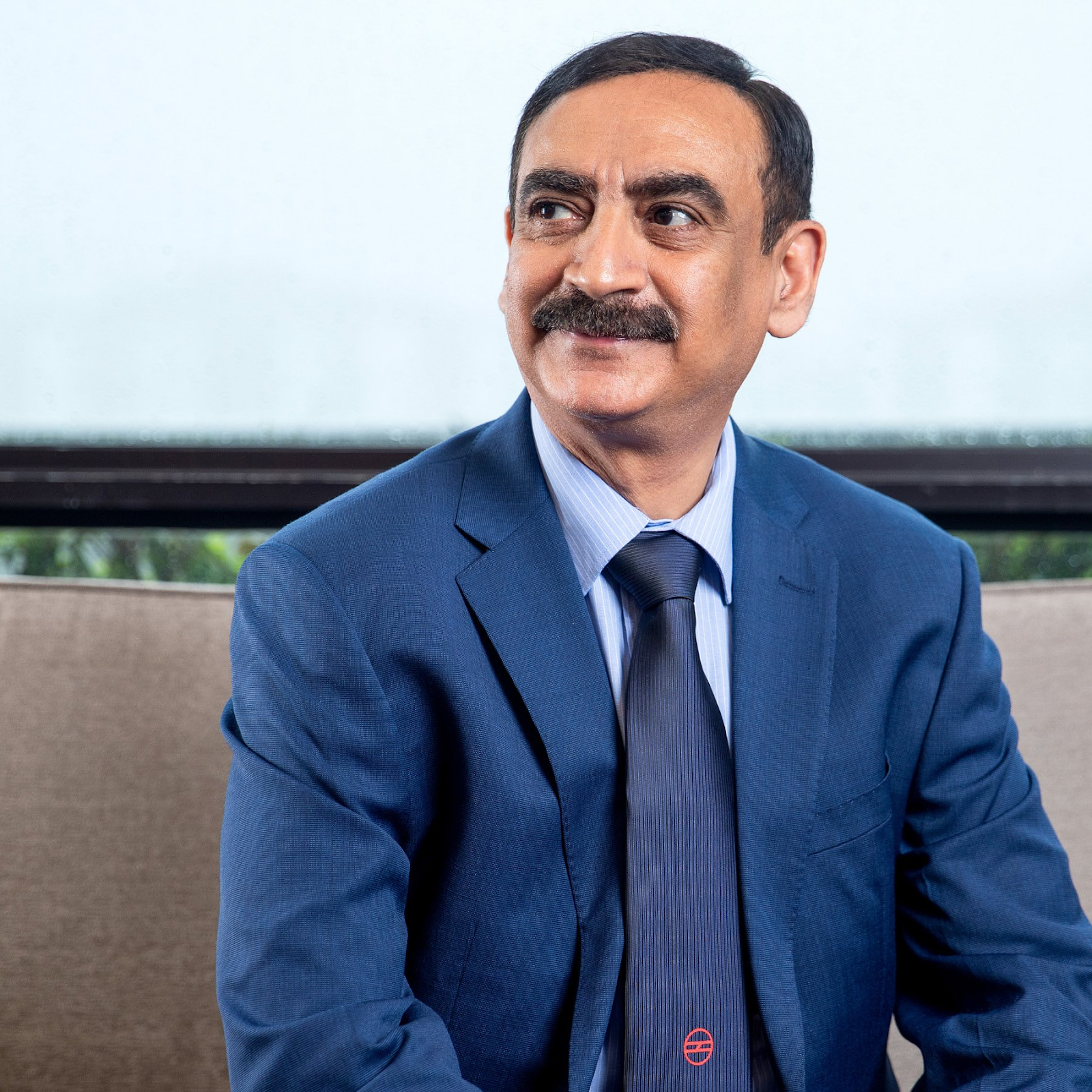
Metro Rail News conducted an exclusive interview with Dr. Vikas Kumar, MD of Delhi Metro Rail Corporation (DMRC). The interview focused on the Delhi Metro Phase IV project. Shri Kumar discussed the project’s potential to enhance connectivity and mentioned advanced technologies like UTO and CBTC incorporated into Delhi Metro operations. During the interview, Shri Kumar highlighted DMRC’s commitment to sustainability through renewable energy, green practices, and efforts to minimize passenger disruptions. He also emphasised DMRC’s consultancy role in metro projects across India and abroad.
The upcoming Phase IV promises to transform Delhi’s connectivity. How will it improve travel times and accessibility across the city? Can you quantify the expected ridership increase upon completion?
Phase IV of Delhi Metro will significantly enhance connectivity and reduce travel times across the city. Key milestones, including tunnelling breakthroughs and viaduct construction, have been achieved and the Janakpuri West-Krishna Park Extension stretch is now ready for operations. Work is in progress on the other stretches as well. We have recently received the first set of train for the ensuing phase as well.
The primary idea behind the new phase-4 corridors is to interconnect the already operational corridors and provide passengers with more alternatives.
While Phase IV is ambitious, what are the potential roadblocks DMRC anticipates, and how will you ensure timely and cost-effective completion?
The pandemic was a major challenge for the project and now land acquisition and tree cutting permission are a few challenges which are yet to be resolved completely. Our approach focuses on proactive engagement with all stakeholders, meticulous planning, and deployment of advanced project management techniques to minimize risks. This way we can ensure timely and cost-effective project completion through strategic resource allocation and continuous monitoring of projects.
With the foundation stones laid, what is the projected timeline for Phase IV completion? How is DMRC managing the budget to avoid cost overruns?
The Phase 4 project is progressing steadily as a portion of the JanakpuriWest- RK Ashram Marg corridor connecting Janakpuri West and Krishna Park Extension Metro station is now ready for operations. The Maujpur to Majlis Park Corridor will open next year in a phased manner, while the remaining structures of Janakpuri West- RK Ashram Marg and Delhi Aerocity- Tughlakabad will open in phases by the end of 2026. Additionally, two new corridors, viz; Inderlok- Indraprastha and Lajpat Nagar- Saket G Block are in pre-tendering stage.
We stick to the budget by inviting competitive bids, keeping a close watch on expenses, and finding smart ways to use resources effectively without lowering the quality.
What cutting-edge technologies are being incorporated into upcoming phases to enhance safety, operational efficiency, and the passenger experience? Can you share specific examples?
Delhi Metro employs cutting-edge technologies to ensure safety, operational efficiency, and enhanced passenger experience. It includes:
Unattended Train Operation (UTO): Trains on the Magenta and Pink Lines are equipped with the UTO technology enabling efficient, punctual and safe operations.
Fail-Safe and CBTC Systems: Trains are equipped with fail-safe technology, automatically halting in case of technical issues. Communication-Based Train Control (CBTC) ensures safe and efficient operations, even during high-frequency periods.
Platform Screen Doors (PSDs):These prevent contact between passengers and tracks, enhancing safety at stations.
Internet of Things (IoT) and Big Data Integration: Internet of Things (IoT)-based predictive maintenance and the indigenously developed i-ATS (Indigenous-Automatic Train Supervision) system improves operational efficiency and reliability, aligning with the ‘Make in India’ initiative.
Digital Solutions: QR-based ticketing, National Common Mobility Cards (NCMC), contactless payments, and the DMRC mobile app enhance travel convenience.
Real-Time Project Monitoring:The STAMP (System for Tracking and Monitoring Project) system tracks project progress, ensuring timely delivery and effective resource management.
AI-powered virtual assistant: DMRC recently launched Beta version of an AI-powered virtual assistant, “Chetna” on its official website. This chatbot offers the commuters immediate responses to queries related to Metro travel, such as travel routes, fare calculations, and station details.
How is DMRC integrating sustainability and environmental considerations into its expansion plans? Are there initiatives for using renewable energy or reducing the carbon footprint?
DMRC prioritizes sustainability in its operations and expansion. As a non-polluting system, it was the first rail-based entity globally to earn carbon credits for regenerative braking and modal shift initiatives. Regenerative braking saves up to 30% energy, while the modal shift reduces vehicular emissions. DMRC constructs green-certified buildings; plant 10 trees for every tree removed, and meets 35% of its energy needs through renewables, including 50 MWp from rooftop solar and 100 MWp from the Rewa Solar Project. Phase-IV focuses on solar energy, green buildings, rainwater harvesting, and energy-efficient practices.
With ongoing projects, how does DMRC plan to maintain customer satisfaction and minimize disruptions during construction? Are there specific communication plans to keep passengers informed?
DMRC is committed to minimizing commuter disruptions during Phase IV works through planned construction schedules and alternative traffic management. Regular updates through media, social platforms, and transmission of updated information through our website to ensure commuters that remain informed about changes. We maintain a customer-first approach to quickly address grievances and ensure passenger convenience during this transitional period through social media and website. Community Interaction programmes are organized in various areas near the sites to keep the residents informed about the construction plans and seeks their feedback.
Can you discuss the funding strategy for the Phase IV project? What is the role of government support in this regard?
DMRC projects are primarily funded through loans from Japan International Cooperation Agency (JICA) along with a blend of government contributions and DMRC’s internal accruals. Government support remains integral for this extensive project, enabling infrastructure investment while facilitating accessibility and social equity for citizens.
Are there any plans for further expansions beyond Phase IV? If so, can you please share the details about potential new corridors or services?
DMRC continues to evaluate expansion opportunities post-Phase IV to meet Delhi-NCR’s evolving needs. Preliminary studies are underway to identify new corridors and improve connectivity to surrounding regions. Potential areas of focus include enhancing connectivity to the periphery and extending the metro network to boost public transport accessibility.
What initiatives has DMRC undertaken recently to streamline passenger experience?
Delhi Metro Rail Corporation (DMRC) prioritizes passenger experience by utilizing digital platforms and mobile apps to provide real-time information/updates in order to enhance convenience. The DMRC mobile apps, like Momentum 2.0 Delhi Sarthi-सारथी app, offer features such as route planning, ticket integration, fare calculation, station information, and real-time train updates. Contactless ticketing is available via WhatsApp QR code ticketing, UPI payments at Ticket Vending Machines (TVMs) and Paper QR Tickets.
DMRC has an effective social media presence on X (formerly called Twitter), Facebook, Instagram, and LinkedIn, with impressive follower counts and high engagement rates. These platforms are primarily used to address queries, provide timely operational updates; ensuring commuters are well-informed about any delays.
Would you please highlight DMRC’s role in the ongoing metro projects in India and abroad, such as the Patna Metro and Bhubaneswar Metro?
DMRC is providing consultancy for metro projects in cities like Patna, Bhubaneswar, Mumbai, etc. We are sharing our expertise beyond India as well, with the implementation & commissioning of metro systems in Dhaka. Overall, our role encompasses providing consultancy, sharing best practices in engineering and operations, and transferring valuable learnings.
What message do you have for the readers of Metro Rail News and the commuters of Delhi Metro?
I extend my heartfelt appreciation to all Delhi Metro commuters and readers for their continued trust and support. DMRC remains committed to delivering a world-class transit experience, prioritizing safety, efficiency, and sustainability. We are inspired by your patronage and remain dedicated to transforming urban mobility for a better future.
Bangalore (Metro Rail News): Bangalore Metro Phase 2 has achieved a major milestone by securing 100% external funding. On 13 December, the Government of India signed a Rs 3,044.54 Crore (€340 million) loan agreement with KfW Germany marking the 100% financial closure for the Phase 2 project.
According to the BMRCL release, the agreement was signed by Ms. Manisha Sinha, Additional Secretary (DEA), on behalf of the Government of India, and Ms. Carolin Gassner, Director (South Asia), on behalf of KfW Germany.
A major milestone for #BangaloreMetro Phase-2! The Government of India & KfW Germany signed a €340 million loan agreement today, ensuring 100% financial closure. External funding for the phase-2 project is now fully secured. #Infrastructure#Metropic.twitter.com/r3RnvYiDTN
The loan agreement was inked in the presence of the BMRCL Finance Director and officials from the offices of KfW Germany and India. The signing ceremony took place at the KfW office located in New Delhi.
BMRCL officials mentioned that, of the total approved senior debt of ₹12,141.14 crore, ₹9,096.60 crore had previously been secured by the Government of India through funding from JICA, AFD, AIIB, and EIB.
Additional Information
Besides the loan agreement, BMRCL and KfW Germany also signed a separate project agreement in respect of the said loan. Sri Maheshwar Rao, IAS, Managing Director, BMRCL and Ms. Carolin Gassner, Director (South Asia), KIW Germany signed the agreement
Bengaluru (Metro Rail News): On 9 December, the Karnataka Rail Infrastructure Development Company (K-RIDE) announced that KPC Projects Ltd. and URC Construction Pvt. Ltd. were the only bidders who submitted the bids for the construction of the Soladevanahalli Depot for the Bengaluru Suburban Rail Project (BSRP).
Significance of Soladevanahalli Depot in Bengaluru Suburban Rail Project
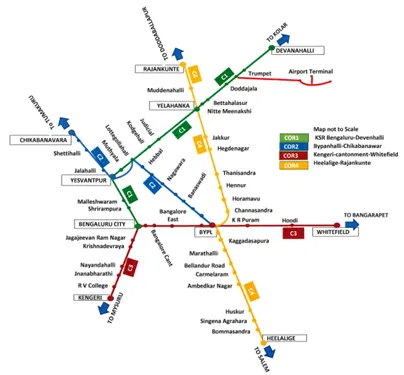
The Soladevanahalli Depot is a key component of the Bengaluru Suburban Rail Project (BSRP), This depot will be used for stabling and maintaining trains on Line 2 (Mallige Line) which covers a 24.866 km distance between Baiyyappanahalli and Chikkabanavara.In conjunction with the Akkupet (Devanahalli) depot, Soladevanahalli Depot will accommodate the project’s rolling stock.
Bidding Process
In September 2024, K-RIDE initiated the bidding process for the construction work of Soladevanahalli Depot.
Key Details of Contract
Tender No: K-RIDE/BSRP/DEPOT/SDHL/2024
Estimated Cost: Rs. 170.93 crore
Deadline: 2 Years (24 months)
The Scope of Work
The appointed contractor for this contract will be responsible for the construction of the Bengaluru Suburban Railway Project (BSRP) Rolling Stock/Train Maintenance Depot at Soladevanahalli (Chikkabanawara)including the development of administration and workshop buildings. The scope of work includes civil, MEP, roofing, signage, architectural finishes, sewage treatment plant (STP), external drainage, internal roads, and boundary walls.
The contractor will also be responsible for constructing a 1 km at-grade section between Chikkabanavara Station and the Soladevanahalli Depot. In addition, the contractor will be responsible for various associated works between Chikkabanavara Station and the Soladevanahalli Depot of the Bengaluru Suburban Railway Project (BSRP).
The Process Ahead
The bids submitted by KPC Projects Ltd. and URC Construction Pvt. Ltd. will undergo technical evaluation. Furthermore, K-RIDE will reveal the financial bids of the technically qualified bidders to reveal the lowest bidder for the contract.
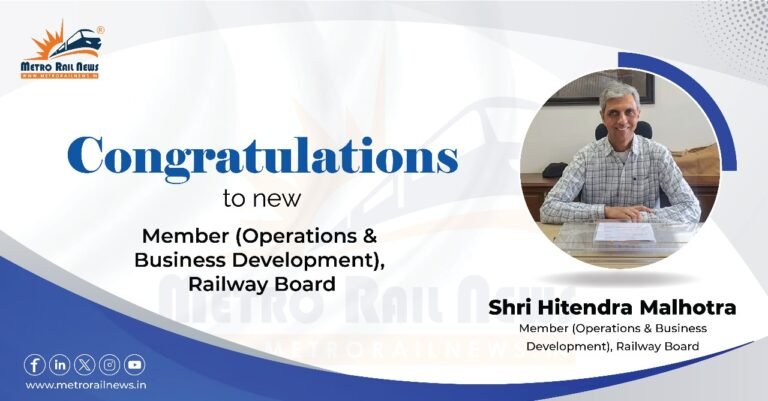
New Delhi (Metro Rail News): Shri Hitendra Malhotra, an esteemed officer of the Indian Railway Service of Electrical Engineers (IRSEE) from the 1987 batch, has been appointed as Member (Operations & Business Development) on the Railway Board.
With over 35 years of service, Shri Malhotra brings a profound understanding of railway operations, rolling stock, and project management.
Academic Accomplishments
Shri Malhotra is an alumnus of the University of Roorkee (now IIT Roorkee), where he earned a degree in Electrical Engineering.
Distinguished Career Journey in Indian Railway
Shri Hitendra Malhotra has held several key positions during his extensive career in Indian Railways.. His roles and responsibilities include:
General Manager, Chittaranjan Locomotive Works (CLW): As the General Manager of Chittaranjan Locomotive Works (CLW), he was responsible for overseeing locomotive production and operational efficiency.
Divisional Railway Manager (DRM), Solapur, Central Railway: Supervised the operations of the Solapur division
Research Designs and Standards Organization (RDSO): At RDSO, he focused on standardizing designs and improving the reliability of self-generating coaches
Deputation to Delhi Metro Rail Corporation (DMRC): During his deputation to the Delhi Metro Rail Corporation (DMRC), he served as Chief General Manager (Rolling Stock).
Vision for the Future
As Member (Operations & Business Development), Shri Malhotra is instrumental in guiding Indian Railways toward modernisation. His experience in optimising operations, enhancing rolling stock reliability, and managing cross-functional teams aligns perfectly with the vision of transforming Indian Railways into a more efficient network.
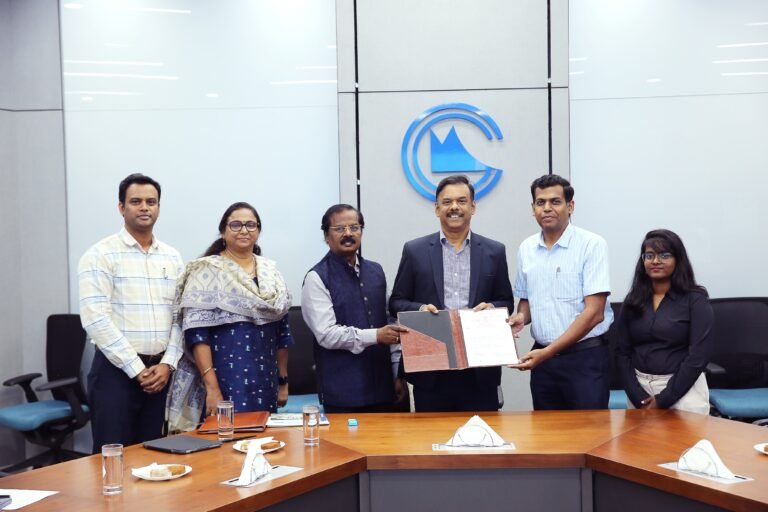
Chennai (Metro Rail News): Chennai Metro Rail Limited (CMRL) has signed a contract for the development of the Detailed Project Report (DPR) for property development at several locations in Phase 1 and Phase 2 of the Chennai metro network.
Contract Information
CMRL awarded this contract to M/s. Jones Lang Lasalle Property Consultants India Pvt. Ltd at Rs. 67.2 lakhs (excluding GST). The Letter of Acceptance (LOA) for the contract was issued on 28th October 2024.
Deadline: The final DPR is expected to be completed within 150 days from the date of the LOA.
The scope of work for the contract includes the development of the Detailed Project Report (DPR), feasibility study, market analysis, transactional advice, concept plans, and land use report.
Additionally, it involves the submission of necessary documents to the Chennai Metropolitan Development Authority (CMDA) and Greater Chennai Corporation (GCC) for approval, as well as the preparation of cost estimates and tender documents for the property development projects at:
Alandur,
Alapakkam Junction,
Boat Club,
Nandanam,
Wimco Nagar Depot.
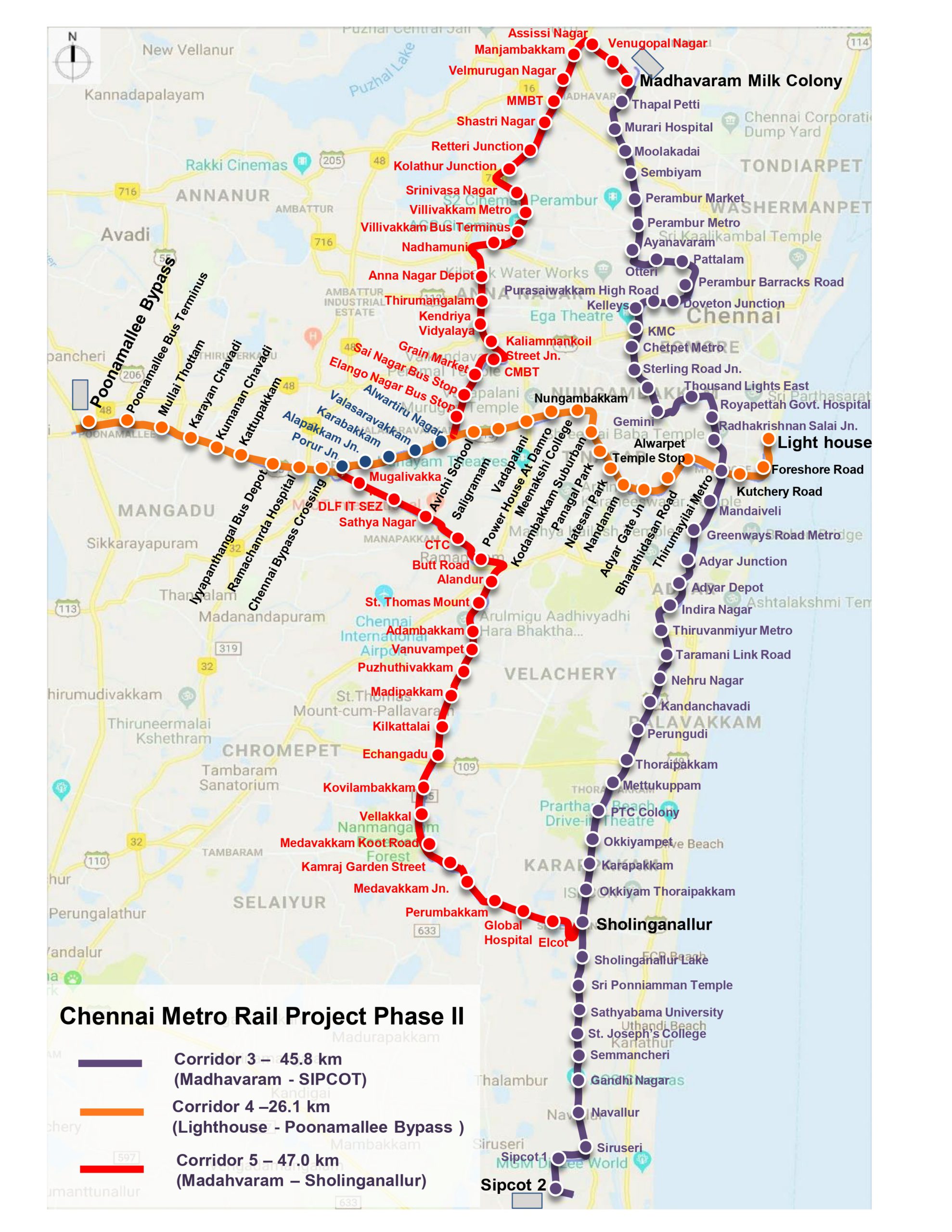
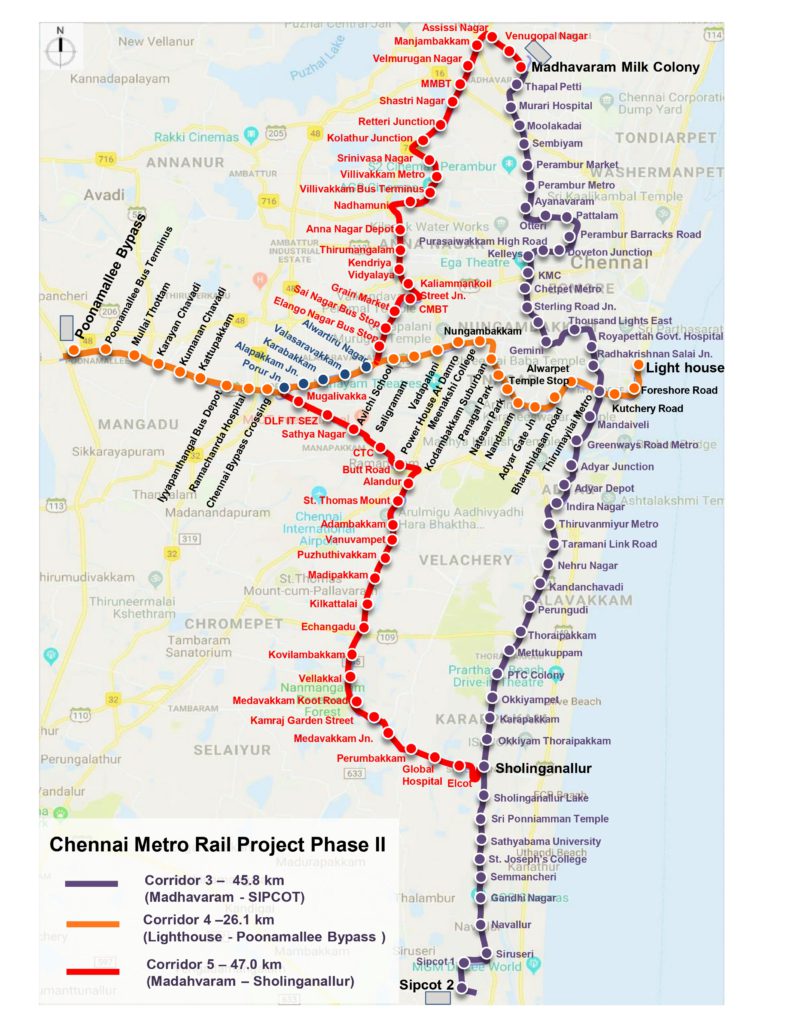
Chennai Metro Phase 2 Map
Non-Fare Revenue Strategy of Chennai Metro Rail
CMRL plans to generate non-fare revenue alongside fare revenue by integrating property development with metro stations at key locations, including Alandur, Alapakkam, Nandanam, Boat Club, and Wimco Nagar Depot.
The property development at Alapakkam will be connected to the Phase 2 station entry/exit via a Foot Over Bridge (FOB). At Nandanam, the property development will be integrated with the upcoming Phase 2 underground station. Alandur’s property development will connect to both Phase 1 and Phase 2 metro stations. Additionally, the Wimco Nagar Depot station will feature eight floors of property development above the existing metro building.
New Delhi (Metro Rail News): To streamline the safety of passengers the Indian Railways has taken a critical step by awarding a Rs 2,041.04 crore contract to Kernex Micro Systems (India) for the deployment of the Kavach System across the railway network.
TheContract Details:
The contract for the supply, installation, testing, and commissioning of 2,500 sets of onboard Kavach equipment (anti-collision system) was awarded by Chittaranjan Locomotive Works (CLW), a key manufacturing unit of Indian Railways situated in Chittaranjan, West Bengal.
Under the contract, Kernex Micro Systems is tasked with completing the installation and testing of the equipment within a 12-month period.
Kavach – An Initiative By Indian Railways to Strengthen Passenger Safety
Kavach is an Automatic Train Protection (ATP) system. The Research Designs & Standards Organisation (RDSO) developed this system in collaboration with Indian companies
In the beginning, this system was known as the Train Collision Avoidance System (TCAS), later in July 2020, the Ministry of Railways adopted Kavach as the national ATP system.
The Kavach system is engineered to prevent train collisions and enhance operational safety on Indian Railways. This system continuously monitors train speed and automatically applies brakes if the loco pilot fails to respond, thereby preventing potential collisions. The system also enhances safety during challenging weather conditions, such as fog and heavy rain, ensuring reliable train operations in adverse environments.
About Kernex Micro Systems
Since 1999, Kernex Microsystems has been involved in the development of railway safety systems, including anti-collision devices (ACDs) and other safety technologies for Indian Railways. Kernex Microsystems boasts a production capacity of 100 Kavach units per month, with the ability to scale up to 250 units per month as required.
Gurugram (Metro Rail News): Another major development has been waiting as eight firms have submitted for the General Consultant (GC) contract of Gurgaon Metro’s New Line spanning 28.5 km from HUDA Millennium City Centre to Cyber City.
The new line spanning 28.5 km will form a ring line connecting the Gurugram and old Gurugram through 27 stations.
In May 2024, Haryana Mass Rapid Transport Corporation Ltd. (HMRTC) floated tender for the General Consultant contract for Gurugram Metro’s 28.5 km New line.
Note: Some of the bidders may be in joint ventures with other partners.
Scope of Work
The appointed contractor will be providing their assistance to HMRTC regarding the design, supervision, safety, quality control and contract management. The contractor has been expected to stay on board for four years.
Additional Information:
In June 2023, The Indian Government’s Union Cabinet approved the project. The general consultant contract is a second crucial contract for Gurugram Metro. Before this, In July, SYSTRA was declared as the lowest bidder for the Detailed Design Consultant (DDC) contract.
Integration with Metro & RRTS
The new line will connect with Delhi Metro’s Yellow Line and Gurgaon’s Rapid Metro. It is also expected to feature interchanges with the 72 km Delhi–Dharuhera RRTS line at Cyber City and Hero Honda Chowk.
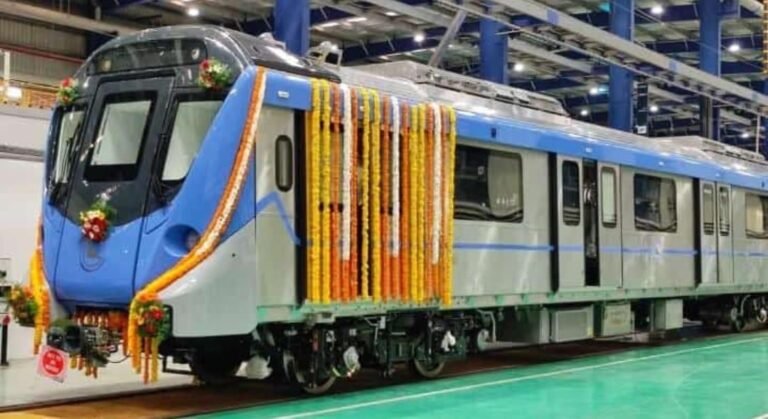
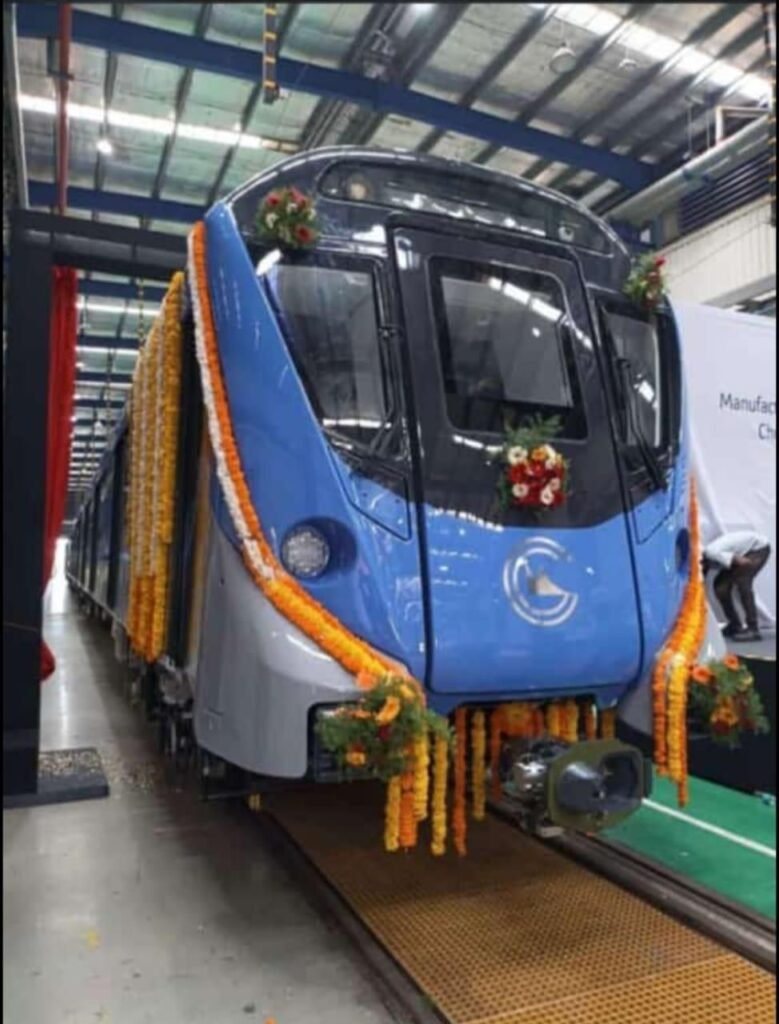
Chennai (Metro Rail News): A major development has been waiting for Chennai Metro as the CMRL is gearing up to initiate the trials of the first three-coach driverless train in December 2024. After performing all the tests CMRL will deploy these driverless trains on Line-4 which spans from Light House to Poonamallee Bypass through 28 stations (18 elevated & 10 underground) under Phase 2.
The train has been manufactured by Alstom at their manufacturing plant the Sri City, located in Andhra Pradesh. On October 17, the train arrived from Sri City and reached Poonamalle, the depot facility for Phase 2.
Key Features of Driverless Trains:
The train sets manufactured by Alstom are designed with the maximum speed of 90 kmph and will be able to serve driverless operations.
The train-sets will be operated in formations of DMC+TC+DMC
DMC = Driving Motor Car
TC = Trailer Car.
The train will be 67.8 meters long and be capable of accommodating approximately 1000 passengers (crush load conditions).
Chennai Metro Phase 2
Chennai Metro Phase 2 consists of 3 corridors spanning 116.1 km in total. In 2019, the Tamil Nadu Government approved the Chennai Metro Phase 2 at an estimated cost of Rs. 69,180 crore.
Line 3 ( Purple Line )
Madhavaram station– SIPCOT 2 station
45.4 km
Total no. of Stations: 49
Line 4 ( Orange Line )
Light House station – Poonamallee Bus Depot station
Bangalore (Metro Rail News): Phase 3A of Bangalore Metro (Namma Metro) gained momentum as the Karnataka Government cabinet approved the Detailed Project Report (DPR) of 36.59 Km long Phase 3A project with an estimated cost of Rs.28,405 Crores.
Rina Consulting prepared the Detailed Project Report (DPR) of the Bangalore Metro Phase 3A. The DPR report proposes a train maintenance and stabling depot at Sarjapur.
Bangalore Metro Phase 3A
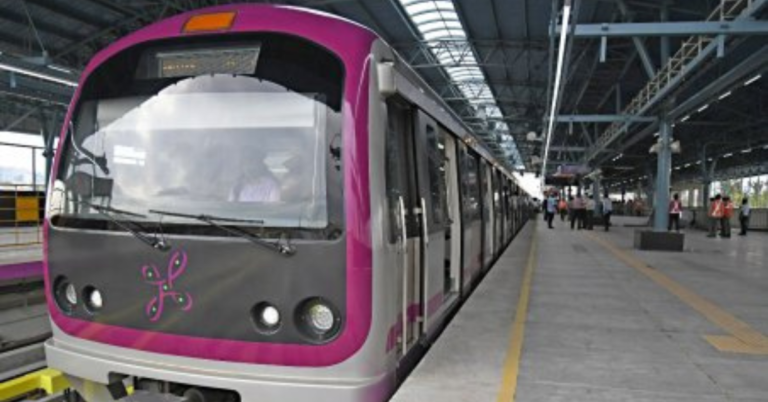
The Bangalore Metro Phase 3A project executed by Bangalore Metro Rail Corporation Ltd. (BMRCL) will comprise one new corridor from Sarjapur to Hebbel with 28 stations out of which 17 stations will be elevated and 11 will be underground.
Stations Planned:
Sarjapur
Kada Agrahara Road
Sompura
Dommasandra
Muthanallur Cross
Kodathi Circle
Ambedkar Nagar
Carmelaram
Doddakanalli
Kaikondrahalli
Bellandur Gate
Ibbalur
Agara
Jakkasandra
Koramangala 3rd Block
Koramangala 2nd Block
Dairy Circle
Nimhans
Shantinagara
Town Hall
KR Circle
Basaveshwara Circle
Bengaluru Golf Course
Palace Guttahalli
Mekhri Circle
Veterinary College
Ganga Nagar
Hebbal.
The total length of the new metro will be 36.59 km out of which 22.14 km will be elevated while the remaining 14.45 km will be underground. The line will run underground between Veterinary College and Koramangala 3rd Block.
The line will connect the Carmeleram, Agara, Koramangala, Dairy Circle, Central College and Armane Nagar.
The 5 stations of this New corridor will provide interchange connectivity at:
Ibbalur (Blue Line)
Agara (Blue Line),
Circle (Pink Line),
KR Circle (Purple Line),
Hebbal (Blue Line & Orange Line)
Future Prospects:
The Detailed Project Report (DPR) of Bangalore Metro Phase 3A will now be submitted to the Union Government for review and approval by its various departments and the cabinet. Furthermore, BMRCL has been planning to appoint Detailed Design Consultants (DDCs) for Phase 3A.