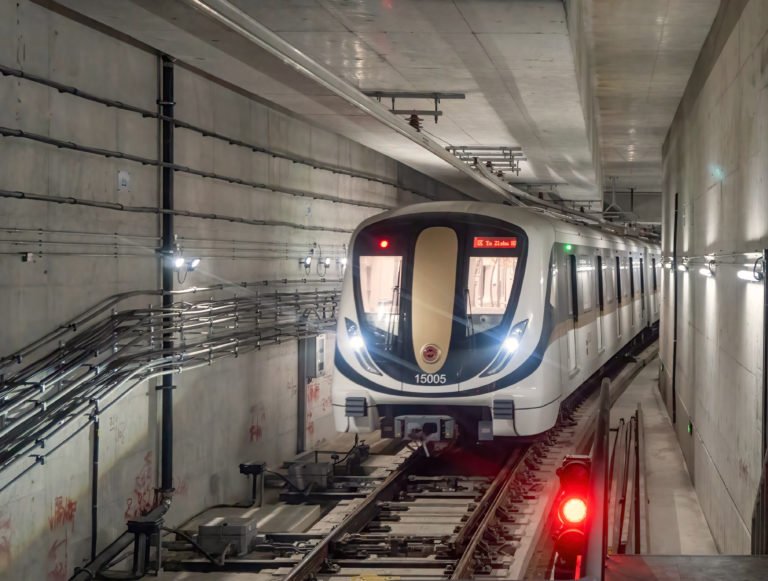
New Delhi: Prime Minister Narendra Modi has flagged-off the Delhi-Faridabad Metro Line that would allow hassle free travel for around two lakh daily commuters between the national capital and the industrial hub in Haryana.The extension of the Delhi Metro connects Badarpur to Escorts Mujesar in Faridabad.The total cost of the project from Badarpur to Escorts Mujesar is nearly Rs. 2,500 crore. Out of this, Rs. 1,557 crore was borne by the Haryana Government, the Centre contributed Rs. 537 crore, while the Delhi Metro provided Rs. 400 crore.The nine stations in this section include, Sarai, NHPC Chowk, Mewala Maharajpur, Sector 28, Badkal Mor, Old Faridabad, Neelam Chowk Ajronda, Bata Chowk and Escorts Mujesar. buy kamagra polo online https://lasernailtherapy.com/wp-content/themes/twentytwentytwo/inc/patterns/en/kamagra-polo.html no prescription
All these are elevated and located on either side of the Delhi-Mathura Road (NH-2).“The nine-station metro corridor which was 95 per cent indigenously built will provide people a safe, affordable, quick, comfortable, reliable, environment-friendly and sustainable transport facility,” a Haryana government spokesperson said.Haryana Chief Minister ML Khattar, addressing a press conference on Saturday, had thanked the Prime Minister for “gifting” the Metro service which would take the city to “another level of progress” with better connectivity with other NCR towns.He had also said that the Prime Minister would be announcing the go-ahead for connecting Gurgaon with Faridabad by Metro.
Thane (Metro Rail News): Thane Metro has progressed as the Maharashtra Metro Rail Corporation Ltd. (Maha-Metro) revealed the 3 bidders for the General Consultant (GC) contract after opening technical bids.
In October 2024, Maha-Metro floated a tender for General Consultant work under package Consul-01. The contract comes with a 4-year ( 48 months ) deadline. The bids submitted by 3 firms have now been sent for technical evaluation. In coming months, Maha Metro will reveal the financial bids of technically qualified bidders.
Bidders for GC Contract
AECOM India Pvt. Ltd
DB Engineering and Consulting GmbH
SYSTRA MVA Consulting (India) Pvt. Ltd.
Note: Some of the bidders may be in a joint venture with other partners.
Thane Metro’s Package Consul-01
Scope of work: The contract entails appointing a General Consultant for Thane Metro. The awarded contractor will be assisting MahaMetro with design, supervision, safety, quality control and contract management for the Thane Integral Ring Metro Project
The Thane Metro’s Package Consul-01 is a second major contract after the Detailed Design Consultant contract DDC-01 for the Thane Metro Project.
Thane Integral Ring Metro Project
Thane Metro is a Mass Rapid Transit System (MRTS) spanning 29 km with 22 stations in total. Out of 29 km, the elevated route spans 26 Km with 20 stations while the remaining 3 km underground section consists of 2 underground stations.
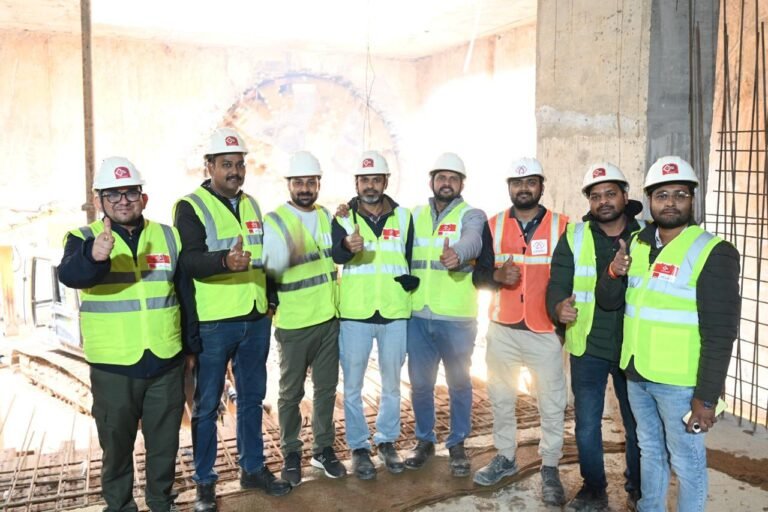
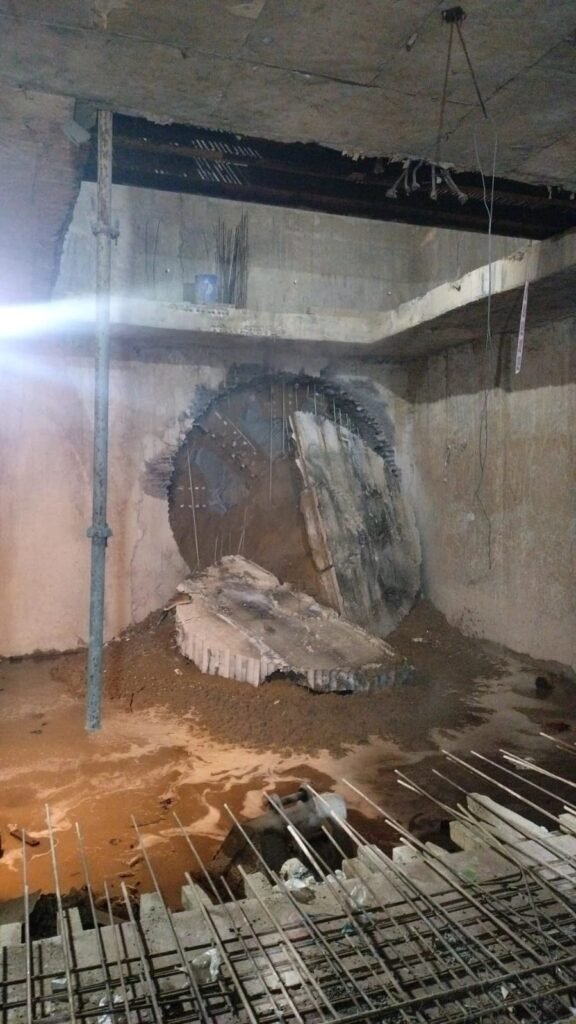
Agra (Metro Rail News): On 1 January, the Agra Metro project reached another milestone with the breakthrough of TBM S-718 at Agra College Station on 14.25 Line 1 which connects Sikandra with Taj East Gate.
TBM Breakthroughs for Agra Metro Project
Package Details: This breakthrough was part of Package AGCC-02, which connects the RBS Ramp to the Taj Mahal Ramp.
TBM Details: With its final drive TBM S-718C achieved its 5th breakthrough for Agra Metro.
Overall Progress: So far 16 breakthroughs have been achieved for the Agra Metro Phase 1 project.
TBM S-718C’s Journey
Assignment
Segment
Length
2 Assignments
Taj Mahal Station to Taj Mahal Ramp
228m upline + 236m downline (twin tunnels)
3rd Assignment
RBS Ramp to RBS College Station
734m
4th Assignment
RBS College to Raja Ki Mandi Station
685m
5th Assignment (current assignment)
Raja Ki Mandi Station to Agra College Interchange Station
535m
Package AGCC-02
In March 2022, Afcons – Sam India Consortium secured package AGCC-02 from Uttar Pradesh Metro Rail Corporation at Rs. 1819.79 crore. The deadline for this contract is 48 months.
Upcoming Developments
The remaining 2 breakthroughs for Agra Metro Phase 1 are planned at Mankameshwar Station (formerly known as Jama Masjid), involving Tunnel Boring Machines (TBMs) 215 and 324.
Bangalore (Metro Rail News): BMRCL has declared Jakson Ltd. as the lowest bidder for the electrical & mechanical contract of the Blue Line of Bangalore Metro (Namma Metro.
Blue Line of Bangalore Metro
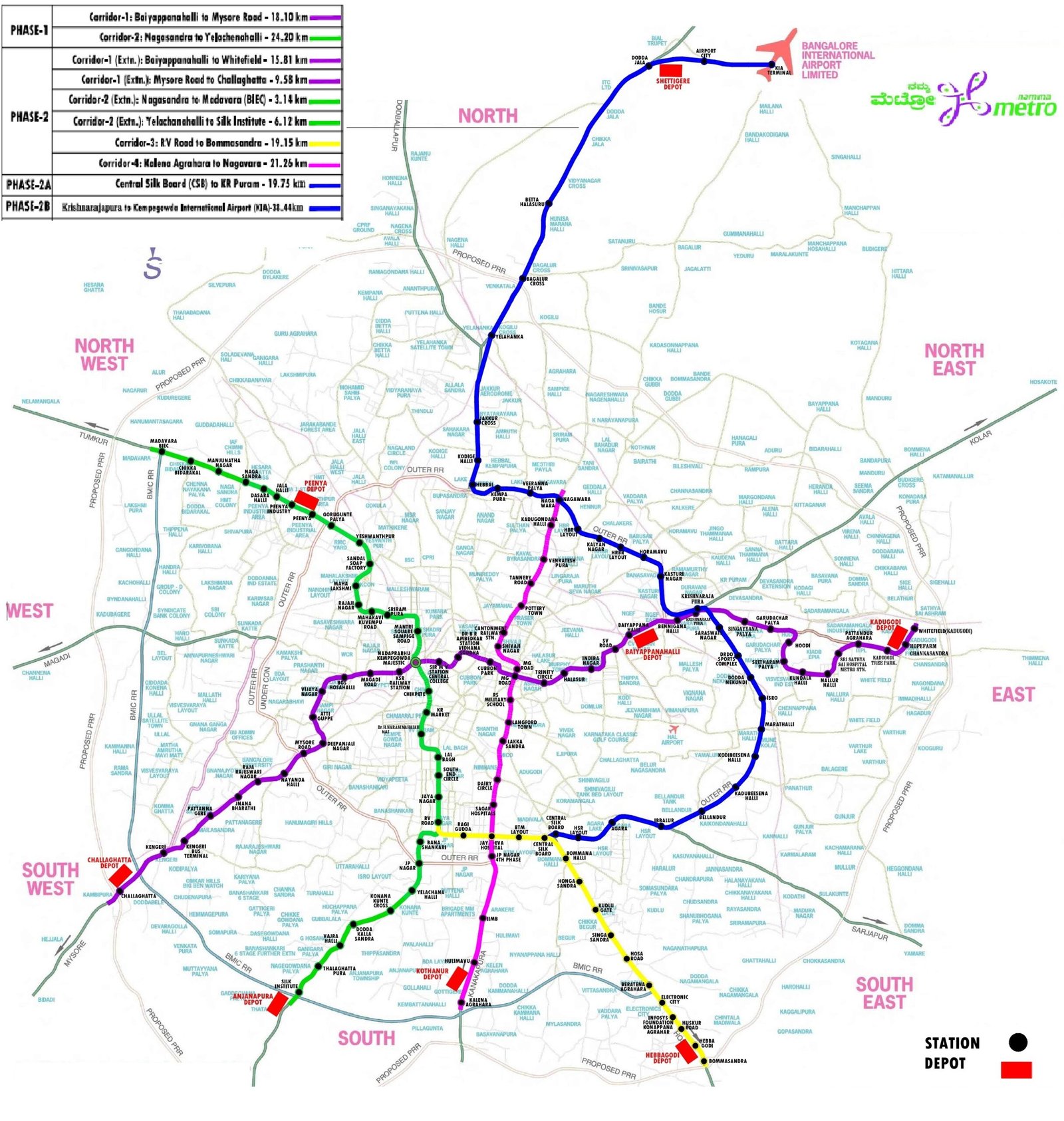
Phase 2A and Phase 2B form Bangalore Metro’s 57 km long Blue Line.
Phase 2A: This covers 18.236 km via an elevated route. This line will connect Central Silkboard with KR Puram along the Outer Ring Road (ORR) through 13 stations.
Phase 2B: This spans about 37 km and will connect KR Puram with Kempegowda International Airport (KIAL) Terminals via 18 stations.
Note: Under this contract, the E&M work will be executed at 28 stations of Blue Line. The E&M works at the Airport City Metro Station and KIA Terminal Station will executed via different contracts.
Bids of Contractors
In September 2024, BMRCL initiated bidding for Package E&M-6. In October 2024, BMRCL revealed the names of 5 bidders for this contract. However, the bids of Power Mech Projects and Toyota Tsusho India were rejected in the technical evaluation. The financial bids of technically qualified bidders are the following:
Firm
Bid Price
Jakson Ltd
Rs. 197.04 crore
Blue Star Ltd
Rs. 210.18 crore
Universal MEP (Voltas’ subsidiary)
Rs. 221.99 crore
Brief Scope: The contractor appointed under this contract will execute Electrical and Mechanical works, including LT panels, LT cables, lighting, hydraulics, fire safety systems, UPS, DG sets, HVAC, and BMS. These works cover 28 elevated stations, 2 wayside TSS, and the cut-and-cover section of the BMRCL Phase 2A and 2B project.
Metro Rail News wishes you a very Happy New Year 2025 with boundless joy, prosperity, and fulfilment! As we step into 2025, we are celebrating 10 years of Metro Rail News. This achievement would not have been possible without the support of our 1.2 million readers, who drive our passion and commitment to excellence.
On January 26, 2015, we launched this platform with a mission to provide the latest updates in the Metro & Railway industry. Looking back over the past decade, I am proud of the progress we’ve made and the trust we have earned. With a commitment to delivering the latest updates and insights from the metro rail industry, we are excited to continue this journey and remain a trusted source of information for you. This year, we are also excited to announce the 5th edition of InnoMetro. With your invaluable support, we are excited to host InnoMetro 2025 at Bharat Mandapam, New Delhi – on May 21–22, 2025. This year, we aim to provide a better experience and more opportunities, making it a global exhibition in the field of rail transportation.
The journey we’ve shared in the world of urban mobility has been nothing short of inspiring, and we are excited about the possibilities that the upcoming year holds for the industry. To our dedicated readers, contributors, advertisers and partners, thank you for being an integral part of Symbroj Media and showing your belief in “Metro Rail News” & “InnoMetro”.
Celebrating 10 years of trust and support from all of you, we announce the launch of the Metro Rail News Awards, recognizing and celebrating the outstanding achievements and contributions of individuals in the metro and rail industry! As we begin another year, we remain committed to delivering valuable information and exceptional content to all our readers.
We look forward to another year of collaboration, innovation, and shared success. Again, Wishing you and your loved ones a joyous New Year filled with new discoveries, meaningful connections, and exciting accomplishments. May 2024 fulfil your aspirations and bring prosperity into your lives. With Best Regards, Narendra Shah Managing Editor Metro Rail News editor@metrorailnews.in
Bhubaneswar (Metro Rail News): IL&FS Engineering and Construction Company shares surged 5% to ₹41.05 during intraday trading after the company bagged a ₹302.82 crore contract from Ceigall India for Bhubaneswar Metro Phase-I’s construction between between Trisulia Square – Biju Patnaik Airport.
Bhubaneswar Metro’s Package BBC-05
Originally this civil contract was awarded to Ceigall India in August 2024 at Rs 898.99 crore contract with a 36-month deadline. This package is the longest among the three main-line civil packages and includes the following:
Route:
Connects KIIT Square to Trisulia Square.
Stations Covered (Elevated):
Nandan Vihar
Raghunathpur
Nandankanan Zoological Park
Barang Station
Phulapokhari
Trisulia Square
IL&FS’ Scope of Work
Under this subcontract from Ceigall India, IL&FS Engineering will be responsible for Part Design and Construction of the Elevated Viaduct from Chainage 15095.24m to 26052.77m including a ramp for Depot entry and restoration works within the barrication of Bhubaneswar Metro Phase-I MRTS on Back-to-Back basis
Additional Scope:
Construction of a ramp leading to the Phulapokhari Depot & Workshop. This depot is under construction by M I A Construction.
Current Progress:
Ceigall India is in the process of setting up their casting yard for the project.
(Metro Rail News): Showing its prowess in AFC technology, Aurionpro has secured a major Automated Fare Collection (AFC) contract worth ₹39,09,65,419.34 for the Delhi Metro under Package AFC-07. This is the second major contract secured by Aurionpro in India, following Chennai Metro.
Scope of Work under Delhi Metro’s Package AFC-07
Under this contract, Aurionpro is responsible for the Design, Manufacture, Supply, Installation, Testing and Commissioning of Automatic Fare Collection (AFC) Gates for different Operational Stations in the Existing Phase I, II and III Networks of Delhi Metro Rail Corporation (DMRC).
Deadline: 18 months (1.5 years)
Aligning with Make in India Initiative
As per the release “The AFC gates for this project will be fully manufactured in India at Aurionpro’s state-of-the-art facility in Ghaziabad, aligning with the government’s “Make in India” initiative”
Official Statement from Aurionpro Solutions
On this major development, Mr Sanjay Bali, President & Global Head – Tech Innovation Group, Aurionpro Solutions, stated, “We are honoured to partner with Delhi Metro Rail Corporation, a pioneer and symbol of excellence in India’s urban transit systems. This prestigious project not only reinforces our growing presence and acceptance as a major player in the Indian smart transit space but also highlights our commitment to innovation and ‘Make in India’ through locally manufactured solutions. The gates, validators, and payment card readers to be delivered under this project are robust, indigenously developed Aurionpro products. Following our recent success in Chennai, this win with Delhi Metro marks a significant milestone, highlighting our expanding footprint on the metro map of India and globe.”.
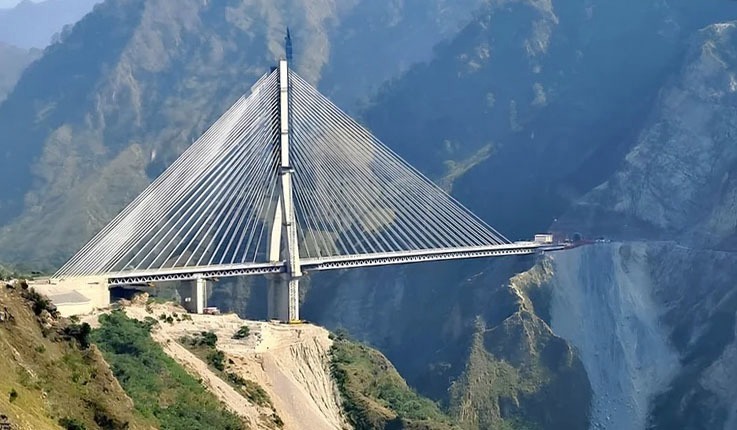
J&K (Metro Rail News): Indian Railways recently conducted a successful first-loaded train trial run on the Anji Khad Bridge, India’s first cable-stayed rail bridge, located in the Reasi district of Jammu and Kashmir.
This development is a crucial step in linking the Kashmir Valley with the rest of the country by rail. Services on this vital connection are anticipated to begin in January 2025.
This development was shared by Union Railway Minister Ashwini Vaishnaw through a video of the trial run on the social media platform X on 28 December 2024.
The Ministry of Railways mentioned “The trial run on the Anji Khad Bridge, a key component of the Udhampur-Srinagar-Baramulla Railway Link (USBRL) project, has been successfully completed.”
Key Features of the Anji Khad Bridge
Engineering Marvel: The Anji Khad Bridge is India’s first cable-stayed rail bridge.
Pylon Design: The bridge features a single pylon rising to a height of 331 meters above the riverbed.
Cable Support: It is supported by 48 cables, providing stability to its lateral and central spans.
Total Length: The bridge spans a total length of 473.25 meters.
Viaduct and Embankment: The structure includes a 120-meter viaduct and a central embankment measuring 94.25 meters.
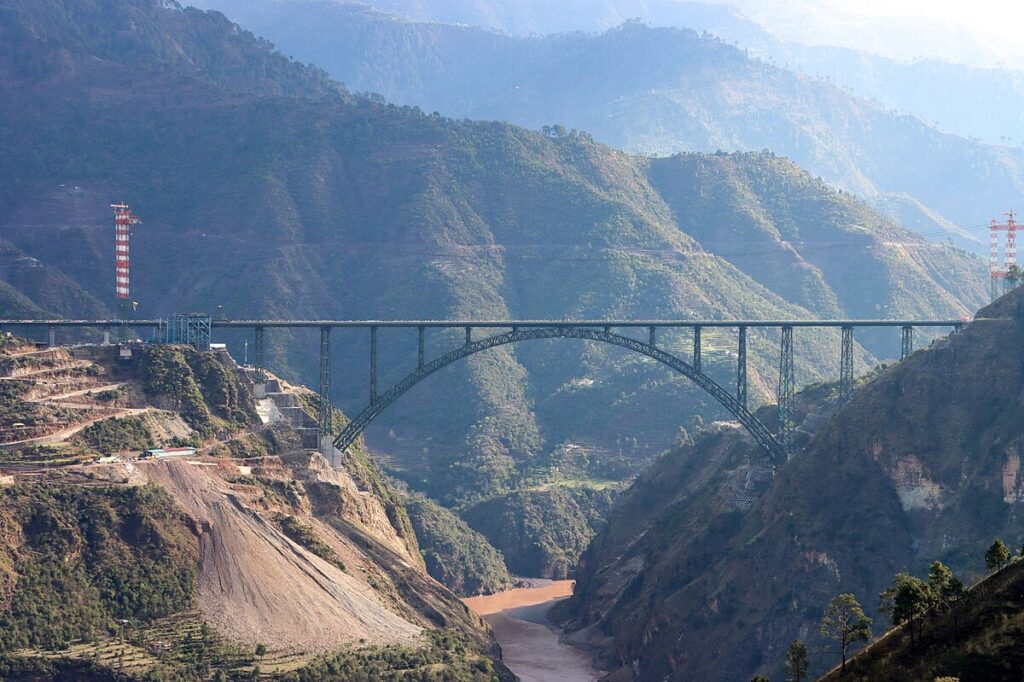
Second-Highest Railway Bridge: The Anji Khad Bridge is the second-highest railway bridge in India, following the Chenab Bridge, which holds the world record at 359 meters above the riverbed. Both bridges are part of the USBRL project.
Chenab Bridge
USBRL Project Overview
The Udhampur-Srinagar-Baramulla Rail Link (USBRL) project establishes connectivity between the Kashmir Valley with the rest of India through a broad-gauge railway line. The project covers a total distance of 272 kilometres of which 255 kilometres of the project has been completed. The remaining stretch between Katra and Reasi is expected to be completed by December 2024.
Key Highlights
Structural Details:
The project includes 38 tunnels, of which 12.75-kilometre long Tunnel T-49 on the Khari-Sumber section, is set to be the longest railway tunnel in India.
It also incorporates major bridges such as the Chenab Bridge and the Anji Khad Bridge.
Travel Time Reduction:
The project will reduce travel time between Jammu and Srinagar from approximately 12 hours to 6 hours.
Cost:
The construction cost of the project is estimated at ₹ 37,012 crore.
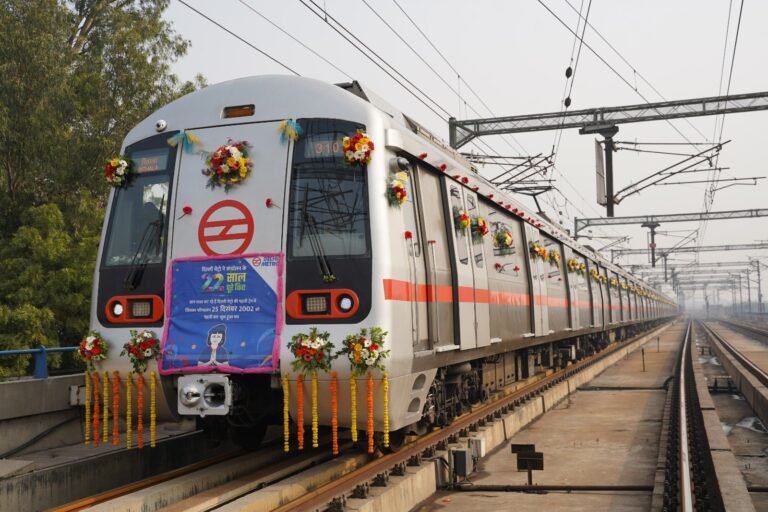
The Delhi Metro Rail Corporation (DMRC) celebrated its 22nd anniversary of the commencement of its passenger operations. It was on 24th December 2002 that the first Delhi Metro train, TS-01, was flagged off by the then Prime Minister, Sh. Atal Bihari Vajpayee, introducing a new era of modern public transport in Delhi NCR.
TS-01 Train
The TS-01 train, which started DMRC’s journey, has carved a legacy of its own in bringing modern public transport to Delhi. Commissioned in 2002, TS-01 began as a 4-coach train but has been upgraded over the years to meet growing passenger demand, and expanded to 6 coaches in 2014 and further to 8 coaches in 2023. Over its 22-year journey, TS-01 has been a symbol of reliability and efficiency, covering approximately 27 lakh kilometers, safely transporting over 5.4 crore passengers, and executing an impressive 23 lakh door operations.
Manufactured by the MRM Consortium in South Korea, the train was transported to Kolkata by ship and then to Delhi via the Indian Railways network. Its advanced propulsion system has not only ensured smooth operations but also contributed to environmental sustainability by regenerating approximately 40% of the total power consumed through regenerative braking.
To ensure smooth operations and passenger safety, TS-01 has undergone two major overhauls/upgrades by DMRC’s expert maintenance teams. As a result, TS-01 has consistently maintained a Mean Distance Between Failures (MDBF) of 84,000 kilometers, significantly exceeding the contractual requirement of 40,000 kilometers
To keep up with modern standards, TS-01 has recently undergone a mid-life refurbishment to provide passengers with enhanced features and comfort. The upgrades include advanced passenger systems such as real-time route maps, safety videos, CCTV for added security, and emergency alarms for convenience. The doors have been refurbished, and a new fire detection system has been installed to boost safety. For passenger comfort, mobile and laptop charging outlets have also been added, along with a fresh interior and exterior repainting to improve aesthetics.
*As a proud testimony of DMRC’s impeccable maintenance mechanism and upkeep schedule, train TS-01 continues to operate passenger services even today on the Red Line as the first among equals from Delhi Metro’s ever expanding fleet of over 350 train sets. The train was also in operation today and to celebrate this special occasion, it was decorated with flowers and a commemorative banner.*
As DMRC celebrates its 22nd anniversary, it also reflects on a year of record achievements, including the highest-ever single-day passenger journeys of 78.67 lakh recorded on 18th November 2024. With significant advancements in digital ticketing, technological upgrades, and ongoing Phase-IV expansions, DMRC is leading in its mission to transform urban transportation and enhance the quality of life of the residents of Delhi NCR.
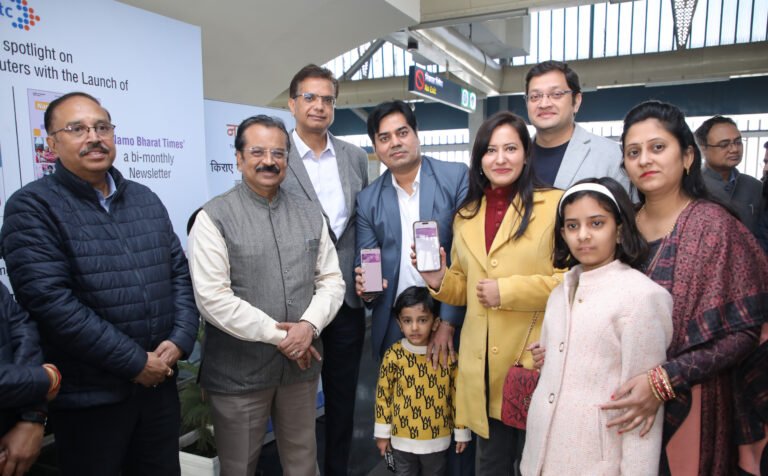
To connect with the Namo Bharat commuters and to provide an opportunity to avail 10% discount on Namo Bharat tickets, NCRTC has launched a Loyalty points programme for tickets purchased through the ‘RRTS Connect’ mobile application.
The initiative was launched by Shri Shalabh Goel, MD, NCRTC, at the Sahibabad RRTS station in the presence of senior officials and commuters. During the event, he also unveiled the first edition of Namo Bharat Times, a bi-monthly commuter newsletter.
About Loyalty Points Program
Under the loyalty points program, passengers will earn 1 point for every rupee spent on the Namo Bharat train tickets. Each loyalty point is valued at ₹0.10 (10 paise) and will be credited to the passenger’s account. These points can be redeemed for ticket purchases.
Every new user will receive ₹50 which is equivalent to 500 loyalty points upon downloading the ‘RRTS Connect’ mobile app. Commuters can earn an additional 500 loyalty points by referring the RRTS Connect app to other users. Both the referrer and the referee will receive ₹50 equivalent to 500 loyalty points each, which will be credited to their respective accounts. All accrued loyalty points will remain valid for one year from the date of credit, encouraging frequent, sustainable travel and ongoing app engagement. The ‘RRTS Connect’ app is available for download on Google Play Store and Apple App Store.
Aim Behind Loyalty Points Program
This initiative will not only benefit the passengers monetarily but also encourage the use of digital QR tickets through the ‘RRTS Connect’ app. It will also be simplifying travel through paperless ticketing. This environment–friendly measure is in line with NCRTC’s vision of improving the quality of life of people by providing equitable, fast, reliable, safe, comfortable, efficient and sustainable mobility solutions.
These customer-centric initiatives reaffirm NCRTC’s steadfast commitment to enhancing affordability, convenience, and the overall travel experience for Namo Bharat commuters. They underscore NCRTC’s dedication to adopting innovative solutions that promote modern, responsible, and efficient transportation.
Namo Bharat Times
The bi-monthly newsletter, Namo Bharat Times, unveiled recently, will be freely available for download on all digital platforms of NCRTC such as ncrtc.in, rrts.co.in etc., including the ‘RRTS Connect’ app. This newsletter will keep Namo Bharat commuters informed about new initiatives and recent developments, enhancing their connection with the service and providing valuable updates. The newsletter serves as a comprehensive source of information, highlighting commuter-focused activities, travel needs, available station facilities, and stories that celebrate the individuals who make the RRTS system thrive. It provides opportunities for commuters of all ages to be featured and recognizes their participation in various events organised by NCRTC.
‘RRTS Connect’ App
The ‘RRTS Connect’ App is designed with commuter-centric features to enhance passenger convenience and streamline the travel experience. Beyond offering a seamless ticket booking process, the app provides several innovative tools to ensure a smooth and enjoyable journey:
Live Train Tracking: Passengers can track trains in real-time to plan their commute effectively.
Real-Time Parking Availability: Stay updated on available parking spots at RRTS stations.
Station Navigation: Access detailed station layouts and navigation assistance for hassle-free movement.
Last-Mile Connectivity Options: Discover and book options such as bikes, autos, and cabs directly through integrated services like the Rapido app.
Additional Features Provided By ‘RRTS Connect’ App
The app also includes key features for additional convenience:
Feeder Bus Services: View bus schedules and connections to and from RRTS stations.
Station Facilities: Access detailed information about station amenities, such as drinking water, restrooms, lifts, escalators, and more.
Direct Assistance: Connect with the station control room via phone or WhatsApp for support.
Lost & Found: Report and recover misplaced items conveniently through the app.
Purchase of Delhi Metro tickets: Passengers can purchase Delhi Metro Ticket through the App.
These features work together to make commuting on Namo Bharat trains more convenient, comfortable, and stress-free, underscoring NCRTC’s commitment to delivering a passenger-friendly travel experience.
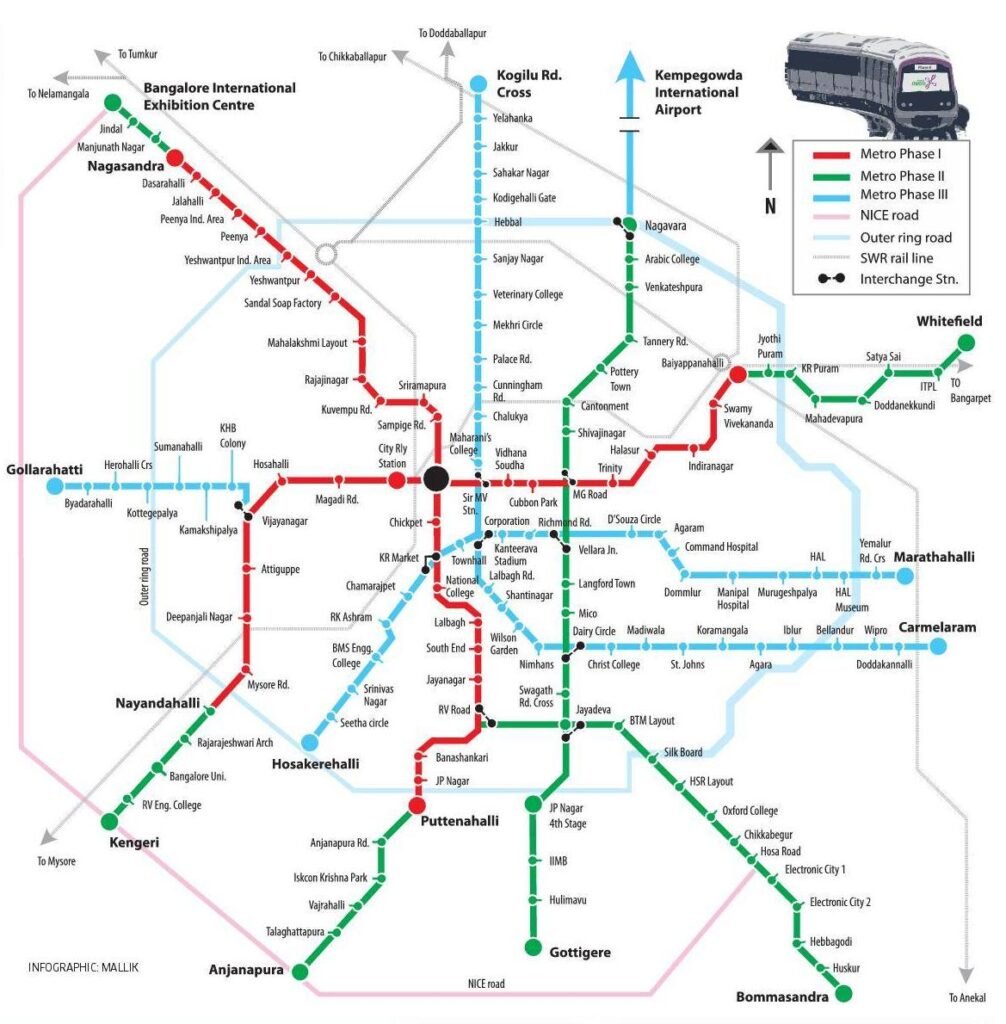
Bangalore (Metro Rail News): Bangalore Metro Rail Corporation opened the technical bids of all the three Detailed Designed Consultant (DDC) Contracts for the 44.65 km Bangalore Metro Phase 3 project and revealed the names of 6 bidders.
Bangalore Metro Phase 3
Phase 3 will increase the connectivity in Western Bangalore by covering a total distance of 44.65 km via 2 new corridors.
Corridor 1 (Orange Line): This will span 32.15 km connecting Kempapura – JP Nagar 4th Phase through 22 stations along the Outer Ring Road (ORR)
Corridor 2: This route will cover 12.5 km distance between Kadabagare – Hosahalli via 9 stations.
Three DDC Packages by BMRCLfor Phase 3
Package DDC-1: This includes the 17 km section of the Orange Line from JP Nagar 4th Phase Station to BDA Complex Nagarbhavi Station.
Package DDC-2: This covers the 12.848 km section of the Orange Line from Sumanahalli Cross Station to Kempapura Station.
Package DDC-3: This covers the entire Kadabagare – Hosahalli corridor.
Bidding Process
BMRCL initiated the bidding for these three DDC contracts in October 2024. For each contract, BMRCL received 6 bids and a total of 18 bids for 3 contracts. The deadline for this work is 1460 days (4 years).
Bidders for Detailed Design Consultant Contracts
AECOM Singapore Pte. Ltd.
L&T Infrastructure Engineering Ltd.
Meinhardt (Singapore) Pte. Ltd.
Shirish Patel and Associates Consultants Pvt. Ltd.
SMEC International Pty. Ltd.
SYSTRA MVA Consulting (India)
The Scope of Three DDC Contracts
Package: DDC-1
EMD: INR 13.15 Lakhs
Deadline: 48 Months
Scope: Detailed Design Consultancy Services for all Structures including Elevated Viaduct, Double Decker, Single Decker/Double Decker Stations, Entry/Exit Structures, Loops and Ramps for Road Flyovers, Subways, FOBs, Multi-Modal Integration Structure, etc. from JP Nagar 4th Phase Station (Excl) to BDA Complex Nagarbhavi Station (Incl) (from Chainage: -0.330 to 16.791) of Corridor-1 for Bangalore Metro Rail Project, Phase-3
Package:DDC-2
EMD: INR 14.03 Lakhs
Deadline: 48 Months
Scope: Detailed Design Consultancy Services for all Structures including Elevated Viaduct, Double Decker, Single Decker/Double Decker Stations, Entry/Exit Structures, Loops and Ramps of Flyovers, Subways, FOBs, Multi-Modal Integration Structure etc. from Sumanahalli Cross Station (Excl) to Kempapura Station (Excl) (from Chainage: 17.473 to 30.321) of Corridor-1 for Bangalore Metro Rail Project, Phase-3
Package:DDC-3
EMD: INR 12.22 Lakhs
Deadline: 48 Months
Scope: Detailed Design Consultancy Services for all Structures including Elevated Viaduct, Double Decker, Single Decker/Double Decker Stations, Entry/Exit Structures, Loops and Ramps for Road Flyovers, Subways, FOBs, Multi Modal Integration Structure and Depots etc. from Hosahalli Station (Incl) to Kadabagere Station (Incl) with Lap Portion and Sumanahalli Cross Station, Depots at Sumanahalli and Peenya (from Chainage: -0.450 to 12.050) of Corridor-2 for Bangalore Metro Rail Project, Phase-3
The Process Ahead
The bids for these contracts have undergone technical evaluation. Following this process BMRCL will reveal the financial bids of technically qualified bidders to identify the lowest bidders for these contracts.
The Ongoing Work in Phase 3
The geotechnical soil investigation for both lines has been ongoing since September. This work is being carried out under four contracts by SECON, Manglam Consultancy Services, and Myrtle Project and Consultancy.
Nagpur (Metro Rail News): The 43.8 km Nagpur Metro Phase 2 will get financial assistance of Rs 1,527 crore from the Asian Development Bank (ADB) which will boost the project in multifaceted ways.
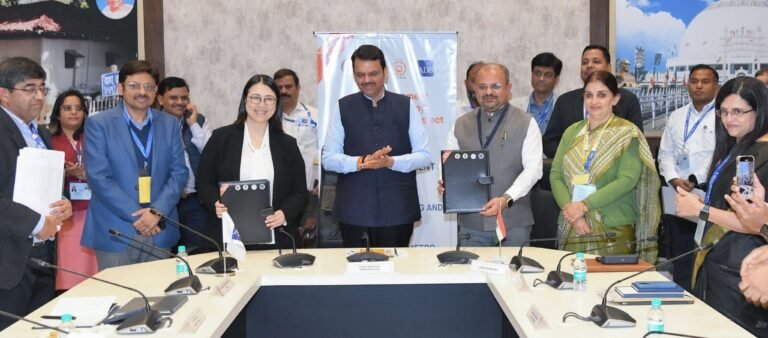
On 17 December, Shravan Hardikar, Managing Director of Maharashtra Metro Rail Corporation (Maha Metro) and Mr. Mio Oka, ADB director signed a Memorandum of Understanding (MoU) in the presence of Chief Minister Mr. Devendra Fadnavis in the cabinet hall of the Vidhan Bhavan.
Image Credit: CMO Maharashtra
MoU signed for 200 million USD loan for Nagpur Metro Phase-II in the presence of Maharashtra CM Shri Devendra Fadnavis.
MoHUA, Maha Metro, and ADB signed MoU for a 200 million USD loan for Phase-II of Nagpur Metro, in the presence of Hon. Maharashtra CM Shri Devendra Fadnavis at… pic.twitter.com/IO08uKkfV4
A total funding of Rs 3,586 crore will be secured for Nagpur Metro Phase 2 from the Asian Development Bank (ADB) and the European Investment Bank (EIB).
MahaMetro will obtain the funding for Phase II of the Nagpur Metro Rail Project in Japanese Yen, which will help secure lower interest rates on the loan.
The disbursement of the loan will be managed through the Union Ministry of Housing and Urban Affairs (MoHUA).
About Nagpur Metro Phase 2
TheNagpur Metro Rail Project Phase-II will cover a total distance of 43.8 kilometres and include 4 key routes:
18.7 kilometres from Khapri to MIDC ESR (Reach 1A), Orange Line.
13 kilometres from Automotive Square to Kanhan River (Reach 2A & Reach 2B), Orange Line.
6.6 kilometres from Lokmanya Nagar to Hingna (Reach 3A), Aqua Line.
5.5 kilometres from Prajapati Nagar to Transport Nagar Reach 4A Aqua Line.
This extension of the Nagpur Metro will streamline the connectivity and is expected to benefit approximately 1 million residents in the Nagpur region.
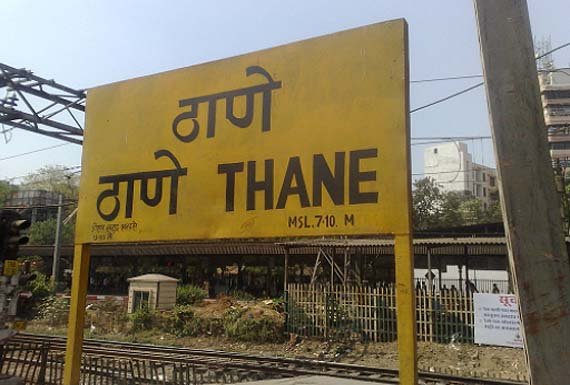
Thane is a metropolitan city in the northwestern part of Maharashtra state in India. It is an essential component of the Mumbai Metropolitan Area and a vibrant city that successfully combines modern development with historical relevance.
The city is primarily a residential suburb of Mumbai, though it also has a large industrial complex, including an industrial estate. It hosts the chemical, engineering, and textile industries.
In Asia, the first passenger train ever ran to Thane. The passenger train service between Bori Bunder (Bombay) and Thane was launched on April 16, 1853.
Public transport in Thane
Thane features a well-developed transportation infrastructure and serves as a major junction on the Central Line of Mumbai’s suburban railway network, handling around 654,000 passengers daily. On the other hand, the Thane Municipal Transport (TMT), under Thane Municipal Corporation, operates about 250 buses on 74 routes. However, due to the expansion of urbanisation, existing transport modes struggle to accommodate commuters, especially during peak hours. The inadequate capacity of public transport has increased reliance on private vehicles, which resulted in congested roads and increased pollution. The introduction of a metro to Thane city is expected to accommodate projected ridership of approximately 6.47 lakh passengers daily by 2029, increasing to 8.72 lakh by 2045.
The Need for a Metro System in Thane City.
Rising Population Trends: In 2001, Thane had a population of 8,131,849, and by the 2011 Census, Thane City had a population of 1,841,488. As of 2024, Thane’s population is estimated to be 26,129,000. To support this growing population, Thane City requires an efficient mode of transport that integrates with other transportation systems to provide seamless connectivity across the city.
Increasing Traffic Congestion on Roads: Due to increasing urbanisation,Thane experiences severe traffic congestion due to a high density of vehicles on the roads. The existing road infrastructure is often inadequate to handle the growing number of commuters.
Overburdened Rail System: While Thane is served by suburban rail services, these are often overcrowded, especially during peak hours. The current capacity does not meet the demands of a rapidly growing population, which results in discomfort and safety concerns for passengers.
Thane Metro Overview
On 16 August 2024, the Union Cabinet, led by Prime Minister Shri Narendra Modi, approved the Thane Integral Ring Metro Rail Project in Maharashtra. This 29-km corridor will run along the western periphery of Thane city, featuring 22 stations. The metro route will be situated between the Ulhas River on one side and Sanjay Gandhi National Park (SGNP) on the other.
Thane Integral Ring Metro Rail Project – Financial Structure
Estimated Project Cost: ₹12,200 crore
Funding Sources:The Thane Metro will be executedwith equal equity contributions from the Government of India (GOI) and the Government of Maharashtra (GoM).
Partial Funding:
Bilateral agencies
Additional Financing Methods:
Station Naming and Access Rights for corporations
Asset Monetisation
The state government has urged the Thane Municipal Corporation to contribute ₹5,078.04 crore towards equity and cover land acquisition expenses. Additionally, an interest-free subordinate loan of ₹969.75 crore will be provided by the state.
Project Transitions
The Thane Integral Ring Metro Rail Project has seen several changes since its inception:
December 2018: The foundation stone for the project was laid by the Prime Minister. Initially, it was conceived as a traditional, heavy metro line for Thane’s mass transit needs.
2019: The mass transit proposal was put on hold due to financial constraints.
Early 2020: The project was revived with plans for a light rail transit (LRT) or metrolite system.
2023: The project was again redefined and returned to the original concept of a full-scale metro line.
2024: The Union Cabinet granted approval for the Thane Integral Ring Metro Rail Project. MAHA Metro has been assigned to execute the Thane Metro.
Key Features :
Responsible Authority
Maharashtra Metro Rail Corporation Limited
Total distance
29 km
Total stations
22 stations
Elevated
20 stations
Underground
2 stations
Total cost
Rs. 12,200.10 crore
Current status
Under construction
Geotechnical work begins on Waghbil road
Operational
0 km
Approved
29 km
Proposed
0 km
Operational by
2029
Electrification
25 kV, 50 Hz AC OHE
Track gauge
Standard Gauge – 1435 mm
Signalling
Communications-based train control (CBTC)
Expected daily ridership
6.47 lakh in 20297.61 lakh in 20358.72 lakh in 2045
Thane Metro Phase 1
Thane Metro Phase 1 project will loop around Thane city with 1 circular line.
Stations: 22 stations (20 elevated and 2 underground).
Length: 29-km
Station names: Raila Devi, Wagle Circle, Lokmanya Nagar Bus Depot, Shivaji Nagar, Neelkanth Terminal, Gandhi Nagar, Dr. Kashinath Ghanekar Natyagraha, Manpada, Dongripada, Vijaynagari, Waghbil, Waterfront, Patlipada, Azad Nagar Bus Stop, Manorma Nagar, Kolshet Industrial Area, Balkum Naka, Balkumpada, Rabodi, Shivaji Chowk, Thane Junction (underground) and New Thane (underground).
Ongoing Work on Thane Metro
Commencement of Geotechnical Work: In early October 2024, Renuka Consultants officially began the geotechnical sub-soil investigation work at Hiranandani Estate.
New Logo for Thane Metro: Maha Metro has unveiled the new logo for the Thane Metro.
Appointment of General Consultants for Thane Integral Ring Metro Project,for Thane Metro’s rapid implementation by providing support in contract management, design, safety, monitoring, and quality assurance.
Bidding under process ( Bids were invited in October and will be closed by November)
Geo-01
Geotechnical Investigation for Thane Metro
Renuka Consultants
S&E-01
Environmental Impact Assessment (EIA) study & preparation of Environmental Management Plan (EMP)
4 bids have been submitted in October.
S&E-02
Social Impact Assessment (SIA) study and preparation of social management implementation plan, rehabilitation & resettlement (R&R Policy) Plan.
Bidding is in progress.
Challenges Involved in the Thane Metro Project
Financial Sustainability: The project involves funding of ₹12,200 crore, and, like other metro projects in India, achieving financial sustainability will be a challenge for Thane Metro.
Approval and Procedural Delays: Planning and design changes have been made to the Thane Metro project since it was first announced. It started out as a heavy metro, changed to a Metro Lite format, and then went back to being a conventional metro. These changes have caused delays and impacted timelines.
Land Issues: The predominantly elevated route of Thane Metro requires land acquisition, along with the rehabilitation and resettlement of affected residents and businesses. Managing these activities efficiently will be crucial, as delays in land acquisition or resettlement could extend project timelines and increase costs.
Social Acceptance: Compared to the metro, Thane City’s suburban train network provides a cheaper mode of transport. Getting people to pick the Thane Metro will be one of the major challenges for Maha Metro.
Environmental Concerns: The metro line’s construction may have an impact on the local ecosystem, especially in the vicinity of Upwan Lake, where locals have expressed worries about environmental degradation brought on by growing urban infrastructure. Development and ecological preservation must be balanced by the implementing agencies.
Benefits Associated with Thane Metro
Integration with Mumbai Metro & Suburban Railway: Thane, a residential suburb of Mumbai, has a large portion of its population commuting daily to Mumbai for work. The Thane Metro will integrate with Mumbai Metro Line 4 (Wadala–Kasaravadavali) and Line 5 (Thane–Bhiwandi–Kalyan), as well as with Railways at Thane Junction station. This integration will facilitate smoother traffic flow, reducing strain on other modes of transport.
Reduced Traffic Congestion: Due to its integration with other transport modes, more people are likely to opt for the Thane Metro to reach their destinations, which will reduce road traffic. Initial projections indicate that Thane Metro will attract about 6.47 lakh daily commuters.
Environmental Sustainability: The shift from private vehicles to public transport will help reduce pollution in the city, supporting India’s long-term goal of achieving net-zero emissions by 2070.
Boost to Economy: As the city becomes more connected and accessible, property prices are expected to rise along the Thane Metro route. Additionally, the route will attract businesses to set up near stations due to increased commuter footfall.
Employment Generation: The construction and operations of the Thane Metro will create job opportunities for residents.
Conclusion
The Thane Metro project aims to address Thane’s growing transportation needs with a 29-km circular line encompassing 22 stations. Designed to relieve congestion, support rising commuter numbers, and reduce pollution, the metro is expected to serve over 6 lakh passengers daily by 2029. Integrated with Mumbai’s transit network, it will offer better connectivity for Thane residents. While challenges like funding, land acquisition, and environmental concerns remain, the metro project is projected to enhance urban mobility and provide practical benefits for daily commuters in Thane.
Kolkata, the capital of West Bengal, often referred to as the “cultural capital of India” due to its diverse culture and rich artistic heritage. It is situated on the eastern bank of the Hooghly River. Kolkata ranks as one of India’s most populous cities. While Kolkata is home to several prestigious institutions like the University of Calcutta and the Indian Museum, the city has been serving as a major financial and commercial hub in eastern India.
Kolkata served as the capital of British India from 1772 to 1911 and played a critical role in India’s colonial history. The city experienced considerable changes, particularly after the partition of Bengal in 1947, which resulted in an influx of refugees from East Bengal.
After independence, Kolkata grappled with the urgent need for efficient urban transportation. By the late 1960s, Kolkata faced severe traffic congestion, with road infrastructure unable to accommodate its growing population. In response to these challenges, the Indian government recognised the necessity of a metro system as part of urban planning in the city, making Kolkata the first city in India to introduce metro rail services.
Glimpse Of Kolkata Metro History
Early proposal: The idea of a metro system in Kolkata can be traced back to the September 1919 session of the imperial legislative council at Shimla. A committee setup by W.E. Crum proposed the idea of a metro line in Kolkata. However, this initiative was shelved due to financial constraints.
Revision of proposal: The proposal of a metro system in Kolkata was reconceived in 1949 with the idea of an underground railway for the city by the chief minister of West Bengal, Bidhan Chandra Roy. A team of French experts conducted the survey, but nothing concrete materialised.
Formation of Metropolitan Transport Project: To conquer the urban transportation challenges, the Metropolitan Transport Project (MTP) was established in 1969.
Planning: In 1971, a master plan was developed, which outlined the construction of five metro lines with a total length of 97.5 km (60.6 mi). However, based on traffic studies, only 3 corridors were approved for construction. The highest priority was given to the Dum Dum to Tollygunge line due to its high traffic volume.
The three identified corridors were:
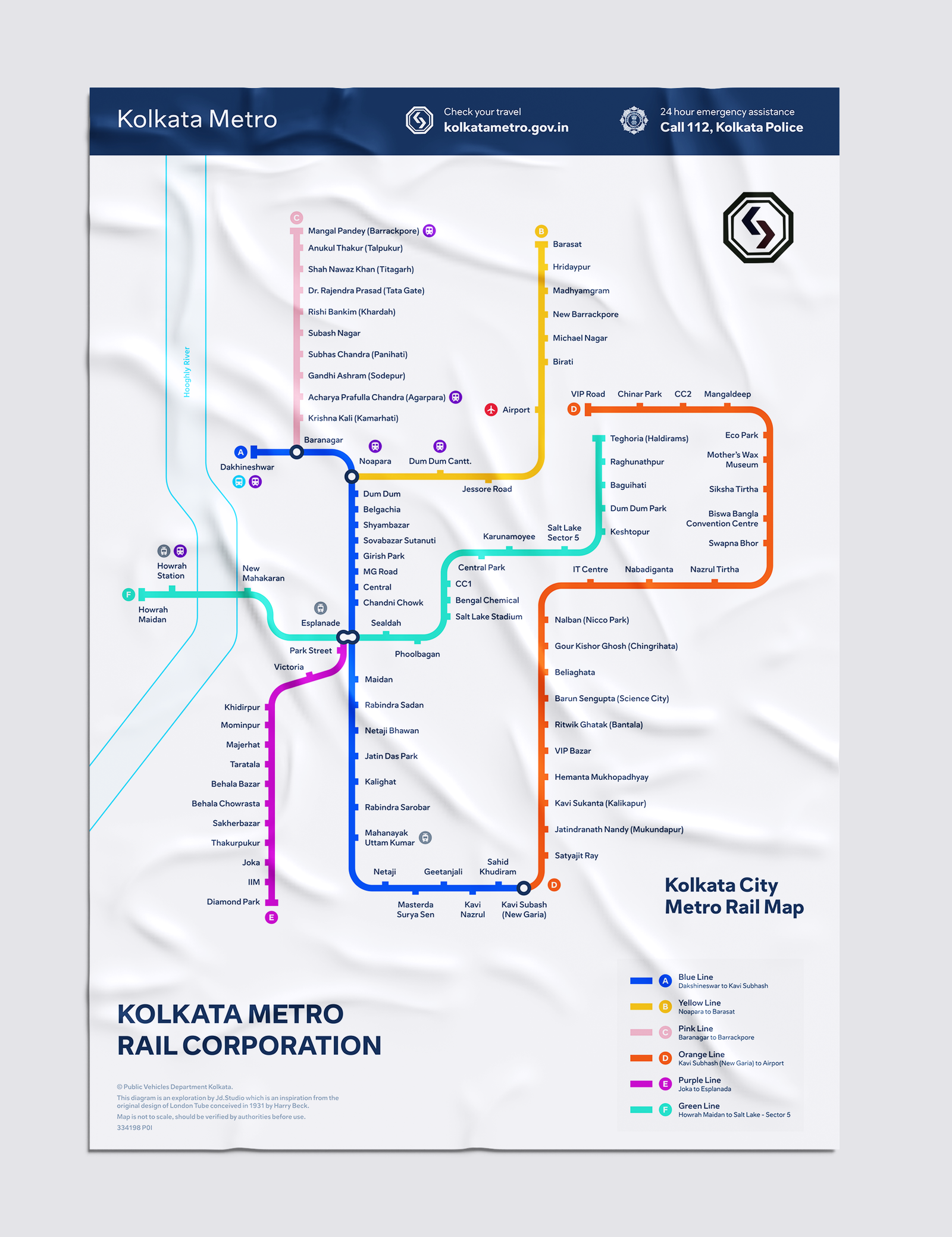
Dum Dum – Tollygunge (Line 1): This line is currently operational between Dakshineswar and New Garia.
Bidhannagar – Ramrajatala (Line 2): Originally planned to extend to Ramrajatala, this line is currently truncated at Howrah Maidan.
Dakshineswar – Thakurpukur: This was divided into two sections — Line 1 (Noapara to Dakshineswar) and Line 3 (Joka to Esplanade).
Execution: On 29 December 1972, Prime Minister Indira Gandhi laid the foundation stone for the metro project in Kolkata.
Reasons Behind Kolkata Metro
Urban population growth: Kolkata experienced a significant population growth due to partition and independence of India. By the 1970s, Kolkata became one of the most densely populated cities in India, with a population exceeding 14 million in the metropolitan area. This influx in population created immense pressure on the existing transport system, which led to severe congestion and inadequate public transport options, generating the need for the metro in Kolkata.
Inefficient road Infrastructure: With the growing population, the number of vehicles in Kolkata has increased rapidly. However, only 6.2% of Kolkata’s area comprises roads, which was significantly lower than that of other major Indian cities, which often exceed 20%. This limited road infrastructure leads to heavy traffic congestion on roads due to its inefficiency to accommodate the growing number of vehicles.
Overview Of Kolkata Metro
Kolkata Metro (India’s first metro) is an urban mass rapid transit system that first began operations on October 24, 1984. As of 2024, Kolkata Metro has 4 operational corridors. The metro system in Kolkata is the second busiest and fourth longest metro network in India. Kolkata Metro has been serving the city for 40 years. The Kolkata Metro boasts daily ridership of 700,000 passengers.
Interim Budget 2024 Highlights:
The New Garia-Airport corridor (Orange Line) received the highest allocation of ₹1,791.3 crore.
The Joka-Esplanade corridor was allocated ₹1,200 crore.
The East-West Metro project received ₹900 crore.
Key Specification of Kolkata Metro
Speed and Track
Top Speed: 80 kmph Average Speed: 34 kmph Track Gauge: Broad Gauge – 1676 mm (Line-1) & Standard Gauge – 1435 mm (Line-2)
Safety and Electrification
Electrification: 750 V DC Third Rail
Operational Routes of Kolkata Metro
Operational Network: 58.68 km Under Construction: 41.94 km Approved: 28.2 km Proposed: 15.7 km
Blue Line (Line-1): Dakshineswar- New Garia (Kavi Subhash)
Length: 32.25 km
Depot: Noapara and New Garia
Number of Stations: 26
Station Names: Dakshineswar, Baranagar, Noapara, Dum Dum, Belgachhia, Shyambazar, Shobabazar, Shobhabazar Sutanuti, Girish Park, MG Road, Central, Chandni Chowk, Esplanade, Park Street, Maidan, Rabindra Sadan, Netaji Bhavan, Jatin Das Park, Kalighat, Rabindra Sarobar, Mahanayak Uttam Kumar, Netaji, Masteda Surya Sen, Gitanjali, Kavi Nazrul, Shahid Khudiram, Kavi Subhash (New Garia)
Timeline of Blue Line (Line 1)
Operational Date
Section
Length
24 October 1984
Esplanade – Netaji Bhawan
3.40 km
12 November 1984
Dum Dum – Belgachhia
2.15 km
29 April 1986
Netaji Bhawan – Tollygunge
4.24 km
13 August 1994
Belgachhia – Shyambazaar
1.63 km
02 October 1994
Esplanade – Chandni Chowk
0.71 km
19 February 1995
Shyam Bazaar – Girish Park
1.92 km
19 February 1995
Chandni Chowk – Central
0.60 km
27 September 1995
Central – Girish Park
1.80 km
22 August 2009
Tollygunge – Garia Bazar
5.85 km
07 October 2010
Garia Bazar – New Garia
3.0 km
10 July 2013:
Dum Dum – Noapara
2.09 km
21 February 2021
Noapara – Dakshineswar
4.11 km
Green Line (Line-2): Sector V – Sealdah and Howrah Maidan – Esplanade
Length: 13 km
Type: Elevated (5.3 km) & Underground (7.7 km)
Depot: Central Park in Bidhannagar (Salt Lake)
Number of Stations: 12
Station Names: Howrah Maidan, Howrah, Mahakaran, Esplanade, Sealdah, Phoolbagan, Salt Lake Stadium, Bengal Chemical, City Centre, Central Park, Karunamoyee, Salt Lake Sector V
Timeline of Green Line ( Line 2)
Operational date
Section
Length
13 Feb 2020
Sector V – Salt Lake Stadium
5.3 km
05 Oct 2020
Salt Lake Stadium – Phoolbagan
1.7 km
14 July 2022
Phoolbagan – Sealdah
2.1 km
6 March 2024
Howrah Maidan – Esplanade
3.9 km
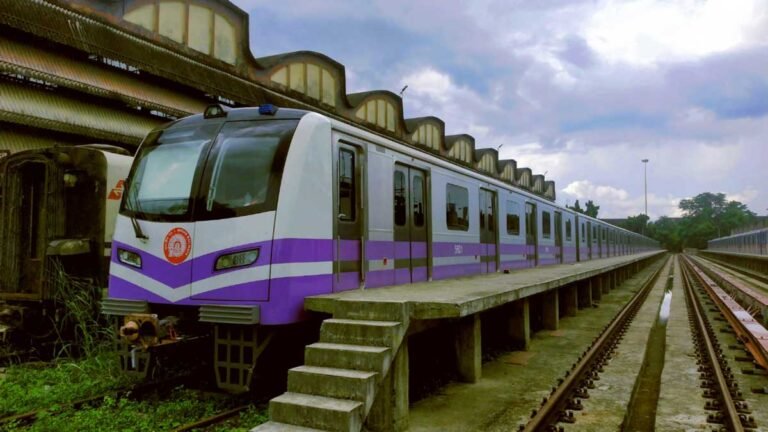
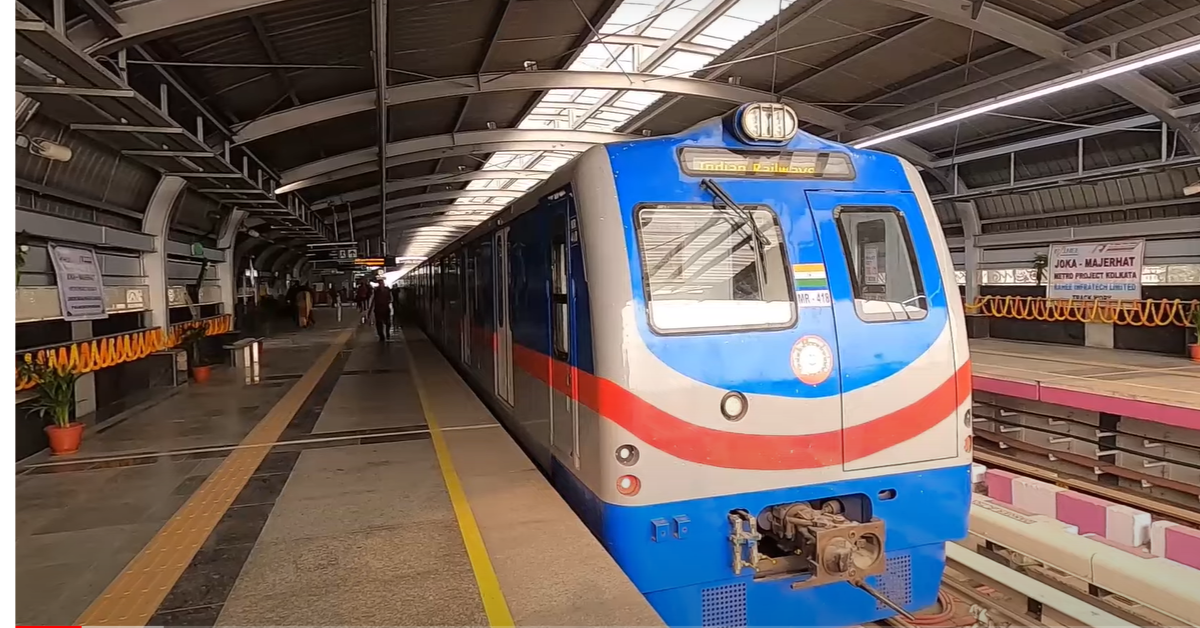
Purple Line (Line-3): Joka – Majerhat
Length: 7.75 km
Type: Elevated
Depot: Joka
Number of Stations: 7
Station Names: Joka, Thakurpukur, Sakherbazar, Behala Chowrasta, Behala Bazar, Taratala, and Majerhat
Timeline of Purple Line (Line 3)
Operational Date
Section
length
30 December 2022
Joka – Taratala
6.5 km
6 March 2024
Taratala – Majerhat
1.25 km
Orange Line (Line-6): Kavi Subhash (New Garia) – Hemanta Mukherjee (Ruby Hospital)
Length: 5.68 km
Type: Elevated
Depot: New Garia
Number of Stations: 5
Station Names: Kavi Subhash, Satyajit Ray, Jyotirindra Nath Nandy, Kavi Sukanta, and Hemanta Mukherjee
Timeline of Orange Line ( Line 6)
Operational date
Section
Length
6 March 2024
Kavi Subhash – Hemanta Mukhopadhyay
5.68 km
Under Construction Lines
Green Line (Line-2) – Esplanade – Sealdah (tunnels only)
Length: 2 km
Type: Underground
Number of Stations: 0
Station Names: N/A
Purple Line (Line-3) – Majerhat to Esplanade
Length: 7.55 km
Type: Elevated (2.5 km) & Underground (5.05 km)
Number of Stations: 5
Station Names: Mominpur, Kidderpore, Victoria Memorial, Park Street and Esplanade.
Recent update: In July 2024, Larsen & Toubro commenced concrete pouring for the initial batch of tunnel ring segments for the Purple Line. Larsen & Toubro was awarded Package UG1 in June 2023. The L&T is responsible for the twin tunnels between Mominpur and Esplanade and 4 construction of 4 underground stations at Kidderpore, Victoria Memorial, Park Street and Esplanade.
Yellow Line (Line-4) – Noapara to NSCBI Airport
Length: 6.87 km
Type: At-grade, elevated & underground
Number of Stations: 4
Station Names: Noapara, Dum Dum Cantt., Jessore Road, Biman Bandar
Recent updates: The 16 km Yellow Line connecting Neopara to Barasat, the first line to connect with the airport, witnessed significant development as the 4 km track from Dum Dum Cantonment to the NSCBI Airport was recently completed. On 21st October 2024,Shri P Uday Reddy inspected the 4km long track in the Maidan trolley from Dum Dum cantonment- Airport.
Orange Line (Line-6) – Hemanta Mukherjee (Ruby Hospital) to NSCBI Airport (Biman Bandar)
Length: 24.19 km
Type: At-grade, elevated & underground
Depot: New Town, New Garia
Number of Stations: 19
Station Names: VIP Bazar, Ritwik Ghatak, Barun Sengupta, Beliaghata, Gour Kishore Ghosh, NICCO Park, Saltlake Sector V, Technopolis, Nazrul Tirtha (formerly Bidhan Nagar), Swapno Bhor (formerly Sub CBD-1), Biswa Bangla Convention Centre (formerly CBD-1), Kala Kshetra, Mother’s Wax Museum (formerly New Town), Eco Park (formerly Convention Center), Siksha Tirtha (formerly Sub CBD-2), City Centre II (formerly Titumir), Chinar Park (formerly Rabindra Tirtha), VIP Road/Teghoria (Haldiram), Biman Bandar (Airport).
Proposed Lines
Green Line (Line-2) – Howrah Maidan to Satrangachi Bus Terminal
Length: 10 km
Type: Elevated
Status: Proposed
Green Line (Line-2) – Sector V to Teghoria
Length: 5.7 km
Type: Elevated
Number of Stations: 5
Station Names: Kestopur, Dum Dum Park, Baguiati, Raghunathpur and Teghoria (Line-6 interchange)
Status: Proposed
Yellow Line (Line-4) – NSCBI Airport (Biman Bandar) to Barasat
Length: 11.26 km
Type: Underground and Elevated
Number of Stations: 6
Station Names: Birati, Michael Nagar, New Barrackpore, Madhyamgram, Hridaypur and Barasat
Status: A 3.6 km underground section with 3 stations from NSCBI to New Barrackpore has been fast-tracked. Geotechnical & Design bids were invited in mid-January 2020.
Status: This line is on hold. Its route was proposed to follow Barrackpore Trunk Road but may follow the Kalyani Expressway instead. When operational, it might function as an extension/spur of Line 1.
Initiative to Digitalised India
In September, the Kolkata metro introduced a mobile-based QR ticketing system on trial basis. Shri P Uday Kumar Reddy, General Manager of Metro Railways, introduced this new ticketing system at Kalighat station with other senior officials.
To support this new QR ticketing system the AFC (Automatic Fare Collection) gates on Blue Line and Orange Line stations have been upgraded.
Benefits of Kolkata Metro
1. Enhanced Connectivity: The expanded network of Kolkata Metro enhanced connectivity in the city by linking the peripheral areas of the city to the central part of the city. This extensive network allowed the residents of Kolkata to access different regions of the city more conveniently.
2. Reduced Traffic Congestion: Kolkata city has witnessed serious issues of road congestion due to major reasons like urban infrastructure limitation, heavy rainfall and increasing vehicle numbers. By providing a means of public transportation like the metro system, the Kolkata metro has resolved major issues like urban transportation and traffic congestion on roads.
3. Economic growth: The Kolkata Metro has majorly contributed to generating more employment rates in the city, leading to a boost in the economic growth of the city. Furthermore, the extensive network of the metro has also drawn the attention of more businesses and industries near the metro stations stimulating the local economies.
4. Time efficiency: The metro system in Kolkata allows the residents of the city to travel to different regions of the city in less time, making the journey more convenient for them. For instance, the travel time between Esplanade and Howrah Maidan by road is approximately 20 minutes; however, one can typically cover the same distance in 5 minutes by using the Metro.
5. Integration with other modes of transportation: The Kolkata metro has efficiently provided connectivity to the other modes of transportation. For instance, The Kolkata metro connects with Kolkata Suburban Railways at several interchange stations like Dum Dum and Sealdah.
Challenges Encountered by Kolkata Metro
1. Structural Integrity Issue: In February 2024, Kolkata Metro Rail Corporation (KMRC) received a report of the CMRS inspection conducted on the Howrah Maidan – Esplanade section of the Green Line. However, a total of 50 issues were reported by CMRS, stating major challenges like cracks in tunnel segments and signage issues that require urgent attention.
2. Water ingress and subsidence: The Esplanade to Howrah Maidan section of the Kolkata metro Green Line saw major water ingress and subsidence issues. Numerous calamitous incidents like water gushing out at rates of 150 litres per minute and an encounter with a tunnel boring machine in a sand aquifer have all contributed to severe ground movement and a threat to nearby residents and properties.
3. Technical Limitations: The construction of the Kolkata Metro during the 1970s introduced several technical constraints that continue to influence its operations. The tunnel dimensions, designed during that era, required the adaptation of Indian meter-gauge shells on broad-gauge bogies for rolling stock, necessitating custom-built rakes. This customisation has not only increased manufacturing costs but also limited the choice of suppliers.
Conclusion
The journey of the Kolkata Metro reflects a legacy of determination and adaptation. From pioneering India’s first underground railway to becoming an essential mode of transport for millions, the metro system has continually evolved to address the city’s growing needs. Overcoming challenges such as dense urban construction, technical constraints, and complex management structures, Kolkata Metro stands as a symbol of the city’s resilience and progress.
The Kolkata Metro’s planned expansions aim to transform urban mobility by connecting distant areas, reducing traffic congestion, and integrating with other transportation systems. With transparent public-private partnerships, community involvement, and a focus on safety and innovation, the Kolkata Metro strives to achieve sustainable urban growth for a more efficient and connected future for the city.
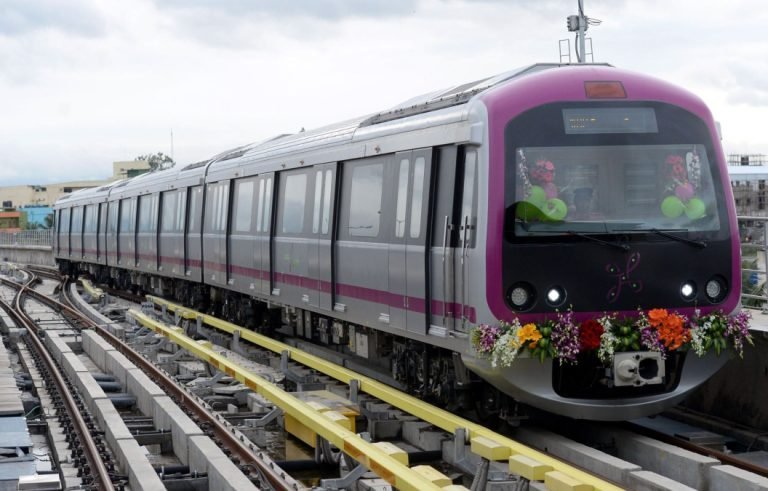
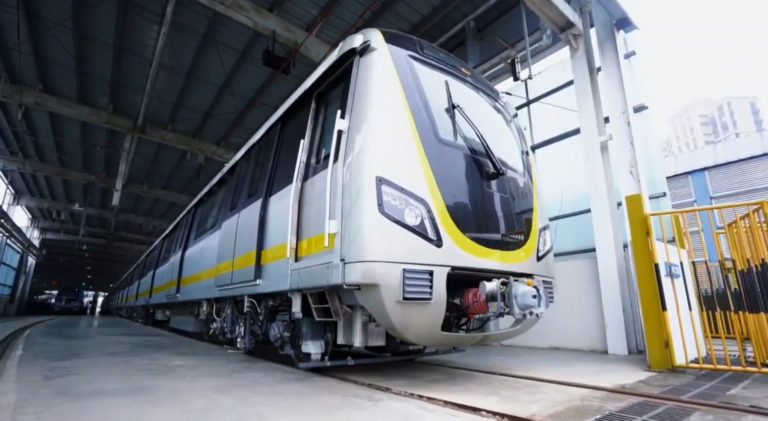
Bangalore (Metro Rail News): A major development has been waiting for Bangalore Metro as Titagarh Rail Systems Limited (TRSL) is going to deliver the first CBTC (Communication-Based Train Control) train set for the Yellow Line at Hebbagodi Depot by 15 January 2025.
In February 2024,China’s CRRC Corporation Ltd.delivered the first prototype train for the Yellow Line which is currently undergoing trials.
ಟಿಆರ್ಎಸ್ಎಲ್ ನಿಂದ ಹಳದಿ ಲೈನ್ನ ಮೊದಲ ಸಿಬಿಟಿಸಿ ರೈಲು ಹೆಬ್ಬಗೋಡಿ ಡಿಪೋಗೆ ಜನವರಿ 15, 2025 ರೊಳಗೆ ಆಗಮಿಸುವ ಸಾಧ್ಯತೆಯಿದೆ.
Yellow Line's first CBTC train from TRSL is likely to arrive by Jan 15, 2025 at Hebbagodi Depot pic.twitter.com/jDDKw7uIf1
CRRC to Deliver First Prototype for Bangalore Metro’s Purple Line
On 10 January 2025, The CRRC is going to deliver the 6-coach DTG (Distance-to-Go) prototype train for Bangalore Metro’s Purple Line. The train is expected to reach Chennai Port by year’s end and will arrive at Peenya Depot by 10 January.
ಬೆಂಗಳೂರು ಮೆಟ್ರೋ ದ ಪ್ರೋಟೋಟೈಪ್ ರೈಲು ಹೊಸವರ್ಷದ ಜನವರಿ 10/2025 ರಂದು ಪೀಣ್ಯ ಡಿಪೋ ತಲುಪುವ ಸಾಧ್ಯತೆಯಿದೆ
Bengaluru Metro's DTG Purple Line prototype train from China's CRRC will reach Chennai Port by year-end and Bengaluru at Peenya Depot by Jan 10, 2025 pic.twitter.com/rRjakR5i8i
In February 2019, China’s CRRC Corporation Ltd was awarded the Bangalore Metro rolling stock contract at Rs 1,578 crore to supply 216 coaches (36 train sets) for the Yellow and Purple Line.
However, due to CRRC’s inability to fulfill the contract requirements, it subsequently signed an MoU with Titagarh Rail System.
The MoU stated that CRRC will supply one prototype train for the Yellow Line and one prototype train for the Purple Line (12 Coaches in total), and Titagarh Rail System will manufacture and supply the remaining 34 train sets comprising 204 coaches.
As per the contract, Out of 216 coaches, 126 coaches ( 21 train sets) will be deployed on the Purple Line while 90 coaches (15 train sets) are planned to be deployed on the Yellow Line.
Bengaluru Metro’s Yellow Line
The Yellow Line of Bengaluru Metro Phase 2 spans 19.143 km from RV Road to Bommasandra through 16 stations.